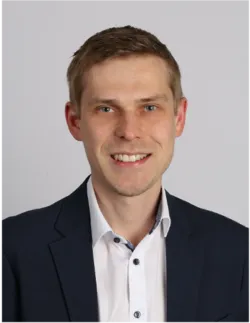
Dr. Manuel Schmidt-Kraepelin is a postdoctoral researcher at the Information Infrastructures group (Technical University of Munich), focusing on gamification for health behavior change and distributed ledger technology applications in healthcare. With dual master's (2016) and bachelor's (2013) degrees in Information Systems from the University of Cologne, he brings extensive experience from KIT, University of Kassel, and University of Cologne research roles. His work combines behavioral science with technical systems design. As a reviewer for major IS journals and conferences (CAIS, ECRA, HICSS, ICIS), he contributes to academic quality assurance. Recipient of multiple best reviewer awards and the prestigious Dean's Award at Cologne, he was honored with the 2014-2016 Deutschlandstipendium and a 2020 DAAD travel grant. Key research areas: gamification mechanics, health behavior change, blockchain in healthcare, narrative transportation theory Recent publications examine gamified procrastination mitigation, expert intuition in medical annotation, and privacy calculus in genetic data sharing Developed taxonomy for gamification concepts in health apps and identified gamification user archetypes Active in design science research and literature synthesis methodologies Awarded best paper recognitions at ICIS and HICSS, with 15+ recent publications across top venues including JMIR, CHI, and IEEE Transactions. Currently teaches Master's seminars on gamified information systems at TUM's Heilbronn campus.
Jonathan Mayer serves as an Associate Professor at Princeton University with dual appointments in the Department of Computer Science and the School of Public and International Affairs. He also serves on the CITP (Center for Information Technology Policy) Steering Committee and maintains an active presence in technology policy discussions through speaking engagements and public service. Department of Computer Science, Princeton University School of Public and International Affairs, Princeton University CITP Steering Committee Member Mayer holds a Ph.D. in Computer Science from Stanford University and a J.D. from Stanford Law School, making him uniquely qualified to bridge technical and legal domains in his research and public service. His research focuses on the critical intersection of technology and law, with particular emphasis on national security, criminal procedure, consumer privacy, network management, and online speech. Mayer examines how technological systems interact with legal frameworks, often investigating surveillance practices, privacy protections, and the regulatory challenges posed by emerging technologies. His work combines technical analysis with legal scholarship to inform policy debates and shape regulatory approaches to complex digital issues. Mayer's speaking engagements over the past decade reveal consistent themes in his research trajectory, particularly around privacy enforcement, platform accountability, and the legal implications of digital design choices. His recent work has increasingly focused on dark patterns, antitrust issues in digital markets, and the structural challenges of regulating technology platforms while preserving privacy and free expression. Mayer has held significant public service roles including Chief Science and Technology Advisor and Chief AI Officer at the U.S. Department of Justice, technology advisor to U.S. Senator Kamala Harris, and Chief Technologist of the Federal Communications Commission Enforcement Bureau. These positions have allowed him to directly influence technology policy at the highest levels of government while maintaining his academic research agenda.
Mattias Ohlsson is a Visiting Professor at the School of Information Technology , Halmstad University . His research focuses on machine learning and deep learning for analyzing diverse health data, particularly patient trajectory modeling with multimodal approaches. Primary affiliation: IT - Computer Department Collaboration areas: Healthcare sector and industry His work emphasizes explainable AI in clinical contexts, including survival analysis, cardiac event prediction, and cross-domain applications in satellite poverty mapping. Recent projects explore temporal healthcare data analysis using transformer architectures and self-supervised learning . Key article trends include: 2025: AI integration with medical expertise for emergency diagnostics 2024: Survival model evaluation, temporal data challenges, and graft failure prediction 2023: Multi-robot routing optimization and fatty liver disease etiology modeling 2022: Heart failure mortality algorithms and anomaly detection systems Current affiliations include the CAISR Health research group, with technical expertise spanning CNNs, transformers, and robust imputation methods.
Tutku ÜÇÜNCÜ is a Lecturer at the Faculty of Forestry, Kastamonu University , Turkey. With a full-time academic career since 2012, they specialize in Forest Industry Machinery and Management , focusing on ergonomic design, decision-making models (AHP, TOPSIS, VIKOR), and sustainable wood processing. Their work bridges industrial engineering with forestry applications. PhD in Forest Industry Engineering (2019) and MSc in Forest Industrial Engineering (2013) from Kastamonu University and Karadeniz Technical University Co-authored 17 journal articles and 14 conference proceedings Research interests include optimizing forest product manufacturing using advanced methods like thermal modification, CNC technology, and laser processing. They apply multi-criteria decision analysis to industry challenges, such as facility location and export strategies. Their work has been cited 139 times (h-index: 6). Recent publications (2022) address green marketing in forest products and sustainable laptop stand design. Earlier works (2016-2017) explore ergonomic computer usage and cluster analysis in regional forestry sectors. They collaborate with researchers across Turkey on projects funded by TÜBİTAK and institutional grants, including 'Optimization of Wood Surface Processing with Laser Machines' (2022) and 'Hot-Compressed Poplar Wood Characteristics' (2017).
Kathleen Gallagher serves as an Assistant Professor in the School of Criminal Justice at Michigan State University, where she teaches graduate courses in crime analysis, policing, and quantitative methods. Her research bridges environmental criminology theory with practical crime analysis applications. Ph.D. in Criminal Justice, University of Cincinnati M.S., American University B.A., American University Dr. Gallagher specializes in environmental criminology with particular focus on micro-place crime patterns and problem-oriented policing frameworks . Her work examines how theoretical concepts translate into operational crime analysis practices, emphasizing the importance of small-scale spatial units and cognitive framing in police problem-solving processes. She investigates the practical implementation challenges of evidence-based policing strategies through empirical analysis of crime trajectories and housing policy impacts. Her publication record (2010-2017) reveals consistent thematic development centered on crime analysis methodology. Key trends include increasing sophistication in spatial analysis techniques, evolving frameworks for problem definition in policing, and systematic exploration of theory-practice gaps. Her research demonstrates strong alignment between academic scholarship and operational law enforcement needs, particularly regarding micro-geographic crime patterns and cognitive aspects of police decision-making. Dr. Gallagher provides technical research assistance to police departments, community organizations, and government agencies. Her professional service includes co-editing the International Association of Crime Analysts' definitive manual Exploring Crime Analysis , reflecting her leadership in translating academic research into practical crime analysis tools. Prior to academia, she served as a Crime Analyst for the Alexandria, Virginia Police Department and Coalition Manager for the National Crime Prevention Council, grounding her scholarship in real-world criminal justice experience.
Olcay Ünver is a Professor of Practice in the Environmental and Resource Management Program at Arizona State University's Polytechnic School and a Senior Global Futures Scientist with the Julie Ann Wrigley Global Futures Laboratory. He also serves as Senior Water Advisor to the Food and Agriculture Organization (FAO) of the United Nations and Industry Fellow at the Australian Rivers Institute. With a distinguished career spanning over three decades, he previously led FAO's water programs, UN-Water's World Water Assessment Programme, and UNESCO's Program Office on Global Water Assessment, and served as Vice-Chair of UN-Water. Dr. Ünver earned his Ph.D. in Civil Engineering with a focus on water resources planning and management from the University of Texas at Austin (1981-1987), his M.Sc. in Civil Engineering with a focus on water resources engineering and hydrology from Middle East Technical University in Ankara, Turkey (1979-1981), and his B.S. in Civil Engineering with a focus on hydrology and hydraulics from the same institution (1973-1979). Prior to joining ASU, he was a distinguished professor of water resources at Kent State University and President of Turkey's Southeastern Anatolia Project, where he transformed a large infrastructure project into a sustainable socioeconomic development program. Dr. Ünver's research focuses on the critical intersection of water resources, food security, and sustainable development. His work examines the Water-Energy-Food Nexus, transboundary water management, drought resilience, and sustainable agricultural practices. He has pioneered approaches to integrated water resources management that consider socioeconomic factors alongside environmental sustainability, particularly through his leadership of the Southeastern Anatolia Project in Turkey, which transformed infrastructure development into comprehensive socioeconomic advancement. His research increasingly emphasizes the importance of stakeholder engagement, policy coherence, and innovative governance structures to address complex water challenges in a changing climate. His extensive publication record demonstrates a consistent focus on practical solutions to global water challenges, with recent work emphasizing the connections between water management, food systems, and climate resilience. His publications reveal an evolving research trajectory from technical water management approaches to more integrated, systems-based perspectives that address the social, economic, and political dimensions of water resources. Dr. Ünver has received numerous prestigious honors including: The 2023 IWRA Crystal Drop Award Fellow of the International Water Resources Association (elected 2000) NATO Science Fellow (1981-1984) TÜBİTAK Honor Fellow (1981-1987) Recognition as one of 19 "European Visionaries" by Time Magazine (1998-1999) Feature in the New York Times (1997) Dr. Ünver actively mentors students and early-career researchers, currently advising a Ph.D. and an M.S. student at Arizona State University while serving on doctoral committees for students at universities in Germany, Finland, Spain, and Indonesia. His advisory work focuses on urban water security, water scarcity, food systems, and sustainable agricultural practices. He has secured and managed significant research funding throughout his career, including projects funded by UNESCO, the US Department of State, the European Union, and various national governments, with portfolios exceeding $80 million. As a leader in global water governance, Dr. Ünver has played key roles in establishing major initiatives including the Euphrates-Tigris Initiative for Cooperation (ETIC), the Water Scarcity in Agriculture Platform (WASAG), and the SDG 6 Global Acceleration Framework. He serves on numerous advisory boards including the Water Joint Programming Initiative of the European Commission, the CGIAR Water, Land and Ecosystems Program, and the FAO Voluntary Guidelines on the Responsible Governance of Tenure of Land, Fisheries and Forests (VGGT).
Toktam Ghafarian Mabhoot serves as an Assistant Professor in the Department of Computer Science at the Faculty of Design in SWPS University, Warsaw. As a computer engineer and data scientist, she applies technology to solve complex problems and enhance people's lives and work environments. Her research spans four innovative technological domains: Cloud Computing : Exploring efficient methods to harness internet-based computing power for data storage, management, and processing that supports global business and scientific systems Big Data : Developing approaches to extract valuable insights from massive datasets to understand trends and drive innovation across healthcare, finance, and other sectors Machine Learning : Creating systems where computers learn from data to make predictions and decisions without explicit programming, including AI assistants and pattern recognition applications Blockchain : Investigating applications beyond cryptocurrency for secure data sharing, transparent transactions, and decentralized systems architecture Dr. Ghafarian Mabhoot's interdisciplinary work combines these cutting-edge technologies to improve the digital landscape and address pressing societal challenges through practical solutions. At SWPS University, she teaches foundational computer science courses including introduction to programming and programming in C language, demonstrating her commitment to developing technical skills in students within a design-focused academic environment.
James Herbsleb is a Professor in the Software and Societal Systems Department at Carnegie Mellon University's School of Computer Science, where he also serves as Director of the PhD program in Societal Computing. He holds a PhD in psychology and an MS in computer science. His research explores the intersection of software engineering, computer-supported cooperative work, and socio-technical systems. Primary focus areas include: Architecting socio-technical ecosystems (e.g., open source platforms like Eclipse and Mozilla) Coordination challenges in modular software development Scientific software sharing and co-creation Hackathons and community code engagements His recent publications (2011-2014) demonstrate strong emphasis on collaborative development platforms like GitHub and Wikipedia, examining social dynamics, contribution evaluation, and governance in distributed teams. Research consistently bridges technical systems and human collaboration patterns. Scientific Awards: ACM Outstanding Research Award (2016) Alan Newell Award for Research Excellence (2014) Best Paper Awards at ICSE, CSCW, and Academy of Management conferences His research is funded by NSF, Sloan Foundation, Google, IBM, Siemens, and Bosch. He leads projects on coordination systems and online deliberation, and has supervised research on open source ecosystems through the Breaking APIs project.
Andreas Koch is a Research Associate at the Professorship of Simulation for Additive Manufacturing at the Technical University of Munich (TUM), Germany. His research focuses on computational modeling of compressible multiphase flows, CutDG methods, and high-performance computing with software development. He holds a Master of Science (M.Sc.) in Mechanical Engineering from TUM (2024). Research Interests Koch's work bridges computational mechanics and machine learning, with emphasis on cut discontinuous Galerkin methods for simulating complex flows and high-performance computing systems. His publications demonstrate expertise in machine learning applications for aerospace systems, including anomaly detection in spacecraft telemetry and deep learning acceleration for spaceborne hardware. Scientific Awards ERC Starting Grant Publications (2024-2013) His research portfolio includes 15 recent publications spanning edge AI solutions for spacecraft , RF synchronization systems, and machine learning frameworks for aerospace applications. Earlier work explores robot perception and geoinformatics implementations.
Tetyana Ihorivna Levitska is an Associate Professor in the Department of Applied Mathematics at Zaporizhzhia Polytechnic National University. With over 25 years of academic experience since 1999, she specializes in mechanics of deformable solids and mathematical modeling in economics. Her expertise spans both theoretical and applied mathematics with significant contributions to engineering applications. Her educational background includes: Bachelor's and Master's in Applied Mathematics from Zaporizhia State University (1994) Candidate of Technical Sciences (PhD equivalent) in Mechanics of Deformable Solids (2000) Professor Levitska's research focuses on the mechanics of deformable solids, particularly stress-strain analysis of shells and composite structures, and mathematical modeling in economics. Her work bridges theoretical mathematics with practical engineering applications, especially in aerospace engineering and economic systems modeling. She has developed innovative approaches to fuzzy logic applications in economic modeling and has contributed significantly to understanding complex shell structures under various loading conditions. Her recent publications demonstrate a strong trend toward interdisciplinary research, combining mechanical engineering principles with computational mathematics. The majority of her work centers on stress-strain analysis of aircraft components, composite materials, and shells of rotation, while also exploring applications of fuzzy logic in economic modeling and migration phenomena. Professor Levitska teaches Higher Mathematics, Probability Theory and Mathematical Statistics, Discrete Mathematics, and Higher and Applied Mathematics to undergraduate and graduate students. Her teaching approach integrates theoretical foundations with practical applications, preparing students for both academic and industry careers.
Oleksandr Viktorovych Korobko is a Senior Lecturer at the Department of Occupational Safety and Environmental Protection within the Faculty of Construction, Architecture and Design at Zaporizhzhia Polytechnic National University. With a career spanning since 1975, he has established himself as an expert in occupational safety, labor protection, and the psychological aspects of safety behavior. His extensive experience includes serving as a technical inspector of the trade union committee at the university. Zaporizhzhia Machine-Building Institute named after V.Ya. Chubar (1981), Radio Electronics and Telecommunications Specialty: Design and production of radio equipment Qualification: Engineer-designer-technologist of radio equipment Dr. Korobko's research interests focus on occupational safety, labor protection, psychology of safety behavior, metal matrix composite materials, and environmental protection. His work bridges engineering and human factors, examining how psychological elements influence workplace safety. Recent research has particularly emphasized safety in educational institutions during wartime conditions and the psycho-emotional states of students in conflict zones. He has also investigated metal composite materials, exploring ways to enhance their characteristics for high-temperature applications. His publication record shows a clear trend toward integrating psychological and engineering approaches to safety. Recent works (2023-2025) demonstrate increasing attention to wartime safety challenges, emotional burnout among youth, and the psychological qualities that motivate safe behavior. His research spans both theoretical frameworks (structural-logical safety training schemes) and practical applications (predicting safety and durability of gas turbine components). Chest Sign 'For Impeccable Work' III Degree of Zaporizhzhia Polytechnic National University Honorary Certificate of Zaporizhzhia Regional Organization of Trade Unions of Education and Science Workers of Ukraine (2022) Honorary Certificate of Zaporizhzhia Regional Council of Trade Unions (2020, 2008, 2006) Honorary Certificate of Zaporizhzhia Polytechnic National University (2019) Dr. Korobko actively contributes to academic governance as a member of the trade union organization and serves as a technical inspector of the trade union committee. His teaching focuses on safety of life for specialists with basics of labor protection and occupational safety in industry. He has participated in numerous professional development activities, including webinars on academic integrity and educational leadership forums. His research collaborations extend to international conferences, particularly with Polish academic institutions.
Dr. Milan Vesković is an Assistant Professor at the Department of Computer and Software Engineering, Faculty of Technical Sciences in Čačak, University of Kragujevac, Serbia. He has been employed at the Faculty since October 2007, progressing from research associate to his current position. His academic journey includes teaching courses in mechatronics, electronics, radio systems, and electronic components and assemblies. Graduated from Faculty of Technical Sciences in Novi Sad, March 11, 2002 (Electrical Engineering and Computer Science) Master's degree from Technical Faculty in Čačak, December 2009 (Electromagnetism) PhD from Faculty of Technical Sciences in Čačak, April 2018 (Electronics) Dr. Vesković's research spans multiple domains within electrical engineering and computer science. His primary interests include the application of numerical methods in electromagnetism (particularly the method of fictitious sources) for solving electrostatic conductor problems, signal processing techniques in electronics, and the application of electronic components in education, ecology, and hardware/software development. His work demonstrates a strong interdisciplinary approach, bridging theoretical electrical engineering concepts with practical applications in computing and environmental sustainability. His recent publications reveal a growing interest in emerging technologies including nanotechnology applications, waste management systems, educational technology (particularly Micro:bit applications), and optimization algorithms for energy management. There's also a clear trend toward interdisciplinary research combining electrical engineering principles with computer science, environmental science, and educational methodologies. Dr. Vesković has served as a UNIDO Consultant for Cleaner Production (CP) Programme following his successful engagement with the "Cleaner Production 2011" project in collaboration with UNIDO and the city of Čačak. As an educator, Dr. Vesković has contributed significantly to curriculum development and teaching in electrical engineering and computer science. His research has been supported through various academic and industry collaborations, particularly in the areas of cleaner production methods and educational technology implementation. He has been actively involved in numerous international conferences and has published 59 papers in domestic and international journals and conference proceedings. His work spans multiple laboratories and research groups within the Faculty of Technical Sciences, particularly those focused on electronics, computer engineering, and interdisciplinary applications of technology in environmental and educational contexts.
Katarina Pavlović is an Assistant Professor in the Department of Mathematics at the Faculty of Technical Sciences in Čačak, University of Kragujevac. Education: Professor of Mathematics and Computer Science (2010), Faculty of Mathematics, University of Belgrade Master of Mathematics (2012), Faculty of Mathematics, University of Belgrade Doctoral candidate in Mathematics (since 2015), Faculty of Natural Sciences and Mathematics, University of Niš Her research focuses on Theoretical Mathematics , Applied Mathematics , and Operations Research , with a specialization in Multi-Criteria Decision Making (MCDM) and Mathematical Optimization . She has developed novel methods for weighted coefficient calculation and correction in MCDM models, including modifications to the CRITIC method, Fuller's triangle method, and corrective functions. Publications span topics like: Multi-criteria evaluation of tourist satisfaction Cluster estimation techniques Decision support systems and data-driven modeling Algorithm optimization for operational research Teaching includes Mathematics 1, 2, and 3, Mathematics Practicum 3, Quantitative Methods, and Discrete Mathematics. She has prior teaching experience in elementary and secondary schools in Belgrade and Čačak. Contact: Email: katarina.tasic@ftn.kg.ac.rs Phone: +381 032/302-740 Office No. 139, Svetog Save 65, Čačak, Serbia
Paula Savolainen serves as a Lecturer in Business, Entrepreneurship and Marketing at Turku University of Applied Sciences, based at the Kupittaa Campus. Her position falls under the Business education program within the university's structure. Her research centers on Customer Behavior , Entrepreneurship , and Value Creation , with significant contributions to Software Project Management . She investigates critical dynamics in customer-supplier relationships, project initiation challenges, and failure factors in software development, particularly emphasizing the supplier's perspective during early project phases. Analysis of her publication timeline (2020-2008) reveals persistent focus on project start-up practices, knowledge transfer obstacles, and contractual influences on project outcomes. Her work bridges business management and software engineering, highlighting how vague project starts, manager transitions, and misaligned expectations critically impact project success. No scientific awards were documented in the provided materials. Available information contains no details regarding student advising activities or research grant acquisitions. She actively participates in research groups dedicated to Customer Behavior and Entrepreneurship and Value Creation, driving collaborative investigations in these domains.
Andreas Krause is a Professor of Computer Science at ETH Zurich , where he leads the Learning & Adaptive Systems Group . He holds additional roles as Academic Co-Director of the Swiss Data Science Center , Chair of the ETH AI Center , and co-founder of the ETH spin-off LatticeFlow . Previously, he was an Assistant Professor at Caltech . Education : PhD in Computer Science from Carnegie Mellon University (2008) , Diplom in Computer Science and Mathematics from Technical University of Munich (2004) His research focuses on machine learning and adaptive systems , with applications in probabilistic AI , sequential decision-making , and responsible AI . He has contributed to advancements in active learning , reinforcement learning , and large language models , particularly for scientific and real-world challenges. Scientific awards and fellowships include: Rössler Prize ERC Starting and Consolidator Grants German Pattern Recognition Award NSF CAREER Award ETH Golden Owl Teaching Award ACM Fellow, IEEE Fellow, ELLIS Fellow Microsoft Research Faculty Fellow Kavli Frontiers Fellow Test of Time Awards at ACM SIGKDD (2019) and ICML (2020) He has held leadership roles in major AI conferences, serving as Program Co-Chair for ICML 2018 and General Chair for ICML 2023 , and is an Action Editor for the Journal of Machine Learning Research . In 2023–24, he contributed to global AI governance as a member of the United Nations’ High-level Advisory Body on AI .