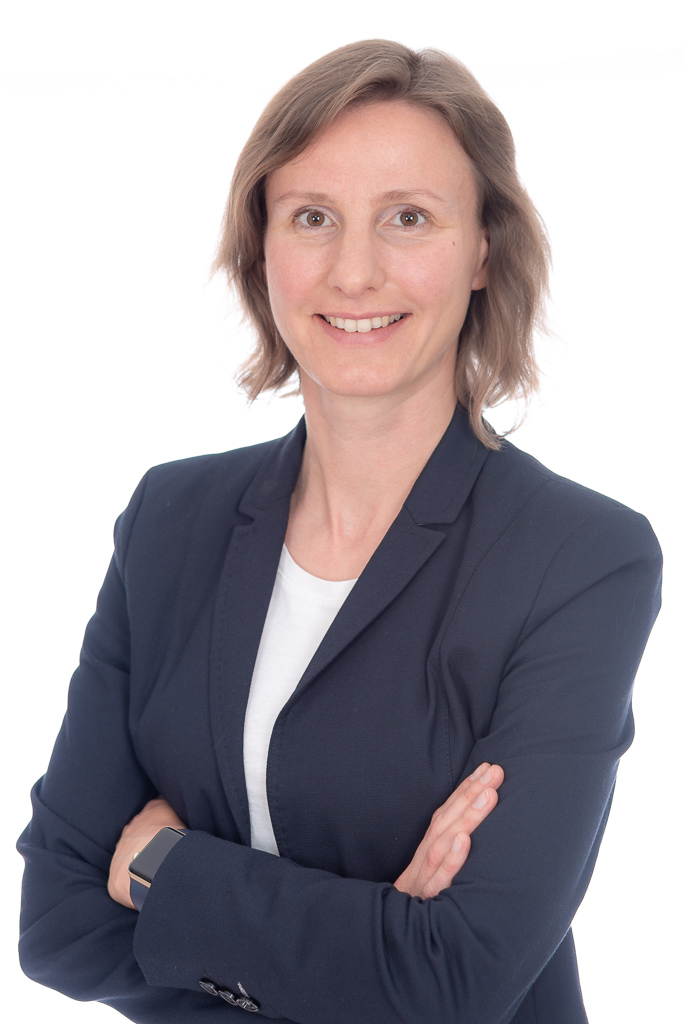
Janne J. Korhonen serves as a Post-Doctoral Researcher and Visitor in the Faculty at Aalto University's Department of Industrial Engineering and Management. His work bridges information technology and organizational strategy in digital transformation contexts. His academic credentials include: Doctor of Science (2018) and Doctoral degree (2018) in Engineering and Technology from Aalto University Diplomi-insinööri in Digital Product Development from Helsinki University of Technology (2003) Dr. Korhonen's research centers on Digital Transformation , Enterprise Architecture , and Dynamic Capabilities . He examines how organizations develop governance structures and capabilities to navigate digital disruption, emphasizing top management's role and informed decision-making for effective information utilization. His publication trajectory reveals a shift from technical digital capabilities toward organizational logic and reconfiguration models. Recent work highlights the necessity for new adaptation frameworks at institutional levels to address digital transformation shortfalls. He has contributed to significant research initiatives including the Academy of Finland-funded "Digital Disruption of Industry" project (2015-2017) and Business Finland's "Adaptive and Complex Informatics Endeavours" (2012-2014), focusing on digital innovation and adaptive systems.
Jaco Renken is a Senior Lecturer in Information Systems at the Global Development Institute (GDI) of the University of Manchester. His research focuses on socio-economic development, digital transformation (Dx4D), and the implications of big/open data in development contexts. He previously held lecturing positions at the University of Stellenbosch (South Africa) and the University of Botswana, experiences that inform his current work on digital development leadership. Education: PhD in Conceptualising ICT4D Champions from the University of Manchester (2012–2016). Teaching includes modules on Digital Development Leadership (joint with University of Melbourne), E-Business Strategy, Research Methods, and Information Systems in Organisations. He supervises PhD projects exploring digital transformation, development champions, and data-intensive development. Research interests span ICTs in development, Dx4D frameworks, and leadership roles in socio-economic change. His work contributes to UN SDGs related to education, inequality reduction, and sustainable development. Collaborations include global institutions and cross-university initiatives. His expertise integrates socio-technical approaches, emphasizing organizational readiness and policy implications of digital technologies in developing regions.
Stefanos Koufidis is a Research Associate at Imperial College London's Department of Physics within the Faculty of Natural Sciences. He holds a PhD in Theoretical Optics from Imperial College London (2025) and an MSc in Optics and Photonics with Distinction (2021). His academic journey began with a First Class Honours MEng in Electrical & Computer Engineering from Aristotle University of Thessaloniki (2019). His research focuses on Optical Physics , particularly in time-periodic chiral media, gravitational wave interactions, and novel Bragg phenomena . He contributes as a certified reviewer for Optica journals and is an Institute of Physics member. Professional milestones include the Arnaoutis Foundation Scholarship and Bodossaki Foundation Doctoral Scholarship. Prior to academia, he served in the Greek Army’s Research and Informatics Corps (2019–2020). Key technical skills include proficiency in English and Modern Greek for peer review. Academic Positions: Research Assistant, Imperial College London (Oct 2024–Apr 2025) Research Associate, Imperial College London (Apr 2025–present) Education: PhD in Theoretical Optics (2021–2025) MSc Optics & Photonics (2020–2021) MEng Electrical & Computer Engineering (2013–2019) His work bridges theoretical optics with applied photonics , exploring phenomena like time-periodic optical activity and exceptional points in coupled chirowaveguides. Recent projects include scattering studies of light by gravitational waves and dynamic Bragg resonances in static/dynamic media. Awards: Bodossaki Foundation Doctoral Scholarship Arnaoutis Foundation MSc Scholarship He collaborates with Prof. McCall’s research group and has published extensively on topics such as temporal analogs of Bragg gratings and gyrotropy-controlled reflectors. Current work emphasizes wave-matter interactions in non-stationary media.
John Derek Morgan is an Associate Professor in the Department of Earth and Environmental Sciences at the University of West Florida, within the Hal Marcus College of Science and Engineering. He serves as the primary faculty for the online Master of Science in GIS Administration program, contributing significantly to geospatial education and research. His work bridges urban environmental geography, GIS, cartography, and public policy. PhD in Geography, Florida State University MS in Management Information Systems, University of Central Florida BA in Economics (with Computer Science minor), University of Central Florida Dr. Morgan's research centers on the application of advanced geospatial methodologies to urban and environmental challenges. His work spans participatory mapping, crime mapping using time-geographic models, hazard modeling, land use planning, and cartographic visualization. He emphasizes user-centered design in Web GIS and explores how spatial tools can promote safer communities and equitable decision-making. His projects often integrate satellite imagery, social vulnerability indices, and community input to inform resilience and policy. The recent publications reflect a strong trend in applying GIS to social and environmental issues, including disaster response, urban park safety, illegal logging detection using GeoAI, and wildfire monitoring. His work combines technical innovation in geovisualization with real-world applications in public safety, environmental justice, and urban sustainability. Scientific Awards: NSF Doctoral Dissertation Research Grant #0927850 Dr. Morgan advises graduate students in the MS GIS program and has been involved in significant research grants, including the Florida Sea Grant 2024 project focused on training GIS graduates for coastal resilience. His collaborations span interdisciplinary teams, including environmental scientists, urban planners, and computer scientists. He has also contributed foundational content to the UCGIS Geographic Information Science & Technology Body of Knowledge. He leads research initiatives involving Web GIS development, hazard modeling post-hurricanes, and participatory mapping for community engagement. His lab work includes the use of satellite imagery, Bayesian networks for infrastructure failure, and deep learning for environmental monitoring. Future work continues to focus on transboundary viewshed changes, GeoAI applications, and improving spatial tools for public decision-making.
Dr. Lisa Adams is a Research Fellow at the Technical University of Munich (TUM) and an Attending Radiologist at TUM University Hospital Rechts der Isar, affiliated with the Diagnostic and Interventional Radiology department. She holds an Albrecht Struppler Clinician Scientist Fellowship (2024) and leads research in the Quantitative Imaging Biomarkers for Predictive Healthcare focus group. Adams earned her MD from Charité - Universitätsmedizin Berlin (2016), completed board certification in radiology (2021), and conducted postdoctoral research at Stanford University (2022-2023). She transferred her Habilitation in Experimental Radiology to TUM in 2024. Her research integrates AI with radiology diagnostics, specializing in: Developing machine learning methods for early disease detection and risk assessment Advancing quantitative imaging biomarkers across organ systems Body composition analysis and biological age estimation Multimodal analysis for personalized healthcare Ethical implementation of AI in clinical practice Adams' recent publications demonstrate strong focus on AI applications in radiology, spanning large language models for clinical reporting, deep learning for medical image interpretation, nanoparticle tracking in regenerative medicine, and radiomics for cancer diagnosis. Her work consistently bridges technical innovation with clinical translation. Awards & Recognition: Walter-Friedrich-Prize, Deutsche Röntgengesellschaft (2023) Alavi Mandell Award (2021) Invest in the Youth Stipend, ECR Vienna (2017) She actively mentors doctoral candidates, having supervised seven PhD students to completion since 2020 with two more nearing submission. Adams secures substantial research funding from DFG, EU, Wilhelm Sander Foundation, Bayern Innovativ, and Berlin Institute of Health. She serves as Scientific Editor for European Radiology and Trainee Editorial Board Member for Radiology: Artificial Intelligence , while also holding leadership positions in the German Radiological Society.
Dr. Andreu Català Mallofré is a Full Professor at the Universitat Politècnica de Catalunya (UPC), affiliated with the Department of Systems, Automatic and Industrial Informatics Engineering. He serves as the principal investigator at the CETpD - Centre d'Estudis Tecnològics per a l'Atenció a la Dependència i la Vida Autònoma (Technical Research Center for Dependency Care and Autonomous Living) and leads the TOC - Tecnologia Orientada a la Comunitat (Community-Oriented Technology) research group. With an academic career spanning over 30 years, he specializes in assistive technologies, human-computer interaction, and biomedical data analysis. His research interests focus on Wearable health monitoring systems Parkinson's disease management solutions Frailty assessment algorithms Emotion-driven computing Community-embedded technology Gerontechnology applications These areas have produced 367 academic outputs including 59 indexed journal articles, 148 conference papers, and 66 competitive R&D projects. Recent publications demonstrate a clear trend toward multimodal health monitoring combining inertial sensors with biometric data for aging populations . Key application areas include freezing-of-gait detection in Parkinson's patients and distress estimation during assisted mobility. His 2024 work explores agricultural sustainability through data-driven fertilizer optimization. Scientific recognition includes UPC Social Council Award (2013) 20+ years as conference committee member Multiple competitive R&D grants 23391773000 Scopus ID Orcid 0000-0001-8775-1955 As academic advisor, he has mentored 3 PhD candidates including Daniel Manuel Rodriguez-Martin (Human Movement Analysis, 2020) Leonid Ivonin (Physiological Signal Processing, 2014) John Neal Abram Brown (Calm Computing, 2014) His teams operate within Vilanova i la Geltrú's School of Engineering, with strong industry and healthcare sector collaborations.
Markus Strohmaier is Professor and Chair of Data Science in the Economic and Social Sciences at the University of Mannheim, with affiliations as Scientific Coordinator at GESIS – Leibniz Institute for the Social Sciences and External Faculty Member at the Complexity Science Hub Vienna. His interdisciplinary work bridges computer science, economics, and the social sciences. University of Mannheim – Chair for Data Science in the Economic and Social Sciences GESIS – Scientific Coordinator for Digital Behavioral Data Complexity Science Hub Vienna – External Faculty Former Professor at RWTH Aachen University and University of Koblenz-Landau Previous Post-Doc and Visiting Roles at Stanford University, Xerox PARC, University of Toronto, and Graz University of Technology His research focuses on computational social science , algorithmic fairness , network science , and the modeling of human behavior using machine learning and large-scale data. He develops methods to analyze textual, relational, and emerging data types to understand socioeconomic systems and digital societies. The recent articles reflect a strong trend in studying inequality in algorithmic systems , governance in decentralized organizations (DAOs) , and psychological profiling of AI . His work spans high-impact journals like Nature and Scientific Reports , emphasizing fairness, transparency, and societal impact of data-driven technologies. Notable scientific contributions include: Editor-in-Chief of EPJ Data Science (2018–2022) Founding co-chair of the Computational Social Science section of the German Informatics Society He advises students and leads research projects on algorithmic fairness, digital governance, and behavioral modeling. His team engages in both fundamental methodological development and applied studies in real-world digital platforms. He has been involved in significant grants and collaborative initiatives around digital behavioral data and computational social science infrastructure. His lab and projects include the Algorithmic Fairness initiative and the interactive visualization tool Planets of Disparity , which explores how algorithms behave on different network structures. These efforts aim to enhance public understanding and technical scrutiny of algorithmic systems.
Alessandro Bevilacqua is an Assistant Professor at the Department of Computer Science and Engineering, University of Bologna. His research focuses on computer vision, medical imaging, and artificial intelligence in healthcare. He leads the Computer Vision Group, which develops advanced algorithms for tumor characterization, radiomics, and automated analysis of pathological images. His work integrates machine learning, quantitative imaging, and clinical applications to improve diagnostic accuracy in oncology. Bevilacqua’s research spans areas such as diffusion-weighted MRI analysis, multiplex immunohistochemistry quantification, and radiomic feature extraction. He collaborates with clinical teams to translate computational methods into practical diagnostic tools. His recent projects include developing AI models for prostate cancer detection, colorectal lesion classification, and predicting treatment responses using imaging biomarkers. Key technical contributions include novel metrics for tumor-peritumour interface analysis, automated workflows for whole-slide imaging, and reproducibility frameworks for radiomic studies. His methodologies address challenges in heterogeneity assessment, clinical significance prediction, and imaging protocol optimization. Academic activities include teaching computer science and engineering courses, mentoring students in AI-driven healthcare projects, and advising on collaborative research initiatives. He maintains an active presence in interdisciplinary research, bridging computational methods with clinical oncology, radiology, and molecular biology.
Gabriel Pereira is Assistant Professor in AI & Digital Culture at the University of Amsterdam (UvA), based at the Media Studies department and the Institute for Logic, Language and Computation (ILLC). His primary affiliation is with the Natural Language Processing & Digital Humanities (NLP&DH) group. Pereira's research focuses on the critical study of data and algorithms, particularly as they intersect with vision, images, and surveillance systems. He brings an interdisciplinary approach that combines Science and Technology Studies (STS), critical algorithm studies, platform studies, and artistic interventions to examine how computational systems shape social relations and power structures. Pereira's research interests center on critical perspectives of computer vision and algorithmic governance, with particular attention to how these technologies operate in contexts of surveillance, platform labor, and digital culture. His work critically examines hegemonic computer vision systems that reinforce surveillance capitalism while exploring alternative ways of seeing and engaging with technology. He has conducted extensive research on Automated License Plate Recognition systems, WhatsApp disruptions in Brazil, and the political economy of smart surveillance projects like Curitiba's 'Digital Wall.' His methodology combines qualitative research with practice-based inquiry, including arts-based and interventionist approaches that challenge dominant technological narratives. His publication trends reveal a consistent focus on critical examinations of algorithmic systems, with growing attention to resistance practices, decolonial perspectives, and situated knowledge from the Global South. The articles show a trajectory from analyzing specific surveillance technologies toward broader theoretical frameworks for understanding algorithmic antagonisms and developing critical technical practices. His work consistently bridges theory and practice, often collaborating with artists and activists to create interventions that make visible the hidden operations of algorithmic systems. Independent Research Fund Denmark International Postdoc grant Deviant Practice Grant (Van Abbemuseum) Pereira actively organizes academic and artistic events, serving as Secretary of the Association of Internet Researchers and participating in the Tierra Común network. He co-organized the Con/Crit/Tec residency in São Paulo that brought together over 80 transdisciplinary researchers to explore alternative geographies of digital consciousness. His collaborative approach extends to numerous grant-funded projects examining platform labor, algorithmic surveillance, and critical data literacy. Pereira emphasizes organizing as an essential element of research work, facilitating knowledge exchange between academic, artistic, and activist communities. He is affiliated with multiple research collectives including the Center for Arts, Design and Social Research (CAD+SR), where he serves as a Researcher in Residence. His practice-based projects like 'Future Movement Future – REJECTED,' 'Algorithmic Sea,' and 'History of _rt' demonstrate his commitment to using artistic interventions as critical research methods. These projects often involve collaborations with artists, technologists, and activists to create alternative ways of engaging with and understanding algorithmic systems.
Jun-Ki Choi is a Professor in the Department of Mechanical and Aerospace Engineering at the University of Dayton’s School of Engineering. He holds the O. Jack and Opal Anderson Faculty Fellowship in Engineering Innovation and serves as Director of the University of Dayton Industrial Training and Assessment Center (UD-ITAC), a U.S. Department of Energy-funded program providing energy efficiency assessments to small and mid-sized manufacturers. His research interests include: Sustainable Manufacturing Energy Efficiency Design for Environment Life Cycle Assessment Circular Economy Sustainable Energy Infrastructure Economic Systems Modeling Energy and Environmental Policy His recent publications focus on industrial energy efficiency, life cycle assessment, sustainable manufacturing, and the application of machine learning in energy systems. The research spans topics such as photovoltaic integration, desalination, refrigeration, compressed air systems, and building energy modeling, often combining techno-economic and environmental evaluations. Dr. Choi has received multiple awards for his work, including the U.S. Department of Energy Excellence in Applied Energy Engineering Research Award (2022), the ASHRAE Technical Paper Award (2017), and multiple recognitions as a Center of Excellence from the U.S. Department of Energy (2003, 2015). He has secured over $8 million in research funding as PI or Co-PI and has mentored numerous students through the UD-ITAC program, which has conducted over 1,000 energy assessments. He teaches courses such as Manufacturing Process, Heat Transfer, and Design for Environment at both undergraduate and graduate levels. Dr. Choi leads the UD-ITAC, a key research and outreach center focused on improving manufacturing competitiveness through energy savings, productivity improvements, and waste reduction. The center has received national acclaim for its impact and professionalism.
Lieven De Marez is a Professor at Ghent University, affiliated with the Faculty of Engineering and Architecture and the Department of Information Technology. His research spans human-computer interaction, quality of experience (QoE), smart homes, digital education, and social media behavior, reflecting a strong interdisciplinary approach combining technical and social sciences. His research focuses on understanding user interactions with emerging technologies, particularly in educational, healthcare, and domestic environments. Key interests include learning analytics, privacy in social media, VR/AR experiences, and the impact of digital technologies on youth and vulnerable populations. He frequently investigates how users perceive and adapt to new systems, emphasizing user-centered design and ethical implications. The most recent publications highlight a trend toward digital well-being, algorithmic transparency in education, and the integration of AI in health and urban contexts. His work often involves mixed-method studies, longitudinal data analysis, and experimental designs to assess user acceptance, behavior, and experience. Recipient of multiple collaborative research grants (inferred from sustained publication output). Active advisor and collaborator with PhD and postdoctoral researchers (inferred from co-authorship patterns). He has contributed to major projects on mobile TV, smart cities, and digital inclusion, often in collaboration with Flemish and European institutions. His work appears in top journals such as Telematics Informatics , New Media & Society , and IEEE Transactions . Lieven De Marez leads or contributes to interdisciplinary research teams focused on interactive technologies, including work on VR prototyping, personal data stores (Solid), and ambient intelligence in public spaces. His recent involvement in projects like ExperienceDNA and Art and Science Interaction Lab underscores his leadership in experimental and user-centric research infrastructures.
Dr. Yana Boeva is a Junior Research Group Leader at the University of Stuttgart , affiliated with both the Institute for Social Sciences and the Cluster of Excellence IntCDC . Her work bridges Science and Technology Studies (STS) with Computational Design , focusing on critical examinations of digital infrastructure, human-computer interaction, and sustainability in architectural contexts. Research Interests: Algorithmic entanglements in design and construction Participatory technology production Digital fabrication and material practice Epistemic cultures of computational design Socio-political implications of Building Information Modeling (BIM) Her recent publications analyze timber construction innovation trajectories , platformization in urban environments , and ghost labor in automation . She co-edited the volume Algorithmic Regimes (2024), which investigates algorithmic knowledge production across societal domains. Scientific Awards: Recipient of the DigitalFUTURES Young Award for critical computational design research Dr. Boeva teaches courses on Algorithmic Sociology and Digital Sustainability at the MA and BA levels. Her work has been supported by projects under the Excellence Cluster IntCDC and BBSR Innovationsprogramm Zukunft Bau .
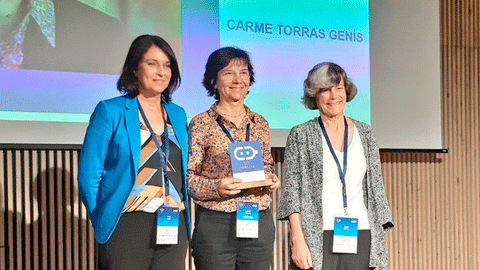
Carme Torras is a Research Professor at the Institute of Robotics and Industrial Informatics (IRI), a joint center of the Polytechnic University of Catalonia (UPC) and the Spanish National Research Council (CSIC), affiliated with the Faculty of Informatics of Barcelona (FIB). She leads the research group in assistive robotics, focusing on ethical, human-centered robotic systems. With over 400 scientific publications, she has made pioneering contributions in robotics, neurocomputing, and artificial intelligence. PhD in Computer Science – Universitat Politècnica de Catalunya Master in Computer Science – University of Massachusetts Bachelor in Mathematics – University of Barcelona Her research interests span robotics , artificial intelligence , neurocomputing , and ethics in digital technologies . She emphasizes the societal impact of AI, promoting ethical principles and public engagement. Her recent articles and literary works explore human-robot interaction, assistive systems, and the emotional dimensions of technology. The analysis of her recent publications reveals a strong trend toward interdisciplinary research combining technical innovation with ethical reflection. Her work integrates robotics with cognitive science, literature, and social responsibility, emphasizing open science and inclusive design. She advocates for an open laboratory model in assistive robotics to foster collaborative innovation. Nit de la Robòtica Award (2022) Pedrolo Prize for 'La mutación sentimental' Ictineu Prize for 'La mutación sentimental' and 'Enxarxats' Carme Torras has supervised 20 doctoral theses and led 17 European research projects, demonstrating significant leadership in both academic mentoring and large-scale collaborative research. She is deeply involved in science communication, using fiction to explore ethical dilemmas in AI. Her vision includes expanding open-access research infrastructure in robotics. She leads the assistive robotics research group at IRI, which focuses on developing intelligent robotic systems for healthcare and personal assistance. The team emphasizes ethical design, human-robot collaboration, and accessibility, contributing to both technological advancement and societal dialogue.
Prof. Dr. Julia Schulze-Hentrich is a full Professor of Genetics at Saarland University, within the Faculty of Natural Sciences and Technology and the Department of Biosciences. She leads an active research group focused on epigenetic and transcriptomic mechanisms in health and disease, with a strong emphasis on neurodegenerative disorders, ageing, and sex-specific differences. She is also an INM Fellow at the Leibniz Institute for New Materials starting 2025, enhancing interdisciplinary collaboration in biomaterials and epigenetics. Her research interests include: Epigenetic modifications in neurodegenerative diseases (Parkinson’s and Huntington’s) Role of gene-environment interactions in disease pathogenesis Ageing-related epigenetic and transcriptomic changes Sex-dimorphic gene regulation in brain disorders Development of epigenetic signatures for diagnosing rare diseases Integration of multi-omics data and computational epigenomics Prof. Schulze-Hentrich leads the DFG Priority Program SPP2561 "SEXandGLIA", is part of the Center for Gender-specific Biology and Medicine (CGBM), and leads the epigenomics workgroup in the international solveRD consortium. Her lab operates the Epigenomics Sequencing Facility (ESF), equipped with advanced NGS platforms and bioinformatics pipelines. She co-developed widely used tools such as RnBeads, BiQ Analyzer HiMod, and MeDeCom. She is actively involved in academic training, co-organizing the GENIE Summer School on sex differences in glia-neuron interactions. She supervises students and researchers, offering B.Sc. and M.Sc. projects, and welcomes graduate and postdoctoral candidates. Scientific collaborations include the Max Planck Institute for Informatics, University Hospital Regensburg, Ruhr University Bochum, and the INM. Her team includes several scientific and technical staff, reflecting a vibrant, interdisciplinary research environment.
Arild Skarsfjord Berg is a Professor at OsloMet's Faculty of Technology, Art and Design, Department of Product Design, with a Doctor of Art in Artistic Research in Public Space and a MA in Ceramic Art. He leads the Product Design and Cultural Sustainability research group, focusing on cross-disciplinary innovation between design, health technology, and material-based artistic practices. Research Interests: Product design with emphasis on material aesthetics Collaborative methods across design, healthcare, and technology Sustainability in professional education Neurotechnology and ethical design scenarios Ceramic art interventions in public spaces Academic pedagogy and teaching excellence Publication Trends: His work demonstrates a unique synthesis between design research and healthcare innovation, with increasing focus on neurotechnology ethics and salutogenic approaches. Materiality remains a consistent thread across both artistic practice and technical applications. Scientific Awards: Fellow of Merited Teachers at OsloMet