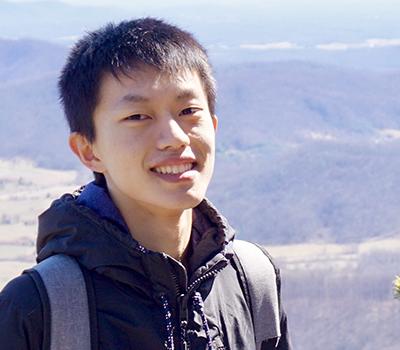
Huazheng Wang is an Assistant Professor in the School of Electrical Engineering and Computer Science at Oregon State University. His research focuses on reinforcement learning, information retrieval, and trustworthy AI. He received his Ph.D. from the University of Virginia (2021) and B.E. from the University of Science and Technology of China (2015). He holds awards including the 2025 EECS Fabulous Teacher Recognition and SIGIR 2019 Best Paper Award. His work addresses challenges in robust reinforcement learning, adversarial attacks on bandit systems, and applications in scientific discovery. Education: Ph.D., Computer Science, University of Virginia (2021) B.E., Computer Science and Technology, University of Science and Technology of China (2015) Research interests emphasize developing efficient algorithms for reinforcement learning, multi-armed bandits, and their applications in recommendation systems, protein optimization, and security. Notable contributions include provably efficient risk-aware reinforcement learning frameworks and adversarial attack analysis on bandit systems. Recent work includes NSF-funded research on neural bandits (IIS-2403401) and publications in top venues like ICML, NeurIPS, and AAAI. His lab explores embodied LLM agents for team cooperation and federated collaborative online monitoring frameworks.
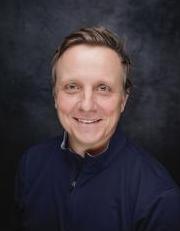
Joshua B. Gross is an Associate Professor in the Department of Biological Sciences at the University of Cincinnati, where he has been conducting research since 2010. His work focuses on evolutionary biology, particularly using the Mexican cavefish ( Astyanax mexicanus ) as a model system to study adaptation to extreme environments. Dr. Gross received his academic training at prestigious institutions: Ph.D. in Organismic and Evolutionary Biology from Harvard University (2005) M.S. with Distinction in Biological Sciences from University of Denver (2001) B.A. in Psychology from Miami University (1995) Dr. Gross's research explores the genetic and developmental basis of evolutionary changes, with a focus on how organisms adapt to extreme environments. His primary model system is the Mexican cavefish ( Astyanax mexicanus ), which exists in both surface-dwelling (with eyes and pigmentation) and cave-dwelling (blind and depigmented) forms. His work integrates quantitative genetics, transcriptomics, and phenotypic analysis to understand the genetic changes underlying cave adaptation, including both regressive traits (like eye loss) and constructive traits (like enhanced taste systems). Analysis of Dr. Gross's recent publications reveals a strong focus on sensory adaptation and craniofacial evolution in cavefish. His work has increasingly incorporated genomic and transcriptomic approaches to understand how cavefish adapt to low-oxygen environments, changes in sensory systems (particularly taste and lateral line), and craniofacial modifications. There's a clear trajectory toward understanding the integration between different biological systems, such as how sensory neuromasts influence skeletal development. Dr. Gross has received several notable awards and recognitions: National Academies Education Fellow in the Life Sciences (2014-2015) Young Investigator Winner, Sigma Xi, University of Cincinnati Chapter (2016) Honorable Mention, Excellence in Doctoral Mentoring Award Nominated for 2018 Dean's Award for Innovative Instruction Young Anatomist's Publication Award from the American Association of Anatomists (2004) As a principal investigator, Dr. Gross has secured substantial funding from the National Science Foundation and National Institutes of Health, including multiple R01 grants from NIH and major awards from NSF. His current projects include "The developmental basis for sensory-skeletal integration: The osteo-inductive role of neuromasts" (NSF IOS-2205928, 2022-2026) and "The constructive evolution of gustation: Molecular, organismal and environmental attributes of taste tuning" (NSF DEB-2343857, 2024-2028). He has mentored numerous undergraduate and graduate students through research projects and has been recognized for his teaching excellence, particularly in Human Genetics. Dr. Gross leads a research laboratory focused on evolutionary and developmental biology at the University of Cincinnati. His team employs a multidisciplinary approach combining field work in Mexican caves, laboratory experiments, genomic analysis, and developmental studies. He has organized international scientific meetings, including the Astyanax International Meeting, fostering collaboration among researchers studying cave-adapted organisms worldwide.
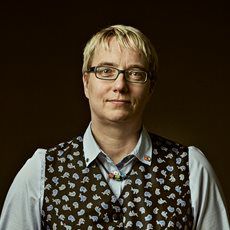
Dr. Alicia Kulczynski is an Associate Professor of Marketing and Head of the Marketing, Tourism & Business Analytics Discipline at the University of Newcastle. She holds a PhD in Management (Marketing) and undergraduate degrees in Forensic Science and Communication Studies. Her research focuses on consumer behavior, branding, and advertising, with emphasis on spokesperson characteristics, psycholinguistics in branding, and music concert attendance. She has published in top-tier journals like the Journal of Marketing and European Journal of Marketing, and was recognized as Associate Editor of the Year (2024) for the Journal of Consumer Behaviour. Her work bridges academia and industry through collaborations with organizations such as the NSW Ombudsman and Ultra Music Festival. Education - PhD in Management (Marketing), University of Newcastle (2014) - Bachelor of Science (Forensic), University of Newcastle - Bachelor of Arts (Communication Studies), University of Newcastle Research Interests - Consumer behavior and decision-making - Branding and brand communication - Advertising strategies and spokesperson effectiveness - Psycholinguistics in brand naming and consumer priming - Music concert attendee behavior and motivations - Cause-related marketing and social impact initiatives Awards - Associate Editor of the Year (2024) - Multiple Best Paper Awards at ANZMAC (2015–2024) - Teaching Excellence Awards (2016–2024) - Industry Collaboration Recognition (e.g., Ultra Music Festival) Grants & Industry Work - Partnered with NSW Ombudsman to develop AI tools for complaint assistance. - Established an Industry Consultative Committee with Pacific Smiles, Newcastle Airport, and HMRI. - Collaborated on diabetes management system market research with a Swedish SME. Teaching & Mentorship - Teaches marketing research courses with industry-linked projects. - Supervised PhD students on topics like AI-driven pricing, post-purchase dissonance, and omnichannel consumer experiences. - Guided students to publish in top journals such as the Journal of Consumer Behaviour and European Journal of Marketing. Labs & Teams - Leads the Marketing, Tourism & Business Analytics Discipline. - Co-founded the Social Marketing Research Team for Youth (SMRTY) initiative.
Professor Nicole Metje is a Professor of Infrastructure Monitoring at the Department of Civil Engineering, University of Birmingham, and Director of the National Buried Infrastructure Facility. She also serves as Co-director of the Institute of Quantum Technology. Her research focuses on quantum sensing, geotechnical engineering, and infrastructure monitoring, with a particular emphasis on buried infrastructure detection and sustainable urban development. Education: PhD in Civil Engineering (University of Birmingham, 2001); Dipl.-Ing. in Civil Engineering (Hannover University, Germany, 1998). Key roles and affiliations include membership in EPSRC Infrastructure Strategic Advisory Team, Chartered Institution of Civil Engineering Surveyors, and international advisory boards for Hong Kong Polytechnic University. She has authored/co-authored over 50 journal papers and a textbook on tunnel construction. Research areas include quantum sensor applications for buried asset detection, geophysical soil properties, and sensor development for infrastructure monitoring. She leads projects such as UKCRIC National Buried Infrastructure Facility and Quantum Technology Hub in Sensors and Metrology. Awards and fellowships include FICE, FCInstCES, CEng, FHEA, and multiple committee memberships in national/international bodies. Teaching includes MSc courses on underground construction and geotechnical engineering. She supervises doctoral research on quantum sensors, soil-structure interactions, and sustainable infrastructure.
Ivan Flechais is an Associate Professor in Software Engineering at the Department of Computer Science, University of Oxford. His work focuses on the intersection of security engineering and human factors, developing approaches that balance technical security requirements with usability considerations in real-world contexts. Dr. Flechais earned his BSc and PhD in Computer Science from University College London. He holds dual French-British nationality and was educated in France until university level. His academic journey reflects an international perspective that informs his research on security systems across different cultural contexts. Flechais's research centers on developing methods for creating secure systems that account for real-world usability constraints. His work addresses the complex challenge where security competes with other system requirements like functionality, usability, and efficiency. He is particularly known for developing the AEGIS design methodology, which provides a cost-effective approach to security design that incorporates usability considerations. His current research explores socio-organizational factors in secure systems design, with recent work focusing on smart home security and privacy, remote work security challenges, and the intersection of security culture with technical implementation. His publication record shows a strong trajectory in usable security research, with recent work (2020-2024) increasingly focused on smart home environments, privacy in domestic settings, and the security challenges of remote work. His research demonstrates consistent attention to the human element in security systems, examining how users interact with security mechanisms in real-world contexts across different cultural settings and technological domains. Smart home security and privacy challenges User experience of security mechanisms Socio-organizational aspects of security implementation Cross-cultural security and privacy considerations Security for distributed and remote work environments Dr. Flechais has supervised numerous PhD and Master's students, including Sarah Alromaih, Varad Vishwarupe, George Chalhoub, and Martin J. Kraemer, among others. His supervision work often focuses on the practical application of security principles in emerging technologies, with students frequently examining security challenges in smart homes, IoT devices, and remote work contexts. His research has been supported through various projects including webinos and Sponstaneous Security, which address security challenges in distributed mobile applications and ad-hoc network environments.
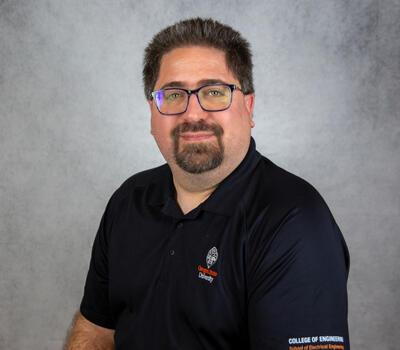
Scott Kerlin is a Senior Lecturer in the Department of Electrical Engineering and Computer Science at Oregon State University's College of Engineering. He holds an M.S. and B.S. in Computer Science from the University of North Dakota. Prior to academia, he worked at the Mayo Clinic on medical software systems and IBM as a build master for enterprise products. His career spans roles including network administrator, lab manager, and Undergraduate Director at UND. Dr. Kerlin's research focuses on bridging industry experience with academic curriculum, particularly in computer science education, project-based learning, and cybersecurity. He emphasizes practical applications of theoretical concepts, such as integrating 3D printing and scanning technologies with security systems for small satellites. His work also explores student efficacy in AI courses and scalable software project management methodologies. He has taught at multiple institutions, including the University of Minnesota and Augsburg University, and held roles at Michigan Tech as Senior Security Engineer. His 2024 Engineering+ Outstanding Teaching Award highlights his commitment to pedagogical innovation. Current projects include in-space 3D printing, solar energy systems, and cryptographic solutions for satellite communications. Key areas of contribution include: 3D printing/Scanning: Material characterization, key replication, and aerospace applications Cybersecurity: Intrusion detection, satellite communications security, and chaotic cryptosystems Educational Innovation: Active learning frameworks, PBL implementation, and student performance modeling His interdisciplinary approach connects computer science fundamentals with real-world engineering challenges, emphasizing sustainability and industry relevance in curricula.
Professor Marek Sanak serves as Full Professor at the Department of Internal Medicine, Jagiellonian University Medical College in Cracow, Poland. He concurrently holds leadership positions as Acting Director of the Department of Forensic Medicine, Head of the Division of Molecular Biology and Clinical Genetics, and Vice-Rector for Research and International Cooperation since 2016. His academic foundation includes: MD from Jagiellonian University Medical College Specialization in Pediatrics and Genetics PhD from Jagiellonian University Research appointments at Harvard University, University of Paris VI, and University of Zurich Professor Sanak's research integrates clinical genetics with molecular immunology, focusing on asthma pathogenesis, lipid mediators of inflammation, and genetic diagnostics. His laboratory employs advanced techniques including deep DNA/RNA sequencing to identify biomarkers and elucidate disease mechanisms. The work bridges fundamental molecular discoveries with clinical applications in respiratory diseases, allergic disorders, and forensic medicine, demonstrating particular expertise in aspirin-exacerbated respiratory disease and epigenetic regulation of inflammatory pathways. Analysis of his recent publications reveals a strategic evolution from classical asthma research toward molecular genetics and viral pathogenesis. His 2017-2021 work increasingly incorporates epigenetic approaches (DNA methylation, microRNA profiling) while expanding into SARS-CoV-2 research during the pandemic. The publications demonstrate interdisciplinary integration across immunology, respiratory medicine, and molecular diagnostics, with consistent focus on translational applications. His distinguished career has been recognized through numerous honors: The Lancet Investigators Award on Asthma (1997) Polish Ministry of Health Individual Prize (1999) Jagiellonian Laurel (2012) Pro Arte Docendi Award (2014/15) Gold Medal for Long Service (2019) Top 2% of world scientists ranking (Elsevier 2022) As Vice-Rector for Research, Professor Sanak has significantly expanded international collaborations with King's College London, University of Southampton, and University of Zurich. His leadership has secured substantial funding for molecular diagnostics and inflammatory disease research while mentoring numerous early-career researchers. He delivers invited lectures globally for organizations including the American Thoracic Society and European Academy of Allergy and Clinical Immunology. Professor Sanak directs integrated research units across the Division of Molecular Biology and Clinical Genetics, Division of Biochemical and Molecular Diagnostics at University Hospital Cracow, and the Department of Forensic Medicine. These teams combine clinical service with basic research to advance genetic diagnostics and understand disease mechanisms, maintaining forensic genetics expertise developed over 20 years of practice.
Staffan Kjelleberg is a Distinguished University Professor at Nanyang Technological University (NTU), Singapore, and Director of the Singapore National Biofilm Consortium (SNBC) and Singapore Centre for Environmental Life Sciences Engineering (SCELSE). He holds previous positions as Scientia Professor at the University of New South Wales (UNSW), Australia, and has led major research initiatives globally. His academic career spans over four decades, with roles including Head of School at UNSW and Professorships at the University of Gothenburg, Sweden. Education: BSc (Chemistry and Biology, 1975), PhD (Microbiology, 1981), and Docent (Microbiology, 1983) from the University of Gothenburg. He has authored over 384 journal papers with significant citations, reflecting his leadership in microbial biofilm research. Research focuses on microbial biofilms and microbiomes, addressing environmental sustainability, public health, and industrial applications. He employs an interdisciplinary approach to study biofilm community dynamics, matrix properties, and translational technologies for biofilm control. Key contributions include discoveries on quorum sensing inhibitors, biofilm dispersal mechanisms, and eDNA roles in biofilm structure. Honours include Fellowships from the Australian and American Academies of Microbiology, Web of Science Highly Cited Researcher status, and Editor roles for 15 international journals. He leads major programs like the Marine Climate Change Science initiative and has co-directed global research centers such as the Centre for Marine Bio-Innovation. Advising and grants: While specific student names are not listed, his extensive leadership in research programs indicates mentorship of numerous scholars. His work bridges fundamental and applied microbiology, impacting environmental and biomedical fields. Labs/Teams: Directs SCELSE and SNBC, co-founded the Centre for Marine Bio-Innovation, and collaborates internationally on biofilm and microbiome research.
Xiaoyao Fan is an Assistant Professor of Engineering at Dartmouth College, specializing in image guidance systems for neurosurgery and spine surgery. His work focuses on improving intraoperative imaging accuracy through computational modeling, stereovision, and ultrasound technologies. He collaborates with the Center for Surgical Innovation (CSI) at Dartmouth-Hitchcock Medical Center (DHMC) and has contributed to over 400 surgical cases involving real-time imaging and feedback systems. Education: B.E. in Electrical Engineering, Tsinghua University (2007) Ph.D. in Biomedical Engineering, Dartmouth College (2012) Research Interests: His research emphasizes minimizing surgical errors via real-time brain deformation compensation, spine motion correction, and intraoperative imaging systems. Techniques include stereovision, 3D ultrasound, and machine learning for image registration and navigation. Key applications include open and minimally invasive neurosurgical procedures. Publications: His work spans stereovision systems for spinal surgery, brain shift compensation algorithms, and intraoperative ultrasound registration. Recent contributions address human feasibility and porcine model validation of surgical navigation tools. Grants & Labs: Collaborates with Medtronic on integrating updated imaging into navigation systems. Active in the CSI DHMC lab, focusing on clinical translation of real-time imaging solutions. Teaches ENGS 111: Digital Image Processing. Labs & Teams: Works within Dartmouth’s engineering and medical collaboration networks, advancing surgical precision through interdisciplinary research.
Laura E. Brumariu is a Professor and Associate Dean for Professional Programs and Student Advancement at the Gordon F. Derner School of Psychology, Adelphi University. She holds a Ph.D. from Kent State University and completed postdoctoral research fellowships at Harvard Medical School. Her office is located in the Hy Weinberg Center, and she is licensed as a psychologist in New York State. Education: Postdoctoral Research Fellow, Harvard Medical School/CHA/MGA (2013) Postdoctoral Research Fellow with Clinical Attributions, Cambridge Health Alliance/Harvard Medical School (2012) Ph.D., Kent State University (2010) Her research adopts a developmental psychopathology perspective, focusing on how parent-child attachment influences emotional and social development, particularly in middle childhood. She investigates emotion regulation, anxiety, disorganized attachment, role-confusion, and family processes related to borderline personality features and dissociation. She developed the Middle Childhood Attachment Strategies Coding System and leads the Child and Adolescent Research (CARE) Lab. Her recent work emphasizes meta-analytic reviews on emotion socialization, attachment, anxiety, and empathy. Her most recent publications reflect trends in attachment theory, emotion regulation, parenting, and internalizing disorders across development, often using meta-analytic and longitudinal methods. Much of her work integrates international collaboration, especially with Romanian researchers. Scientific Awards and Honors: Clinical Research Training Program, Harvard Medical School, Research Fellow (2010–2012) The Jeanette and Louis Reuter Fellowship in Developmental Sciences, Kent State University (2008–2009) She has mentored numerous doctoral students whose research spans topics such as gratitude, empathy, emotion socialization, and trauma. She teaches courses in psychological research, family therapy, and doctoral thesis supervision. She has secured research funding and collaborates extensively on studies related to child and adolescent mental health, though specific grants are not detailed in the text. Her professional activities include frequent presentations at major psychological conferences such as the Association for Psychological Science and the International Attachment Conference. Labs and Research Teams: She directs the Child and Adolescent Research (CARE) Lab at Adelphi University, which focuses on attachment, emotion regulation, and psychopathology in children and adolescents. The lab conducts both observational and survey-based research and trains graduate students in developmental and clinical methods.
Mark Martinez-Klimov is a researcher in the Department of Chemical Engineering at Åbo Akademi University, Faculty of Science and Engineering. His work focuses on catalysis for sustainable energy and renewable fuel production, with an emphasis on heterogeneous catalysis, biomass conversion, and CO2 utilization. He is actively involved in experimental and kinetic studies of catalytic processes. Research Interests: His primary research areas include hydrodeoxygenation, dry methane reforming, combustion synthesis, and catalytic upgrading of bio-oil and biomass derivatives. He investigates catalyst design, deactivation mechanisms, and process optimization using advanced characterization techniques such as X-ray diffraction, scanning electron microscopy, and thermogravimetric analysis. His work supports the development of cleaner energy technologies and circular chemical processes. The analysis of his recent publications (2021–2025) reveals a consistent focus on sustainable catalytic processes, particularly in renewable jet fuel production, hydrogenation of sugars, and CO2 valorization. His research spans both fundamental catalyst development and applied reaction engineering, often in continuous flow systems such as trickle bed reactors. The work integrates material science with chemical engineering principles to address challenges in energy transition. Scientific Awards: No awards explicitly mentioned in the provided text. Advising and Grants: While specific students or grants are not listed, his collaborative publication pattern with senior researchers like Dmitry Murzin and Pavel Mäki-Arvela suggests involvement in major research projects, likely funded by national or EU-level grants. He appears to contribute to team-based research in catalysis and sustainable technologies, potentially mentoring junior researchers and PhD students within the group. Labs and Teams: Mark is part of a prominent catalysis research group at Åbo Akademi University, specializing in sustainable chemical processes. The team leverages advanced synthesis methods (e.g., solution combustion, impregnation) and characterization tools to develop novel catalysts for energy and environmental applications. Their work is highly collaborative, involving both national and international partners in the field of green chemistry and renewable fuels.
Dr. Michael Baym is an Associate Professor of Biomedical Informatics at Harvard Medical School with affiliate appointments in Microbiology and the Laboratory of Systems Pharmacology, and as an Associate Member of the Broad Institute. He leads the Baym Lab, which studies microbial evolutionary genomics and antibiotic resistance through a hybrid of experimental, computational, and theoretical approaches. His research focuses on: Antibiotic Resistance Evolution and practical interventions Mobile Genetic Elements (plasmids, phages, transposons) Computational Genomic Algorithms for big data analysis Synthetic Biology tools and technologies Key recent publications explore phage discovery systems , phylogenetic compression of microbial genomes, and RNA-guided gene drives in plasmids. His work is supported by multiple NIH/NIGMS and NSF grants including a MIRA award. Scientific honors include: Packard Fellowship (2018) Pew Biomedical Scholarship (2020) Sloan Research Fellowship (2020) A. Clifford Barger Excellence in Mentoring Award (2021) SSQBio Mentorship Award (2022) The lab actively trains PhD students and postdoctoral fellows with alumni occupying academic and industry positions globally. Current team members include researchers from interdisciplinary backgrounds working at the intersection of experiment, computation, and theory .
Liang Zhao, PhD, MAS, MBA, is a Professor in the Department of Bioengineering and Therapeutic Sciences within the Schools of Pharmacy and Medicine at the University of California, San Francisco (UCSF). Prior to joining UCSF, he served as director of the Division of Quantitative Methods and Modeling (DQMM) in the Office of Research and Standards in the Office of Generic Drugs in the Center for Drug Evaluation and Research (CDER) at the U.S. Food and Drug Administration (FDA) from 2015 to 2024. His professional career spans over 19 years with experience at Pharsight, Bristol Myers Squibb (BMS), MedImmune, and the FDA. Dr. Zhao's research focuses on pharmacometrics, drug delivery modeling, and artificial intelligence-based tools that impact drug development and regulatory decision-making. His work encompasses mechanistic models for brain drug delivery, regulatory science modeling and simulation, AI-driven drug discovery and development, drug interactions, biological availability, generic drugs, clinical pharmacology, therapeutic equivalency, computer simulation, and FDA regulatory processes. He has pioneered innovative approaches including model master files for model sharing and model-integrated evidence for generic product development and approval. His research integrates machine learning tools into pharmacometrics to advance drug delivery and bioequivalence assessment methodologies. Dr. Zhao has published over 120 articles and book chapters in prestigious journals. His recent publications demonstrate strong focus on applying advanced modeling techniques, machine learning algorithms, and pharmacometric approaches to solve complex problems in drug development and regulatory science. His work shows consistent innovation in developing quantitative methods to enhance bioequivalence assessment, improve drug product characterization, and support regulatory decision-making for generic drugs. FDA Group Recognition Award, FDA, 2024 Gary Neil Prize for Innovation in Drug Development, American Society for Clinical Pharmacology & Therapeutics (ASCPT), 2023 Commissioner's Special Citation, FDA, 2021 Humanitarian Award, Victims' Rights Foundation, 2020 30+ FDA CDER team and Individual Awards, CDER, FDA, 2011 Academic Award for Executive MBA Class 2009, Judge Business School, University of Cambridge, 2011 Dr. Zhao leads the Zhao Lab at UCSF, which advances drug development and regulatory science through cutting-edge research in pharmacometrics, drug delivery modeling, and artificial intelligence. His work bridges academic research with regulatory applications, demonstrating leadership in translating scientific innovations into practical regulatory frameworks. His experience across industry, regulatory agencies, and academia provides a unique perspective on drug development challenges and opportunities.
Ibo van de Poel is a Full Professor at Delft University of Technology , within the Faculty of Technology, Policy and Management , specifically in the Section Philosophy . He holds the prestigious Antoni van Leeuwenhoek professorship , awarded to excellent young researchers, and is a leading figure in Design for Values , engineering ethics , and technology as social experimentation . Education: Van de Poel studied Philosophy of Science, Technology and Society at the University of Twente , with a propaedeutic exam in Mechanical Engineering . He earned his PhD in Science and Technology Studies (STS) in 1998 from the University of Twente , under the supervision of Prof. Dr. A. Rip. Research Interests: His research spans three major themes: Design for Values : Investigating how moral values can be integrated into engineering design, including empirical studies on how engineers handle value conflicts. Moral Responsibility in R&D Networks : Exploring the "problem of many hands" in large-scale research and development projects, developing formalizations and empirical methods. Ethics of Emerging Technologies : Examining ethical issues in new technologies like nanotechnology and synthetic biology , with a focus on technology as social experimentation . Publications and Impact: Van de Poel has authored over 25 international peer-reviewed articles and 15 book contributions . He is co-editor of major works including the Handbook of Philosophy of Technology and the Engineering Sciences (Elsevier, 2009), Philosophy and Engineering (Springer, 2010), and Ethics, Engineering and Technology (Wiley-Blackwell, 2011). His recent work includes leading the VICI project "New Technologies as Social Experiments" , funded by NWO. Scientific Awards: Antoni van Leeuwenhoek Professorship (TU Delft) VICI Grant for "New Technologies as Social Experiments: Conditions for Morally Responsible Experimentation" Advising and Grants: Van de Poel has led and contributed to multiple high-impact projects, including: NWO Project on "Moral Responsibility in R&D Networks" (2007–2012) EU Project on ethical issues in synthetic biology (2009–2011) VICI Project on "New Technologies as Social Experiments" (ongoing) He has also supervised PhD students and contributed to educational innovations, including the development of the AGORA web-based program and the first Dutch textbook on ethics and technology . Labs and Teams: Van de Poel is an active member of 4TU.Ethics & Technology , a federation of Dutch technical universities focused on ethics and technology. He contributes to the Simon Stevin Series in the Ethics of Technology and participates in various reading groups and PhD communities within the network.
Dr. Andrew Hines is a Researcher at the School of Computer Science, University College Dublin, specializing in machine learning applications for signal processing in speech, audio, and video domains. His work focuses on Quality of Experience (QoE) modeling, speech quality assessment, and immersive media analysis. He has held leadership roles in European COST Actions like Qualinet and CryptoAction, and previously worked in industry as a Director of Engineering. University: University College Dublin Role: Director of Research, Innovation and Impact Key Collaborations: IEEE (Senior Member), Audio Engineering Society (Ireland) Research interests center on machine learning for QoE optimization, audio-visual integration, and healthcare applications like heart sound classification and stroke rehabilitation. His recent publications explore self-supervised learning, neural speech codecs, and contextual factors in speech/audio quality assessment. Scientific contributions include awards like IEEE Senior Membership, and his work spans both academic research and industrial engineering in finance and aviation sectors. He leads the QxLab research team at UCD and develops open-source platforms such as WARP-Q and AQP for quality metrics.