Professor Simon Buckingham Shum is a leading academic in Learning Informatics at the University of Technology Sydney (UTS), serving as inaugural Director of the Connected Intelligence Centre since 2014. His work bridges Human-Computer Interaction, Educational Technology, and Learning Analytics to develop AI-driven tools like OnTask that enhance student belonging through personalized feedback. Key research areas: Human-Computer Interaction, Learning Analytics, AI in Education, Collective Intelligence Recent work focuses: LLM-augmented qualitative analysis, Belonging Analytics frameworks, and ethical AI implementation in education CIC received the 2024 Vice-Chancellor’s Student Experience Award for scaling OnTask across multiple faculties. His contributions span over 30 years, including founding roles at The Open University’s Knowledge Media Institute and innovations in Open Educational Resources (OER), SocialLearn, and FutureLearn platforms. Notable awards: 2024 Student Experience Award (OnTask), Fellow of the Royal Society of Arts (RSA), DEFI STRI Researcher at University of Cambridge Education: B.Sc. in Psychology (York), M.Sc. in Ergonomics (UCL), PhD in Human-Computer Interaction (York) He leads multidisciplinary collaborations with teams across Business, Law, and Education faculties, pioneering tools like Theme Explorer and Qreframer bot. His recent focus on the "metacrisis" reframes educational technology’s role in addressing global systemic challenges through transdisciplinary approaches.
Dr. Metin Uyanik is a Senior Lecturer at the School of Economics, The University of Queensland. He holds a PhD from Johns Hopkins University (2016) and previously worked as a Postdoctoral Research Fellow at the University of Rochester's Wallis Institute of Political Economy. His research focuses on Economic Theory, Game Theory, Political Economy, Computational Economics, and Mathematical Economics. His work has been published in top-tier journals such as Economic Theory , Games and Economic Behavior , and Journal of Mathematical Economics . Education: Bachelor of Economics, Bogazici University Masters (Research) of Economics, Koc University Doctor of Philosophy, The Johns Hopkins University Research Interests: Dr. Uyanik's research bridges theoretical and applied economics, emphasizing foundational mathematical approaches. His work explores general equilibrium theory, discontinuous games, topological methods in economics, and welfare economics. Key themes include the analysis of non-convex economies, fixed-point theorems, and the integration of axiomatic frameworks with behavioral assumptions. Teaching: He teaches Advanced Microeconomics, Economics for Commerce, and Introduction to Strategic Thinking at UQ. His pedagogical focus includes mathematical rigor and practical applications of economic theory. Collaborations & Future Work: Collaborations with scholars like M. Ali Khan and Richard P. McLean highlight his engagement with complex theoretical frameworks. Ongoing projects include studies on large production economies, myersonian common knowledge, and computational methods in equilibrium analysis.
Felicity McArdle is a Professor in the Department of Early Childhood Education within the Faculty of Education at Queensland University of Technology. With a distinguished career spanning over two decades, her work centers on reimagining early childhood pedagogy through critical lenses of social justice, art education, and play-based learning. Her research has significantly influenced Australian early childhood policy and practice. McArdle's research interests demonstrate a consistent commitment to transformative education. She critically examines how art and play function as vehicles for social justice, challenging neoliberal discourses in early childhood education. Her work on refugee children's artistic expression and anti-bias curriculum development reveals her dedication to equity-oriented pedagogy. Through collaborative drawing methodologies and visual research approaches, she has pioneered innovative ways of understanding children's perspectives. Her publication trends reveal a sophisticated evolution from foundational work on visual arts in education (2001-2010) toward increasingly critical examinations of power, policy, and social justice (2011-2021). The consistent citation impact of her work—particularly her 2002 paper 'Early Childhood Art Education: A Palimpsest' with over 13,000 citations—demonstrates her field-defining contributions to reconceptualizing art education as critical praxis. McArdle has held significant editorial roles including co-editing the influential 2013 volume 'Young Children, Pedagogy and the Arts' and serving on the editorial board of Australian Journal of Early Childhood. Her collaborations with leading scholars like Susan Grieshaber, Jennifer Sumsion, and Linda Knight have produced seminal work on intentional teaching and play-based learning. Her research methodology expertise centers on visual and arts-based approaches, particularly collaborative drawing techniques that engage children as active research participants. This methodological innovation reflects her commitment to ethical research practices that honor children's agency while generating meaningful insights about early childhood experiences.
Dr. Farha Sattar is a Lecturer in Education (Mathematics) at the Faculty of Arts and Society, Charles Darwin University. With over thirty years of teaching experience in Mathematics, Science education, GIS, Remote Sensing, and e-Learning technologies at undergraduate and postgraduate levels, Dr. Sattar brings extensive expertise to her academic role. She holds a PhD in Geospatial Science from Charles Darwin University, focusing on Spatial Mathematical Modelling for 3D Gully Mapping and Erosion Quantification. Her educational background includes: PhD in Geospatial Science (Three Dimensional Gully Mapping and Erosion Quantification within a Geoinformatics Framework), Charles Darwin University (2012) Prior academic experience at several Asian and European universities Dr. Sattar's research spans multiple interdisciplinary fields with a strong focus on the intersection of education and technology. Her primary research interests include Mathematics Education, STEM Education, Geoscience Education, Spatial Mathematical Modelling, Drone Technology, Remote Sensing, Geographic Information Systems, and Innovative Pedagogies such as experiential learning and inquiry-based approaches. She has developed expertise in cognitive development, particularly in fostering critical and creative thinking skills through iSTEM approaches. An analysis of Dr. Sattar's recent publications reveals a consistent trajectory toward integrating emerging technologies like drones, augmented reality, and geospatial artificial intelligence into educational contexts. Her work demonstrates a progression from foundational geospatial research on erosion mapping to innovative applications in STEM education. Recent publications increasingly focus on drone technology for educational purposes, spatial data infrastructure for policy development, and computational thinking development through technology-enhanced learning. Dr. Sattar has received numerous accolades for her contributions to education and research: NT Science Week Awards – Inspired NT STEM Hero of the Year award (2021) Long Service Recognition Award (2023) Finalist, CDU Alumni Award (2023) Multiple Best Presentation Awards (2008, 2010, 2017) Australian College of Educators - 2021 College Medal Nominee As a supervisor, Dr. Sattar mentors postgraduate research students including Ayesha Farhan, who is working on "A Framework for Cognitive Development: Fostering Critical and Creative Thinking Skills, Using iSTEM Approach." She actively secures research funding through various projects such as "DBELaSTEM: Drone-Based Experiential Learning and STEM Education," "STEM_D & VR: Youth STEM Learning and Empowerment with Drones and VR," and "CodProg Drone Lab." Her research is supported by grants from NT Government projects and other external funding sources. Dr. Sattar leads the CodProg Drone Lab, an innovative research space exploring drone technology applications in education. She is a certified drone pilot and aeronautical radio operator, which enables her to bridge theoretical knowledge with practical applications. Her work with the "Flying Forward: Drones, STEM Equity, and Indigenous Empowerment" initiative demonstrates her commitment to community engagement and addressing educational disparities through technology.
Dr Juliet Bennett is a Research Fellow at the Sydney Centre for Healthy Societies (SCHS) and Charles Perkins Centre, University of Sydney. Her work bridges process philosophy with systemic interventions for social and ecological wellbeing. She holds a PhD in Peace and Conflict Studies, focusing on paradigm shifts from static to process thinking. Previously, she managed collaborative research at Sydney Policy Lab and directed the Sydney Peace Foundation. Education: PhD (Peace and Conflict Studies), MPhil/MA (Peace and Conflict Studies). Teaching includes units on peace studies, narratology, and structural violence at the University of Sydney and Lenoir Rhyne University. Research interests center on mitigating social/ecological injustice, structural violence, and climate change through critical sociology, contextual economics, and participatory methods. Current projects examine food systems and ultra-processed foods via critical social theory. Awards: 2020 Excellence in Teaching for 'Key Issues in Peace and Conflict Studies'. Memberships include Sydney Policy Lab, New Economic Networks Australia, and the International Peace Research Association. Publications span process philosophy applications, climate policy, and participatory research methods. Her work advocates for systemic transformations toward ecological civilization through interdisciplinary collaboration.
Dr. Zara Ersozlu is a Senior Lecturer in Mathematics Education within the School of Education at the University of Newcastle, Australia. With a distinguished international career spanning multiple continents, she has held academic positions at prestigious institutions including North Carolina State University (USA), Gazi and Gaziosmanpasa Universities (Turkey), National Taiwan Normal University (Taiwan), The University of Western Australia, Murdoch University, and Deakin University. Her academic journey includes tenured positions as an Associate Professor and leadership roles as Department Head and Chair in teacher education disciplines. Currently, she teaches undergraduate and postgraduate courses in mathematics education, including Effective Pedagogies in Primary Mathematics, K-6 Mathematics, K-6 Numeracy, and Digitally Supported Learning. Dr. Ersozlu earned her Doctor of Philosophy from Firat University in Turkey and her Master of Art from Sakarya University. Her extensive academic preparation is complemented by five years of practical teaching experience in public schools prior to entering academia. This blend of theoretical knowledge and practical classroom experience informs her approach to teacher education and educational research. At the broadest level, Dr. Ersozlu's research investigates solutions to real-life problems impacting people's well-being, success, and capacity to achieve. Her scholarly work spans primary and secondary mathematics education, the psychology of mathematics (including metacognition, self-regulation, and anxiety), cross-cultural educational studies, teacher education, virtual simulated learning environments, and educational assessment. She has increasingly focused on the transformative potential of AI and machine learning in education, exploring how these technologies alter teaching, learning, and research processes. Her methodological expertise encompasses both quantitative and qualitative approaches, allowing her to effectively analyze both small and large educational datasets. Analysis of Dr. Ersozlu's recent publications reveals a strong emphasis on mathematics anxiety, teacher education, and the integration of technology in learning environments. Her work demonstrates a consistent focus on practical applications of educational research to address real-world challenges in mathematics education. The interdisciplinary nature of her research connects educational psychology, technology integration, and cross-cultural perspectives, with particular attention to how these elements intersect in teacher preparation and student learning outcomes. 2023 ATEA Research Recognition Award from the Australian Teacher Education Association 2021 Fellow of the Higher Education Academy (Advance HE, UK) 2010 Fellowship Program for Postdoctoral Researchers from the Council of Higher Education of Turkey Dr. Ersozlu is deeply committed to mentoring the next generation of scholars, currently supervising four PhD students and having successfully guided ten students to completion. Her grant portfolio includes significant funding for projects such as Best Practice Guidelines for RPL in Initial Teacher Education Programs ($60,000), Exploring the Reciprocal Relationship Between Mathematics Anxiety and Mathematical Resilience ($2,599), and multiple conference travel awards. She serves as an Associate Editor for several prominent journals including the International Electronic Journal of Mathematics Education and as Editor for Interdisciplinary STEM Education. Her editorial work reflects her standing as a respected voice in mathematics education research. Dr. Ersozlu's academic leadership extends to her role in developing innovative teaching approaches that integrate virtual simulation technology and learning analytics. Her work with TeachLivE™, a mixed-reality classroom simulation platform, demonstrates her commitment to creating authentic learning experiences for teacher education students. Through these initiatives, she bridges the gap between educational theory and classroom practice, preparing future educators to effectively implement evidence-based teaching strategies in diverse learning environments.
Professor Barney Tan serves as Professor of Information Systems and Senior Deputy Dean (Impact and Partnerships) at UNSW Business School. Previously, he held the position of Head of School (Information Systems and Technology Management) and was formerly Professor of Strategic Information Systems at The University of Sydney. Professor Tan completed his PhD in Information Systems at the National University of Singapore in 2012, following a Bachelor of Computing (Honors) in Information Systems from the same institution in 2004. His research focuses on strategic information systems, AI management and implementation, digital platforms and ecosystems, fintech, and information systems for sustainable development with particular emphasis on IT trends in the Asia-Pacific region including China and ASEAN countries. As an engaged researcher, Professor Tan is deeply passionate about translational research that contributes toward sustainable development and frequently provides advisory support to organizations he has studied, including national governments through his work with the United Nations International Think Tank for Landlocked Developing Countries. His research has been published in top-tier journals including MIS Quarterly, Information Systems Research, Journal of Association of Information Systems, Information Systems Journal, and The Journal of Strategic Information Systems. Senior Editor, Information Systems Journal (2022-Present) Senior Editor, Information Technology and People (2019-Present) Associate Editor, Internet Research (2020-Present) Associate Editor, Information and Management (2016-Present) Editorial Board Member, Information Systems Research (2022-Present) Editorial Board Member, IEEE Transactions on Engineering Management (2017-Present) Professor Tan has received numerous prestigious teaching and research awards throughout his distinguished career: 22 awards in 11 years at The University of Sydney SUPRA Teacher of the Year award for 2019 and 2020 SUPRA Supervisor of the Year award for 2019, 2020 and 2021 The University of Sydney Business School Dean's Award for Teaching in 2019 Multiple Dean's Citations for Teaching across various courses and semesters Professor Tan has successfully secured multiple competitive research grants: Hong Kong University Grants Committee General Research Fund (2020-2022): 'The Impact of Social Media on Digital Guanxi Formation in the Chinese Workplace', Co-Investigator, HKD$475,617 (A$88,286) The University of Sydney Business School Industry Partnership Grant (2017): 'International Think Tank for Landlocked Developing Countries Research Development Project', Chief Investigator, A$27,238 Zhejiang Gongshang University Strategic Research Grant (2016-2019): 'Emerging Digital Commerce Platforms: Development Patterns and Usage Behavior', Principal Investigator, CNY$300,000 (A$60,535) Multiple University of Sydney Bridging Support Grants (2015-2016) focused on digital commerce and Australian-China trade Professor Tan is frequently featured in mainstream media outlets including ABC News, Business Insider, Sydney Morning Herald, The Australian, News.com.au, The Australian Financial Review, CIO, and Bloomberg Businessweek, where he provides expert commentary on technology-related topics such as cryptocurrency, digital platforms, and China's tech landscape.
Associate Professor James Andrew Phillips is a faculty member in the Department of Philosophy within the School of Humanities and Languages at the University of New South Wales (UNSW). He has been at UNSW since 2006, initially serving as a Vice-Chancellor's postdoctoral fellow, followed by an ARC Australian Research Fellow from 2007-2011, before assuming his current combined research-teaching position. His educational background includes undergraduate studies at the University of Queensland, an MA in Comparative Literature and Critical Theory from Monash University, and a PhD in Philosophy from the University of Tasmania (2002). During his doctoral studies, he spent time as an OeAD scholar in Innsbruck and a DAAD scholar in Potsdam. He has also been a visiting research fellow at the Institute for Advanced Studies in the Humanities at the University of Edinburgh and a resident associate at the National Humanities Center in North Carolina. Phillips' research focuses on aesthetics, phenomenology, film and philosophy, political theory, literary criticism, and British and Irish literature. His current book project explores the philosophy of fiction, drawing on concepts of 'world' in Kant and Heidegger. He has translated two significant philosophical works: Christoph Menke's Tragic Play: Irony and Theater from Sophocles to Beckett (2009) and Alexander García Düttmann's Philosophy of Exaggeration (2007). His recent publications demonstrate a strong focus on the intersection of philosophy, aesthetics, and cinema, with particular attention to phenomenological approaches to film studies and the political dimensions of aesthetic experience. His work bridges continental philosophy with contemporary cultural analysis, creating connections between historical philosophical traditions and modern artistic practices. Philosophy Group Convenor Research Committee Member - School of Humanities and Languages Phillips currently supervises PhD candidate Finnegan Hassey (on Arendt's concept of nationalism, jointly with Jess Whyte) and MA student Sofia Kartavtseva (on Sade and aesthetics). He teaches political philosophy, aesthetics, and the history of German philosophy, with planned courses for 2025 including ARTS3368 'Modern European Philosophy' and ARTS2384 'Political Philosophy'.
Professor Behzad Fatahi is a distinguished academic in Civil and Environmental Engineering at the University of Technology Sydney (UTS), specializing in geotechnical engineering, railway infrastructure, and sustainable construction technologies. With a career spanning over 16 years at UTS, he has served as Deputy Head of School - Teaching and Learning (2024-present), Head of Discipline (2020-2024), and School Research Coordinator (2012-2017). His research focuses on unsaturated soil mechanics , dynamic soil-structure interaction , and green infrastructure solutions . Academic Appointments : Professor (2024-present), Associate Professor (2017-2024), Senior Lecturer (2011-2017), Lecturer (2008-2011) Research Leadership : Supervised 21 PhD students to completion, developed groundbreaking techniques for landfill waste reuse and tyre-derived aggregates in railway construction His work on seismic resilience of LNG tanks and bioengineered soil stabilization has received international recognition, including the 2023 Best Research Paper Award at the Australasian Association for Engineering Education conference. Professor Fatahi's industry experience includes geotechnical engineering roles at Coffey International and SES Engineering prior to academia. Key Research Contributions : Developed green corridor models for railway lines using coupled flow-deformation equations Pioneered AI-integrated teaching frameworks for civil engineering education Advanced machine learning techniques for intelligent compaction and structural buckling analysis As a Category 1 supervisor , he mentors graduate researchers in Civil Engineering , Geomechanics , and Earthquake Engineering . His peer-reviewed work (>240 publications) demonstrates technical excellence and innovation across multiple geotechnical domains.
Dr. Amir Ghanbaripour is a Discipline Lead in Planning, Property, and Project Management at Bond University's Faculty of Society & Design, with a PhD in Construction Project Management (2020). He teaches postgraduate courses and leads the Project Management program. His expertise spans project management methodologies, systems thinking, organizational maturity, and gender equality in projects. He is an active member of the Project Management Institute (PMI) as Associate Director for Academic Outreach. Education: PhD in Construction Project Management (Bond University, 2020), MSc in Civil Engineering (Iran University of Science and Technology, 2012), BSc in Civil Engineering (Amirkabir University of Technology, 2009). Research focuses on project success models, agile methodologies, and technology integration in construction education. He leads research projects on megaprojects, sustainable practices, and gender diversity in the industry. Grants include the 2023 FSD Research Project Grant (focusing on construction project strategies) and the 2023 FSD Deans Award (exploring robotics in manufacturing). He supervises PhD candidates and collaborates with national/international organizations on project management innovation.
Kees Dorst is a Professor of Transdisciplinary Innovation at the TD School of the University of Technology Sydney. He bridges philosophical understandings of design with practical applications, focusing on tackling complex societal challenges through designerly thinking. His research develops methodologies for strategic transformation and networked problem-solving in public sectors. Professor of Transdisciplinary Innovation, UTS Director, Designing Out Crime Research Centre International keynote speaker and advisor on design thinking Research Interests Dorst specializes in: Transdisciplinary innovation for societal challenges Design thinking and co-evolutionary processes Reframing complex problems in public policy Design cognition and metacognition Urban environment design for safety Recent Research Trends show increasing focus on: Hypercomplex problem-solving frameworks Strategic transformation through design Cognitive models in design processes Public sector innovation methodologies Teaching & Leadership includes: Bachelor of Creative Intelligence and Innovation Master of Creative Intelligence and Strategic Innovation Founding the Designing Out Crime Research Centre International design research symposium leadership
Dr. Sophie Adams serves as an ARC DECRA Fellow in the Department of Sociology at La Trobe University, where she conducts interdisciplinary research at the intersection of human geography and Science and Technology Studies. Her work critically examines the social dimensions of climate change mitigation and adaptation, with particular emphasis on renewable energy transitions and the societal implications of technological solutions to environmental crises. Adams' research program centers on the politics of environmental knowledge , investigating how climate science informs policy formation and the negotiation of social objectives in decarbonisation processes. She employs qualitative and participatory methodologies to analyze climate change adaptation in energy systems , social license for technological interventions , and the redistribution of expertise in public health and environmental governance. Her scholarship consistently addresses power dynamics in knowledge production and the democratic challenges of sustainability transitions. Analysis of her publication trajectory (2019-2025) reveals increasing focus on energy-social interfaces, with significant contributions to understanding virtual power plants, demand-side management, and the role of modeling in climate policy. Her work demonstrates methodological innovation through participatory approaches while maintaining critical engagement with resilience thinking and adaptation frameworks. Scientific recognition includes: Australian Research Council Discovery Early Career Researcher Award (ARC DECRA) Supported by her DECRA fellowship, Adams leads independent research projects examining the societal dimensions of energy transitions. Her collaborative work spans geography, public health, and energy engineering, as evidenced by interdisciplinary co-authorship patterns. Current projects investigate Australian householders' conditions for participating in virtual power plants and the social implications of climate modeling in adaptation planning, reflecting her commitment to socially relevant environmental research.
Professor Luke Prendergast is the Deputy Dean of the School of Computing, Engineering & Mathematical Sciences (SCEMS) at La Trobe University (LTU) and holds a Professorship in the Department of Mathematics and Statistics. He previously served as Head of Department (2014–2020) and led LTU's Statistics Consulting Platform. His research focuses on robust statistics, meta-analysis, dimension reduction, and applied statistics, leading the DRAMA research group. Collaborations span fields like endocrinology, disability studies, and respiratory health. He actively contributes to research grants, including projects on Prader-Willi syndrome and exercise for disability populations. Professor Prendergast's recent work emphasizes statistical software development (e.g., the rquest package) and applications in biostatistics, such as metabolomics analysis and health intervention fidelity. His articles address topics like quantile-based hypothesis testing, geospatial accessibility for disability care, and motivational interviewing efficacy. Professional roles include NHMRC grant review panels, editorial boards for Nutrients and Respirology , and leadership in the Statistical Society of Australia (SSA Vic). His teaching includes courses in meta-analysis, linear models, and data-based critical thinking. Grants funded projects on exercise programs for cerebral palsy populations and community-university partnerships for disability inclusion. Luke's work bridges statistical theory with real-world health challenges, emphasizing robust methodologies and interdisciplinary collaboration.
Tunye Qiu is a recent PhD graduate in Economics from the Crawford School of Public Policy at the Australian National University (ANU) . He is currently on the job market and holds roles as a Senior Tutor and Associate Lecturer in the Research School of Economics (RSE) at ANU, where he has taught courses in microeconomics, macroeconomics, game theory, and policy impact evaluation since 2021. He also serves as the Program Manager of the China Economy Program and an Assistant Editor for the Journal of Chinese Economic and Foreign Trade Studies. Education : PhD in Economics (2024) at Crawford School, ANU; BEcon (ANU); MEcon (ANU). Research Interests : His work focuses on labor economics, urban economics, demographic economics, and development economics. He explores causal impacts of government policies on China’s housing market, fertility rates, land supply behavior, and housing demand, alongside international trade, labor markets in South Pacific countries, and educational outcomes in Australia. Teaching & Roles : Senior Tutor, Microeconomics 1 (2021-2024), Macroeconomics 1 (2024), Business Economics (2024), Strategic Thinking (2021-2023) at RSE, ANU. Teaching Quantitative Policy Impact Evaluation (2022-2024), Issues in Development Policy (2023-2024), and The Economic Way of Thinking (2023) at the Crawford School. Research Trends : His publications address housing affordability (2024), marriage delay (2024), policy impacts on housing prices (2024), land supply dynamics (2024), trade dynamics with China (2022), and migration patterns in China (2020). These works integrate causal inference methods and policy evaluation frameworks. Email : tunye.qiu@anu.edu.au
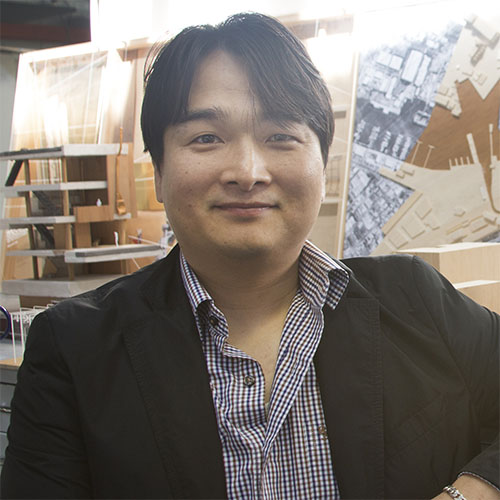
JuHyun Lee is an Associate Professor of Architecture and Computational Design in the School of Built Environment at the Faculty of Arts, Design and Architecture (ADA), University of New South Wales (UNSW) Sydney, where they also hold the prestigious title of Scientia Academic. With a professional background in architecture and construction (1998-2002), they have held academic positions across Australia including a five-year post-doctoral fellowship at the University of Newcastle (2012-2017) and a senior research fellowship at the University of South Australia (2018), following earlier research and teaching roles in South Korea (2003-2011). Lee specializes in architectural design computing, design cognition, and urban complexity, integrating computational methods, cognitive science, and architectural theory to advance architectural intelligence and human-centered design. Their research spans architectural visualization, analysis and design methods, algorithm/protocol design, and data visualization with computational approaches. They have established a strong research program examining the intersection of language, culture, and design cognition, particularly focusing on cross-cultural design communication between Australia and Korea. Lee's recent publications demonstrate a clear trajectory toward increasingly sophisticated integration of computational methods with architectural design theory, particularly in the areas of shape grammar, space syntax, and machine learning applications. Their work shows consistent focus on practical applications of computational design methods to real-world architectural problems, with growing emphasis on cross-cultural collaboration and intelligent design systems. The research portfolio reveals a deepening engagement with AI and machine learning techniques applied to architectural design assessment and generation. Scientia Academic at UNSW Sydney Associate Fellow of the Higher Education Academy (AFHEA, 2020) As an educator, Lee develops cutting-edge courses in computational design and Building Information Modeling (BIM), integrating experiential learning and industry engagement. They have secured over $11 million in research funding, including multiple ARC Discovery Projects and an Australia-Korea Foundation grant. Lee co-directs the Advanced Architectural Analytics Laboratory (A 3 LAB), leading interdisciplinary research on design automation, spatial analysis, and machine learning applications in architecture, while also leading cross-cultural initiatives like the Australia-Korea Architects' Network (AKAN). Lee supervises multiple HDR students working on culturally sustainable urban design, socio-spatial patterns in public housing, and computational layout generation. Their research has significant implications for improving design communication across cultural boundaries and developing more coherent, clear, and accessible built environments through computational design approaches.