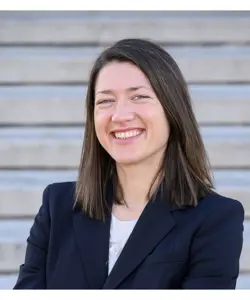
Dr. Gladis Kersaint is Vice Provost for Strategic Initiatives and Professor of Mathematics Education at the University of Connecticut's Neag School of Education. Previously serving as Dean from 2016 to 2021, she led initiatives that maintained the school's top-20 ranking, raised over $10 million for scholarships, and enhanced diversity. Her academic background includes a Ph.D. in Mathematics Education from Illinois State University, an M.S. in Education from the University of Miami, and a B.S. in Mathematics from the same institution. Her research focuses on mathematics education, teacher preparation, educational technology, rural women's development, and diversity initiatives. She has secured approximately $30 million in grants from NSF, DOE, and Florida DOE, supporting collaborative STEM projects involving school districts and university faculty. Dr. Kersaint has published extensively on topics including multilingual mathematics education, technology integration, and teacher retention. Her scholarship demonstrates consistent focus on improving educational outcomes through innovative pedagogical approaches and systemic reforms. She serves on national boards including the National Council of Teachers of Mathematics and the American Association of Colleges for Teacher Education. Prior to academia, she taught high school mathematics in Miami-Dade County Public Schools.
Christopher Walters is a Professor at the Kenneth C. Griffin Department of Economics, University of Chicago, and previously served as an Assistant Professor at UC Berkeley (2013-2025). He is a Research Associate at the National Bureau of Economic Research, Research Fellow at IZA, and Faculty Affiliate at MIT's School Effectiveness and Inequality Initiative (SEII). PhD in Economics, MIT (2013) B.A. in Economics and Philosophy, University of Virginia (2008) Walters specializes in Labor Economics and the Economics of Education , focusing on school choice, early childhood interventions, and program evaluation. His work combines applied econometric methods with discrete choice modeling to analyze educational investments and labor market outcomes. Walters' recent publications examine class size effects, teacher quality impacts, and school finance policies, reflecting his interest in improving educational equity through rigorous empirical analysis. Research Fellow at IZA He collaborates with institutions like J-PAL North America and MIT Blueprint Labs, contributing to evidence-based policy design in education and labor economics.
Keffrelyn Brown is a Professor of Curriculum and Instruction at the University of Texas at Austin, with primary appointments in Cultural Studies in Education. She holds the prestigious Suzanne B. and John L. Adams Endowed Professorship in Education and is recognized as a Distinguished University Teaching Professor. Her academic affiliations extend across multiple departments and centers, including the Department of African and African Diaspora Studies, the John L. Warfield Center for African and African American Studies, and the Center for Women's and Gender Studies. Dr. Brown earned her Ph.D. in Curriculum & Instruction from the University of Wisconsin-Madison, an Ed.M in Learning and Teaching from Harvard Graduate School of Education, and a B.S. in Political Science and Psychology from the University of Houston. Her scholarly work centers on sociocultural knowledge of race in teaching and curriculum, critical multicultural teacher education, and the educational discourses related to African Americans. She co-founded and co-directs the Center for Innovation in Race, Teaching, and Curriculum with Dr. Anthony Brown. Her extensive publication record spans over 50 books, journal articles, and book chapters, with recent work focusing on antiblackness, racial literacy, Black joy, and humanizing pedagogies. Her research consistently addresses the complex intersections of race, curriculum, and teacher education, with particular attention to how educators develop critical sociocultural knowledge about race. Dr. Brown has received numerous prestigious awards including the Division K Mid-career Award from AERA (2017), the Kappa Delta Pi/Division K Early Career Research Award (2013), and the Regent's Outstanding Teaching Award (2012). She serves on editorial boards for prominent journals such as Teachers College Record, Race, Ethnicity and Education, Teaching and Teacher Education, and Urban Education. As a former elementary and middle school teacher, school administrator, and curriculum developer, Dr. Brown brings practical experience to her academic work. She is actively engaged in teacher education, offering courses such as AFR 352F: Sociocultural Influences on Learning and UGS 302: Teachers in Popular Culture, while continuing to influence educational policy and practice through her scholarship and community engagement.
Dr. Wanju Huang is a Clinical Assistant Professor in the Learning Design and Technology program at Purdue University , where she focuses on enhancing online learning experiences through innovative instructional design and emerging technologies. Prior to joining Purdue in Fall 2016, she served as an instructional design manager at Teaching and Learning Technologies and spent six years as a lecturer and instructional designer at Eastern Kentucky University. Education: Ph.D. in Curriculum & Instruction (Technology concentration) from University of Illinois at Urbana-Champaign Her research interests center on technology-mediated online communities, instructor presence in digital learning, augmented reality applications, and faculty development programs. She has published extensively on these topics, including studies on multimedia interventions for teaching presence, immersive technologies in ESL education, and adaptive cyber training platforms. Dr. Huang's publications reflect a strong focus on EdTech innovation , with trends spanning AI integration in K-12 , model-based systems engineering , and microlearning strategies . Her work bridges theoretical frameworks like social constructivism with practical implementations in professional education. Professional memberships include the American Educational Research Association, Association for Educational Communications and Technology, and Quality Matters. She teaches courses on learning design foundations, e-learning systems, and professional competency demonstrations in LDT.
Nabil M Issa is a Professor in the Department of Surgery (Trauma and Critical Care) and Medical Education at the Feinberg School of Medicine, Northwestern University. He is a general and acute care surgeon at Northwestern Memorial Hospital, with a focus on minimally invasive techniques including robotic and laparoscopic surgery. Dr. Issa is also a Master Surgeon Educator and holds leadership roles in national surgical education organizations. Dr. Issa's educational background includes: MD: Al Mustansiriya University College of Medicine (1988) FRCS: Fellow of the Royal College of Physicians and Surgeons of Glasgow, Scotland, United Kingdom (1997) FACS: Fellow of the American Board of Surgery with additional qualification in Surgical Critical Care (2007) FCCM: Fellow of the Society of Critical Care Medicine (2007) MHPE: Master's in Health Professions Education, University of Illinois at Chicago (2016) Dr. Issa's research focuses on surgical education , particularly in creating innovative curricula and assessing technical and cognitive skills acquisition. His work spans simulation , team science , and outcome measures in trauma and critical care. He investigates evidence-based practices for surgeon credentialing and emphasizes patient education and quality improvement in acute care settings. His recent publications reflect a strong commitment to diversity in surgical training , trauma outcomes research , and sustainability in surgery . Dr. Issa examines disparities in fellowship training, morbidity in vulnerable populations, and the validation of injury severity metrics. His work bridges clinical care with educational innovation and systems-level improvements in surgical practice. Dr. Issa has received numerous honors and awards, including: Excellence in Teaching Award, Northwestern University Department of Surgery (2023) Professorship in Surgery, Northwestern University (2023) Academy of Master Surgeon Educators, American College of Surgeons (2022) Member in the National Committee on Trauma (COT), American College of Surgeons (2022) Presidential Citation, Surgical Critical Care Program Directors Society (SCCPDS) (2021) Excellence in Teaching Award, Feinberg School of Medicine (2019) Best Trauma/SICU Teacher Award, Department of Emergency Medicine (2019) Presidential Citation, Surgical Infection Society (2012) Excellence in Teaching Award, Feinberg School of Medicine, Surgical Residency Program (2011) Excellence in Teaching Award, Northwestern University (2011) Dean's Award for Teaching Excellence, Feinberg School of Medicine (2011) Presidential Citation, Society of Critical Care Medicine (2010) Excellence in Teaching Award, Feinberg School of Medicine, Surgical Clerkship (2010) Excellence in Teaching Award, Feinberg School of Medicine, Surgical Residency Program (2010) Excellence in Teaching Award, Feinberg School of Medicine, Surgical Clerkship (2009) Excellence in Teaching Award, Feinberg School of Medicine, Surgical Residency Program (2009) Excellence in Teaching Award, Feinberg School of Medicine, Surgical Residency Program (2008) Dr. Issa serves as a faculty mentor for the Surgical Education Research Fellowship (SERF) and has held leadership roles in surgical education committees. His leadership includes: Chair, Association for Surgical Education (2024-Present) Co-chair, Association for Surgical Education (2023-Present) Chair, Development Committee at ASE (2019-Present) Member, Executive committee for ASE Foundation (2019-Present) Chair, Awards Committee- Association for Surgical Education-ASE (2018-Present) Vice President, Chicago Committee on Trauma (2015-Present) Dr. Issa has developed and leads simulation-based educational initiatives at Northwestern Memorial Hospital, focusing on acute care and surgical skills. He collaborates with multidisciplinary teams in trauma, critical care, and surgical education to design curricula that address the continuum of surgical training.
Maarten Renkema is an Assistant Professor at the University of Twente, specializing in Artificial Intelligence (AI) and its intersection with Human Resource Management (HRM) , Healthcare , and Organizational Innovation . His research explores how AI transforms work design, employee autonomy, and HRM practices in formalized contexts. Key Research Themes: Algorithmic HRM and Digitalization Human-AI Collaboration in Healthcare Self-Managing Teams and Organizational Structures AI Literacy in Education Scientific Awards: Best Dissertation Award (2019) from the Dutch HRM Network Research Trends: His recent work focuses on AI adoption in HRM, ethical implications of algorithmic management, and redefining professional roles in AI-integrated environments. Articles from 2024-2025 highlight practical applications of AI in healthcare workflows, employee-driven innovation, and the evolving responsibilities of HR professionals. Collaborations: Active in cross-sector partnerships, including projects on AI literacy frameworks and talent management in sports. Regularly contributes to professional discourse through invited talks and media commentary on AI's societal impact.
Dr. Daniel A. Sass is an Associate Dean for Graduate Studies and Associate Professor in the Department of Management Science and Statistics at the University of Texas at San Antonio’s Carlos Alvarez College of Business. He directs the Statistical Consulting Center and focuses on methodological research, including psychometrics, structural equation modeling, and factor analysis. His applied work spans education, public health, and organizational behavior. Education: Ph.D. in Management Science and Statistics, University of Wisconsin-Milwaukee B.A., University of Wisconsin-Milwaukee Research Interests : Dr. Sass specializes in advanced statistical methodologies with applications in education and social sciences. His work emphasizes psychometric validation, measurement invariance, and applied collaborative projects. Key areas include teacher retention, classroom management, and cross-cultural scale adaptation. His research bridges theoretical statistical frameworks with real-world challenges in education and public policy. Publications Trends : Recent work explores pandemic impacts on productivity, educator stress in charter schools, and diabetes management programs. Earlier studies focus on statistical methods like factor analysis and structural equation modeling validation. His articles consistently address practical implications for policy and practice. Advising/Grants : While no advisees are listed, his collaborative projects involve interdisciplinary teams across education, public health, and organizational studies. His Statistical Consulting Center supports UTSA researchers in applying rigorous statistical methods to their work. Labs/Teams : Director of the Statistical Consulting Center, providing methodological support for academic and applied research projects.
Rui Pedro Figueiredo Marques is a Professor at the Higher Institute of Accounting and Administration, University of Aveiro, where he teaches Information Systems across technical, bachelor's, master's, and doctoral programs. He serves as course director for the Professional Higher Technical Course in Organizational Informatics and Communication and holds a board position at the Institute of Accounting and Administration, University of Aveiro. As a Full Researcher at GOVCOPP's Competitiveness, Innovation and Sustainability (CIS) group, his work focuses on Information Systems for Business, with recent emphasis on AI, Blockchain, and Business Intelligence applications in auditing and accounting contexts. Marques' academic credentials include a Ph.D. in Computer Science (2014, Universities of Minho/Aveiro/Porto), a Master's degree (2008), and a Bachelor's in Electronics and Telecommunications Engineering (2005, University of Aveiro). He has authored/co-authored over 50 publications, including journal articles, conference papers, and book chapters on topics ranging from ERP systems in auditing to digital transformation in low-density territories. He is editor-in-chief of the International Journal of Business Innovation and actively participates in funded research projects addressing governance, competitiveness, and public policies. His research explores intersections between technology and business practices, with notable contributions to AI in auditing, blockchain's role in financial transparency, and sustainable development frameworks for social economy entities. Notable projects include evaluations of ERP systems' impact on internal audit maturity and frameworks promoting accountability in private social solidarity institutions. Marques' work frequently emphasizes practical applications of technology in audit processes, education, and public sector modernization. He collaborates with institutions like the Portuguese Social Solidarity Sector and has advised on digital transformation strategies for tourism and hospitality industries.
Heather Krasna serves as Adjunct Assistant Professor of Health Policy and Management and Associate Dean of Career and Professional Development at Columbia University's Mailman School of Public Health. With over 25 years of experience, she leads career services for Mailman students while conducting nationally recognized research on public health workforce dynamics through major federal grants. Her educational background includes: BA from University of Michigan at Ann Arbor (1997) MS from New School University (1997) PhD from Maastricht University (2020) Training at Teachers College Columbia University (2020) Dr. Krasna's research examines employment outcomes, salary disparities, occupational classifications, and labor market competition within the public health workforce. Her work leverages large-scale job postings data and federal datasets to address critical gaps in workforce taxonomy and governmental public health infrastructure, directly informing policy interventions and educational curricula. Analysis of her 2021-2025 publications reveals consistent focus on defining the public health workforce scope, with growing emphasis on sector comparisons (public vs. private), equity in career services, and methodological improvements for occupational data collection. Her studies increasingly incorporate intersectional analysis of salary disparities and strategic recommendations for workforce strengthening. Her scientific recognition includes: Dean's Award for Excellence in Administrative Leadership Provost's Award for Massive Open Online Course Design Phi Beta Kappa membership As career services leader, Dr. Krasna provides individual advising to diverse populations including students, elected officials, and government executives. She directs significant grant-funded initiatives including a $4.35 million HRSA Research Grant as Site Principal Investigator for the Consortium for Public Health Workforce Research (C-WORPH) and a $250,000/year CDC grant for public health infrastructure strengthening. Through the Region II Public Health Training Center, she develops and delivers strategic hiring training to health departments nationwide. Dr. Krasna actively shapes national public health workforce policy through leadership roles in the American Public Health Association Governing Council, Association of State and Territorial Health Officials' Public Health Advocacy Consensus Task Force, and multiple national committees focused on workforce taxonomy and educational standards.
Prof. Silviya Nikolaeva is a faculty member at Sofia University St. Kliment Ohridski, affiliated with the Faculty of Education's Department of Social Work. She specializes in social pedagogy, non-formal education, and educational policy, with teaching responsibilities including courses on classroom management, European projects in education, and foundations of non-formal education. Research Focus: Her work explores systemic theories in educational sciences, innovative teaching methods, and the application of big data in education. She emphasizes contextualizing social pedagogy and project-based approaches within European and Bulgarian frameworks. Publication Trends: Her recent articles (2011–2019) analyze non-formal education, inclusive learning environments, and educational modernization. Common themes include policy implementation, teacher competencies, and cross-national studies, particularly between Bulgaria and Ireland. Student Advising: She has supervised four doctoral candidates, including: Iva Boneva (2019): Inclusive attitudes in teachers Desislava Ivanova (2017): Social project beneficiaries Lilia Petrova (2012): School-family collaboration Alexander Ranev (2010): Teacher leadership
Jennifer Nelson is an Assistant Professor in the Department of Education Policy, Organization & Leadership at the University of Illinois, Urbana-Champaign, with a joint appointment in the School of Labor and Employment Relations. Her interdisciplinary work bridges educational leadership, organizational sociology, and social inequality research, focusing on how school structures shape educators' experiences. PhD in Sociology, Emory University BA in Sociology, Columbia University IES Postdoctoral Fellow, Vanderbilt University Former high school teacher in public urban school Nelson's research examines work and organizations through a sociological lens, with particular attention to structures of social inequality by race, class, and gender. As an organizational ethnographer, she investigates how school structures and practices shape teachers' behavior, attitudes, and social interactions. Her work explores teacher networks, interracial relations, job satisfaction, and turnover, with a focus on how principal practices influence teachers' access to workplace resources and support. Nelson also studies urban teachers' job reward bundles as predictors of turnover, early childhood teachers' identity strategies, organizational justice in predicting teacher trust, and determinants of state-level adoption of alternative teacher certification laws. Currently, she is conducting research on principal compensation and evaluation, as well as teacher-principal social interactions. Her scholarly work demonstrates consistent focus on educational leadership, organizational sociology, and social inequality in schools. The majority of her publications appear in top-tier journals across education and sociology disciplines, reflecting interdisciplinary scholarship that bridges theory and practice. Her research methods primarily employ qualitative and mixed-methods approaches, with increasing incorporation of survey data and statistical analysis in recent work. Michael Fullan Emerging Scholar in Professional Capital and Community Award (2020) AERA Division A Outstanding Dissertation Award (2019) Nelson actively contributes to the academic community through editorial work for the journal "Work and Occupations" and teaches graduate courses including EPOL 557: Education and Stratification, EPOL 544: Organizational Theory for Educational Leaders, and EPOL 547: District Change for Equity and Social Justice. Her research is supported by collaborations with colleagues across institutions, particularly with scholars at Vanderbilt University, and addresses critical questions about how school organizations can better support educators and promote equity.
Dr. Andrea K. Rorrer is a full-time Professor at the University of Utah's College of Education, Department of Educational Leadership and Policy, and serves as Director of the Utah Education Policy Center (UEPC). With 35 years of education experience, she has held roles as a teacher, principal, policy analyst, and researcher. Her academic career at the University of Utah includes promotions from Assistant Professor (2002-2009) to Associate Professor (2009-2014) and Professor since 2014, alongside serving as Associate Dean for Research from 2014-2023. PhD in Educational Leadership & Policy, University of Texas at Austin (2001) MS in Educational Leadership & Policy, University of Virginia (1995) Dr. Rorrer's research focuses on the intersection of educational leadership, policy implementation, and systemic change with equity as a central theme across early childhood, K-12, and higher education. Her work examines leadership preparation programs, charter school effectiveness, policy mediation, and institutional factors affecting educational outcomes. Recent publications highlight: Leadership preparation program features influencing career intentions (2025) Personalized learning software's impact on teacher-student dynamics (2024) Turnaround reform frameworks (2018) Charter school mobility patterns (2019) Homeschool policy analysis (2012) Scientific recognition includes: UCEA Master Professor Award (2020) College of Education Research Award AERA Dissertation Award (2001) Culbertson Award for early-career contributions Mentorship has been central to her career, with 35 doctoral chairs and 44 committee memberships since 2002. Current teaching activities include Thesis Research and Ed.D. Capstone Project courses.
Felix Gomez Marmol is an Associate Professor at the University of Murcia's Faculty of Informatics, Department of Information and Communication Engineering. His research focuses on cybersecurity, artificial intelligence, network security, and IoT security. He holds a PhD in Computer Science from the University of Murcia (2010), supervised by Dr. Gregorio Martínez Pérez. Key research interests include adaptive intrusion detection systems, dark web analysis, and AI-driven cybersecurity frameworks. He leads the Intelligent Systems and Telematics research group and previously contributed to the Sistemas Inteligentes group. His work emphasizes practical applications such as the SCORPION Cyber Range platform for cybersecurity training and gamification. Recent projects involve detecting hate networks on social media, optimizing malware defense using transfer learning, and developing SIEM systems for IoT environments. His contributions span technical papers on cybersecurity education, ethical hacking fundamentals, and blockchain-based security solutions. Prof. Gomez Marmol has collaborated on initiatives like the COBRA framework for simulating advanced persistent threats (APTs) and the COnVIDa dashboard for pandemic-related data analysis. His research bridges theoretical advancements with real-world cybersecurity challenges.
Pradeep Lall is the MacFarlane Endowed Distinguished Professor and Alumni Professor in the Department of Mechanical Engineering at Auburn University’s Samuel Ginn College of Engineering. He serves as Director of the Auburn University Electronics Packaging Research Institute (EPRI) and holds a joint courtesy appointment in the Department of Electrical and Computer Engineering. A leader in flexible hybrid electronics and harsh environment systems, Dr. Lall has built a world-renowned research program focused on additive manufacturing, electronics reliability, and sustainable materials. Ph.D. in Mechanical Engineering, University of Maryland M.B.A. in Finance and Strategy, Northwestern University M.S. in Mechanical Engineering, University of Maryland B.E. in Mechanical Engineering, Delhi College of Engineering Dr. Lall’s research centers on Flexible Hybrid Electronics (FHE) , Harsh Environment Electronics , Semiconductor Packaging , and Prognostics Health Management . His work leverages additive manufacturing techniques such as Aerosol-Jet, InkJet, and screen printing to develop conformal, robust, and sustainable electronic systems. His innovations include the Flexible Biometric Band for monitoring workers in hazardous environments and additively printed antennas for aerospace applications. His recent focus includes eliminating PFAS from electronics and developing water-based inks for eco-friendly manufacturing. The 15 most recent publications reflect a strong trend toward sustainability , additive manufacturing , and real-world applications in defense, aerospace, automotive, and healthcare. His work bridges fundamental research with industrial realization, particularly through partnerships with NextFlex and federal agencies. Themes include reliability under shock and vibration, sensor development for extreme environments, and workforce training in advanced manufacturing. Dr. Lall has received numerous scientific honors, including: SMTA Founder’s Award (2024) SEMI FlexTech R&D Achievements Award (2023) ASME Avram Bar-Cohen Memorial Medal (2022) IEEE Biedenbach Outstanding Engineering Educator Award (2020) IEEE Sustained Technical Contributions Award (2018) NSF Alex Schwarzkopf Prize (2016) Fellow of ASME, IEEE, NextFlex, and Alabama Academy of Science Dr. Lall has secured over $2 million in annual research funding from SRC, NSF, and NextFlex, leading large-scale projects on sustainable electronics and workforce development. He mentors numerous graduate and undergraduate students and leads the NSF-CAVE3 Center. As founding faculty advisor of the SMTA student chapter, he promotes student engagement in electronics manufacturing. His lab, EPRI, features a full prototyping line for additive electronics and collaborates with industry and government to advance domestic manufacturing capabilities. EPRI, under Dr. Lall’s leadership, partners with the Auburn University Research and Technology Park, the Office of Economic Development, and multiple colleges to drive technology commercialization and workforce education in electronic packaging. The institute is at the forefront of the national effort to reestablish U.S. leadership in semiconductor packaging and advanced electronics manufacturing.
Bryan Lilly is a Professor of Marketing at the University of Wisconsin Oshkosh , where he has been affiliated with the College of Business since 1991. His academic journey includes a Ph.D. from Indiana University (1997), an MBA from Northwestern University (1991), and a BS from The Ohio State University (1985). Education : Ph.D. (Indiana University, 1997), MBA (Northwestern University, 1991), BS (The Ohio State University, 1985) Dr. Lilly's research spans Marketing Education, Sales Pedagogy, Consumer Behavior, and Environmental Advertising . He has pioneered collaborative data collection models for regional workforce development and examined counterproductive work behaviors in sales. His 2024 article on student-teacher behavioral dynamics and 2023 work on patient satisfaction in healthcare marketing highlight his interdisciplinary focus. His recent publications (2016-2024) emphasize pedagogical innovation , sales ethics , and consumer psychology , with keywords spanning education, healthcare, and environmental marketing. Articles frequently address behavioral motivations, word-of-mouth dynamics, and experiential learning. Scientific Awards : College of Business Outstanding Faculty of the Year (2018) Dr. Lilly has served as a thesis advisor for UW Honors students, advised marketing clubs, and participated in university governance through committees like the COB Graduate Programs Committee and UWO Faculty Senate Budget Committee. He also contributes to community initiatives like the Neenah youth support group Brigade and Oshkosh Propel.