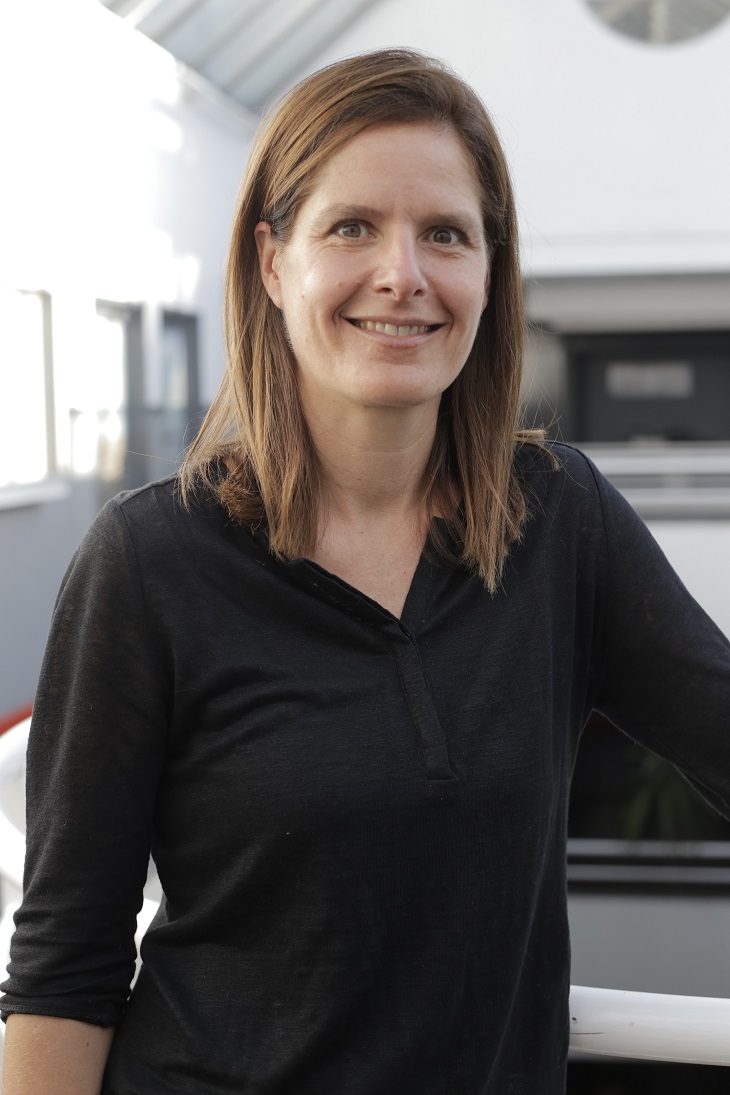
Imke Nienaber-Requillart is a Senior Lecturer at IÉSEG School of Management, France, specializing in languages and history. She teaches courses in Global History, Geopolitics, and German/French language communication at both Bachelor and Master cycles of the Grande École program. Education: Zweites Staatsexamen in History and French Literature (2002, Teachers Training College Leverkusen); Erstes Staatsexamen in History and French Literature (1999, University of Göttingen); Specialized Master in History (1996, University of Paris I Panthéon-Sorbonne). Her professional experience includes teaching German language courses since 2009 and Global History since 2024 at IÉSEG.
Pascale Trevisiol Okamura is an Associate Professor in Language Sciences and Language Teaching at Sorbonne Nouvelle University, affiliated with the DILTEC research team (EA 2288). Her primary role includes teaching language acquisition and foreign language didactics within the UFR of Literature, Linguistics, and Didactics (LLD). She co-heads the Master 2 program in Language Teaching (FLE/FLS) and holds administrative roles in departmental councils and educational committees. Education Background: Lecturer at Sorbonne Nouvelle University since 2015 Previously taught at Université de Poitiers (2010–2015) and Université Paris 8 (2007–2010) French teaching assistant at Hokkaido University, Japan Research Focus: Specializes in third language acquisition (L3), crosslinguistic influence, and the interface between language acquisition and didactics. Key themes include: Discourse construction in L3 French Input processing and initial language exposure Development of teaching materials for FLE Plurilingual practices among language teachers Current projects involve multilingualism in primary education, Tamil-speaking learners' L3 French acquisition, and reflexive training in research. Teaching & Supervision: Co-supervises doctoral research on topics such as L3 French acquisition in Chinese contexts, translinguistic discourse influences, and plurilingual teacher practices. Teaches advanced courses on language acquisition theories and FLE methodology. Labs/Teams: Member of the Second Language Acquisition Network (ReAL2) and part of the DILTEC team, focusing on language didactics and multilingualism research.
Elise Lavoué is a full Professor in Computer Science at iaelyon School of Management, Jean Moulin Lyon 3 University, and a key researcher at the LIRIS laboratory (CNRS). She leads the SICAL research team and holds leadership roles including Editor-in-Chief of the STICEF journal, member of Labex ASLAN’s management committee, and member of the University of Lyon’s Research Ethics Evaluation Committee (CER-UdL). She is also affiliated with the ATIEF association. Her research focuses on enhancing motivation and engagement in digital learning environments through adaptive gamification, learning analytics, and human-computer interaction. She explores how tailored game elements, emotional awareness tools, and immersive technologies like virtual reality can support self-regulated learning, critical thinking, and skill development in complex digital contexts. Her recent publications span top journals such as IEEE Transactions on Learning Technologies, International Journal of Human-Computer Studies, Computers & Education, and CHI PLAY. These works reflect a strong trend in adaptive and personalized learning technologies, emotion-aware systems, and immersive training environments, particularly in educational and professional settings. Honorable Mention Award at ACM CHI PLAY 2019 (top 4%) Best Industrial Paper award at CSEDU 2020 Elise Lavoué actively supervises PhD students and post-doctoral researchers and leads multiple funded projects including LudiMoodle+, RENFORCE, Lex.gaMe, BODEGA, and Emoviz. These projects involve collaborations with institutions across France and focus on gamification, VR training, emotional dashboards, and vocabulary acquisition. She has secured funding from ANR, Labex ASLAN, CNRS, and other national bodies. Her work emphasizes interdisciplinary collaboration between computer science, education, and social sciences. She is involved in several research teams and labs, primarily the SICAL team within the LIRIS laboratory, a major interdisciplinary research unit in computer science, images, and information systems. Her projects often involve industry partners such as SpeakPlus and Woonoz, and she contributes to both scientific advancement and practical educational innovation.
Sophie Othman is a Lecturer at the University of Franche-Comté, affiliated with the Centre de Linguistique Appliquée (CLA) and the DEFLET department. She is actively engaged in research and teaching in language didactics, digital education, and innovative pedagogical practices. Her work spans multiple roles in research coordination, program leadership, and international academic collaboration. Research Interests: Her primary research areas include digital technology in language teaching and learning, design of online and distance learning environments, digital engineering in education, pedagogical innovation, comodal and hybrid training models, MOOCs, e-portfolios, and teacher training in ICT. She explores how digital tools transform language education, especially in multilingual and multicultural contexts. The recent scholarly output shows a consistent focus on post-pandemic educational transformation, AI integration in learning systems, and the design of flexible pedagogical scenarios. Her publications appear in journals such as ALSIC and in international conference proceedings, reflecting a strong engagement with digital pedagogy and language education innovation. Leadership and Service: Vice-President, Scientific and Pedagogical Commission, CLA – University of Franche-Comté (2021–present) Co-Responsible, TIPED Research Program, ELLIADD (2017–present) Scientific Coordinator, Innov'FLE Thematic Thursdays (2022–present) Former Coordinator, Master 2 FLE 'Political and Digital Environments' and FLE Track at CTU Besançon (2018–2020) Scientific Committee Member for international conferences (e.g., ADCUEFE, CEDIL, UBEST, EIAH) Expert reviewer for language didactics journals and collective works International trainer for the French Ministry and OIF in over 15 countries Projects and Grants: #ApproprIA: AI Appropriation in Education (2025–...) UNPEAA: Digital Use by Allophone Adults (2024–...) Innov'FLE: Innovation in FLE Teaching (2022–...) HUMANE: Digital Humanities for Education (2019–2022) ANR-IDEFI Innovalangues (2013–2016) Advising and Grants: While no formal students are listed, she has supervised research teams and mentored junior researchers through collaborative projects and editorial roles. She has secured national and international funding, notably through the ANR-IDEFI program, and contributes to large-scale educational initiatives supported by governmental and Francophone institutions. Labs and Teams: She is affiliated with the ELLIADD research laboratory (University of Franche-Comté) and was previously associated with LIDILEM (Université Grenoble Alpes). She leads and participates in interdisciplinary research groups focused on digital language education, teacher training, and innovation in didactics.
Dr. Sophie Chadelle is a faculty member at ENSAV, part of the University of Toulouse – Jean Jaurès (UT2J), where she holds the position of PRAG (Professeur Agrégé) since 2023. She is affiliated with the Centre for Anglophone Studies (CAS) and teaches courses in Translation Studies, Audiovisual Translation, Film Analysis, and Feminist Film Studies at both undergraduate and graduate levels. Her research is deeply interdisciplinary, combining Translation Studies, Gender Studies, and Film and Television Studies. She completed her doctorate in December 2023 with a thesis titled "For a Multimodal, Interdisciplinary and Feminist Approach of Audiovisual Translation: The Case of Female Identities and Sexualities in Sex and the City (HBO, 1998–2004)" , supervised by Nathalie Vincent-Arnaud and David Roche. Her academic journey includes prior roles as an ATER (2021–2023), CDU (2018–2021), and secondary school teaching (2016–2018). Her research interests focus on the feminist implications of audiovisual translation, particularly how gender identities and female voices are transformed in the French dubbing and subtitling of American TV series. She explores themes such as taboo, irony, cosmopolitanism, and the body in media translation, using a multimodal and interdisciplinary methodology. Her work critically examines how translation can either reinforce or resist patriarchal norms and cultural marginalization. Her publications span journal articles, conference papers, and a forthcoming book co-authored with Laura Benoît on feminism in British and US television drama. Her recent articles analyze series like Sex and the City and Ugly Betty , investigating how feminist discourse is negotiated in translation. The trends in her publications reflect a consistent focus on gender, power, and representation in media, with a methodological emphasis on multimodality and interdisciplinary critique. She is actively involved in the academic community, co-directing the "Translating Minority Voices" seminar and organizing events such as study days on feminism in television series. She has served on scientific committees and peer-reviewed articles for journals like Miranda and Caliban . Her work extends beyond academia through dissemination activities, including training sessions for secondary school teachers on feminism in film and television. She has advised and collaborated with various researchers and institutions, contributing to collective volumes and interdisciplinary projects. Her leadership in organizing academic events and her editorial contributions highlight her role in fostering scholarly dialogue. She is associated with research teams such as PRISMES (Sorbonne Nouvelle) and LERMA (Aix-Marseille), underscoring her collaborative and networked research approach.
Nathalie Sage Pranchère is a Chargée de recherche (Research Officer) at the French National Centre for Scientific Research (CNRS), affiliated with the UMR 7219 SPHERE laboratory (Sciences, Philosophy, History) at Université Paris Cité. A graduate of the École nationale des Chartes and Paris-Sorbonne University, she specialises in the social, institutional and gender history of medicine, obstetrics and public health in modern France and Europe. Education & Career Diplôme d’archiviste paléographe, École nationale des Chartes (2006) PhD in Contemporary History, Paris-Sorbonne University (2011) Teacher of history and geography, Créteil academy (2013-2020) Associate professor on secondment, Fondation Charles-de-Gaulle (2011-2013) CNRS Research Officer since 2020 Research Interests Pranchère explores the history of medical knowledge and practices , focusing on obstetrics, midwifery and public health from the 18th to the 20th century. She examines professionalisation of health practitioners, gender and women’s history , perinatal death and stillbirth , and public health policies . Her work combines archival research with social and cultural history approaches, and she is particularly attentive to the intersection of medicine, law and gender. Scientific Awards Prix Madeleine-Lenoir 2016 (Société de l’École des Chartes) Prix de la Mutualité Hospitalière 2008 & 2012 (Société française d’histoire des hôpitaux) Research Organisation & Supervision She co-directs the seminar Regards croisés sur la petite enfance at EHESS and has organised numerous international conferences. She has supervised seven master’s memoirs in midwifery schools and history programmes and serves on the boards of the Société de démographie historique and the Birth History Society . Laboratory & Collaborations Based at SPHERE (CNRS/Université Paris Cité), she collaborates with historians, demographers and philosophers of science within the laboratory’s History and Philosophy of Medicine research axis.
Carine Lounissi is a Lecturer at the University of Rouen Normandy within the UFR Letters and Human Sciences. She holds an HDR (Accreditation to Supervise Research) and a PhD in English Studies from Université Paris 3 – Sorbonne Nouvelle (2006). Her research focuses on revolutionary cultures of the 18th century, particularly the interplay between the American and French Revolutions, Atlantic history, and republican political thought. She has published extensively on Thomas Paine's role in transatlantic revolutionary movements, including monographs like Thomas Paine and the French Revolution (2018) and edited volumes exploring republican ideas. Her recent work examines how French intellectuals interpreted American Revolution events, influencing anticolonial and antislavery discourse in the 1780s. Lounissi is co-editor of the Revue française d'études américaines and serves on editorial boards for journals such as XVII-XVIII . She actively organizes academic events, including the REDEHJA seminar series and conferences on transatlantic revolutionary connections. Her teaching includes courses on American democracy's origins and civil rights history, contributing to teacher training programs like CAPES and Aggregation preparation. Her research networks include leadership roles in organizations like REDEHJA and participation in international projects such as America2026. Lounissi's work bridges historical analysis with contemporary debates about revolutionary legacies, emphasizing textual circulation, ideological transfer, and the global dimensions of Enlightenment thought.
Chantal Dompmartin is a Lecturer in Linguistics and Language Teaching at the University of Toulouse Jean Jaurès (UT2J), where she works in the Department of French as a Foreign Language Studies (Defle). She is a permanent member of the CLLE-ERSS laboratory (Cognition, Languages, Language, Ergonomics) and an associate member of the LIDILEM Laboratory. Her academic career spans over two decades, with publications dating from 2003 to the present, demonstrating sustained scholarly activity. In 2023, she successfully completed her HDR (Habilitation à diriger des recherches), a significant academic qualification in the French system that enables her to supervise doctoral candidates. Dr. Dompmartin's research focuses on sociolinguistics, language awareness, and teaching French as a Foreign and Second Language, with particular emphasis on multilingual language practices, representations, and writing workshops in FLE contexts. Her work explores how creative writing can serve as a tool for linguistic and cultural appropriation, especially for students navigating new linguistic environments. She investigates how translinguistic bridges, stylistic progression, and experiential writing can support learners in developing security between their 'here' and 'elsewhere' linguistically and culturally. Her research often addresses the experiences of multilingual students, including those who are exiled or displaced, examining how writing workshops can facilitate their linguistic and cultural adaptation. An analysis of her recent publications reveals a consistent trajectory focused on plurilingualism and creative pedagogical approaches. Her work increasingly emphasizes sensitive and experiential approaches to language teaching, with writing workshops serving as central methodology. She explores how multilingual resources can be mobilized in educational settings to support language learning and cultural adaptation, particularly for students in displacement situations. Her research demonstrates a movement from theoretical considerations of multilingual practices toward practical applications in classroom settings, with growing attention to teacher training and implementation of plurilingual approaches in diverse educational contexts. Dr. Dompmartin actively collaborates with researchers across institutions, including notable collaborations with Nathalie Thamin, Charlotte Lamy de La Chapelle, and members of the CLLE and LIDILEM laboratories. Her work bridges theoretical sociolinguistics with practical language teaching applications, contributing significantly to the field of plurilingual education. She participates in national and international conferences, presenting her research on sensitive approaches in plurilingualism teaching and multilingual writing workshops, demonstrating her active engagement with the scholarly community.
Géraldine Farges is a Professor in the Department of Education and Training Sciences at the University of Burgundy, where she also serves as the Director of the department. She is affiliated with the AAFE Pole and actively contributes to national educational research through her involvement in the INSPE Scientific Council and the INSPE COSP. Her work bridges academic research and educational policy, particularly in teacher recruitment and status. Research Interests: Her research centers on the sociology of education, with a strong focus on educational inequalities, social stratification, and the sociology of teaching professions. She investigates how teachers' social status is perceived and changing in France, and explores the attractiveness of teaching as a career. Her work critically examines educational policies, pre-professionalization pathways, and access to teaching careers, especially in private higher education. The recent publications highlight a consistent trend in analyzing teacher status, career trajectories, and policy impacts. Her work spans qualitative and quantitative methods, often using longitudinal data and sociological theory to understand structural inequalities in education. She frequently contributes to collective volumes and policy-oriented research reports. Scientific Leadership: Co-director of the “Education and Society” book series at ISTE/Wiley (with Xavier Pons) Director, Department of Education and Training Sciences Member, INSPE Scientific Council and COSP Géraldine Farges leads and collaborates on research projects such as ATRACTIPRO, which examines how pre-professionalization affects the attractiveness of teaching in the Burgundy Franche-Comté region. She works closely with researchers like Loïc Szerdahelyi, Elise Tenret, and Igor Martinache. While no formal advising role is listed, her co-authored works with early-career researchers suggest mentorship activities. She has contributed to national policy reports for the French Ministry of Education. Labs and Teams: She is associated with research units including IREDU (Institut de recherche sur l’éducation) and collaborates with CEREQ, indicating integration into major French educational research networks.
Nadia Naffi is an Assistant Professor in the Department of Teaching and Learning Studies at the Faculty of Education, Laval University, where she also holds the Chair in Educational Leadership (CLE) on innovative teaching practices in a digital context funded by National Bank. She serves as Co-head of the Education and Empowerment axis of the International Observatory on the Societal Impacts of AI and Digital Technology (OBVIA), and has held leadership roles including chairing the first integration of the Institutional Committee for Innovation in Teaching at Laval University. Naffi's research focuses on digital empowerment in the face of AI risks, with particular emphasis on combating disinformation, deepfakes, and cyber scams through educational strategies. Her work spans multiple domains including educational technology, AI ethics, media literacy, and digital resilience across different age groups from youth to seniors. She has developed innovative approaches to designing inclusive learning experiences that harness AI and digital technologies in ethical, critical, and responsible ways. Her recent publications reveal a clear trend toward addressing societal challenges posed by generative AI, with particular focus on deepfakes, disinformation, and cyber resilience. The research spans educational settings, healthcare contexts, and broader societal implications, demonstrating an interdisciplinary approach that connects technical understanding with pedagogical innovation and policy development. Her work consistently emphasizes the human dimension of technology adoption and the need for critical digital literacy across all age groups. Concordia Public Scholar (2017-2018) Winner of SSHRC 'I have a story to tell' competition Winner of ACFAS 'My Thesis in 3 minutes' competition President's Media Outreach Award (2016-2017) Governor General of Canada Gold Medal – Person and Society 2018 2019 SALTISE Award for Teaching Excellence and Innovation John F. Lemieux Young Alumni Medal Naffi has secured significant research funding including a $425,000 National Bank Teaching Leadership Chair and multiple grants from SSHRC, FRQSC, and other organizations totaling over $1.5 million. Her research projects address critical issues such as seniors' cyber resilience against deepfakes, AI-health transformation, digital inequalities during pandemic, and educational responses to disinformation. She has also developed practical resources including bilingual guides for online course transition and the 'Abécédaire de l'IA' educational tool. As Co-head of OBVIA's Education and Empowerment axis, Naffi leads a multidisciplinary team focused on understanding and addressing the societal impacts of AI through education. Her work connects academic research with practical applications through collaborations with government agencies, educational institutions, and community organizations. The Digital and AI Bootcamp she developed represents one practical initiative bringing together educational advisors to explore innovative digital technologies including virtual reality and AI in teaching contexts.
Iza Marfisi is a Professor at the University of Le Mans where she became a University Professor in 2024 and was appointed Head of the IEIAH (Computer Environments for Human Learning) team in 2025. She works within the Claude Chappe Institute of Computer Science, focusing on developing educational technologies that empower teachers to create their own digital learning tools. Her research bridges computer science and educational theory to enhance teaching practices through accessible technology solutions, with particular emphasis on making advanced tools usable for non-technical educators. Marfisi's research spans Educational Technology, Serious Games for Education, Mobile Learning, and Extended Reality (XR), with a consistent focus on teacher-centered design. She develops "no-code" authoring tools enabling educators to create custom digital learning experiences deployable across various hardware platforms. Her work specifically targets situated learning with mobile devices, human-computer interactions for learning, and educational applications of mixed and extended reality. This approach democratizes access to advanced educational technologies by removing technical barriers for teachers. Analysis of her recent publications reveals a clear evolution from foundational mobile learning frameworks toward increasingly sophisticated integration of mixed reality and artificial intelligence in educational contexts. Her 2024-2025 work shows particular emphasis on generative AI for educational activity design, immersive pharmacology learning, and collaborative frameworks that connect multiple learning technologies. The publications consistently emphasize practical teacher needs, with many studies conducted in authentic educational settings rather than controlled laboratory environments. Marfisi actively supervises doctoral research across multiple dimensions of educational technology. Her current advisees explore artificial intelligence for mixed reality activity creation, mixed reality for professional training, free software approaches to serious games, and innovative interaction techniques for collaborative learning. Previous students have investigated mixed reality for fraction learning, educational game indexing systems, and mobile educational game design models. Her supervision portfolio demonstrates both depth in specific technical areas and breadth across the educational technology landscape. As Head of the IEIAH team at LIUM since 2025, Marfisi leads a research group focused on computer environments for human learning. She also serves on the Board of Directors for both the Serious Game Society and the IKIGAI association (Games for citizens), and was elected Deputy Director of Research at the Claude Chappe Institute of Computer Science since 2018. Her leadership extends to communications management for the IEIAH team and participation in the LIUM Laboratory Council (2022-2024), demonstrating significant institutional impact beyond her direct research contributions.
Olivier Francomme is an Associate Professor (PRAG) at the University of Picardy Jules Verne in Amiens, France. He also serves as a Research Director at the China Cooperative Research Center for Modern School at Jiaxing University of Zhejiang in China, and as an Associate Researcher at the EXPERICE laboratory (EA 3971) at the University of Paris 8. His professional email is olivier.francomme@u-picardie.fr and he can be reached at his personal website http://olivier-francomme.fr/ . University of Picardy Jules Verne - Associate Professor (PRAG) University of Paris 8 - Associate Researcher at EXPERICE laboratory University of Zhejiang, China - Research Director at China Cooperative Research Center AFIRSE French Section - General Secretary Dr. Francomme earned his Doctorate in Educational Sciences and completed his HDR (Habilitation à Diriger des Recherches) in 2011. His academic journey began with a Doctorate in Human Geography in 2000, which emerged from anthropological education research focusing on family structures and educational outcomes in Colombian Amazonia and Caribbean islands. In 2004, he pursued a Master's degree to better align with teacher training contexts where he continues to work today. Dr. Francomme's research interests span multiple dimensions of educational phenomena. He specializes in Freinet pedagogy and its international applications, particularly in China where he has been instrumental in establishing experimental Freinet schools since 2011. His work on "Scientific support for educational innovations in schools and high schools" represents a significant three-year action research project (2015-2021) conducted with AFIRSE French section and CCRCMS in China. Another major research strand focuses on "Violence in schools," where he served as coordinator and scientific manager for an international research project initiated by UNESP (University of Rio Claro Brazil) from 2008-2014. His recent publications reveal a strong emphasis on transdisciplinarity in educational research, with particular attention to cooperative research methods ("Chercheurs Collectifs Coopératifs") that bridge theory and practice. There's a clear international dimension to his work, with significant collaborations in China, Greece, Brazil, and across Europe. The pandemic period (2020-2022) saw him examining how Freinet pedagogy practitioners adapted to coronavirus challenges, demonstrating the flexibility and resilience of alternative educational approaches. Dr. Francomme has been actively involved in advising and research supervision, particularly through his role directing the Master MEEF-EBI (bilingual immersive teaching) program at the University of Perpignan. His work with "Chercheurs Collectifs Coopératifs" represents an innovative approach to teacher training that emphasizes collaborative research as a pathway to professional development. He has secured research funding through various channels including AFIRSE, CCRCMS, and AO-IUFM Picardie (2010-2013). Dr. Francomme leads research teams through the China Cooperative Research Center for Modern School in Jiaxing, where he directs international collaborations focused on educational innovation. At the University of Paris 8, he contributes to the EXPERICE laboratory (EA 3971), which specializes in educational sciences, psychoanalysis, and French as a foreign language. His work with the ICEM (Institut coopératif de l'École moderne) and FIMEM (Fédération internationale des mouvements de l'École moderne) connects him to broader international networks of educational innovation.
Rémi Leclercq is a Lecturer-Researcher at the University of Paris-Saclay, affiliated with the Topology and Dynamics team at the Orsay Institute of Mathematics. He holds administrative roles including Deputy Director of International Relations at the Graduate School of Mathematics (until March 2025) and membership in the Parity Commission, Teaching Council, and IMO Library Council. His research focuses on symplectic and contact topology, gauge theory, and differential geometry, with involvement in the ANR CoSy project and Inria DataShape team. He co-organizes the Geometry Topology Dynamics seminar and a 2026 conference honoring Octav Cornea. Leclercq teaches advanced courses such as Differential Geometry and Gauge Theory (M2ICFP) and contributes to teacher training programs like MEEF1. He has co-supervised doctoral students Simon Vialaret (since 2021) and Pierre Mennesson (2015–2018). His work bridges mathematical rigor with applications in theoretical physics, emphasizing geometric structures and their topological implications.
Georges Louis Baron is a University Professor at Paris Cité University, specializing in digital technologies in education. His work spans educational informatics, digital literacy, programming in primary education, and the didactics of computer science. He is actively involved in research networks such as GTnum and projects like Adjectif.net, SUPERE-RCF, and RéVEA. His research interests include the integration of digital tools in teaching and learning, teacher training, and the evolution of ICT in education, particularly in the Global South. He has contributed extensively to academic discourse through publications, editorial roles, and collaborative research. The recent articles highlight a strong focus on digital transformation in education, the use of ScratchJr and Bee-Bot in early programming education, digital assessment tools, and equity in digital learning. His work bridges theory and practice, emphasizing pedagogical innovation and teacher collaboration. Notable scientific contributions include studies on student data literacy, digital humanities in education, and the socio-political dimensions of educational research. He has also contributed to understanding how mobile technologies are adopted in schools and how digital resources are co-created by teachers. While no formal list of students or awards is provided, his editorial roles and leadership in research projects suggest a significant mentoring and advisory role. He is actively engaged in shaping the future of digital education through scenario-based research and curriculum development.
Eric Mounier is a Lecturer in Mathematics Teaching at Université Paris-Est Créteil Val de Marne (UPEC), affiliated with the André Revuz Didactics Laboratory (LDAR-EA 4434). His academic work focuses on mathematics education research, particularly in primary school settings and teacher training. Dr. Mounier's research interests include: Understanding factors in resource adoption by primary mathematics teachers Studying teacher practices, particularly in the closing phase of teaching activities Investigating knowledge of cycle 2 pupils (6-9 years) concerning numeration Developing assessments for number knowledge (numeration, calculations, problems) Analyzing mathematics textbooks for primary schools, with special focus on the "Singapore Method" His publication record from 2015-2020 reveals a consistent research trajectory examining the relationship between spoken and written numeration systems, assessment design for early mathematical learning, and the complex relationship between teachers and educational resources. Mounier frequently collaborates with researchers including Nadine Grapin, Maryvonne Priolet, and Nathalie Pfaff, producing studies that bridge theoretical research with practical classroom applications in French primary schools. Mounier has led significant research projects including: "Appel d'offre ESPE" (2008-2014): Study of the viability of a new teaching approach for written numerical notation in CP (first grade) LéA EvalNumC2 (2016-2019): Evaluation of numerical knowledge of cycle 2 students, conducted in REP and REP+ schools in Montreuil with 20 primary school teachers and 4 researchers He served as responsible for the national seminar of mathematics didactics ARDM from 2013-2015, organizing 3 national seminars annually in Paris and other regions. Mounier also contributes to academic discourse as a scientific reviewer for journals including "Spirale" (research journal in education) and "Rmé" (mathematics journal for school).