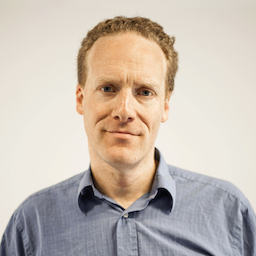
Ove Hoegh-Guldberg is a Professor at James Cook University specializing in coral reef ecology and climate change impacts. His research focuses on coral symbiosis, bleaching mechanisms, and the resilience of marine ecosystems under global environmental pressures. Key research interests include coral reef biodiversity, ocean acidification, and the development of conservation strategies for tropical marine environments. He has contributed to high-impact studies on coral reef vulnerability, mesophotic coral ecosystems, and the application of artificial intelligence for reef monitoring. His work integrates molecular, ecological, and policy perspectives, addressing challenges such as coral bleaching, cyclone damage, and the adaptation of fisheries to climate change. Collaborations span institutions globally, emphasizing interdisciplinary approaches to marine conservation.
Dr. Ian Bayley is a Senior Lecturer in Computer Science at the School of Engineering, Computing and Mathematics, Oxford Brookes University. He serves as Subject Coordinator for MSc courses in Computing Science, Advanced Computer Science, and Computer Science for Cyber Security. His research focuses on cybersecurity, secure programming, software engineering, and design patterns, with collaborations on topics like LLM evaluation, exploratory testing for machine learning, and agent-oriented programming for microservices. He is affiliated with the Cloud Computing and Cybersecurity Group (CCC) and the Artificial Intelligence, Data Analysis and Systems (AIDAS) Institute. Teaching responsibilities include modules such as Secure Programming (undergraduate/postgraduate) and Professional Programming Practice for first-year undergraduates. He actively supervises cybersecurity projects and students, including Debalina Ghosh (LLM evaluation) and Kieren Stanton (authentication in vehicular networks). Research interests span cybersecurity patterns, software design composability, formal methods for web services, and agent-oriented approaches to microservices. Recent work explores LLM evaluation via scenario-based meta-information and testing challenges in machine learning applications. He co-leads research on design pattern composition and algebraic specifications. Publications span journals like Journal of Systems and Software and IEEE Transactions on Software Engineering , addressing topics from cybersecurity patterns to formal verification of web services. His teaching and research emphasize practical software engineering principles and cutting-edge cybersecurity practices.
Andrea Mocci is a Lecturer at the Faculty of Informatics of the Università della Svizzera italiana (USI). His work focuses on software engineering methodologies, developer productivity, and IDE interaction analysis. He is affiliated with the Software Institute and actively contributes to academic events such as the IEEE International Workshop on Mining and Analyzing Interaction Histories (MAINT). His research explores empirical software engineering techniques, including developer behavior analysis, code documentation improvement, and the application of natural language processing to software artifacts. Key areas of investigation include: IDE interaction and navigation efficiency Code redundancy and quality metrics Video tutorial analysis for educational content Runtime systems and annotation APIs Defect prediction and software maintenance Publications from 2016-2020 highlight trends in developer-centric tools, holistic recommender systems, and visualization techniques for software evolution. His work often bridges theoretical formal methods with practical developer workflows, aiming to improve both software quality and developer productivity through empirical studies and tool development.
John Quarles is a Professor at the University of Texas at San Antonio, specializing in Virtual Reality (VR) and Human-Computer Interaction. His research focuses on accessibility in immersive technologies, cybersickness mitigation, and inclusive design. He has contributed over 100 publications across top venues like IEEE VR, ISMAR, and IEEE Transactions on Visualization and Computer Graphics. His work addresses challenges faced by users with disabilities, such as balance impairments and mobility limitations, through innovative feedback systems and adaptive algorithms. Quarles has co-authored influential papers on cybersickness prediction, VR accessibility for persons with Multiple Sclerosis, and disability simulations to reduce societal bias. He has held leadership roles including Program Chair for IEEE VR 2023, demonstrating his influence in academic and industrial VR communities. His research spans interdisciplinary applications in healthcare, education, and rehabilitation, with notable collaborations on datasets like 'Mazed and Confused' and frameworks like SmoothRide. Key themes include multimodal feedback methods, user-centric design principles, and leveraging AI for personalized VR experiences.
Dr. Katharina M. Jörger is a researcher at Ludwig Maximilian University of Munich, specializing in the phylogeny and evolution of meiofaunal molluscs. Her work focuses on understanding the evolutionary relationships and ecological roles of small marine organisms, particularly within the Mollusca phylum. She holds a Ph.D. from LMU Munich, where her thesis explored molecular phylogeny of Acochlidia, a group of marine and freshwater gastropods. Her research integrates anatomical, genetic, and ecological approaches to address questions in systematic zoology and evolutionary biology. Key areas of expertise include meiofaunal molluscs, molecular systematics, and cryptic species identification. She has contributed significantly to the study of Aplacophora (Solenogastres) and Acochlidimorpha, elucidating their phylogenetic relationships and ecological adaptations. Her work often emphasizes the development of novel methods for studying small, elusive organisms, such as 3D microanatomy and hybridization-based genetic capture techniques. Dr. Jörger has conducted fieldwork in diverse locations, including the Azores, Antarctic regions, and the Caribbean, to document meiofaunal biodiversity. Her publications span topics like mitochondrial genome analysis, freshwater slug invasions, and deep-sea predation dynamics. She collaborates internationally on projects exploring meiofaunal ecology and evolutionary patterns. Her research also addresses broader ecological questions, such as how meiofauna contributes to marine biodiversity and how taxonomic methods can better capture cryptic diversity. Despite no explicitly listed awards, her prolific publication record underscores her impactful contributions to mollusc systematics and evolutionary biology.
Gary Bernardi is a Researcher affiliated with the Yale School of Medicine's Department of Emergency Medicine. He holds a Master of Science (MS) from Quinnipiac University (2011) and is certified as a Family Nurse Practitioner by the American Academy of Nurse Practitioner's Certification Program. His research focuses on genomics, marine biology, and evolutionary processes, with notable contributions to fish taxonomy, coral adaptation, and invasive species genomics. He has also engaged in interdisciplinary work analyzing labor actions in academic life sciences departments. Key research interests include genomic studies of extremophile organisms (e.g., Lake Magadi tilapia), phylogenetic classification of marine species (e.g., blennioid fishes), and invasion biology of species like the lionfish in the Mediterranean. His work integrates genomic data with ecological and evolutionary frameworks to address biodiversity and conservation challenges. Publications highlight collaborative efforts in global marine ecosystems, from the Tropical Eastern Pacific to Micronesian coral reefs. While no formal awards are listed, his contributions to both biological and academic policy research reflect a dual commitment to scientific discovery and institutional reform. No grants, advising roles, or lab affiliations are explicitly detailed in the provided text.
Tanel Vahter is a Research Fellow in Soil Ecology at the University of Tartu’s Faculty of Science and Technology, Institute of Ecology and Earth Sciences. He holds a Doctor’s Degree from the University of Tartu (2021) and a Master’s Degree in Landscape Ecology from Tallinn University (2016). His career includes roles as a doctoral student (2016–2021) and chief specialist in agrochemistry at the Agricultural Research Centre (2014–2016). Education: PhD in Botany and Ecology, University of Tartu (2016–2021) MSc in Landscape Ecology (cum laude), Tallinn University (2014–2016) BSc in Geoecology, Tallinn University (2011–2014) Research Interests: Vahter focuses on soil ecology, plant-microbial mutualisms, and sustainable agroecosystems. His work explores how agricultural practices, environmental factors, and historical habitat proximity influence soil biodiversity and ecosystem services. He emphasizes the role of mycorrhizal fungi in plant growth promotion and ecological restoration, particularly in post-mining landscapes and semi-natural grasslands. His research integrates high-throughput sequencing and environmental DNA (eDNA) techniques to assess global plant and soil microbial diversity. Publications Trends: His articles highlight the interplay between soil microbial communities and agricultural sustainability. Recent studies investigate the impacts of tillage practices, soil compaction, and commercial inoculants on fungal diversity. He also examines the legacy effects of land-use changes on ecosystem services and the potential of native fungi for landscape restoration. Awards: 2020 Dora Plus T1.1 short-term mobility grant 2018 IAVS Travel grant for symposium participation 2018 Third place in 'Quarrie Life' European project competition 2016 Third place in Tallinn University thesis competition Advising & Grants: Vahter supervises three doctoral and three master’s students, focusing on topics like regenerative agriculture and soil health indicators. He has led or contributed to grants totaling over 1.3 million EUR, including projects on agroecology, soil biodiversity, and sustainable farming. Current roles include leading the 'Development of a fatty acid biomarker based soil health indicator' initiative and co-leading the 'FUNFARM' project. Labs & Teams: Active in research networks like the European COST Action FP1305 and collaborates with institutions such as the Estonian Research Council and the Archimedes Foundation. He is a board member of the Estonian Soil Science Society and participates in global initiatives like the Global Soil Biodiversity Conference.
Melinda Bonnie Fagan is a Professor of Philosophy at the University of Utah, holding the Sterling M. McMurrin Chair. Her research focuses on experimental practice in biology, particularly stem cell and developmental biology, explanation in science, and philosophical conceptions of objectivity and evidence. Education: B.A. in Biology (Williams College, 1992), M.A. in Philosophy (University of Texas at Austin, 2002), Ph.D. in Biological Sciences (Stanford University, 1998), Ph.D. in History and Philosophy of Science (Indiana University, 2007) Her work explores the intersection of philosophy of science, epistemology, and the history of science, with a particular emphasis on the role of values in scientific practice. She has authored numerous publications on stem cell biology, systems biology, and the philosophical implications of scientific modeling. Her recent projects include analyzing interdisciplinary collaboration in scientific research and its impact on explanatory frameworks, as seen in her forthcoming book Explanatory Particularism in Scientific Practice (Oxford University Press, 2025). Scientific Awards: Career Champions Award (2020) University Research Council Faculty Fellow Award (2018) Scholar's Award (NSF, 2014) Choice Award for Outstanding Academic Titles (2014) Grants: Collaborative Explanation Grant (NSF, 2014-2015) NSF FAGAN 2014 Grant (2014-2015) She has also contributed to debates on science and values, bioethics in stem cell research, and the social organization of scientific experiments. Her teaching includes courses on Philosophy of Biology, Science and Society, Feminist Philosophy of Science, and Theory of Knowledge.
Dr. Ana C. Vallor is an Associate Professor of Biology at the University of the Incarnate Word (UIW), tenured since 2014. She holds a Ph.D. in Molecular Virology and Microbiology from the University of Pittsburgh (2002) and a B.S. in Biology from St. Mary’s University (1990). Her research focuses on antimicrobial discovery, probiotic applications, and microbial transmission dynamics, with recent work emphasizing drug biotransformation and soil-derived antimicrobial compounds. Dr. Vallor has authored/co-authored over 30 peer-reviewed publications and actively mentors undergraduate and graduate students in laboratory research. Academic leadership roles include Director of the Masters of Biology Program (2016–2018), Microbiology Course Coordinator, and service on institutional review boards. She is a member of SACNAS, ASM, and the San Antonio Center for Medical Mycology. Notable awards include the Presidential Teaching Legacy Award (2015) and the Sr. Joseph Marie Armer CCVI Endowed Chair (2019–2021). Her research explores novel antimicrobial agents from South Texas soil microorganisms, probiotic Lactobacillus species’ roles in pathogen inhibition, and fungal drug metabolism. Recent projects include HPLC analysis of antifungal biotransformation products and assessment of essential oils’ antibacterial efficacy. Dr. Vallor also leads educational outreach initiatives through programs like Tiny Earth and Upward Bound.
Eric Rickart is the Curator of Vertebrate Zoology at the Utah Museum of Natural History and an Adjunct Associate Professor in the University of Utah's Department of Biology. His 30+ year career focuses on mammalian biodiversity, with specialized expertise in historical biogeography, community ecology, and island systems. Collaborating with institutions like the Field Museum of Natural History, he has led field research in the Philippines discovering new species and informing conservation strategies. His Great Basin studies examine climate and land-use impacts on mammal communities. He secured a $400,000 NSF grant to expand the museum's vertebrate collections. He serves on editorial boards for journals including Mammalian Species and Journal of Mammalogy . Education: PhD in Biology (1982, University of Utah), M.A. Biology (University of Kansas), B.S. Systematics & Ecology (University of Kansas). Research emphasizes island endemism, elevational gradients, and conservation biology. Key projects include Philippine mammal diversity mapping and Great Basin climate change impact studies. He has published over 60 peer-reviewed articles, focusing on rodent systematics, biogeography, and conservation. Collaborations span international teams, addressing habitat preservation and species discovery in understudied ecosystems.
Dr. Tero Juuti is an Associate Professor (tenure track) in Automation Technology and Mechanical Engineering at Tampere University. He holds a Doctor of Science (Technology) in Mechanical Engineering from 2009. His research focuses on product development methodologies, modularization strategies, and engineering education innovation. Key areas include high-variety low-volume manufacturing systems, design reuse, and lean design principles. Juuti has contributed significantly to understanding modular product structures and their impact on manufacturing efficiency. Education: Doctor of Science (Technology), Mechanical Engineering (2009) Research Interests: Modular product design and architecture Decision support systems for configurable products Engineering education pedagogy Lean manufacturing in HVLV contexts Knowledge management in product development Juuti has published over 78 peer-reviewed articles, with recent work addressing design reuse in engineer-to-order contexts and coordination mechanisms in modular systems. He received the Tampere University Prize for Teaching Excellence (2020) and the ICED'09 Reviewers' Favorite Award (2009). Professional Activities: Editorial board member of Journal of Engineering Design (2022–present) Session chair at NordDesign 2022 Opponent for doctoral defenses at Blekinge Institute of Technology (2023) Reviewer for multiple journals and conferences His work bridges academic research with industrial applications, emphasizing practical solutions for manufacturing challenges through systematic design methodologies and pedagogical innovation.
Dr. Erinn Fagan-Jeffries is a Grant-Funded Researcher (B) in the School of Biological Sciences at the University of Adelaide, affiliated with the Faculty of Sciences, Engineering and Technology. She leads the wasp systematics group within the Invertebrate Systematics and Biodiversity lab, focusing on taxonomy and systematics of parasitoid wasps, particularly the superfamily Ichneumonoidea. Her work emphasizes accelerating the documentation of Australia's undocumented insect species (70% of total) through innovative methods and citizen science initiatives like the Insect Investigators project, which engages schools in species discovery. Research interests include parasitoid wasp biodiversity, taxonomy, and community engagement in biodiversity science. She supervises Honours, Masters, and PhD students in parasitoid wasp-related projects. Her work intersects with conservation, agricultural pest management, and biogeography. Publications highlight discoveries of new species, citizen science impacts, and taxonomic revisions. She collaborates with national reserves and educational institutions to advance biodiversity understanding.
Rev. Dr. Marcin Ferdynus serves as Assistant Professor at the Department of Ethics, Faculty of Philosophy, John Paul II Catholic University of Lublin. A Catholic priest ordained in 2006, he holds MA in Theology (2006) and PhD in Philosophy (2018) from KUL. His academic career spans teaching roles at European Integration College in Szczecin (2016-2017), pastoral care (2008-2016), and administrative positions including Educational Center Deputy Director (2017-2019) and scholarship recipient (2022). Research Interests Biomedical Enhancement Ethics Medical Futility vs Persistent Therapy Human Dignity in Healthcare Personhood Theory AI Moral Agency Catholic Bioethical Frameworks Recent publications analyze dignity's necessity in healthcare, comparative end-of-life policies, and AI limitations in psychotherapy. His research demonstrates strong international engagement through Erasmus+ internships at Oxford, Padua, Malta, and Slovakia institutions. Scientific Awards Prime Minister's Award for doctoral work (2017) Minister of Education Stipendium (2022) Komisja Edukacji Narodowej Medal (2022) KUL Publication Awards (2021, 2023, 2024) Academic Leadership Philosophy program coordinator (2024-) Scholarship Commission Chair (2023-) Editorial Board of Roczniki Filozoficzne (2019-) Organizer of interdisciplinary conferences International conference speaker (UK, Italy, Czech Republic)
Prof. Dr. Josef Settele is a leading academic and researcher in conservation biology and social-ecological systems. He is the Head of the Department of Conservation Biology & Social-Ecological Systems at the Helmholtz-Centre for Environmental Research (UFZ) in Halle, Germany. He also holds the academic rank of Professor of Ecology (apl.) at Martin-Luther-University of Halle-Wittenberg and has been an Adjunct Professor at the University of the Philippines, Los Baños. His work is deeply interdisciplinary, bridging ecology, policy, and societal engagement. His primary research interests lie in the ecology of insects in cultural landscapes , the interplay between biodiversity, land use, and social-ecological systems , and the critical interface between science, society, and policy . A central theme of his career has been understanding and mitigating the impacts of human activities on biodiversity, with a particular focus on pollinators. He has led major international projects such as ALARM, LEGATO, CLIMIT, and the current SPRING project, which is preparing the EU Pollinator Monitoring Scheme (EU PoMS). His recent publications (2020–2025) demonstrate a consistent focus on long-term biodiversity monitoring, the impacts of climate change and land use, and the development of policy-relevant science. He is a prolific author on topics including butterfly population trends in Europe, the assessment of Natura 2000 sites, the genetic diversity of insect populations, and the role of science in environmental policy debates, particularly concerning the EU’s Nature Restoration Law. His work heavily utilizes large datasets and citizen science, exemplified by the 'Tagfalter-Monitoring Deutschland' (Butterfly Monitoring Germany). Member, German Advisory Council on the Environment (SRU) (since 2020) Member, Multidisciplinary Expert Panel (MEP) of IPBES (since 2022) Co-Chair, Global Assessment of IPBES (2016-2019) Scientific Coordinator, SPRING Project (2021-2024) Member, Senate Committee Competition (SAW) of the Leibniz Association (since 2020) Review Board Member, German Research Foundation (DFG) (2016-2024) Prof. Settele is a highly active advisor and grant coordinator, having led numerous large-scale, multi-national research projects funded by the EU (FP5, FP6), the German Federal Ministry of Education and Research (BMBF), and other national and international bodies. His leadership in projects like ALARM, LEGATO, and SPRING, which involve dozens of partner institutions and hundreds of scientists, underscores his role as a principal investigator and scientific coordinator of the highest caliber. He is deeply involved in the governance of science, serving on prestigious review boards and advisory councils. He leads the research team on 'Animal Ecology and Social-Ecological Systems' at the UFZ and is the driving force behind the 'Tagfalter-Monitoring Deutschland' (Butterfly Monitoring Germany) project. His work is also connected to larger research units and platforms at the UFZ, including the 'Community Ecology' department and the 'Research Ecosystems of the Future' initiative. His research is fundamentally collaborative, involving extensive national and international networks of scientists, stakeholders, and policy-makers.
Assoc. Prof. Drahomira Cupar is an Associate Professor at the Department of Information Sciences and Technologies, University of Zadar. She specializes in information organization, digital humanities, and reading habits research. Her work focuses on classification systems, open access publishing, and cultural heritage preservation. She actively participates in projects like TRIPLE, OPERAS-PLUS, and CRAFT-OA. Consultation hours are Wednesdays 10:00–12:00 via email. Her research spans over 60 publications covering digital transformation of historical texts, metadata strategies, and literacy promotion. Key projects include digitization of Glagolitic texts and development of multilingual taxonomies. She teaches courses on information organization, research methodology, and library science. Awards section is currently unspecified. Grants involve EU-funded initiatives focusing on open science infrastructure and digital preservation. She leads the Thesaurus.hr initiative and contributes to the OPERAS network.