Chad E. Hart is a Professor in the Department of Economics at Iowa State University (ISU), specializing in agricultural economics and international trade policy. His research focuses on WTO agricultural commitments, crop insurance, biofuel policy, and commodity market dynamics. Hart holds a Ph.D. (1999) and B.S. (1991) in economics from ISU and Southwest Missouri State University, respectively. He has served in roles at ISU’s Center for Agricultural and Rural Development (CARD) and the Food and Agricultural Policy Research Institute (FAPRI), examining trade policies and energy-agriculture intersections. Hart has received notable awards, including the CALS Dean’s Citation (2020) and Exemplary Faculty Mentor Award (2016). His work bridges academic research and practical extension, addressing issues like trade disputes, commodity pricing, and agricultural sustainability. Hart’s insights frequently inform USDA outlook reports and policy analyses, with a focus on Iowa’s agricultural economy. Labs/Teams: Active in CARD and FAPRI, contributing to interdisciplinary research on agricultural policy and market dynamics.
Stefano Rossi is a Full Professor of Finance at Bocconi University's Department of Finance, serving as Chair of the Department. He holds affiliations with the Centre for Economic Policy Research (CEPR) and the European Corporate Governance Institute (ECGI), and serves on editorial boards for journals including Journal of Law, Finance, and Accounting and European Financial Management . His research focuses on corporate governance, bankruptcy, debt financing, sovereign borrowing, and quantitative trading, with publications in top journals such as The Journal of Finance and Journal of Monetary Economics . He has received international recognition, including awards for his work on ownership evolution. Prior to Bocconi, he taught at institutions including the Stockholm School of Economics and Cornell University. He earned his BA/MSc from Bocconi and a PhD in Finance from London Business School. Prof. Rossi's research explores intersections between corporate finance and public policy, with recent work analyzing credit cycles, municipal bankruptcy law, and liquidity shocks in insurance markets. His articles frequently address systemic financial risks and institutional frameworks governing corporate and sovereign debt. Awards include the ECGI Best Paper Prize for his collaborative research on ownership dynamics. Teaching spans corporate finance, valuation, and financial markets at undergraduate, graduate, and executive levels. He has developed courses at Bocconi's undergraduate, MBA, and PhD programs, emphasizing practical applications of theoretical finance models. His comprehensive curriculum includes mergers & acquisitions and private equity strategies. Key contributions include studies on shareholder voting mechanisms, sovereign default dynamics, and the impact of tax policies on corporate behavior. His work often bridges academic rigor with real-world policy implications, influencing both academic discourse and regulatory practices.
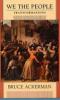
Bruce Ackerman is Sterling Professor of Law and Political Science at Yale University, holding one of the most prestigious academic positions at Yale. He has made significant contributions to constitutional law, political philosophy, and public policy over his distinguished career. His educational background includes an LL.B. from Yale (1967) and a B.A. from Harvard (1964). Ackerman has received numerous honors including the Henry Phillips Prize for lifetime achievement in Jurisprudence (2002), an Honorary Doctorate from the University of Milan (2023), and recognition as a Commander of the French Order of Merit. Ackerman's research focuses on American Constitutionalism, Comparative Constitutionalism, and Theories of Justice. His groundbreaking work includes the three-volume series We the People , which explores great turning points in American constitutional history. His scholarship has had global impact, influencing constitutional reforms in France, Brazil, Britain, and other countries. His recent work examines the constitutional challenges posed by the internet revolution and digital age. His publications reveal consistent engagement with constitutional crises across different nations and time periods, with particular attention to emergency powers, presidential authority, and democratic resilience. Ackerman's work connects historical constitutional development with contemporary challenges to democratic institutions. Commander of the French Order of Merit Henry Phillips Prize for lifetime achievement in Jurisprudence (2002) Honorary Doctorate from University of Milan (2023) Member of the American Law Institute Member of the American Academy of Arts and Sciences Named Leading Global Thinker by Foreign Policy magazine Ackerman has advised numerous governments and constitutional bodies worldwide. His work Before the Next Attack served as basis for French constitutional reform on emergency powers, while The Stakeholder Society influenced wealth distribution reforms in Brazil and Britain. He continues to actively engage with current constitutional challenges through scholarly publications, media commentary, and direct consultation with constitutional institutions globally.
Catherine Anne Brown is a Professor at the Faculty of Law, University of Calgary with extensive international experience, having held visiting professorships at Stanford University (as a Fulbright Fellow), University of Toronto, UCLA, McGeorge School of Law, and Whittier Law School. Her expertise spans taxation, international trade law, and estate planning across multiple jurisdictions. Her research focuses on the critical intersection of tax and trade agreements, particularly how non-discrimination principles operate within services trade frameworks. Current work examines tax treaty mechanisms for addressing discriminatory practices in cross-border commerce, building on her 2017 monograph "Tax Discrimination and Trade in Services". She actively explores evolving regulatory challenges in digital services taxation and international compliance. Professor Brown's scholarship demonstrates consistent engagement with practical legal applications, bridging academic theory and professional practice through textbooks, treatises, and policy-oriented analyses. Her publications reveal progressive specialization in tax-trade interfaces while maintaining foundational contributions to estate planning education. Her distinguished career has been recognized through: Lifetime Achievement Award (Canadian Tax Foundation, 2017) Doug Sherbaniuk Award for Distinguished Writing (Canadian Tax Foundation, 2014) Award for Distinguished Service in Legal Scholarship (Law Society of Alberta/Canadian Bar Association, 2011) Widdifield Award for estate planning scholarship (2006, 2012) Induction into the International Academy of Estate and Trust Law (2012) As an educator, she directed the Business Clinical program until 2014, providing practical training in business law applications. She maintains active professional engagement through appointments to the NAFTA Chapter 19 roster (2018), STEP Canada's Public Policy Committee (2016), and the Canada Revenue Agency's Offshore Compliance Advisory Committee (2016), while serving on the Legal Education Society of Alberta's Board of Directors.
University of California , Santa Barbara (UCSB)United States
Isabelle Mejean serves as Professor in the Department of Economics at Sciences Po, specializing in international macroeconomics and international trade. Her prior academic appointments include Ecole Polytechnique, CEPII (Centre d'Etudes Prospectives et d'Informations Internationales), and the IMF Research Department. Education: PhD in Economics, University of Paris 1-Panthéon-Sorbonne (2006) Mejean's research explores micro-foundations of global trade systems, emphasizing firm-level adaptations to geopolitical shifts, environmental regulations, and supply chain disruptions. Her work bridges macroeconomic phenomena with granular trade data, investigating how carbon taxes reshape supply networks, how trade fragmentation affects economic security, and how labor market structures influence volatility resilience. This approach reveals critical mechanisms behind inflation transmission and policy spillovers across borders. Analysis of her 2022-2025 publications shows consistent focus on empirical trade dynamics using French manufacturing datasets and global firm networks. Key trends include quantifying carbon leakage through supply chains, mapping shock propagation in firm-to-firm trade, and evaluating de-risking strategies amid geopolitical tensions. Her research directly informs contemporary debates on climate-trade policy coherence and energy security. Scientific Awards: No awards documented in source material. Advising and Grants: Doctoral supervision activities and research funding sources remain unspecified in available records. Labs and Teams: Affiliation with specific research collectives or laboratories is not referenced in current institutional profiles.
Andrew Green serves as Professor and Metcalf Chair in Environmental Law at the University of Toronto Faculty of Law, where he teaches environmental law, climate change law, administrative law, natural resources law, judicial decision-making, and international trade. His scholarly contributions span multiple legal domains with particular emphasis on the intersection of environmental regulation and administrative governance. Green's research interests encompass Environmental Law , Administrative Law , Climate Change Policy , Judicial Decision-Making , and International Trade Law . His empirical approach to legal scholarship has produced significant insights into how judges make decisions, particularly in administrative contexts, and how trade rules interact with domestic environmental regulations. His work often bridges theoretical legal analysis with practical policy implications. His recent publications reveal a strong focus on Canadian climate policy implementation, judicial behavior in high courts, and the evolving standards of review in administrative law. The research demonstrates increasing interdisciplinary integration, incorporating machine learning approaches to analyze judicial decisions and examining the systemic challenges in environmental governance. His scholarship consistently addresses the tension between regulatory effectiveness and legal accountability. Metcalf Chair in Environmental Law Past co-President of the Society for Empirical Legal Studies Past President of the Canadian Law and Economics Association Former Associate Dean at the Faculty of Law Chair of the University of Toronto Academic Appeals Committee (2009-2018) Before joining the Faculty of Law, Green practiced environmental law in Toronto for six years, handling both litigation (including prosecutions, administrative appeals, and civil actions) and transactional work. His practical experience informs his scholarly work on regulatory design and implementation. His research has influenced policy discussions on climate change, securities regulation, and administrative law reform in Canada.
Raşit GÜLTEKİN is an Associate Professor at Trakya University, Faculty of Economics and Administrative Sciences, Department of Finance and Department of Financial Law. He serves as Head of the Department of Financial Law (2023-2026), Director of the Career Application and Research Center (2024-2025), and holds various other administrative positions including membership on the Rectorate Advisory Board and the Social and Human Sciences Research Ethics Committee. His educational background includes: PhD in Finance from Anadolu University Institute of Social Sciences (2019) Master's Degree in Finance from Trakya University Social Sciences Institute (2008) Bachelor's Degree in International Relations from Ankara University Faculty of Political Sciences (2001) Additional Bachelor's Degree in Finance from Anadolu University Faculty of Economics (2022) Associate Degree in Justice from Anadolu University Open Education Faculty (2020) Professor GÜLTEKİN's research focuses on customs law, international trade, taxation systems, and border carbon adjustment mechanisms. His work examines the intersection of legal frameworks, economic policy, and environmental sustainability in trade contexts, with particular attention to Turkey's position within global trade systems. He has extensively studied customs procedures, tariff policies, and the impact of international agreements on national trade practices. His recent publications demonstrate a strong trend toward environmental taxation and border carbon adjustment mechanisms, particularly examining the European Union's policies and their implications for Turkey. He has maintained consistent research on customs administration, trade compliance, and legal aspects of international trade procedures, combining theoretical analysis with practical applications in trade policy. Professor GÜLTEKİN serves as a reviewer for multiple academic journals including: PARADİGMA İktisadi ve İdari Araştırmalar Dergisi Alanya Akademik Bakış Mesleki ve Sosyal Bilimler Dergisi Anadolu Üniversitesi Sosyal Bilimler Dergisi İstanbul İktisat Dergisi Meriç Uluslararası Sosyal ve Stratejik Araştırmalar Dergisi International Anatolia Academic Online Journal International Journal of Public Finance He holds professional certifications in Foreign Trade Expertise (2021) and ISO 9000 Training (2004), and serves on the Edirne Provincial Employment and Vocational Training Board under the Ministry of Labor and Social Security.
Potsdam Institute for Climate Impact ResearchGermany
Ottmar Edenhofer serves as Director and Chief Economist of the Potsdam Institute for Climate Impact Research (PIK), Director of the Mercator Research Institute on Global Commons and Climate Change (2012-2024), Professor for The Economics and Politics of Climate Change at Technische Universität Berlin, and Chair of the European Scientific Advisory Board on Climate Change (ESABCC) since 2022. His affiliations span leading European climate research institutions and academic bodies. Edenhofer's research focuses on climate change economics, particularly the impact of technological change on mitigation costs, public finance implications of climate policy, distributional effects of carbon pricing, and governance of global commons. His work bridges theoretical economic modeling with practical policy design, emphasizing equity considerations and institutional frameworks for effective climate action. He pioneered social science research at PIK, establishing rigorous methodologies for translating scientific findings into actionable policy advice. His publication record demonstrates consistent leadership in high-impact climate economics research, with seminal contributions to IPCC assessments (serving as Co-Chair of Working Group III for the Fifth Assessment Report) and influential analyses of carbon pricing mechanisms. Recent work increasingly addresses carbon dioxide removal governance, distributional justice in climate policy, and the integration of climate action with broader sustainable development goals. His research consistently appears in top journals including Nature, Science, and Nature Climate Change. Edenhofer has received numerous scientific honors including the Romano Guardini Prize (2018), Deutsche Umweltpreis (2020), and Arthur Burkhardt-Prize (2021). He belongs to the top 1% of most cited scientists globally (2018-2022) and was ranked among Germany's top 10 economists (2019-2020). His policy influence extends to serving as Vatican consultor for the Dicastery for Promoting Integral Human Development and advising EU institutions through ESABCC. As a science-policy interface leader, Edenhofer has shaped climate negotiations leading to the Paris Agreement and continues to advise European institutions on implementing climate neutrality targets. His work emphasizes the critical role of carbon pricing with equitable revenue recycling and the strategic sequencing of climate policies to maintain political feasibility while achieving deep decarbonization.
Christopher Findlay is an Honorary Professor at the Crawford School of Public Policy, Australian National University (ANU). He previously served as Executive Dean of the Faculty of the Professions at the University of Adelaide (2011–2018) and Head of the School of Economics at the University of Adelaide (2005–2011). His academic career includes roles as Professor of Economics at ANU’s Asia Pacific School of Economics and Government (1999–2005). He holds a BEc (Hons) from the University of Adelaide (1974), MEc from ANU (1977), and PhD in Economics from ANU (1982). His research focuses on international economics, Australia’s economic relationships with Asia, rural transformation, and climate change adaptation. He has led projects for the Australian Centre for International Agricultural Research (ACIAR) on farmer adaptation to climate change and rural transformation. He is a contributor to the Economic Research Institute for ASEAN and East Asia (ERIA) and has advised APEC and ASEAN Secretariats. Findlay is Vice-Chair of the Australian Committee for Pacific Economic Cooperation (AUSPECC) and has been involved in the Pacific Economic Cooperation Council (PECC) since its founding in 1980. His awards include membership in the Academy of the Social Sciences in Australia (2002) and the Order of Australia (AM, 2007). His work bridges academia and policy, emphasizing regional economic integration, trade policy, and sustainable development. Key contributions include analyses of services trade, global value chains, and structural reforms in Asia-Pacific economies.
Marios Koutsias is a Senior Lecturer at Essex Law School, University of Essex, specializing in EU Commercial Law, Company Law, and Data Protection. He holds an LLB from Aristotle University of Thessaloniki, an LLM in EU Law from the University of Essex, an MA in Politics and International Relations from King's College London, and a PhD in Law from the University of Essex. Prior to his academic career, he practiced as a lawyer on Greek Law and European Union Law in Thessaloniki and Brussels, and remains a member of the Thessaloniki Bar Association, Greece. His educational background includes: LLB from Aristotle University of Thessaloniki, Greece LLM in EU Law from University of Essex MA in Politics and International Relations from King's College, London PhD in Law from University of Essex Dr. Koutsias' research focuses on Company Law, Corporate Governance, Comparative Company Law, European Union Law with a special emphasis on the Internal Market, and Privacy and Data Protection. His work critically examines shareholder primacy versus stakeholder theory, the influence of national cultural identities on corporate governance frameworks, and the evolving landscape of data protection regulations in the digital economy. He has made significant contributions to understanding how Brexit might reshape European corporate governance paradigms and the tensions between commercial interests and privacy rights in global trade. His publication record reveals a strong interdisciplinary approach, connecting theoretical legal concepts with practical commercial applications. The research trends show increasing focus on post-Brexit regulatory alignment, stakeholder governance models, and data protection challenges in international commerce. His most recent 2025 article argues that Brexit should not sever UK-EU privacy regulatory connections to protect both trade interests and human rights. Dr. Koutsias supervises PhD students in Law with expertise in corporate governance frameworks across different jurisdictions. His current supervisees include Tioluwani Comfort Tioluwani and Iman Abdulrahman M Alfaraj, while he has successfully guided seven PhD students to completion since 2016, including Christina Gkampitsaki (awarded January 2024) and Tioluwani Comfort Tioluwani (awarded December 2023). His teaching responsibilities encompass Company Law (LW225), Law of the European Union (LW302), Final Year Research Project (LW304), Introduction to the Law of the European Union (LW430), Industry Placement (LW811), and Data Protection Law in the Digital Age (LW656). He has secured research funding including the 2019 Mondaq KTP 2 grant from Innovate UK. Dr. Koutsias has co-authored three significant books: 'Company Law in the New Europe' and 'The Nature of Corporate Governance: The Significance of National Cultural Identity' (both Edward Elgar Publishers), and 'Company Law' by Palgrave with Professor Janet Dine, which is considered one of the leading textbooks in the field. He also serves as a Specialist Contributor to Gore Brown on EU Company Law publications, demonstrating his recognized expertise in this specialized area.
Lu Yi is a Professor at the Department of Economics, Tsinghua University School of Economics and Management , holding a CITIC Chair Professor since 2022. He is also Director of multiple research centers , including the Tsinghua University China Economic and Social Data Research Center and the Center for International Economics. A doctoral supervisor , he has guided students across institutions and academic programs. Lu Yi's education includes a BA from Fudan University's School of Life Sciences (1999) , an MA from Fudan University's School of Management (2003) , and a PhD from the University of Hong Kong's Faculty of Business and Economics (2007) . His research focuses on Chinese economy, public finance, and global economic governance , with particular emphasis on trade liberalization, institutional quality, and environmental policy. Key research areas : Trade policy impacts, productivity gains from trade, environmental regulation effects, and labor market responses to technological change Leadership roles : Editorial board member of American Economic Journal: Economic Policy , Co-Editor of China & World Economy , former Deputy Editor-in-Chief of Economic Journal Policy advisory : Expert for National Healthcare Security Administration's DIP payment system, National Council Member for Social and Economic Council His scientific awards span national and provincial levels , including the First Sun Shangqing Young Scholar Award , Pushan World Economics Outstanding Paper Youth Award , and multiple provincial social science achievement awards in Shandong, Liaoning, Zhejiang, Fujian, and Sichuan. His publications in top journals like the Journal of Public Economics , Review of Economics and Statistics , and Nature Climate Change demonstrate his influence in applied economics and policy research.
John Byrne is a Distinguished Professor of Energy and Climate Policy and Director of the Center for Energy and Environmental Policy (CEEP) at the University of Delaware's Biden School of Public Policy. His academic career spans over three decades with significant contributions to global climate policy through roles in the IPCC, World Council for Renewable Energy, and Seoul International Energy Advisory Council. He pioneered the Sustainable Energy Utility (SEU) model and led the first SEU implementation in Delaware, recognized internationally for its innovative financing mechanisms. His research focuses on energy transitions, environmental justice, and renewable energy integration. Notable achievements include co-founding the International Solar Cities Initiative, advising China’s State Environmental Protection Agency, and conceiving the SEU's AA+-rated bond program. Byrne has held visiting positions at Lawrence Berkeley National Laboratory and Seoul National University, where he contributed to South Korea’s greenhouse gas abatement strategy. Byrne’s publications include 19 books and 170+ articles, with influential works like Rethinking Environmentalism (MIT Press) and Green Energy Economies . He serves as Co-Editor-in-Chief of WIREs Energy and Environment and editor of the Energy and Environmental Policy book series since 1983. His work is funded by major institutions including the World Bank, UNDP, and U.S. Department of Energy. Key recognitions include the 2007 Nobel Peace Prize (shared via IPCC contributions) and Fulbright Senior Lecturer Award. Byrne’s current efforts focus on advancing solar energy policies, sustainable urban development, and bridging environmental justice with climate resilience.
Patrick Schneider is an Assistant Professor in the Department of Economics and Public Policy at Imperial Business School , UK. He completed his PhD at the London School of Economics and Political Science and previously worked as an Economist at the Bank of England (2015-2018). His research lies at the intersection of macroeconomics, household finance, and public economics, with a focus on unconventional stabilization policies and behavioral biases. Education: PhD Economics, London School of Economics and Political Science (2025) MPhil Economics, University of Oxford (2015) Bachelor of Economics (Hons) & Bachelor of Arts, UNSW Sydney (2011) His recent work explores how behavioral biases affect retirement account access policies and intergenerational equity. Analysis of his publications reveals trends in macroeconomic policy distributional effects , productivity dynamics , and market power . He has contributed to debates on Brexit's economic implications and stabilization mechanisms in financial systems. While no specific scientific awards are documented, his research engages with critical policy questions through empirical analysis and behavioral economic modeling. He maintains an active presence on academic and policy discussions via platforms like Bluesky, focusing on macroeconomic policy transparency and trust in financial systems.
Finn Arnesen (born 1962) is a Professor and Head of Department at the Scandinavian Institute of Maritime Law within the Faculty of Law at the University of Oslo. He has been affiliated with the Faculty of Law since 1989, progressing from research fellow to associate professor and becoming a full professor in 1998. Arnesen also serves as Chairman of the Board of Finanstilsynet (Financial Supervisory Authority of Norway) since March 2018 and is a member of the Market Council. Graduated in law in 1989 Defended doctoral thesis "State governance and EEA legal barriers" in 1996 Research assistant at Nordic Institute of Maritime Law (1987) Research assistant at Department of Criminal Law and Criminology (1988-89) Professor Arnesen specializes in EU law, EEA law, administrative law, international law, law of obligations, legal sources, and public procurement. His research focuses on general EU and EEA law, procurement law, and legal issues arising at the intersection between EEA law and Norwegian law. His work spans petroleum law, maritime law, and energy law, with particular attention to how European legal frameworks interact with Norwegian domestic legislation. Analysis of Arnesen's recent scholarly output reveals consistent engagement with the EEA Agreement's implementation and interpretation. His publications demonstrate expertise in treaty law, legal integration challenges, and the practical implications of European law for Norwegian sectors including fisheries, energy, and public procurement. The research shows particular focus on territorial application, legal homogeneity, and the relationship between European legal frameworks and national implementation. Arnesen has held significant professional positions including: acting Judge at the Supreme Court (2011-2012), member of the Public Procurement Complaints Board (2015-2023), and lawyer at Thommessen law firm (2002-2003). He has chaired important committees including those producing NOU 2005:13 on nominee registration of shares and NOU 2020:9 on incorrect application of National Insurance Act requirements in the EEA area. Professor Arnesen leads research projects including "The European Dimension of Norwegian Law (EURNOR)" and "Public Procurement of Critical Societal Functions and Effects on Societal Security and Emergency Preparedness (ProCritS)." He is affiliated with multiple research groups including the Labor Law Group, Research Group for International Law, and Market, Innovation and Competition (MIK) group.
Vienna University of Economics and BusinessAustria
Gabriel Felbermayr is a Professor of Economics at Vienna University of Economics and Business (WU) and Director of the Austrian Institute of Economic Research (WIFO) since 2021. He holds a PhD in Economics and has held academic positions at the University of Munich (ifo Center for International Economics), Kiel University (Chair in Economics), and the University of Tübingen. University Professor: WU Vienna (2021–) Director: WIFO Vienna (2021–) President: Kiel Institute (2019–2021) Research Interests include international trade theory, labor markets in open economies, European integration, migration economics, and climate-trade intersections. His work combines theoretical models with empirical policy analysis, focusing on globalization challenges, supply chain disruptions, and economic sanctions. Current Projects Trump 2.0 Transatlantic Tariff Scenarios Scientific Awards include recognition for his research contributions, though specific award names are not detailed in the text. He has led major projects for institutions like the Austrian Economic Chamber and the Foundation for Family Businesses. Education includes studies at the University of Linz and University of Florence (PhD). His publications span journals like Journal of International Economics , Review of World Economics , and World Development .