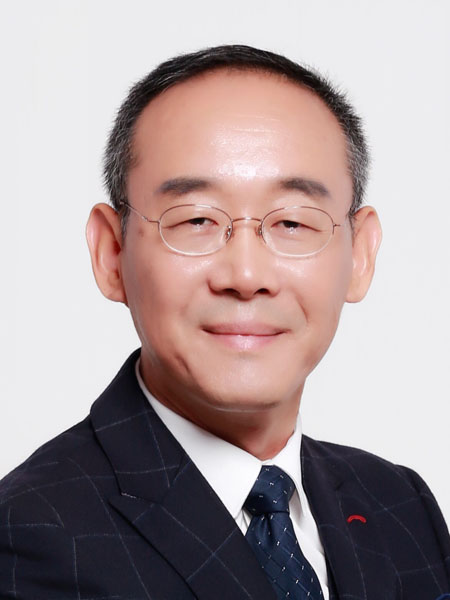
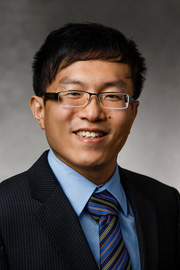
Professor Keqin Li is a globally recognized academic holding concurrent professorships at Hunan University (China) and State University of New York (USA). He has held distinguished titles including National Distinguished Professor and SUNY Distinguished Professor. His research focuses on computer networking, heterogeneous systems, energy-efficient computing, and distributed systems. He has authored over 800 publications with an h-index of 64 and secured major grants from Chinese National Science Foundation and Ministry of Science and Technology. Education: PhD in Computer Science from University of Houston (1990), B.S. from Tsinghua University (1985). Research Interests: Includes parallel computing architectures, cloud-edge computing integration, energy-efficient algorithms, and task scheduling optimization. His work spans foundational studies to applied solutions in distributed systems, with notable contributions to network function virtualization and secure cloud data sharing. Awards: Ranked top globally in distributed computing by Scopus citation metrics (2020-2021) IEEE Fellow (2015) Recipient of 1000 Plan Chinese Talent Program (2013) Professional Activities: Editorships at ACM Computing Surveys, IEEE Transactions on Parallel and Distributed Systems, and over 190 conference organizing roles. Principal Investigator of 12+ major research projects (2013-2025). Labs/Teams: Leads research groups focused on parallel computing, cloud-edge systems, and energy-efficient architectures across multiple institutions.
Prof. Andrea Bonci is an Associate Professor at the Department of Information Engineering, Polytechnic University of Marche. His research focuses on automation, robotics, control systems, and machine learning, with applications in industrial automation, predictive maintenance, and human-robot collaboration. He leads projects involving edge computing frameworks, digital twins, and advanced control algorithms for manufacturing systems. His work integrates AI techniques such as Echo State Networks and Deep Learning for anomaly detection and process optimization. Key research areas include: Development of collaborative robot systems for material handling and precision manufacturing Real-time control systems for autonomous vehicles and motorcycles Edge AI frameworks for industrial anomaly detection Modelling and simulation of cyber-physical systems Recent publications emphasize innovations in ROS 2-based robotics, PID control for lateral vehicle dynamics, and energy-efficient production planning. His contributions bridge theoretical control systems with practical industrial applications, aiming to enhance manufacturing efficiency and safety.
Bin Ran serves as the Vilas Distinguished Achievement Professor and Director of the Intelligent Transportation Systems (ITS) Program within the Civil & Environmental Engineering Department at the University of Wisconsin-Madison. A globally recognized expert in Connected Autonomous Mobility (CAM), he has authored over 850 scientific articles and secured more than 200 patents across multiple jurisdictions, significantly advancing transportation engineering through innovations in vehicle-highway automation and intelligent infrastructure systems. His educational foundation includes a PhD from the University of Illinois at Chicago (1993), an MS from the University of Tokyo (1989), and a BS from Tsinghua University (1986). These qualifications underpin his leadership in transportation research and education. Ran's research program centers on Connected Autonomous Mobility (CAM), Collaborative Automated Driving Systems (CADS), and Connected and Automated Vehicle & Highway (CAVH) technologies. His work integrates dynamic transportation network modeling, smart city applications, big data analytics, and Drive GPT-enhanced traffic simulation to develop proactive safety systems and resilient infrastructure solutions. Current projects emphasize cloud-based architectures, digital twins, and cooperative vehicle control frameworks. Analysis of his 2024-2025 publications reveals dominant trends in cloud-to-vehicle control systems, risk-quantified adaptive cruise control, and federated digital twin frameworks for connected corridors. Research spans cybersecurity for connected vehicles, energy-efficient platooning, and urban traffic flow optimization—addressing both technological innovation and sustainability challenges in transportation networks. Professor Ran has received prestigious accolades including the ITE's Wilbur S. Smith Distinguished Transportation Educator Award (2018) and the Vilas Distinguished Achievement Professorship (2016). His complete award portfolio features: 2025 TRB Committee on Vehicle-Highway Automation Best Paper Award 2024 Top 0.05% Lifetime Global Highly Ranked Scholar in Transport 2020 ASCE Journal Best Paper Award 2010 Chinese National Distinguished Expert Lifetime Honor 1994 Charley Wootan Award for best transportation PhD dissertation He actively mentors graduate researchers through thesis supervision (CIV ENGR 890/990 courses) and leads major initiatives including the Transportation Research Board's Task Force on vehicle-highway automation architecture and the World Transport Convention's Faculty Committee. His grant portfolio supports international collaborations through the International Road Federation's 180-country network. As ITS Program Director, Ran oversees a research ecosystem integrating connected vehicle corridors, roadside edge computing, and V2X-enabled infrastructure. His team develops physical-virtual integration frameworks like the Digital Twin for Connected Vehicle Corridors, focusing on real-world deployment of cooperative automated driving systems across diverse environmental conditions.
Marcel Mauri is a researcher in the field of Business Informatics at Goethe University Frankfurt. His work focuses on agile workflow management, business process management, case-based reasoning, cloud computing and knowledge management. He has been actively involved in research projects like EVER and WFCF that investigate methods for transferring workflows between domains and managing cloud-based workflow systems. Research Interests Marcel's research interests center around: Agile workflow management and business process management Case-based reasoning and knowledge extraction from processes Cloud computing and resource management in distributed systems Recent Publications His recent publications show a strong focus on autonomous mobility systems and cloud management. He has published extensively on: Integration of BDI agents with traffic simulation tools Workflow transfer learning between domains Experience management approaches for cloud task placement Projects Marcel has been involved in several research projects: Project EVER - Extraction and Processing of Procedural Experience Knowledge in Workflows WFCF - Workflow Cloud Framework for process-oriented case-based reasoning CAKE - Collaborative Agile Knowledge Engine for workflow management
Chunying Li serves as an Assistant Professor in the Department of Electronic and Electrical Engineering at the College of Engineering, Southern University of Science and Technology (SUSTech). Recognized as a 2024 Shenzhen Pengcheng Peacock Program Distinguished Talent and Ocean Power Young Scientist nominee, her research pioneers spherical underwater robotics and multi-agent systems for complex marine environments. Her educational foundation includes: Ph.D. in Intelligent Mechanical Systems Engineering from Kagawa University, Japan (2021-2023) M.S. in Control Engineering from Tianjin University of Technology, China (2017-2020) Dr. Li's research integrates biomimetic principles with advanced engineering to solve underwater navigation challenges. Her work on multi-sensor fusion enables robust environmental perception, while adaptive control algorithms allow spherical robots to operate in turbulent conditions. Key applications include ocean monitoring, resource exploration, and collaborative multi-robot missions where traditional systems fail. Recent publications (2020-2024) reveal a strong focus on performance optimization and biomimetic sensing , with 7 of 11 representative papers appearing in Q1 journals like Information Fusion (IF=17.564). A notable trend is the development of artificial lateral line systems inspired by fish, significantly improving obstacle recognition in murky waters. Her accolades include: 2024 Young Scientists Nomination for Ocean Power 2024 Shenzhen Pengcheng Peacock Program Distinguished Talent 2023 Chinese Society of Automation Natural Science Award (Second Prize) 2022 CSC National High-Level University Scholarship Dr. Li leads the Shenzhen Outstanding Science and Technology Innovation Talent Program while contributing to international projects: Shenzhen Grants: Pengcheng Peacock Program (Principal Investigator) International Collaboration: Japan SPS KAKENHI Program (Key Researcher) Regional Projects: Tianjin Science and Technology Innovation Cooperation Program Her laboratory develops spherical underwater robot platforms featuring hybrid thrusters and multi-sensor arrays, emphasizing father-son robot coordination and jellyfish-inspired swarm behaviors. Through IEEE ICMA conference leadership roles (Finance Chair 2025, Publication Co-Chair 2024), she actively shapes robotics research standards in Asia-Pacific.
Sebastian Altmeyer is a Professor holding the Chair for Embedded Systems at the Institute of Computer Science within the Faculty of Applied Computer Science at the University of Augsburg. He has been in this position since August 2019, following his role as Assistant Professor at the University of Amsterdam from September 2017 to July 2019. Professor Altmeyer's research focuses on real-time systems and embedded computing, with particular expertise in multi-core architectures, cache analysis, scheduling algorithms, and response time analysis. His work bridges theoretical computer science with practical applications in safety-critical systems. He leads research projects including ADMORPH EU H2020, Multi-Core Response Time Analysis (MRTA), Design of Hardware Transactional Memory for Embedded Systems, and several others focused on manycore architectures and embedded system design. His extensive publication record demonstrates consistent contributions to the field of real-time systems, with recent work focusing on systematic evaluation techniques for real-time systems, multicore interference analysis, safety-critical edge robotics, and hardware transactional memory. His research shows a clear trajectory toward addressing the challenges of modern embedded systems with increasingly complex hardware architectures while maintaining real-time guarantees. Professor Altmeyer leads the Chair for Embedded Systems team at the University of Augsburg, which includes Prof. Dr. Theo Ungerer, Petra Zettl, Dr.-Ing. Martin Frieb, and several other researchers. The team conducts research in areas including hardware transactional memory, manycore architectures, and real-time system analysis. Their work has practical applications in safety-critical systems where timing guarantees are essential.
Alessandro Checco is an Assistant Professor in the Computer Science Department at University of Rome La Sapienza. His research focuses on crowdsourcing, distributed systems, and privacy-preserving technologies, bridging theoretical computer science with practical applications that consider human factors in technological systems. He has established himself as a significant contributor to the field of human computation and privacy-aware systems. His educational background includes: 2020: Fellowship of Higher Education from The University of Sheffield, Higher Education Academy 2015: Ph.D. in Mathematics from Hamilton Institute (Design of decentralised algorithms applied to channel/code selection and convex optimisation for throughput fairness of 802.11 networks) 2010: M.Sc. in Mathematical Engineering from University of Roma "Tor Vergata" (110/110 with great distinction) 2009: Erasmus Scholarship at Universiteit Gent, Department of Telecommunications 2007: B.Sc. in Mathematical Engineering from University of Roma "Tor Vergata" (110/110 with great distinction) Checco's research spans multiple areas at the intersection of computer science and social implications of technology. He is particularly interested in Crowdsourcing for Human Computation, Distributed Private Recommender Systems, Information Retrieval, Data Privacy, Distributed Systems, User Data Obfuscation in Web Systems, Societal and Economic Analysis of Online Work, Crowd Workers Unionisation, and Algorithmic Bias. His work often examines how technological systems can be designed to respect user privacy while maintaining functionality, and how crowd work can be structured to be more equitable for workers. His recent publications demonstrate a clear evolution in research focus, beginning with foundational work in wireless networks and distributed algorithms, then shifting toward human computation and privacy-preserving systems. His most recent work increasingly addresses the societal implications of crowd work, including investigations into crowd worker unionization and cooperative models. Several publications examine gender bias in algorithmic systems, reflecting growing attention to fairness and ethical considerations in his field. Among his notable achievements: All That Glitters is Gold-An Attack Scheme on Gold Questions in Crowdsourcing (Best Paper Award) Checco has secured significant research funding and led important projects including the H2020-funded FashionBrain project as Research Director and the EPSRC-funded BetterCrowd project as Research Associate. His work on the FashionBrain project demonstrates his ability to lead large-scale, interdisciplinary research initiatives. He has also received the Technology Innovation Development Award (TIDA) from Science Foundation Ireland. His research has practical applications across multiple domains including recommendation systems (BLC: Private Matrix Factorization Recommenders), peer review assistance using AI, smart farming technologies, and cooperative models for crowd workers (CrowdCO-OP). He has developed frameworks for understanding worker behavior in crowdsourcing platforms and created methods for improving quality control in human computation systems.
Dr. Shuming Liang serves as a Postdoctoral Research Fellow at The Data Science Institute within the Faculty of Engineering and Information Technology at University of Technology Sydney (UTS). His research bridges machine learning theory with practical applications in critical infrastructure management, particularly focusing on water distribution systems and transportation networks. His educational background includes a Ph.D. in Data Science from UTS (2020-2024), a Master of Science in Astrophysics from the Chinese Academy of Sciences (2010-2014), and a Bachelor of Science in Physics from the University of Jinan (2006-2010). Dr. Liang's research interests center on Machine Learning with specialization in Graph Neural Networks , where he develops novel frameworks for anomaly detection, link prediction, and infrastructure failure forecasting. His work uniquely integrates time-series data , geospatial data , and satellite imagery to solve real-world problems in water resource management and transportation optimization. Recent publications demonstrate his expertise in creating multi-task learning approaches that enhance the interpretability and scalability of GNNs for industrial applications. His publication trend shows increasing focus on practical implementations of machine learning in civil infrastructure, with recent work emphasizing anomaly detection in sensor networks (2025), generalization techniques for GNNs (2025), and applications in water pipe network management (2021-2024). His research consistently addresses the challenge of applying theoretical machine learning advances to solve tangible problems in critical infrastructure systems. Dr. Liang actively collaborates with industry partners through funded research projects, particularly with Sydney Water Corporation, where his work contributes to proactive maintenance strategies for water distribution networks. His research has practical implications for reducing water loss, improving infrastructure reliability, and optimizing resource allocation in urban environments. His laboratory work focuses on developing data-driven frameworks that integrate multiple data sources (pipe features, network structure, geographical information, and temporal failure patterns) to create comprehensive predictive models for infrastructure management. Current projects involve implementing these models in real-world water utility operations to enable targeted pipe inspection and renewal planning.
Silvia Schintke is a full professor at Haute école d'Ingénierie et de Gestion du Canton de Vaud (HEIG-VD), part of HES-SO University of Applied Sciences and Arts Western Switzerland. She leads the Laboratory of Applied NanoSciences (COMATEC-LANS) and the Industrial Systems Engineering program. Professor since 2002 Executive Diploma HSG in General Management (2012-2014) St. Gallen Leadership Certificate (2011) Her research focuses on Nanotechnology and Advanced Materials , particularly Functional Surfaces , Nanofiber Fabrication , and Flexible Electrodes . She has developed bio-sourced packaging solutions and metal-free conductive polymers for medical applications. Key projects include: Current: SIENA (electrophysiology networks in agriculture) PRONANO (nanotechnology development) Completed: NAPARDI (France-Switzerland), CORRAL (EU FP7 corrosion protection), NanoSkills (European nanotechnology training) She has secured multiple grants from: innosuisse Swiss National Science Foundation EU FP7 Leonardo da Vinci Program Her publications span conductive hydrogels , nanofiber electrodes , and molecular self-assembly techniques. She collaborates with institutions like Agroscope, Vivent SA, and international universities.
Associate Professor at Anglia Ruskin University's School of Engineering and the Built Environment within the Faculty of Science and Engineering. Director of the Telecommunications Engineering Research Group with expertise in electronic design of telecommunication networks and wireless systems. Education: PhD in Telecommunication Engineering, Anglia Ruskin University MSc in Telecommunications Systems Management, Anglia Polytechnic University BSc in Electrical & Electronic Engineering, Baghdad University Research focuses on wireless networks , RF systems , noise cancellation , and mobile communications across 2G-5G generations. His work extends to cyber security , RF MEMs , mobile ad hoc networks , and emerging areas including cloud computing and artificial intelligence in networking systems. Recent publications reveal strong emphasis on network performance optimization, security enhancements, and energy efficiency in wireless systems, with significant contributions to mobile ad hoc networks, cloud offloading algorithms, and software-defined networking architectures. Awards: Royal Academy of Engineering award (1999) Supervised 12 PhD students and 2 MPhil students to completion as primary supervisor, with 2 additional PhD completions as secondary supervisor. Currently guides 4 PhD candidates. Secured competitive grants including Newton-Bhabha Fund (2016) and UKIERI UK-India Education and Research Initiative (2014-2016) for collaborative research in mobile accessibility and network security. Leads consortium bids for EU Horizon 2020 projects and directs research in RF MEMs sensor design and mobile multiprotocol switches, with active industry collaborations including Sedgewall Ltd and Glazing Vision.
Paula Stickles serves as a Professor of Mathematics at Millikin University within the School of Mathematics & Computational Sciences, where she focuses on advancing pedagogical practices in mathematics education through rigorous scholarship and classroom innovation. Her research centers on mathematics education , with particular expertise in college algebra instruction, secondary mathematics methods, and teacher development. Key investigations include the efficacy of online homework systems, textbook necessity in foundational courses, authentic teaching experiences for pre-service educators, and the integration of technology in mathematics instruction. Her work consistently addresses practical challenges in mathematics teaching across secondary and post-secondary contexts, emphasizing evidence-based approaches to curriculum design and assessment. Analysis of her 14 publications (2006-2017) reveals a cohesive research trajectory focused on improving mathematics instruction through empirical studies of teaching tools, resource allocation, and pedagogical strategies. Her scholarship spans methodological diversity—from Markov chain analyses of games to semiotic examinations of classroom culture—while maintaining practical relevance for mathematics educators. Dr. Stickles has no documented scientific awards in the provided materials. Her professional contributions appear centered on teaching excellence and educational research rather than competitive grant funding or graduate student supervision, as no such activities are referenced in available sources.
Derek Hoiem is a Professor in the Department of Computer Science at the University of Illinois Urbana-Champaign (UIUC), affiliated with the Siebel School for Computing and Data Science since 2009. He holds a PhD in Robotics from Carnegie Mellon University (2007) and completed a Beckman Postdoctoral Fellowship (2008). As co-founder and Chief Science Officer of Reconstruct, he develops AI-driven tools for construction progress monitoring. His research focuses on computer vision, object recognition, scene understanding, and graphics. Key honors include IEEE Fellow (2022), University Scholar (2022), and the Sloan Research Fellowship (2013). He has received NSF CAREER and Intel Early Career awards, alongside best paper awards at CVPR (2006) and WACV (2015). His teaching excellence is reflected in numerous 'List of Teachers Ranked as Excellent' accolades across multiple semesters. Research interests span 3D reconstruction, neural networks, and multimodal models. His work addresses challenges in visual program generation, neural radiance fields, and construction monitoring through photogrammetry. He leads projects in continual learning, efficient AI systems, and explainable multimodal interactions. Professional contributions include grants from NSF and industry partnerships. He advises on cutting-edge AI applications in construction, graphics, and vision-language integration. His lab’s innovations bridge theoretical advancements with real-world systems like Reconstruct’s Visual Command Center.
Dr. Michael Pantic is a Researcher in the Professorship for Autonomous Systems at ETH Zürich , affiliated with the Department of Mechanical and Process Engineering. His work focuses on advancing autonomous systems , particularly in aerial robotics , control systems , and sensor fusion . He specializes in developing innovative solutions for obstacle avoidance, navigation algorithms, and robotic manipulation in complex environments. His research emphasizes omnidirectional micro aerial vehicles (OMAVs) , reactive planning, and real-time obstacle avoidance techniques. Recent projects include corrosion inspection of infrastructure using autonomous robots and integrating radar with vision for robust depth prediction. Dr. Pantic's contributions bridge theoretical advancements with practical applications in industrial robotics and structural monitoring. Publications highlight trends in reactive navigation strategies , multi-resolution mapping , and physical interaction control . His work addresses challenges like local minima escape in path planning and minimizing actuator complexity in aerial manipulators. No scientific awards or student advisees are listed in the provided materials. Collaborative efforts include contributions to the MBZ International Robotics Challenge and the CleanSpace One Mission .
Ron C. Chiang is an Associate Professor at the University of St. Thomas, specializing in software engineering, distributed systems, and cloud computing. His research focuses on optimizing virtualization, resource management, and high-performance architectures. He holds a Ph.D. in Computer Engineering from George Washington University and has contributed to advancements in cloud security, I/O prefetching, and precision agriculture through machine learning. Education: Ph.D. in Computer Engineering (George Washington University). Research Interests: Distributed systems, cloud computing, virtualization systems, and data-intensive applications. He has developed innovative solutions for container placement strategies, interference-aware scheduling, and energy-efficient memory management. Awards include the Best Student Paper Finalist at SC11, a 'Best of HotPower' award, and grants from IBM and Amazon. He teaches courses on cloud computing, database systems, and infrastructure as code. His work integrates theoretical computer science with practical applications, such as sustainable farming through AI and healthcare platforms in cloud environments. Grants: IBM Academic Initiative (2015–2017), Amazon AWS Educator Credits (2015–2016). He has published extensively in journals like IEEE Transactions and at conferences including SC, ICAC, and ICPA.
Azalia Mirhoseini is an Assistant Professor of Computer Science at Stanford University and founder of the Scaling Intelligence Lab. She also serves as a Senior Staff Scientist at Google DeepMind. Her research focuses on scalable and self-improving AI systems, including advancements in chip design automation, large language models, and reinforcement learning applications. Prior roles include co-founding the ML for Systems team at Google Brain. Education: BSc in Electrical Engineering from Sharif University of Technology; PhD in Electrical and Computer Engineering from Rice University. Awards include MIT Technology Review’s 35 Under 35 and Best ECE Thesis Award. Research highlights include AlphaChip (deep RL for chip layout optimization), Mixture-of-Experts (MoE) architectures, and Constitutional AI frameworks for alignment. Her work bridges AI and systems, addressing real-world challenges in hardware design and scalable AI. Key contributions span over 50 publications in top venues like Nature , NeurIPS , and ICLR . Media coverage includes MIT Tech Review, IEEE Spectrum, and WIRED. Teaching includes CS229s: Systems for Machine Learning. Labs/Teams: Scaling Intelligence Lab (Stanford), collaborations with Google Research/DeepMind. Advising/Grants: Mentors students through Stanford; her work is funded via industry-academic partnerships.