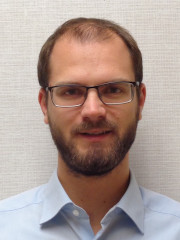
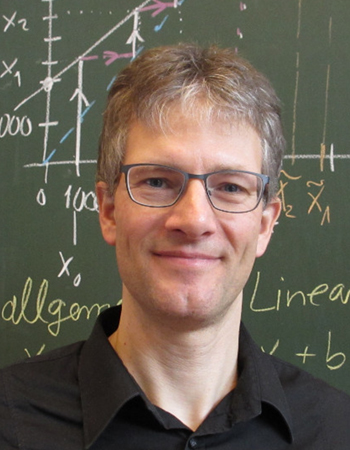
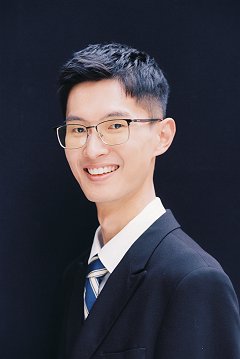
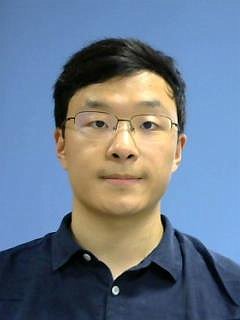
Martin Radetzki is a full Professor at the Institute for Computer Architecture and Parallel Systems (University of Stuttgart) , specializing in Embedded Systems . His work focuses on network-on-chip (NoC) design, fault tolerance, memory optimization, and simulation frameworks. Key research areas: NoC synthesis, deadlock-free routing, performability analysis, and power-efficient memory subsystems Recent publications emphasize integer linear programming frameworks for co-designing floorplanning and routing, chiplet-based systems , and machine learning-enabled performance evaluation His methodologies address cross-layer challenges in NoC design, combining formal optimization with practical implementation for heterogeneous processing elements. Collaborative projects include fault resilience analysis, parallel simulation techniques, and memory allocation strategies for SoCs. Dr. Radetzki supervises research with students like Shuang Liu and Manuel Strobel , contributing to IEEE Transactions on Computers , ACM TECS , and conferences such as DATE and MCSoC . Current work explores optimal routing topologies for emerging chip architectures.
Prof. Burkhard Corves serves as Director of the Institute of Mechanism Technology, Machine Dynamics and Robotics within the Faculty of Mechanical Engineering at RWTH Aachen University. His academic leadership spans robotics, mechanism theory, and dynamic systems engineering, with significant contributions to industrial automation and sustainable manufacturing applications. His research concentrates on Robotics, Mechanism Design, Machine Dynamics, and Multibody Simulation, with recent emphasis on compliant gripper development for surgical applications, energy-efficient cam mechanisms, and human-robot collaboration systems for inclusive workplaces. Key investigations address data-driven trajectory optimization, sustainable ship recycling processes, and real-time simulation techniques for bicycle and vehicle dynamics. Analysis of his 15 most recent publications (2024-2026) reveals dominant themes in industrial robotics (particularly delta robots and pick-and-place systems), compliant mechanism design for medical applications, and sustainable manufacturing processes. Significant focus appears on real-time multibody simulation for transportation systems, control strategies for vibration suppression, and recycling automation aligned with circular economy principles. Emerging work explores human-robot collaboration for disability inclusion and bioprocessing optimization. Scientific Awards No awards were documented in the provided materials. Advising and Grants Specific student supervision details and grant funding information were not included in the source documentation. Laboratories and Teams Prof. Corves leads the Institute of Mechanism Technology, Machine Dynamics and Robotics (IGMR), directing research in robotic systems for manufacturing, sustainable ship recycling, and bicycle dynamics simulation. The institute actively participates in interdisciplinary projects including Bots2ReC (semi-autonomous asbestos removal) and sustainable EV battery recycling initiatives, with strong emphasis on practical engineering solutions for industrial challenges.
Jürgen Strohhecker is a Professor of Business Administration, Operations, and Cost Management at the Frankfurt School of Finance & Management. He has held this position since 1999 and is renowned for integrating system dynamics into operational and managerial research. His work spans behavioral operations management, inventory control, and sustainable strategies. Education: Studied business administration at Mannheim University (1987–1992), earning a doctoral degree (Dr. rer. pol.) in 1997. Strohhecker’s research focuses on dynamic complex decision-making, behavioral accounting, and production control. His work applies system dynamics to areas like supply chain risk modeling, sustainable business strategies, and cognitive traits in inventory management. He has developed tools for balanced scorecard cockpits and explored technology adoption in financial services. His recent publications emphasize team mental models, safety stock optimization, and Kanban integration in pharmaceutical production. Articles highlight interdisciplinary applications of system dynamics in sustainability and strategic implementation. Scientific Awards: Prechel Foundation Research Prize (1998) Excellence in Teaching Award (2010) Hessian Academic Award for Teaching (Top 12 submission, 2010) Strohhecker has held leadership roles, including President of the System Dynamics Society (2015) and Deutsche Gesellschaft für System Dynamics (2006–2010). He collaborates with institutions like London Business School and contributes to academic and professional associations.
Dirk Müller is a Professor of Software Technology/Operating Systems at the Faculty of Computer Science/Mathematics, Dresden University of Applied Sciences (HTW Dresden). He has been in this position since 2016 and is an active member of the Faculty Council since June 2021. He was awarded IEEE Senior Member status in April 2023. His academic journey includes a doctorate in Engineering from the University of Kassel in 2006, habilitation at Chemnitz University of Technology in 2014, and prior research positions at Philipps University of Marburg and Florida State University. 1995-2002: Studies in Medical Informatics at University of Leipzig 2003-2006: Research Assistant/Doctoral Student at University of Kassel 2006-2008: Research Associate at Philipps University of Marburg 2008-2014: Academic Councillor at Chemnitz University of Technology 2014-2016: Private Lecturer at TU Chemnitz 2016-present: Professor at HTW Dresden Professor Müller's research focuses on real-time systems and scheduling, model-driven software development, digitalization in companies and administration, and the concept of information. His work particularly emphasizes Rust language applications in software engineering. He has published extensively on real-time scheduling algorithms, mixed-criticality systems, and embedded systems. His teaching responsibilities include Operating Systems I, Software Engineering I & II, Model-Driven Software Development, and Programming in Rust. His publication record shows a consistent focus on real-time systems, with a clear progression from theoretical scheduling algorithms to practical implementations. His recent work has expanded into public administration digitization and biometric conference systems, while maintaining his core expertise in scheduling theory. The publications demonstrate strong international collaboration, particularly with researchers like Matthias Werner, Alejandro Masrur, and Robert Baumgartl. IEEE Senior Member (2023) Erdős number: max. 4 Strict Erdős number: max. 5 Professor Müller actively supervises student theses, with over a dozen bachelor's and diploma theses completed between 2023-2025. His students work on diverse topics including Rust programming, workflow automation, user experience optimization, and real-time event processing. He serves as a reviewer for multiple prestigious journals including IEEE Transactions on Parallel and Distributed Systems, Real-Time Systems, and The Computer Journal. He also acts as Senior Editor for Computer Science Books at Versita. His laboratory work focuses on practical implementations of real-time systems, often using Raspberry Pi as a platform for traffic analysis and other embedded applications. His research group maintains strong connections with industry, as evidenced by the applied nature of student projects at companies like IntraConnect GmbH.
Dr. Philipp Grete is a postdoctoral research associate at the Hamburg Observatory (University of Hamburg), previously holding a Marie Skłodowska-Curie Fellowship at the same institution and a postdoctoral position at the Department of Physics & Astronomy, Michigan State University . His interdisciplinary research bridges astrophysics and computational methods , focusing on: Magnetohydrodynamic turbulence in astrophysical systems Performance-portable exascale simulation frameworks (Parthenon, AthenaPK) Cosmic ray transport mechanisms Anisotropic transport processes in weakly collisional plasmas Supercomputer-driven AGN feedback analysis He leads the XMAGNET project using DOE INCITE allocations on exascale systems and recently secured DFG funding for three years. His work has been recognized with the Postdoctoral Excellence in Research Award (MSU), SC23 Best Paper nomination, and CUG23 Best Paper Runner-up award.
Osbert Bastani serves as an Associate Professor in the Department of Computer and Information Science at the University of Pennsylvania. He leads the trustml@Penn research group and holds affiliations with the ASSET, PRECISE, and PRiML research centers, as well as PLClub. His academic work centers on developing reliable and interpretable artificial intelligence systems through interdisciplinary approaches combining programming languages, formal methods, and machine learning. He earned his Ph.D. in Computer Science from Stanford University under the guidance of Alex Aiken, followed by a postdoctoral position at MIT working with Armando Solar-Lezama. This foundation in both theoretical computer science and practical systems has shaped his research trajectory. Bastani's primary research areas include Trustworthy Machine Learning (focusing on robustness against adversarial attacks, fairness in algorithmic decision-making, and explainable AI), program synthesis, and formal verification. His recent publications address critical challenges in large language models, such as defending against jailbreaking attacks and ensuring trustworthy retrieval-augmented generation. He also develops methods for conformal prediction under distribution shifts and neurosymbolic program synthesis for complex tasks like web question answering. His teaching portfolio features advanced courses including CIS 7000: Trustworthy Machine Learning and CIS 4190/5190: Applied Machine Learning, where he integrates cutting-edge research into the curriculum. Through his research group, he mentors graduate students on projects spanning neurosymbolic programming, uncertainty quantification, and fairness in sequential decision-making. As an active member of Penn's research ecosystem, Bastani contributes to the ASSET center's mission of building secure systems, PRECISE's work on cyber-physical systems, and PRiML's machine learning initiatives, while collaborating with PLClub on programming language innovations.
Richard Kempter is a Professor at Charité - Universitätsmedizin Berlin's Institute of Neuroscience, where he leads research in computational neuroscience with a focus on hippocampal circuitry and memory systems. His work bridges experimental neuroscience with theoretical modeling, examining how neural networks support spatial navigation, memory formation, and consolidation processes. His research interests center on the computational principles underlying hippocampal function, particularly in memory consolidation, spatial navigation, and neural coding. Kempter investigates how hippocampal circuits generate sharp wave-ripple events, how grid cells form spatial representations, and how memory traces transform during systems consolidation. His work combines computational modeling with experimental data analysis to develop testable theories about neural mechanisms. Analyzing Kempter's recent publications reveals a strong focus on hippocampal CA3 circuitry, with particular attention to sharp wave-ripple complexes and their role in memory consolidation. His work demonstrates how specific connectivity patterns between pyramidal neuron subtypes enable memory replay, while his computational models explain how grid-like representations emerge in entorhinal cortex. The research spans multiple scales from single-cell properties to network dynamics, with applications to both rodent and human memory systems. Kempter's scientific contributions have appeared in top-tier journals including Nature , Neuron , and PNAS , reflecting the significance of his work in understanding fundamental neural mechanisms. His publications demonstrate consistent innovation in developing computational frameworks that explain experimental observations while generating new testable predictions about memory systems. His research team collaborates extensively across institutions, working with experimental neuroscientists to bridge theoretical models with empirical data. Current projects examine how neural synchrony creates functional filters during rest states, how population sparseness affects memory capacity, and how subtype-specific connectivity enables sequential activation during memory replay events.
Shangwen Wang is an Assistant Professor in the School of Computer Science at National University of Defense Technology (NUDT) in Changsha, China. He earned his Bachelor's degree in June 2017, Master's degree in December 2019, and Ph.D. in December 2023, all from NUDT. During his graduate studies, he was supervised by Professor Xiaoguang Mao. From May 2022 to July 2023, he was a visiting student at Southern University of Science and Technology under Professor Yepang Liu. His educational background includes: Ph.D. in Software Engineering, NUDT (2020.3-2023.12), supervised by Prof. Xiaoguang Mao Visiting Scholar, SUSTech (2022.5-2023.7), supervised by Prof. Yepang Liu M.A. in Software Engineering, NUDT (2017.9-2019.12), supervised by Prof. Xiaoguang Mao B.A. in Software Engineering, NUDT (2013.9-2017.6) Wang's research focuses on program repair, program comprehension, mining software repositories, software maintenance and evolution, software testing, and AI for Software Engineering. His work bridges traditional software engineering techniques with modern AI approaches, particularly leveraging large language models for various software engineering tasks. He has made significant contributions to automated program repair, fault localization, vulnerability detection, and code generation. His research demonstrates a strong emphasis on empirical validation and practical applicability to real-world software development challenges. His recent publications show a clear trend toward integrating large language models with traditional software engineering tasks. The 15 most recent articles reveal a focus on applying LLMs to program repair, fault localization, vulnerability detection, and code generation, while maintaining strong empirical foundations. His work spans both theoretical advancements and practical tool development, with applications in software security, testing, and maintenance. His notable achievements include: CCF Outstanding Doctoral Dissertation (CCF优博) 2024 Outstanding Doctoral Graduates, NUDT, 2023 Multiple distinguished paper awards including ACM SIGSOFT Distinguished Paper Award (ISSTA'24) and IEEE TCSE Distinguished Paper Awards (ICSME'22, SANER'22) Prestigious scholarships from NUDT throughout his academic career As an active member of the software engineering community, Wang serves on numerous program committees for top conferences including ICSE, ASE, ESEC/FSE, and ISSTA. He has also contributed to teaching as a teaching assistant for courses such as Compiler, Python Programming, Discrete Mathematics, and C++ Programming. His research group appears to be actively mentoring students, as evidenced by his role as corresponding author on multiple student-led publications. Wang maintains an active research presence with collaborations across multiple institutions in China. His work demonstrates a clear trajectory from traditional program analysis techniques toward integrating cutting-edge AI approaches, particularly large language models, into software engineering practices.
Zhongxin Liu is a Distinguished Research Fellow (Assistant Professor) and Doctoral Supervisor at the College of Computer Science and Technology, Zhejiang University. He received his Ph.D. from Zhejiang University under the supervision of Prof. Shanping Li. His research focuses on intelligent software engineering (AI4SE), particularly using AI to help developers understand, write, change, and test code through learning from software "big data". His educational background includes: Ph.D. in Computer Science, Zhejiang University (2016-2021) Dr. Liu's research interests center around intelligent software engineering with emphasis on code intelligence, program analysis, and software testing. His work leverages machine learning, particularly large language models, to solve challenging problems in software development including code generation, bug localization, and test case generation. He has made significant methodological contributions to the field through his innovative approaches to understanding and improving the software development lifecycle. His recent publications (2024-2026) demonstrate a clear trend toward leveraging large language models for software engineering tasks, with particular focus on code generation, fault localization, and program analysis. The research spans multiple domains including vulnerability detection, smart contract development, and cross-domain code search, showing how AI can enhance traditional software engineering practices. Dr. Liu has received numerous prestigious awards for his contributions: ACM SIGSOFT Distinguished Paper Award (ISSTA 2025, ASE 2018-2020) Distinguished Paper Award (APSEC 2023) Zhejiang University Education Foundation Qizhen Scholar (2021) Distinguished Doctoral Thesis of Zhejiang University (2021) As a Doctoral Supervisor at Zhejiang University, Dr. Liu mentors graduate students in intelligent software engineering. He serves on program committees for major conferences including ICSE, ASE, and FSE. His research group actively recruits undergraduate interns, graduate students, and postdocs to work on code intelligence projects. Dr. Liu is also scheduled to be a Visiting Professor at the University of Stuttgart from October 2024 to January 2025. Dr. Liu leads a vibrant research group at Zhejiang University focused on advancing AI-powered tools for software development. His work bridges theoretical advances in machine learning with practical applications in software engineering, creating novel solutions that help developers be more productive and produce higher quality code.
Luciano Baresi is a Full Professor at the Polytechnic University of Milan (Politecnico di Milano), Italy, affiliated with the Department of Electronics, Information and Bioengineering. He earned his laurea (MSc) and PhD in Computer Science from the same institution and has held visiting positions at the University of Oregon (USA), Tongji University (China), and the University of Paderborn (Germany). His research spans software engineering, with current focuses on self-adaptive systems, edge computing, and AI/ML-based software. His work integrates formal methods with practical applications, emphasizing autonomous systems, cloud-edge continuum, and federated learning. Recent publications highlight AI-driven advancements in software testing, resource optimization, and educational tools. Key research themes include: AI/ML for autonomous driving testing and data augmentation Serverless computing at the edge Federated learning system architectures Containerization and cloud resource management Awarded for impactful contributions: RE 2020 Most Influential Paper ICSOC 2020 Best Paper SEAMS 2022 Best Paper He advises 14+ PhD students and leads projects like Ketonet (health app), WHO's Essential Items Estimator, and dynaSpark. As Editor-in-Chief of Proceedings of the ACM on Software Engineering and senior editor for multiple journals, he shapes academic discourse in adaptive systems and software engineering.