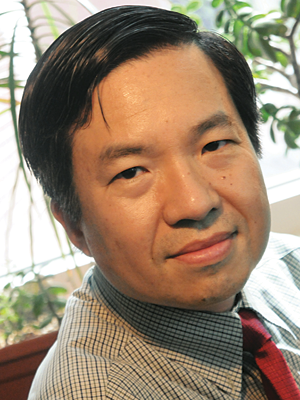
Shih-Fu Chang is the Dean of Columbia Engineering and holds the Morris A. and Alma Schapiro Professorship at Columbia University. His research focuses on computer vision, machine learning, and multimedia information retrieval. He is recognized as a foundational figure in the field of content-based visual search and has pioneered innovations in image/video search engines, crime prevention systems, and brain-machine interfaces. His leadership roles include Chair of Columbia's Electrical Engineering Department (2007-2010), Editor-in-Chief of the IEEE Signal Processing Magazine (2006-2008), and Senior Executive Vice Dean at Columbia Engineering, where he drives strategic planning and international collaboration. Dr. Chang has received prestigious awards including the ACM Multimedia Technical Achievement Award, IEEE Signal Processing Technical Achievement Award, and IEEE Kiyo Tomiyasu Award. He is a Fellow of AAAS, ACM, and IEEE, and an Academician of Academia Sinica. His recent work emphasizes multimodal reasoning, few-shot learning, and vision-language systems, with applications in healthcare diagnostics and multimedia benchmarking. His research spans cross-modal understanding, event extraction, and adaptive AI systems. Key contributions include systems like Ferret-v2 for multimodal grounding and RESIN for schema-guided event tracking. He has advised multiple startups and actively contributes to curriculum development in AI and engineering education.
Alison J. Mackey is Professor and Chair of the Department of Linguistics at Georgetown University, College of Arts and Sciences. She is a leading scholar in second language acquisition (SLA), with a focus on interaction, feedback, research methodology, and language learning across the lifespan. Her research interests include second language acquisition , task-based language teaching , research methodology , interaction and corrective feedback , and language learning in children and adults . She has published extensively in top-tier journals and book series, shaping methodological standards in the field. Her recent publications reflect a strong trend in methodological rigor , interactionist approaches , and practical applications of SLA research. Themes include data elicitation , stimulated recall , task design , and pragmatic development , spanning both theoretical and classroom-based inquiry. Mildenberg Prize (2012) for The Handbook of Second Language Acquisition American Association for Applied Linguistics Distinguished Scholarship and Service Award International Association of Task-based Language Learning and Teaching Distinguished Achievement Award CHOICE Outstanding Academic Title (2012) Alison Mackey has advised numerous scholars through co-authorship and editorial leadership. She is Editor-in-Chief of Cambridge University Press Annual Review of Applied Linguistics and Editor of the Routledge Second Language Research series, guiding the publication of cutting-edge research. While specific grants are not listed, her editorial work and high citation count (>35,000) reflect significant research impact and funding support. She leads and contributes to major research initiatives such as the IRIS Repository , promoting open-access research instruments in SLA. Her work fosters collaboration across institutions and supports methodological transparency and replication in the field.
Mingyu Ding is a tenure-track Assistant Professor at the Department of Computer Science, University of North Carolina at Chapel Hill. His research bridges robotics, embodied AI, and computer vision, focusing on building agents that interact effectively with physical environments. PhD in Robotics, University of Hong Kong (2022), advised by Ping Luo Postdoctoral Fellow, BAIR@UC Berkeley (with Masayoshi Tomizuka) Visiting Scholar, CSAIL@MIT (with Joshua Tenenbaum) B.S. in Computer Science, Renmin University of China (under Zhiwu Lu) His work emphasizes robot learning through physical simulation, multimodal foundation models, and self-supervised methods. Key contributions include Embodied Concept Learner (ECL) and Sparse Diffusion Policy frameworks. Recent publications highlight trends in 3D vision, diffusion-based planning, and language-driven robotic behavior synthesis. Awards include ICRA Best Paper (2024), ME Rising Star (2023), and CVPR Doctoral Consortium (2023). Session Chair for ICRA 2025 Associate Editor for IROS 2025 Guest Editor for Robotics Special Issue: Embodied Intelligence
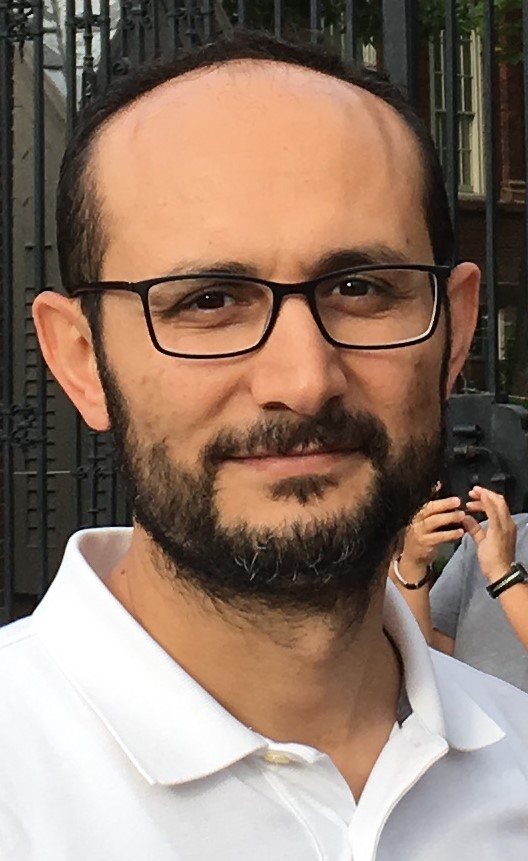
Ozcan Ozturk is a Professor in the Computer Science and Engineering and Electronics Engineering programs at Sabancı University's Faculty of Engineering and Natural Sciences. Previously, he held professorships at Bilkent University and adjunct roles at North Carolina State University. His expertise spans heterogeneous computing, parallel systems, processor architecture, and compiler optimization. He earned his Ph.D. from Penn State University, with prior academic roles at the University of Florida and internships at Intel and Marvell. Education: Ph.D. in Computer Science and Engineering (2007), Pennsylvania State University M.S. in Computer Engineering (2002), University of Florida B.Sc. in Computer Engineering (2000), Bogazici University Research interests include accelerator technologies, GPU-based systems, multicore processors, and compiler optimizations. His work focuses on improving parallelization efficiency, energy optimization, and reliability in heterogeneous architectures. He leads funded projects like 'Machine Learning for Compiler Flags' and 'Graph Accelerator Design'. Notable awards include the Bilkent Teaching Award (2019), BAGEP (2018), and HiPEAC Paper Award (2016). He serves on editorial boards of IEEE and ACM journals and chairs major conferences like ASPLOS and ICS. Grants and collaborations include partnerships with Huawei, Intel, NVIDIA, and TÜBİTAK. He advises over 20 students and has supervised projects in safety-critical systems, FPGA accelerators, and compiler-directed optimizations. His lab develops domain-specific architectures, including RISC-V extensions for graph processing.
Dima Damen is a Professor of Computer Vision at the School of Computer Science, University of Bristol, where she leads the Machine Learning and Computer Vision Group. She also serves as a Senior Research Scientist at Google DeepMind. As an EPSRC Early Career Fellow (2020-2025) and a Fellow of ELLIS for Europe, her research focuses on advancing computer vision, particularly in egocentric (first-person) vision, video understanding, and action recognition. Her educational background and professional journey have positioned her as a leader in the field of computer vision, with a particular emphasis on understanding human activities from wearable cameras. She has received numerous awards including Best Paper at ACCV 2024 and Outstanding Paper at ICASSP 2021. Professor Damen's research interests span multiple areas of computer vision and machine learning. She specializes in egocentric vision, where she has made significant contributions to understanding human activities from first-person perspectives. Her work explores video understanding, action recognition, hand-object interactions, and the development of vision-language models that can interpret and generate instructions from visual data. She has pioneered approaches to unique video captioning, long video understanding through active memory representations, and spatial reasoning from egocentric videos. Her research often bridges the gap between theoretical computer vision and practical applications in human-centered AI. Her recent publications demonstrate a strong focus on egocentric vision, with papers like "AMEGO: Active Memory from long EGOcentric videos" (ECCV 2024) and "HOI-Ref: Hand-Object Interaction Referral in Egocentric Vision" (2024) advancing the state of the art in understanding long-form first-person videos. She has also contributed to vision-language models with works like "ShowHowTo: Generating Scene-Conditioned Step-by-Step Visual Instructions" (CVPR 2025) and "It's Just Another Day: Unique Video Captioning by Discriminitave Prompting" (ACCV 2024, Best Paper). Her research shows a consistent trajectory toward building systems that can understand human activities in natural environments with human-like capabilities. Professor Damen has received significant recognition for her work, including: EPSRC Early Career Fellow (2020-2025) ELLIS Fellow for Europe (Nov 2024) Best Paper at ACCV 2024 Outstanding Paper at ICASSP 2021 (awarded to only 3 out of 1700 papers) Outstanding Reviewer for CVPR 2020 and 2021 Program Chair for ICCV 2021 She has successfully advised numerous PhD students and postdoctoral researchers, many of whom have gone on to prestigious positions in academia and industry. Her group has secured significant research funding including the EPSRC Programme Grant Visual AI and the EPSRC UMPIRE grant. She actively collaborates with industry partners including Google DeepMind, Adobe, and Meta, ensuring her research has practical impact. Professor Damen leads the Machine Learning and Computer Vision Group at the University of Bristol, which focuses on egocentric vision, video understanding, and the development of vision-language models. The group has created influential datasets like EPIC-KITCHENS, which has become a standard benchmark in egocentric vision research. Her team regularly participates in and organizes workshops at major computer vision conferences including CVPR, ICCV, and ECCV.
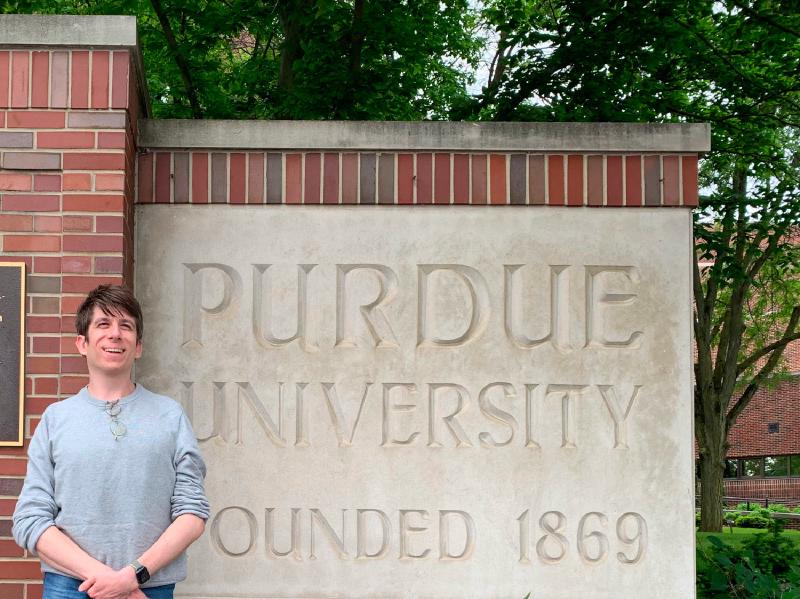
Joseph A. Campbell is an Assistant Professor in the Department of Computer Science at Purdue University, leading the Collaborative AI for Machines and People (CAMP) Lab. He holds a Ph.D., M.S., and B.S. in Computer Science and Computer Engineering from Arizona State University. Before academia, he worked as a software engineer for five years. Prior to Purdue, he was a Postdoctoral Fellow at Carnegie Mellon University's Robotics Institute. His research focuses on explainable machine learning and robotics, particularly how agents use explanations for self-improvement and decision-making. Key areas include theory of mind in multi-agent systems, lifelong learning, and interpretable transfer learning. His work bridges robotics and AI, with applications in human-robot interaction and prosthetic control. Notable publications include advancements in reinforcement learning with language models, multi-agent collaboration frameworks, and methods for enhancing state estimation in robots. His research has been presented at top conferences like NeurIPS, EMNLP, and CoRL. Dr. Campbell maintains an active GitHub profile (joe-campbell) with repositories such as Interaction Primitives for robotics applications. His lab, CAMP, explores AI systems that collaborate effectively with humans and other machines.
Jay Henderson is an Assistant Professor in the Department of Computer Science at Memorial University of Newfoundland, leading the Human-Computer Interaction (HCI) Lab. His research focuses on quantitative HCI, measuring human performance with emerging technologies such as mixed reality and generative AI. He holds a PhD from the University of Waterloo and has held roles including Postdoctoral Fellow at Carleton University and Senior Research Scientist at Huawei Technologies Canada. Education: PhD in Computer Science, University of Waterloo (2021) BSc Hons in Computer Science (minors in Mathematics and Psychology), Mount Allison University (2016) Research Interests: Henderson’s work bridges computer science with psychology and mathematics, emphasizing objective measurement of user interactions. Key areas include mixed reality productivity, generative AI interfaces, gesture-based input, and multimodal feedback systems. His quantitative approach ensures practical insights for technology design. Key Grants & Awards: NSERC Discovery Grant ($155,000 over 5 years) NSERC Discovery Launch Supplement ($12,500) David R. Cheriton Graduate Scholarship ($20,000 over 2 years) Teaching & Supervision: Teaches courses like COMP 4303 (AI for Games) and supervises multiple graduate and undergraduate researchers. Notable supervisees include Daniel Jo (MSc) and Arunav Saha (BSc Honours). Service Contributions: Served on ACM committees including Graphics Interface and CHI Late Breaking Work. Acted as Virtual Chair for ACM ASSETS 2024 and contributed to ACM’s name change policy as a transgender advocate.
Pranav Rajpurkar is an Associate Professor at Harvard University, co-founder of a2z Radiology AI, and lead of the Rajpurkar Lab. His work pioneers AI systems that emulate physician-level expertise in medical tasks, with a focus on multi-modal medical AI and radiology. He joined Harvard faculty at age 25 and became Associate Professor at 30 after completing his Stanford PhD at 19. Education: Bachelor of Science (CS), Stanford University, 2015 Master of Science (CS), Stanford University, 2018 PhD (CS), Stanford University, 2021 Rajpurkar's research centers on building AI that thinks and communicates like doctors, with breakthrough work in ECG arrhythmia detection and chest X-ray interpretation. His lab develops foundational datasets (ReXGradient-160K, RadRevise) and benchmarks for medical AI, spanning computer vision, NLP, and multimodal systems. Current work focuses on generative AI for clinical workflows, voice-guided emergency assessment, and rigorous evaluation frameworks for medical LLMs. His 2025 publications reveal three dominant trends: (1) Generative medical AI for radiology report generation and editing, (2) Voice-enabled AI agents for prehospital care, and (3) Multimodal clinical monitoring systems. Key advancements include universal biomedical foundation models (UniBiomed), 3D CT segmentation from text reports, and frameworks for AI-human role separation in radiology. Scientific Awards: Forbes 30 Under 30 in Science (2022) MIT Tech Review Innovator Under 35 (2023) Nature Medicine Early-career Researcher To Watch (2022) Rajpurkar has mentored over 84,000 students through Harvard courses and Coursera's AI for Medicine program. His lab secures major NIH and NSF grants for medical AI development, with recent funding focused on multimodal emergency care systems (MC-MED) and radiologist-AI collaboration. He directs the Harvard-Stanford Medical AI Bootcamp and co-hosts The AI Health Podcast. The Rajpurkar Lab operates as a cross-institutional hub with collaborators at Stanford, MIT, and major hospitals. It drives initiatives like the MAIDA framework for global medical imaging data sharing and develops open-source tools including RadGraph for radiology report analysis. Current projects focus on voice AI for stroke assessment and generative models for non-invasive cancer management.
Henrike K. Blumenfeld is an Associate Professor at San Diego State University (SDSU), affiliated with the School of Speech, Language and Hearing Sciences within the College of Health and Human Services. She serves as Director of the Bilingualism and Cognition Laboratory and holds joint faculty status in the SDSU/UCSD Joint Doctoral Program in Language and Communicative Disorders. Her primary research focuses on bilingualism, cognitive control, and language processing across the lifespan. Education: Ph.D., Communication Sciences and Disorders, Northwestern University (2001–2008) B.A., Linguistics, Bryn Mawr College (1997–2001) Research Interests: Bilingualism and cognitive aging Cross-linguistic effects in language comprehension Cognitive control mechanisms in bilingual speakers Neurobiological bases of bilingual language processing Assessment of multilingual populations Grants & Awards: She has secured funding from NIH/NIDCD, NSF, and SDSU grants totaling over $200,000. Notable awards include the 2022 CHHS YES Award for service, 2013 Undergraduate Professor of the Year, and multiple research travel grants. Labs/Teams: Directs the Bilingualism and Cognition Lab, collaborating with institutions like the Gary and Mary West Senior Wellness Center and Bangor University’s Centre for Research on Bilingualism.
Lourdes Ortega is a Professor in the Department of Linguistics at Georgetown University and serves as Faculty Director of Georgetown’s Initiative for Multilingual Studies. Her work focuses on multilingualism beyond childhood, equitable language education, and decolonial epistemologies. She mentors students at undergraduate, master’s, and doctoral levels. Former positions include roles at University of Hawai‘i at Mānoa (2004-2012), Northern Arizona University (2002-2004), and Georgia State University (2000-2002). Education: Ph.D. and M.A. from University of Hawai‘i at Mānoa. Her research investigates how multilingualism develops in non-native contexts, advocating for social justice and equity in language education. Key contributions include her award-winning 2000 meta-analysis in Language Learning , the textbook Understanding Second Language Acquisition (2009), and co-editing The Cambridge Handbook of Bilingualism (2019). Recent work addresses under-studied languages like Arabic and Urdu in U.S. K-12 education, emphasizing decolonial and Indigenous frameworks. She has published extensively in top journals such as Applied Linguistics , Studies in Second Language Acquisition , and World Englishes . Awards: Gerald M. Mara Faculty Mentoring Award (2016, 2020), Pimsleur Award (2001), and 2023 recognition as a top 2% cited researcher. She advises 22 doctoral students and has secured grants supporting multilingual education research. Leads Georgetown’s Initiative for Multilingual Studies, co-chairs the Harmonious Bilingualism Network (HaBilNet), and edits Language Learning . Served as President of the American Association for Applied Linguistics (2023-2024). Her work bridges theory and practice, prioritizing cura personalis (care for the individual) in mentoring and advocating for multilingual well-being.
Dr. Anett Hoppe is a research staff member at the Leibniz Information Centre for Science and Technology (TIB) in Hannover, Germany, where she works in the Visual Analytics research group. Her research focuses on the intersection of artificial intelligence, education technology, and information science, with particular emphasis on how people learn through search processes and educational video consumption. Dr. Hoppe completed her academic journey with: Ph.D. in Semantic Web technologies for online user profiles from the University of Burgundy, Dijon, France Her primary research interests span Search as Learning, software-based support for scientific reproducibility, and ethical considerations in computer-based decision making. She investigates how visual elements, reading sequences, and AI technologies impact knowledge acquisition during web search and educational video consumption. Her work bridges human-computer interaction, educational psychology, and information retrieval to create more effective learning experiences, with recent publications examining the role of large language models, vision-language models, and visual complexity in educational contexts. Analysis of her recent publications (2024-2025) reveals a strong interdisciplinary focus combining computer science, educational psychology, and information science. Her research examines video-based learning effectiveness, knowledge gain prediction, educational resource discovery, and the impact of visual elements on learning outcomes. She consistently explores how AI technologies can be leveraged to enhance educational experiences while maintaining attention to ethical considerations and scientific reproducibility. Dr. Hoppe maintains active collaborations with researchers across multiple institutions, with frequent co-authorship patterns indicating strong research partnerships, particularly with Ralph Ewerth and other members of the Visual Analytics group at TIB. Her work supports TIB's mission to advance knowledge infrastructure and scholarly communication through innovative technological solutions while directly addressing practical challenges in educational technology and information retrieval.
Dr. Feras Dayoub is a Senior Lecturer at the School of Computer and Mathematical Sciences (Faculty of Sciences, Engineering and Technology) at the University of Adelaide , specializing in Embodied AI and Robotic Vision within the Australian Institute for Machine Learning (AIML) . He co-directs the CROSSING French-Australian laboratory for human-autonomous agent teaming and holds an Adjunct position at the Queensland University of Technology (QUT) , serving as an Associate Investigator at its Centre for Robotics . Previously, he was a Chief Investigator at the ARC Centre of Excellence for Robotic Vision . His research focuses on advancing reliable deployment of computer vision and machine learning on mobile robots in real-world environments. Applied projects include agricultural automation , environmental conservation , and autonomous infrastructure monitoring . He has published extensively on topics like object detection , domain adaptation , 3D representation learning , and vision-language navigation , with a particular emphasis on robustness in dynamic and partially observed environments. Dr. Dayoub is also an educator specializing in programming , computer vision , and robotic perception . He contributes to open-source robotics research through tools like AARK (Autonomous Racing Toolkit) and has led teams developing solutions for precision agriculture (e.g., Deepfruits fruit detection system) and environmental monitoring (e.g., Crown-Of-Thorns starfish detection ). Key Collaborations : CROSSING Lab, QUT Centre for Robotics Research Themes : Embodied AI, Robust Perception, Domain Adaptation
Amir-massoud Farahmand is an Associate Professor at the Polytechnique Montréal (Department of Computer and Software Engineering) and a Status-Only Associate Professor at the University of Toronto (Department of Computer Science). He is also a Core Academic Member at Mila (Quebec AI Institute). His research focuses on computational and statistical mechanisms for designing efficient reinforcement learning (RL) agents and adaptive algorithms. Dr. Farahmand's research spans reinforcement learning, optimal transport, adversarial robustness, and model-based methods. He has extensively studied regularization in RL, distributional approaches, and algorithm design for stability and convergence. His textbook Lecture Notes on Reinforcement Learning (2021) emphasizes mathematical intuition over algorithmic collections. Recent publications highlight trends in high-update-ratio RL, distributional equivalence, and self-prediction for task understanding. He is actively involved in teaching, having previously instructed courses on machine learning, neural networks, and RL at the University of Toronto. Scientific Awards : Ontario Early Researcher Award (2024) for Accelerated Reinforcement Learning Algorithms Dr. Farahmand has mentored numerous students, including his first PhD graduate Yangchen Pan (now at Oxford) and MSc students like Allen Bao (AMD) and Farnam Mansouri (University of Waterloo). He is currently recruiting graduate students at Polytechnique Montréal and Mila for 2025 admissions.
Dr. Hilde Kuehne is a Professor at the University of Tuebingen and a key researcher at the Tuebingen AI Center. She holds affiliations with MIT-IBM Watson AI Lab and Goethe University Frankfurt, with a focus on computer vision, multimodal learning, and explainable AI. Her work bridges vision-language models, audio-visual alignment, and self-supervised methods. Co-organizer of the New Frontiers in Associative Memories workshop @ ICLR 2025 Member of the Scientific Advisory Board of the Carl-Zeiss-Foundation Contributor to CVPR 2025's UTD dataset for unbiased video benchmarks Her research addresses critical challenges in: Explainability for Vision Transformers (LeGrad) Fine-grained audio-visual alignment (CAV-MAE Sync) Zero-shot visual recognition automation (Meta-Prompting) Spatio-temporal grounding without annotations Recent collaborative work spans 15+ publications across CVPR, NeurIPS, ICCV, and ICLR, with emphasis on multimodal foundation models, dataset bias mitigation, and differentiable logic networks. She actively contributes to workshop organization and peer review as evidenced by her involvement in CVPR 2025 and ICLR 2025 program committees.
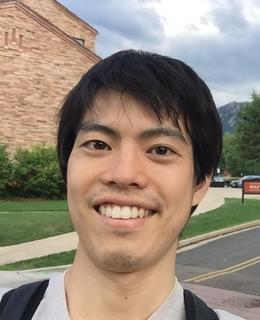
Ryo Suzuki is an Assistant Professor in the Department of Computer Science at the University of Calgary's Faculty of Science. His research focuses on Human-Computer Interaction (HCI) and robotics, particularly in tangible user interfaces, swarm robotics, and shape-changing interfaces. He holds a PhD in Computer Science from the University of Colorado Boulder (2020) and has conducted research internships at Stanford University, UC Berkeley, the University of Tokyo, and Adobe Research. His educational background includes advanced coursework in robotics and HCI, with a strong emphasis on interdisciplinary innovation. He teaches courses such as Human-Computer Interaction II, Human-Robot Interaction, and Special Topics in Mixed Reality Application Design. Research interests include designing novel interfaces for AR/VR/MR systems, haptic feedback mechanisms, and collaborative robotics. His work often bridges physical and digital spaces, such as through projects like LiftTiles (shape-changing building blocks) and RoomShift (room-scale haptic environments). Key awards include the UIST 2020 Honorable Mention Paper Award, DIS 2019 Best Paper Award, and the Ministry of Internal Affairs and Communications in Japan Innovation Award. His research has been featured in IEEE Computer Graphics and Applications, TechXplore, and Wired. He actively explores future work in symbiotic AI systems, AI-in-the-loop AR applications, and scalable shape-changing robotics. His lab emphasizes hands-on prototyping and user-centered design principles.