David K. Gaffney is a Professor in the Department of Radiation Oncology at the University of Utah and serves as Senior Director for Clinical Research at the Huntsman Cancer Institute . He holds the J Robert and Ann K Stewart Endowed Professorship and specializes in the radiotherapeutic management of gynecological cancers, breast cancers, and lymphomas. Education: PhD in Biochemistry (1990), MD (1992) - Medical College of Wisconsin Residency - University of Utah School of Medicine Internship - LDS Hospital, Salt Lake City Dr. Gaffney’s research focuses on clinical trial development , prognostic markers , radiation sensitizers , and secondary cancers . His work addresses improving survival and quality of life for cancer patients through optimized radiation protocols and global health initiatives. Recent publications emphasize brachytherapy for cervical cancer, IMRT applications, and financial implications of treatment regimens. He chairs the Clinical Research Executive Committee at Huntsman Cancer Institute and contributes as a Senior Editor for journals like International Journal of Gynecologic Cancer . Dr. Gaffney actively collaborates with international organizations such as the Gynecologic Cancer Intergroup and has led guidelines for cervical and endometrial cancer staging and treatment.
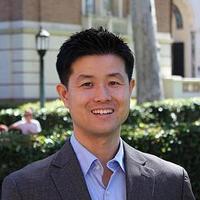
Andy Hong is an Assistant Professor at the University of Utah's Department of City & Metropolitan Planning . He also serves as a PEAK Urban researcher at the University of Oxford and an honorary senior fellow at the George Institute for Global Health. As director of the Healthy Aging and Resilient Places (HARP) Lab , Hong explores the intersection of urban design, transportation systems, and population health outcomes. Ph.D. in Urban Planning and Spatial Analysis, University of Southern California (2016) MPA and MUP from University of Washington (2011) BS in Informatics and Geography, University of Washington (2004) His research spans several domains: Urban Health Science - Analyzing how built environments affect physical activity, sedentary behavior, and chronic disease Environmental Exposure - Investigating air pollution exposure across transportation modes and urban settings Planetary Health - Through bibliometric analysis of interdisciplinary sustainability frameworks Smart City Applications - Using machine learning and IoT sensor data for environmental monitoring Recent publications examine: Integration of big data and thick data for urban governance greenspace health benefits in global South cities age-friendly infrastructure challenges during pandemics transport equity through accessibility metrics air pollution modeling using interpretable ML techniques He previously held academic appointments at University of Oxford, University of British Columbia, and Korea Transport Institute.
Sotirios Xydis is an Assistant Professor in the Division of Computer Science at the School of Electrical and Computer Engineering, National Technical University of Athens (NTUA), with prior faculty appointment at Harokopion University of Athens (2020-2023). He maintains ongoing collaboration with the Institute of Communication and Computer Systems (ICCS) since 2014 and previously served as an engineer at HEDNO (2015-2018) and postdoctoral researcher at Politecnico di Milano (2011-2013). His academic credentials include: BSc in Electrical and Computer Engineering, NTUA (2005) MSc in Techno-Economic Systems, NTUA (2011) PhD in Electrical and Computer Engineering, NTUA (2011) Dr. Xydis specializes in hardware/software co-design , energy-efficient hardware acceleration , and memory management for embedded and cloud-edge systems. His research bridges low-power circuit design , heterogeneous architecture optimization , and resource management frameworks , with particular emphasis on AI workloads and serverless infrastructures. Current projects target Edge AI accelerators (CONVOLVE), disaggregated memory systems, and LLM inference optimization through hardware-aware algorithms. Analysis of his 2023-2025 publications reveals three dominant trends: (1) Energy-efficient hardware accelerators for Edge AI using approximate computing techniques, (2) Memory/resource management innovations for disaggregated serverless environments, and (3) GPU/FPGA optimization for LLM inference through dynamic frequency scaling and predictive throttling. These works consistently address the power-performance tradeoffs in heterogeneous computing systems. His scientific recognition includes: Best Paper Award, IEEE/NASA/ESA AHS (2007) Best Paper Award, ACM PARMA (2013) Best Paper Award, ACM Computing Frontiers (2020) Hipeac Award at DAC (2019, 2020) Dr. Xydis has secured over 15 European/national research grants as Principal Investigator and Technical Coordinator, focusing on hardware acceleration frameworks and energy-efficient computing. His advising encompasses graduate research in hardware design and optimization, though specific student names aren't publicly listed. Current projects include CONVOLVE for Edge AI and CollectiveHLS for collaborative hardware synthesis. He is a core member of NTUA's Microelectronics Laboratory (Microlab) and collaborates with ICCS on hardware acceleration projects. His team develops frameworks like CollectiveHLS and throttLL'eM, with active participation in DATE, DAC, and ISCA conference communities.
Cornelius Born , M.Sc., is a researcher affiliated with KrcmarLab at the Technical University of Munich (TUM) , specifically within the Department of Information Systems and Business Process Management (Informatik 17). His work sits at the intersection of information systems, healthcare, and human-AI collaboration. Education: M.Sc. in Information Systems – Technical University of Munich Visiting Graduate Student – ETH Zurich, Switzerland Exchange Semester – Tsinghua University, Beijing, China B.Sc. in Information Systems – Duale Hochschule Baden-Württemberg, Mannheim Research Interests: Cornelius focuses on Information Systems in Healthcare , investigating how digital technologies transform clinical workflows. He explores Digital Transformation in Hospitals , from electronic health records to advanced analytics, and studies Human-AI Collaboration , ensuring that AI-driven decision support tools integrate seamlessly and ethically into healthcare settings. Project Involvement: He is actively contributing to the ZNAFlow project, which targets data-driven process optimization in healthcare environments. Industry Experience: Prior to his academic role, Cornelius gained practical experience at Roland Berger and EY , providing strategic IT and process consulting to healthcare and public-sector clients. Contact: cornelius.born@tum.de
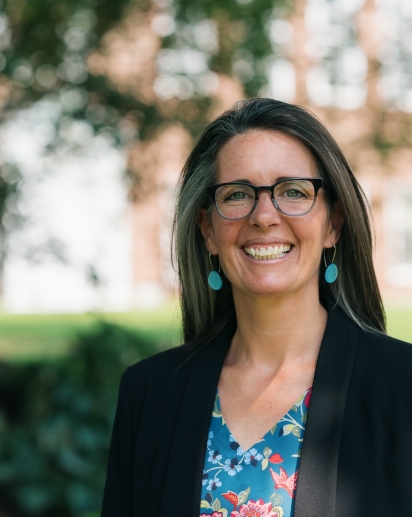
Devon Noonan is an Associate Professor at Duke University School of Nursing since 2013, teaching Health Promotion (N502) in the Doctor of Nursing Practice Program. A registered nurse and board-certified Family Nurse Practitioner (FNP-BC), she brings over eight years of clinical experience across community health, occupational health, and pediatric/adolescent settings. Her educational foundation includes: PhD and MPH from University of Virginia MS in Nursing from Georgetown University BSN from Boston College Dr. Noonan's research targets health promotion and cancer risk reduction in vulnerable populations, with concentrated expertise in tobacco control methodologies and innovative prevention strategies. Her work bridges clinical practice with public health interventions through: Analysis of alternative tobacco products (smokeless tobacco, Snus, waterpipe) Development of workplace health initiatives Implementation of mobile health technologies Design of cancer prevention frameworks for at-risk communities Her scientific contributions are recognized through competitive funding: American Lung Association fellowship supporting tobacco use research Sigma Theta Tau grant for college student health studies NIH T32 fellowship at University of Michigan advancing cancer risk reduction These awards underpin her investigation of health risk behaviors and evidence-based interventions, particularly focused on tobacco exposure pathways and scalable prevention models for underserved groups.
Dr. Schenita D. Randolph serves as Associate Professor at Duke University School of Nursing, where she joined the faculty in July 2015. Holding credentials including PhD, MPH, RN, and Certified Nurse Educator (CNE), her academic journey spans over a decade of nurse education and leadership roles including Interim Director for Community Engagement at North Carolina A&T State University. Her educational foundation includes: PhD in Public Health with Community Health Education focus from Walden University MPH from University of North Carolina-Chapel Hill BSN from North Carolina A&T State University Dr. Randolph's research centers on HIV/AIDS prevention among African American populations, with specialized focus on health disparities and minority health . Her program develops culturally tailored interventions targeting HIV reduction in Black communities, particularly examining structural barriers, community engagement strategies, and racial discrimination's impact on sexual health outcomes. Recent work emphasizes PrEP uptake among Black women and parent-adolescent communication frameworks. Analysis of her 2023-2025 publications reveals consistent focus on community-partnered HIV prevention interventions targeting Black populations in the US South. Key methodological approaches include human-centered design, salon-based implementation, and anti-racist frameworks addressing structural barriers to PrEP access. Recurring themes involve racial discrimination's intersection with sexual health and innovative recruitment strategies for marginalized populations. Her distinguished recognition includes: Great 100 Nurse recipient for North Carolina National Elsevier Leading Stars in Education (ELSIE) Award NC A&T State University Interdisciplinary Research Award (2013) As an active nurse educator for over 15 years, Dr. Randolph has advised nursing students across BSN and graduate programs while developing population-focused curricula. Her grant-funded research examines health disparities through community-engaged approaches, though specific funding sources aren't detailed in available materials. Previous clinical roles as public health nurse and home health professional inform her community-centered research perspective.
Maria Isabel Calapez Cabrita Leal Seruca serves as an Associate Professor at Portucalense University's Science and Technology Department in Porto, Portugal, where she teaches Information Systems and coordinates the Informatics Engineering and Information Systems for Management programs. She additionally holds the role of Department Coordinator for the Erasmus+ Programme. As a Senior Researcher at Universidade do Minho's Centro Algoritmi, she contributes to the IST R&D Group and ISTTOS R&D Lab, bridging academic and research domains across institutions. Her academic foundation includes a degree in Applied Mathematics and Computation from Portucalense University, complemented by an MSc and PhD in Computation from the University of Manchester Institute of Science and Technology (UMIST). This technical background underpins her research trajectory in digital systems and organizational transformation. Her research focuses on Information Systems with specialized expertise in Business Intelligence, Data and Web Mining, Digital Transformation, and Reuse and Patterns. She has pioneered models like E-swim (Enterprise Semantic Web Implementation) and ToOW (Training of Organizations in the Web) to address organizational challenges through technology adoption. Her work consistently integrates practical applications in educational settings and industry contexts, particularly through international Erasmus collaborations. Analysis of her 2019-2025 publications reveals a dominant emphasis on Digital Transformation in educational mobility systems (notably Erasmus+ projects), alongside applied Data Mining in domains including tourism, pharmaceutical distribution, and waste management. Her scholarship demonstrates a trajectory from foundational semantic web research toward contemporary organizational digitalization challenges, with increasing focus on sustainable development frameworks. While no major individual scientific awards are documented in the source material, her research output includes 41 publications with an h-index of 7 and 164 citations, reflecting steady scholarly impact in Information Systems journals and conferences. She actively leads Erasmus+ initiatives including the KA220 project 'Data Science We Teach Data' and has coordinated multiple Erasmus Intensive Programmes on Sustainable Digital Transformation (2022-2023), Business Intelligence (2008-2010), Web Mining (2011-2013), and Data Science (2014). Her grant work consistently targets curriculum development for digital competencies in higher education. Within research infrastructure, she contributes to the Digital Transformation and Innovation in Organisations (DTIO) Group at REMIT (Portucalense University) and the ISTTOS Lab at Centro Algoritmi (Universidade do Minho), focusing on organizational agility through technology adoption and pattern-based solutions.
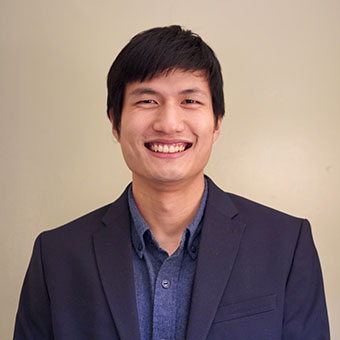
Duane Juang serves as Assistant Professor of Engineering in Biology at Brandeis University, where he bridges engineering, chemistry, and biology to develop accessible tools for health research and diagnostics through novel assay platforms. Education: BS from National Tsing Hua University, Taiwan PhD from National Tsing Hua University, Taiwan PhD from University of Wisconsin-Madison His research program focuses on creating simple tools using physical phenomena (fluidics, magnetics) and chemistries (surface, biomolecular) for biological discovery. Key initiatives include: developing high-throughput microbial screening for antibiotic discovery, studying microbial community interactions for therapeutic applications like Clostridium difficile infection treatment, and engineering point-of-care diagnostics with quantum magnetic sensing for low-abundance biomarker detection without complex instrumentation. Analysis of his recent publications reveals consistent advancement in microfluidic technologies for health applications, spanning microbial ecology platforms, enzymatic reaction acceleration, and integrated diagnostic systems for pathogens. His work demonstrates a translational approach from fundamental microbial studies to practical diagnostic solutions addressing global health challenges. As director of the In Vitro Methods Lab, Dr. Juang fosters interdisciplinary collaboration to harness emerging technologies for accessible health solutions, with ongoing projects targeting antibiotic discovery pipelines and field-deployable diagnostic tools for resource-limited settings.
Dr. Thomas Do is a Senior Lecturer at the School of Computer Science, University of Technology Sydney (UTS), where he also serves as Co-Director of the Human-centric AI (HAI) Centre since March 2023. His academic appointments at UTS include Senior Lecturer (November 2023-present), Research Fellow (November 2021-October 2023), and Research Associate (October 2020-October 2021). He is a member of the Faculty of Engineering and Information Technology, the Australian Artificial Intelligence Institute (AAII), and the School of Computer Science at UTS. Dr. Do's educational background includes: PhD in Computer Science from the University of Technology Sydney (2020) Master's degree in Human-Computer Interaction and Robotics from the Korea Institute of Science and Technology (2016) Dr. Do's research spans the intersection of artificial intelligence, neuroscience, and human-computer interaction. His primary focus is on Brain-Computer Interfaces (BCIs), where he investigates how to integrate BCI technology into everyday applications. He explores the convergence of AI, data science, neural engineering, and human-computer interaction to unlock the full potential of BCIs. His current projects include Human-centric AI technologies (funded by GrapheneX), Brain-Robot Interfaces (funded by Australian Defence), and Human-AI teaming (funded by ARC DP). His work often involves EEG analysis, spatial navigation studies, and object recognition systems. Dr. Do's recent publications demonstrate a strong focus on advancing Brain-Computer Interface technology through innovative approaches to signal processing, multimodal integration, and practical applications. His work spans from fundamental neuroscience research on brain connectivity patterns to applied AI systems for real-world problems in healthcare, transportation, and security. A notable trend in his research is the integration of explainable AI methods with neuroscience to create more transparent and trustworthy BCI systems. Dr. Do is actively involved in teaching and supervision at UTS, where he has taught courses including Data System, AI/Analytics Capstone Project, Technology Research Methods, and Interactive Media. His current research is supported by an ARC Discovery Project grant titled "Mind-reading AI to translate silent speech into words" (2025-2027). Dr. Do maintains active collaborations with institutions worldwide, having previously worked with the Technical University of Berlin, Germany, the University of California San Diego, USA, and the US Army Research Lab. His research has practical applications in medical, defense, and consumer technology sectors.
Zirui Song, MD, PhD, serves as Associate Professor of Health Care Policy and Medicine at Harvard Medical School and Faculty Director of Research for the Center for Primary Care. He practices as a general internist at Massachusetts General Hospital, providing primary care and inpatient medicine services while leading health policy initiatives across Harvard-affiliated institutions. His educational foundation includes: B.A. in Public Health Studies (Honors) from Johns Hopkins University M.D. from Harvard Medical School (magna cum laude) Ph.D. in Health Policy (Economics track) from Harvard University National Bureau of Economic Research Fellowship in Aging and Health Economics Dr. Song's research centers on optimizing healthcare value through rigorous analysis of payment systems, service pricing, insurance financing, and care quality. His work examines how employer strategies, peer influences, and population-level interventions impact spending and health outcomes, employing advanced econometric methods to address critical policy questions. Recent projects investigate private equity's effects on healthcare organizations, firearm injury consequences, and Medicare payment reforms. Analysis of his publication record reveals dominant themes in private equity impacts on healthcare delivery (hospitals, hospices, physician practices), Medicare Advantage payment dynamics , and innovative payment models for maternity and dental care. His work consistently bridges health economics theory with practical policy applications, often utilizing natural experiments and large-scale administrative data. His distinguished recognition includes: AcademyHealth Article-of-the-Year award NIHCM Foundation Health Care Research Award Society of General Internal Medicine Outstanding Junior Investigator Award Morton N. Swartz, M.D. Humanism in Medicine Award Multiple Harvard University Certificates of Distinction in Teaching As an educator, Dr. Song directs the MGH Internal Medicine Residency Health Policy concentration and co-directs Harvard's foundational Health Policy course for medical/dental students. He mentors PhD candidates and medical trainees while serving as JAMA Health Forum Associate Editor and Health Services Research editorial board member. His policy experience includes U.S. Department of Health and Human Services work on Medicare payment policy and Massachusetts Health Policy Commission fellowship.
Michele Tine is an Associate Professor in the Sociology Department at Dartmouth College and Chair of the Education Steering Committee. Her research investigates cognitive processes underlying the income achievement gap and develops evidence-based interventions for low-income students, with specific focus on rural versus urban poverty contexts. Dr. Tine earned her Ph.D. in Applied Developmental and Educational Psychology from Boston College and her B.A. in Psychology and Education from Gettysburg College. Her academic expertise spans Rural Poverty, Evidence Based Education, Sociology of Education, Cognitive Development, and Curriculum Development. Her research examines how poverty in different geographic settings affects cognitive and academic outcomes, particularly through spatial memory mechanisms and contextual factors. She develops practical educational interventions targeting the widening achievement gap, emphasizing rural-urban disparities that persist across grade levels. Recent publications analyze distinct cognitive profiles in rural versus urban poverty, spatial memory's educational implications, and learning science applications for closing achievement gaps. Her work consistently addresses context-specific challenges for low-income students and translates findings into actionable educational strategies. Dr. Tine teaches undergraduate courses including EDUC 01 (Introduction to Education), EDUC 27 (The Impact of Poverty on Education), EDUC 47 (Social and Emotional Development), and EDUC 52 (Topics in Education). As Chair of the Education Steering Committee, she shapes academic governance and curriculum development within Dartmouth's education programs.
Dr. Sheree Lloyd is a Senior Lecturer in Health Services Management at the Tasmanian School of Business and Economics (TSBE), University of Tasmania. With over 30 years of experience in academic and health service management, she is a recognized expert in digital health, health informatics, electronic medical record (EMR) usability, rural health innovation, and quality and safety in healthcare delivery. She holds a PhD from Queensland University of Technology, a Master of Technology Management from Griffith University, and a Bachelor of Business with a computing major from QUT. She is a Certified Health Information Manager, a Fellow of the Australasian College of Health Service Managers and the Australasian Institute of Digital Health, and a Senior Fellow of the Higher Education Academy (FHEA). PhD, Queensland University of Technology Master of Technology Management, Griffith University Bachelor of Business (Computing major), Queensland University of Technology Associate Diploma in Medical Record Administration, Cumberland College of Health Sciences Graduate Diploma in Project Management, Aurora Training Graduate Diploma in Government, Aurora Training Dr. Lloyd’s research is centered on improving healthcare through digital transformation. Her primary interests include EMR usability, digital health innovation, work-integrated learning (WIL), consumer-directed care, and leadership in health and social care. She leads a national collaborative study on clinician perceptions of EMR usability across Australia and Finland, and is currently Chief Investigator on an internal UTAS-funded project assessing digital health transformation preparedness in Tasmania. Her work emphasizes co-design with industry, translation of evidence into practice, and workforce upskilling through microcredentials. Her recent publications span topics such as EMR usability, microcredentials in digital health, graduate employability through WIL, consumer-directed care, and innovation in rural health. These works appear in journals like International Journal of Medical Informatics , Health Information Management Journal , and Asia Pacific Journal of Health Management . Collectively, her research reflects a strong commitment to human-centered digital health solutions, equitable care, and sustainable workforce development. Executive Dean's Commendation for PhD Vice Chancellor's Award, Queensland University of Technology Teaching Commendation, Griffith University Teaching Commendation, University of Tasmania Dr. Lloyd has supervised multiple Master’s students to completion and regularly examines PhD and MA theses. She has led curriculum design for health service management and digital health programs, including postgraduate certificates and microcredentials. She is actively engaged in industry collaboration, serving as Chief Examiner for the Australasian College of Health Service Management Fellowship and contributing to national digital health committees. Her current work focuses on evaluating workforce readiness for Tasmania’s statewide EMR rollout, aiming to inform targeted training and support strategies.
Daniel Gleason is a Professor of English and current Chair of the English Department at Bryan College in Dayton, Tennessee. He serves as Poet in Residence and has held academic roles since at least 2010, when he defended his dissertation on William Faulkner at the University of Tennessee at Chattanooga. Ph.D. in English from Indiana University of Pennsylvania M.A. in English Literary Study from University of Tennessee, Chattanooga B.A. in English from Bryan College Dr. Gleason's research focuses on 20th-century American Literature, contemporary poetry, and trauma theory. His creative writing explores faith-infused poetics through publications in journals like Rappahannock Review and Dappled Things , often intersecting with religious themes and personal identity. His scholarly work shows strong engagement with Southern literature (Mary Oliver, Natasha Trethewey, William Faulkner), trauma's impact on narrative structure, and theological dimensions in contemporary poetry. Conference presentations at events like Theology on Tap and the Conference on Christianity and Literature demonstrate his interdisciplinary approach. As department chair and Poet in Residence, Dr. Gleason bridges academic leadership with creative practice, having coached soccer and worked in diverse educational settings including public schools and online programs.
Dr Clare McTigue is a Lecturer in Public Sector Innovation at the Business School of Edinburgh Napier University and a member of the Unity Lab Team. Her work bridges transport policy, sustainable urban mobility, and emerging technologies, with a strong focus on policy implementation challenges in public transport systems. Her research interests include transport policy implementation , public sector innovation , bus policy reform , sustainable transport , stakeholder engagement , and the integration of emerging technologies such as hydrogen-electric aviation and autonomous vehicles. She employs both qualitative and quantitative methods, with recent work applying advanced statistical modeling to road safety data. Her recent publications span high-impact journals including Transport Policy , Analytic Methods in Accident Research , and Utilities Policy . The articles reflect a consistent focus on policy barriers, governance models, and technological innovation, particularly in the UK context. A notable trend is her growing emphasis on public acceptance of novel transport systems, as seen in the HEART project research. Dr McTigue has been involved in significant research projects, including the HEART (Hydrogen Electric and Automated Regional Transportation) project funded by Innovate UK, which aims to develop the world’s first hydrogen-powered, automated aircraft for sub-regional travel. This project highlights her engagement with cutting-edge, interdisciplinary transport solutions. She is also affiliated with the Unity Lab Team , which supports collaborative innovation in public services. Though no formal awards are mentioned, her work has been presented at international conferences such as the World Conference on Transport Research in Shanghai. Dr McTigue contributes to doctoral education through supervision and research collaboration. While no current advisees are listed, she completed her own PhD on barriers to bus policy implementation, demonstrating deep expertise in the field.
Michael J. Rust serves as Professor of Biomedical Engineering and Director of Experiential and Entrepreneurial Learning in the College of Engineering at Western New England University, focusing on developing accessible medical technologies for resource-limited settings globally. Education: BS in Electrical Engineering, University of Cincinnati PhD in Electrical Engineering, University of Cincinnati Research Interests: Dr. Rust pioneers innovations in Point-of-Care diagnostics, biosensors, and lab-on-a-chip systems with emphasis on global health applications. His work bridges engineering and clinical needs through projects like non-invasive diabetes breathalyzers and portable anemia diagnostics, targeting affordability and usability in low-resource environments. Key methodologies include microfluidics, bioinstrumentation, and BioMEMS integration. Scientific Awards: NSF GK-12 Graduate Fellowship Advising and Grants: Mentoring 65+ students since 2010 across capstone projects and research, Dr. Rust secures major funding from NSF, NIH, ASQ, KEEN, Jenzabar Foundation, and Kern Family Foundation. His lab translates research into real-world solutions through partnerships with industry and international fieldwork. Laboratory: The POC Medical Devices Lab develops deployable healthcare tools including ultrasound nerve block training phantoms, pharmaceutical quality testers, and centrifuge-free anemia diagnostics, with active student involvement in design and prototyping.