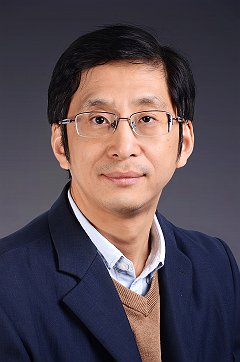
Daniel Heßler serves as Professor in the Department of Design at Dortmund University of Applied Sciences, specializing in the BA Serious Games & Digital Knowledge program where he provides student advisory services. He actively mentors students developing games that transcend entertainment through educational and knowledge-based applications. His research focuses on the pedagogical integration of game mechanics, emphasizing serious game design across multiple formats including digital prototypes, board games, card games, and role-playing systems. He prioritizes practical implementation of learning theories through spatial design, user interface development, and hybrid game systems that connect gameplay with knowledge acquisition. Prof. Heßler conducts structured portfolio consultations requiring digital presentations of 3D models, game prototypes, and process diagrams, maintaining accessibility through email coordination for alternative appointments. His work bridges theoretical frameworks with tangible educational outcomes in game-based learning environments.
Dr. Adrian Clark is an Associate Professor in the School of Product Design at the University of Canterbury's Faculty of Engineering, where he teaches and conducts research in the Applied Immersive Game Design major (Bachelor of Product Design) and Game Development (Bachelor of Digital Screen Honours). His research focuses on Augmented Reality, Computer Vision, Game Design, Computer Graphics, and Artificial Intelligence . Clark completed his PhD in Computer Science at the HIT Lab NZ, developing the OPIRA (Optical-flow Perspective Invariant Registration Augmentation) framework. He later invented 'Colourable Augmented Reality,' leading to the co-founding of QuiverVision, whose Quiver app has been downloaded over 22 million times. After seven years as Head of Research and Development at QuiverVision, he returned to academia. Clark has designed multiple degree programs including the Bachelor of Digital Screen (Honours) with specializations in Animation, Game Arts, and Game Development, as well as the Digital Product Design major. His publication record shows consistent contributions to human-computer interaction venues with emphasis on practical AR applications, particularly in educational contexts and game design. As a supervisor, Clark has mentored numerous graduate students across diverse AR/VR projects spanning dance education, rugby safety, sexuality education, neurological studies, and cultural applications. His professional activities include extensive journal reviewing for publications like IEEE Transactions on Visualization and Computer Graphics, Virtual Reality, and Frontiers in Public Health. ORCID: 0000-0001-6009-879X Contact: +6433692458 | adrian.clark@canterbury.ac.nz | West 329
Hongyu Zhang is a Professor and Dean of the School of Big Data and Software Engineering at Chongqing University, China, and an Honorary Professor at The University of Newcastle, Australia. Previously, he served as a Lead Researcher at Microsoft Research Asia and an Associate Professor at Tsinghua University, China. He received his PhD from the National University of Singapore in 2003. His academic journey spans prestigious institutions, combining industry research experience with academic leadership. Dr. Zhang's research interests focus on intelligent software engineering, software analytics, data-driven software engineering, software fault management, testing and debugging, and software maintenance and reuse. His work centers on improving software quality and productivity by mining and analyzing vast amounts of software data. Over the years, he has developed innovative methods that apply data mining, machine learning (including deep learning), and information retrieval techniques to extract knowledge from software data and solve complex software engineering problems. His research spans three major areas: intelligent programming (code search, code summarization, code generation), intelligent quality prediction (defect prediction, cloud failure prediction, performance prediction), and intelligent fault detection and diagnosis (log-based fault detection, crash-based fault localization, bug report analytics). His recent publications demonstrate a clear trend toward integrating large language models and deep learning techniques with traditional software engineering practices. The research spans intelligent programming assistance, code security, UI automation, distributed systems optimization, and performance analysis. His work increasingly focuses on practical applications of AI in software engineering, with emphasis on real-world impact in industrial settings, particularly in microservices, cloud systems, and large-scale software development environments. 8 ACM Distinguished Paper Awards Best Paper Award: How Long Will it Take to Mitigate this Incident for Online Service Systems? David Lorge Parnis Fellowship Senior Member of IEEE Distinguished Member of ACM Distinguished Member of CCF Fellow of Engineers Australia (FIEAust) Recognized in The Australian's Top Researchers special edition as leading researcher in Software Systems World's Top 2% Scientists (career-long) Dr. Zhang has successfully advised numerous PhD and Master's students who have gone on to prominent positions at leading technology companies and academic institutions worldwide. His research has been supported by significant grants including Australian Research Council Discovery Projects (as Lead CI) and multiple National Science Foundation of China projects. His work has made tangible impacts in industry, most notably through the Microsoft Developer Assistant project which received over 450K downloads in 2016. He leads research groups focused on intelligent software engineering and software analytics, with strong collaborations between Chongqing University, The University of Newcastle, and Microsoft Research. His teams develop practical tools for code intelligence, log analysis, and fault diagnosis that are deployed in real-world online service systems.
Sven Bertel is a Professor at Flensburg University of Applied Sciences in the Faculty of Information and Communication, where he leads the CIVU – Center for Interaction, Visualization and Usability. His research focuses on Human-Computer Interaction, particularly in usability engineering, spatial cognition, and educational technology applications. Professor Bertel's research interests span several interconnected domains. His primary focus is on spatial cognition and mental rotation, where he investigates how people solve spatial problems and how these abilities can be trained through technology. A significant portion of his work applies these principles to medical ultrasound training through the development of SonoGame, a serious game designed to improve visuospatial skills for medical professionals. He also explores digital competencies development, particularly how user-centered software development can be integrated into educational contexts to prepare students for a digital world. His publication trends reveal a consistent focus on spatial abilities and educational technology since 2017, with recent work (2021-2024) increasingly emphasizing medical applications of spatial cognition research. His collaborations span multiple disciplines, particularly with medical researchers in ultrasound imaging and educators working on digital transformation in teaching. Professor Bertel is actively involved in several research projects related to digital competencies and medical training technologies. His leadership of the CIVU center indicates his role in coordinating interdisciplinary research efforts focused on interaction design, visualization techniques, and usability engineering. His teaching responsibilities include courses in the Applied Informatics program, with a specific focus on usability engineering. Through his work, he bridges theoretical research in spatial cognition with practical applications in medical training and educational technology.
Kristian Gohlke is a lecturer and doctoral candidate at Bauhaus-Universität Weimar, actively contributing to academic instruction and pioneering research at the intersection of physical materials and computational systems. His institutional affiliation centers on innovative technology development within the university's research ecosystem. His research focuses on Tangible User Interfaces and Physical Computing , specifically investigating how large air-filled structures can function as dynamic input/output devices for computers. This work explores novel human-computer interaction paradigms, including playful applications like bouncy castles integrated with gaming systems. His methodology emphasizes hands-on Digital Fabrication using self-built 3D printers, CNC milling machines, and custom electronics within the Bauhaus Apparatus Laboratory. Gohlke founded and operates the Bauhaus Apparatus Laboratory, a dedicated prototyping facility enabling experimental technology development. Holding a degree in Digital Media, he maintains a lifelong passion for electronics dating to childhood projects like homemade radios and automated systems. As an advocate for experiential learning, he actively participates in the Children's University Weimar to inspire children through fearless technological experimentation and critical examination of everyday devices.