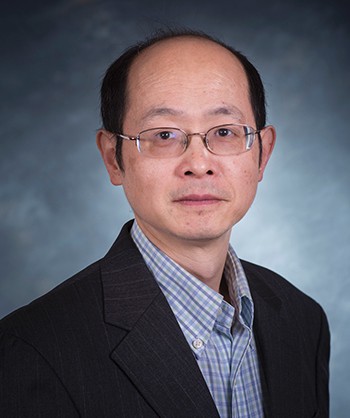
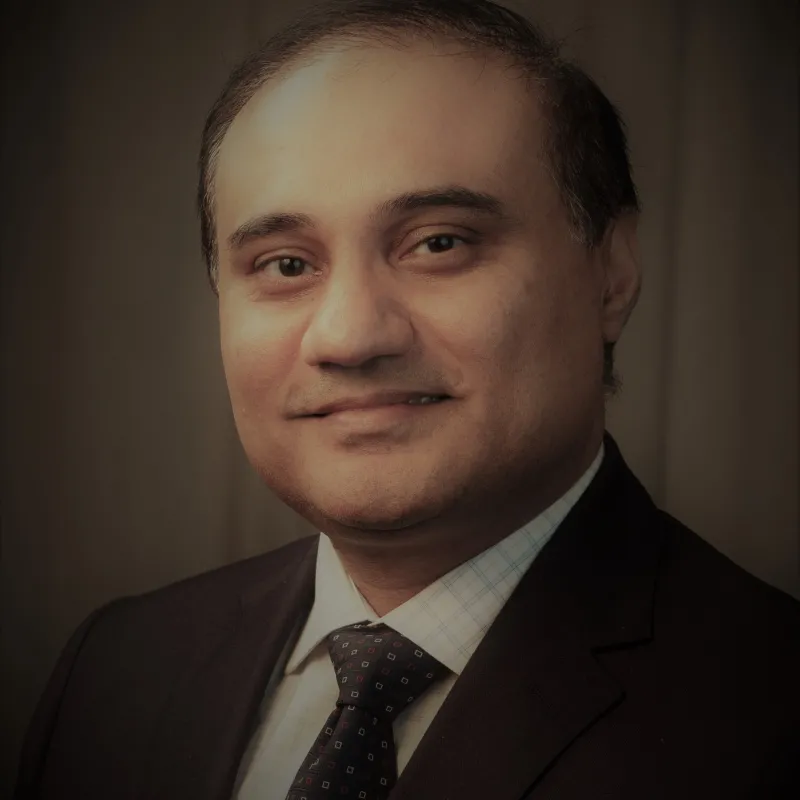
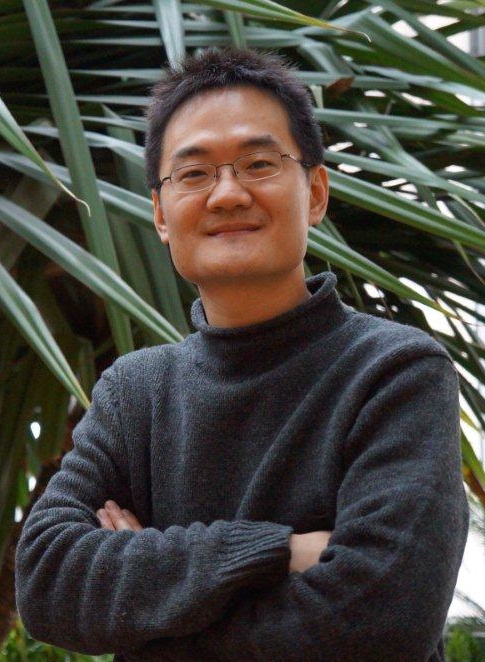
Nathan Lassance is a Lecturer at the Louvain School of Management (LSM), Université catholique de Louvain (UCLouvain), and a member of the Louvain Finance (LFIN) research division. His work bridges financial theory, statistical modeling, and data-driven portfolio optimization, with a focus on addressing parameter uncertainty and improving risk-return tradeoffs in asset allocation. Research Interests: Portfolio management, covariance matrix estimation, financial econometrics, risk analysis, quantitative finance, and non-Gaussian return distributions. Publications: His recent work explores shrinkage methods for high-dimensional portfolio selection, sentiment-aligned covariance matrices, and the economic value of statistical metrics like mean squared error. He has also contributed to understanding the limitations of factor-based mispricing models and the statistical properties of mean-variance portfolios. Labs/Teams: Affiliated with the Louvain Institute of Data Analysis and Modeling (LIDAM) and the Louvain Finance (LFIN) group.
Hakan Basarir is a Professor in the Department of Mining Engineering at the Norwegian University of Science and Technology (NTNU), Trondheim, Norway. His research and teaching focus on mining rock mechanics, rock mass characterization, underground support systems, and the application of soft computing methods in mining engineering. PhD in Mining Engineering (2002) 20+ years of research and teaching experience 60+ publications in journals and conferences Research Interests include rock mass property prediction using measurement while drilling (MWD) techniques, numerical modeling of mining structures, optimization of mine support systems, and sustainable material development. His work integrates machine learning and computational methods to address challenges in mining geomechanics and backfill design. Recent Publications highlight advancements in AI-driven lithology prediction, eco-concrete formulation, and backfill mixture optimization. He has also contributed to tunnel stability analysis and seismic rock slope modeling. Teaching includes advanced courses in mining engineering, mineral production modeling, and specialization projects in geotechnology.
Dr. Jesse Vermaire is an Associate Professor in the Department of Geography and Environmental Studies at Carleton University . With a Ph.D. from McGill University and M.Sc. from the University of New Brunswick, his research focuses on the impacts of environmental change on freshwater ecosystems, particularly climate warming, nutrient enrichment, and extreme events like droughts and storm surges. His lab employs paleolimnological techniques and long-term datasets to study ecosystem resilience and recovery. Education: B.Sc. Honours (University of Guelph), M.Sc. (UNB), Ph.D. (McGill) His work spans multiple subfields, including microplastic pollution, metal contamination from historical mining, wildfire effects on lakes, and riparian development impacts. Recent publications highlight studies on plastic ingestion by Arctic seabirds, legacy arsenic pollution in Cobalt, Ontario, and critical thresholds for freshwater conservation. Collaborations with researchers like S.J. Cooke and J.P. Smol demonstrate his interdisciplinary approach. Key trends in his 15 most recent articles include: 1) Quantifying microplastic pollution in diverse ecosystems (Arctic, mangroves, agricultural soils); 2) Analyzing historical contamination impacts (arsenic, gold, lead mining); 3) Investigating climate-fire-sediment interactions; 4) Advancing monitoring methodologies (community science, multi-matrix sampling); 5) Critiquing environmental restoration practices; and 6) Developing evidence-based conservation frameworks.
Arijit Chakrabarty is a Professor at the Theoretical Statistics and Mathematics Unit of the Indian Statistical Institute, Kolkata, India. His research focuses on random matrix theory, heavy-tailed distributions, large deviations, and long-range dependence. He can be reached via email at arijit.isi@gmail.com. Research Interests: Random matrix theory, Heavy-tailed distributions, Large deviations, Long-range dependence, Spectral analysis, Stochastic processes Publications Trends: His 15 most recent articles span random matrix theory, large deviations, Gaussian processes, and free probability. Key topics include eigenvalue analysis in random graphs, excursion lengths in Gaussian processes, and clustering of extremes in memory regimes. Lecture Notes: He has produced educational materials on Measure Theoretic Probability, Martingale Theory, and Probability Theory, partially in collaboration with Arup Bose and Rajat Hazra. These notes are accessible online and reflect his teaching contributions.
Zhijie Xiao is a Professor of Economics at Boston College, affiliated with the Morrissey College of Arts and Sciences. His expertise lies in econometrics and empirical finance, with a focus on quantile regression, financial markets analysis, and statistical inference. Xiao holds a Ph.D. from Yale University, along with multiple advanced degrees from Yale and the University of China. B.Sc., University of China M.Sc., University of China M.A., Yale University M.Ph., Yale University Ph.D., Yale University Xiao's research emphasizes methodological advancements in econometrics, particularly in quantile autoregression and tail risk modeling. His work bridges theoretical econometrics with practical applications in finance, addressing issues like market volatility and asset pricing dynamics. Key contributions include improving kernel estimation efficiency in nonparametric models and developing inference frameworks for quantile regression processes. Selected publications highlight his engagement with financial market tail risks and structural econometric modeling. Though no awards or grants are explicitly listed, his extensive publication record underscores sustained academic impact. Xiao teaches econometrics and contributes to the department’s research initiatives through collaborative projects.
Virginia Young is the Cecil J. and Ethel M. Nesbitt Professor of Actuarial Mathematics at the University of Michigan's Department of Mathematics, within the College of Literature, Science, and the Arts. She holds a Ph.D. from the University of Virginia (1984). Her research focuses on actuarial and financial mathematics, particularly decision-making processes for individuals and insurance companies in financial and insurance contexts. This includes topics like optimal reporting strategies, reinsurance mechanisms, and risk management under uncertainty. Her work addresses modern challenges such as defined contribution pension plans and strategic insurance product design. Key research areas include stochastic control theory, game-theoretic models in insurance markets, and optimization under model ambiguity. She explores how insurers and individuals make decisions under risk, with applications to annuities, reinsurance chains, and lifetime financial planning. Recent studies investigate Stackelberg games in reinsurance, optimal deductible insurance, and minimizing lifetime ruin probabilities through strategic annuitization. Virginia Young has no listed scientific awards in the provided texts. She advises no formally documented students, though her role likely involves mentoring within the Mathematics Department. Her work contributes to both theoretical advancements and practical applications in actuarial science and financial risk management.
Sheraz Ahmed is an Associate Professor (Tenure Track) at LUT Business School, Lappeenranta University of Technology, Finland, where he also serves as Academic Director of the Master’s Degree Program in Strategic Finance and Analytics. He holds a Doctor of Science in Financial Economics from Hanken School of Economics and has been affiliated with LUT since 2011. Doctor of Science, Financial Economics and Economic Statistics, Hanken School of Economics (2004–2009) Master of Science, Computational Finance, Hanken School of Economics (2001–2003) His research focuses on international finance, asset pricing, factor investing, portfolio management, high-frequency trading, corporate governance, and emerging markets . He employs advanced econometric techniques to analyze financial market behavior, market efficiency, liquidity risk, and the impact of governance reforms. His work frequently appears in journals covering finance, accounting, and economics. His recent publications explore topics such as the adaptive market hypothesis in cryptocurrencies, dynamic dependence between ETFs and crude oil, liquidity risk pricing, and financial integration in CIVETS and African markets. His research demonstrates a consistent focus on empirical analysis of financial markets in transitional and emerging economies. Sheraz Ahmed is an active peer reviewer for journals including Applied Economics, Journal of Economic Surveys, and Journal of Forecasting . Member, European Finance Association (2014–present) He has supervised over 80 master’s theses and multiple doctoral students in finance and analytics. He teaches financial theory, valuation of financial securities, and empirical research in finance at the master’s level. He is affiliated with the Department of Finance and Statistics within the School of Business and Management at LUT.
Peter W. Glynn is the Thomas Ford Professor in the Department of Management Science and Engineering (MS&E) at Stanford University's School of Engineering, and also holds a courtesy appointment in the Department of Electrical Engineering. Additionally, he serves as a Senior Fellow of the Hong Kong Institute for Advanced Study at City University of Hong Kong. His distinguished career spans over four decades, with significant contributions to the fields of simulation, computational probability, and stochastic modeling. Professor Glynn received his Ph.D. in Operations Research from Stanford University in 1982 and his B.S. with Honors in Mathematics from Carleton University in 1978. His academic journey began at the University of Wisconsin at Madison (1982-1987) before returning to Stanford, where he has held various leadership positions including Deputy Chair of MS&E (1999-2005), Director of Stanford's Institute for Computational and Mathematical Engineering (2006-2010), and Chair of MS&E (2011-2015). His research interests focus on simulation , computational probability , queueing theory , statistical inference for stochastic processes , and stochastic modeling . Professor Glynn's work has developed algorithms widely used across the field of Monte Carlo simulation, with applications in financial risk management, service systems engineering, logistics, and retail operations. His recent publications demonstrate continued innovation in areas such as numerical methods for stochastic systems, rare-event simulation, and analysis of queueing systems under various traffic conditions, showing a strong trajectory of advancing both theoretical foundations and practical applications. Professor Glynn's scholarly contributions have been recognized with numerous prestigious awards, including: Fellow of INFORMS (2007) Fellow of the Institute of Mathematical Statistics (1998) John von Neumann Theory Prize from INFORMS (2010) Member of the US National Academy of Engineering (2012) Lifetime Professional Achievement Award, INFORMS Simulation Society (2021) Philip McCord Morse Lecturer, INFORMS (2020) Throughout his career, Professor Glynn has mentored numerous doctoral students whose research has made significant contributions to operations research and related fields. His editorial service has been extensive, including founding Editor-in-Chief of Stochastic Systems and service on the editorial boards of leading journals in operations research, probability, and statistics. His professional service extends to numerous advisory boards and committees at national and international levels, reflecting his standing as a leader in his field.
Katie Kedward is a Senior Research Fellow at the University College London Institute for Innovation and Public Purpose (IIPP), specializing in sustainable finance and ecological economics. With prior experience in capital markets at Royal Bank of Canada and green banking at ShareAction, she combines post-Keynesian, political economy, and ecological economics perspectives in her research. Her work focuses on aligning financial systems with environmental goals, particularly addressing biodiversity loss and climate change. Education: MSc in Ecological Economics (University of Leeds, 2019), BA in Economics (University of Cambridge, First Class) Advisory Roles: Member of Positive Money UK’s advisory panel Collaborations: Network for Greening the Financial System (NGFS), Dasgupta Review Katie’s research examines financial stability risks from biodiversity loss, green credit policy reforms, and systemic uncertainty in climate-related financial regulation. Her work has been cited by central banks (Banque de France, Bank Negara Malaysia) and featured in major outlets like The Guardian and BBC News. Recent publications focus on nature-economy modeling, biodiversity financing gaps, and financial policy coordination for climate action. She advocates for increased public investment as a complement to private finance in achieving conservation goals. Scientific Awards Sally Macgill Memorial Prize for Best Masters Thesis (2019) Katie contributes to policy discussions through publications in FT Sustainable Views, LSE Business Review, and Nature Ecology & Evolution. She actively reviews for journals including New Political Economy and Conservation Letters.
Professor Jae Kyung Woo is a distinguished academic in the School of Risk and Actuarial Studies at the UNSW Business School, University of New South Wales. She holds multiple prestigious professional designations including Fellow of the Institute of Actuaries of Australia (FIAA), Fellow of the Society of Actuaries (FSA), and Chartered Enterprise Risk Analyst (CERA). Her educational background includes MMath and Ph.D. degrees from the Department of Statistics and Actuarial Science at the University of Waterloo. She has held academic positions at Columbia University as Assistant Professor in the Department of Statistics (2011-2012), and at the University of Hong Kong as Assistant Professor in the Department of Statistics and Actuarial Science (2012-2017) before joining UNSW in July 2017. Research interests focus on risk theory, reliability theory, aggregate claim analysis, queueing theory, and dependence modelling Editorial Board member for ASTIN Bulletin (2021-present), European Actuarial Journal (2025-present), Probability in the Engineering and Information Sciences (2018-present), and Risks (2020-present) Principal investigator for ARC Discovery Projects (2020-2023) and Casualty Actuarial Society grants (2018-2020) Her research output includes 35 journal articles, 1 book, 1 thesis/dissertation, and 1 other publication, with recent work emphasizing shock models for correlated large losses, credibility theory under dependency structures, and advanced dependence modeling techniques in insurance contexts. Her work bridges theoretical stochastic analysis with practical applications in insurance and risk management. Fellow of the Institute of Actuaries of Australia (FIAA), since May 2018 Fellow of the Society of Actuaries (FSA), since Oct 2013 Chartered Enterprise Risk Analyst (CERA), since Jan 2012 Fellow Member of Actuarial Society of Hong Kong (ASHK), since Dec 2018 Professor Woo has secured significant research funding including an ARC Discovery Project grant of AUD 334,000 (2020-2023) for developing shock model-based frameworks for correlated large losses, and a Casualty Actuarial Society grant of USD 20,000 (2018-2020) for credibility theory research under general dependency structures. She served as Nominated Accreditation Actuary at UNSW until 2024.
Philippe Jorion is Dean's Professor of Finance at the Paul Merage School of Business, University of California, Irvine. He holds a PhD and MBA from the University of Chicago and an MEng from Université Libre de Bruxelles. He has previously served as vice dean and associate dean at the Merage School and is currently a managing director at Pacific Alternative Asset Management Company (PAAMCO). PhD, University of Chicago MBA, University of Chicago MEng, Université Libre de Bruxelles His research focuses on financial risk management , derivatives , international finance , and empirical investments . He is a leading authority on Value at Risk (VaR) and has pioneered methodologies for measuring and managing financial risk. His work bridges academic theory and practical application in asset management and risk control. The recent articles reflect a strong emphasis on risk modeling, tail risk, derivatives usage, and regulatory frameworks. Themes include Value at Risk validation , hedge fund risk , currency hedging , and model risk , demonstrating sustained scholarly leadership in quantitative and applied finance. His scientific awards include: Smith Breeden Prize for best paper in the Journal of Finance Graham and Dodd Scroll Award for best paper in the Financial Analysts Journal Professor Jorion has advised numerous professionals through executive seminars and industry engagement. He has delivered training on risk management, global asset allocation, and fixed income markets. He served as editor-in-chief of the Journal of Risk and sits on the editorial boards of several finance journals. He has also led academic initiatives as vice dean and associate dean at the Merage School. He is actively involved with the Pacific Alternative Asset Management Company (PAAMCO) , where he applies academic insights to real-world hedge fund portfolio management. His work integrates academic research with institutional investment strategies, particularly in alternative assets and global risk frameworks.
Giuseppe Cavaliere is a Full Professor of Econometrics at the University of Bologna (since 2006) and a Distinguished Research Professor at Exeter Business School. He holds affiliations with the University of Copenhagen and Aarhus University. His research focuses on time series econometrics, financial econometrics, statistical inference, and empirical macroeconomics. He serves as co-editor of the Journal of Econometrics and associate editor of the Journal of Time Series Analysis. Key roles include being an Elected Fellow of the International Association for Applied Econometrics (IAAE), Fellow of the Journal of Econometrics, and Research Fellow of the Granger Centre for Time Series Econometrics. He previously served as President of the Italian Econometric Association (SIdE). His publications appear in top journals like Econometrica, Annals of Statistics, and Journal of Econometrics. Current research emphasizes bootstrap inference, cointegration, and volatility modeling in nonstationary environments. His work addresses challenges in econometric theory, financial data analysis, and macroeconomic policy evaluation. Awards and recognitions highlight his contributions to econometric methodology and its applications in finance and macroeconomics. His advisory and editorial roles reflect his influence in shaping the field's theoretical and practical advancements.
Jovan Stojkovic is an incoming Assistant Professor at the Department of Computer Science at the University of Texas at Austin, set to join in Fall 2026. Prior to his appointment at UT Austin, he will spend a year at Meta working with the AI and Systems Co-design group. His research focuses on cloud computing and datacenters, with particular emphasis on cloud-native workloads and machine learning inference. Education: PhD in Computer Science from the University of Illinois at Urbana-Champaign, advised by Professor Josep Torrellas Undergraduate studies at the School of Electrical Engineering, University of Belgrade, Serbia, where he was recognized as the best student of the Computer Engineering and Information Theory Department every year from 2017-2020 Research Interests: Jovan's research focuses on cloud computing and datacenters , with two primary domains: Cloud-native workloads , such as microservices and serverless computing. He investigates how to co-design novel hardware platforms and software systems that deliver orders-of-magnitude improvements in performance, energy efficiency, and resource utilization for these emerging workloads. Machine Learning (ML) inference , particularly large language models (LLMs). His work addresses the challenges of ML inference through smart scheduling, workload placement, and system-level configuration tuning to reduce energy, power, and thermal overheads while maintaining performance and accuracy guarantees. Publication Trends: Jovan's publications demonstrate a strong focus on optimizing cloud infrastructure for emerging workloads. His research spans across serverless computing, microservices, and large language model inference. A clear trend emerges in his work: addressing the performance, energy efficiency, and resource utilization challenges of modern cloud workloads through innovative hardware-software co-design approaches. His most recent work shows increasing focus on LLM inference optimization, particularly in the areas of thermal management, power efficiency, and scheduling for many-adapter environments. Awards and Honors: HPCA Best Paper Award (2025) IEEE MICRO Top Picks Honorable Mention (2024) 6 patents with IBM and Microsoft on: Serverless systems, Processor overclocking in the cloud, and Energy-efficient LLM inference W. J. Poppelbaum Memorial Award (2025) for hardware and architecture innovation Mavis Future Faculty Fellowship (2024–2025) Invited to present at 11th Heidelberg Laureate Forum (2024) Kenichi Miura Award (2022) for excellence in High Performance Computing Multiple student travel grants to ISCA, MICRO, ASPLOS, and HPCA Advising and Grants: Jovan is actively seeking prospective PhD students for his research group at UT Austin. His research has been supported through collaborations with major tech companies including IBM, Microsoft, and Meta. His six patents with IBM and Microsoft demonstrate the practical impact of his research in serverless systems, processor overclocking, and energy-efficient LLM inference. His work on serverless computing (MXFaaS, EcoFaaS) and LLM inference optimization has received significant recognition in top-tier computer architecture conferences. Research Groups: During his PhD at UIUC, Jovan worked with Professor Josep Torrellas on cloud infrastructure research. He has collaborated extensively with researchers at IBM Research (particularly Hubertus Franke) and Microsoft (particularly Íñigo Goiri and Ricardo Bianchini). His upcoming position at UT Austin will establish his independent research group focused on cloud computing and datacenter systems. His year at Meta working with the AI and Systems Co-design group will further strengthen his expertise in AI infrastructure.
André Lucas is a Full Professor of Financial Econometrics at Vrije Universiteit Amsterdam's School of Business and Economics, affiliated with the Tinbergen Institute. He holds leadership roles including former Head of the Econometrics and Data Science Department, Vice Dean of Research, and Program Director for MSc Finance. His PhD (1996) is from Erasmus University Rotterdam. Research focuses on model instability, time-varying parameters in financial contexts, and risk. He developed the Generalized Autoregressive Score (GAS) model, earning NWO's VICI grant (2010-2015). He co-led the EU-funded Systemic Risk Tomography network (2013-2016). Awards include multiple grants and recognition for contributions to econometric methodology and financial risk analysis. Teaching spans financial econometrics, statistics, and thesis supervision across undergraduate and graduate programs. Key datasets include GAS model implementations and copula-based risk frameworks. Over 20 PhD students have secured placements at institutions like the ECB, FED Boston, and leading universities.
Ming Yuan is a Professor in the Department of Statistics at Columbia University and serves as Associate Director of the Data Science Institute. His research focuses on high-dimensional statistics, machine learning, and statistical methodology with applications in genomics, finance, and imaging. Yuan holds a Ph.D. in Statistics from the University of Wisconsin-Madison (2004) and a B.S. in Electrical Engineering from the University of Science and Technology of China (1997). Education: 2004 Ph.D., Statistics, University of Wisconsin-Madison 2003 M.S., Computer Science, University of Wisconsin-Madison 2000 M.S., Probability and Statistics, University of Science and Technology of China 1997 B.S., Electrical Engineering, University of Science and Technology of China Research Interests: Dr. Yuan’s work bridges theoretical and applied statistics, emphasizing scalable methods for high-dimensional data. Key areas include tensor decomposition, covariance estimation, and statistical machine learning. His contributions to methods like sparse inverse covariance estimation and matrix/tensor completion have found applications in finance, genomics, and image analysis. Publications: His recent work explores tensor-based methods for high-dimensional analysis and develops optimal algorithms for compressed sensing. Articles often address statistical theory and computational challenges in modern data science, reflecting a balance between foundational and applied research. Awards: 2025 JASA Theory & Method Invited Discussion Paper 2024 William F. Sharpe Award (JFQA) 2018 Medallion Lecturer (Institute of Mathematical Statistics) 2014 Guy Medal in Bronze (Royal Statistical Society) 2007 Leo Breiman Junior Award Professional Activities: Yuan has served as Co-Editor of The Annals of Statistics (2019–2021) and Program Secretary for the Institute of Mathematical Statistics (2018–2021). His work integrates interdisciplinary collaborations, particularly in biomedical imaging and financial econometrics.