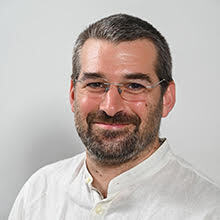
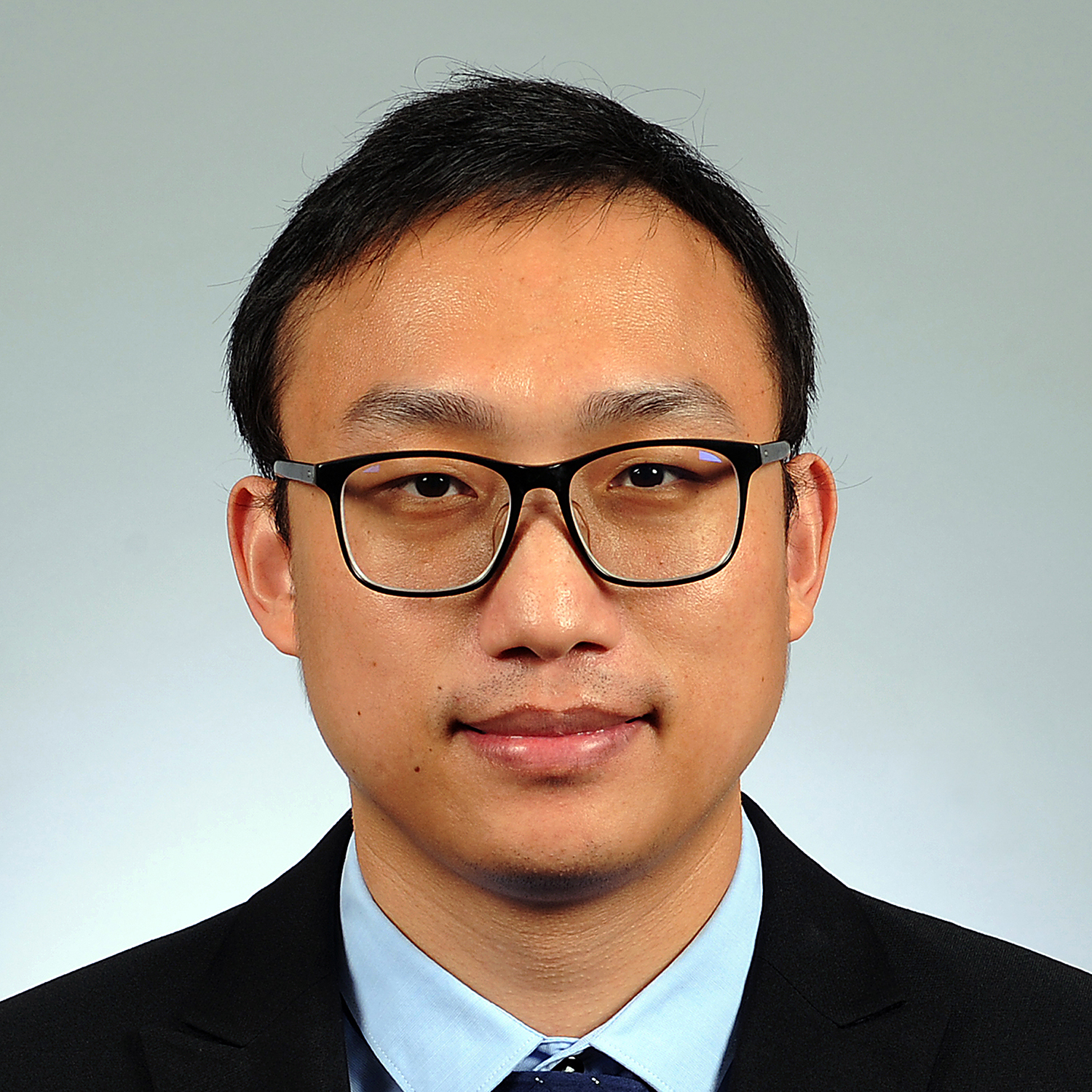
Felix Naumann is a Professor at the Hasso Plattner Institute in Potsdam, Germany, specializing in data management and database systems. His research focuses on data quality, data profiling, entity resolution, functional dependencies, and database optimization. He has authored over 300 publications in top-tier conferences and journals, including VLDB, SIGMOD, and ICDE. His work bridges theoretical foundations with practical systems, such as TASHEEH for data cleaning and PRISMA for privacy-preserving schema matching. He serves as an editor for the ACM Journal of Data and Information Quality and has led initiatives on hybrid conference formats and inclusive computing. Key contributions include: Data Quality: Pioneered studies on data quality's impact on machine learning and developed tools like AutoTSAD for anomaly detection. Data Dependency Discovery: Advanced functional and inclusion dependency mining algorithms, including Hitting Set Enumeration methods. Schema Matching & Integration: Created systems like BrewER and Frost for entity resolution and schema alignment. Educational Impact: Led massive open courses in data engineering with over 10,000 participants. His work emphasizes practical applications in cultural heritage data (ReCLAIM), Wikipedia table analysis, and cross-platform data systems (RHEEMix). He collaborates extensively with industry and academia, addressing challenges in dynamic datasets and data governance.
Dr. Armando Marino is a Senior Lecturer in Earth Observation at the University of Stirling’s Department of Biological and Environmental Sciences since 2018. He holds an MSc in Telecommunication Engineering (2006, Universita’ di Napoli) and a PhD in Polarimetric SAR Interferometry (2011, University of Edinburgh). His research focuses on synthetic aperture radar (SAR) for environmental monitoring, including maritime pollution, forest degradation, agricultural productivity, and coastal erosion. Education: MSc Telecommunication Engineering, Universita’ di Napoli ‘Federico II’ (2006) PhD in Remote Sensing, University of Edinburgh (2011) Marino develops machine learning algorithms for SAR data analysis and conducts fieldwork with custom-built radar systems. He collaborates with institutions like ESA, JAXA, and NASA, leading projects such as PlasticSurf (microplastic detection) and MoLaDy (ALOS-4 land monitoring). His work integrates optical and SAR satellite data for flood mapping and vegetation analysis. He has received accolades including the RSPSoc Best PhD Thesis (2011) and University of Stirling’s Outstanding Collaborator award (2022). Current projects involve £180,000+ in funding for radar-based environmental solutions. Scientific Awards: Best PhD Thesis 2011 (RSPSoc) Outstanding PhD Thesis (Springer Verlag) Outstanding Collaborator 2022 (University of Stirling) Marino’s methodologies combine SAR polarimetry, computer vision, and environmental field measurements. He actively mentors interdisciplinary teams and contributes to global initiatives on climate hazard mitigation.
Chun-Liang Li is a research scientist at Apple MLR and an affiliate assistant professor at the Paul G. Allen School of Computer Science & Engineering, University of Washington. His work bridges machine learning theory with practical applications in computer vision and natural language processing, focusing on efficient model training and representation learning. His educational background includes: Ph.D. in Machine Learning from Carnegie Mellon University (2014-2019), supervised by Prof. Barnabás Póczos B.S. and M.S. in Computer Science and Information Engineering from National Taiwan University (2008-2013), supervised by Prof. Hsuan-Tien Lin Li's research centers on generative models and representation learning , with significant contributions to document understanding (FormNet series), multimodal systems (Pic2word), and large language model efficiency . His work consistently addresses real-world challenges like reducing training costs while maintaining performance, as seen in distillation techniques and synthetic data optimization. Analysis of his 2022-2024 publications reveals three dominant trends: (1) LLM efficiency through curriculum training and model updating, (2) structural document understanding via graph-based methods, and (3) multimodal representation learning for vision-language tasks. These reflect his cross-cutting approach to improving model scalability and applicability. His scientific recognition includes: IBM Ph.D. Fellowship (2018) Best student paper runner-up at IJCAI (2017) Double first-place wins in KDD Cup Tracks (2011, 2013) While specific grant details aren't listed, his award-winning KDD Cup performances and extensive publication record suggest strong funding support. He collaborates widely with students and researchers, though formal advisees aren't specified. His current roles at Apple MLR and UW position him at the industry-academia interface for cutting-edge AI development. At Apple, Li contributes to the Machine Learning Research group's core vision-language projects, while his UW affiliation enables academic mentorship and cross-institutional collaboration on foundational ML research.
Sebastiano Vascon is an Associate Professor at Ca' Foscari University of Venice's Department of Environmental Sciences, Computer Science and Statistics (DAIS), and affiliated with the European Center for Living Technology. He earned his PhD in 2016 from the Italian Institute of Technology and University of Genoa, focusing on evolutionary game theory in pattern analysis and computer vision. His postdoctoral work spanned institutions like the Technical University of Munich and ETH Zurich, where he specialized in Active Learning and multi-object tracking. His research merges AI with interdisciplinary challenges, including climate change, environmental science, and cultural heritage preservation. Key areas include graph neural networks, computer vision, and game-theoretic models. He leads projects like RePAIR (AI for cultural heritage reassembly) and EasyWalk (AI-driven mobility solutions), and contributes to initiatives like MEMEX (digital storytelling). Teaching spans courses in Deep Learning, Machine Learning for Environmental Applications, and AI in Cultural Management. Research projects include: RePAIR: AI-driven 3D puzzle solving for artifact reconstruction EasyWalk: Socially-aware navigation systems MEMEX: AI for inclusive digital storytelling Climate modeling with IceBoost framework Publications highlight innovations in trajectory forecasting, environmental risk assessment, and graph-based methods. He actively reviews for top conferences (CVPR, ECCV) and journals.
Fan Yao is an Associate Professor in the Department of Electrical and Computer Engineering at the University of Central Florida's College of Engineering and Computer Science. She received her Ph.D. in Computer Engineering from The George Washington University in 2018 and currently leads the Computer Architecture and Systems Research (CASR) lab. Her research focuses on the intersection of computer architecture, security, and machine learning, with particular emphasis on hardware-based security vulnerabilities and defenses. Dr. Yao's research interests span computer architecture, hardware and system security, AI security, energy-efficient computing, and cloud computing. Her work addresses critical security challenges in modern computing systems, particularly focusing on microarchitecture attacks, hardware-based model tampering in deep learning systems, and information leakage threats in emerging non-volatile memory systems. She has developed innovative defense mechanisms against cache timing channels, branch predictor vulnerabilities, and GPU-based side channels. Her recent publications demonstrate a strong focus on AI security (particularly Deep Neural Network vulnerabilities), hardware security (including cache and branch predictor attacks), and secure memory architectures. The research shows an evolution from traditional computer architecture topics toward the security implications of AI hardware and emerging memory technologies, with increasing emphasis on practical attacks and defenses in real-world systems. NSF GW I-Corps Site Grant Award, 2018 Best Dissertation Award, GWU, 2018 The Norris & Betty Hekimian Engineering Endowment Fellowship, GWU, 2017 Top Picks in Hardware and Embedded Security, 2019 NSF CAREER project award, 2024 Dr. Yao currently leads multiple NSF-funded research projects including 'Understanding and Taming Deterministic Model Bit Flip Attacks in Deep Neural Networks' (NSF SaTC, 2020-2023), 'Towards Secure-By-Design Integration of Emerging Non-Volatile Memory in Future System' (NSF CNS, 2020-2023), and 'Architecting Secure-by-Design Memristor-Based Memories' (NSF CNS, 2019-2022). She has successfully mentored numerous PhD students, many of whom appear as first authors on top-tier conference publications, demonstrating her commitment to graduate education and research mentorship. As the leader of the CASR lab, Dr. Yao oversees a vibrant research group focused on building secure-by-design, efficient, and advanced future systems through novel techniques spanning hardware, computer architecture, and systems. The lab actively publishes at top computer architecture and security conferences including ISCA, MICRO, HPCA, IEEE S&P, and USENIX Security, with multiple papers accepted to these venues annually. The group has developed several influential tools and frameworks for security analysis, including proof-of-concept code for BranchSpec exploits that has been widely cited in the hardware security community.
Professor Felix Naumann is Chair for Information Systems at the Hasso Plattner Institute (HPI) at the University of Potsdam in Germany, where he leads the Information Systems research group. He is also Coordinator for MSc. Data Engineering and for the Data and AI track for MSc. Computer Science, and Speaker of the Research School on Data Science and Engineering. His extensive academic career includes visiting positions at CIRES Centre in Brisbane (2024-2025), SAP's Innovation Center (2020), AT&T Research (2016), and QCRI (2012). Professor Naumann's research focuses on data profiling, data cleansing, data integration, and data quality assessment with over 200 scientific publications. His work spans theoretical foundations and practical applications, with significant contributions to data quality metrics, metadata extraction, and AI-driven data preparation techniques. His research group develops prominent systems like Metanome for data profiling and Metis for data quality assessment. His recent publications demonstrate continued innovation in data management, with a growing intersection between traditional database research and AI applications. The 15 most recent papers show increasing focus on data quality for AI applications (KITQAR), multimodal data analysis (MELArt), and practical data cleaning frameworks that bridge database systems with machine learning pipelines. GI Dissertationspreis 2000 for best computer science PhD thesis IBM Research Division Award, 2002 Distinguished ACM member since 2021 Distinguished Reviewer Award - SIGMOD 2023 Best paper award at EDBT 2024 for Tasheeh paper Professor Naumann has successfully advised over 30 PhD students who now hold prominent positions at institutions like MIT, Google, Snowflake, and universities worldwide. His research has been funded by major grants including DFG Nachwuchsforschergruppe (2003-2008), IBM SUR Grant (2007), and DFG Forschergruppe Stratosphere (2010-2016). He leads the Information Systems research group at HPI, which includes PostDocs, PhD students, and student assistants working on projects like Metanome, Metis, KITQAR, and Janus, focusing on data profiling, quality assessment, and change exploration in data systems.
Professor Zhifeng Bao is a faculty member at RMIT University's School of Computing Technologies. His research focuses on enhancing data usability across heterogeneous domains, including structured, unstructured, and spatial-temporal data. His work spans database management, keyword search optimization, social network analysis, and spatio-textual data processing. He coordinates the course COSC1169: Intranet and Internet Data Engineering and supervises PhD/Masters students in projects such as trajectory data processing, data asset valuation, and edge computing optimization. Research interests emphasize improving data accessibility and efficiency through methodologies like query relaxation, visual analytics, and provenance tracking. His recent projects include cost-effective edge node placement, traffic accident risk prediction, and differentially private federated learning. Teaching and supervision activities highlight a commitment to bridging theory and practical data engineering challenges.
Raphaël Troncy is an Assistant Professor at EURECOM's Data Science Department, specializing in Semantic Web technologies, Knowledge Graphs, and Natural Language Understanding. He teaches courses like 'Human-computer interaction for the Web' and 'Semantic Web technologies.' His research focuses on semantic data integration, knowledge graph applications, and recommender systems. Notable projects include DOREMUS (musical work graph), entity2rec (knowledge graph-based recommendations), and 3cixty (city exploration knowledge bases). He actively contributes to semantic web challenges and conferences, winning multiple awards including the 2018 Best Poster Award at ESWC and 2015 First Prize in the Semantic Web Challenge. Troncy's work spans cultural heritage digitization (e.g., Odeuropa olfactory data modeling), cybersecurity anomaly detection (NORIA-O ontology), and interdisciplinary projects like SILKNOW's silk textile knowledge graph. He leads development of tools like DAGOBAH for semantic table interpretation and KG Explorer for knowledge graph exploration. Education: Not explicitly stated in text Labs/Teams: Active in EURECOM's Data Science group, collaborating on projects involving knowledge graphs, AI, and semantic technologies
Univ.-Prof. Dr.-Ing. habil. Volker Rodehorst is a full professor of computer vision at Bauhaus-Universität Weimar, holding positions in both the Faculty of Media and Faculty of Civil Engineering. His research focuses on photogrammetric computer vision, image analysis, 3D reconstruction, and structural health monitoring with applications in civil infrastructure inspection and urban modeling. He leads projects like ev.AI.luate and InfraCloud, leveraging AI and UAS technologies for infrastructure assessment. Education: PhD (2003): Technical University of Berlin, Faculty of Civil Engineering & Applied Geosciences Habilitation (2013): TU Berlin, Faculty of Electrical Engineering & Computer Science Computer Science Diploma (1994): TU Berlin Research Interests: UAS-based structural inspection using multi-view stereo and deep learning Crack detection and segmentation in concrete structures Automated building age estimation for energy modeling Flight path planning optimization for complex structures Integration of computer vision into BIM workflows Publications: Recent work emphasizes robust algorithms for crack detection (Omnicrack30k benchmark), UAS flight path optimization, and semantic segmentation challenges in bridge inspections. Key contributions include MVCrackViT and CISOL datasets advancing structural analysis methodologies. Awards: Best Academic Performance Prize (1994) - TU Berlin ISPRS Presidential Citation (2008) for WG III/2 leadership Grants & Labs: Leads Bauhaus' 3D-RealityCapture-ScanLab and coordinates EU projects like AISTEC-PRO. Active in developing modular solutions like smoodPLAN for infrastructure inspection. Teaching: Offers courses in photogrammetric computer vision, geodesy, and parallel systems. Supervises PhD students in structural health monitoring and computer vision.
Haihua Chen is an Assistant Professor of Data Science in the Department of Information Science at the University of North Texas (UNT), with a co-affiliation in Health Informatics. They lead the Intelligent Data Engineering and Analytics (IDEA) Lab, focusing on interdisciplinary research in artificial intelligence, data science, and informatics. Chen earned a Ph.D. in Information Science (concentrating in Data Science) from UNT in 2022, an M.S. in Information Science from Wuhan University, and dual B.S. degrees in Information Science and English Literature from Central China Normal University. Research interests span applied machine learning, data quality evaluation, NLP, and informatics applications in legal and healthcare domains. Notable work includes developing frameworks for measuring scientific novelty, constructing high-quality legal and biomedical datasets, and leveraging AI for precision medicine and disaster response. Chen has secured over $499K in external grants, including NSF REU and HSI projects, and $20K+ in internal grants. Their work has been published in top journals like Journal of Informetrics , IEEE Transactions on Reliability , and Scientometrics , with a strong focus on innovation measurement and data-centric AI. Teaching includes courses on computational methods, data analysis, and AI in healthcare. Professional leadership roles include chairing ASIS&T SIG-STI and editorial roles for Journal of the Association for Information Science and Technology , Knowledge and Information Systems , and others. Awards include UNT’s Great Grads Award and the Linda Schamber Writing Award.
Katja Hose is a Professor in the Department of Computer Science at Aalborg University's Technical Faculty of IT and Design. Her research focuses on Data, Knowledge and Web Engineering with specializations in AI for the People and Artificial Intelligence and Machine Learning. She maintains an active research profile with numerous publications and projects. Department of Computer Science Technical Faculty of IT and Design Aalborg University Research areas: Query Processing, Semantic Web, Linked Data, Knowledge Graphs Professor Hose's research interests center on knowledge representation, semantic web technologies, and AI applications. Her work spans from theoretical database systems to practical applications in healthcare, environmental assessment, and microbial data analysis. She has made significant contributions to knowledge graphs, large language models, and semantic search technologies, with particular emphasis on addressing hallucinations in AI systems and improving table search in semantic data lakes. Her recent publications demonstrate a strong trend toward integrating knowledge graphs with large language models, developing evaluation frameworks for AI hallucinations, and applying data science to diverse domains including healthcare and environmental sustainability. Her research bridges theoretical computer science with practical applications that address real-world challenges. NLP4KGC Best Paper Award (2023) ESWC 2023 Best Demo Award (2023) 2020 AMiner AI 2000 Most Influential Scholars AIME 2020 Best Paper Nomination (2020) ESWC 2019 Best Demo Award Nomination (2019) Professor Hose leads multiple significant research projects including ARISTOTLE (AI for clinical risk assessment), DarkScience (microbial data analysis), and the Poul Due Jensen Professorate in Big Data and AI. She has supervised numerous PhD students and collaborates extensively across disciplines, particularly in healthcare applications of AI and environmental assessment technologies. Her research has attracted substantial funding from sources like Villum Fonden and Danish E-infrastructure Cooperation. She is actively involved in several interdisciplinary research teams, including collaborations with microbiologists on microbial dark matter projects and with environmental scientists on digital environmental assessment systems. Her work on the ARISTOTLE project demonstrates strong connections between AI research and clinical applications, while her DarkScience project bridges computer science with microbiology.
Shaileshh Bojja Venkatakrishnan is an Assistant Professor in the Department of Computer Science and Engineering at The Ohio State University's College of Engineering. His research spans multiple domains at the intersection of networking, distributed systems, and machine learning with a particular focus on blockchain technologies and cryptocurrency networks. Educational Background: PhD in Computer Science from University of Illinois Urbana-Champaign (UIUC), 2017 Bachelor's degree from Indian Institute of Technology Madras, 2012 Dr. Bojja Venkatakrishnan's research interests center around fundamental algorithmic questions at the networking layer of Bitcoin and other cryptocurrency networks. He is particularly interested in applying machine learning techniques for developing algorithms over networks and graphs, with emphasis on 'first-principles' thinking to solve complex distributed systems problems. His work extends to scheduling algorithms for data center networks, peer-to-peer networks, and information theory. The breadth of his research is evident in his publications spanning blockchain networking, payment channel networks, decentralized applications, and machine learning applications for network optimization. Research Impact: Recipient of the Joan and Lalit Bahl fellowship at UIUC His publication record demonstrates significant contributions to the field, with papers appearing in top venues including SIGCOMM, NSDI, SIGMETRICS, and IEEE Transactions. His recent work focuses on enhancing blockchain scalability through peer sampling techniques, transaction reordering mitigation, and efficient peer-to-peer network design for decentralized applications. The trajectory of his research shows a consistent focus on addressing fundamental challenges in distributed systems with practical implications for real-world blockchain implementations and network architectures.
Georg Rehm is an Honorary Professor for Computational Linguistics and Language Technology at Humboldt University Berlin and a Principal Researcher at the German Research Center for Artificial Intelligence (DFKI) in Berlin, where he serves as Deputy Director of the DFKI Lab Berlin. He is also the Head of the German-Austrian Chapter of the World Wide Web Consortium (W3C) based at DFKI Berlin. Rehm has over 300 scientific publications and extensive experience in leading major research projects in computational linguistics and language technology. His research focuses on Natural Language Processing, Computational Linguistics, and Artificial Intelligence, with specific interests in multilingual language technologies, semantic web, digital humanities, and language data spaces. He has led numerous significant projects including European Language Grid, OpenGPT-X, and NFDI4DataScience. Rehm is particularly active in initiatives promoting digital language equality in Europe by 2030. Rehm's recent work demonstrates a strong focus on large language models, scholarly document processing, scientific knowledge representation, and climate-related fact-checking systems. His publications span across multiple high-impact venues including ACL, ESWC, and LREC, with a notable emphasis on practical applications of language technology in real-world scenarios. DFKI Research Fellow (2018) As an active member of the academic community, Rehm regularly serves as an expert for the European Parliament, reviews EU projects, and organizes numerous scientific conferences and workshops. His leadership extends to multiple European initiatives aimed at advancing language technology infrastructure and promoting digital language equality across Europe.
Jignesh M. Patel is a Professor in the Computer Science Department at Carnegie Mellon University, where he leads research on efficient data analysis methods. His work focuses on improving both system efficiency (e.g., high-performance data algorithms) and human efficiency (e.g., user productivity with data systems). Research Focus: Patel's group specializes in database systems, query optimization, hardware acceleration, and human-data interaction. Their interdisciplinary work spans: Transactional processing and real-time analytics Query optimization techniques Hardware-algorithm co-design Natural language interfaces for data systems Memory-efficient data processing Professional Activities: Co-founded four technology companies (Paradise, Locomatix, Quickstep, DataChat). Serves on program committees for premier conferences including SIGMOD and CIDR (as co-chair). Teaches database systems courses at CMU. Awards: Received Best Paper Award at DaMoN 2010 for work on cluster efficiency.
Andre Carrascal Incera is a Researcher at the Department of Fundamentals of Economic Analysis, part of the Faculty of Economic and Business Sciences at the University of Santiago de Compostela. His research focuses on regional economics, input-output models, and the economic impacts of tourism and globalization. He holds a PhD from the same university, where he studied tourism and income distribution using general equilibrium models applied to Galicia's economy. His work spans topics such as economic resilience, pandemic effects, and interregional inequality. Education: PhD in Economics, University of Santiago de Compostela (2014) Research Interests: Regional economic dynamics Input-output analysis Tourism’s role in regional economies Economic modeling of pandemics Environmental externalities Advising/Grants: No formal advisees or grants listed. Collaborations include the GAME (Economic Analysis and Modeling Group). Labs/Teams: Member of the GAME group, focusing on economic modeling and regional development.