Stephan Pieper is a Researcher at the Beuth University of Applied Sciences Berlin , where he contributes to projects like ExCELL funded by the BMWi program Smart Data. He completed his computer science education at the Technical University of Berlin , specializing in n-ary relation extraction during his master's thesis. Research Focus : Data Analysis Data Mining Traffic Prediction Social Recommender Systems Scientific Contributions : His work addresses information retrieval from text databases, fact-aware document processing, and self-supervised web search techniques. Recent publications span topics like tuple extraction, table augmentation, and full-text indexing frameworks. Additional Roles : Co-founder of startup Surpreso , focusing on social media-driven gift recommendation Active in data quality research and Smart Data initiatives Contact : stephan.pieper@bht-berlin.de
Anisa Rula is an Assistant Professor in Computer Science at the Department of Information Engineering, University of Brescia since 2021. Previously, she was a researcher at the University of Bonn's SDA group (2017–2019). She holds a PhD in Computer Science from the University of Milano-Bicocca (2014). Her research focuses on data management and exploration, particularly in data quality assessment for Information Systems and Knowledge Graphs. Key interests include semantic data enrichment, large datasets, and knowledge extraction. Education: PhD in Computer Science, University of Milano-Bicocca (2014) Prior academic and research roles at University of Bonn (2017–2019) Research Interests: Data Quality Assessment for Knowledge Graphs and Information Systems Large-Scale Dataset Management & Exploration Procedural Knowledge Extraction from Text Ontology-Driven Semantic Enrichment Human-in-the-Loop Data Annotation Systems Publications reflect her expertise in Knowledge Graph lifecycle management, quality assessment tools like KGHeartBeat, and LLM applications for schema mining and data discovery. Her work emphasizes practical implementations such as MantisTable for semantic table interpretation and K-hub ontology for industrial knowledge extraction. Awards: None explicitly mentioned in text. Advising & Grants: No student advisees listed. Active in developing open-source tools and collaborative frameworks for data quality and semantic web applications. Labs/Teams: Involved in Knowledge Graph validation and quality initiatives, including contributions to the EU Business Graph platform and cross-institutional workshops on Linked Data Quality.
Dr. Laura Evenstar is an Associate Professor at the University of Plymouth's School of Geography, Earth and Environmental Sciences (part of the Faculty of Science and Engineering). Her research focuses on the interaction between climate and tectonics in arid regions like the Atacama Desert, Helmand Province, and the southwestern U.S., with a particular emphasis on critical metals essential for the energy transition. She previously held positions at the University of Brighton (2019–2024) and worked as a Senior Research Associate and Senior Teaching Associate at the University of Bristol, leading BHP Mining-funded research on landscape evolution in northern Chile. Her PhD from the University of Aberdeen and BSc from the University of Leeds underpin her expertise in geomorphology and sedimentology. Her work integrates field observations, geochronology, and remote sensing to explore topics such as porphyry copper deposits, supergene enrichment, and the coevolution of life and landscape in hyperarid environments. Key projects include investigations into the Central Andes' tectonic uplift and the influence of salt diapirs on sedimentation. Her research has been supported by industry consortia and governmental grants, emphasizing applied geoscience for resource exploration and environmental understanding. Dr. Evenstar's scientific contributions span over 15 years, with publications addressing landscape evolution, mineral formation, and paleoenvironmental reconstruction. While no specific awards are listed, her work reflects interdisciplinary engagement with global challenges like sustainable resource extraction and climate change adaptation. She collaborates across academic and industrial sectors, contributing to both theoretical advancements and practical applications in geomorphology and economic geology.
Dr. Patricia Mathabe is a Senior Lecturer in Agricultural Technology at RAU. She holds a PhD in Plant Sciences (Montana State University), MPhil in Biochemistry (University of Cambridge), and BTech in Biotechnology (Vaal University of Technology). Her expertise spans agricultural technology, proteomics, metabolomics, metagenomics, and genomics. She has over 20 years of experience in academia, industry, and government across South Africa, the U.S., and the U.K., focusing on agricultural research, technology diffusion, food security, and agri-business management. Education: PhD in Plant Sciences, Montana State University MPhil in Biochemistry, University of Cambridge BTech in Biotechnology, Vaal University of Technology Research Interests: Dr. Mathabe’s work integrates advanced technologies with agricultural challenges. Her research explores AI-driven crop monitoring, soil microbial diversity, drone applications in herbicide impact analysis, and proteomic tools for crop disease management. She emphasizes sustainable practices and technology access for small-scale farmers. Publications & Presentations: Her work spans peer-reviewed journals, conference talks, and media engagement. Key themes include postharvest disease management, proteomics in crop protection, and ethical biotechnology applications. Recent contributions address drought-resistant crop development and antimicrobial alternatives in agriculture. Teaching & Leadership: She leads the MSc in Agricultural Technology and Innovation program, teaches modules on AgriScience and Climate Change, and supervises PhD/MSc students internationally. She reviews grants for the National Research Foundation and serves on editorial boards for journals like MDPI’s Trends in Post-Harvest Technology. Labs & Teams: While no specific lab is named, her leadership roles imply coordination of interdisciplinary teams focused on technology integration in agriculture.
Xin Chen is an active academic researcher affiliated with the University of Alabama at Birmingham and other institutions, including universities in China, USA, UK, and Singapore. With expertise in Artificial Intelligence , Machine Learning , and Biomedical Informatics , Chen contributes to diverse areas such as autonomous vehicle systems, medical imaging, and cybersecurity. Key Research Areas : Deep Learning for Autonomous Systems Biomedical Data Analysis Network Security and Fault Diagnosis Cross-Domain AI Applications Recent Publications (2025): Chen has published extensively in journals like IEEE Access , Briefings in Bioinformatics , and Neurocomputing , focusing on applications of AI in healthcare, industrial systems, and data science.
Florian Kleber is a senior scientist at the Computer Vision Lab within the Institute of Visual Computing and Human-Centered Technology at Vienna University of Technology (TU Wien), Austria. His research spans two primary domains: document analysis for cultural heritage preservation and medical data analysis. He has been actively involved in lecturing at TU Wien, particularly in Document Analysis courses, and has served as a substitute member of the Curriculum Commission for Informatics. Dr. Kleber's research focuses on the intersection of computer vision and practical applications. His work in cultural heritage includes multi-spectral acquisition and restoration of ancient manuscripts, development of tools for historical document analysis, and work on writer identification and retrieval systems. In medical data analysis, he has specialized in flow cytometry analysis, particularly for minimal residual disease assessment in acute lymphoblastic leukemia. His research demonstrates a consistent pattern of applying advanced computer vision techniques to solve domain-specific challenges in both humanities and medical fields. His recent publications reveal a strong trend toward synthetic data generation for training document analysis systems, self-supervised learning approaches for writer retrieval, and explainable AI techniques for medical data analysis. The publications show increasing sophistication in transformer-based architectures applied to both document analysis and medical imaging domains. His work bridges theoretical computer vision advances with practical applications in cultural heritage institutions and medical settings. Dr. Kleber has supervised multiple diploma theses at TU Wien, including work on automated analysis of herbarium collections, transparency techniques for neural networks, synthetic data for document analysis, and physical layout analysis of newspaper images. He has been involved in numerous research projects including the Vienna City Library poster collection analysis, digitization of museum holdings in Lower Austria, and the AutoFlow project for medical data analysis. His laboratory work centers around the Computer Vision Lab (E193-01) at TU Wien, where he collaborates on projects involving document image analysis, cultural heritage preservation, and medical data processing. His team has developed tools for manuscript analysis, document reconstruction, and flow cytometry data interpretation, often in collaboration with cultural institutions and medical facilities.
Moritz Staudinger is a PreDoc Researcher at the Data Science department of Technische Universität Wien . His research focuses on reproducibility in machine learning and information retrieval, with particular emphasis on query generation, data citation, and evolving database schemas. Current projects: FAIR-AI (2024–2026) , HumRec (2021–2025) , and DoSSIER (2019–2024) Collaborations: Works with Andreas Hanbury , Andreas Rauber, and others Research interests include large language models for scientific applications, temporal information retrieval, and FAIR data principles. His recent publications examine reproducibility challenges across machine learning, systematic literature reviews, and environmental data management. Supervisions : Mentors students working on topics like data sovereignty, multilingual fact-checking, and quality indicators for data management plans. Collaborates on the DBRepo semantic repository framework.
Yunsi Fei is a Professor in the Electrical and Computer Engineering Department at Northeastern University, serving concurrently as Associate Dean of Faculty Affairs. She leads the Northeastern site of the NSF IUCRC Center for Hardware and Embedded System Security and Trust (CHEST). Her research focuses on hardware-oriented security, computer architecture, embedded systems, and IoT security, with significant contributions to mitigating side-channel and fault attacks on neural networks and hardware systems. Fei holds a PhD in Electrical Engineering from Princeton University (2004), and bachelor’s and master’s degrees in Electronic Engineering from Tsinghua University. She joined Northeastern in 2011 after faculty roles at the University of Connecticut. Her research interests span secure computer architecture, energy-efficient embedded systems, and underwater sensor networks. Notable projects include RINGS (a NSF-funded IoT resilience initiative) and secure RISC-V processor design. She has received the NSF CAREER Award and multiple best paper awards at top conferences. Fei’s work integrates hardware-software co-design to address vulnerabilities in AI accelerators and cryptographic systems. She leads the Energy-Efficient and Secure Systems (ENESS) Lab and collaborates with industry and academia through CHEST. Recent grants include $1.5M for cybersecurity in additive manufacturing and $1M for spectrum-agile IoT systems. Her awards include a 2023 Distinguished Paper Award (AsiaCCS) and 2022 Best Paper (Great Lake VLSI). She mentors students like Ruyi Ding, who joined LSU as faculty in 2025. Fei also chairs sessions on hardware security and is an affiliated faculty member with Northeastern’s Institute of Information Assurance.
Matthias Schädel is a renowned nuclear chemist and physicist specializing in the synthesis and chemical characterization of superheavy elements (SHE). He held academic roles including Lecturer at Johannes Gutenberg-University Mainz (1994-1996) and Faculty Member at Texas A&M University (2000-2001). His career spanned over 35 years at GSI Helmholtzzentrum für Schwerionenforschung, where he served as Group Leader (1985-2008), Department Leader (2008-2010), and contributed to major facilities like TASCA. Post-retirement (2010), he led the Superheavy Element Chemistry Group at Japan Atomic Energy Agency (2010-2015). Schädel's research focuses on SHE chemistry, nuclear reactions, and relativistic effects influencing element properties. Education: PhD in Nuclear Chemistry (1979, Mainz University), Diploma (1974, Mainz). Key contributions include discoveries of elements 114 (flerovium) and 116 (livermorium), and pioneering studies on lawrencium's ionization potential. He developed automated chemical separation techniques for TASCA and co-authored over 200 peer-reviewed articles. Research highlights include studies on element 115 decay chains, fission dynamics, and gas-phase chemistry of SHE. His work bridges nuclear physics and chemistry, advancing understanding of the periodic table's extremes. Collaborations span international institutions like Lawrence Livermore and Livermore National Laboratories.
Chin-Tuan Tan is an Associate Professor in the Department of Electrical Engineering at the Erik Jonsson School of Engineering and Computer Science, University of Texas at Dallas. His research focuses on auditory neuroscience, cochlear implants, and speech processing, with a particular emphasis on understanding neural mechanisms underlying speech perception in hearing-impaired listeners. His work integrates electrophysiological measurements (e.g., auditory evoked potentials, ERP, fMRI) with advanced signal processing techniques to improve cochlear implant outcomes and evaluate speech quality metrics. Key research areas include neural entrainment to speech signals, cross-frequency coupling in auditory processing, and the development of objective neurophysiological metrics for sound quality assessment in cochlear implant users. He has extensively studied the effects of noise suppression algorithms, spectral distortion, and acoustic models on speech perception, with applications in real-time adaptive hearing solutions. His contributions address critical challenges in cochlear implant design, including frequency table optimization, noise robustness, and binaural hearing restoration. Recent studies explore the electrophysiological correlates of pitch perception in electric-acoustic stimulation environments and the impact of sound level control on spatial auditory attention. His interdisciplinary approach bridges electrical engineering, neuroscience, and audiology, aiming to enhance speech understanding and quality of life for hearing-impaired populations.
Dr. Barry Devereux is a Senior Lecturer at Queen's University Belfast's School of Electronics, Electrical Engineering and Computer Science, part of the Faculty of Engineering and Physical Sciences. His research focuses on interdisciplinary applications of machine learning, natural language processing (NLP), cognitive science, and healthcare analytics. He leads projects like the AIDE_NICYBER2025 initiative, exploring cybersecurity and AI integration. Dr. Devereux teaches the CSC2062 Artificial Intelligence and Machine Learning course and advises four PhD students, including those researching semantic vectors, deep learning in healthcare, and neurosciences ontology. His research interests include model interpretation in NLP, lexical semantics, and applying AI to neuroimaging and bioinformatics. Notable achievements include the British Council/IAESTE Employer Award (2018) and contributions to datasets like SynFinTabs and LAB-KG. He collaborates on projects funded by NIO New Deal, PWC, and Liberty IT, emphasizing AI's role in solving complex societal challenges. Dr. Devereux's work bridges computational models with human cognition, leveraging large-scale data analytics to address issues in healthcare, cybersecurity, and environmental science. His lab, affiliated with the Institute of Electronics, Communications & Information Technology (ECIT), fosters innovation in AI-driven solutions.
Professor Karen Rafferty is a prominent academic and Head of the School of Electronics, Electrical Engineering and Computer Science at Queen's University Belfast. She holds the rank of Professor and specializes in Virtual Reality (VR), Mixed Reality (MR), and Multi-sensory Interaction technologies, with a focus on their applications in Health & Training and Industry & Automation. Her research emphasizes disruptive technological practices, leveraging software engineering, sensor fusion, and real-time systems. Prof. Rafferty has led or contributed to numerous national and EU-funded projects, including roles as Principal Investigator (PI) and Co-Investigator (CoI) in grants such as the ARISE project on steel erection robotics and the PWC Research and Development Centre. She is actively involved with professional bodies like the IET, serving as a registration interviewer and evaluator for EU research programs (H2020, FP7, FP6). Her awards include the Best Paper Award at the 33rd International Manufacturing Conference and recognition for contributions to Digital Enterprise Technology. She teaches Engineering Entrepreneurship and VR/AR technologies, emphasizing interdisciplinary innovation. Key research themes span AI-driven systems, blockchain for sustainable decision-making, and haptic feedback integration in immersive environments. Her work often bridges academia and industry, with practical applications in manufacturing automation and healthcare training.
Alex Karagrigoriou is an Associate Professor of Statistics at the University of Piraeus, Department of Statistics and Insurance Science. He holds a BSc in Mathematics from the University of Patras, an MA and PhD in Mathematical Statistics from the University of Maryland, USA. His academic career includes roles at the University of Cyprus (1992–2014), the University of the Aegean (2014–2024), and adjunct positions at the Hellenic Open University (2014–present) and Mediterranean Institute of Management (1994–1998). Prior academic roles include work in the USA Department of Agriculture (1986–1992) and maritime sector experience (1980–1986). His research focuses on Applied Probability , Statistical Modeling , Reliability Theory , and Actuarial Mathematics . He has authored/co-authored over 100 journal articles, 10 edited volumes, and 40 conference proceedings, with notable contributions in divergence measures, semi-Markov processes, and risk modeling. His work has been cited over 1,400 times (h-index=17). Key achievements include supervising 3 postdocs, 6 PhDs, and 50 Master’s students, many of whom have received awards such as the Best Young Statistician Award (2007, 2018, 2021). His research trends emphasize stochastic modeling of complex systems, entropy-based inference, and interdependency patterns in econometric data. Labs/Teams: Active collaborator in interdisciplinary projects involving reliability engineering, biostatistics, and financial risk analysis. Serves as Co-Editor of Journal of Reliability and Statistical Studies and contributor to multiple international journals.
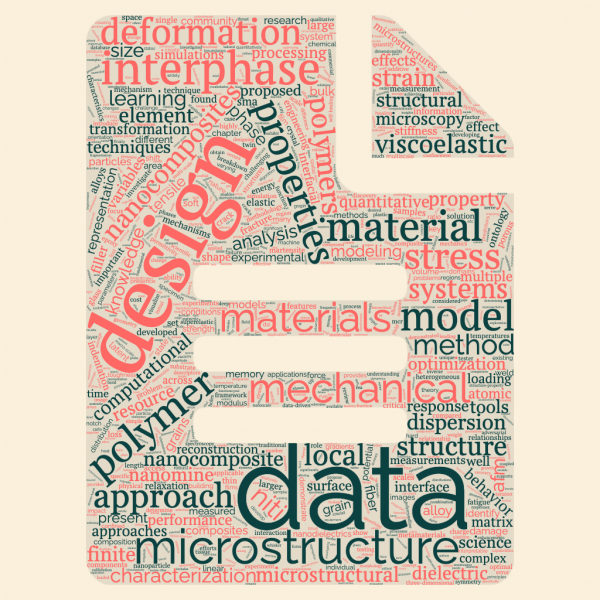
Catherine Brinson is the Sharon C. and Harold L. Yoh III Distinguished Professor in the Thomas Lord Department of Mechanical Engineering and Materials Science at Duke University. She holds the Pratt School of Engineering affiliation and has served in academic leadership roles, including Department Chair and Associate Dean at Northwestern University. Her research focuses on advanced materials, with an emphasis on polymer-based nanostructured systems, interfacial mechanics, and integrating data science into materials discovery. Brinson earned her B.S. from Virginia Tech (1985), and M.S. and Ph.D. from Caltech (1986, 1990). Her work bridges experimental and computational methods, leveraging atomic force microscopy (AFM) and machine learning to study material behavior at nanoscale to bulk levels. Key projects include developing FAIR (Findable, Accessible, Interoperable, Reusable) data frameworks for materials research and optimizing 3D-printed metamaterials. She has pioneered methods like Dynamic Scanning Indentation (DSI) for polymer characterization and contributed to the MaterialsMine initiative for data-driven material design. Brinson's awards include the A.C. Eringen Medal (2022), AAAS Fellowship (2020), and Nadai Medal (2014). Her lab’s innovations span from smart textiles to computational modeling of nanocomposites. Collaborative efforts in materials informatics, such as the MaRDA initiative, underscore her commitment to interdisciplinary and open-science practices. Her grants include NSF CAREER Awards and industry collaborations. The Brinson Lab at Duke trains researchers in materials science, data science, and advanced characterization techniques, emphasizing FAIR data principles and AI integration.
Dr Peter Davies is a Senior Research Fellow in Archaeology at La Trobe University, specializing in the social, industrial, and environmental archaeology of colonial Australia. His work focuses on human engineering of natural landscapes, resource management, and urban material culture, with significant contributions to understanding historical gold mining impacts in Victoria. Education: BA(Hons), MA (Melbourne University), PhD (La Trobe University) His research integrates interdisciplinary methodologies to analyze environmental histories of metal mining, legacy effects of dredging, and engineered landscapes in the Anthropocene. Recent work includes mercury emissions from colonial mining and sustainable river management frameworks. Key projects include the ARC-funded Rivers of Gold (2021–2025) and Archaeology of Institutional Confinement (2008–2014). He authored the monograph Sludge: Disaster on Victoria's Goldfields (2019) and published extensively in journals like Environmental Chemistry and Geoarchaeology . Scientific Awards: La Trobe University Research Excellence Award (2016) Davies collaborates with Susan Lawrence and others on environmental archaeology, emphasizing policy relevance and public engagement through reports, museum exhibits, and transnational comparisons of colonial mining practices.