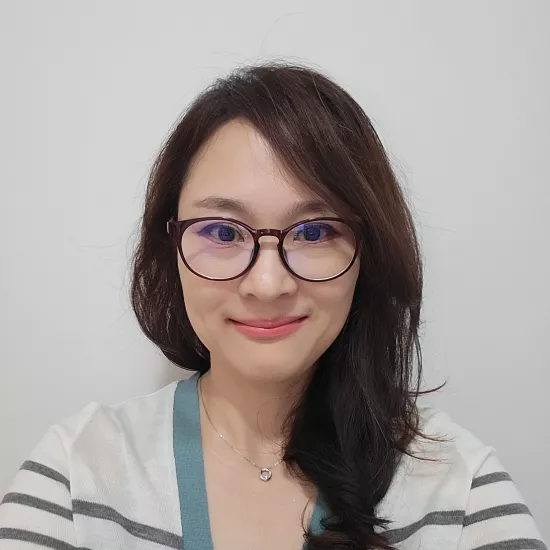
Katherine Yaw is an Assistant Professor of Applied Linguistics in the Department of World Languages at the University of South Florida (USF). She is core faculty in USF's MA Linguistics/ESL program and PhD program in Linguistics & Applied Language Studies. Her research focuses on speech perception , language attitudes , and cognitive processing of L2-accented speech , alongside work in research methodology and quantitative research ethics . She has published in journals like Journal of Multilingual and Multicultural Development and Language Teaching , with recent articles exploring raciolinguistic stereotyping, ethics frameworks, and listener processing dynamics. Her publications highlight trends in applied linguistics intersecting with sociolinguistics , cognitive science , and educational ethics , particularly emphasizing the Delphi method , questionable research practices , and accent discrimination in educational contexts.
Professor Tineke Brunfaut is a leading academic in Applied Linguistics at Lancaster University 's School of Social Sciences. Her work focuses on language testing , second language reading , listening , and integrated/multimodal skills . She coordinates the Language Testing Research Group and has received prestigious awards including the ILTA Best Article Award , e-Assessment Award , and TOEFL Outstanding Young Scholar Award . Key research areas: Cognitive and affective factors in testing, methodological innovations (eye-tracking, discourse analysis), and language test development. Recipient of multiple grants from the British Council, Trinity College London, and British Academy. PhD supervision interests: Language testing, integrated skills, assessment literacy, and validation. Recent publications explore technology-enhanced assessment , multimodal viewing-to-write tasks , and the impact of delivery modes on test performance . She has consulted for global institutions on test design and evaluation. Scientific Awards : ILTA Best Article Award e-Assessment Award for Best Research TOEFL Outstanding Young Scholar Award Her teaching includes MA programs in Language Testing, TESOL, and Applied Linguistics, covering Test Construction , Research Methods , and Statistical Analyses .
Maria Dove, Ed.D., is a Professor in the Department of Education at Molloy College. Her research focuses on co-teaching strategies, multilingual education, and educator collaboration to support diverse learners. She has published extensively in journals like NYS TESOL Journal and Language Magazine , emphasizing collaborative planning and resilience-building in educational settings. Dr. Dove’s work highlights the importance of shared instructional practices and teacher teamwork. Her educational background includes an Ed.D., though specific degree details are not provided. Collaborations with colleagues like Dr. Honigsfeld are central to her scholarship, focusing on practical solutions for multilingual learners and capacity-building in schools. No academic awards are explicitly mentioned in the provided materials.
Gaston Bacquet is a Lecturer in Education Studies at the University of Glasgow's School of Education, specializing in Culture, Literacies, Inclusion & Pedagogy. A Chilean teacher trainer and educator based in Scotland, he also holds qualifications as a meditation and yoga instructor. With extensive international teaching experience across K-12 and higher education systems in Chile, Japan, Saudi Arabia, Myanmar, the US, and UK, his work bridges practical pedagogy and theoretical innovation. His educational background includes a DipTESOL from Trinity College London, an MA in TESOL from the Institute of Education (UCL), and a PhD in Education from the University of Glasgow. Bacquet currently teaches in the MSc/MEd Education Studies program and leads the undergraduate Asian Religions course, while supervising dissertation students across the School of Education. Research interests center on nonviolence as transformative educational practice, with emphases on decolonial approaches, contemplative pedagogy, and inclusion of minoritized groups. His work integrates Buddhist philosophy, indigenous wisdom traditions, and international perspectives to challenge Western epistemological dominance. Key methodological commitments include participatory action research and qualitative approaches that prioritize community voices. Recent publications reveal evolving trajectories from language education toward decolonial nonviolence frameworks, with increasing focus on Global South contexts, indigenous knowledge systems, and teacher preparation. His 2024-2025 work shows intensified engagement with Buddhist-Christian dialogue, indigenous contributions to peace education, and practical applications of nonviolence in classroom power structures. As a supervisor, Bacquet mentors Master's students in inclusion, nonviolence, and educational ethics, welcoming PhD proposals aligned with his research interests. His professional activities span editorial roles with Cogent Arts and Humanities and SAGE Open , alongside active participation in international scholarly networks including the Comparative and International Educational Society and the European Network for Buddhist-Christian Studies. Professional affiliations reflect his interdisciplinary reach: British Educational Research Association (2021-present), American Educational Research Association (2022-present), International Society for Contemplative Research (2023-present), and the International Society for the Scholarship of Teaching and Learning (2025-present). His conference presentations consistently address nonviolence pedagogy, decolonial curriculum development, and participatory research ethics across global contexts from Chile to New Zealand.
Liv T. Davila is an Associate Professor at the University of Illinois at Urbana-Champaign, with appointments across the College of Education, Center for Global Studies, and European Union Center. Her research focuses on language learning, identity formation, and equity for immigrant and refugee students, particularly in K-12 settings. Education: PhD in Education (University of North Carolina at Chapel Hill), MEd in TESL (University of North Carolina at Charlotte), MA in Comparative Education (University of Minnesota), BA in Anthropology/French (Grinnell College) Her work employs qualitative methods, including ethnography and discourse analysis, to examine multilingual learners’ experiences, teacher education practices, and global migration’s impact on schools. She has received the Outstanding Graduate Teaching Award (2020) and led research on language access during the pandemic. Recent publications highlight co-teaching dynamics, refugee youth resilience, and translanguaging in preschools. She advocates for pedagogies that affirm students’ identities through home languages and multicultural approaches. Scientific Awards: Outstanding Graduate Teaching Award, College of Education (2020)
Pascal Scherrer is Associate Dean (Research) and Professor within the Faculty of Business, Law and Arts at Southern Cross University . Based in Lismore, Australia, he combines an administrative leadership role with active research in sustainability, regional development, tourism and visitor management. His work bridges academia, industry and government, having jointly secured over AUD $2 million in competitive funding and delivered high-impact projects for clients such as the NSW National Parks & Wildlife Service and the Australian Meat Processor Corporation. Education BSc – Griffith University BSc (Hons) – Griffith University Graduate Certificate TESOL – Bond University PhD – Griffith University Research Interests Dr Scherrer’s scholarship centres on sustainability science applied to tourism and regional development. His current flagship project is a circular-economy partnership with the Australian Meat Processor Corporation aiming to reduce plastic packaging waste across red-meat supply chains. Earlier work includes sustainable-visitor-capacity assessments on Rottnest Island , alternatives to summiting Wollumbin-Mt Warning that informed a AUD $7.4 million NSW government trail investment, and longitudinal monitoring of visitor experiences at Point Fraser artificial wetland in Perth. Cross-cutting themes include visitor risk perception in remote alpine and coastal settings, community engagement in protected-area governance, Indigenous tourism business models , and the intersection of digital culture (e.g., selfie-taking) with tourism safety. Scientific Awards 2023 – Southern Cross University Research Award 2014 – Southern Cross University Vice-Chancellor’s Award for Excellence in Community Engagement Grants & Advising Scherrer has jointly attracted over AUD $2 million in research and consultancy funding from state and federal agencies, industry bodies and NGOs. He currently supervises Honours and PhD candidates across topics in sustainable tourism, regional development and visitor management, and teaches undergraduate and postgraduate units covering sustainable tourism, visitor-economy management, and planning & policy. Professional Affiliations & Service Member, IUCN World Commission on Protected Areas Member, North Coast Regional Advisory Committee, NSW National Parks & Wildlife Service External facilitator for community and local-government projects
Michael Karas is an Assistant Professor of Applied Linguistics at Brock University's Faculty of Social Sciences. He holds a PhD from the University of Western Ontario (2019). His research focuses on language teacher self-efficacy, reflective practice, and learner silence, with notable contributions to meta-analyses in language education. He teaches courses such as Second Language Acquisition (LING 3Q91) and Pedagogical Grammar (LING 5P02). Karas serves as Book Review Editor for the TESL Canada Journal and TESL Ontario Academic Coordinator, demonstrating active engagement in academic service. Education : PhD in Applied Linguistics, University of Western Ontario (2019) Research Specialization : Explores intersections between teacher proficiency, classroom dynamics, and innovative methodologies like duoethnography. His work bridges theoretical research with practical applications in teacher education and language policy. Service Contributions : Editorial roles at TESL Canada Journal (2017–present) Coordinator for TESOL Doctoral Forum (2017–2018)
Dr. Sandra Kouritzin is a Professor in the Curriculum, Teaching and Learning department at the University of Manitoba's Faculty of Education . With a PhD from the University of British Columbia (1997), she has served as editor of the TESL Canada Journal (2000-2006) and authored Face[t]s of First Language Loss . Her work spans language loss, neoliberal university practices, and transcultural research ethics. Education: PhD (1997), University of British Columbia MA (1987), University of British Columbia Honours Equivalent (1985), University of British Columbia BA (1984), University of British Columbia Research Interests: Her primary focus lies in English as a Second Language and First Language Revitalization , particularly examining neoliberal pressures on faculty workload and identity. She explores transnational research ethics , positioning theory in second language identity, and the colonial implications of language education. Publication Trends: Her recent work critiques neoliberal governance in universities, analyzes academic gigification , and emphasizes decolonial research frameworks. Articles from 2024-2018 consistently address language policy , faculty burnout , and post-truth pedagogy . Scientific Awards: Recipient of the CSSE Dissertation Prize (1997) and the Falconer Emerging Researcher Award (2005) . Grants & Editorial Work: Secured over $1.5 million in research funding from SSHRC, Metropolis, and other agencies. Served as editor for TESL Canada Journal and contributed to TESOL Encyclopedia chapters.
Ji-young Shin serves as an Assistant Professor in the Teaching Stream within Education Studies at the University of Toronto Mississauga's Department of Language Studies. Her position integrates teaching, research, and practical application in language education with emphasis on assessment innovation and technology integration. Her academic credentials include: PhD in English / Second Language Studies & ESL from Purdue University, USA MS in Educational Psychology & Research Methodology from Purdue University, USA MA in Teaching English to Speakers of Other Languages (TESOL) from Hankuk University of Foreign Studies, South Korea BA in English Education (Japanese minor) from Hankuk University of Foreign Studies, South Korea Shin's research program focuses on language assessment, corpus linguistics, and technology-mediated pedagogy. She employs mixed methods with quantitative emphasis, utilizing corpus-informed computational analysis and latent-trait modeling complemented by qualitative discourse analysis. Her work addresses critical gaps in second language acquisition, educational measurement, and digital learning environments, particularly regarding AI applications and test validation across diverse language contexts. Her publication trajectory from 2017-2025 demonstrates consistent innovation in language assessment methodologies and technology integration. Key themes include AI-powered chatbots for L2 Korean instruction, online vocabulary testing for Spanish, and corpus-based writing pedagogy. Her work shows increasing focus on artificial intelligence applications and cross-linguistic validation studies, reflecting evolving priorities in language education research. Shin has secured competitive research funding including: Global Classrooms Grant (2025–2026) for VR-enhanced intercultural competence Black, Indigenous, and/or Racialized Scholar Grant (2025–2026) for cross-border AI language learning IRCC Engage3 Project (2022–2024) as Co-PI on VR/AI educational advancement Advancement Fund Plus (2022) for generative AI in teacher education British Council Award (2019) for technology-mediated assessment development She teaches advanced courses including 'The Future of Ed Tech: Active Learning Classrooms and Artificial Intelligence' (EDS285) and supervises community-based experiential learning (EDS388). Her grant portfolio indicates active supervision of research assistants and collaboration with international teams focused on AI implementation and assessment validation. Current projects explore generative AI for language learning across diverse contexts and virtual reality applications in teacher education. While specific laboratory infrastructure isn't documented, her collaborative publications with researchers across Korea, Spain, and the United States suggest participation in international research networks focused on language assessment technology and corpus applications.
Dr Maria Dasli is a Senior Lecturer in Intercultural Education at the University of Edinburgh's Moray House School of Education and Sport, where she founded and led the Institute for Language Education (2020–2023). Her work focuses on intercultural communication pedagogy and contemporary race discourse, emphasizing ethical responsibility and critical analysis of cultural difference. She holds a PhD in Education from the University of Exeter and has served leadership roles in academic organizations like IALIC and CERES. Dr Dasli's research explores how discourse shapes cultural identities and perpetuates inequality, with a focus on deconstructing prejudiced narratives. She has published in journals like Language and Intercultural Communication and edited volumes such as The Critical Turn in Language and Intercultural Communication Pedagogy . Her teaching spans courses on intercultural citizenship, TESOL methodology, and critical intercultural communication. Education: BA English Language Teaching (University of Stirling) MSc TESOL (University of Stirling) MA Sociolinguistics (University of Essex) PhD Education (University of Exeter) PgCert Teaching and Learning in Higher Education (Edinburgh Napier University) Her awards include a Best Paper Award (2010) and Fellowship of the Higher Education Academy (since 2011). She has supervised numerous PhD students on topics like race in higher education and neoliberalism in language teaching. Dr Dasli's leadership extends to organizing conferences on racial equality and intercultural education, including events funded by the University of Edinburgh and international partnerships. She advocates for pedagogies that foster cultural openness and combat systemic prejudice through education.
Dr. Nhlanhla Mpofu is an Associate Professor in TESOL and Literacy at Stellenbosch University's Faculty of Education, where she serves as Vice Dean for Teaching and Learning and Chair of the Department of Curriculum Studies. She also holds a Visiting Professor position at the University of Antwerp in Belgium. She obtained her PhD in Humanities Education from the University of Pretoria in 2016. Her research focuses on second-language learning in English-medium classrooms , developing culturally sustaining pedagogies that leverage learners' mother tongues, and re-orienting language education research in multilingual systems. She leads the NRF-funded project "Exploring the preparation and experiences of teachers using English across the curriculum: An interdisciplinary approach" and specializes in asset-based approaches that challenge deficit models in language education. Her publications demonstrate consistent focus on language policy implementation , teacher development , and multilingual pedagogies within African educational contexts, with recent work examining translanguaging strategies and disciplinary literacies. Awards & Honors: Fulbright Alumna Golden Key Honor Society Rated Researcher (South African National Research Foundation) Member of South African Young Academy of Science (SAYAS) Margaret McNamara Education Grantee COIL Fellow Grants: 2019: NRF-funded project on teacher preparation for English as Language of Learning and Teaching (Principal Investigator) She maintains professional memberships with the Southern African Linguistics and Applied Linguistics Society (SALALS) and South African Association for Language Teaching (SAALT), and serves on the South African Council on Higher Education Accreditation Committee.
Aya Matsuda is a Professor of Applied Linguistics at Arizona State University's Department of English, where she directs undergraduate and graduate programs in linguistics and applied linguistics. She holds a Ph.D. in English from Purdue University, along with an M.A. in Linguistics and a B.A. in English from International Christian University in Tokyo. Her research focuses on World Englishes, English as an International Language (EIL), and the implications of globalization for language education. Matsuda has authored and edited influential books including Preparing Teachers to Teach English as an International Language (2017) and Principles and Practices of Teaching English as an International Language (2012). Her work emphasizes rethinking language pedagogy to reflect global English diversity, challenging traditional native-speaker norms. Professional service includes roles as Board Director of TESOL International Association (2014–2017), Treasurer-Secretary of the International Association for World Englishes (2015–2019), and editorial board memberships for journals like TESOL Quarterly and World Englishes . Awards include the NNEST of the Month (2008) and the Walter J. Johnson Award (2000). Her teaching spans courses on Disciplinary Discourses, Global English Contexts, and Second Language Acquisition. She has mentored numerous graduate students, focusing on topics like EIL curriculum design, language policy, and multilingualism.
Professor Helen Sauntson is affiliated with York St John University as a faculty member in the School of Education, Language and Psychology and Director of the Centre for Language and Social Justice Research . She holds a PhD from the University of Birmingham and is a Senior Fellow of the Higher Education Academy (SFHEA). Her teaching spans undergraduate and postgraduate programs in English Language and Linguistics and TESOL . Educational Background : BA – Central England PGCE – University of Birmingham PhD – University of Birmingham SFHEA (Senior Fellow of the Higher Education Academy) Research Focus : Professor Sauntson’s work centers on intersections of language, gender, and sexuality within educational contexts. Her recent publications and conference presentations highlight: Discourse analysis of anti-LGBTQ+ rhetoric Neoliberalism’s impact on academic freedom Queer theory applications in TESOL Policy analysis of Relationships and Sex Education guidelines Student resistance to heteronormativity Critical linguistic frameworks for inclusive pedagogy Professional Leadership : She serves as: Co-editor of Palgrave Studies in Language, Gender and Sexuality Co-editor of Cambridge Elements in Language, Gender and Sexuality Editorial board member for Journal of Language and Sexuality and Gender and Language Teaching & Advocacy : Her pedagogy integrates research-led approaches to sexual diversity training and LGBTQ+ inclusion, with a focus on: Curriculum reform for inclusivity Teacher training programs Policy advisory roles Global queer educational frameworks
Professor Talia Isaacs is a leading academic in Applied Linguistics and TESOL at University College London's Faculty of Education & Society. She serves as Head of Research and Inclusion Co-Lead in the Department of Culture, Communication and Media, with a focus on language assessment, health communication, and educational equity. Previously, she was an Associate Professor at UCL-IOE (2016–2024) and Lecturer/Senior Lecturer at Bristol University (2011–2016), where she founded the EU-funded Second Language Speech Lab. Education: PhD in Second Language Education from McGill University (2011) Appointments: Co-Editor of Language Testing (2023–present), Expert Member of EALTA and TOEFL Committee of Examiners Her research spans language assessment , speech sciences , and health communication , with groundbreaking work on pronunciation assessment and clinical trial inclusivity. Recent articles analyze accent fairness in Duolingo testing, trial monitoring frameworks, and health communication practices. She champions Open Science and was awarded the 2023 UCL Open Science Award. Her research trends show interdisciplinary engagement across educational linguistics , clinical trial methodology , and health equity , often employing mixed methods and evidence synthesis . She has supervised 7 PhD students to completion, including funded projects by ESRC, MRC, and British Council. Scientific Awards: UCL Open Science and Scholarship Award (2023) Fellow of the Royal Society of Arts (2023) Fellow of the Higher Education Academy (2014) She leads the Second Language Speech Lab and collaborates with the MRC-NIHR Trials Methodology Research Partnership. Her work addresses language barriers in academic and healthcare settings, with a focus on under-served communities.
Aiyub Palmer is an Associate Professor in the Department of Arabic & Islamic Studies at the University of Kentucky. His affiliations include cross-disciplinary ties to Folklore & Mythology and Modern & Classical Languages, Literatures & Cultures. His research centers on sainthood, authority dynamics, and social movements in early Islam, alongside innovations in Arabic language pedagogy, particularly in digital learning environments. Education PhD in Islamic Studies, University of Michigan, Ann Arbor (2015) MA in Teaching Arabic as a Foreign Language (TAFL), University of Michigan, Ann Arbor (2009) MS in Education with TESOL specialization, California State University, Fullerton (2001) BA in History, University of California, Los Angeles Research Focus Palmer’s scholarship examines the socio-theoretical foundations of authority in early Islam through figures like al-Hakim al-Tirmidhi, analyzing how pre-Islamic Arab social structures influenced the conceptualization of sainthood and legitimacy. His monograph project traces the evolution of Islamic authority from the Prophet’s time through the 4th Islamic century, focusing on al-Tirmidhi’s Kitab al-Hikma manuscript to show how Sufi discourse interacted with broader power negotiations in Islamicate societies. Current work bridges medieval mysticism with modern pedagogical practices, emphasizing accessible Arabic language learning. Advising & Grants No formal advisees listed. Grants and funding details not specified in available text. Labs/Teams No dedicated research labs or collaborative teams explicitly mentioned. Collaborations likely occur through departmental and university networks.