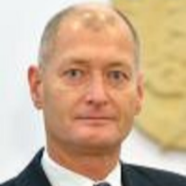
Dr. James W Pomeroy is a Research Fellow in Thermal Materials and Device Research at the School of Physics, University of Bristol. His work focuses on optical spectroscopy and electrical characterization of III-nitride and boron-rich semiconductors for advanced electronic devices. University of Bristol | School of Physics Research Fellow in Thermal Materials and Device Research His research develops time-resolved measurement techniques for self-heating and transient phenomena in electronic devices, achieving sub-micron spatial and nanosecond temporal resolution. Key areas include GaN-on-diamond integration, thermal boundary resistance reduction, and wide bandgap semiconductor applications in RF electronics. Recent publications highlight collaborations on gallium oxide and boron arsenide materials, device thermal management, and heterogeneous integration strategies for power electronics. The 15 most recent works span topics like subthreshold slope optimization , phonon transport across interfaces , and microwave device thermal analysis .
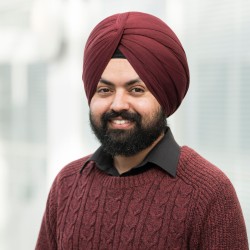
Dr. Arshdeep Singh is a Research Fellow A at the Centre for Vision, Speech and Signal Processing (CVSSP) at the University of Surrey, specializing in AI-driven audio processing. He concurrently serves as a Sustainability Fellow at the University’s Institute for Sustainability and holds the UKAN+ Early Career Acoustic Champion title (2023). His research focuses on efficient neural network architectures for audio classification, model compression, and sustainable AI applications. Singh completed his PhD at IIT Mandi, India, with prior roles including internships at Intel Bangalore and CSIR-CSIO Chandigarh, and an M.E. from Panjab University (Gold Medal recipient). Research interests include audio signal processing, CNN compression via filter pruning, and sustainable AI. Notable contributions include developing lightweight CNN frameworks for acoustic scene classification and sound event detection, with applications in smart home technologies and industrial health monitoring. His work often targets resource-constrained devices, emphasizing real-world deployability. Publications highlight innovations like graph centrality-based filter pruning and quaternion transformations for CNN efficiency. Awards include the Panjab University Gold Medal for M.E. and recognition as an Early Career Acoustic Champion. Supervision includes MSc students (e.g., Soham Bhattacharya, Bars Szegedi) and undergraduates (Kristaps Redmers, Yan-Ping Liao). His interdisciplinary projects span audio captioning, embedded hardware deployment, and dataset creation for sound event detection in residential environments.
Dimitrios Skarlatos is a Professor in the Department of Physics at the University of Patras, specializing in Micro-Nanoelectronics and Semiconductor Physics with applications in Microelectronics. His academic career spans over two decades, with progressive appointments from Assistant Professor to his current position as full Professor since August 2023. He maintains extensive research collaborations with institutions including EKETE Demokritos, international universities, and semiconductor research centers across Europe. Skarlatos earned his Doctoral Degree from the Department of Physics of the School of Sciences at Aristotle University of Thessaloniki in 2000, with a thesis on "The role of point and extended silicon defects in the operation of MOS transistors." Prior to this, he completed a Postgraduate Diploma in Condensed Matter Physics from the University of Crete (1993) and his undergraduate degree in Physics from the University of Athens (1990). His research focuses on Group IV semiconductor materials (Silicon, Strained Silicon, Germanium) for CMOS technology applications. Key areas include experimental study of extended defects, ion implantation and dopant diffusion/activation, MOS gate dielectric development, and novel memory device architectures (nanocrystal memories, MANOS, ReRAM). His work combines advanced cleanroom processing techniques with electrical characterization and simulation methods. Analysis of his recent publications reveals a strong focus on germanium-based semiconductor devices, with particular attention to dopant behavior, interface engineering, and memory applications. His research has evolved from traditional silicon processing to emerging germanium technologies and novel memory architectures, demonstrating consistent innovation in semiconductor materials science. Skarlatos has supervised 3 completed doctoral dissertations (with 1 in progress), 5 postgraduate theses, and 12 undergraduate theses. He has led multiple research projects including EU-funded initiatives (ESPRIT, GROWTH, IST) and national research programs (GGTE, HERACLES II), focusing on semiconductor front-end processes, memory technologies, and solar cell applications. His laboratory work involves advanced cleanroom processing (ALD, thermal processing, optical lithography), electrical characterization (C-V, G-V, I-V), and collaboration with TEM facilities. He maintains strong connections with semiconductor research centers including CEMES/CNRS in Toulouse and has extensive experience with TCAD simulation tools.
Prof. Dr. Robert Wille is a Full Professor at the Technical University of Munich (TUM) in the School of Computation, Information and Technology and Chief Scientific Officer at the Software Competence Center Hagenberg GmbH . He leads the Chair for Design Automation , focusing on automatic methods for complex system design in conventional and future technologies. Studied Computer Science (Diploma) at the University of Bremen (2002-2006) Doctorate (summa cum laude) from the University of Bremen (2009) His research spans quantum computing , microfluidic biochips , field-coupled nanotechnologies , and reversible circuits , with applications in machine learning , artificial intelligence , and cyber-physical systems . Recent work includes quantum circuit verification, radar-camera fusion, and silicon dangling bond logic optimization. Robert Wille has received prestigious awards such as the ERC Consolidator Grant , Google Research Award , and Distinguished Professor appointment . He serves as Associate Editor for journals like IEEE TCAD and Springer LNCS, and has chaired conferences including DATE and ICCAD.
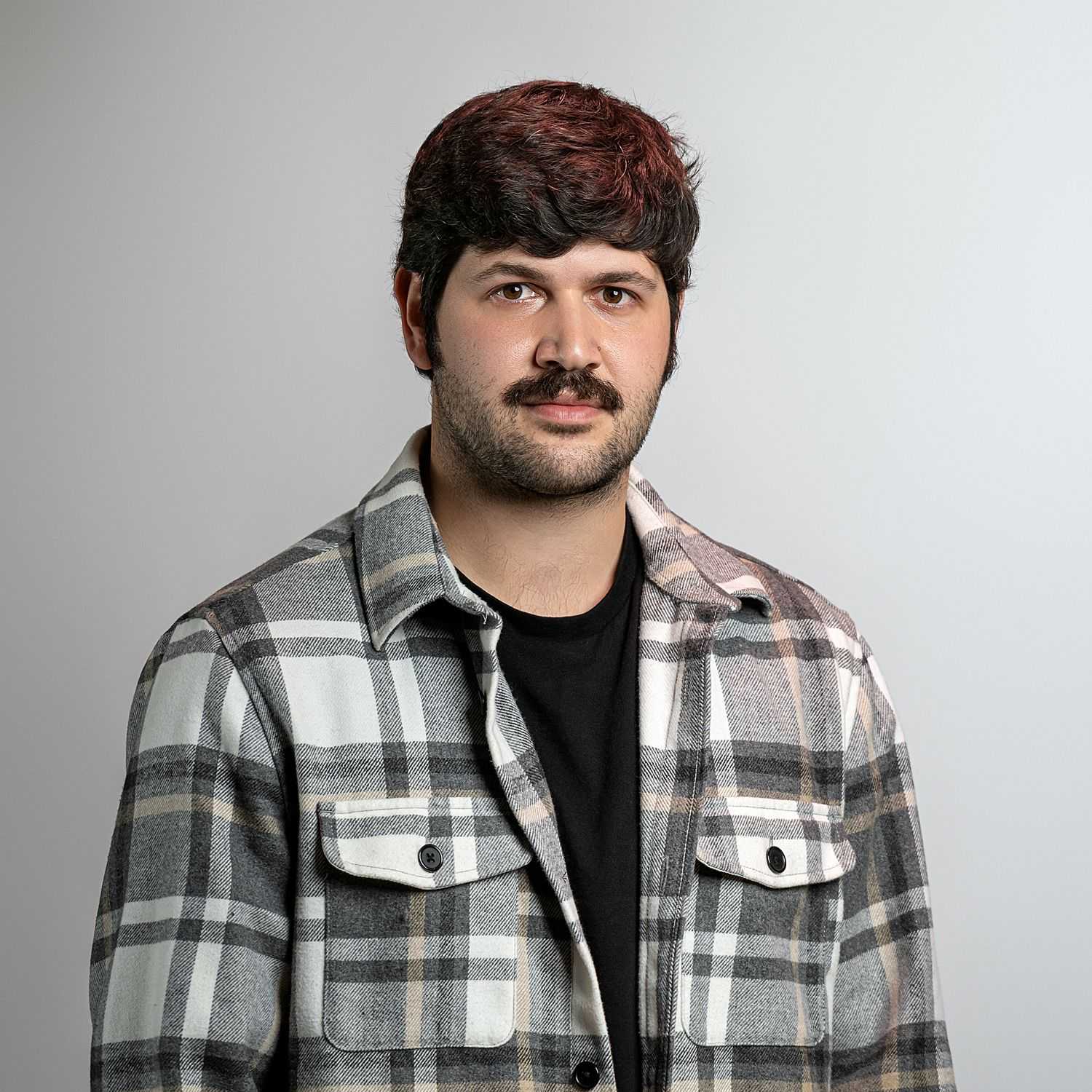
Julián García Fernández serves as a Visiting Professor at the University of Santiago de Compostela, based in Laboratory S2. His contact details include email: julian.garcia.fernandez2@usc.es and phone: +34 881816392. His primary research interests include: Semiconductor Physics Machine Learning Solid-State Physics Microelectronics Device Physics Computational Physics Dr. García Fernández's recent work demonstrates a focus on applying machine learning to semiconductor device simulation (TCAD) and thermal management. He has developed tools such as MLFoMpy for post-processing semiconductor data and novel workflows for optimizing cooling devices using solid-state physics principles. His research addresses challenges in ultra-scaled transistor technologies and device fluctuations, bridging computational methods with experimental physics. He is affiliated with Laboratory S2 at the University of Santiago de Compostela, which supports advanced research in semiconductor technologies and device physics through interdisciplinary collaboration.
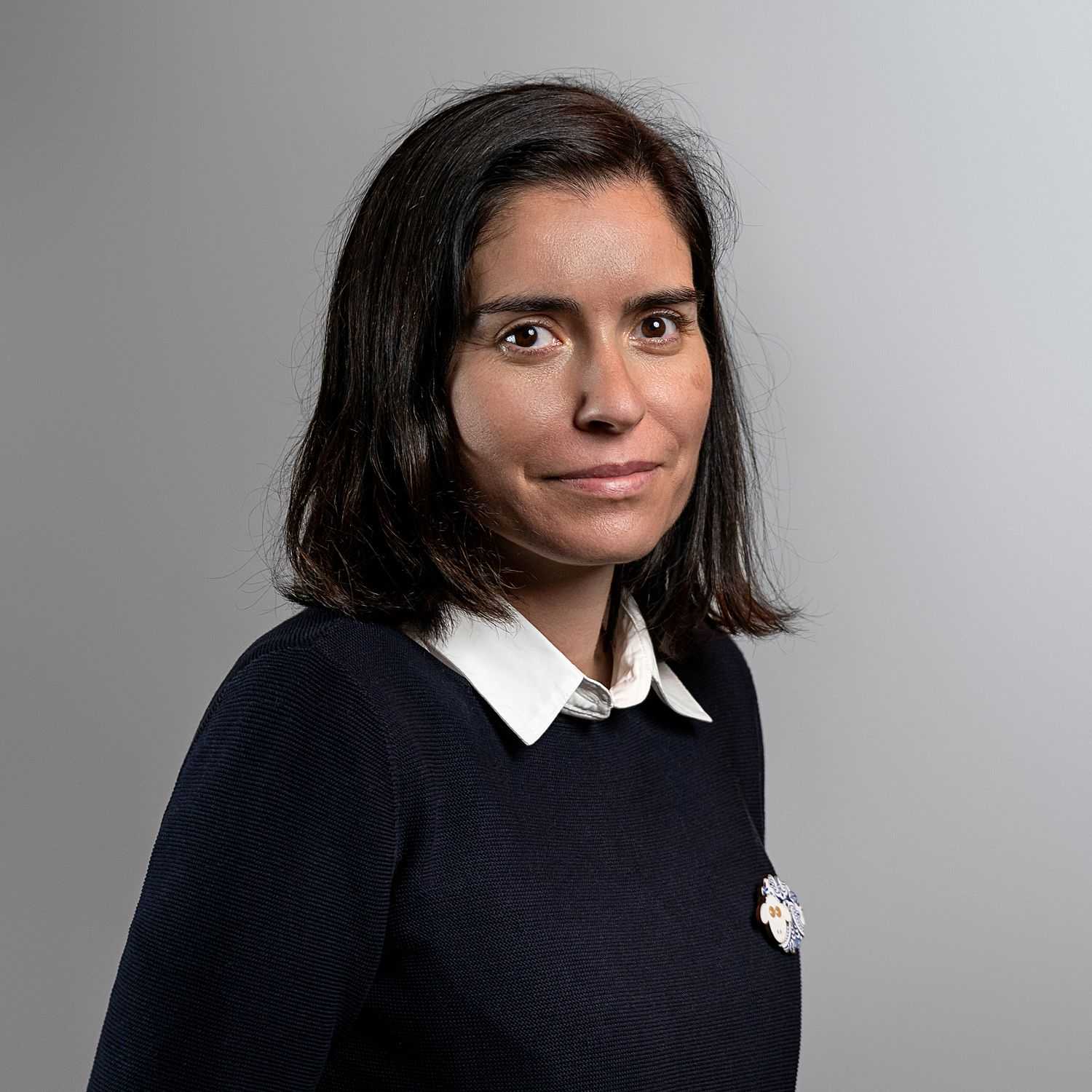
Natalia Seoane Iglesias serves as an Associate Professor in the Department of Applied Physics at the University of Santiago de Compostela's College of Physics. Her research integrates semiconductor device physics with high-performance computing to address challenges in next-generation electronics and energy conversion systems. B.Sc. in Physics, University of Santiago de Compostela (Spain) Ph.D. in Physics, University of Santiago de Compostela (2007) Postdoctoral research: University of Glasgow (2007-09), University of Edinburgh (2011), Swansea University (2013-15) Her research focuses on semiconductor device simulation , nanoscale variability analysis , and laser power conversion systems . She develops advanced computational tools combining 3D finite-element modeling with machine learning techniques to optimize device performance. Current projects target ultra-high efficiency (>80%) SiC-based laser converters for space applications and statistical variability studies in sub-10nm transistor architectures. Her publication portfolio reveals strong trends in machine learning-enhanced TCAD and high-concentration photovoltaics . Recent work demonstrates how vertical epitaxial heterostructures with SiC/GaN materials can overcome traditional efficiency barriers in wireless power transfer systems, while her nanoscale variability studies provide critical insights for future CMOS scaling. Key scientific contributions include: Development of MLFoMpy for semiconductor data post-processing Novel Pelgrom-based predictive models for device variability Breakthrough laser power converter architectures exceeding 80% efficiency Comprehensive studies of metal grain effects in nanosheet FETs She leads the rePowerSiC project (2024-2028) developing space-qualified laser power systems and contributes to multiple EU-funded initiatives in high-performance computing. Her team employs advanced simulation frameworks including VENDES and Silvaco Atlas for device characterization, with applications ranging from satellite power systems to refinery monitoring drones.
Dr. Krzysztof Iwan is an Assistant Professor at the Department of Power Electronics and Electrical Machines within the Faculty of Electrical and Control Engineering at Gdańsk University of Technology. His office is located in Building A, room EM-214, and he can be contacted via email at krzysztof.iwan@pg.edu.pl or by phone at +48 58 347 1363. His research spans several key areas in electrical engineering and biomedical applications: Power Electronics: Converter systems, semiconductor device modeling, and drive technologies Simulation & Modeling: Development and application of simulation tools like TCAD and Saber Electromagnetic Compatibility: EMI propagation, filtering, and suppression techniques Biomedical Engineering: Surgical simulation for hernia repair and medical visualization Energy Quality: Analysis of harmonic distortions in power networks His publications demonstrate a consistent focus on computational modeling approaches to solve complex engineering problems. Recent work shows an interdisciplinary trend combining power electronics with biomedical applications, particularly in surgical simulation. The majority of his publications involve simulation-based research of power electronic systems and electromagnetic compatibility issues. Dr. Iwan is an active member of the Department's research team which focuses on: Modeling, design and simulation of power electronic converters Control and diagnostics of power electronic converters Electromagnetic compatibility of converters and electrical drives Quality of electrical energy Modeling and diagnostics of electrical machines and transformers Design of piezoelectric sensors and motors CAD and CAE techniques for power electronics