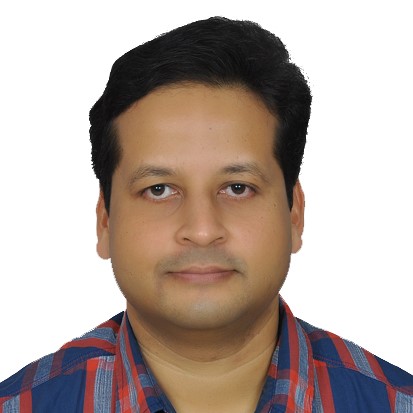
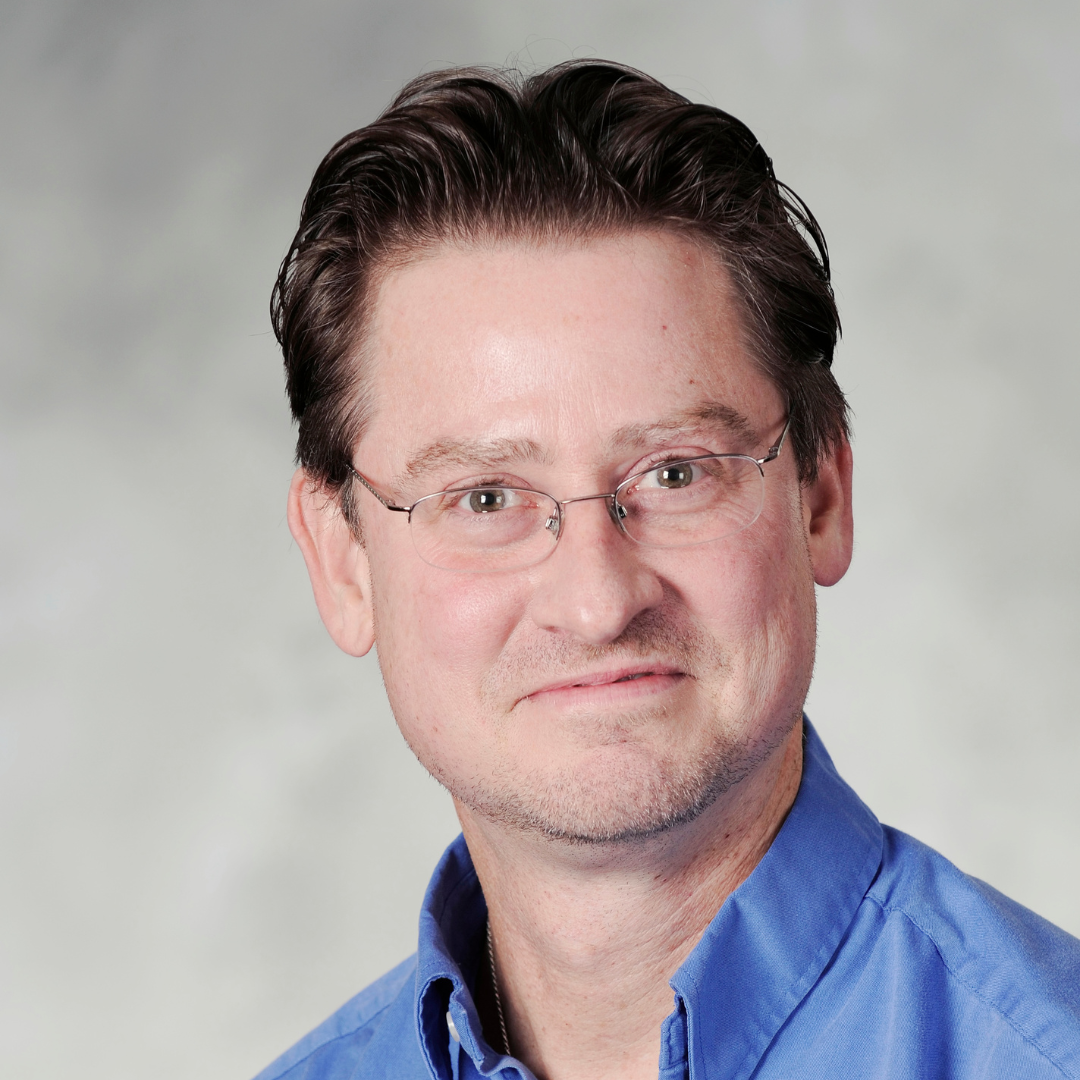
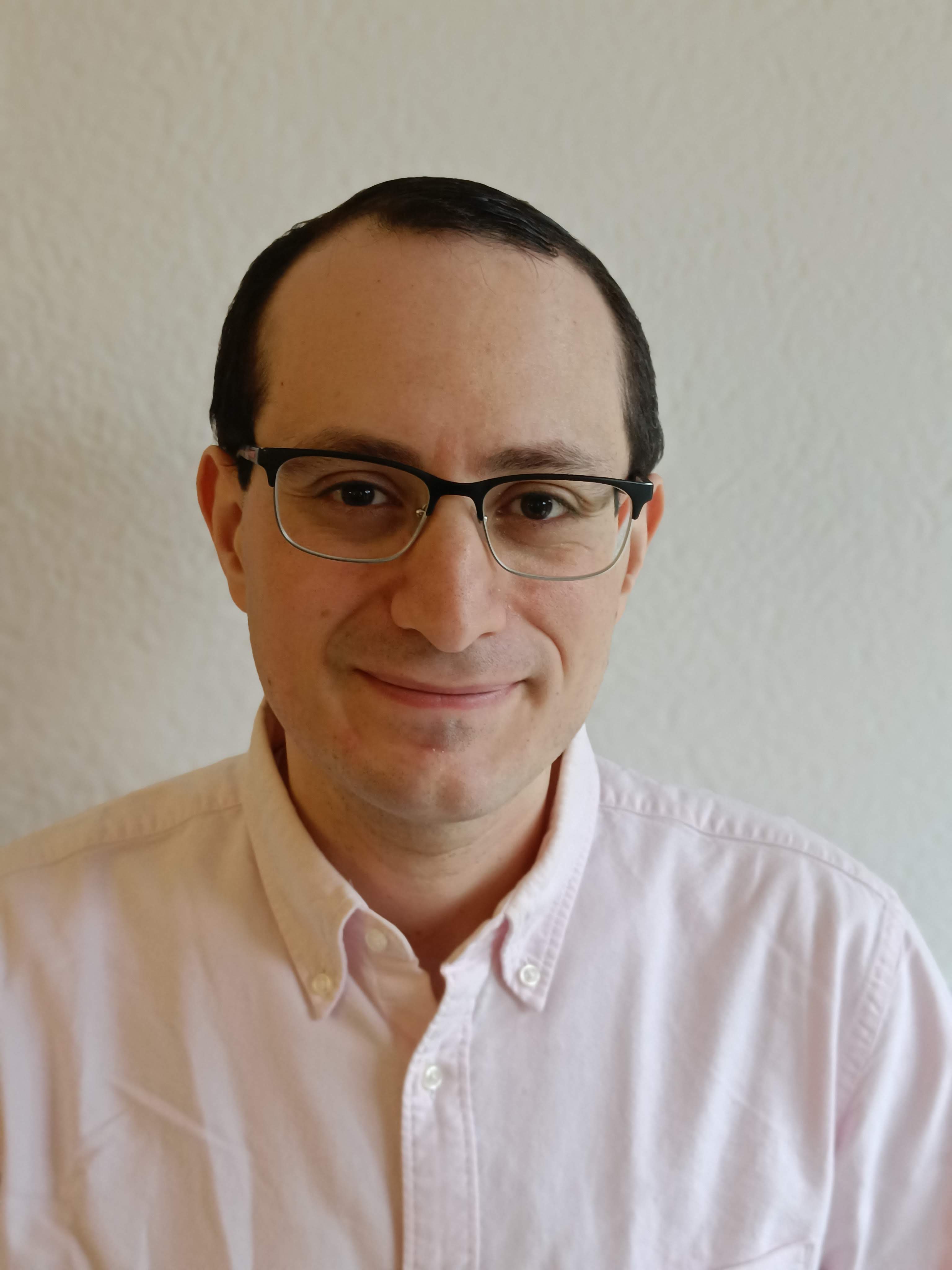
Kaushik Nayak is an Associate Professor in the Department of Electrical Engineering at the Indian Institute of Technology Hyderabad . His research spans semiconductor device physics, mesoscopic electronics, and electro-thermal effects in nanoscale transistors, with recent work on diamond MOSFETs, 2D material contacts, and thermal resistance in nano-sheet FETs. Ph.D., Indian Institute of Technology Bombay M. Tech., Microelectronics, IIT Bombay B.E., Electronics & Telecommunication, Utkal University He teaches advanced courses on semiconductor device modeling, mesoscopic electronics, and electromagnetic wave propagation. His publications focus on nanoelectronics, device variability, and high-temperature operations. Contact: knayak@ee.iith.ac.in .
Matthias Bucher is a Professor at the Department of Electronics and Computer Engineering, Technical University of Crete. He specializes in analog/RF integrated circuits design, MOSFET compact modeling, and device characterization. His research focuses on nanoscale CMOS, wide-band semiconductor devices, and high-voltage MOSFETs. He leads the Electronics Laboratory and teaches courses such as Electronics II and CMOS Analog IC Design. Education: Ph.D. in Electrical Engineering, Swiss Federal Institute of Technology (EPFL), 1999 M.S. in Electrical Engineering, Swiss Federal Institute of Technology, 1993 Research Interests: Prof. Bucher’s work emphasizes charge-based compact models (e.g., EKV3), RF device modeling, and noise analysis in MOSFETs/JFETs. His contributions include open-source tools for Verilog-A modeling and parameter extraction methodologies for advanced CMOS technologies. Labs/Teams: He directs the Electronics Laboratory , focusing on nanoelectronics and high-reliability circuits. His team collaborates on semiconductor device modeling for aerospace and industrial applications. Grants/Awards: While not explicitly listed, his extensive publication record and leadership in open-source projects indicate sustained recognition in semiconductor research communities.
Marco Pirola is a Full Professor at the Department of Electronics and Telecommunications (DET) of the Polytechnic University of Turin, Italy. He is a member of the Interdepartmental Center 'CleanWaterCenter@PoliTo' and actively contributes to research in high-frequency electronics and microwave engineering. His work focuses on power amplifiers, device characterization, and advanced microwave circuit design. Research Interests: Microwave power devices, GaN technology, 5G/mm-Wave applications, space communications, and smart pipeline monitoring systems. Awards: IEEE Fellow (since 2019), IEEE Senior Member. Recent Publications address topics like Ka-band MMIC amplifiers for SAR systems, broadband Doherty amplifiers using GaN, and harmonic analysis of current-mode power stages. His projects include STARGATE (European GaAs power architectures) and Millimetre-Wave GaN Radar for UAV detection. Teaching: He leads courses on 'Radio Frequency Integrated Circuits' and 'Advanced Devices for High Frequency Applications' at the Polytechnic University of Turin. Supervised PhD students include Wenjun Zhang and Abbas Nasri, who worked on III-V HEMT circuits and GaN power amplifiers.
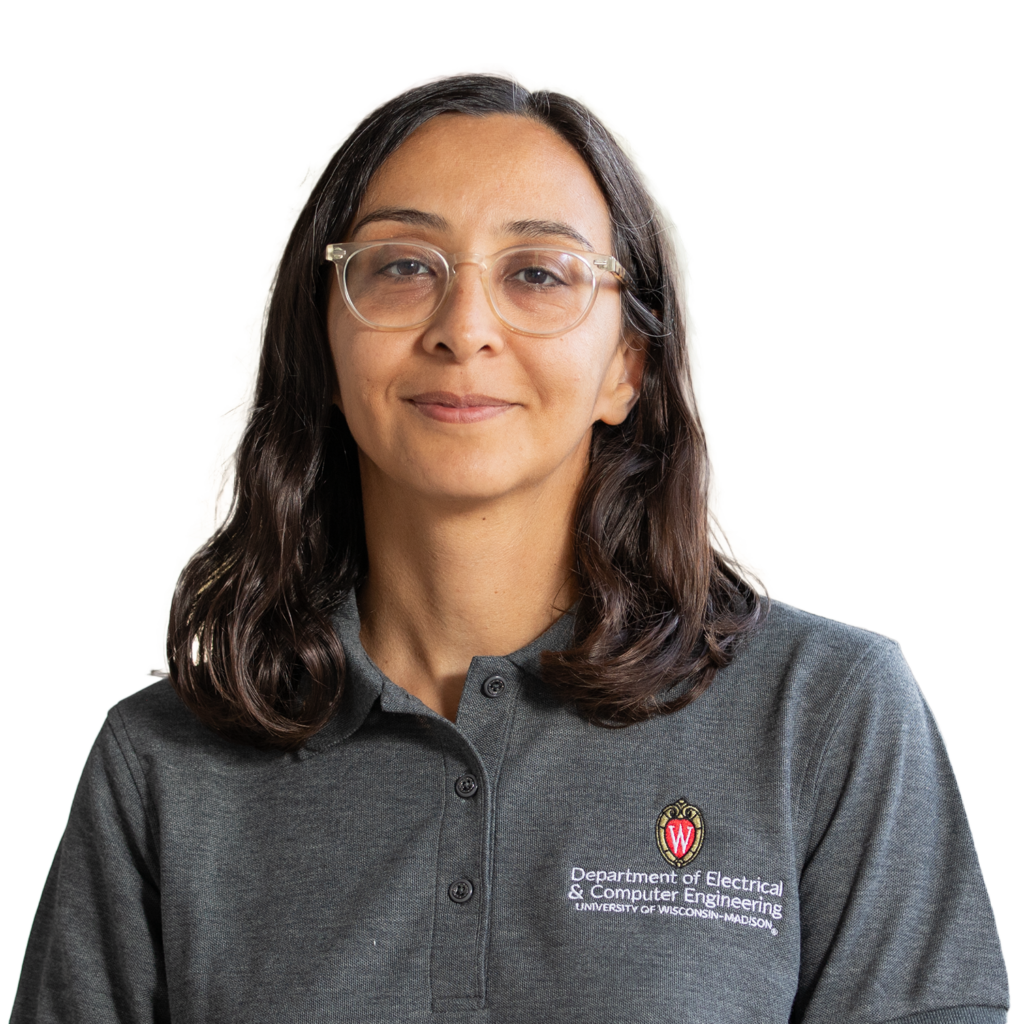
Azadeh Davoodi is a Vilas Distinguished Achievement Professor and Associate Chair of Undergraduate Studies in the Department of Electrical and Computer Engineering at the University of Wisconsin-Madison. Her research focuses on Electronic Design Automation (EDA), integrated circuit debug, and machine learning applications in VLSI design. She holds editorial roles in journals like IEEE TCAD and ACM TRETS, and has chaired major conferences such as ISPD 2015 and served on technical program committees for DAC, ICCAD, and others. Education: PhD in Electrical Engineering, University of Maryland-College Park (2006) Research Interests: Machine learning for VLSI chip design VLSI design automation for machine learning IC-CAD for emerging nanotechnologies Hardware security Recent Research Trends: Her work bridges machine learning and hardware design, with publications on neural network optimization, distributed inference, and explainable AI for circuit design. She emphasizes energy-efficient CNNs, latency reduction in edge computing, and security in split manufacturing. Awards: 2025 DATE Best Paper Candidate 2024 Vilas Distinguished Achievement Professor 2015 ACM Best Paper Award 2011 NSF CAREER Award Service and Grants: Leads NSF-funded projects on explainable ML for CAD and holds grants for distributed neural network synthesis. Her service includes roles as IEEE HKN member and editorial board positions. Labs/Teams: Engages in interdisciplinary research teams at UW-Madison, focusing on EDA innovation and hardware-software co-design.
Mark Law is a Professor in the Department of Electrical & Computer Engineering at the University of Florida, part of the Herbert Wertheim College of Engineering. His research focuses on semiconductor process modeling, integrated circuit fabrication, and superconductivity. He leads the ColdFlux superconductor design tool project and has contributed to advancements in Ga2O3 and GaN-based devices. Education: PhD, Electrical Engineering, Stanford University (1988) MS, Electrical Engineering, Stanford University (1982) BS, Computer Engineering, Iowa State University (1981) Research Interests: Design and modeling of IC fabrication processes, semiconductor device behavior, superconducting electronics, radiation effects in semiconductors, and TCAD simulation tools. His work emphasizes practical applications of advanced materials like Ga2O3 and GaN in power electronics and high-voltage devices. Notable Contributions: Developed the ColdFlux EDA tool for superconducting circuits, pioneered edge termination techniques for β-Ga2O3 rectifiers, and modeled radiation damage in wide-bandgap semiconductors. Awards: Fellow, National Collegiate Honors Council (2023) UF Academy of Distinguished Teaching Scholars (2019) IEEE Electron Device Society J.J. Ebers Award (2010) Multiple teaching awards, including College of Engineering Teacher of the Year (1996). Advising & Grants: While no specific students are listed, his research has been supported by industry and government grants. He advises on semiconductor fabrication processes and has led collaborative projects with SEMI and the Semiconductor Research Corporation. Labs & Teams: Leads the ECE Device Simulation Group and collaborates with the University of Florida’s Materials Science Department on advanced semiconductor projects.
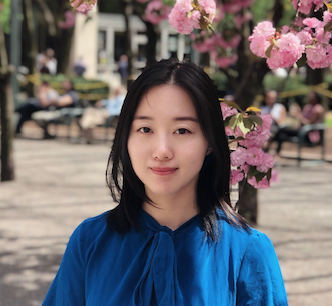
Kexin Li is an Assistant Professor in the School of Electrical, Computer and Energy Engineering at Arizona State University since August 2023. She earned her Ph.D. in Electrical and Computer Engineering from the University of Illinois Urbana-Champaign in 2022, followed by a postdoctoral position at Columbia University. Education: Ph.D., Electrical and Computer Engineering, University of Illinois Urbana-Champaign (2022) M.Eng., Computer Engineering, New York University (2019) MSc., Analog and Digital IC Design, Imperial College London (2014) B.Eng., Electronic Science and Technology, Southeast University (2012) Her research focuses on semiconductor device physics and modeling for high-power, high-frequency applications, with particular expertise in wide bandgap materials like GaN. She develops frameworks for technology-circuit co-design that bridge nanoelectronics, device physics, and circuit implementation. Current work emphasizes cryogenic device modeling for quantum computing interfaces and ultra-wideband RF systems. Analysis of her recent publications reveals a strong focus on GaN HEMT characterization, device-circuit co-design methodologies, and cryogenic operation for quantum applications. Her work spans fundamental semiconductor physics, advanced TCAD simulation, and practical circuit implementation for next-generation communication systems. Scientific Recognition: Selected as 2022 EECS Rising Star Editor's Pick in Journal of Applied Physics (2022) for GaN HEMT modeling work Professor Li actively mentors graduate and undergraduate researchers, currently advising five Ph.D. students and four MS/UG students. Her research group collaborates with institutions including AFRL and focuses on creating a collaborative, diverse environment for developing new electronic materials and systems. She teaches courses including Analog and Digital Circuits (EEE 335) and Fundamentals of Solid-State Devices (EEE 436).
John D. Cressler is a Regents Professor and Schlumberger Chair in Electronics at the Georgia Institute of Technology's School of Electrical and Computer Engineering. He earned his B.S. in Physics from Georgia Tech (1984) and Ph.D. in Applied Physics from Columbia University (1990). After pioneering SiGe research at IBM (1984-1992), he joined academia at Auburn University before moving to Georgia Tech in 2002. His research specializes in silicon-germanium heterojunction technology, with focuses on: RF/microwave/mm-wave circuits Radiation effects in electronics Cryogenic semiconductor behavior Device reliability physics Compact modeling for SiGe devices His 700+ publications demonstrate consistent innovation in SiGe HBT design, radiation-hardened circuits, and millimeter-wave systems. Recent work emphasizes radiation tolerance for space applications, high-frequency circuit optimization, and novel fabrication techniques. Major Awards: IEEE Fellow (2001) IEEE Leon K. Kirchmayer Graduate Teaching Award (2011) ONR Young Investigator Award (1994) IEEE Third Millennium Medal (2000) He leads Georgia Tech's SiGe research group with extensive industry collaborations and teaches courses including ECE 3040 (Microelectronic Circuits), ECE 6444 (SiGe Devices), and interdisciplinary courses on science/religion dialogue.
Olin Hartin serves as a Professor of Practice in Arizona State University's School of Electrical, Computer and Energy Engineering, leveraging over 30 years of Fortune 500 industry experience in science and technology. Based at the Tempe campus (GWC 340, Mailcode 5706), he maintains an active research profile with 25 patents and more than 60 scholarly publications. His academic credentials include: Ph.D. in Electrical Engineering M.S. in Electrical Engineering M.S. in Physics B.S. in Physics Hartin's research centers on advanced device technologies and materials, with demonstrated expertise in nanoengineering, RF circuit design, and semiconductor physics. His work bridges theoretical modeling with practical fabrication challenges, particularly in gallium nitride transistor development and electromagnetic compatibility. Recent projects address thermal management in high-power devices and noise isolation techniques for mixed-signal integrated circuits, driven by industry applications in wireless infrastructure. Analysis of his publication history reveals sustained focus on GaN HEMTs since 2010, with increasing emphasis on machine learning applications for FPGA deployment. His work consistently targets real-world implementation challenges, reflecting his industry background through patents in antenna design, ESD protection, and RF component optimization. Professional recognition includes: Senior Member of IEEE In teaching, Hartin supervises senior design laboratories (EEE 488/489) and instructs core courses including Hardware Design Language/Programming Logic (EEE 333), Circuits II (EEE 334), and Machine Learning with FPGA Deployment (EEE 405). His industry perspective enriches curriculum development, though specific grant funding details are not publicly documented. While no dedicated research lab is specified, his patent portfolio indicates ongoing collaboration with semiconductor industry partners.
Dr. Luiz Felipe Aguinsky is a Lecturer in Computational Nanoelectronics and Deputy Group Leader of the DeepNano Research Group at the University of Glasgow. He holds a PhD (Dr. techn.) from TU Wien, Austria, where he specialized in semiconductor fabrication process modeling. As an Erwin Schrödinger Fellow at ETH Zurich, he developed machine learning-enhanced models for memristors. His research focuses on computational nanoelectronics, combining advanced simulation techniques with cutting-edge materials science. Education: PhD (Dr. techn.) in Microelectronics, TU Wien (Austria), 2019 (with distinction) Erwin Schrödinger Fellowship at ETH Zurich's Computational Electronics Group (2021–2023) Research Interests: His work integrates machine learning with atomistic simulations to address challenges in semiconductor manufacturing. Key areas include: High-performance TCAD for nanofabrication processes Quantum transport and neuromorphic computing Applied computer graphics for nonimaging applications Level-set methods for surface evolution modeling Publications Trends: Recent work emphasizes knudsen diffusion modeling for nanofabrication, atomic layer deposition simulations, and plasma etching optimization. Cross-disciplinary methods like ray tracing and machine learning feature prominently in his latest projects. Awards & Fellowships: EUROSOI-ULIS Best Poster Award (2021) Erwin Schrödinger Fellowship (FWF, 2023–2025) Professional Activities: Active member of IEEE Nanotechnology Council's Modelling & Simulation Technical Committee. Co-author of over 15 peer-reviewed publications since 2019, with contributions to IEEE NANO, SISPAD, and EuroSOI conferences. Labs/Teams: Leads computational modeling efforts in the DeepNano Research Group, collaborating globally on TCAD innovations for next-generation semiconductor devices.
Dr. QUAN Chen is an Associate Professor at the School of Microelectronics, Southern University of Science and Technology (SUSTech), holding this position since May 2025 after serving as Assistant Professor (2019-2025) and Research Assistant Professor at the University of Hong Kong (2012-2018). A Shenzhen high-level overseas talent, he earned his PhD from the University of Hong Kong and conducts cutting-edge research in electronic design automation. His academic credentials include: Ph.D. from The University of Hong Kong (2010) Master's degree from The University of Hong Kong (2007) Bachelor's degree from Sun Yat-Sen University (2005) Dr. Chen's research pioneers advanced EDA algorithms for large-scale analog/RF circuit simulation, post-Moore multi-physics analysis, and AI-assisted design technologies. His work addresses critical challenges in nanodevice modeling and quantum computing circuits, resulting in over 50 publications in top venues like IEEE TCAD and DAC, plus four Chinese patents. Analysis of his recent publications reveals dominant trends in exponential integrator methods for transient simulation, model order reduction techniques, and physics-informed machine learning for reliability analysis. His work bridges numerical mathematics with practical EDA applications across analog circuits, quantum hardware, and emerging memory technologies. Key recognitions include: Wu Wenjun Artificial Intelligence Science and Technology Award, Second Prize (2020) ICCAD Best Paper Award Nomination (2012) Dr. Chen actively recruits Postdoctoral Fellows, Research Assistants, and Graduate Students while leading major funded projects including NSFC key/general programs and Guangdong Provincial R&D initiatives. His industry partnerships with Huawei, Empyrean, and Guowei Group translate theoretical advances into real-world EDA solutions. He directs a specialized research group at SUSTech focused on computational methods for next-generation circuit design, fostering innovation in simulation algorithms and multi-physics analysis through academic-industry collaboration.
Daniel Nagy is an Assistant Professor at the Department of Electronics and Computing within the Higher Polytechnic School of Engineering at the University of Seville. His research focuses on nanoelectronics, semiconductor device simulation, and TCAD technologies. He leads the ARQCOMP research group, specializing in computer architecture and novel transistor design. Education details are not explicitly provided in the texts, but his academic focus suggests advanced training in electronics engineering or related fields. His research interests include quantum transport phenomena, nanoscale device variability analysis, and computational modeling of FinFETs, nanowire FETs, and nanosheet transistors. He has extensively contributed to TCAD simulation frameworks such as NESS (Nano-Electronic Simulation Software), emphasizing open-source tools. Research Trends: His work emphasizes transistor scaling challenges for sub-2nm nodes, device variability mitigation, and the development of modular simulation tools. Key topics include nanosheet FET optimization, POM-based molecular memory systems, and benchmarking of emerging transistor architectures. His studies often bridge quantum mechanics (via Schrödinger equation modeling) with classical transport phenomena. No scientific awards are mentioned in the provided texts. He has advised no publicly listed PhD/Master’s students. His ARQCOMP group collaborates on next-generation electronic device architectures and simulation methodologies. Labs/Teams: The ARQCOMP group focuses on advancing computer architecture and nanoelectronic device simulation through interdisciplinary approaches, integrating computational physics, materials science, and electrical engineering.
Matthias Bucher is a Professor at the Department of Electronics and Computer Architecture , School of Electronic & Computer Engineering , Technical University of Crete, Greece. His research focuses on analog/RF integrated circuit design, compact modeling, and semiconductor device physics. Education : PhD (1999) and MSc (1993) in Electrical Engineering from EPFL, Switzerland Research Areas : EKV3 MOSFET compact modeling, RF characterization, nanoscale CMOS, and high-voltage device modeling Courses Taught : Electronics II, Analog CMOS Circuit Design, Special Topics in Analog CMOS Circuit Design His work emphasizes compact modeling for RF and analog circuits, with applications in nanoscale devices and radiation-hardened electronics. Recent publications highlight open-source PDK initiatives, Verilog-A standardization, and noise modeling in advanced transistors. He leads the Electronics Laboratory at TUC and collaborates with microelectronics companies. Bucher is a member of IEEE and the Technical Chamber of Greece, with over 45 publications and two book chapters to his credit.
Marco Ernesto Vallone is a Fixed-term Assistant Professor at the Department of Electronics and Telecommunications (DET) at Politecnico di Torino (PoliTO), where he is also a member of the PhotoNext Interdepartmental Center for Applied Photonics. His academic appointments include membership in the College of Electronic, Telecommunications, and Physics Engineering. He holds national scientific qualifications for Associate Professor positions in Electronics (09/E3), Theoretical Physics of Matter (02/B2), and Experimental Physics of Matter (02/B1). Dr. Vallone's research spans multiple areas of optoelectronics and semiconductor physics, with a particular focus on infrared detectors, light-emitting diodes, silicon photonics, and photodetectors. His work combines theoretical modeling with practical applications, specializing in multiphysics CAD of vertical-cavity surface-emitting lasers (VCSELs), efficiency and reliability of visible and UV LEDs, multiscale physics-based modeling of optoelectronic devices, far-infrared image sensor design, and Si and III-V photonic integrated circuits. His research addresses critical challenges in high operating temperature (HOT) infrared detectors, germanium-on-silicon waveguide photodetectors, and plasmonic structures for enhanced optoelectronic performance. His extensive publication record from 2022-2025 demonstrates a consistent research trajectory focused on advancing infrared detection technology, photodetector design, and semiconductor device modeling. His work shows a progression from fundamental quantum mechanical investigations to practical engineering applications, particularly in collaboration with industry partners like Cisco, Huawei, and AIM Infrarot-Module. The research consistently bridges theoretical physics with practical device engineering, with increasing emphasis on plasmonic enhancement techniques and high-temperature operation of infrared detectors. Scientific Qualifications: National Scientific Qualification as Associate Professor in Electronics (09/E3), since November 2020 National Scientific Qualification as Associate Professor in Theoretical Physics of Matter (02/B2), since May 2021 National Scientific Qualification as Associate Professor in Experimental Physics of Matter (02/B1), since May 2021 Dr. Vallone serves as a PhD co-supervisor and Master's thesis co-supervisor, notably guiding Matteo Giovanni Carmelo Alasio's doctoral research on "Ge-on-Si photodetectors for silicon photonics: multiphysics modeling and design." His research funding includes multiple industrial contracts as Principal Investigator with AIM Infrarot-Module, Cisco Systems, and Huawei, focusing on infrared detector design, silicon photonics integration, and laser development. He has also participated in international research collaborations with Boston University, University of Cambridge, University of Padova, and University of Modena and Reggio Emilia, particularly studying GaN/InGaN multi-quantum well LEDs. As a member of the Microwave and Optoelectronics Group (MOG) at DET, Dr. Vallone contributes to the department's research infrastructure while maintaining active industry partnerships that translate academic research into practical applications for telecommunications, defense, and astronomical imaging systems.
Paolo PAVAN is a Full Professor at the Department of Engineering 'Enzo Ferrari' of the University of Modena and Reggio Emilia (UNIMORE). He leads research in neuromorphic electronics, semiconductor devices, and wearable biomedical sensors. His work spans memristor-based neural networks, power electronics (GaN MOSFETs), and driver safety systems leveraging physiological signals like PPG and skin conductance. He teaches advanced courses on electronic systems design, neuromorphic hardware, and analog electronics. Research interests include neuromorphic computing architectures, reliability of emerging memory technologies (RRAM/FeFET), and GaN-based power devices. He has published extensively on topics like defect dynamics in semiconductors, in-memory computing, and automotive safety systems. His lab (e-lab.unimore.it) focuses on bridging device physics and circuit design for next-generation electronics. Recent studies highlight contributions to spiking neural networks using hybrid CMOS-memristor systems, driver drowsiness detection via TCNs, and TCAD analysis of GaN device instabilities. His work addresses both fundamental physics and practical applications, emphasizing energy efficiency and reliability in emerging technologies.
Gian Franco Dalla Betta is a Full Professor at the Department of Industrial Engineering, University of Trento, and Deputy Coordinator of the Doctoral Programme in Materials, Mechatronics and Systems Engineering. His work focuses on silicon radiation detectors, CMOS image sensors, and microelectronics for high-energy physics and medical imaging applications. Secondary School Degree, Pio X Institute, Treviso (1985) M.Sc. in Electronic Engineering, University of Bologna (1992) Ph.D. in Materials, Technologies and Electronic Devices, University of Trento (1997) His research spans: Radiation detector design (PIN diodes, strip/pixel detectors, 3D sensors, LGADs) CMOS photodetectors (SPADs, SiPMs, CAPD) Radiation damage modeling and mitigation Hybrid neutron detectors and active-edge terminations Recent publications highlight advancements in 3D sensor design for timing applications, LGADs for particle tracking, and CMOS SPAD arrays. Key subfields include radiation hardness, charge multiplication, and TCAD-aided process optimization. Scientific recognition includes the IEEE Transactions on Nuclear Science 2025 Best Paper Award . His work has been instrumental in detector production for CERN experiments like ATLAS and ALICE. At ITC-IRST (now FBK), he pioneered silicon fabrication processes for radiation detectors and contributed to international collaborations such as INFN and CMS upgrades.