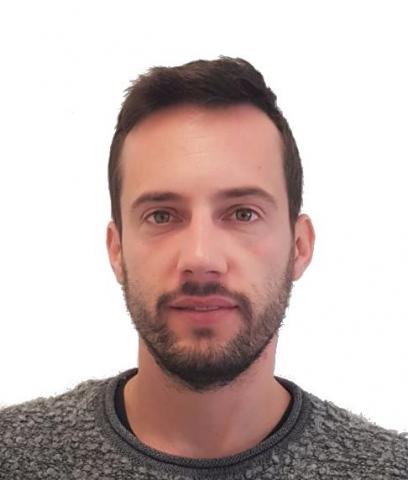
Andrea Morichetta is an Associate Professor at the University of Camerino (UNICAM). His research focuses on blockchain technology, smart contracts, and business process management. He explores the integration of blockchain with choreography-based systems, model-driven engineering, and process mining. His work addresses challenges in smart contract testing, distributed systems coordination, and auditability in decentralized applications. Key research areas include: Blockchain-based execution frameworks for BPMN choreographies Mutation testing strategies for Solidity smart contracts Decentralized identity systems using blockchain Event log analysis for Ethereum applications His publications highlight advancements in: Smart contract security and testing methodologies Choreography-driven architectures for IoT and MLOps Formal analysis of business process collaborations He contributes to international conferences and workshops on blockchain, enterprise modeling, and business informatics research. His work bridges theoretical foundations with practical implementations in distributed systems and process automation.
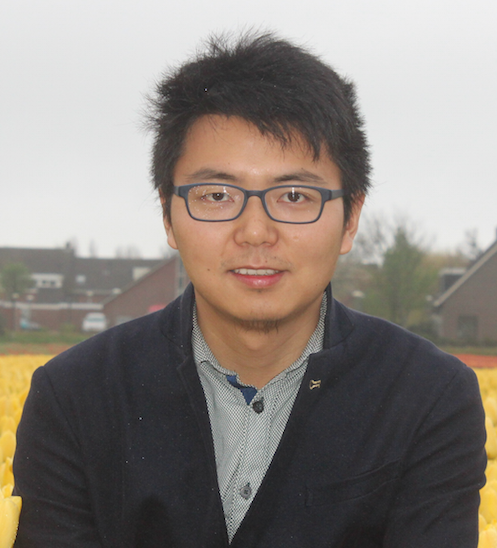
Li Li is a Professor of Software Engineering at Beihang University , China. Previously, he served as an ARC DECRA Fellow and Senior Lecturer at Monash University , leading the SMart software Analysis and Trustworthy computing (SMAT) research lab at the Department of Software Systems and Cybersecurity. His academic journey includes a Ph.D. in Software Engineering from the University of Luxembourg (2016), supervised by IEEE Fellow Prof. Yves Le Traon and Dr. Jacques Klein. Research Interests Li's research focuses on Mobile Software Engineering (Mobile Security, Quality Assurance) and Intelligent Software Engineering (SE4AI, AI4SE). He applies static code analysis , dynamic program testing , and machine/deep learning to enhance software security and reliability. Key areas include Android API evolution, automated patch validation, and multi-language code analysis frameworks like Scalpel for Python. Scientific Recognition ARC DECRA Fellowship Rising SE Research Star Top-5 Most Impactful Early Career SE Researchers (2020, 2017) 5 Best/Distinguished Paper Awards across PLDI, WWW, ASE, MSR, and SANER Academic Contributions He has contributed to foundational Android analysis tools (e.g., AndroZoo++, DroidRA) and developed scalable systems for distributed program analysis (Seads). His work appears in top venues like ICSE, ESEC/FSE, ASE, ISSTA, POPL, and TSE.
Prof. Michele Germani is a Full Professor at the Polytechnic University of Marche, Department of Industrial Engineering and Mathematical Sciences. His research focuses on ergonomics, sustainability, and human-centered design, with particular emphasis on industrial automation, wearable technologies, and circular economy principles. He leads projects on ergonomic risk assessment, environmental impact modeling, and smart manufacturing systems. Academic Background: Holds a position in the Faculty of Engineering, contributing to both teaching and research. His work integrates machine learning, sensor-based systems, and virtual reality to address challenges in manufacturing, healthcare, and sustainable design. Research Interests: Prof. Germani explores topics such as design for disassembly, eco-design tools, and the application of advanced technologies (e.g., exoskeletons, cobots) to enhance workplace safety and efficiency. His studies often bridge engineering and environmental science, aiming to reduce carbon footprints through innovative design methodologies. Key Projects: Development of decision support systems for fall risk detection, sensor-based ergonomic evaluation tools, and frameworks for circular economy implementation. He also investigates the impact of Industry 4.0 technologies on workforce dynamics and operator training via mixed reality simulations. Grants & Collaborations: Engaged in interdisciplinary collaborations focusing on sustainable manufacturing, healthcare technology, and smart systems. His research has led to tools like Durabot for durability analysis and Greenbuild for green building design. Labs & Teams: Oversees labs developing eco-design strategies, human-robot collaboration systems, and ergonomic assessment protocols, with a focus on real-world industrial applications.
Chiara Bodei is an Associate Professor at the Department of Computer Science, University of Pisa. She specializes in cybersecurity, formal methods, and programming languages. Her teaching responsibilities include courses such as 'Programming Fundamentals with Laboratory' and 'Security Methods and Verification' at both undergraduate and graduate levels. She has contributed to research in automotive cybersecurity, IoT security, and formal analysis of software systems. Her work emphasizes secure communication protocols, privacy policies in automotive data, and context-aware security mechanisms. She collaborates with industry and academia on projects related to software-defined vehicles and IoT security. Her research has been published in top-tier conferences and journals, focusing on practical and theoretical advancements in computer security and formal methods. Research Interests: Cybersecurity, Formal Methods, Automotive Systems Security, IoT Security, Programming Languages, Context-Aware Systems. She has co-authored numerous papers on topics such as vehicular communication security, secure automotive protocols, and privacy in IoT systems. Teaching: Bodei has taught courses like 'Fondamenti di Programmazione' (undergraduate), 'Security Methods and Verification' (graduate), and 'Language-Based Technology for Security' (master’s level) across multiple academic years. She emphasizes practical programming skills and theoretical foundations in her courses. Labs/Teams: Her work is supported by the Department of Computer Science labs at the University of Pisa, focusing on applied research in cybersecurity and formal systems.
Roberto Giorgi is an Associate Professor of Computer Engineering at the Department of Information Engineering, University of Siena, Italy. He has held this position since October 1, 2006, following his tenure as an Assistant Professor since March 15, 1999. His educational background includes a Ph.D. in Computer Engineering from the University of Pisa (1999) with a thesis on coherence protocols for shared-memory multiprocessors, and an Electronic Engineering degree (1995) with a thesis on trace-driven performance evaluation of multiprocessors. Giorgi's primary research focuses on Computer Architecture , particularly on multiprocessor/multicore issues including processor design, coherence protocols, programmability, and energy efficiency. His work spans both theoretical and practical aspects of computer architecture, with emphasis on real-world implementations and educational tools. He has coordinated significant EU-funded projects including AXIOM (2014-2018) on Smart Cyber-Physical Systems and TERAFLUX (2009-2014) on Many-Cores. His recent publications (2022-2025) demonstrate a strong progression toward practical applications of computer architecture research, with particular emphasis on RISC-V architecture, FPGA-based acceleration, dataflow computing models (especially DF-Threads), and graph processing. Many of his papers address educational tools for computer architecture education, real-time object detection on embedded platforms, and novel execution paradigms for edge computing and HPC. IEEE Senior Member ACM Lifetime Member Coordinator of EU-funded AXIOM project (2014-2018) on Smart Cyber-Physical Systems Coordinator of EU-funded TERAFLUX project (2009-2014) on Many-Cores Giorgi has been actively involved in securing research funding and building collaborations, particularly in high-performance computer architecture research with emphasis on scalable architectures and embedded systems. He leads the Computer Architecture Lab (ROOM 223) at the University of Siena, which was established in 2007, and has been instrumental in developing practical implementations of architectural concepts including the AXIOM platform for cyber-physical systems.
Luca D'Acci is an Associate Professor in Sustainable Urban Forms and Evaluations at the Polytechnic of Turin, affiliated with the Interuniversity Department of Territorial Sciences, Planning and Policies (DIST). He holds additional affiliations as a Senior Research Fellow at the University of Portsmouth and as a member of research networks at the University of Birmingham and Erasmus University Rotterdam. His academic journey includes international roles such as Head of Urban Environment at Erasmus University Rotterdam and visiting researcher positions at the University of Oxford, University of Cambridge, and ETH Zurich. Education: MSc in Architecture-Science of Cities, Polytechnic of Turin (2003, cum laude) PhD in Economic Assessments, Polytechnic of Turin (2007) BSc in Mathematics, University of Turin (2007) BSc in Construction Engineering, Polytechnic of Turin (2009, cum laude) Post-PhD in Urbanism, University of Campinas (2010) Anthropology, University of Oxford (2020, 20 credits) Luca D'Acci’s research focuses on urban morphology, urban allometry, isobenefit urbanism, and the socio-economic-environmental impacts of urban form. His work bridges humanistic and quantitative approaches, integrating engineering, architecture, economics, and anthropology. He investigates how urbanicity, urban form, and spatial configuration influence well-being, sustainability, and resilience. His recent publications (2023–2025) reveal a strong trend toward computational modeling and simulation of urban growth, particularly through the lens of isobenefit urbanism —a concept he has pioneered. These works combine cellular automata, agent-based modeling, and morphogenetic frameworks to simulate sustainable urban futures. He also explores fractal patterns in housing markets, the psychology of urban living, and the mental costs of urbanicity. His research spans disciplines including urban science, environmental psychology, urban economics, and complex systems. Scientific Awards and Honors: Fellow, Erasmus Happiness Economics Research Organisation (EHERO), Erasmus University Rotterdam (2022–) Senior Research Fellow, University of Portsmouth (2017–) Fellow, Cluster for Sustainable Cities, University of Portsmouth (2017–2020) Fellow, Urban Morphology Research Group, University of Birmingham (2016–2021) Member, Cambridge Networks Network, University of Cambridge (2016–) Honorary Fellow, University of Birmingham (2016–) Luca D'Acci actively advises PhD students as a member of the Doctoral Collegium for Urban and Regional Development at Politecnico di Torino (2020–2024). He has secured and contributed to significant research grants, including projects funded by the World Bank, Asian Development Bank, European Commission, EPSRC, Lincoln Institute of Land Policy, and University College London (Future Urban Growth Lab). His editorial roles include membership on the boards of PLOS ONE , PLOS Mental Health , and Humanities & Social Sciences Communications . Labs and Research Networks: Future Urban Growth Lab (UCL, 2019–) LEUr Urban Ecology Lab (UFSC, 2022–) URban Evolution Morphology (UReM, 2024–) Erasmus Universiteit Rotterdam (EHERO, 2022–2024) Spatial Intelligence Unit (SPIN Unit), Estonia (2013–) International Society of Biourbanism (2013–)
Maurizio Zamboni is a Full Professor at the Department of Electronics and Telecommunications (DET) at the Polytechnic University of Turin, where he also serves as Student Ombudsman. His academic career spans over three decades with continuous teaching and research contributions in electronics and computing fields. Professor Zamboni's research interests focus on cutting-edge areas including CMOS integrated circuits, computer architecture, quantum computing, semiconductor devices, and VLSI design. His work particularly emphasizes emerging nanotechnologies for digital microelectronic architectures and the design of high-performance or low-consumption processing systems. He has developed expertise in circuit architectures for probabilistic computing, logic-in-memory computing, magnetic devices, and quantum architectures. His recent publications (2021-2025) reveal a strong trend toward quantum computing applications, in-memory processing architectures, and novel approaches to overcoming the memory wall problem. These works span both theoretical algorithm development and practical hardware implementations, with significant focus on quantum annealing, FPGA-based quantum emulation, and memory-mapped processing architectures. Professor Zamboni has been actively supervising PhD students working on quantum computing algorithms, hardware AI accelerators for automotive applications, and quantum-related optimization approaches. He leads research within the VLSILAB Group at DET, focusing on the intersection of nanoelectronics, quantum computing, and advanced computer architectures. His work bridges theoretical computer science with practical electronic design, creating novel solutions for next-generation computing challenges.
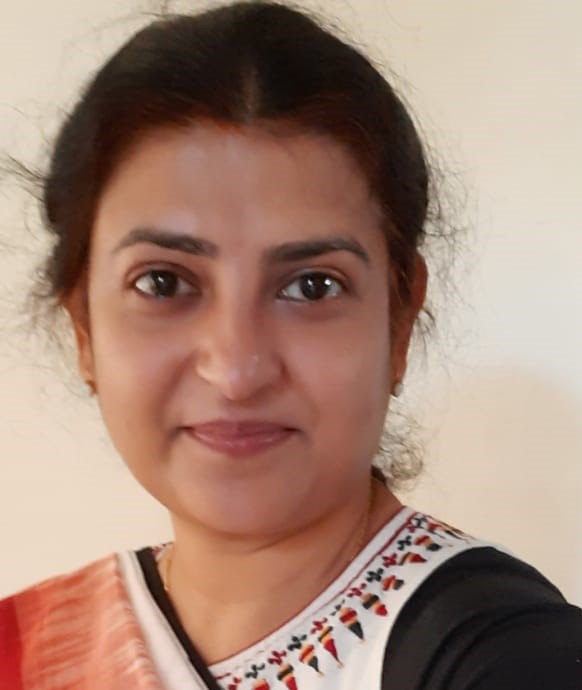
Dr. Dipanwita Thakur serves as Assistant Professor at the Department of Computer Engineering, Modeling, Electronics and Systems (DIMES) at the University of Calabria, Italy since July 2023. She is an active member of the European Cooperation in Science & Technology (COST Action CA22104) focusing on cybersecurity and serves in the IEEE Future Networks Working Group for Artificial Intelligence/Machine Learning. Previously, she held a 15-year Assistant Professor position at Banasthali University, Rajasthan, and has industry experience at TechMahindra and C-DAC. Education: Ph.D. in Smart Healthcare from West Bengal University of Technology, Kolkata M.Tech. in Software Engineering from Banasthali Vidyapith MCA from NIELIT, Government of India B.Sc. from University of Calcutta Her research pioneers Green Artificial Intelligence with emphasis on energy-efficient federated learning and smart healthcare applications. She develops privacy-preserving human activity recognition systems using multimodal data fusion, focusing on performance evaluation and environmental sustainability. Her work bridges theoretical machine learning with practical healthcare solutions, optimizing AI systems for reduced carbon footprint while maintaining clinical efficacy through hardware-algorithm co-design and quantization techniques. Recent publications reveal a strong trajectory toward sustainable AI, with increasing focus on energy-aware federated learning frameworks, multimodal medical segmentation, and non-IID data handling. Her work consistently addresses the critical balance between model accuracy, convergence speed, and energy consumption across edge devices, with growing emphasis on quantization techniques and hardware-algorithm co-design for real-world deployment. Scientific Awards: Elevated to IEEE Senior Member (2024) Dr. B.C. Roy Memorial Scholarship for outstanding 10th Board results (1992) Student Science Seminar Award by West Bengal Government (1990) Dr. Thakur actively mentors students as evidenced by her congratulations to advisee Farwa for paper acceptances. She serves as Associate Editor for Information Fusion (Elsevier) and IEEE Sensors Journal, and holds editorial roles at Scientific Reports. Her research is advanced through COST Action CA22104 and IEEE working groups, though specific grant details aren't listed in the source material. She has organized key workshops including Green-Aware AI 2024 and Green Federated Learning at IJCNN 2025. She leads research within the MONAI community on data quality and federated learning, and contributes to IEEE IoT and Future Networks initiatives. Her work with the COST Action CA22104 Behavioral Next Generation in Wireless Networks connects cybersecurity with sustainable AI development, while her Missouri S&T visiting scholar position focuses on energy optimization for federated learning systems.
Alberto Oliveri is an Associate Professor at the University of Genoa in the Department of Naval, Electrical, Electronic and Telecommunications Engineering. He teaches courses including Circuits and Systems, Nonlinear Circuits and Systems, Power Management, and Elements of Electrical Technology for undergraduate and graduate programs in Electronic Engineering, Information Engineering, Industrial Technologies, and Chemical Engineering. His research focuses on advanced topics in power electronics and control systems, with particular emphasis on: Modeling and optimization of magnetic components (inductors) for switch-mode power supplies FPGA implementation of nonlinear model predictive control algorithms Synthetic inertia solutions for renewable energy grid integration Embedded control systems for power converters Advanced modeling of ferrite-core and amorphous-core inductors His recent publications (2022-2025) demonstrate a consistent focus on improving power conversion efficiency through advanced control strategies and hardware implementation. Research themes include predictive control optimization, magnetic component characterization under saturation conditions, renewable energy grid support functions, and embedded algorithm development for real-time power system monitoring.
Gian Pietro Picco is a Full Professor at the Department of Information Engineering and Computer Science (DISI) at the University of Trento, Italy. His research focuses on wireless networks, particularly ultra-wideband (UWB) technology, wireless sensor networks, and cyber-physical systems. He teaches courses including Distributed Systems, Low-power wireless networking for the Internet of Things, and Programming 2. Professor Picco's research interests span several interconnected domains in pervasive computing and networking: Ultra-wideband (UWB) technology for precise localization and communication Wireless sensor networks and Internet of Things (IoT) systems Cyber-physical systems and networked control Energy-efficient networking protocols Distributed systems and middleware Software engineering approaches for networked embedded systems His recent publications demonstrate a strong focus on ultra-wideband technology applications, particularly in localization, ranging, and concurrent transmissions. His work bridges theoretical foundations with practical implementations, often addressing real-world challenges in human-robot interaction, contact tracing, and infrastructure monitoring. A notable trend is the increasing application of UWB technology for precise positioning in complex environments, with significant contributions to understanding and mitigating human occlusion effects on ranging accuracy. Professor Picco has received numerous prestigious awards for his research contributions: Best Paper Award at IPSN'23 for "Network On or Off? Instant Global Binary Decisions over UWB with Flick" Best Paper Award at IPIN 2019 for "TALLA: Large-scale TDoA Localization with Ultra-wideband Radios" Best Paper Award at EWSN 2018 for "Concurrent Ranging in Ultra-wideband Radios" Best Paper Award at IPSN 2015 for "Geo-referenced Proximity Detection of Wildlife" Best Paper Award at IPSN 2011 for "Wireless Sensor Networks for Adaptive Lighting in Road Tunnels" Best Paper Award at IPSN 2009 for "Monitoring Heritage Buildings with Wireless Sensor Networks" Mark Weiser Best Paper Award at PerCom 2012 Professor Picco actively advises numerous PhD and Master's students, with several of his advisees becoming prominent researchers in wireless networking. His laboratory has secured significant funding for research projects in wireless sensor networks, IoT systems, and cyber-physical systems. His work has practical applications in heritage building monitoring, wildlife tracking, road tunnel lighting systems, and pandemic contact tracing. His research group maintains the Cloves large-scale ultra-wideband testbed and has developed several middleware systems for wireless sensor networks, including Lime and TeenyLIME. The group collaborates extensively with international research institutions and has made significant contributions to standardization efforts in IoT networking protocols.
Angelo Corallo is an Associate Professor at the Department of Experimental Medicine, University of Salento, specializing in technologies and methodologies for collaborative processes in industrial systems. His research spans Digital Business Ecosystems , Cybersecurity , and Collaborative Product Design , focusing on the interplay between technology and organizational dynamics. He leads interdisciplinary research divisions in Open Networked Business Management , Learning and Innovation , and Collaborative Product Design . Research Interests : Corallo's work integrates Information and Communication Technologies (ICT) with Business Management, particularly in Digital Twins for healthcare and manufacturing Knowledge Modeling and Ontology Engineering Industry 4.0 and Smart Manufacturing Agri-Food Sustainability through digitalization Scientific Contributions : His recent articles explore trends in Cybersecurity for Industrial IoT Metaverse Applications in business models Traceability Systems in food supply chains Collagen-Based Biomaterials from aquaponics
Valentina Serra is a Full Professor at the Department of Energy (DENERG), Polytechnic University of Turin, and a member of the Future Urban Legacy Lab (FULL Center). She specializes in advanced building envelopes , energy performance , and indoor environmental quality , with a focus on experimental facilities and sustainable materials. Research Interests: Adaptive façades, PCM integration, thermochromic coatings, and acoustic absorption using natural waste materials. Projects: Scientific Director for EU-funded Wall-ACE (2016–2019), PRIN (2019–2021), and regional research initiatives like GRE_EN_S (2010–2012). Awards: Member of the Energy and Buildings editorial board since 2019, Program Chair for SEB-16, and organizer for IBPC 2015. Teaching: Course Lecturer for Eco-Friendly Architectural Design B at Politecnico di Torino since 2021. Students: Supervises PhD candidates like Ramona Russo and Giorgia Autretto, focusing on occupant-centric design and PCM-based systems. Patents: Co-inventor of the national patent NBT - Not Bed Technology .
Carlo Combi is a Full Professor at the Department of Computer Science, University of Verona. He serves as Department Director and holds roles in various academic committees, including the Faculty Board of PhD in Computer Science and the Computer Science Teaching Committee. His research focuses on databases, healthcare information systems, temporal data mining, and business process management. He leads the STARS laboratory and has contributed to projects like PREPARE (prostate cancer evaluation) and EDIPO (neuroimaging genetics). His teaching spans courses on biomedical databases, software engineering, and Python programming. Combi's work integrates ethical considerations into process models and addresses challenges in healthcare workflows, temporal analytics, and AI applications in medicine. Education: Not explicitly listed in provided texts. Research Projects: Includes 30+ projects since 2008, emphasizing healthcare informatics, temporal systems, and data warehousing. Labs/Teams: STARS (Semistructured Temporal clinical Geographical Systems) and collaborations with CBMC (Computational Biomedicine Center). Grants: Multiple national/international grants, including funding for temporal data mining and healthcare process modeling. Awards: None explicitly mentioned, though his leadership roles and extensive publications highlight academic recognition. His research bridges clinical processes, temporal databases, and AI, with applications in acute kidney injury prediction, BPMN extensions for healthcare, and explainable AI in medical systems. Combi actively contributes to open-source solutions for clinical data analysis and integrates ethical frameworks into process management.
Ivano Malavolta is an Associate Professor in Software Engineering at the University of Urbino , focusing on energy-efficient software, software architecture, and model-driven engineering (MDE). His research bridges robotics, mobile systems, and sustainability, emphasizing empirical methods and industrial applicability. Key Research Areas: Energy-efficient software, microservices, robotics systems, collaborative modeling, mobile application performance. Affiliations: Department of Software Engineering, University of Urbino. His recent publications highlight empirical studies on energy consumption patterns in robotics, mobile apps, and AI systems. He has contributed to frameworks like the Green Software Measurement Model (GSMM) and tools for architectural technical debt analysis. Notably, he has co-authored 15+ peer-reviewed articles in venues such as Journal of Systems and Software , Information and Software Technology , and ACM/IEEE conferences . His work often involves cross-platform comparisons (e.g., Electron vs. Web, Pandas vs. Polars) and systematic mappings of software engineering practices.
Francesco Strada is a Fixed-term Assistant Professor at the Department of Control and Computer Engineering (DAUIN) at Politecnico di Torino. He serves as a Course Lecturer for Virtual Reality and Technical Art for Cinema and Video Games, and as a Course Collaborator for multiple courses across Computer Engineering, Film and Media Engineering, and Architecture programs. He is an active member of the College of Computer, Film and Mechatronics Engineering and the College of Architecture and Design teaching committees. Dr. Strada's research focuses on Computer Graphics, Virtual Reality, Augmented Reality, and Human-Computer Interaction with particular emphasis on Embodied Conversational Agents, emotion recognition, and serious games applications. His work bridges technical computer science with psychological and human factors considerations to create more believable and effective virtual experiences. His research spans applications in education, healthcare, automotive interfaces, cultural heritage, and emergency response training. His recent publications demonstrate a strong trend toward emotionally intelligent virtual agents, VR/AR applications in specialized domains, and technical innovations in latency management and digital human representation. His work often combines psychological principles with technical implementations to enhance user experience and system effectiveness. Dr. Strada actively supervises PhD students including Alessandro Emmanuel Pecora, Stefano Calzolari, and Leonardo Vezzani, whose research focuses on Emotionally Aware Embodied Conversational Agents (E2CA) and Car AR-HUD design. He leads significant research projects including Holo-BLSD (2024-2025), a Mixed Reality tool for first aid emergency response training, and '50 shadows of AI' (2025), focusing on personalized education in corporate settings. He is a member of the CGVG - Computer Graphics and Vision Group at DAUIN, where his team develops cutting-edge applications in AR/VR, Human-Computer Interaction, User Experience, Computer Vision, Machine Learning, and Artificial Intelligence. His research has practical applications in education, training, healthcare, automotive interfaces, and cultural heritage preservation.