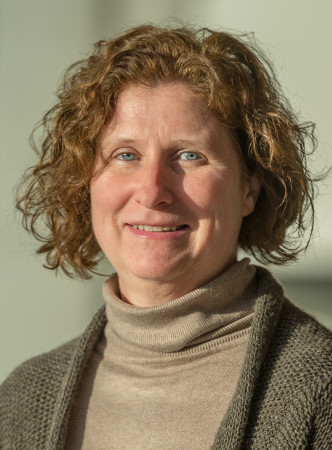
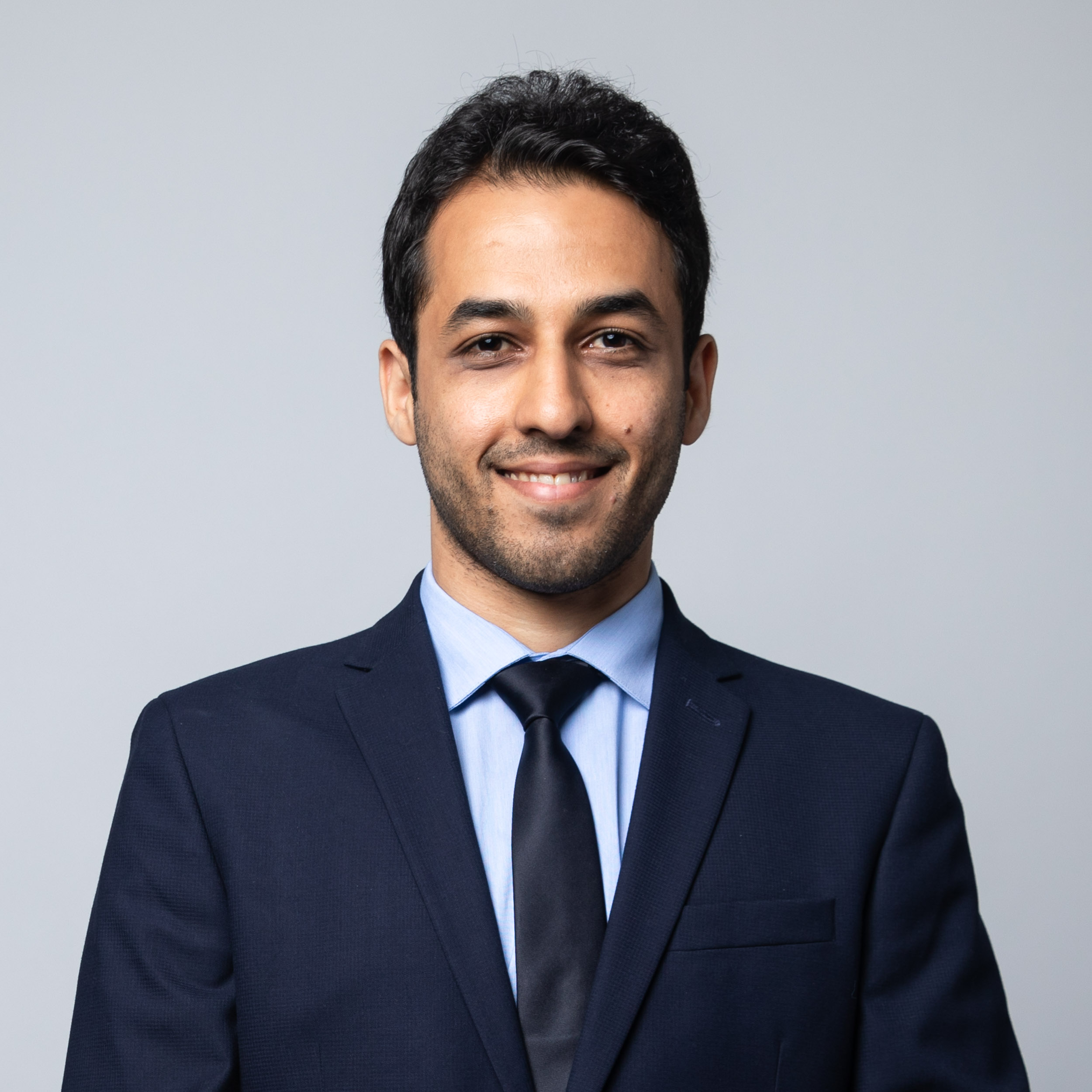
PD Dr. Kaspar Riesen is the Head of the Pattern Recognition Group at the Institute of Computer Science, University of Bern. His research focuses on graph-based methods for pattern recognition, with applications in document analysis, environmental modeling, and healthcare. Key interests include graph matching, neural networks, and spatio-temporal modeling. His work spans structural pattern recognition, graph embeddings, and keyword spotting in historical documents. Recent projects involve river network analysis using graph regression and hypoglycemia prediction via LSTM-GNN hybrid models. Publications emphasize graph theory advancements, such as normalized graph compression and geometric similarity learning. Collaborations include developing specialized algorithms for automated error detection and improving decision-making in simulated sports. Labs/Teams: Pattern Recognition Group (PRG) at the University of Bern.
Ingrid Moerman is a part-time Professor at Ghent University and a staff member at the Internet Technology and Data Science Lab (IDLab), a core research group of imec embedded within Ghent University and the University of Antwerp. She coordinates mobile and wireless networking research and leads a team of over 30 researchers at Ghent University, with extensive involvement in European and national funding initiatives. She received her Electrical Engineering degree (1987) and Ph.D. (1992) from Ghent University. Her research spans collaborative networks, cognitive radio, software-defined radio, IoT, LPWAN, and high-density wireless access, emphasizing experimentally-supported development of next-generation wireless systems with practical implementations in spectrum management and real-time control. Recent publications (2024-2025) reveal a strong pivot toward AI-integrated wireless networking, featuring OFDMA scheduling innovations, Wi-Fi 6/7 interference mitigation, and time-sensitive networking for industrial applications. Key trends include 5G/6G convergence, vehicular communication enhancements, and digital twin frameworks for network observability, reflecting her focus on mission-critical industrial use cases. Her accolades include: 9 Best Paper Awards 2 FWO Prizes (Research Foundation - Flanders) IMEC Prize of Excellence 2001 MSc Thesis Award (as promoter) Best Demo/Exhibit Award at ICT 2013 DARPA Spectrum Collaboration Challenge Prize ($750,000) She has coordinated major EU projects (FP7/H2020: CREW, WiSHFUL, eWINE, ORCA) with industry partners, securing substantial funding for experimental wireless research. Her grant portfolio emphasizes collaborative innovation in spectrum sharing and neutral-host architectures for multi-operator environments. At IDLab, she directs advanced wireless testbeds supporting real-world validation of technologies like openwifi and White Rabbit, with active experimentation in time-sensitive networking and spectrum collaboration for industrial IoT deployments.
Dr. Utku Yavuz is an Assistant Professor in the Biomedical Signals and Systems Department at the TechMed Centre. His expertise spans neuromuscular physiology, wearable sensor technologies, and clinical monitoring systems. He holds a PhD in Biomedical Engineering from Ege University, complemented by earlier degrees in Physics Engineering (Hacettepe University) and Biophysics (Hacettepe University). Research Focus: Motor unit physiology, neuromuscular modeling, and clinical applications of wearable sensors. Key Areas: Spinal motor neuron behavior, electromyography (EMG), and translational technologies for diabetes and musculoskeletal health. Dr. Yavuz’s work bridges neuroscience and engineering, addressing challenges in prosthetic design, real-time neuromuscular signal decoding, and improving clinical decision-making through sensor data analysis. Recent studies include optimizing wearable glucose monitors and analyzing muscle-tendon dynamics in amputees. His research outputs span 43 publications, with contributions to high-impact journals like BMC Digital Health and IEEE Sensors Journal . Collaborations include institutions focused on biomechanics, robotics, and clinical informatics. Advising: Supervised 1 graduate project, though specific advisee names are not listed. Active in academic activities such as thesis examinations and conference presentations.
Prof. Dr. Klaus Schmid is a Professor in the Department of Software Systems Engineering at the University of Hildesheim, part of the Faculty of Mathematics, Natural Sciences, Economics, and Computer Science. His research focuses on Machine Learning Operations (MLOps), software product lines, adaptive systems, and variability modeling. He leads projects such as EXPLAIN and ReGaP, emphasizing explainable AI and industrial MLOps integration. His work addresses challenges in Cyber-Physical Production Systems (CPPS), including data management, model calibration, and domain knowledge integration. Key research interests include MLOps architecture design, variability modeling transformations (e.g., UVL to IVML), and incremental verification techniques for software product lines. He has published extensively in venues like IEEE ETFA, IEEE Software, and SPLC conferences. Notable achievements include a Best Paper Award for work on control patterns in self-adaptive systems. Collaborations with industry partners highlight his focus on bridging academic research and practical industrial applications. Prof. Schmid’s contributions extend to tool development, such as EASy-Producer for variability-aware software ecosystems, and frameworks for environment modeling in adaptive systems. His research addresses both foundational challenges (e.g., syntax-preserving slicing) and applied topics like MLOps platform comparisons and industrial case studies in Industry 4.0.
Dr. Hossein Sayadi is an Assistant Professor and Associate Chair in the Department of Computer Engineering and Computer Science at California State University, Long Beach (CSULB). He holds a Ph.D. in Electrical and Computer Engineering from George Mason University, an M.S. from Sharif University of Technology, and a B.S. from K. N. Toosi University of Technology. His research focuses on hardware security , AI/ML applications , cybersecurity , and computer architecture . He leads the iSEC Lab , exploring topics like hardware trust, malware detection, and edge computing security. His work is supported by NSF grants and CSU awards, including the 2024-25 CSU STEM-NET Faculty Fellowship. Education: Ph.D., Electrical and Computer Engineering (George Mason University) M.S., Computer Engineering (Sharif University of Technology) B.S., Computer Engineering (K. N. Toosi University of Technology) His publications span conferences like IEEE ISQED, ISCAS, and DATE. He serves as Technical Program Committee Chair for IEEE ISQED (2024–2025). Awards include NSF ERI grants ($195,305) and the 2023 Multidisciplinary Research Grant. Research opportunities are available for students in machine learning , hardware security , and cybersecurity education .
Dr. Raman Adaikkalavan is a Professor in the Department of Computer and Information Sciences at Indiana University South Bend (IUSB), and serves as Associate Vice Chancellor for Enrollment Management. He holds a Ph.D. in Computer Science and Engineering from the University of Texas at Arlington (2006), and has extensive academic leadership experience. His research focuses on information security (particularly IoT and Android), data streaming, and computer science education. Notable contributions include developing the IU Test web-based assessment tool and advancing secure data stream processing architectures. Education: B.E. (1999) from Bharathidasan University, M.S. and Ph.D. (2002/2006) from University of Texas at Arlington, with additional certificates in online teaching (2013). Research emphasizes practical applications like secure stream processing in cloud environments and improving pedagogical methods through active learning. His work has been supported by NSF grants and institutional funding. Awards include the IU Trustees' Teaching Award (2011) and recognition as a University Scholar (UT Arlington). He advises students on topics like secure data stream processing and software engineering. Collaborations include projects with Dr. Indrakshi Ray (Colorado State) and Dr. Sharma Chakravarthy (UT Arlington). His IU Test system aids in program assessment and accreditation reporting for ABET.
Dr. Khandaker Mamun Ahmed is an Assistant Professor at The Beacom College of Computer & Cyber Sciences, Dakota State University. He teaches undergraduate and graduate courses in artificial intelligence, algorithms, and data structures. He holds a Ph.D. in Computer Science from Florida International University (2024), an M.Sc. from the same institution (2023), and a B.Sc. in Software Engineering from the University of Dhaka (2016). His research focuses on computer vision, federated learning, cybersecurity, explainable AI, vision-language models, and optimization algorithms. He has contributed to peer-reviewed publications and conference presentations, with notable work in federated learning for IoT, anomaly detection in videos, and AI applications in healthcare and agriculture. Recent articles highlight advancements in federated learning frameworks, AI-driven healthcare systems, and real-time object detection using neural networks. His work also addresses cybersecurity challenges in DevOps pipelines and generative AI for educational datasets. Recipient of the 'Best graduate student in research award' (2022), Dr. Ahmed advises on AI ethics and mentors students through academic-industry collaborations. His research bridges theoretical computer science with practical applications in agriculture, healthcare, and infrastructure monitoring.
Kai-Min Chung is a Distinguished Research Fellow at the Institute of Information Science (IIS), Academia Sinica, Taiwan. His research focuses on quantum cryptography, complexity theory, and pseudorandomness. Prior to this role, he completed a postdoctoral fellowship at Cornell University (supported by the Simons Foundation) and earned his Ph.D. in computer science from Harvard University under Salil Vadhan. Education Ph.D. in Computer Science, Harvard University (Advisor: Salil Vadhan) Postdoctoral Researcher, Cornell University Research Interests Chung's work bridges quantum computing and cryptography, addressing challenges in secure communication, post-quantum cryptography, and complexity-theoretic foundations. His contributions include groundbreaking results on quantum-resistant protocols, zero-knowledge proofs, and cryptographic primitives resilient to quantum adversaries. Recent research emphasizes the theoretical limits of quantum algorithms and their implications for cryptographic security. Professional Activities Program Committee Chair: Asiacrypt 2024, ITC 2023 Membership on committees for CRYPTO, EUROCRYPT, STOC, FOCS, and others Awards Best Student Paper Award at TCC 2010 Distinguished Paper Award at PLDI 2023 Simons Postdoctoral Fellowship Teaching & Mentoring Chung teaches advanced courses on modern cryptography and advises students in theoretical computer science. He actively recruits postdoctoral researchers and students to his lab, focusing on cutting-edge quantum and classical cryptographic systems.
Brian C. Keegan is an Associate Professor in the Department of Information Science at the University of Colorado Boulder. He is also a director of the Colorado Laboratory for Users, Media, and Networks (COLUMN) and holds courtesy appointments in the Department of Computer Science, with affiliations at the ATLAS Institute, Institute for Behavioral Research, American Politics Research Lab, and REACH. PhD in Media, Technology and Society from Northwestern University S.B. in Mechanical Engineering and Science, Technology and Society from MIT His research focuses on social computing , network science , and data science , with three primary areas: (1) high-tempo online collaborations, (2) governing information commons, and (3) public interest data science. He uses digital traces of social behavior to study how disruptions reveal collaborative social structures, primarily in platforms like Wikipedia, Reddit, and Twitter. Recent articles explore virtual community governance , Cannabis sativa biology , decentralized social media , and peer-produced information dynamics . Scientific accolades include Best Paper and Honorable Mention awards at top venues like ACM CSCW and AAAI ICWSM. Funding comes from the National Science Foundation . Dr. Keegan advises on social media governance , online collaboration , and data science ethics , and collaborates with organizations like Steep Hill Labs, Leafly, and Colvin Run Networks.
Thomas Ludwig is a Professor of Information Systems with a focus on Cyber-Physical Systems at the University of Siegen. He holds a PhD (summa cum laude) from the same institution and has led numerous research initiatives in Industry 4.0, digital transformation, and human-centered technology design. His work spans augmented reality (AR), gamification, and AI integration in manufacturing. Ludwig co-founded and coordinates the 'Mittelstand 4.0-Kompetenzzentrum Siegen' to support SMEs in digitalization. He has authored over 50 publications in top-tier journals and conferences, including Computer Supported Cooperative Work (CSCW) and Proceedings of the ACM on Human-Computer Interaction . His research has been recognized with awards such as the IHK Preis 2017 for Best Dissertation and the Artur-Woll-Preis. Education: Diplom-Wirtschaftsinformatiker from University of Siegen (2012), PhD in Information Systems (2016), with a focus on socio-technical systems and mobile/social media research. Research Interests: Cyber-Physical Systems, AR applications, gamification design, AI in production planning, and digital competency frameworks for SMEs. He leads projects like Fusion, KOKOS, and EKPLO, addressing challenges in collaborative work, disaster management, and industrial digitalization. Grants & Projects: Projects include EU-funded EMERGENT, BMBF-funded KOKOS, and the self-acquired EKPLO initiative for APS systems in SMEs. He also coordinates the Zukunftszentren KI NRW and the EDIH Südwestfalen. Awards: 32. IHK Preis 2017, Artur-Woll-Preis, pwc-Preis, and multiple best paper awards at international conferences. Labs/Teams: Part of the Cyber-Physical Systems Lab at University of Siegen and the interdisciplinary team behind the 'Rendezfood' and 'Advanced Planning Systems' initiatives.
Angelo Corallo is an Associate Professor at the Department of Experimental Medicine, University of Salento, specializing in technologies and methodologies for collaborative processes in industrial systems. His research spans Digital Business Ecosystems , Cybersecurity , and Collaborative Product Design , focusing on the interplay between technology and organizational dynamics. He leads interdisciplinary research divisions in Open Networked Business Management , Learning and Innovation , and Collaborative Product Design . Research Interests : Corallo's work integrates Information and Communication Technologies (ICT) with Business Management, particularly in Digital Twins for healthcare and manufacturing Knowledge Modeling and Ontology Engineering Industry 4.0 and Smart Manufacturing Agri-Food Sustainability through digitalization Scientific Contributions : His recent articles explore trends in Cybersecurity for Industrial IoT Metaverse Applications in business models Traceability Systems in food supply chains Collagen-Based Biomaterials from aquaponics
Alfonso Emilio Gerevini is a prominent researcher in artificial intelligence with over 30 years of continuous academic contributions. His work spans theoretical foundations of automated planning to practical healthcare applications, with recent publications demonstrating significant impact in both traditional AI domains and emerging interdisciplinary areas. His research interests focus on automated planning systems , temporal reasoning , and multi-agent coordination , with recent expansion into healthcare applications using machine learning techniques. Gerevini has made fundamental contributions to planning algorithms, particularly in width-based search, case-based planning, and privacy-preserving multi-agent planning. His work on PDDL (Planning Domain Definition Language) has been influential in standardizing planning representations. Analysis of his 15 most recent publications reveals a strategic evolution from core planning research toward impactful healthcare applications, particularly during the COVID-19 pandemic. While maintaining his expertise in planning algorithms, he has successfully integrated machine learning techniques to address real-world medical challenges including radiology report analysis, prognosis prediction, and lab test interpretation. His work demonstrates exceptional versatility across both theoretical and applied domains of artificial intelligence. Gerevini maintains a robust collaborative network, primarily with Italian researchers including Ivan Serina, Alessandro Saetti, and Luca Putelli. His publications appear consistently in top-tier AI venues including Artificial Intelligence journal, Journal of Artificial Intelligence Research, and AAAI/ICAPS conferences. The collaborative patterns suggest he leads a significant research group focused on advancing planning systems while applying them to critical real-world problems.
Mauro Dragone is an Associate Professor at Heriot-Watt University's School of Engineering & Physical Sciences, affiliated with the Institute of Sensors, Signals & Systems. He holds a BSc in Computer Science from Bologna University (1999) and a PhD from University College Dublin (2009). Before academia, he worked as a software developer and project manager. His research focuses on robotics, human-robot interaction, IoT, and Ambient Assisted Living (AAL), with leadership roles in EU projects like METRICS/HEART-MET and the OpenAAL initiative. He co-directs the MSc Robotics program and established the Robotic Assisted Living Tested lab within the UK National Robotarium. Key research interests include assistive robotics for frailty, healthcare robotics, and self-adaptive robotic systems. Notable contributions include the FP7 RUBICON project (2011-2014) and the Cognitive Assistive Robotic Environment (CARE) group. He has received awards such as the 2024 Principal's Research Impact Award and 2022 Research Team of the Year. Recent articles emphasize healthcare applications, modular robotics, and trustworthy AI. His work aligns with UN SDGs addressing healthy aging and sustainable cities.
Dr. Michelle Zhu is a Professor and Associate Director for Faculty and Academic Affairs at the School of Computing, Montclair State University. She previously held roles as Associate Professor and Director of Undergraduate Programs at Southern Illinois University Carbondale. Dr. Zhu holds a Ph.D. in Computer Science from Louisiana State University and a B.S. in Biomedical Engineering from Zhejiang University. Her research focuses on parallel/distributed computing, big data analytics, and high-performance networking, supported by grants from NSF, DOE, and NVIDIA. She has authored over 150 peer-reviewed publications. Education: Ph.D., Computer Science, Louisiana State University (2005) M.Sc., Computer Science, Louisiana State University (2002) B.S., Biomedical Engineering, Zhejiang University (1996) Her research interests span parallel computing architectures, cloud workflow scheduling, and cybersecurity. She has led initiatives integrating computational thinking into STEM education and developed robotics-based learning tools. Her work has been funded through NSF grants such as the $1.1M "Assimilating Computational and Mathematical Thinking into Earth and Environmental Science" project (2017–2022). Dr. Zhu’s articles explore topics like blockchain-based cloud security, GPU-accelerated Gibbs sampling, and edge computing deployment strategies. She actively contributes to academic governance, serving on Montclair State’s Middle States accreditation committee and the University Academic Assessment Council. Key Grants: NSF MRI: Multimodal Collaborative Robot System (MCROS), $321,737 (2021–2024) DOE: Scalable Application Support Platform for E-Sciences, $389,398 (2009–2013) Service Roles: Curriculum Committee Chair, Computer Science Department Blue Ribbon Task Force for Gen Ed Redesign (2019–2020) She collaborates on robotics projects like MCROS and leads outreach efforts to engage pre-university communities in AI and robotics education.
Gerti Kappel is a full professor at the Institute of Information Systems Engineering at TU Wien, affiliated with the Business Informatics Group (BIG). Since 2020, she has served as Dean of the Faculty of Informatics at TU Wien, previously holding the role of Dean’s team member responsible for research, diversity, and financial affairs (2016–2019). She previously held a full professorship in computer science (database systems) and led the Department of Information Systems at Johannes Kepler University Linz (1993–2001). Her research focuses on Model Engineering, Web Engineering, and Process Engineering, particularly in cyber-physical production systems. She has co-authored influential works such as UML@Work (2005), UML@Classroom (2015), and Web Engineering (2006). Key projects include leadership roles in Vienna Informatics Living Lab (2018–2019), MPM4CPS (2014–2019), and ARTIST (2012–2015), addressing topics like model versioning, cloud architecture modeling, and inter-organizational systems. Her recent articles explore circular systems engineering, IoT-based simulation environments, and model-driven approaches for time-series analytics and cloud applications. She actively contributes to academic governance, including managing the Office of the Dean (E199-01) and overseeing faculty services. Her work emphasizes bridging theory and practice through collaborative frameworks like ERPEL and TROPIC . Grants: Projects funded by Austrian Research Promotion Agency, European Cooperation in Science and Technology, Vienna Business Agency, and others. Advising: Supervised over 15 graduate theses, including recent works on model-driven techniques for railway planning, debugging frameworks for modeling tools, and cloud-based IDEs. Labs/Teams: Leads research within the Business Informatics Group (BIG) and collaborates with the Vienna Informatics Living Lab for applied systems engineering.