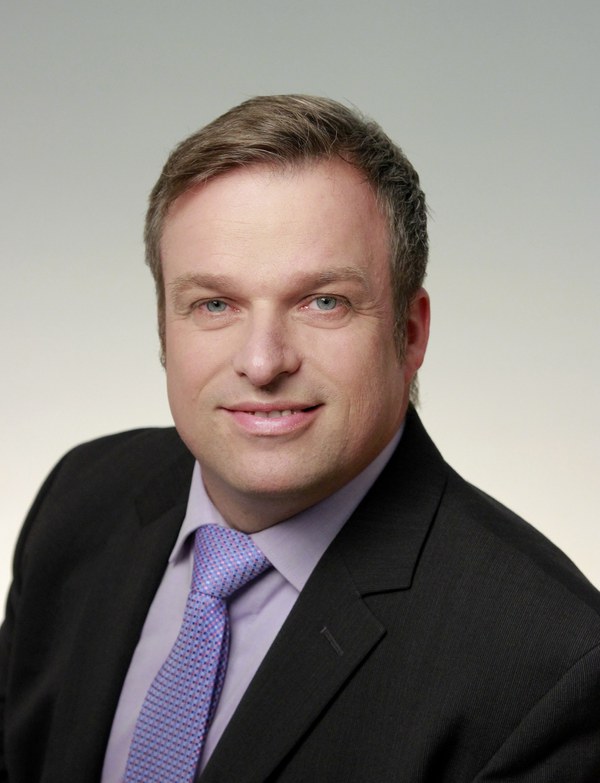
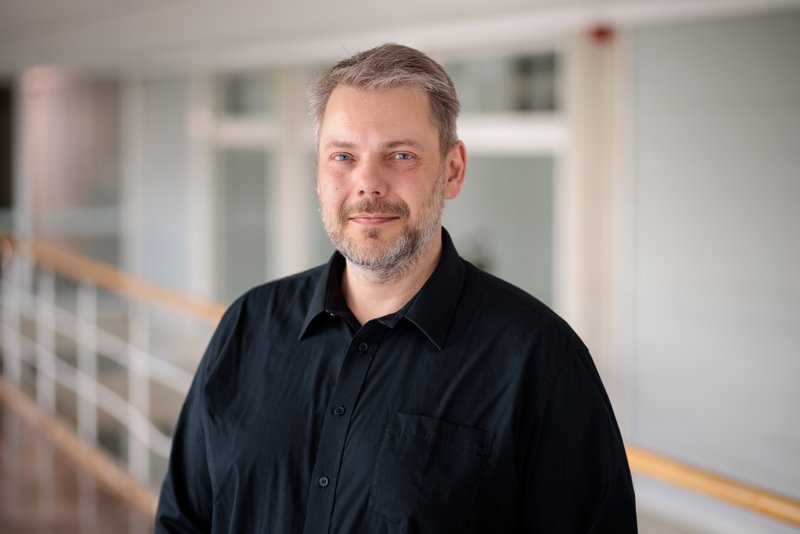
Prof. Dr.-Ing. Jochen Linßen is a Professor at the Institute of Climate and Energy Systems (ICE) , specifically within the Jülich Systems Analysis (ICE-2) group at the Research Center Jülich GmbH. His work focuses on advancing energy systems modeling, renewable energy integration, and hydrogen technology. Key research areas include the techno-economic analysis of energy transition pathways, hydrogen cost-potentials, and the interplay between energy systems and transportation networks. His expertise spans climate policy, infrastructure planning, and the development of frameworks for long-term mobility demand modeling. He has contributed to high-resolution assessments of renewable energy resources and the evaluation of green hydrogen’s role in decarbonizing industries. Recent work emphasizes AI-driven risk mitigation in energy systems and the impact of natural hazards on energy infrastructure resilience. Research Interests: Modeling of energy systems and hydrogen networks Renewables integration and curtailment challenges Transportation electrification and hydrogen fueling infrastructure Climate policy and decarbonization strategies Key Projects: ETHOS. MODE. regional framework for mobility demand analysis Global assessments of wind and solar power potentials Hydrogen supply chain optimization for Germany and Europe His collaborative approach bridges engineering, economics, and environmental science to address systemic challenges in energy transitions. Ongoing efforts include participatory mapping of green hydrogen potentials in sub-Saharan Africa and analysis of automated driving’s impact on road networks.
Marco Kuhrmann is a Professor of Agile System Development at the Faculty of Informatics at Reutlingen University. He holds positions including Chair of the Examination Board for the Medical Technology Informatics program. His research focuses on software engineering methodologies, particularly agile development, process improvement, and hybrid methods. He has held academic roles at institutions like the Technical University of Munich, University of Southern Denmark, and the University of Passau. Education: PhD (Dr. rer. nat.) in Computer Science, Technical University of Munich (2008) Habilitation (Dr. rer. nat. habil.), Technical University of Munich (2014) Diploma in Computer Science, University of Potsdam (2004) His research interests include software process improvement, hybrid development approaches combining agile and traditional methods, and software engineering education. He leads projects like ANUKI and contributes to initiatives such as the HELENA survey on hybrid methodologies. His work addresses challenges in regulated domains, global software engineering, and the application of AI techniques in requirements engineering. Publications highlight themes like process transparency, compliance automation, and data augmentation. He is active in academic communities through workshops (e.g., PROFES, ICSSP) and has authored textbooks like Einführung in die Softwaretechnik (Springer, 2021). His teaching emphasizes hands-on experiments, such as simulating distributed teams and process adaptation in stressful scenarios. He collaborates with labs like the Virtual Reality Lab (VRehago) and contributes to research infrastructure like the IPSSE (Goslar) and software process ecosystems. Current projects explore AI-driven requirements evaluation and measurable artifact models in regulated industries.
Prof. Ulrich Scholze holds the Professorship of Weaving Technology at Reutlingen University’s School of Textiles. He serves as Head of the Examination Office for the BEng programs in Textile Technology-Textile Management and Textile Engineering, and acts as BAföG representative for all faculty programs. His teaching focuses on weaving process engineering, machinery, and product development of woven fabrics (clothing, functional, and technical textiles). His research emphasizes practical applications in textile machinery analysis and weaving processes, as evidenced by his publications since 2015. He maintains an active role in academic governance and student support, with consultation hours every Wednesday 11:30-13:00. Prof. Scholze is affiliated with the Weaving Technology Lab at the Texoversum research facility, contributing to interdisciplinary projects in textile innovation and sustainability.
Professor Tatjana Steusloff is currently a Professor of General Business Administration (especially International Marketing) at the Wiesbaden Business School of HSRM since 2021. Previously held roles include Professor of Economics/Visiting Professor of Marketing at Düsseldorf University of Applied Sciences (2016–2020) and lecturer positions at various HAW institutions (2009–2016). Her career combines academic leadership with industry experience in marketing roles at companies like McCain Foods (Senior Brand Manager, 2004–2008) and Unilever Bestfoods (Brand Manager, 2000–2004). Education: Earned a Dr. rer.oek. (Magna Cum Laude) in 2016 from Leipzig Graduate School of Management (HHL), with prior studies at TU Dresden (1996–1998) and a semester abroad in the MBA program at University of Illinois at Urbana-Champaign (1999). Research Focus: Specializes in sustainable consumer behavior, customer-centric brand management, and science communication in marketing. Recent work emphasizes eco-route choice behavior and digital nudging interventions. Has presented at ISMS Marketing Science Conference (2024), EMAC Annual Conference (2023), and KSFE Annual Conference (2023). Teaching: Leads courses in international marketing strategies, strategic marketing, and market entry case studies at both bachelor's and master's levels in International Management programs. Professional Activities: Serves on the advisory board of Marketing Club Mainz-Wiesbaden (since 2025) and as curator for wi3 Consulting e.V. (since 2023). Previously held board positions in academic organizations (2022–2024).
Prof. H.-Hugo Kremer holds the Chair of Business and Vocational Education at Paderborn University's Faculty of Business Administration and Economics. His research focuses on digital transformation in education, vocational training strategies, and media didactics. He leads the Center for Vocational Education and Training (cevet), addressing challenges in VET professionalization. Recent projects include PRACTICE (AI in education), WÖRLD (digital teacher training), and DigiSelF (student self-management in higher education). His teaching portfolio includes courses on international management, digital transformation, and educational program design. Advising external doctoral candidates like Laura Getz and Fabian Ludolph, he collaborates with institutions like the University of Jena and maintains active involvement in mentoring initiatives.
Clara Rosa Cardoso is a Researcher at the University of Siegen's Department of Business Informatics and New Media, contributing to the DCitizens project and advising students in the HCI master's program. She holds a Master's in Digital Media and Society from the University of Bremen, with a thesis on hashtag activism (#ForaBolsonaro). Her research focuses on online political activism, digital media's societal impact, and participatory design in underserved communities. She has supported labs like ZeMKI's Mediatization and Globalization group and Prof. Kannengiesser's media sociology projects. Beyond academia, she tutored media practice lectures and summer camps. She earned a Bachelor's in Communication from Universidade Federal da Bahia and an MBA in Marketing (Brazil). Her work emphasizes resilience in unstable regions (e.g., Palestinian refugee camps) and lessons from design failures in digital civics. She collaborates on projects like Fab Lab Siegen and contributes to HCI conferences like CHI and NordiCHI. Clara's interdisciplinary approach bridges technology, sociology, and community empowerment without formal awards noted to date.
Mechthild Löwenstein is a Professor of Nursing Education at Esslingen University of Applied Sciences since 2016. Doctor of Philosophy in Nursing Science from UMIT Hall i. Tirol Dean of Nursing Education (BA) program Specializes in portfolio-based learning, organizational development, and digital transformation in healthcare education Recipient of the 2014 Stiftung Bildungspakt Bayern innovation award Research Trends: Her recent work focuses on digitalization strategies in nursing education, competency development through portfolios, and pandemic-driven pedagogical adaptations. Scientific Awards: 1. Preis 'Innere Schulentwicklungsinnovationspreis 2014' Professional Contributions: She has pioneered innovative teaching methods, led nursing training centers, and published extensively on educational reform.
Wenguang Chen is a researcher affiliated with Tsinghua University and Pengcheng Laboratory , specializing in computer science and high-performance computing . His work bridges theoretical advancements with practical applications in domain-specific languages , parallel programming , and machine learning . Research Interests include: Development of modular DSLs for numerical methods (e.g., Mat2Stencil) Performance optimization in distributed and parallel systems Compiler frameworks for privacy-preserving AI (e.g., FHE-based neural network inference) Graph algorithms scaling to trillion-edge datasets Applications of Rust in memory-safe pointer analysis Recent Publications span 2014–2025, focusing on: Parallelization strategies for supercomputing Compiler automation tools Extreme-scale data processing Performance variance diagnosis in production environments
Dr. Hakki Arslan serves as a Research Associate at the Dubnow Institute within the Ignaz-Goldziher-Program since July 2024, specializing in comparative Jewish-Muslim legal traditions with emphasis on interreligious marriage and historical legal discourse. His academic background includes: Religious Studies and History studies at Goethe University Frankfurt am Main Doctoral research in Islamic Theology at University of Osnabrück (2011-2015), funded by Konrad Adenauer Foundation Arslan's research investigates authority structures in Jewish and Muslim legal traditions, Ottoman-era interreligious contact zones, and methodological critiques of Islamic law periodization. His work bridges historical analysis with contemporary relevance through comparative frameworks examining legal adaptation in pluralistic societies. Publication trends (2014-2022) reveal sustained focus on Islamic legal hermeneutics, Ottoman legal pluralism, and cross-traditional dialogue, with increasing emphasis on decolonizing historical narratives and contemporary applications of classical jurisprudence. His scientific recognition includes: Konrad Adenauer Foundation Doctoral Fellowship Arslan's research has been sustained through institutional postdoctoral positions at Osnabrück and Münster universities, with current work embedded in the Dubnow Institute's Ignaz-Goldziher-Program examining legal tradition authority in modern contexts.
Juan F. Sequeda is the Principal Scientist and Head of the AI Lab at data.world, with a PhD in Computer Science from the University of Texas at Austin. He co-founded Capsenta, a spin-off from his research on semantic data virtualization. His work bridges academia and industry through roles in the Property Graph Schema Working Group, LDBC Graph Query Languages task force, and W3C standards editing. Education : PhD in Computer Science (2015) from University of Texas at Austin His research focuses on Knowledge Graphs, Semantic Web, and Ontology-Based Data Integration. He develops technologies for graph data management and semantic query processing, with applications in constitutional data analysis (Constitute.org) and enterprise data virtualization (Ultrawrap, Gra.fo, G-CORE). Recent publications analyze composable graph query languages (G-CORE, 2018) and optimize SPARQL execution on relational data (Ultrawrap, 2013). Awards include NSF Graduate Fellowship (2010-2013), ISWC2014 Best Student Paper, and 2015 Institute for Applied Informatics Best Transfer Project. Scientific Awards : NSF Graduate Research Fellowship (2010-2013) 2nd Place, 2013 Semantic Web Challenge Best Student Research Paper, ISWC2014 2015 Best Transfer and Innovation Project (Institute for Applied Informatics) UT Graduate Diversity Fellowship (2008-2009) National Instruments Scholarship (2007-2008) Intel Foundation Fellowship (2007) He actively contributes to program committees (ISWC, ESWC, WWW) and workshop organization (COLD, AMW2018 General Chair). Contact: juan@data.world (work), juanfederico@gmail.com (personal).
Anke Hoffmann is a Researcher at the Museum of Natural History, Leibniz Institute for Evolution and Biodiversity Research in Berlin. She currently serves as Project Officer for Collection Cataloguing and Development in the Future Plan, coordinating research clusters and leading international projects like the 'Diversity and ecosystem function of small mammals in the Lower Oder Valley National Park.' Education: PhD in Zoology (Technical University of Braunschweig, 1999), Biology (Technical University of Braunschweig, 1994) Key Roles: EU BON Project Coordinator (2012-2017), EDIT Project Coordinator (2008-2011), Master's Program Coordinator in Namibia (2001-2008) Hoffmann's research focuses on population ecology of small mammals in the Lower Oder Valley National Park and biodiversity patterns in African arid and rainforest ecosystems . Her work bridges field research, biodiversity informatics, and policy frameworks. Publications reflect expertise in ecological monitoring , cybertaxonomy , and data policy for biodiversity. Recent projects emphasize digital transformation in museums and integrated biodiversity observation systems. She has contributed to international collaborations, including EU-funded initiatives (EU BON, EDIT) and global museum research summits. Hoffmann's career spans roles at the Botanical Garden & Museum of the Free University Berlin and the Institute for Wildlife Research at the University of Veterinary Medicine Hannover.
Dr. Parm von Oheimb is a Researcher in the Mollusc Collection at the Museum für Naturkunde – Leibniz Institute for Evolution and Biodiversity Research in Berlin, Germany, where he has worked since 2019. His research focuses on malacology, biodiversity patterns, evolutionary biology, and biogeography, with particular emphasis on land snails and freshwater mollusks across diverse ecosystems including the Tibetan Plateau, Vietnam, and urban environments. Previously, he held postdoctoral positions at The Natural History Museum in London (2015-2019) and Justus Liebig University Giessen (2013-2015). Dr. von Oheimb earned his Dr. rer. nat. in 2013 from Justus Liebig University Giessen with a dissertation titled "Phylogeography at the 'Roof of the World' – Diversity and distribution of freshwater mollusks at the Tibetan Plateau and the Himalayas." He completed his Diploma in Biology with distinction in 2008 from the same institution. His educational background provided the foundation for his extensive research on mollusk systematics, biogeography, and evolutionary patterns across diverse geographical regions. Dr. von Oheimb's research interests span multiple areas of malacology and biodiversity science. His work on Tibetan Plateau freshwater gastropods has contributed significantly to understanding high-altitude adaptation and historical biogeography. His research in Vietnam has focused on limestone karst ecosystems and the biodiversity of land snails, revealing cryptic species diversity and community assembly patterns. More recently, he has investigated urban biodiversity, particularly examining cemeteries as habitats for terrestrial gastropods in Berlin. His methodological approaches integrate field surveys, molecular phylogenetics, morphological analysis, and biogeographical modeling to address fundamental questions in evolutionary biology and ecology. His extensive publication record demonstrates consistent research output across multiple continents and habitats, with a clear trajectory from high-altitude freshwater systems to tropical limestone karsts and urban environments. The research shows a consistent focus on molluscan biodiversity patterns while adapting methodologies to address specific ecological and evolutionary questions in each system. His work often involves large international collaborations, reflecting the global nature of biodiversity research. Dr. von Oheimb has received several scientific awards including a Research Fellowship from the Deutsche Forschungsgemeinschaft (2015-2017), a Travel Award from the Malacological Society of London (2016), and the J. Frances Allen Institute of Malacology Outstanding Publication Award (2013). He has also received multiple awards for poster presentations at international conferences. As a dedicated researcher, Dr. von Oheimb has served as a Subject Editor for Zoosystematics and Evolution since 2025 and is an active member of several scientific societies including The Malacological Society of London, Unitas Malacologica, and the German Malacological Society. His work contributes to multiple research programs at the Museum für Naturkunde, particularly the "Dynamics of Nature" initiative and the "Life between Graves" project examining cemetery biodiversity. Dr. von Oheimb also contributes to science communication through the "Schemenkabinett" project and has developed various popular science formats. His research leverages the extensive mollusk collections at the Museum für Naturkunde, connecting traditional taxonomy with modern molecular approaches to address contemporary questions in biodiversity science.
Prof. Jeronimo Castrillon serves as a Professor and holds the Chair for Compiler Construction at Dresden University of Technology. Based at Helmholtzstrasse 18, 3rd floor, Room BAR III68 in Dresden, Germany, his contact details include email jeronimo.castrillon@tu-dresden.de and phone +49 (0)351 463 42716. His research centers on Compiler Construction , focusing on compiler design, optimization techniques, and code generation for resource-constrained systems. This work extends to Embedded Systems where efficient compilation is critical, High-Level Synthesis for hardware design automation, and Computer Architecture through compiler-architecture co-design. His expertise bridges theoretical foundations and practical implementations in programming language ecosystems. As chairholder, he leads academic activities within the Compiler Construction unit, contributing to curriculum development and research supervision in computer engineering disciplines.
Prof. Dr. Gudula Deipenbrock serves as a Professor at the Berlin University of Applied Sciences (HTW Berlin) within the School of Economics and Law. Her teaching responsibilities include Finance, Accounting, Corporate Law and Taxation for Master's students, and Business Law for both Bachelor's and Master's programs at the Treskowallee Campus (Building C, Room 431). Her research expertise spans national, international, and European financial markets law with concentrated focus on legal implications of digital transformation, particularly FinTech applications and artificial intelligence regulation within financial systems. Additional research areas include comparative corporate law studies, regulatory frameworks for rating agencies in the European Union, and institutional analysis of commercial law across jurisdictions. With 65 publications and participation in 75 academic lectures/events, Prof. Deipenbrock maintains active scholarly engagement through 9 professional memberships. She enforces strict policies prohibiting audio/video recordings of her courses and conducts scheduled office hours for student consultations, including exam reviews during summer semesters.
Jens Herder is a Professor of Virtual Studio/Virtual Reality at the Düsseldorf University of Applied Sciences since 2000. As former Dean of the Faculty of Media , he pioneered the Bachelor's in Media and Applied Information Technology and Master's in Virtual Reality programs. He founded the Journal of Virtual Reality and Broadcasting and leads research at the Virtual Sets and Virtual Environments Laboratory . Studied Computer Science with Architecture at TU Darmstadt PhD in Engineering from University of Tsukuba (1999) His research spans Virtual/Augmented/Mixed Reality , Spatial Media , and Interactive Environments . Key projects include: Sound Spatialization Framework development 3D Monument digitization with ethical participation Augmented Reality lighting control systems Volumetric capture integration for virtual teleportation He supervises 6+ graduate theses annually, focusing on: Real-time virtual production Photorealistic rendering Immersive media workflows AR/VR hardware integration Current affiliations: Head of Virtual Studio/VR Laboratory Internationalization Commissioner for Faculty of Media