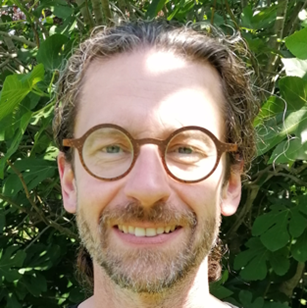
Prof. dr. Nico Van de Weghe is a full Professor of GIScience at the University of Ghent (UGent), affiliated with the CartoGIS research unit. His work bridges computer science, social science, and natural science through geospatial information studies, focusing on enabling machines to reason spatially (GeoAI). Since 2004, he has specialized in knowledge-based AI, particularly spatiotemporal reasoning and moving object analysis, with applications in animal behavior, criminology, healthcare, mobility, and sports. Van de Weghe's research emphasizes hybrid GeoAI systems combining knowledge-driven and data-driven approaches. Keywords include GeoAI, GIScience, Spatiotemporal Analysis, Moving Objects, and Data Mining. Recent publications highlight urban road network analysis, hybrid trajectory modeling, BIM semantic enrichment, and cycling safety studies using virtual reality.
Prof. Ilse Dewachter is the head of the Biomed Neuroscience research group at Hasselt University (UHasselt), specializing in Alzheimer’s therapy and prevention for over 25 years. Her work focuses on multi-targeted therapies targeting tau, inflammation, and ApoE, alongside pioneering research into disease prevention via blood-based biomarkers. Recent studies explore a protective APOE3ch mutation that halted Alzheimer’s progression in a patient, offering hope for new treatments. Research Interests: - Alzheimer’s disease mechanisms (Abeta, tau, inflammation) - Multi-target therapies and biomarker development - Neurodegenerative disease prevention strategies - Genetic mutations impacting disease progression Articles Overview: Her most recent work (2025-2022) addresses neuroinflammation, tau propagation models, and AI-driven neuroimaging. Key themes include APOE genetics, blood-brain barrier dynamics, and exercise impacts on cognition. Funding & Grants: Current projects require significant investment for advanced biomarker equipment and clinical trials. A notable €300,000 grant funded research on brain lipid metabolism’s role in Alzheimer’s. Labs & Teams: Leads the BIOMED Neuroscience group at UHasselt, collaborating internationally on preclinical models and drug development.
Veerle Foulon serves as full professor and dean of the Faculty of Pharmaceutical Sciences at KU Leuven, Belgium. She leads the Unit Clinical Pharmacology and Pharmacotherapy within the Department of Pharmaceutical and Pharmacological Sciences. Her institutional leadership roles include membership in the University Council, Academic Council, and Special Academic Council as dean, alongside positions in the Board for Alumni Relations and Biomedical Sciences Group Management. Leuven Centre for Health Humanities Leuven Interdisciplinary Centre for Meaning and Lived Religion LC&Y - KU Leuven Institute for Child and Youth LIVO – KU Leuven Institute for Educational Research LKI - KU Leuven Cancer Institute Her research centers on pharmaceutical care, interdisciplinary collaboration, patient-centered care, and rational pharmacotherapy. Key focus areas include medication safety during pregnancy through the BELpREG registry, antimicrobial stewardship in Ethiopian healthcare settings, and person-centered medication optimization for elderly patients in nursing homes. She emphasizes real-world data collection and interdisciplinary approaches to address critical gaps in medication safety for vulnerable populations. Analysis of her recent publications reveals dominant themes in pregnancy medication safety (particularly via the BELpREG cohort), nursing home medication pathways, and antimicrobial resistance interventions. Her work consistently involves large-scale international collaborations across Europe and Ethiopia, addressing systemic challenges in pharmaceutical care through mixed-methods designs and registry-based studies. As principal investigator on major funded projects extending to 2028—including antimicrobial resistance initiatives in Ethiopia and pregnancy medication safety studies—she directs substantial research grants. Her leadership in interdisciplinary consortia drives innovation in medication optimization, though specific doctoral advisees are not documented in the provided materials. Current projects demonstrate strong translational focus with direct clinical implementation pathways. Embedded within multiple Leuven research institutes, she fosters cross-disciplinary collaborations through the BELpREG consortium and antimicrobial stewardship networks. Her work actively involves partnerships with Ethiopian tertiary hospitals, European pregnancy registries, and Belgian nursing home networks to develop and implement evidence-based pharmaceutical care models.
Professor Mieke Van Houtte, affiliated with the University of Ghent, is a leading scholar in educational sociology with a focus on gender dynamics , tracking systems , and student diversity . Her research spans secondary education , grade retention , and inclusive practices , often employing multilevel analysis to address Belgian educational challenges. PhD Promotions: Lennart Van Eycken (2024), Lorenz Dekeyser (2022), Timo Van Canegem (2022), Emma Degroote (2021) Key Collaborators: Jannick Demanet, Peter Stevens, Alexis Dewaele Her work explores gender role attitudes , school misconduct , and teachability perceptions , linking them to structural factors like school social composition and multilingualism . Recent articles emphasize mental health in gender-minority youth and preschool gender socialization . Prominent themes in her publications include academic achievement , tracking effects , and educational inequality . She has authored books like Sociologen over onderwijs and Zichtbaarheid- en discriminatiemanagement bij holebi-jongeren , and frequently contributes to journals such as American Educational Research Journal and European Child & Adolescent Psychiatry .
Jan Taeymans is a Professor at the Vrije Universiteit Brussel (VUB) in the Faculty of Physical Education and Physical Therapy, Department of Movement and Sport Sciences. His research focuses on musculoskeletal disorders, health economics, and systematic reviews. He has supervised multiple theses, including a doctoral thesis on long-term health-related fitness determinants and a master’s thesis on urinary incontinence costs. His recent work includes studies on pain-intensity correlations in low back pain patients, economic evaluations of lifestyle interventions, and hip instability analysis. He has received a national/international honor for contributions to academic pedagogy innovation. Research Interests: Taeymans’ research spans systematic reviews, meta-analyses, musculoskeletal health economics, and intervention efficacy. He explores topics like body composition in chronic pain, cost-benefit analyses for weight reduction therapies, and hip pathology mechanisms. Academic Contributions: With over 100 research outputs, Taeymans’ work bridges clinical practice and public health. His 2025 articles emphasize interdisciplinary approaches to chronic pain and obesity management. Recent projects include a lifestyle intervention study for low back pain sufferers and a menstrual cycle body composition analysis. Awards: National/international honour (2021) for advancing heutagogical teaching methods in academia. Collaborations & Grants: Taeymans advises on ethical reviews for clinical trials (e.g., GLA:D interventions, menstrual cycle studies) and co-leads health economic evaluations at Bern University of Applied Sciences. His grants fund studies on musculoskeletal conditions and lifestyle interventions. Labs/Teams: His work integrates with VUB’s Movement and Nutrition for Health and Performance team, focusing on translational research linking physical activity to musculoskeletal health outcomes.
Stijn Baert is a Full-Time Professor of Empirical Labor Economics at Ghent University and a Part-Time Professor at the University of Antwerp. He leads UGent@Work, a research network of 30 professors analyzing labor market dynamics. Affiliated with institutions like Université catholique de Louvain, GLO, IMISCOE, and IZA, Baert's work bridges academic rigor with policy impact. Doctorate in Economics (2013), Ghent University Master's in Economics (2008), Ghent University Civil Engineering Degree (2006), Ghent University His research focuses on labor market discrimination , unemployment consequences , and work-health intersections . He has published in European Economic Review , Health Economics , and Social Science & Medicine , with over 1,000 annual citations. Baert's policy work includes proposals for degressive unemployment benefits and sector-specific practical tests to address discrimination. Key articles highlight AI's labor market impact, parenthood's career effects, and compressed work schedules. His awards include the Rotary Science Award (2020) and multiple recognitions for doctoral research. He is a frequent media commentator, with over 7,500 citations in national/international outlets, and a top 1% globally influential economist. 2020: Ranked Second Among Flemish Thought Leaders 2019: Included in Trends Magazine’s Top 30 Belgian Thirty-Somethings 2014: Charles Ullens Prize 2013: P&V Foundation Prize Baert's advocacy includes evidence-based labor market reforms, participation in Flemish recovery committees, and public engagement through YouTube videos and media interviews. His work on AI in the workplace (2025) reveals that 52% of men but only 40% of women use AI, with 21% finding AI brainstorming more productive than human collaboration.
Jo Nijs is a Professor at Vrije Universiteit Brussel (VUB), affiliated with the Department of Physiotherapy, Human Physiology and Anatomy. His work focuses on chronic pain mechanisms, chronic fatigue syndrome, and neurophysiological adaptations. He leads the 'Pain in Motion' research group and has authored over 950 publications with an h-index of 73. Research interests include: chronic musculoskeletal pain pathophysiology, central sensitization, and translational strategies for pain management. Notable projects include investigating epigenetic mechanisms in chronic pain and interdisciplinary approaches to osteoarthritis treatment. Recipient of the 2020 Francqui Collen Chair and 2017 Excellence in Research Award Supervised 73 students in physiotherapy and pain science Active in international collaborations across 25+ countries Recent research emphasizes pain neuroscience education efficacy, pain-sleep interactions, and immune mechanisms in chronic conditions. His work bridges clinical practice with advanced neuroimaging and molecular biology techniques.
Jean-Michel Dogné is a full Professor at the Faculty of Medicine, University of Namur, where he leads research in clinical pharmacology and toxicology. He is affiliated with several key research centers including the Namur Medicine & Drug Innovation Center, the Namur Thrombosis and Hemostasis Center, and the Namur Nanosafety Center. His work is integral to the Namur Research Institute for Life Sciences and he actively contributes to EU-level pharmacovigilance through his role in the EMA's PRAC committee. Education: Doctor of Pharmacy, Université de Liège (2000), Thesis: Drug design and development His research focuses on anticoagulant therapy, thrombosis, drug safety, and personalized medicine , with strong emphasis on clinical applications in cancer and infectious diseases. He has led major projects such as COVILAB (on COVID-19) and studies on BCR-ABL inhibitors in leukemia. His work often involves systematic reviews, meta-analyses, and biomarker discovery, contributing to evidence-based medicine. The 15 most recent publications reflect a sustained focus on thrombosis in oncology, pharmacovigilance, anticoagulants, and pandemic research , with increasing integration of regulatory science and model-informed drug development. His work spans clinical trials, laboratory investigations, crystallography, and public health policy , demonstrating a multidisciplinary approach to pharmaceutical innovation. Scientific Awards: Prix Léo Pharma Cancer & Thrombosis (2017) Jean-Michel Dogné has supervised over 40 students and researchers, contributing significantly to training the next generation of clinical pharmacologists. He has secured numerous national and international grants, particularly in the areas of drug safety and thrombosis. His collaborative network is extensive, involving institutions across Europe and participation in EU-level regulatory bodies. He is a key member of the Clinical Pharmacology Research Group and leads major initiatives such as the MP-EMA project. His team operates within state-of-the-art facilities at the University of Namur, focusing on translational research from bench to bedside.
Prof. Dr. Katrijn KLINGELS is a Senior Lecturer at the Faculty of Rehabilitation Sciences , Hasselt University , Belgium. Her work centers on Motivational Control , Developmental Neuroscience , and Pediatric Rehabilitation , with a focus on neurodevelopmental disorders like Cerebral Palsy and Developmental Coordination Disorder . Supervision of 11 ongoing doctorates, including studies on balance control heterogeneity , intensive balance training , and somatosensory deficits in children with motor disorders. Leadership roles in the OMT Bachelor ReKi program and the Examination Board for Rehabilitation Sciences. Her research integrates brain imaging , neuromechanics , and functional assessments to understand motor impairments and design targeted therapies. Current projects include CO-OP interventions for autism , ICP-Move implementation for intellectual disabilities, and muscle fatigue studies in cerebral palsy. She teaches courses like Evidence-Based Clinical Reasoning and Advanced Pediatric Rehabilitation .
Kelly Ickmans is a Professor at the Vrije Universiteit Brussel's Department of Human Physiology and Anatomy, specializing in pain research. She leads interdisciplinary projects addressing chronic pain mechanisms, pediatric pain management, and the neuromusculoskeletal consequences of conditions like chronic fatigue syndrome and hypermobility disorders. Her work integrates clinical research, education, and translational approaches to improve rehabilitation outcomes. Research Focus: Chronic pain pathophysiology, central sensitization, exercise interventions, and pain education for pediatric and adult populations. She has pioneered studies on adrenergic dysfunction in myalgic encephalomyelitis and developed pain science education protocols for cancer survivors. Collaborations: Active in Belgium and internationally, with projects funded by FWO and university grants. Her teams collaborate across physical therapy, neurology, and pediatrics to address comorbidities like pain-sleep disturbances in childhood cancer survivors. Grants & Projects: 10+ active/funded projects including: Epigenetic mechanisms of exercise-induced pain (2024-2028) Pain education for pediatric cancer survivors (PANACEA Study) Rehabilitation paradigms for functional abdominal pain disorders Advising: Supervises 34+ theses and doctoral projects, focusing on clinical research and translational medicine.
Eva Swinnen is a researcher at the Vrije Universiteit Brussel within the Brubotics Rehabilitation Research Center, focusing on physiotherapy, human physiology, and anatomy. Her work bridges robotics and rehabilitation medicine. Key research areas: Walking (100%), Gait Analysis (86%), Systematic Reviews (59%), Orthotic Devices (51%) Recent Publications (2025): Explore AI applications in stroke rehabilitation, virtual twin technology, and electrotherapy effects on muscle recovery. Notable collaborations include projects with KU Leuven and Radboud University Medical Center. 2022 Kuka Innovation Award Finalist 2019 Phase I & II App Development Competition Winner Supervision: Guided master's theses on topics like Kinect™ system validation, volleyball spike biomechanics, and EMG patterning in motor tasks. Currently involved in EU-funded TARGET consortium initiatives for stroke management.
Thomas Luyckx is a Visiting Lecturer in the Department of Development and Regeneration at KU Leuven. His work focuses on advanced orthopedic surgical techniques, particularly in knee reconstruction and biomechanics. University: KU Leuven Department: Department of Development and Regeneration Academic Rank: Lecturer Research Interests include: Robot-assisted total knee arthroplasty (TKA) Kinematic alignment strategies for TKA Anterior cruciate ligament (ACL) reconstruction biomechanics Finite element analysis of knee implants 3D patient-specific surgical planning Publication Trends highlight his contributions to evaluating robotic-assisted TKA, kinematic alignment methodologies, and ACL reconstruction outcomes. His work spans clinical studies, biomechanical modeling, and comparative analyses of surgical techniques. Projects involve collaborations on tissue-engineered cartilage repair, clinical outcome assessments, and biomechanical simulations. He serves as co-promotor in ongoing research until 2027.
Robin Lemmens is a Professor at the Faculty of Medicine, KU Leuven, and leads the Laboratory of Neurobiology (VIB-KU Leuven). He serves as head of Academic Consultants Training in Specialist Medicine and Program Director of the POC Medical Specialist in Training. His affiliations include the LBI - KU Leuven Brain Institute and membership in multiple institutional committees including the Metaforum Steering Committee and Faculty Council of Medicine. Dr. Lemmens' research focuses on stroke neurology with particular expertise in neuroimaging, cerebrovascular diseases, and endovascular therapy. His work spans ischemic stroke management, anticoagulation therapy, intracerebral hemorrhage, and advanced imaging techniques for stroke diagnosis and treatment planning. Current research explores AI applications in stroke imaging, optimal timing of anticoagulation after stroke, and endovascular therapy in extended time windows. Analysis of recent publications reveals a strong emphasis on translational stroke research with significant contributions to clinical trial methodology. Key themes include validation of imaging biomarkers, optimization of thrombolytic and anticoagulant therapies, and development of AI tools for stroke lesion segmentation. His work frequently appears in high-impact journals including Stroke , Neurology , and The Lancet . Dr. Lemmens supervises research projects and students, with recent supervision including Oosterbos, C. on peroneal nerve entrapment research. His grant portfolio includes multiple active projects totaling millions in funding, with recent grants focusing on secondary stroke prevention, comprehensive stroke management systems, and AI for stroke outcome prediction. He leads the Laboratory of Neurobiology at VIB-KU Leuven, which collaborates extensively with international stroke research networks. Current research directions include developing patient-centered stroke care pathways, advanced imaging techniques for early ischemic changes, and personalized stroke diagnostics and treatment protocols.
Andrea Polli is an unpaid and external employee in the Department of Physiotherapy, Human Physiology and Anatomy at Vrije Universiteit Brussel (VUB), Belgium, with an ORCID profile (0000-0001-8559-2217). She maintains an active research profile with 53 documented research outputs and leads multiple funded research projects through 2028. Her research expertise spans several interconnected domains: Chronic Pain Mechanisms (100% research focus) Chronic Fatigue Syndrome/ME/CFS (91% research focus) Epigenetic Regulation in Pain Conditions (66% research focus) Central Nervous System Sensitization (86% research focus) Brain-Derived Neurotrophic Factor Pathways (47% research focus) Dr. Polli's recent publications demonstrate a sophisticated integration of molecular biology, immunology, and clinical pain research. Her 2025 work examines adrenergic dysfunction in ME/CFS, epigenetic mechanisms in pain management, and metabolic-immune interactions in chronic pain conditions. This research bridges basic science with clinical applications, particularly in developing evidence-based management strategies for complex chronic pain syndromes. She received recognition in 2022 for her work on stress intolerance mechanisms in chronic pain: Stress intolerance in patients with chronic widespread pain: are epigenetic mechanisms the answer to the mystery? Dr. Polli is actively involved in five major research projects investigating chronic pain mechanisms, including studies on low back pain comorbidities, epigenetic regulation of exercise-induced pain, stress-related mechanisms, and mitochondrial dysfunction in ME/CFS. Her collaborative network extends across multiple institutions, with significant activity in conference presentations and research supervision.
Emma De Keersmaecker is a Research Fellow at the Faculty of Physical Education and Physiotherapy , Vrije Universiteit Brussel , Belgium. Her work focuses on Virtual Reality , Gait , and Rehabilitation for neurological populations including Stroke and Multiple Sclerosis patients. Research keywords: Optic Flow, Patient Rehabilitation, Exercise Equipment, Biomechanics, Immersion Active in peer-reviewed publications and Cochrane systematic reviews Recipient of the FWO SB fellowship for fundamental research Research Trends : Emma's publications emphasize Virtual Reality applications for gait rehabilitation, investigating how Optic Flow , Immersion , and Assistive Technologies improve locomotion in stroke survivors and neurological patients. Her work spans Exoskeletons , Biomechanical Analysis , and Clinical Interventions . Scientific Awards : FWO SB Fellowship (2019)