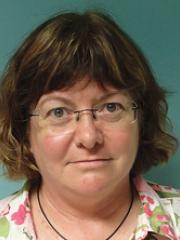
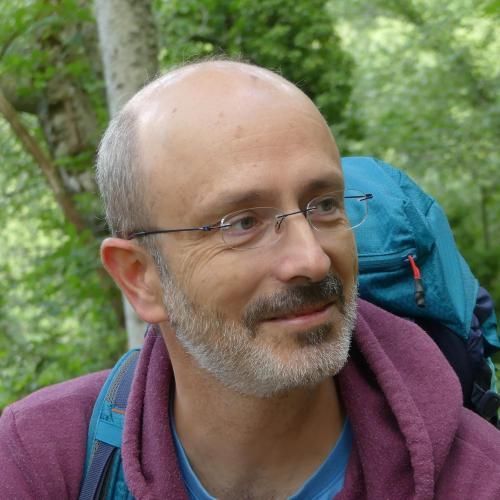
Mikael Thollesson is a Senior Lecturer at Uppsala University, affiliated with the Department of Organismal Biology; Systematic Biology and Klubban’s Biological Station. His research focuses on evolutionary biology, phylogenetics, taxonomy, and molecular biology, particularly in marine and freshwater sponges (Porifera), bacterial pathogens, and computational methods in evolutionary analysis. Evolutionary Biology Marine Biology Taxonomy His recent publications highlight trends in sponge biodiversity, phylogeography, bacterial horizontal gene transfer, and mitochondrial gene evolution. Key articles include studies on Swedish demosponge faunas, Silene sect. Arenosae systematics, and computational tools like SPRIT for detecting gene transfers. No explicit awards or grants are mentioned.
Thomas Pape is a Professor at The Natural History Museum of the University of Copenhagen, specializing in the systematics, taxonomy, phylogeny, biogeography and evolution of Diptera (two-winged insects), with special emphasis on Calyptratae families including Sarcophagidae, Oestridae, and Calliphoridae. He has been a professor since 2025 after serving as an Associate Professor from 2004-2024. PhD from Copenhagen University (1990) Docent at Stockholm University (1998) Associate Professor at Danish Bilharziasis Laboratory (1990-1992) Research Entomologist at Naturhistoriska Riksmuseet, Stockholm (1994-2004) His research spans taxonomy, systematics, phylogeny, biogeography and evolution of Diptera with special emphasis on calyptrate families. He collaborates on Systema Dipterorum, conducts comparative larval morphology studies, and investigates the phylogeny of Calyptrata. His work includes Diptera nomenclature and large-scale biodiversity inventories. Analysis of his recent publications reveals a strong trend toward molecular phylogenetics (using RAD-seq and anchored phylogenomics), forensic entomology applications, and biodiversity informatics. His research spans entomology, systematics, evolutionary biology, and increasingly intersects with bioinformatics and conservation science, with significant contributions to understanding flesh flies, bot flies, and blow flies. President of the International Council of Zoological Nomenclature (since 2016) Chair of the Council for the International Congresses of Dipterology (2010-2018) Member of editorial boards for Entomotropica, Studia dipterologica, Stuttgarter Beiträge zur Naturkunde, and Tijdschrift voor Entomologie Dr. Pape teaches courses in Entomology (structure, phylogeny and biology of terrestrial arthropods), Field Biology II - Zoology, and Ecology and Evolution of East Africa (a 2-week field course in Tanzania with Nikolaj Scharff). He has served on scientific panels for SYNTHESYS and as chair of the scientific advisory committee for Museum Koenig in Bonn (2006-2009). His research group employs both morphological and molecular approaches to address evolutionary questions in Diptera, with particular expertise in calyptrate families. The laboratory maintains active international collaborations across multiple continents, as evidenced by his extensive publication record and research network.
Violeta Atienza Tamarit is an Associate Professor in the Department of Botany and Geology at the Faculty of Biological Sciences, Universitat de València, Spain. Her academic and research profile is deeply rooted in botany, with a specialization in lichen flora and vegetation, particularly epiphytic lichens in Mediterranean regions such as Castellón and surrounding territories. Her research interests span Botany , Lichenology , Plant Systematics , Biogeography , and Vegetation Ecology . She is an active member of the SEBHAP research group (Systematics, Evolution and Biogeography of fungi, seaweeds and plants), which focuses on the evolutionary and ecological dynamics of non-vascular plants and algae. This affiliation underscores her commitment to understanding biodiversity patterns and taxonomic relationships in cryptogamic flora. Violeta Atienza earned her PhD from the Universitat de València with a thesis titled Flora y vegetacion liquenica epifitica de las comarcas de els ports y baix maestrat (castellon) y territorios proximos in 1990, establishing a long-standing research trajectory in lichen ecology. Her work contributes significantly to the knowledge of epiphytic lichen communities in eastern Spain. She is involved in collaborative research through the SEBHAP group, which integrates systematics, molecular phylogenetics, and biogeographic modeling to study fungi, seaweeds, and plants. While specific grants and student advisement are not detailed in the available text, her sustained academic presence suggests active mentorship and research leadership.
Dr. Lyn Cook is an Associate Professor specializing in evolutionary biology and systematics at the University of Queensland. Her research examines plant-insect interactions, biogeographic patterns, and taxonomic relationships using molecular phylogenetics. Research focuses on: Australian flora and insect coevolution Historical biogeography of Southern Hemisphere taxa Taxonomic revisions using genomic data Cryptic species discovery Conservation prioritization Recent work addresses taxonomic controversies in Eucalyptus classification and resolves biogeographic origins of Australian arachnids using phylogenetic methods. Fieldwork spans Australian biomes from rainforests to arid zones.
Matthew Wills is Professor of Evolutionary Palaeobiology in the Department of Life Sciences at the University of Bath. He is affiliated with the Milner Centre for Evolution and the Centre for Mathematical Biology, where he leads research into macroevolutionary processes using fossil and molecular data. His work integrates phylogenetics, morphological disparity, and stratigraphic congruence to understand large-scale evolutionary patterns. His research interests focus on the role of fossils in building phylogenies, the evolution of morphological complexity, and the testing of macroevolutionary trends such as early high disparity and increasing complexity. He investigates how developmental shifts underpin major evolutionary transitions and how fossilization biases affect our understanding of the Tree of Life. His lab conducts projects on arthropod supertrees, molluscan ontogeny, and the phylogeny of Eumalacostraca using molecules, morphology, and fossils. His recent publications reveal a strong focus on quantifying morphological complexity, vertebral evolution in mammals, species richness in birds, and the impact of boundaries on trait evolution. These works frequently appear in high-impact journals like Nature Communications and Nature Ecology & Evolution , indicating a trend toward integrative, data-rich evolutionary analyses combining paleontological, morphological, and phylogenomic approaches. Principal Investigator, Biodiversity and The Sixth Mass Extinction (Royal Commission for the Exhibition of 1851) Principal Investigator, Susceptibility to Mass Extinctions: Ammonites as a Case Study (NERC) Principal Investigator, PLUTO Project (BBSRC) Principal Investigator, Arthropod Supertree of Life (BBSRC) He has supervised 17 research students and contributes to public discourse through platforms like The Conversation . His work supports UN Sustainable Development Goals related to life on land and climate action through deep-time biodiversity research.
Dr. Jason Gibbs is an Associate Professor in the Department of Entomology at the University of Manitoba, Faculty of Agricultural and Food Sciences. He also serves as the Curator of the J. B. Wallis / R. E. Roughley Museum of Entomology (WRME), a significant center for the study of bee biodiversity. His work is central to advancing knowledge in wild bee systematics, phylogenetics, and conservation. PhD in Biology, York University, Canada MSc in Botany, University of Toronto, Canada BSc in Biological Sciences, University of Toronto Scarborough, Canada His research focuses on the diversity, taxonomy, and conservation of wild bees , particularly halictid and panurgine bees. He employs integrative taxonomic approaches , combining morphological, molecular, and ecological data to resolve species boundaries and evolutionary relationships. His work extends to pollinator ecology , examining how habitat management, agricultural practices, and landscape changes affect bee communities and pollination services. He is deeply involved in bee conservation , including the rediscovery of rare species and the development of habitat strategies to support pollinators in human-modified landscapes. The trends in his recent publications reveal a strong emphasis on systematics and alpha-taxonomy , with numerous revisions of bee genera and checklists of regional faunas. He frequently uses DNA barcoding and phylogenomics to address taxonomic challenges. Additionally, his work explores pollination dynamics in agricultural systems , particularly in blueberry and other crops, assessing the roles of wild versus managed bees. There is a consistent theme of habitat enhancement and conservation across his research, with studies on floral strips, prairie restoration, and the impacts of land-use change. Dr. Gibbs is actively involved in mentoring and training the next generation of entomologists. His lab includes several graduate students and highly qualified personnel who contribute to his diverse research projects, as indicated by the asterisked names in his publications. He leads the Gibbs Wild Bee Lab, which is dedicated to understanding bee diversity and evolution. The lab combines field research with molecular and morphological analyses, and maintains close ties with the WRME museum, which serves as a vital resource for specimen-based research and education.
Charles C. Davis is a Professor of Organismic and Evolutionary Biology at Harvard University and Curator of Vascular Plants in the Harvard University Herbaria. He leads the Davis Lab, focusing on plant diversity through integrative research in systematics, paleobiology, ecology, and molecular biology. His work emphasizes phylogenetic theory, biogeography, and the application of herbarium collections to address global change challenges. Davis is particularly noted for leveraging herbarium specimens to study plant responses to climate change, phenology, and biodiversity patterns. Research interests include plant-insect interactions, genome architecture evolution in parasitic plants, and the ethical use of herbarium specimens. His lab has pioneered high-throughput phylogenomic pipelines (e.g., PhyloHerb) and explored the future of herbaria in the digital age. Collaborations span global institutions, emphasizing digitization, spectral imaging, and AI-driven analysis of biodiversity data. Recent work highlights the impact of anthropogenic change on plant communities, the role of phenology in species survival, and strategies to mitigate collecting biases in herbaria. Davis teaches courses on plant systematics and evolution, and his lab actively participates in public engagement through exhibits like the HMNH’s *In Search of Thoreau’s Flowers*. His research has been featured in *Trends in Ecology & Evolution*, *Molecular Phylogenetics and Evolution*, and *Current Biology*, with a focus on advancing methodologies for biodiversity science while addressing ethical challenges in specimen sampling.
Matthew D. Barrett is a researcher at James Cook University , specializing in plant systematics and fungal taxonomy. His work spans diverse areas including angiosperm phylogenomics, fungal biodiversity, and conservation biology of rare Australian flora. Research Focus : Phylogenomic analysis, fungal systematics, and ecological adaptations of Australian plant species. Publications : Contributed to major studies in Nature , Studies in Mycology , and Telopea , with a particular emphasis on Western Australian endemics. His recent publications highlight integrative approaches combining morphological and molecular data for taxonomic revisions, particularly in Basidiomycota and Orchidaceae.
Dr. Tanja Stratmann is a Postdoctoral Researcher at Utrecht University 's Department of Earth Sciences within the Faculty of Geosciences since July 2025, with prior affiliations at NIOZ Royal Netherlands Institute for Sea Research (2022-2025), Max Planck Institute for Marine Microbiology (2019-2022), and Ghent University (2018-2019). PhD in Marine Sciences (2018) from NIOZ/Ghent University MSc in Statistical Data Analysis (2019) from Ghent University MSc in Biology (2014) from Aarhus University Her research focuses on extreme marine environments , particularly deep-sea ecosystems and polar regions . Key areas include: Environmental impacts of deep-sea mining Benthic food web dynamics using isotopic tracers Megafaunal roles in carbon/nitrogen cycling Dissolved organic matter cycling in Arctic systems Recent work analyzes 13C, 15N, 2H tracers in sponge feeding studies (2025) and Clarion-Clipperton zone food web integrity (2023). Her databases ( BenBioDen , ProkaBioDen ) support global marine research. Scientific Recognition: Veni Laureate (2022) Open Science XS Grant (2022) Rubicon Research Fellowship (2019-2022)
Reto Nyffeler , PD Dr., has been Lecturer and Curator of Phanerogams at the University of Zurich since 2002. He leads the Institute of Systematic Botany’s herbarium activities and heads the Nyffeler research group, collaborating closely with the Sukkulenten-Sammlung Zürich. Education & Career Diploma in Systematic Botany, University of Zurich (1988-1991) Ph.D., Institute of Systematic Botany, University of Zurich (1994-1997) Post-doctoral researcher & Mercer Fellow, Arnold Arboretum, Harvard University (1997-2000) Post-doctoral researcher, Stanford University (2000-2001) Lecturer and Herbarium Curator, University of Zurich (2002-present) Research Focus Nyffeler’s work integrates plant systematics, biogeography, and phylogenetic methodology. Empirically, he concentrates on the diversification of succulent plants—especially Cactaceae—using molecular phylogenetics to untangle taxonomy, growth-form evolution, and biogeographic history. Parallel interests include the floristics of alpine regions and the systematics of Campanulaceae, Asteraceae, and Ranunculaceae. Across dozens of peer-reviewed papers (2010-2025) he has advanced family-wide phylogenies for Cactaceae and Caryophyllales, documented repeated succulent radiations, and created online taxonomic backbones such as Caryophyllales.org . His current projects combine next-generation sequencing with classical morphology to revise genera like Parodia and to understand adaptation in high-altitude Callianthemum . Students & Mentoring PhD advisee: Anita Lendel (systematics of Trichocereeae) Master advisees: 16 students (2006-2018) working on alpine ecology, cactus morphology, and floristic change Research Group & Collaborations The Nyffeler group comprises a scientific assistant (Dr. Heike Hofmann), technical and IT staff, and rotating Master students. The team maintains close collaborations with the Sukkulenten-Sammlung Zürich, Harvard’s Arnold Arboretum (Mercer Fellowship network), and multiple international cactus specialists.
Andrés Baselga Fraga is a Professor at the University of Santiago de Compostela, affiliated with the Department of Zoology, Genetics and Physical Anthropology within the Faculty of Biology. He leads the BiBiCI research group (Biodiversity, Biogeography and Integrative Conservation) and is associated with the Center for Interdisciplinary Research in Environmental Technologies (CRETUS). His doctoral work (2002) focused on Chrysomelidae beetles in Galicia, supervised by Dr. Francisco Novoa Docet. Education: PhD in Biology, University of Santiago de Compostela (2002) Thesis: 'Study of the Chrysomelidae (Coleoptera) of Galicia' Research Interests: His work centers on biodiversity patterns, biogeographical processes, and community ecology, with a focus on spatial scaling of phylogenetic diversity, climate change impacts, and dispersal limitation effects. He explores these through macroecological approaches, integrating genetic, taxonomic, and environmental data. His studies often address beetle communities, particularly Chrysomelidae, and their responses to environmental changes. Article Trends: Recent publications analyze biodiversity value through phylogenetic uniqueness, climate stability's role in species abundance-genetic diversity congruence, and dispersal mechanisms shaping community turnover. He also examines spatial and temporal shifts in montane ecosystems and develops novel statistical methods for assessing distance-decay relationships. Awards: No specific academic awards noted in the provided texts. Grants & Advising: No grant details or student advisees explicitly listed. His research has been supported through institutional affiliations like CRETUS. Labs/Teams: Leads the BiBiCI group and collaborates with CRETUS, focusing on interdisciplinary environmental research.
Professor Vincent Savolainen is a Professor of Organismic Biology at Imperial College London's Department of Life Sciences (Silwood Park Campus), part of the Faculty of Natural Sciences. He serves as Director of the Georgina Mace Centre for the Living Planet, focusing on interdisciplinary environmental challenges. Previously, he was Deputy Head of the Department of Life Sciences (2013–2016) and Deputy Head of Molecular Systematics at the Royal Botanic Gardens, Kew (2007–2016). His research integrates field ecology, molecular phylogenetics, and population genomics to address biodiversity preservation, evolutionary biology, and societal challenges like pandemic monitoring. Key areas include ecological speciation in palms, same-sex behavior in animals, and zoonotic disease surveillance in bats. He has pioneered environmental DNA (eDNA) techniques for biodiversity assessment and led studies on the genetic basis of traits like sexual orientation in primates. Professor Savolainen holds prestigious awards, including the Linnean Society’s Bicentenary Medal (2006), European Research Council Advanced Grant (2008), and Coincy Medal for Botany (2014). He sits on UK Natural Environment Research Council panels and Royal Society committees. His group includes researchers like Dr Marco Balducci and Dr Louis Bell-Roberts, and collaborates with institutions like the Zoological Society of London and Royal Society of Biology. Current projects explore plant-insect coevolution, conservation genetics of deer species, and the evolution of endothermy in fish.
Dr. Patrick Keeling is a Professor in the Department of Botany at the University of British Columbia (UBC), affiliated with the Biodiversity Research Centre and the Faculty of Science. He holds a Canada Research Chair Tier 1 in Microbial Diversity and Evolution. His research focuses on the molecular evolution and cell biology of eukaryotes, particularly protists, emphasizing their diversity, genomic adaptations, and roles in ecosystems. Key projects include studying endosymbiotic events, apicomplexan parasites, and the genomic evolution of microbial eukaryotes. Affiliations: Department of Botany, Biodiversity Research Centre, Faculty of Science (UBC) Research Interests: Protistology, microbial diversity, endosymbiosis, genome evolution, phylogenetics, and comparative genomics Dr. Keeling’s lab investigates protist taxa such as apicomplexans, dinoflagellates, and chlorarachniophytes, with a focus on their metabolic pathways, organelle evolution, and ecological roles. Recent work includes uncovering coral-infecting parasites, analyzing microbial symbioses, and exploring the origins of multicellularity. His team employs genomic, transcriptomic, and microscopy-based approaches to address evolutionary questions. Awards: Canada Research Chair Tier 1 (2021–present). Scientific contributions span over 200 publications, emphasizing protist diversity, parasite evolution, and endosymbiotic mechanisms. His lab hosts students and collaborates globally on marine and microbial research projects. Labs/Teams: The Keeling Lab at UBC, part of the Biodiversity Research Centre, integrates molecular, genomic, and ecological methods to study microbial eukaryotes. Collaborations include studies on coral symbionts, dinoflagellate evolution, and protistan microbiomes.
Lucia Muggia serves as an Associate Professor in Systematic Botany at the Department of Life Sciences (DSV) of the University of Trieste. She holds multiple institutional roles including Department Council Member, Course of Study Recommendations Member for Environmental Biology programs, and Coordinator of the 'Environment and Life' PhD program (XXXIX Cycle). Her academic activities span across several degree programs including SM56 - Environmental Biology, SM58 - Ecology and Sustainability of Global Change, and multiple cycles of the PHD01 - Environment and Life doctoral program. Professor Muggia's research focuses on the biology of lichen symbiosis and plant-animal ecophysiology within the Environmental Biology research group. Her work intersects with environmental monitoring, ecological responses to global change, and plant-environment interactions. The research themes evident from her project involvement include environmental biomonitoring, ecological sustainability, and plant responses to environmental stressors. She actively participates in numerous research initiatives, often serving as Scientific Manager or Financial Manager for projects funded by various entities including the Ministry of University and Research, University of Udine, OGS (National Institute of Oceanography and Experimental Geophysics), and other research organizations. Current projects include 'iNEST Interconnected North-East Innovation Ecosystem,' 'Effects of 2D-NanoMaterials on seed plants reproduction,' and 'Prot. 2022Z7PXKW - Graphite for graphene: digging into the diversity of primary degrading microorganisms.' Research Group: Biology of lichen symbiosis (Prof. Tretiach) - Environmental Biology - Plant and animal ecophysiology Departmental Roles: Department Council Member, Course of Study Recommendations Member Doctoral Programs: Coordinator for PHD01 - Environment and Life - XXXIX Cycle, Member for multiple previous cycles (XXX through XXXVIII)
Jorge Cañizares-Esguerra is a Professor and Alice Drysdale Sheffield Professor of History at the University of Texas at Austin's College of Liberal Arts. His work fundamentally recontextualizes Latin America's role in shaping Western modernity through historical analysis of science, abolitionism, and democratic thought. Education: PhD from University of Wisconsin His research interrogates historiographical categories like the Enlightenment, Scientific Revolution, and Atlantic Age of Revolutions that have obscured Latin America's contributions to modernity. He demonstrates how manuscript petitions, not print culture, drove knowledge production and how colonial scribal practices created alternative cosmopolitanisms. Recent publications include Categories as Prisons (University Pennsylvania Press) challenging Atlantic historiography, and The Radical Spanish Empire (Harvard University Press) co-authored with Adrian Masters, which reclaims Spanish America's role in anti-slavery movements and systematic skepticism. His work appears in Cambridge Companion to Latin American Independence and New World Objects of Knowledge series. Teaching includes courses on Colonial Latin America (LAS 366), Atlantic History (HIS 383M), and Urban Slavery (HIS 347N). He has extensive editorial experience co-editing Princeton Handbook of Atlantic History and Jesuit-Protestant Encounters series.