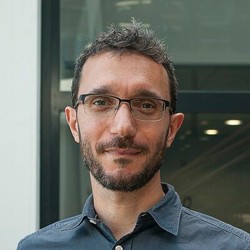
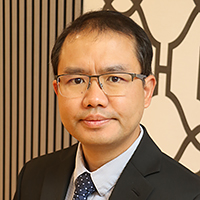
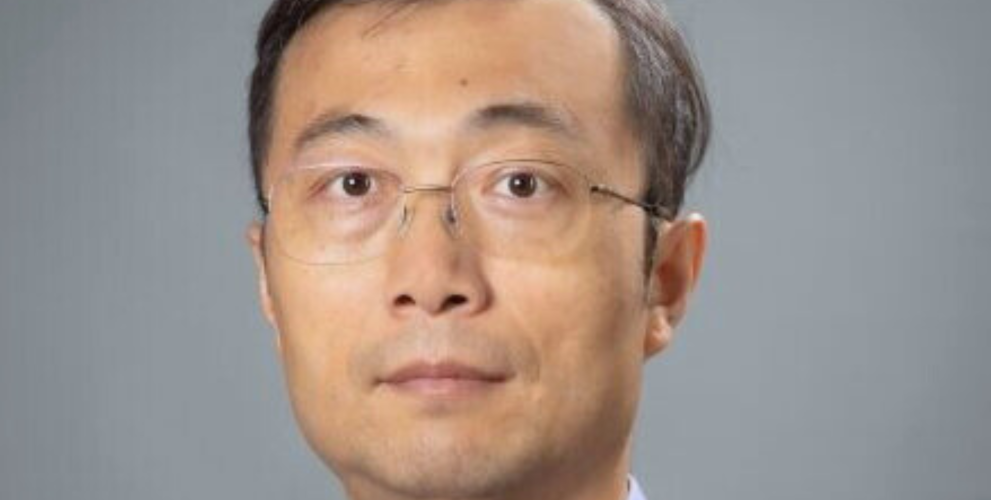
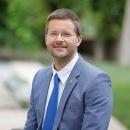
Paolo Papotti is an Associate Professor of Computer Science at EURECOM (France) since 2017, affiliated with the Data Science department. Previously, he was a senior scientist at QCRI (Qatar) and an assistant professor at Arizona State University (USA). He earned his PhD in Computer Science from the University of Roma Tre (Italy) in 2007, following an MEng in Computer Engineering from the same institution in 2003. His research focuses on scalable data management, data integration, data cleaning, and computational fact-checking. Notable contributions include work on knowledge graph rule discovery (Rudik), fact-checking frameworks (Scrutinizer), and data quality systems. His research has been supported by awards such as the 2020 Google Faculty Research Fellowship. Key publications include advancements in table representation learning, LLM-based data querying, and crowdsourced fact-checking validation. His work spans theoretical foundations and practical tools for improving data quality and information trustworthiness.
Emanuel Sallinger is a Full Professor at TU Wien's Databases and Artificial Intelligence Group and Vice Dean of Academic Affairs for Business Informatics and Data Science. He leads the Knowledge Graph Lab, focusing on scalable knowledge-based systems, reasoning in knowledge graphs, and AI integration. His research spans computational logic, database theory, and blockchain applications. Education: PhD in Computer Science (awarded 'sub auspiciis praesidentis rei publicae'), Master's degrees in Computational Intelligence and Informatics Management, and a Bachelor's in Software and Information Engineering. Research Interests: Knowledge graphs (construction, reasoning, scalability), logic-based systems, AI/ML integration with databases, enterprise architecture modeling, and financial knowledge systems. His work emphasizes practical applications like enterprise modeling, sustainable waste management, and regulatory compliance. Grants & Projects: Lead Vienna Science and Technology Fund (WWTF)-funded Knowledge Graph Lab. Involved in projects like 'Knowledge Graph-driven Tour Management' (sustainability), 'SustainGraph' (waste processing), and 'Enterprise Architecture Knowledge Graphs'. Teaching: Offers courses on Knowledge Graphs, Generative AI, Database Systems, and research methodology. Supervises doctoral and master's students in AI, databases, and knowledge representation. Labs/Teams: Knowledge Graph Lab at TU Wien, collaborating with industry on blockchain-based systems, financial AI, and enterprise architecture frameworks.
Amanda Pallais is the Robert C. Waggoner Professor of Economics at Harvard University's Department of Economics. She previously held the role of Paul Sack Associate Professor of Political Economy and Social Studies. Her research focuses on labor market inefficiencies and barriers to equitable education access, particularly for low-income populations. Pallais holds a B.A. in Economics and Mathematics from the University of Virginia (2006) and a Ph.D. in Economics from MIT (2011). Her research explores how labor market dynamics, such as reputation costs and manager bias, hinder equitable employment outcomes. She has also studied how small policy changes, like college application fees, disproportionately affect low socio-economic status (SES) students’ educational choices. Her work further examines the impact of financial aid on college persistence and completion rates among disadvantaged groups. Pallais’s recent publications (2024–2015) highlight trends in labor economics, education policy, and gender dynamics. Key themes include remote work’s gendered impacts, training efficacy, merit aid effects, and experimental analyses of policy interventions. Her work bridges theoretical frameworks with real-world experiments to address systemic inequalities. No scientific awards or grants are explicitly noted in the provided texts. While no formal advising records are listed, her research themes imply significant contributions to mentoring students in labor economics and education policy. She is affiliated with Harvard’s Faculty of Arts and Sciences (FAS) and maintains an active research agenda in social stratification and economic inequality.
Kathleen O'Connor Duffany, PhD, MEd, is an Associate Professor of Public Health in the Department of Social and Behavioral Sciences at the Yale School of Public Health . She serves as Director of Research and Evaluation at the Community Alliance for Research and Engagement (CARE) and Co-Director of the Yale-Griffin Prevention Research Center . Her work focuses on dismantling structural barriers to health equity through community-engaged research and policy advocacy. PhD in Chronic Disease Epidemiology/Social and Behavioral Sciences (2015), Yale School of Public Health MEd in Elementary and Special Education (1995), Boston College BA in Psychology and English (1991), College of the Holy Cross Dr. Duffany leads community-based participatory evaluations across diverse public health domains including food insecurity, breastfeeding support, maternal-child health, and vaccine equity. She directs the Community Impact Lab , which connects students with local organizations for equitable practice partnerships, and provides technical assistance for health departments statewide. Her research emphasizes translating findings into policy solutions through coalition-building and structural interventions. Recent publications demonstrate expertise in produce prescription programs , nutrition interventions in food pantries , and equity-focused workforce development . She has published extensively on health disparities in Frontiers in Public Health , Maternal and Child Nutrition , and International Journal of Environmental Research and Public Health , with methodological strengths in qualitative evidence synthesis and community-clinical linkages . Current projects examine person-centered food assistance models and structural determinants of mental wellbeing . At Yale, she teaches Community Health Program Evaluation to MPH and PhD students and leads annual Evidence-Based Public Health trainings for Connecticut health professionals. Her leadership roles include mentoring Vaccine Equity Fellows and directing formative evaluations of statewide health initiatives.
Dr. Tamás Koltai is a Professor and Dean at the Faculty of Economics and Social Sciences of Budapest University of Technology and Economics (BME). He leads the doctoral school's Specialization Group in Production Management. His roles include overseeing academic programs and research in production management, operations research, and efficiency analysis. Education: Doctor of the Hungarian Academy of Sciences (2016) Dr. habil. (2000), Budapest University of Technology and Economics Candidate of Technical Sciences (1987), Hungarian Academy of Sciences M.Sc. in Mechanical Engineering (1983), BME Faculty of Mechanical Engineering Research Interests: Dr. Koltai focuses on production management optimization, including the application of Data Envelopment Analysis (DEA), sensitivity analysis in mathematical models, and the integration of robotics in assembly lines. His work bridges theoretical models (e.g., MILP/CP optimization) with practical industrial challenges, particularly in healthcare efficiency and educational management. Notable Awards: IEOM Society Teaching Excellence Award (2021) BME GTK Faculty Memorial Medal (2016) János Susánszki Award (2013) Széchenyi Professorship Scholarship (1999–) Teaching & Leadership: He has held visiting roles at the University of Seville (1990–1992) and the University of Michigan (1988/89). His teaching excellence is recognized through awards and his contributions to business simulation education. His research often collaborates with industry partners to address real-world operational challenges. Labs/Teams: Leads the Production Management Specialization Group and contributes to interdisciplinary teams focusing on manufacturing efficiency and healthcare operations within BME.
Dr. Linda D. Grooms is a Professor of Educational Leadership at Regent University's School of Business and Leadership. With over three decades of experience, she specializes in integrating faith-based principles into educational systems. Her leadership spans university teaching, international training, and longitudinal research in online pedagogy, computer-mediated communication, and virtual leadership development. Education: BM in Music Theory, Furman University (1976) MA in Educational Administration, Regent University (1984) Certificate of Advanced Graduate Studies & PhD in Organizational Leadership, Regent University (1997 & 2000) Research Interests: Dr. Grooms focuses on distance learning innovation, constructivist online education models, leadership resilience in cross-cultural contexts, and the intersection of ethical leadership with educational equity. Her work emphasizes leveraging technology to democratize education and foster global leadership. Awards & Grants: Regent Professor of the Year (2015-16) Recipient of multiple faculty research grants Certified Master Instructor (2003) Over $15,000 in external grants for educational initiatives Professional Contributions: She serves on editorial boards for journals like International Journal of Leadership Studies and has reviewed for publishers including Sage and Rowman & Littlefield. Her work appears in prestigious encyclopedias and peer-reviewed journals, with a focus on bridging theory and practice in educational leadership. Future Focus: Continues advocating for faith-infused education systems, cross-cultural leadership development, and expanding access to quality education through digital innovation.
Dr. Wei David Dai is an Assistant Professor of Computer Science at Purdue University Northwest and Director of the Advanced Intelligence Software (AIS) Lab. His research focuses on robust deep learning, data quality, and public safety technologies like gunshot detection systems. He previously worked at IBM China as a senior engineer and served in Arkansas state government as a data scientist. Education: Ph.D. in Computer and Information Sciences (University of Arkansas at Little Rock, USA, 2020) M.S. in Information Science (University of Arkansas at Little Rock, USA, 2016) M.S. in Software Engineering (South China University of Technology, China, 2013) B.S. in Computer Science (Central South University, China, 2007) Research Interests: His work spans robust deep learning models, distributed computing systems, and privacy-preserving technologies. Notable projects include public safety innovations such as acoustic gunshot detection and AI-driven campus security systems. Articles Trends: Recent publications emphasize public safety applications (e.g., mass school shooting simulations) and deep learning robustness evaluation (e.g., the Accuracy-Stability Index metric). Earlier works address cloud computing optimization and data quality frameworks. Awards: Recipient of the 2024 Excellence in Research Award and multiple IBM honors for technical excellence and instruction. Grants & Advising: Leads the Indiana Space Grant Consortium-funded satellite imaging project and Purdue Provost Grant for gunshot detection. Advises doctoral and master’s students on AI ethics, distributed systems, and public safety. Labs: The AIS Lab develops AI tools for public safety, equipped with GPU resources for audio and image analysis.
Kyprianos Papadimitriou is a Researcher at the Microprocessor and Hardware Laboratory within the School of Electrical and Computer Engineering at the Technical University of Crete . He holds a PhD in Electronic and Computer Engineering (2012) and has been involved in teaching laboratory courses such as Logic Design , Computer Architecture , and VLSI/ASIC Circuit Design . Research Areas : His work spans Reconfigurable Systems , Hardware Design , Computer Architecture , RFID Systems , and Real-Time Systems . He has developed innovative approaches in FPGA-based dynamic reconfiguration, MPSoC security, and 3D stereo vision for surveillance. Key Trends : Runtime reconfiguration for FPGAs Security frameworks for NoC-based MPSoCs Low-cost embedded vision systems Optimization of reconfiguration overhead Hardware task scheduling methodologies Genetic algorithm implementations on FPGAs Scientific Contributions : 1 USA patent (2005) Co-author of VLSI-SoC 2013 paper nominated for 1st Prize Active member of scientific committees (FPL, ReConFig) Peer reviewer for IEEE, Elsevier, and Springer journals Session chair at IEEE CNS and HPCC conferences Grants & Projects : Participated in competitive European and national programs, serving as scientific manager, coordinator, and technical coordinator. Developed spin-off company (2003-2005) to commercialize master's thesis research. Laboratory & Teaching : Affiliated with the Microprocessor and Hardware Laboratory , focusing on practical training in digital systems, processor-based systems, and VLSI design.
Dr. Ali Ahrari is a Lecturer at the School of Systems and Computing, University of New South Wales, Canberra. He holds a Ph.D. in Mechanical Engineering from Michigan State University (2016) and has extensive experience in research and academia, including roles as a Research Fellow and Associate at UNSW-Canberra and the University of Sydney. His research focuses on evolutionary algorithms, multimodal and multi-objective optimization, and surrogate-assisted optimization. Ahrari is a recipient of prestigious awards, including the ARC-DECRA 2023 and multiple international competition wins in optimization (e.g., CEC/GECCO competitions). He leads research groups like the Canberra Evolutionary Optimization (EvOpt) and serves on editorial boards, including Applied Soft Computing. Education: Ph.D. (2016, Michigan State University), M.Sc. and B.Sc. (University of Tehran). Awards: ARC-DECRA, ISCSO, and GECCO/CEC competition wins. Grants: ARC DECRA (2023), NCI Adapter Schemes, UNSW HPC allocations. Supervision: Currently advising 1 PhD student at SEIT, UNSW-Canberra. Engagements: Chair of IEEE Task Force on Multi-modal Optimization, organizer of optimization competitions (GECCO'2024, CEC'2022). His research emphasizes computational optimization, evolutionary computation, and swarm intelligence, with applications in engineering design and dynamic environments. He actively contributes to academic communities through editorial roles and conference organization.
Arianto Patunru is a Research Fellow at the Arndt-Corden Department of Economics within the Crawford School of Public Policy at the Australian National University (ANU). He joined ANU in 2012 and holds a PhD from the University of Illinois at Urbana-Champaign. His roles include coordinating the ANU Indonesia Project, overseeing policy engagements such as the Australia-Indonesia High Level Policy Dialogue, and managing the Indonesia Project on COVID-19 initiatives. Patunru previously headed the Institute for Economic and Social Research (LPEM-FEUI) in Jakarta and taught economics at Universitas Indonesia. His research focuses on international trade, economic development, globalization, and policy analysis. He has published in journals like the American Journal of Agricultural Economics , Journal of Development Studies , and Bulletin of Indonesian Economic Studies , where he serves as an editor. Patunru frequently contributes to policy debates through op-eds in platforms like East Asia Forum and The Conversation , addressing issues such as Indonesia’s economic strategy, trade policies, and climate change. Key research themes include the impact of economic reforms (e.g., Indonesia’s Omnibus Law), trade policy dynamics, and the role of foreign investment. He has explored topics like labor share declines in manufacturing, environmental policy challenges, and vaccination strategies during the pandemic. Patunru’s work bridges academic analysis with practical policy advice, emphasizing Indonesia’s integration into global value chains and the need for balanced economic strategies.
Cliff Zou is a Professor in the Department of Computer Science at the University of Central Florida (UCF), where he coordinates master’s programs in cybersecurity, privacy, and digital forensics. He directs the UCF Alliance for Cybersecurity and contributes to the university’s Cyber Security and Privacy Cluster. Education: Ph.D. in Electrical and Computer Engineering from University of Massachusetts-Amherst His research focuses on computer and network security , network modeling , and performance evaluation . Key areas include malware analysis, botnet defense, and adaptive cybersecurity protocols. His publications address threats like email worms, peer-to-peer botnets, and internet worms, reflecting his work in proactive threat mitigation and network resilience. Scientific recognition includes: Senior Member of IEEE Best Student Paper Award (ACSAC 2007) UCF Teaching Incentive Program (TIP) award (2013) Best Paper runner-up (PADS 2005, ICCCN 2004) First-place award for undergraduate project 'Personal Medication Monitor' His research has been featured in New Scientist Magazine , EurekAlert! , PCWorld , and The Register . Zou actively contributes to academic conferences as an organizer and program committee member.
Markku Karjalainen is a Professor in the Department of Architecture at Tampere University's Faculty of Built Environment. With over 80 research publications spanning from 2016 to 2025, he has established himself as a leading expert in timber construction and wooden building systems in Finland. Professor Karjalainen's research primarily focuses on timber construction , particularly multi-story wooden buildings, dovetail wood construction techniques, and sustainable building practices. His work spans architectural design, structural engineering, fire safety, and environmental impact assessment of wooden structures. He has conducted extensive statistical analyses of Finnish timber residential buildings, examining construction practices from 1995 to the present. His research demonstrates a strong commitment to advancing wooden construction technologies while addressing practical challenges in fire safety, structural performance, and building physics. Analysis of his recent publications (2023-2025) reveals a consistent focus on dovetail construction techniques for mass timber elements, with numerous studies examining structural performance, fire properties, and air permeance. His work bridges theoretical research with practical applications in the construction industry, particularly in Finland where wooden multi-story construction has seen significant growth. Karjalainen's research often involves international collaboration, with studies comparing practices across different countries and examining global perspectives on timber construction. His scholarly output demonstrates a methodical progression from basic statistical analysis of building practices to increasingly sophisticated investigations of specific construction techniques and their performance characteristics. This evolution reflects both his growing expertise and the maturation of timber construction as a field of academic inquiry.
Jordi Guitart Fernández is a Professor at the Department of Computer Architecture, Barcelona School of Informatics (FIB), Universitat Politècnica de Catalunya (UPC). He is also affiliated with the Barcelona Supercomputing Center (BSC-CNS), a leading national supercomputing facility. He leads the CROMAI research group, focusing on Computing Resources Orchestration and Management for AI. His work bridges high-performance computing, cloud systems, and artificial intelligence. Research Interests: Cloud Computing and Edge Computing Green and Energy-Efficient Computing Containerization and Virtualization for HPC Resource Orchestration and Management Autonomic and Self-Adaptive Systems Machine Learning Workflow Management AI-Driven System Optimization His recent publications reveal a strong focus on intelligent management of computing resources across cloud, edge, and HPC environments using machine learning and agent-based frameworks. He investigates performance, efficiency, and reliability in containerized AI and HPC workloads, particularly within Kubernetes and distributed infrastructures. His work increasingly integrates human-in-the-loop and trustworthiness aspects into AI systems. Scientific Awards: CLOUD Conference 2025 Best Paper Award VISIGRAPP 2025 Best Student Paper Award Premi Extraordinari de Doctorat 2025 - Àmbit d'Enginyeria de les TIC Test of Time Award Honorable Mention (e-Energy) Reconeixement als Mèrits Docents d'Especial Qualitat Top reviewers for Polytechnic University of Catalonia (Computer Science) - September 2017 Advising and Grants: He has advised doctoral students, including Peini Liu. He leads and participates in numerous competitive R+D+i projects, such as CROMAI and DALEST, funded by national and European programs like HORIZON 2020 and the Spanish State Research Plans. His work is supported by grants focused on knowledge generation and industrial leadership in computing technologies. Labs and Teams: He is the leader of the CROMAI - Computing Resources Orchestration and Management for AI research group at UPC. He also collaborates closely with the Barcelona Supercomputing Center (BSC-CNS), contributing to large-scale computing initiatives and strategic research agendas in Europe.
Stefan Duma is the Harry C. Wyatt Professor of Engineering and a University Distinguished Professor at Virginia Tech. He is currently serving as Interim Department Head in the Department of Biomedical Engineering and Mechanics within the College of Engineering. He also directs the Institute for Critical Technology and Applied Sciences and leads the Virginia Tech Helmet Lab. His educational background includes: Ph.D. in Mechanical Engineering from the University of Virginia (2000) M.S. in Industrial Engineering from the University of Cincinnati (1996) B.S. in Mechanical Engineering from the University of Tennessee (1995) Dr. Duma's research focuses on injury and impact biomechanics, with applications in automobile safety design , sports biomechanics (especially football and hockey), and military restraint systems . His work investigates head and neck injury mechanisms, concussion thresholds, and protective equipment performance. He has pioneered methodologies for evaluating helmet safety and individualized injury tolerance. The recent publications reflect a strong focus on head impact biomechanics , concussion prediction , and wearable sensor validation . The research spans youth and collegiate sports, drone impact risks, and automotive safety. Key themes include individual variability in injury response, helmet performance assessment, and translational safety applications. Scientific recognition includes his appointment as a University Distinguished Professor and leadership roles, though specific awards are not listed in the provided text. Dr. Duma advises a team of researchers and students, including Steven Rowson, Abigail Tyson, and Eamon Campolettano. His lab has secured significant research funding (implied by patent and publication volume), particularly in developing safety standards and injury prevention technologies. The Virginia Tech Helmet Lab is central to his research, conducting experiments with human volunteers, PMHS, and advanced instrumentation. His lab, the Virginia Tech Helmet Lab, is a leading center for impact biomechanics research, focusing on real-world safety challenges in sports, transportation, and emerging technologies like drones.
Agustín Zaballos Diego is an Assistant Professor in the Department of Computer Engineering at University Ramon Llull (URL), Barcelona, Spain, since 1999. He serves as Research Coordinator in the Department of Engineering at La Salle Campus Barcelona and leads the R&D Networking and Security Area since 2002. His academic background includes a PhD in Data Networks and Internet Technologies (2012), an International MBA (2014), and an M.S. in Electronic Engineering (2000). University: University Ramon Llull (URL) Department: Department of Computer Engineering Research Group: GRITS Research Focus: Real-time QoS-aware routing protocols in Smart Grids, Ubiquitous Sensor Networks, and IoT communications. His work bridges telecommunications, computer science, and energy systems through projects like OPERA (FP6), INTEGRIS (FP7), and FINESCE (FP7). Publication Trends: Recent articles highlight advancements in HF communications for Antarctic research, hybrid genetic algorithms for traffic engineering, IPv6 testing, and Industry 4.0-related networking solutions. Keywords span Smart Grids, IoT, Sensor Networks, and QoS optimization. Collaborative Projects: Key initiatives include the Antarctica Project , ATHIKA (ICT in healthcare), ENVISERA (environmental sensor networks), HOTSUP (online teaching innovation), PLANET4 (AI/ML in industry), and XIoT (IoT scalability challenges).