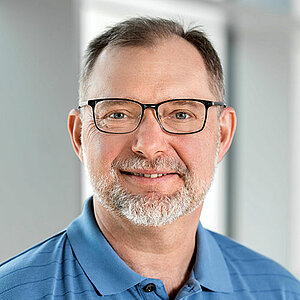
Dr. Martin Anselm is an Associate Professor in the Department of Manufacturing and Mechanical Engineering Technology at Rochester Institute of Technology's College of Engineering Technology. His research specializes in electronics manufacturing reliability, with emphasis on solder joint performance, thermal cycling effects, low-temperature solder alloys, and surface mount technology (SMT) process optimization. Key research domains include: Thermal and vibration reliability of BGA/LGA solder joints Hybrid low-temperature solder systems (e.g., SAC-Bi alloys) Stencil printing optimization for fine-pitch components Failure analysis of mixed solder alloys Correlations between material properties and manufacturing defects His publications demonstrate strong industry collaboration, particularly with the Surface Mount Technology Association (SMTA), focusing on practical solutions for electronics assembly. He also contributes to engineering education through industry-academia partnership models.
Professor Miltos D. Grammatikakis is a faculty member in the Department of Electrical and Computer Engineering at Hellenic Mediterranean University, holding the academic rank of Professor with active office hours (Fridays 18:00-20:00) and email contact mdgramma@cs.hmu.gr. His academic foundation includes an MSc (1985) and PhD (1991) in Computer Science from the University of Oklahoma, followed by international positions in France, Germany, and Greece before his current appointment. Research focuses on critical embedded systems domains with emphasis on practical implementations: Embedded Security & Real-Time/Mixed Criticality Systems Parallel/Multi-Core Architectures & System Reliability EDA Tools & High-Level Power Estimation Telecom/Satellite Networked Systems He has received recognition including an award for the open-source OCCN on-chip communication framework. Award for OCCN framework Professor Grammatikakis maintains strong industry-academia ties through 20 years of collaboration with ST Microelectronics on projects like IPSIM and Spidergon STNoC. His extensive project portfolio spans 25+ European initiatives (H2020, FP7, FP6 etc.), resulting in 80+ publications, two CRC Press books, two US patents, and 900+ Google Scholar citations. Current work continues to advance semiconductor design methodologies and embedded system architectures.
Professor Bernd Tillack is a leading researcher at the Leibniz Institute for Innovative Microelectronics (IHP) in Frankfurt (Oder), Germany, specializing in advanced semiconductor technologies and microelectronics innovation. His work bridges fundamental physics with practical applications in communications and sensing systems. His primary research domains include: Semiconductor Microelectronics BiCMOS Technology Silicon Photonics Terahertz Spectroscopy Millimeter-Wave Systems Integrated Circuit Design Professor Tillack actively leads multiple German Research Foundation (DFG) projects including 'Control of charge carrier dynamics in SOI waveguides', 'Bend-IT: Flexible wireless sensors', and 'THz-LoC II: Integrated Lab-on-Chip Terahertz Spectroscopy Platform'. His research demonstrates consistent focus on applying silicon-germanium BiCMOS technology to solve challenges in high-frequency communications and sensing applications. Key project types he manages: Research Groups (SOI waveguide dynamics) In-kind grants (Bend-IT wireless sensors) Priority Programs (THz-LoC spectroscopy) Collaborative Research Centers (silicon photonic I/O) His work exemplifies the IHP's mission to advance microelectronics for next-generation communication systems, with strong emphasis on translating theoretical concepts into tangible device implementations.
Dr. Ali Kadir is a Reader in Mechanical Engineering at the University of Salford's School of Science, Engineering & Environment. Previously serving as International Exchange Director for the School of Computing, Science and Engineering for nearly two decades until 2020, he currently acts as Admissions Tutor for BEng (Hons) and MEng (Hons) programmes in Aeronautical Engineering and Aircraft Engineering with Pilot Studies. With extensive teaching experience spanning Engineering Mathematics, Engineering Dynamics, and Mechanical Systems across multiple engineering disciplines, his academic career demonstrates deep commitment to engineering education. Dr. Kadir's educational background includes: BSc (Hons) Applicable Mathematics (Part Time, 1985-1991) - Project: Finite element analysis of heat transfer problems PhD in High temperature gas turbine micro and nanocoating CFD, FEA and experimental (Part Time, 2013-2021) His research spans multiple interconnected domains with primary focus on high temperature corrosion, micro and nano coating materials for jet engines, Finite Element Analysis, and Computational Fluid Dynamics. Additional research thrusts include biomechanics and orthopaedic engineering (particularly bone fracture analysis), electromagnetic smart materials, medical fluid dynamics, and renewable energy systems with nanofluid solar collectors. His methodology consistently integrates advanced mathematical modeling, finite element simulation, computational fluid dynamics, and experimental validation through flame spray coating techniques. Dr. Kadir's publication trajectory reveals strong interdisciplinary trends, with recent work (2022-2025) increasingly focused on nanofluid applications across aerospace, marine engineering, medical technologies, and renewable energy systems. His research demonstrates sophisticated integration of computational and experimental approaches to solve multi-physical engineering problems, with particular emphasis on nano-scale materials engineering and cross-domain applications. Professional recognition includes: Fellow of the Institute of Mathematics and its Applications (FIMA) As an active PhD supervisor, Dr. Kadir mentors students in high temperature corrosion modeling, nanocoatings development for aerospace/medical/marine applications, orthopaedic biomechanics (spinal analysis, bone stress modeling), and mathematical modeling of electromagnetic smart fluids. He serves as Associate Director of the Multi-physical Engineering Sciences Research Group (MPESG) under Prof. Anwar Bég, which provides critical infrastructure for computational and experimental research across engineering disciplines. The MPESG facilitates collaboration between theoretical modeling, simulation, and experimental validation, with strong industry connections in aerospace, marine engineering, and medical device sectors that enable translation of research findings into practical engineering solutions for complex real-world challenges.
Professor Marek Gorywoda is a faculty member in the Engineering Department at Hof University of Applied Sciences, where he has been teaching Materials Science since 2004. His expertise spans metallic materials, composite and functional materials, characterization of materials and surfaces, materials testing, and failure analysis. Education: PhD at Loughborough University of Technology, Institute of Mechanical Engineering and Institute of Materials Engineering and Polymer Technology Studies at TU Clausthal in Metallurgy, with focus on Metal physics, solid state physics, technical electronics and computer science Intermediate diploma at the Academy of Mining and Metallurgy in Krakow in Metallurgy Professor Gorywoda's research focuses on advanced materials development and characterization, particularly in ceramic matrix composites, metallic materials, and surface engineering. His work has significant applications in aerospace, medical technology, and electronics industries. He has developed expertise in laser cladding techniques for ultra-thin materials and electromigration analysis in microelectronic components. His recent publications reveal a strong focus on ceramic matrix composites (particularly C/C-SiC), laser processing of thin materials, and electromigration in microelectronic interconnects. These research areas demonstrate his interdisciplinary approach bridging traditional materials science with advanced manufacturing and electronic applications. Professor Gorywoda actively supervises bachelor's and master's theses, with topics ranging from composite materials to metal processing and characterization techniques. He encourages students to work on externally sponsored projects with industry partners. He is responsible for the Laboratory for Microscopy and the Laboratory for Materials Testing, which are equipped with state-of-the-art equipment for materials characterization and testing, including scanning electron microscopy, nanoindentation, thermal analysis, and mechanical testing systems.