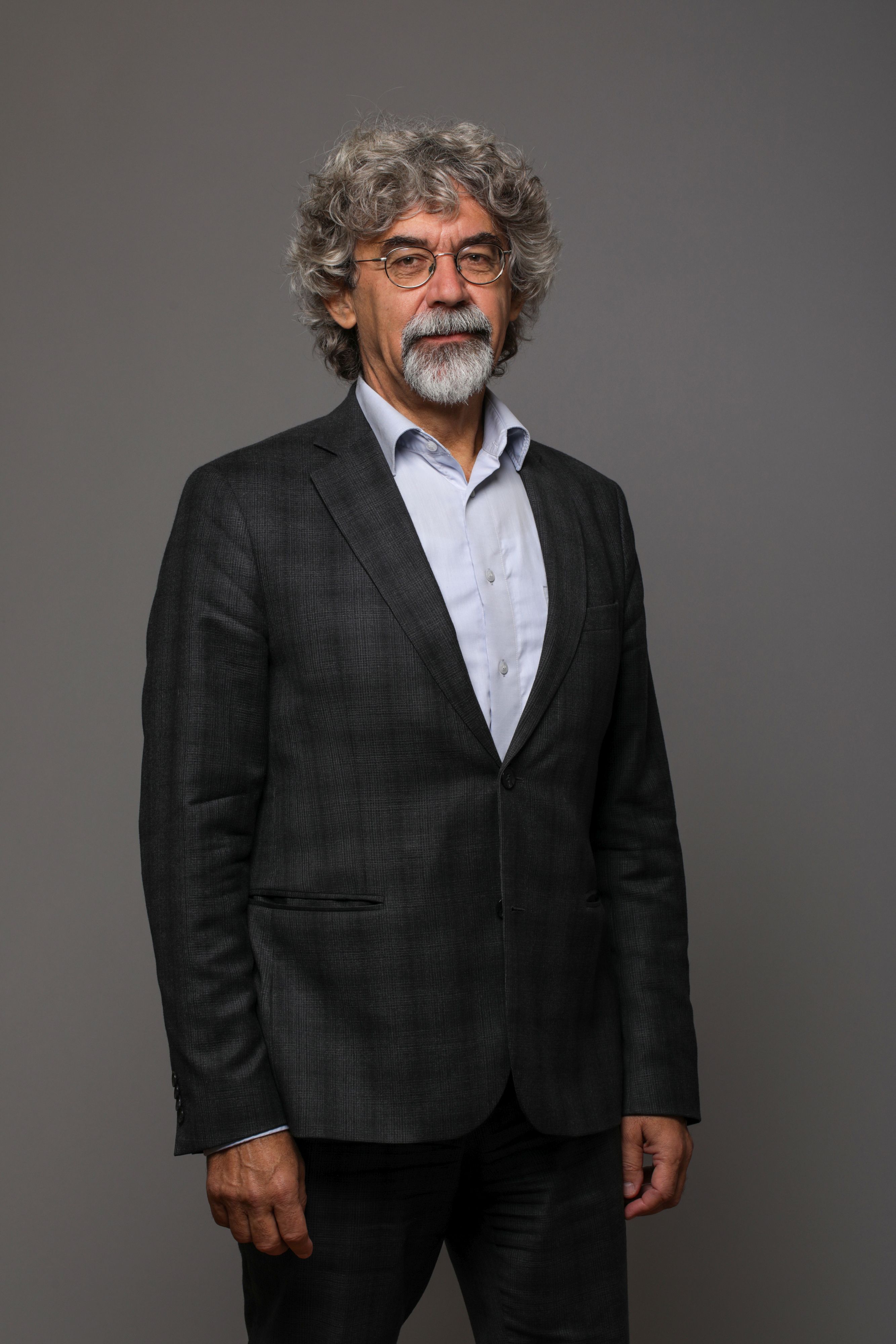
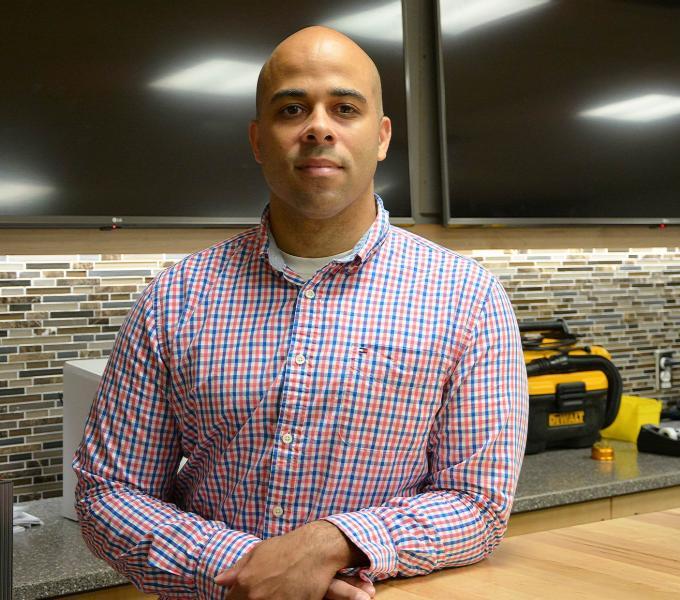
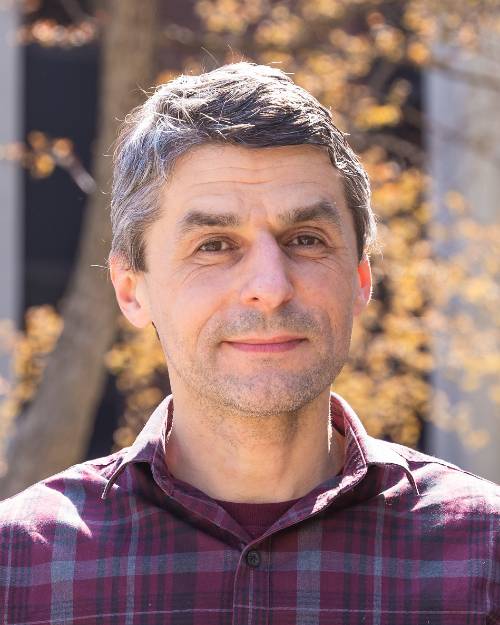
Adrijan Barić is a Researcher at the Department of Electronics, Microelectronics, Computer and Intelligent Systems, Faculty of Electrical Engineering and Computing (University of Zagreb). His work focuses on integrated circuit design, electromagnetic compatibility (EMC), and sensor systems. Expertise in CMOS technology and FPGA-based systems Developed on-chip sensors for stress effects and electromagnetic emissions Contributed to wireless sensor nodes and power converter design His research involves behavioral modeling of integrated circuits, time-domain simulations, and EMC-aware design methodologies. Key projects include: Smart temperature sensors using ring oscillators Conducted emissions analysis in DC-DC converters High-frequency modeling of surface-mount components Contact: adrijan.baric@fer.unizg.hr
Candace Chan is an Associate Professor in the Department of Materials Science and Engineering at Arizona State University’s Ira A. Fulton Schools of Engineering. She also holds affiliations with the Center for Renewable Energy Electrochemistry (CREE), the Adaptive Intelligent Materials and Systems Center (AIMS), and the Department of Civil and Environmental Engineering, reflecting her interdisciplinary research profile in advanced materials and sustainable energy systems. Her research focuses on next-generation battery technologies, including lithium-ion and solid-state batteries, with strong emphasis on materials for anodes, cathodes, and solid electrolytes. She investigates nanowire and silicon-based materials, clathrates, and interfacial phenomena in electrochemical systems. Her work spans fundamental materials synthesis and characterization to applied engineering solutions for battery recycling and upcycling, particularly through direct recycling processes and sustainable material regeneration. The recent publications highlight trends in battery sustainability, interfacial engineering, and mechanical reliability. Key themes include cobalt-nickel exchange in cathode recycling, lithium dendrite suppression in garnet electrolytes, surface treatment of solid electrolytes, and mechanical stress analysis in flexible batteries. These studies reflect a cohesive research direction toward safer, more sustainable, and higher-performance energy storage systems. Dr. Chan has secured significant research funding from the Department of Energy (DOE), National Science Foundation (NSF), and Sandia National Laboratories. Active projects include the development of the PRIME process for cathode recycling, understanding interfaces in lithium-sulfur solid-state batteries, and nano-inspired EV battery recycling to secure supply chains. She also contributes to major instrumentation initiatives, such as the acquisition of a Dual Transmission X-ray Diffractometer for in situ and operando materials analysis. She is actively involved in mentoring and research leadership, serving as Principal Investigator (PI) on multiple grants, indicating her role in advising graduate students and postdoctoral researchers. Her work is supported by collaborations across materials science, engineering, and earth sciences, and she contributes to open science through deposition of crystal structure datasets in the Cambridge Structural Database.
Rajeev J. Ram is a Professor of Electrical Engineering at the Massachusetts Institute of Technology (MIT), affiliated with the Research Laboratory of Electronics (RLE) within the School of Engineering. His primary department is Electrical Engineering and Computer Science (EECS). He holds degrees in Applied Physics from Caltech and Electrical Engineering from UC Santa Barbara. Education: B.S. in Applied Physics, California Institute of Technology Ph.D. in Electrical Engineering, University of California, Santa Barbara Research Interests: Ram's work focuses on integrating photonics with microelectronics, developing energy-efficient semiconductor devices, and advancing microfluidic systems for biopharmaceutical applications. His lab pioneered technologies like threshold-less lasers and 100%-efficient light sources, with recent emphasis on quantum computing interfaces and rural solar electrification solutions like SolSource. Awards: St. Andrews Prize for Energy and Environment (for thermoelectric rural electrification) RLE Semiconductor Laser Group Leadership (1999) Grants & Leadership: Managed a $100M portfolio at ARPA-E, advised DARPA, and led MIT's Center for Integrated Photonic Systems (CIPS). His work bridges academia-industry partnerships, including collaborations with national labs on quantum information science centers. Labs & Teams: Heads the Physical Optics and Electronics Group at MIT, focusing on photonics integration, quantum optics, and biopharmaceutical microfluidics. Active in translating lab innovations into global applications like the SolSource energy system.
Chao Wang is an Associate Professor in the School of Electrical, Computer and Energy Engineering at Arizona State University (ASU), with additional affiliation as Associate Faculty in the Biodesign Center for Molecular Design and Biomimetics. He joined ASU in 2015 as a Research Assistant Professor, became Assistant Professor in 2016, and was promoted to Associate Professor in 2022. His research bridges nanoscience and biotechnology, focusing on scalable nanomanufacturing, quantum optics, and liquid biopsy for biomedical, communication, and energy applications. Ph.D. Electrical Engineering, Princeton University (2012) M.S. Institute of Microelectronics, Tsinghua University (2006) B.E. Electronic Engineering, Tsinghua University (2003) His research emphasizes multidisciplinary integration of nanofabrication, photonics, fluidics, and biochemistry to develop compact sensing systems. Key areas include plasmonics, nanofluidics, and biosensor design for early disease detection. Recent publications highlight advancements in metasurface optics, nanopore DNA sensing, and structural color printing. He holds 32 U.S. patents for innovations in nanobiotechnology and nanofabrication. Notable awards include the NIH Director’s New Innovator Award (2022) and NSF CAREER award (2019). He serves on ASU committees such as the Nanofab Governance Board and reviews for 34 scientific journals. His lab at ASU (https://nanobio.engineering.asu.edu/) trains graduate students and researchers in nanotechnology applications.
Xiaolong Liu serves as Assistant Professor at Southern University of Science and Technology's School of Microelectronics. His academic journey includes a Ph.D. from Hong Kong University of Science and Technology (2019), M.E. from Tsinghua University (2014), and B.E. from Beijing University of Aeronautics and Astronautics (2010). Prior to his current position, he worked as Staff Engineer at eTopus Technology in Silicon Valley (2019-2021) and completed a postdoc at HKUST. Ph.D. in Electronic and Computer Engineering, Hong Kong University of Science and Technology (2019) M.E. in Microelectronics, Tsinghua University (2014) B.E. in Electronic Engineering, Beijing University of Aeronautics and Astronautics (2010) Dr. Liu's research spans cutting-edge RF/mm-Wave/THz integrated circuit design, focusing on high-performance signal generators , ultra-wideband transceivers , and low-power frequency synthesis . His work addresses critical challenges in 5G/6G communications, terahertz spectroscopy, and high-speed wireline interfaces through innovative CMOS architectures. Technical emphases include varactor-less VCOs, harmonic enhancement techniques, and magnetic tuning mechanisms for millimeter-wave systems. His publication portfolio demonstrates consistent leadership in IEEE flagship journals/conferences (JSSC, TMTT, ISSCC, VLSI), with recent work advancing Class-F oscillators, sub-sampling PLLs, and sub-THz synthesizers. Notable trends include migration toward sub-THz frequencies (2023-2025) , multi-core oscillator architectures , and elimination of harmonic tuning for simplified design. IEEE VLSI Paper Technical Highlights (2019) IEEE CICC Invited Talk (2019) IEEE TVLSI 2023 Best Reviewer Award Top 4 Most Downloaded Paper in TCAS-II (July 2022) Dr. Liu actively mentors students through SUSTech's graduate programs, with advisees consistently earning university-level thesis awards and conference recognitions. His lab maintains strong industry ties through silicon validation and collaborates on cutting-edge tapeouts in 7nm/16nm nodes. Current projects focus on cryo-CMOS interfaces for quantum computing and ultra-wideband transceivers for 6G applications. His research group operates within SUSTech's state-of-the-art microelectronics facility, specializing in mm-Wave/THz characterization and high-speed SerDes validation. The team maintains partnerships with semiconductor foundries for advanced-node prototyping and collaborates with industry leaders on real-world implementation challenges.
Mahsa Shoaran is a Tenure-Track Assistant Professor at EPFL (École Polytechnique Fédérale de Lausanne) jointly appointed at the Center for Neuroprosthetics and the Institute of Electrical Engineering . She is also the founding director of the Integrated Neurotechnologies Laboratory (INL) and contributes to several doctoral programs and teaching missions across EPFL’s School of Engineering (STI). Education: PhD in Electrical Engineering, EPFL (2015) M.Sc. & B.Sc., Sharif University of Technology Postdoctoral Fellow, California Institute of Technology (Caltech) (2015-2017) Former Assistant Professor, School of Electrical and Computer Engineering, Cornell University (2017-2019) Research Focus: Dr. Shoaran’s work sits at the convergence of integrated circuit design , machine learning , and neuroscience . Her group develops ultra-low-power, miniaturized system-on-chips (SoCs) capable of real-time neural recording , pathology detection , and closed-loop therapeutic intervention such as adaptive neurostimulation. Machine-learning algorithms running on-chip enable precise symptom detection in neurological and psychiatric disorders, while advanced circuit techniques guarantee energy efficiency suitable for long-term implantable or wearable neural interfaces. Scientific Awards & Grants: ERC Starting Grant 2021 Google Faculty Research Award in Machine Learning 2019 Swiss NSF Postdoctoral Fellowships NSF Award for Young Professionals – Smart & Connected Health MIT EECS Rising Star 2015 Doctoral Advising & Service: She currently supervises 14 PhD students in the Integrated Neurotechnologies Laboratory. Additionally, she serves on the PhD program committees for Electrical Engineering (EDEE), Microsystems & Microelectronics (EDMI), and contributes to the Neuro-X and SEL teaching programs. She is a Technical Program Committee member for IEEE CICC and serves on the Student Research Preview committee for ISSCC. Laboratory & Collaborative Teams: The Integrated Neurotechnologies Laboratory (INL) at EPFL Campus Biotech in Geneva hosts her interdisciplinary team of circuit designers, machine-learning researchers, and neuroscientists. The lab collaborates closely with clinicians to translate innovations into real-world neuroprosthetic and diagnostic devices.
Dr. Qiang Li serves as a Reader in the School of Physics and Astronomy at Cardiff University, leading the MOCVD Research Group and collaborating with the Institute for Compound Semiconductors and EPSRC Future Compound Semiconductor Manufacturing Hub. His expertise spans semiconductor epitaxy for optoelectronic integration, with significant contributions to quantum dot lasers and silicon photonics. Education: Ph.D. in Electronic and Computer Engineering, Hong Kong University of Science and Technology (2014) B.S. in Microelectronics, Peking University (2009) Dr. Li's research focuses on four interconnected domains: epitaxy of quantum dots for lasers, nanowire optoelectronics, tunnel epitaxy for silicon photonics integration, and type-II superlattice infrared detectors. His work bridges fundamental materials science with practical device applications, emphasizing III-V semiconductor integration on silicon platforms for telecommunications and sensing. Recent publications reveal accelerating progress in dislocation-tolerant growth techniques and nanowire-based photonic devices, with increasing emphasis on manufacturable solutions for integrated photonics. Scientific Awards: Sêr Cymru Lecturer Award (2019) Dr. Li currently supervises three PhD students and has secured substantial research funding including an EPSRC New Investigator Award (2020-2023), leadership in an EPSRC standard grant on tunnel epitaxy (2025-2028), and participation in the £100M EPSRC Compound Semiconductor Manufacturing Hub. His active grants address critical challenges in III-V/silicon integration for photonic applications. He directs the MOCVD Research Group, which operates within Cardiff's Translational Research Hub and maintains strong industry partnerships through the CS Connected initiative, focusing on advancing compound semiconductor manufacturing capabilities.
Dr. Samuel Dickerson is an Associate Professor and Vice Chair for Education at the University of Pittsburgh's Swanson School of Engineering, Department of Electrical and Computer Engineering. His work bridges technical expertise in electronics, mixed-signal integrated circuits, and cyber-physical systems with a commitment to advancing engineering pedagogy. Dr. Dickerson’s research spans biomedical circuits, remote sensing applications, and lab-on-chip microsystems. He has made significant contributions to solitary wave-based nondestructive evaluation and metacognitive teaching strategies . Recent publications highlight his work in wireless transducers, corrosion monitoring, and SPICE simulation-driven education. Scientific Awards: Pitt Innovator Award (2013)
Ryan Behunin is an Associate Professor in the Department of Applied Physics and Materials Science at Northern Arizona University. His research focuses on fluctuation-induced phenomena, optomechanics, and quantum systems, with a particular emphasis on Brillouin physics—investigating light-sound interactions to develop high-performance chip-scale lasers, precision sensors, and laser cooling techniques. He leads the ¡MIRA! research group and contributes to the ¡MIRA! Center, which promotes interdisciplinary STEM innovation. Postdoctoral Research Associate, Yale University Postdoctoral Research Associate, Los Alamos National Laboratory PhD in Physics, University of Maryland BS in Physics, University of Utah Behunin’s work explores fundamental questions in quantum friction, laser noise, and energy dissipation through fluctuation-induced phenomena. His optomechanics research leverages Brillouin scattering to advance integrated photonics, including ultra-low-linewidth lasers and coherent microwave-photonic systems. Recent projects address quantum state preservation, phonon-electron coupling, and scalable quantum information solutions. Behunin’s publications from 2023-2025 focus on quantum optomechanics, Brillouin-based transduction, and multi-phonon state engineering. Collaborations span photonics, acoustics, and quantum information science, with applications in quantum computing, sensing, and communication protocols. Scientific honors include: NSF EAPSI Fellowship (2009) Ralph D. Myers Award for Excellence in Teaching (2007/2008 Honorable Mention) Ryan Behunin actively mentors K-12 students through Tynkertopia and science fairs, emphasizing STEM diversity. His ¡MIRA! group emphasizes interdisciplinary collaboration, partnering with institutions like the University of Maryland, Yale, and Los Alamos National Laboratory.
Sergey Arustamov is an Associate Professor at the Faculty of Secure Information Technologies, ITMO University . He joined ITMO in February 2008 and currently serves as deputy head for research and project work and a project manager at the faculty. He has held significant roles in academia, industry, and international research collaborations. Education: PhD (1989, theoretical foundations for designing matrix LSI topology), Doctor of Sciences (DSc) degree. Research interests focus on: Computer-aided design of electronic systems Systems-on-a-chip architecture Hardware and software information security solutions Corporate information security management His work includes collaborations with European institutions through ERA.Net-RUS SIC and contributions to automated design systems for electronic devices during the Soviet era. Teaching includes courses on: Security of information processes in automatic systems Information technologies in education and science English for business and science Industry experience includes 15 years as Chief Information Officer at Crédit Lyonnais Rusbank (later Crédit Agricole) from 1992-2007, and leadership of the Department of Microelectronics and Design Automation at ITMO's predecessor institution from 1988-1992.
Yves Audet is an Associate Professor in the Department of Electrical Engineering at Polytechnique Montréal, affiliated with three centers of excellence: Industry of the Future and Digital Society (primary), Energy, Water and Resources , and Transport and Sustainable Infrastructure . He holds a B.Sc. and M.Sc. from Sherbrooke University and a Ph.D. from Simon Fraser University. His research bridges integrated circuit design , energy systems , and microsensor technology , with focus areas including: Ultra-low power CMOS circuits for energy harvesting High-speed isolated data communication (capacitive/inductive) Spectral imaging sensors and Hall-effect isolators Radiation-hardened avionics systems Photovoltaic and RF power conversion Analysis of his 62 publications reveals strong emphasis on: Optimizing power-delay tradeoffs in communication systems (7 recent papers on isolators) Advancing start-up circuits for sub-50mV energy harvesters Developing miniaturized sensor interfaces for IoT/industrial applications Improving fault tolerance in FPGAs and avionics He has supervised 19 graduate students (6 PhD, 13 Master's) working on projects spanning CMOS spectrometers, UAV wireless charging, and radiation-hardened circuits. No awards are documented, but he holds 2 patents in CMOS photodetection technology.
Ilona Rohrmann is a researcher at the Chair of Nano- and Quantum Sensors (TUEINAN) at Technische Universität München (TUM). Her work focuses on magnetic sensor technology and chip-based sensor systems, aligned with the department's research areas in nanotechnology and quantum sensing. She is based at the Garching campus in Munich, Germany, and can be contacted via her institutional email ilona.rohrmann@tum.de. Her professional affiliation with TUM includes collaboration under the Professorship for Chip-based Magnetic Sensor Technology (TUS1317). Research Focus: Rohrmann's research interests lie in the development and application of nano- and quantum sensors, particularly for chip-based magnetic sensing technologies. This interdisciplinary work bridges physics, materials science, and microelectronics to advance sensor capabilities in precision measurement and quantum information processing. Contact & Workplace: Located at Hans-Piloty-Str. 1/III, 85748 Garching bei München, Germany, Rohrmann's laboratory facilities are part of TUM's advanced research infrastructure for nanoscale and quantum technologies.
Cristinel Ababei serves as an Associate Professor in the Department of Electrical and Computer Engineering at Marquette University's Opus College of Engineering. He directs the Marquette Embedded Systems (MESS) Laboratory and holds a Ph.D. in Electrical and Computer Engineering from the University of Minnesota (2004), with prior degrees from Technical University of Iasi in Romania. Ph.D., 2004, Electrical and Computer Engineering, University of Minnesota M.S., 1998, Signal Processing, Technical University of Iasi B.S., 1996, Microelectronics, Technical University of Iasi Dr. Ababei's research spans network-on-chip architectures, embedded systems design, FPGA implementations, and energy optimization systems. His work particularly focuses on uncertainty modeling in embedded systems, multicore processor optimization, and applications in underwater drones, LiDAR systems, and battery management. The MESS Lab under his direction conducts research in embedded systems (including tinyML and IoT applications), FPGAs as accelerators for computer vision, and network-on-chip architectures with emphasis on carbon emissions and uncertainty modeling. His recent publications demonstrate a clear trajectory toward integrating machine learning techniques with traditional hardware design, particularly in energy management systems, battery optimization, and environmental monitoring applications. This includes work on HVAC optimization using reinforcement learning, carbon-aware datacenter scheduling, and TinyML applications for battery health monitoring. William and Nancy Stemper Award for underwater drone prototype IEEE Senior Member (2015) Multiple NSF research grants as PI and Co-PI Teaching innovation grants for entrepreneurship-focused courses Dr. Ababei actively mentors students through the NSF REU Site program 'Hardware, Embedded Software, and Analytics for Environment Quality Monitoring' and has graduated multiple Ph.D. and M.S. students. He has secured significant research funding including NSF grants for uncertainty modeling in heterogeneous embedded systems, cross-layer optimization of energy and cost in multiple buildings, and REU site funding for environmental monitoring. He also founded the 'Men as Advocates and Allies Group' at Marquette as part of the Advance Program. His laboratory work includes the development of underwater drones for water quality monitoring, SmartBuilds energy simulation framework, and various embedded systems for environmental sensing applications. He has been instrumental in organizing WE-GIRLS Summer Camps to encourage girls in engineering from grades 6-8.
Donald R. Reising serves as a Guerry and UC Foundation Professor of Electrical Engineering in the College of Engineering and Computer Science at the University of Tennessee at Chattanooga (UTC). He holds appointments in both the Electrical Engineering department and the Computational Science program, with active roles in university governance as Faculty Senate Chair (2022-2025) and member of multiple strategic committees including the PhD Computational Science Committee. B.S. in Electrical Engineering, University of Cincinnati (2006) M.S. in Electrical Engineering, Air Force Institute of Technology (2009) Ph.D. in Electrical Engineering, Air Force Institute of Technology (2012) Dr. Reising's research spans three interconnected domains: wireless security through Specific Emitter Identification (SEI) and RF fingerprinting, smart grid intelligence for real-time disturbance analysis, and radiation effects characterization in microelectronics. His work integrates machine learning with signal processing to solve critical infrastructure protection challenges, particularly in adversarial environments where traditional security measures fail. Recent publications demonstrate increasing focus on deep learning countermeasures against SEI spoofing attacks and edge-computing solutions for power grid resilience. His 15 most recent publications reveal strong emphasis on adversarial machine learning (6 articles), SEI robustness under environmental stressors (5 articles), and smart grid data analytics (3 articles), with growing interdisciplinary work in quantum correlations and transportation safety. This trajectory shows evolution from foundational RF fingerprinting techniques toward comprehensive security frameworks for critical infrastructure. IEEE Chattanooga Chapter's Outstanding Engineer Award (2022) UTC’s Outstanding University Service Award (2018) AFRL Sensors Directorate Dr. Samuel M. Burka Award (2013) Association of Old Crows Research Excellence Award (2009) MASINT Committee Academic Excellence Award (2009) Dr. Reising leads multiple research initiatives including the RF Security Lab and Smart Grid Analytics Group, securing consistent funding from DoD agencies (AFRL, ARL), NSF, and industry partners like EPRI. His service extends to advising graduate students through the Computational Science PhD program and directing undergraduate research in radiation effects characterization. Current projects focus on SEI resilience against deep learning attacks, quantum-enhanced signal processing, and edge-computing solutions for grid cybersecurity.
Dr. Jeff Darabi is a Professor and Ph.D. Program Director in the Department of Mechanical and Mechatronics Engineering at Southern Illinois University Edwardsville (SIUE). He holds a Ph.D. in Mechanical Engineering from the University of Maryland. His research spans micro/nanofluidics, biomicrofluidics, energy systems, and multiphysics modeling, with applications in biomedical devices and thermal management. Research Interests: MEMS and Micro/Nanofluidics Biomicrofluidics for cell separation and diagnostics Nanoengineered thermal systems for electronics cooling Coupled physics simulations (fluid, thermal, electromagnetic) His recent publications (2016–2019) demonstrate a focus on magnetophoretic bioseparation chips, microfluidic device design, and advanced materials like copper-CNT composites. This work emphasizes computational modeling integrated with experimental validation.