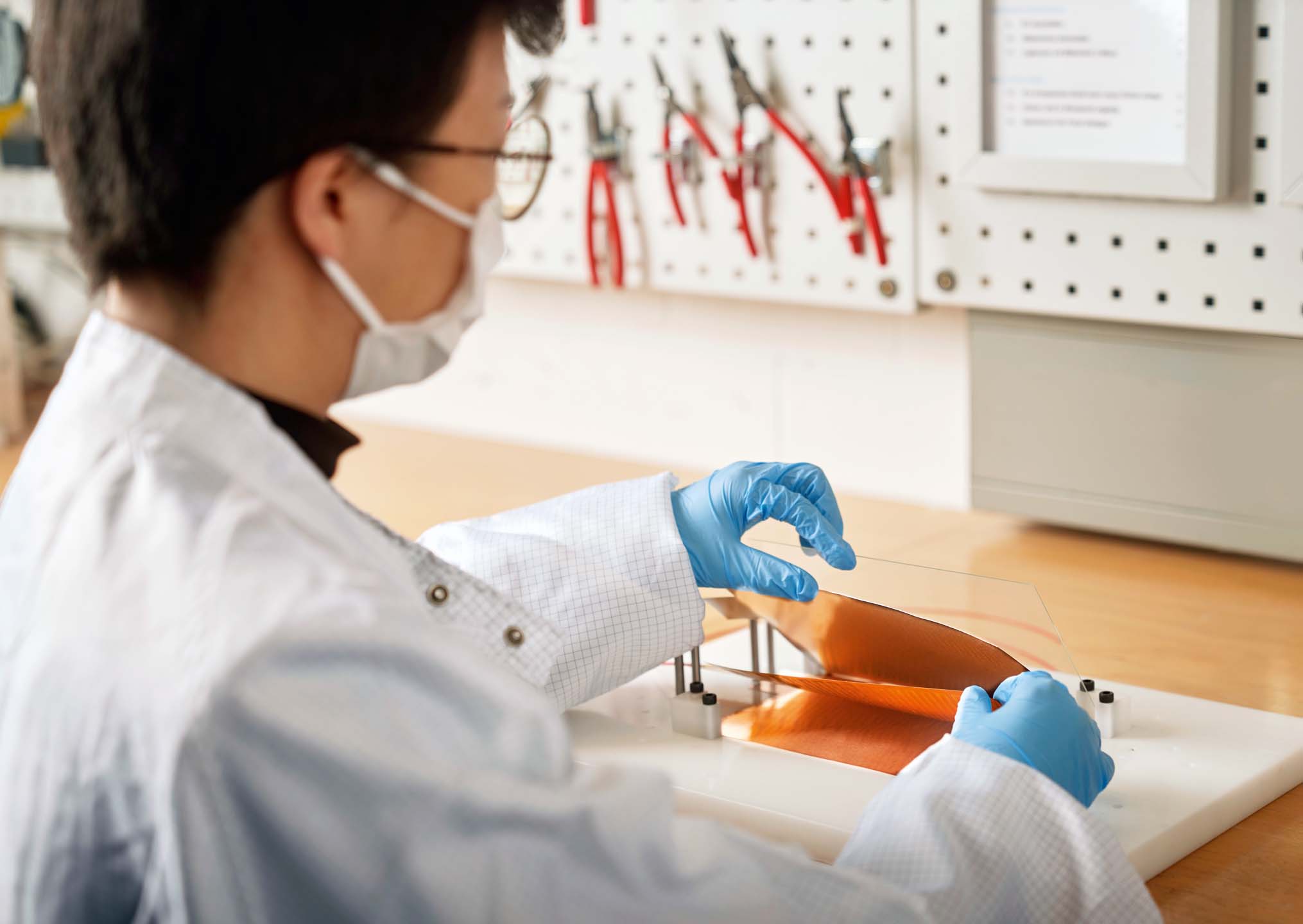
Haogang Cai is an Assistant Professor in the Department of Radiology at NYU Grossman School of Medicine. He holds a PhD from Columbia University and leads the Cai Lab, focusing on advanced nano-bio interfaces for biosensing and diagnostics. Education: PhD from Columbia University Current Position: Assistant Professor, Department of Radiology, NYU Grossman School of Medicine Dr. Cai's research spans nanotechnology, biosensing, and cell mechanobiology, with a particular emphasis on metasurface-based optical biosensors and ligand-cell interaction studies. His work integrates nanophotonics, biomedical engineering, and surface engineering to develop innovative diagnostic platforms. Recent publications highlight advancements in TiO₂ nano-biopatterning, dielectric metasurfaces, and CRISPR-Cas13a sensing technologies. His team has also pioneered superhydrophobic-optofluidic devices and explored liquid crystal tunable metasurfaces for visible light applications. The Cai Lab employs cutting-edge techniques like microstereolithography and super-resolution microscopy to analyze cell adhesion, ligand positioning, and nanoscale optical transmission. These studies bridge biophysics, materials science, and biomedical diagnostics.
Dr.-Ing. Stefan Mönch is a Junior Professor at the Institute for Electrical Energy Conversion (Institut für Elektrische Energiewandlung) at the University of Stuttgart, where he leads the research group "Smart Converters for Emission-Free Mobility of the Future" as part of the InnovationsCampus Mobility of the Future (ICM). He was appointed to this position in December 2023, establishing his junior professorship within the framework of this Baden-Württemberg-funded initiative focused on sustainable mobility solutions. Dr. Mönch completed his Bachelor's and Master's degrees in Electrical and Information Technology with a focus on power electronics and microelectronics at the University of Stuttgart. He earned his doctorate (Dr.-Ing.) in 2021 with research on Gallium Nitride-based and integrated power semiconductor circuits. Prior to his current position, he worked as a scientist and project leader at the Fraunhofer Institute for Applied Solid State Physics (IAF) in Freiburg, and from 2017 he was an academic staff member at the Institute for Robust Power Semiconductor Systems (ILH) at the University of Stuttgart. Dr. Mönch's research focuses on highly efficient electrical energy converters for sustainable mobility applications. His work spans power electronics with novel topologies and operating concepts, compact voltage converters for intelligent charging and driving, and electrocaloric heat pumps for thermal management in mobile applications. His Smart Converters group investigates beyond 99% efficient partial-power-processing, multilevel topologies, integrated converters with sensors and control systems, AI-aided design optimization, and wide-bandgap semiconductor technologies including GaN and SiC across voltage ranges from 48V to 1.5kV. The group's mobility-specific research includes bidirectional DC battery charging, traction drive topologies, and wireless power transfer inverters, while their energy research explores solid-state cooling, electrocalorics, magnetocalorics, and energy recovery circuits. Analysis of Dr. Mönch's recent publications reveals a strong focus on high-efficiency power conversion technologies, particularly using wide-bandgap semiconductors like GaN. His work demonstrates consistent progress in achieving over 99% efficiency in various converter topologies, with significant contributions to electrocaloric heat pump systems, multilevel converter architectures, and novel GaN-based circuit designs. The research shows a clear trend toward integration, with numerous publications on monolithic and highly-integrated GaN power ICs that combine multiple functions on a single chip. Dr. Mönch actively supervises student research and thesis work at the University of Stuttgart and has guided numerous student projects throughout his career. He leads multiple research projects including HiPower 5.0 (2025-2028), COOLPOL (2024-2028), and SmartEnergyConversion (2024) at the university, while continuing his involvement with Fraunhofer IAF projects such as ECO-KÜHL (2025-2027), GaN4EmoBiL (2023-2026), and ElKaWe (2019-2024). The Smart Converters research group, led by Dr. Mönch, currently consists of the professor and four academic staff members (as of July 2025). The team includes researchers Adrian Söllner, Ines Bennour, Jan Schipper, and Ole Bauer, who collaborate on developing next-generation power electronics solutions for sustainable mobility applications. The group operates within the broader framework of the InnovationsCampus Mobility of the Future, which connects research expertise from both the University of Stuttgart and Karlsruhe Institute of Technology to accelerate progress in sustainable transportation technologies.
Simeon Bogdanov is an Assistant Professor at the University of Illinois at Urbana-Champaign , affiliated with the Elmore Family School of Electrical and Computer Engineering . His research bridges quantum nanophotonics and machine learning, with a focus on light-matter interaction at nanoscale and high-speed quantum devices. He holds a Ph.D. in Electrical Engineering from Northwestern University (2014). Education : Ph.D. Electrical Engineering (2014), M.Sc. Microelectronics (2008), B.Sc. Physics (2007) Research Interests span quantum emitter integration, plasmonic nanostructures, machine learning in quantum systems, superconducting materials, and ultrafast photonic devices. His work addresses quantum decoherence and scalable quantum information systems. Publication Trends reflect expertise in quantum photonics, machine learning for optical microscopy, and superconducting material characterization. Collaborations with institutions like Purdue University and Holonyak Micro and Nanotechnology Lab are prominent. Scientific Honors : NSF CAREER Award (2023) OSA Senior Member (2024) Teaching Excellence (2024) Professional Affiliations include American Physical Society, SPIE, IEEE Electron Devices Society, and Optical Society of America. He has taught courses like Semiconductor Devices and Quantum Systems.
Prof. Dr. Sven-Hendrik Voß is a Professor at the Berlin University of Applied Sciences (BHT Berlin) since 2011. His academic role includes mentoring first-year students, representing practical phase programs, and leading the Digital Laboratory (Department VI). He has extensive experience in high-speed hardware architectures, FPGA design, and optical communication systems. Doctorate in Electrical Engineering (Microelectronics) from TU Berlin Diploma in Electrical Engineering (Communications) from TU Berlin Research Interests span digital signal/image processing, FPGA-accelerated data processing, high-speed communication systems, embedded vision systems, and methods for image synthesis. He has contributed to light field imaging, real-time processing, and optical interconnects for maskless lithography. Publications focus on FPGA-based solutions for high-speed data processing, optical communication systems, and hardware implementations in fields like 3D media and industrial applications. His work often combines digital circuit design with optical technologies. Teaching includes digital systems design, computer architecture, machine-oriented programming, and image processing. He offers thesis topics involving FPGA development for audio/video applications and communication systems. Professional Background includes leadership roles at Fraunhofer HHI, where he headed the High-Speed Hardware Architectures department (2010-2014) and led hardware groups in earlier roles. He has industry experience in VHDL implementation and PCB design.
Professor Merlyne De Souza is a Chair in Microelectronics at the University of Sheffield's School of Electrical and Electronic Engineering. Her research spans multi-disciplinary microelectronics, focusing on GaN CMOS, neuromorphic computing, RF power amplifiers, and healthcare sensors. University of Sheffield (2007-) De Montfort University (2003-2007) Research Interests: GaN-based CMOS and power devices Magnetic materials for power management Memristive neuromorphic systems Perovskite solar cells Scientific Trends: Recent publications emphasize GaN device architectures, solid electrolyte transistors for neural networks, and sustainability in semiconductor materials through graphene oxide recycling and thermoelectric composites. Awards: No specific awards mentioned in the text. Advising: Supervised 7 PhD/MPhil students including Balakrishnapillai P, Casterman D, and Rasheduzzaman M. Secondary supervision of Baltynov T and Unni V.
Prof. G.Q. Zhang is a full professor at the College of Electrical Engineering, Mathematics and Computer Science at Delft University of Technology. He leads research in Electronic Components, Technology and Materials , focusing on reliability engineering, semiconductor materials, and advanced packaging solutions. 681+ research outputs 42 supervised theses Active in IEEE and Springer editorial activities since 2008 Research Focus: Dr. Zhang's work spans electromigration reliability, silicon carbide device characterization, residual stress analysis, and triboelectric energy harvesting systems. His fingerprint analysis reveals critical contributions to power semiconductor packaging and nano-materials for microelectronics . Scientific Contributions: Recent publications cover topics from atomic flux divergence simulation in aluminum interconnects to corrosion protection of nano-copper materials. His team's work on dual-SSHC rectifiers with digital MPPT demonstrates leadership in energy harvesting technologies. Fellow, Netherlands Academy of Engineering (2023)
Giuseppe Barillaro is an Associate Professor at the Information Engineering Department of the University of Pisa, leading a research group focused on micro and nanostructured materials, devices, and systems for applications in (nano)photonics, microelectronics, (bio)sensing, and (nano)medicine. His work bridges advanced fabrication techniques with biomedical and environmental sensing solutions. Research Themes : Development of biodegradable and implantable sensing systems Microfabrication using silicon electrochemical micromachining (ECM) technology Optofluidic photonic crystal microsystems Microneedles for transdermal biosensing 3D microincubators for cell analysis Key Collaborations : Italian Institute of Technology (IIT), Scuola Normale Superiore, and international institutions in materials science and biomedical engineering. Article Trends : His recent publications emphasize nanoscale materials engineering (porous silicon, conducting polymers, photonic crystals) for ultra-sensitive biosensing, biodegradable medical devices, and advanced optical systems. Techniques include 4D printing, in-situ nanoassembly, and ECM-based silicon structuring. Scientific Leadership : Project Coordinator for EIC PathFinder Open project RESORB (EC-funded) Marie-Curie fellowships for team members Collaborations with CNR-IEIIT, STMicroelectronics, and Baxter International Inc. Education & Advising : He mentors PhD and Master’s students in Biomedical Engineering, Electronic Engineering, and Chemistry, with former advisees now at institutions like the Max Planck Institute and Molecular Foundry Berkeley Lab. Teaching includes Biomedical Electronics instrumentation. Labs & Teams : Leads a multidisciplinary group at University of Pisa Collaborates with Prof. S. Merlo (University of Pavia) and Dr. G. Mazzini (CNR-IGM Pavia)
Michael Vervaeke is a postdoctoral researcher at Brussels Photonics (B-PHOT), which operates within the Applied Physics and Photonics department at Vrije Universiteit Brussel in Brussels, Belgium. With an ORCID identifier of 0000-0001-7096-7477, Dr. Vervaeke maintains an active research profile with substantial contributions to optical engineering and photonics. Dr. Vervaeke's research focuses on freeform optics , rapid prototyping , and optical interconnects , with significant applications in space instrumentation and semiconductor analysis. His fingerprint analysis shows strong concentrations in rapid prototyping (100%), optical interconnects (97%), lenses (95%), and chips (89%). His recent publications demonstrate a clear trajectory toward increasingly sophisticated optical systems with practical applications in space exploration and semiconductor manufacturing. The research shows integration of theoretical optical design with precision fabrication techniques for real-world implementation. Dr. Vervaeke is actively involved in several major research initiatives: OZR4287: Nano-optical surface finishing for freeform optics (2024-2028) FWOIRI15: Essential Technologies for the Einstein Telescope (2023-2026) IOF3019: Brussels Photonics 2025 initiative (2021-2025) iBOF/21/084: Exploration of the dark universe with gravitational waves (2021-2026) As a mentor, Dr. Vervaeke has supervised master's research on angular magnification systems for beam steering applications and self-centering micro-holes for optical fiber connectors. His collaborative work extends across the Brussels Photonics research group and international partners working on photonics innovation in Europe. Dr. Vervaeke is a key contributor to B-PHOT's mission as described in the GEAR project, positioning Brussels Photonics as a driving force behind photonics innovation both in Europe and globally.
Philipp Dominik Häfliger is a Professor at the Nanoelectronics Systems Research Group within the Department of Informatics at the University of Oslo. His research spans biomedical circuits, neuromorphic systems, and advanced CMOS technologies. He has held key teaching roles in courses like Microelectronics Essentials and Analog Microelectronics . Research Interests : Smart sensor interfaces 3D CMOS systems Biomedical circuits and systems Space probe instrumentation Neuromorphic electronics Machine learning hardware Supervision : Häfliger has mentored numerous PhD and Master’s students, including Tonny Nguyen Duc Do (industry PhD with Sony), Candice Quinn , Steffen Nøvik , and Keith Finlayson . His alumni include researchers now at CERN, Texas Instruments, and Nordic Semiconductor. Labs & Projects : He leads research within the 4DSpace strategic initiative and contributes to projects like PHOTOSENSE and CHIP (Organ on Chip and Nano Devices). His group focuses on nanoelectronics applications in biomedical and space instrumentation.
Dr. Xuan Thang Vu is a Group Leader at the Institute of Materials for Electrical Engineering I and the Chair of Micro- and Nanosystems at RWTH Aachen University . His research focuses on advanced materials and sensor technologies for biomedical and microelectronic applications. Materials Science for Electrical Engineering Nanotechnology in Biosensors Thermal Conductivity in Organic Thin Films Field-Effect Transistors for Biomolecular Detection Dr. Vu’s work spans the intersection of materials science, microelectronics, and biomedical engineering. Recent publications highlight his contributions to graphene oxide thin films , PEDOT:PSS-based sensor arrays , and silicon nanowire biosensors , with applications in health monitoring , ion detection , and neurochemical sensing . His research emphasizes scalable fabrication techniques and integration of nanomaterials into functional devices. Key trends in Dr. Vu’s publications include the use of machine learning for polymer optimization , correlative dielectric analysis , and real-time biomarker detection . His work also explores thermal diffusivity measurements and reaction-diffusion modeling in microfluidic systems. Dr. Vu’s group operates at the Walter Schottky House , utilizing facilities for MEMS fabrication and characterization. His collaboration with interdisciplinary teams has led to innovations in smart textiles , lab-on-a-chip systems , and biohybrid computing .
M.Sc. Moritz Weißbrich is a Researcher at the Chair for Chip Design for Embedded Computing , part of the Institute of Theoretical Computer Science at Technische Universität Braunschweig. Holding an M.Sc. in Electrical Engineering and Information Technology from Leibniz Universität Hannover, his academic focus spans high-performance/low-power processor architectures , approximating arithmetic circuits , and stochastic computation techniques for fault-tolerant systems. His research portfolio includes 20+ peer-reviewed publications since 2017, with recent work on Nano-scale controllers for FPGA systems Biomedical sensor design in 22nm FDSOI Energy-aware VLIW processor optimization Stochastic timing analysis frameworks He has been developing ultra-low-power embedded solutions since 2021, following prior research assistant roles at Leibniz Universität Hannover's Institute of Microelectronic Systems (2017-2021). Key technical contributions appear in venues like Springer LNCS , IEEE RFIC Symposium , and Journal of Systems Architecture , focusing on processor customization , energy harvesting systems , and radiation-hardened circuit design . His work addresses challenges in autonomous computing, harsh environment electronics, and precision agriculture applications.
Nathan Swami is a Professor in the Department of Electrical and Computer Engineering at the University of Virginia. His research focuses on biophysical microsystems, developing microfluidic devices for biosensing, disease modeling, and tissue regeneration. He leads the Biophysical Microsystems Group at the UVA Center for Advanced Biomanufacturing. B.S., Indian Institute of Technology, Banaras Hindu University (1991) M.S., University of British Columbia (1993) Ph.D., University of Southern California (1998) Post-Doc, Clinical MicroSensors Inc. (1999-2000) Principal Scientist, Motorola Labs (2000-2003) His research spans biomedical data sciences, millimeter-wave electronics, and bio-inspired systems. Current projects include: Subcellular phenotypic analysis for microbiota interactions Conformation-specific biomarker detection Microfluidic vesicle/cell isolation Organ-on-chip tissue engineering Impedance-based cytometry Biodegradable scaffold fabrication Recent publications emphasize dielectrophoresis, cellular mechanics, and electrochemical biosensing, with applications in mitochondrial analysis and pathogen inhibition. His lab develops systems for point-of-care diagnostics in resource-poor settings. Key grants include NIH funding for microbiota-based infection control, AFOSR projects on biomarker detection, and a Paul Manning Launchpad Award for microfluidic sorting systems. His work combines microelectronics with bioanalysis to advance personalized medicine and tissue regeneration.
Dr. Claudia Cecchetto is an Assistant Professor (Junior Researcher, RTDA) at the Department of Biomedical Sciences, University of Padua, where she conducts research in the Neurochip Lab led by Prof. Stefano Vassanelli. Her work focuses on developing neurotechnological tools to study sensory processing in the rodent barrel cortex. Education: PhD in Biomedical Engineering, University of Padua (2013-2016) MSc in Physics, University of Padua (2010-2012) BSc in Physics, University of Padua (2007-2010) Research Interests: Dr. Cecchetto specializes in in vivo electrophysiology, two-photon microscopy, and implantable neuroprobes. Her current projects investigate neuronal network dynamics in the somatosensory cortex using combined imaging and electrophysiological techniques, supported by machine learning analysis. Her research spans neuroengineering, biophysics, and computational neuroscience. Publications Focus: Her recent articles emphasize neurotechnology development (e.g., CMOS probes, LFP analysis algorithms) and sensory processing studies in rodent models, frequently incorporating advanced imaging and electrophysiological methods. Awards: Marie Skłodowska-Curie Actions Fellowship (PNRR-MSCA project NEU-PAGES) Projects & Grants: She manages multiple EU-funded initiatives including SYNCH (#824162), NEUREKA (#863245), and leads the NEU-PAGES project combining two-photon imaging with neuroprobe technology. Previously, she completed the MSCA project GRACE (#796177) at Okinawa Institute of Science and Technology. Affiliations: She collaborates with the Optical Neuroimaging Unit (OIST, Japan) and maintains active profiles on ResearchGate and LinkedIn.
David Whalley is a Visiting Fellow in Electronics Packaging at Loughborough University, with visiting roles at Chalmers University of Technology and Nanyang Technological University. He holds advanced qualifications including BSc and MPhil degrees, and professional certifications such as CEng and FIMechE. His career spans over three decades, starting as a lecturer at Loughborough in 1990 and progressing to Senior Lecturer by 1998. His research focuses on electronics packaging, conductive adhesives, MEMS sensor technologies, and thermal management solutions. Key areas include material characterization, microfabrication processes, and reliability of electronic components under environmental stress. He has contributed to advancements in solder joint reliability, LED thermal management, and sustainable electronics manufacturing. Education: David graduated from Loughborough University in 1984 with a BSc, followed by an MPhil. He has held roles at Loughborough and Lucas Advanced Engineering Centre, blending academic and industry expertise. His research portfolio includes over 50 publications, emphasizing interdisciplinary approaches to electronics packaging challenges. Notable collaborations include work on polymer-based interconnects and inkjet etching technologies for microelectronic applications. Research Interests: His work spans electronics packaging design , MEMS sensor reliability , and conductive adhesive performance . He investigates thermal and mechanical stress effects on electronic components, with a focus on improving material durability and device longevity. Recent studies address damp-heat degradation in photovoltaic modules and the role of self-assembled monolayers in conductive adhesives. Articles trends: His publications from 2014–2023 highlight evolving themes in material science and microfabrication , including thermal management innovations and defect detection in MEMS devices. A significant emphasis is placed on sustainable electronics through advanced packaging and recycling-friendly designs. Grants & Advising: While specific grants are not listed, his extensive publication record indicates sustained research funding. No formal student advisees are documented in the provided texts. His work contributes to low-volume, high-complexity electronics manufacturing frameworks. Labs/Teams: His research aligns with Loughborough’s Electronics and Electrical Engineering Department, focusing on green electronics and advanced packaging solutions. Collaborations with Chalmers and NTU suggest involvement in international initiatives for sustainable manufacturing and material innovation.
Masoud Agah is Professor and Virginia Microelectronics Consortium Professor at Virginia Tech's Bradley Department of Electrical and Computer Engineering. He founded the VT MEMS Lab in 2005, pioneering microfluidic and nanofluidic platforms for chemical analysis and cancer diagnostics. His work bridges engineering and biomedicine through innovations in gas chromatography and cell phenotyping technologies. Research includes high-performance separation columns, impedance-based cell analysis, and dielectrophoretic pathogen detection. Recent NSF-funded projects focus on ionic liquid stationary phases and multi-constriction microfluidic biosensors. Awards: NSF CAREER Award (2008) Virginia Tech Engineering Faculty Fellow Award (2011) Labs: The VT MEMS Lab features cleanroom facilities for device fabrication and optical diagnostics suites for biological testing.