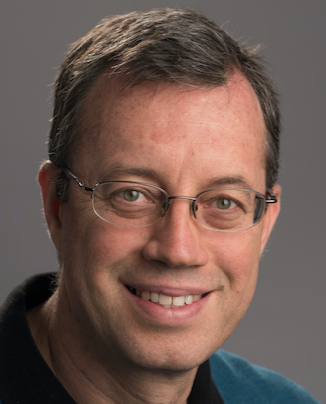
Yashar Ganjali is a Professor in the Department of Computer Science at the University of Toronto , leading the Systems and Networking Group . His research spans computer networks , with a focus on data center networking , software-defined networking (SDN) , and congestion control . Education : Not explicitly detailed, but inferred from academic rank as a Professor. His work on flow consolidation , load migration in SDN controllers , and machine learning for network management has been influential. Recent projects include FORESIGHT (2025) for ML-driven scheduling and Meta-Migration (2023) to reduce switch migration latency. Scientific Awards include the IFIP Networking 2025 Best Paper Award . Collaborations with institutions like Google (2024) and Facebook (2019) highlight his industry impact. Advisees include Sepehr Abbasi Zadeh (PhD, 2024). Current projects integrate optical packet switching and eBPF-based network augmentation , aiming to address scalability, micro-bursts, and resource allocation efficiency in cloud environments.
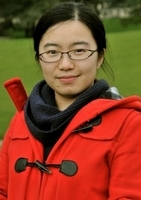
Sherry Tongshuang Wu is an Assistant Professor at Carnegie Mellon University's School of Computer Science, with primary appointments in the Human-Computer Interaction Institute (HCII) and secondary affiliation with the Language Technology Institute (LTI) . Trained at the University of Washington under Jeffrey Heer and Dan Weld, she bridges HCI and NLP to study human interactions with AI systems across diverse user groups. Her educational background includes a Ph.D. (2016-22) and M.S. (2016-18) in Computer Science and Engineering from the University of Washington, and a B.Eng. (2012-16) from Hong Kong University of Science and Technology. Industry experience includes research internships at Google Brain, Microsoft Research, and Apple. Wu's research focuses on three interconnected pillars: Real-world AI Evaluation (developing frameworks like SPHERE for systematic assessment), Task-specific AI Test & Distill (optimizing general-purpose models for specific use cases), and Human-AI Task Delegation (designing optimal collaboration between humans and AI). Her work emphasizes practical deployment, user-specific net gains, and error recovery mechanisms. Analysis of her 15 most recent publications reveals a strong trend toward evaluation frameworks (35%), human-AI collaboration systems (30%), and specialized model distillation (25%), with growing emphasis on educational applications (10%). Key methodological themes include checklist-based evaluation, perspective-aware retrieval, and structural analysis of AI outputs. Google Academic Research Award (2024) Amazon Research Awards (2024) AIED 2024 Best Paper Award ACL 2020 Best Paper Award Rising Stars in EECS Workshop (2020) Wu actively mentors 19 students across PhD, Master's, and undergraduate levels, with notable projects including synthetic data generation, LLM literacy tools, and retrieval system optimization. She leads significant grant-funded work through Amazon Research Awards and Google Academic Research Awards, focusing on deployable model generation and human-AI collaboration frameworks. Her lab develops practical tools like Promp2Model and SPHERE that bridge theoretical research with industry applications.
Todd Millstein is a Professor in the Computer Science Department at the University of California, Los Angeles (UCLA), and served as Department Chair from 2022–2025. He is also an Amazon Scholar and a co-founder and former Chief Scientist of Intentionet (now at AWS). His research focuses on making software systems more reliable, particularly through network verification and programming language techniques. He pioneered the Batfish network configuration analyzer, which is used by AWS, Oracle Cloud, and dozens of companies, and received the ACM SIGCOMM Networking Systems Award (2025) for this work. His recent publications span probabilistic programming, network reliability, and interactive program verification, including papers at PLDI 2024 (on bit blasting probabilistic programs), NSDI 2024 (on behavioral testing of BGP), and HotNets 2024 (on network layering). Todd has received prestigious awards such as an NSF CAREER Award , a Microsoft Research Outstanding Collaborator Award , and multiple best paper awards at PLDI, OOPSLA, and SIGCOMM. He has advised Ph.D. students like Ana Brendel and Poorva Garg , and teaches courses such as CS30 (Principles of Computing), CS231 (Types and Programming Languages), and CS239 (Current Topics in PL and Systems). His professional roles include Program Chair for OOPSLA 2014 and ECOOP 2018, and committee member for numerous conferences including PLDI , SPLASH , and LAFI .
Suliana Manley is a Full Professor at the École Polytechnique Fédérale de Lausanne (EPFL) , affiliated with the School of Basic Sciences and the Laboratory of Experimental Biophysics . She also holds teaching and research roles in EPFL's School of Life Sciences and Swiss Plasma Center , focusing on interdisciplinary biophysical studies. Education : PhD in Physics (2004), Harvard University Bachelor's in Physics & Mathematics (1997), Rice University Manley's research centers on super-resolution fluorescence imaging , single-molecule tracking , and quantitative biophysics . Key themes include: Understanding protein assembly dynamics at cellular membranes Elucidating viral assembly mechanisms (e.g., HIV-Gag) Developing 3D imaging algorithms and high-density data reconstruction tools like PALMsiever and FALCON Quantifying nanoscale organization in systems like telomeres and centrioles Her work bridges optical physics , computational image analysis , and cellular biology , with notable Nature and PNAS publications. Collaborations span bioengineering , genetics , and medical research . Scientific Awards : Featured in Nature Methods Research Highlights (3x) Very Important Paper and Cover Article (ChemBioChem, 2012) Postdoctoral Fellow, NIH and MIT Advising & Collaborations : Current PhD students in biophysics, cellular biology, and bioengineering Former students: Anna Archetti, Aleksandr Benke, Andrea Callegari, and others Co-founder of tools for high-density super-resolution microscopy and live-cell imaging Labs & Teams : Leads the Laboratory of Experimental Biophysics at EPFL, integrating physics-based methods into biological questions. The lab focuses on quantitative imaging , computational modeling , and software development for nanoscale analysis.
Norman Sadeh is a Professor in the School of Computer Science at Carnegie Mellon University (CMU), where he has made significant contributions to cybersecurity, privacy, and AI research. He has co-founded and co-directed several groundbreaking graduate programs at CMU, including the Privacy Engineering Program (2012-present), the Ph.D. Program in Societal Computing (2003-2013), and the MBA track in Technology Strategy and Product Management (2005-2017). Carnegie Mellon University, School of Computer Science Software and Societal Systems Department CyLab Security and Privacy Institute Manufacturing Futures Institute Dr. Sadeh received his Ph.D. in Computer Science at CMU with a major in Artificial Intelligence and a minor in Operations Research. He holds an M.Sc. in computer science from the University of Southern California and a BS/MS degree in electrical engineering and applied physics from the Free University of Brussels (Belgium) as 'Ingénieur Civil Physicien.' Professor Sadeh's research spans cybersecurity, online privacy, Human-AI Interaction, AI governance, mobile computing, the Internet of Things, user-oriented machine learning, and language technologies. He is particularly known for his pioneering work on AI-based privacy enhancing technologies, including privacy assistants, automated privacy compliance tools, and NLP-based privacy solutions. His work has influenced the design of privacy features at major technology companies including Apple, Google, and Facebook/Meta, as well as privacy policies at regulatory agencies like the Federal Trade Commission and the California Office of the Attorney General. Analysis of his recent publications shows a strong focus on practical privacy solutions, particularly in mobile and IoT contexts, with an emphasis on making privacy more usable and understandable for end users. His work bridges technical innovation with policy implications, addressing both the technological and human aspects of privacy protection. 2018 Outstanding Entrepreneur of the Year award from the Pittsburgh Venture Capital Association Test of time award by the AAAI Conference on Web and Social Media (ICWSM) Gartner Group's Magic Quadrant leader in Security Awareness Computer-Based Training for 4 consecutive years Deloitte's Technology Fast 500 recognition for 3 consecutive years Professor Sadeh has advised numerous students, including PhD candidates like Aerin (Shikhun) Zhang, whose dissertation focused on understanding diverse privacy attitudes. His research has been funded through various grants, including NSF SaTC projects, and has resulted in technologies that protect tens of millions of users worldwide. He also founded Wombat Security Technologies, which was acquired by Proofpoint in 2018 and whose technologies are used by over 75% of Fortune 100 companies. Professor Sadeh leads several research initiatives including the Privacy Engineering Program, the Usable Privacy Policy Project, the Personalized Privacy Assistant Project, and CMU's Privacy Infrastructure for the Internet of Things. His Mobile Commerce Lab and E-Supply Chain Management Lab have produced influential research that has been commercialized by major organizations including IBM, Raytheon, Boeing, and the U.S. Army.
Caterina Urban is a Research Scientist (Chargé de Recherche) at INRIA and École Normale Supérieure (ENS) in Paris, France. She is a member of the INRIA research team ANTIQUE (ANalyse StaTIQUE), where she focuses on formal methods and static analysis. Prior to her current position, she was a postdoctoral researcher at the Chair of Programming Methodology, led by Peter Müller at ETH Zurich. Dr. Urban holds a PhD in Computer Science (2015) from École Normale Supérieure, Paris, where she worked under the joint supervision of Radhia Cousot and Antoine Miné. She also earned a Master's degree (2011) and Bachelor's degree (2009) in Computer Science, both with full marks and honors (summa cum laude) from the Università degli Studi di Udine, Italy. Her research interests span the whole spectrum of formal methods with a focus on developing rigorous methods and tools to enhance the reliability of computer software, particularly data science applications. Her main area of expertise is static analysis based on abstract interpretation. Dr. Urban is currently engaged in several research projects including Lyra (focusing on data science software), Libra (fairness certification for neural networks), and SAIF (addressing safety concerns in machine learning-based systems). Dr. Urban's recent publications demonstrate her expertise in applying abstract interpretation to diverse areas including machine learning, data science, program verification, and security. Her work bridges theoretical foundations with practical applications, particularly in ensuring the reliability and trustworthiness of increasingly critical data science and machine learning systems. She has received recognition for her work through invitations to serve on program committees for major conferences including OOPSLA 2026, PLDI 2026, and CAV 2026. She is also the general chair of iFM 2025 in Paris. Dr. Urban actively mentors the next generation of researchers, supervising PhD students and postdoctoral researchers. She teaches courses on abstract interpretation and its applications at the Master Parisien de Recherche en Informatique (MPRI) and various international summer schools. She has developed several open-source software tools including Lyra (a static analyzer for data science applications), Libra (for fairness certification of neural networks), and Typpete (SMT-based static type inference for Python).
Aman Arora is an Assistant Professor at Arizona State University's Ira A. Fulton Schools of Engineering, specializing in the School of Computing and Augmented Intelligence. His research focuses on reconfigurable computing, hardware acceleration of machine learning, and non-traditional computing paradigms like Processing-In-Memory. With over a decade of semiconductor industry experience, he bridges academic research and industrial applications. PhD in Computer Science from The University of Texas at Austin Research interests emphasize domain-specific acceleration through FPGA optimization , compute-in-memory architectures , and machine learning for CAD/EDA . His work addresses critical challenges in energy efficiency and throughput for AI workloads. Recent publications demonstrate trends toward compute-in-memory systems , FPGA-based deep learning acceleration , and sustainable hardware design . Key contributions include frameworks like SAF, CSR, and GAMA for dynamic hardware optimization. Laboratory Website: ADVENT Lab Teaching includes courses on digital hardware design (CSE 320) and advanced topics in machine learning acceleration (CEN 524/CSE 524). Industry experience informs his practical approach to research and education.
Kevin Crowston is a Distinguished Professor of Information Science at Syracuse University's School of Information Studies (iSchool), where he examines how information technology enables new organizational forms through empirical studies, theoretical modeling, and system design. His work focuses on coordination-intensive processes in virtual settings, with significant contributions to citizen science, data science teamwork, and journalism transformation. Education A.B. in Applied Mathematics (Computer Science), Harvard University, 1984 Ph.D. in Information Technologies, MIT Sloan School of Management, 1991 Research Focus : Crowston investigates coordination mechanisms in human-AI collaboration, particularly through projects like Gravity Spy (combining citizen scientists with machine learning for gravitational wave analysis) and journalism innovation (e.g., ReelFramer for AI-assisted news-to-video translation). His framework addresses how intelligent systems reshape work design, knowledge production, and team dynamics in scientific and media contexts. Publication Trends : Recent articles (2024-2025) reveal three dominant threads: (1) Human-AI co-creation in journalism (deskilling/upskilling dynamics, creative tool adoption), (2) Citizen science evolution with AI (co-learning systems, lexical entrainment), and (3) Socio-technical governance of intelligent machines (control-accountability alignment, project archetypes). These reflect his central inquiry into how technology reconfigures work structures. Scientific Recognition ACM Distinguished Speaker Research Leadership : Crowston currently directs two major NSF initiatives: (1) HCC grant 21-06865 on intelligent support for non-expert information navigation, and (2) FW-HTF grant 21-29047 exploring human-technology collaboration in journalism. He spearheaded a Research Coordination Network establishing socio-technical frameworks for work in the age of intelligent machines, culminating in a special issue of Information, Technology & People . Collaborative Infrastructure : He co-leads the Gravity Spy citizen science ecosystem (integrating LIGO physicists, machine learning systems, and volunteers) and serves as co-editor-in-chief of Information, Technology and People , previously editing ACM Transactions on Social Computing . His MIDST platform research advances stigmergic coordination for data science teams.
Tom Schrijvers is a Professor at the Department of Computer Science in the Faculty of Engineering Science at KU Leuven, Belgium. He leads the Programming Languages Group within the Declarative Languages and Artificial Intelligence (DTAI) research group. His research focuses on programming languages, particularly functional and logic programming, with special emphasis on Haskell, type systems, and algebraic effects. His research interests include: Functional Programming, especially Haskell Type Systems and Type Theory Algebraic Effects and Handlers Logic Programming, particularly Prolog Constraint Programming Domain-Specific Languages Programming Language Theory Prof. Schrijvers' recent research has focused on effect systems, staged programming, and language composition. His work on algebraic effect handlers has been particularly influential, providing new insights into how effects can be modularly composed and handled in functional languages. He has also made significant contributions to the understanding of type classes and their implementation in Haskell. His publications demonstrate a consistent focus on practical applications of programming language theory, with work spanning from foundational type theory to applied domain-specific languages for areas like fluorescence microscopy. His research often bridges the gap between theoretical programming language concepts and practical implementation concerns. Prof. Schrijvers has supervised numerous PhD students to completion, including Pieter Wuille, Benoit Desouter, George Karachalias, Steven Keuchel, Amr Saleh, Alexander Vandenbroucke, and Ruben Pieters. He currently supervises PhD students Klara Mardirosian, César Santos, Gert-Jan Bottu, Koen Pauwels, Birthe van den Berg, and Roger Bosman. His research group has received funding from various sources including EU projects like GRACeFUL. The Programming Languages Group at KU Leuven, which he leads, focuses on functional (Haskell) and logic (Prolog, Datalog, CLP) programming languages, as well as general programming language theory. The group has been active in numerous research projects and collaborations across Europe.
Jonathan Külz is a Researcher at the Technical University of Munich (TUM) , affiliated with the Department of Informatics 6 - Chair for Cyber Physical Systems under Prof. Matthias Althoff. His research focuses on Modular Robotics , Reinforcement Learning , Cyber-Physical Systems , and Control Systems . His work includes algorithmic synthesis of modular robot compositions, model-based manipulator co-design, and unifying benchmarks for robotics. He has supervised multiple Master’s theses Bachelor’s theses Practical courses on topics like Robot Workspace Representation and Dynamic Model Identification . Notable supervised projects include Autonomous Navigation of Reachbot and Task-Based Modular Robot Configuration Synthesis . His recent publications span Robotics , Benchmarking , and Computational Social Science . Key trends include Computationally efficient assessment of robot capabilities Deep reinforcement learning for robotics Analysis of political discourse polarization Jonathan emphasizes structured thesis supervision, requiring exposés, shared folders, and protocol-driven meetings. He advocates for LaTeX in scientific writing and tools like NotebookLM and Zettlr for research documentation.
Luca Sebastiani is a Full Professor in Horticultural Sciences (AGR/03) at Scuola Superiore Sant'Anna in Pisa, Italy, since 2014. He currently coordinates the PhD Course in AgroBioSciences and has previously served as Director of the Institute of Life Sciences (2016-2021). His academic career includes roles as Associate Professor (2002-2014) and Assistant Professor (1998-2002) at the same institution. PhD in Plant Biology from Scuola Superiore Sant'Anna (1996) MSc in Agricultural Sciences from University of Pisa (cum laude, 1991) Postdoctoral research in agricultural biotechnology (1996-1998) Research Interests: Focus on plant-environment interactions, particularly abiotic and biotic stress responses in crops. Key areas include: Physiological and molecular responses to climate change stressors Nutraceutical enhancement of food crops Plant germplasm conservation using molecular markers Agriculture 4.0 integrating AI, IoT, and robotics Phytoremediation using poplar and Brassica species Scientific Contributions: His work bridges molecular mechanisms (aquaporin function, heavy metal transport) with ecosystem-level applications (precision irrigation, contaminant phytoremediation). Recent publications emphasize genome sequencing, stress tolerance modeling, and nutraceutical food development. ISHS Medal for SapFlow Workshop organization (2011) Giovanni Spitali Foundation Award for PhD dissertation (1998) Collaborations: Extensive international collaborations with institutions like Beijing Forestry University, Comenius University, and Purdue University. Currently supervises projects in plant phenotyping, omics technologies, and sustainable crop management.
Ayse Coskun is a Professor in the Electrical and Computer Engineering Department at Boston University's College of Engineering. She serves as Director of the Center for Information and Systems Engineering (CISE) and as interim Associate Dean for Research and Faculty Development. Her research focuses on the intersection of computer systems, energy efficiency, and AI. Dr. Coskun received her PhD from the University of California, San Diego in 2009. Prior to joining academia, she worked at Sun Microsystems (now Oracle). Her research spans energy-efficient computing, cloud computing, high performance computing, computer architecture, and embedded systems, with recent work focusing on AI's impact on data center energy demands. Her publication record shows consistent innovation across multiple domains, with recent work emphasizing AI applications for improving cloud security (through frameworks like DeltaSherlock and Praxi) and transforming data centers into grid-responsive assets (Emerald AI project). Her research bridges theoretical advances with practical applications, resulting in tools adopted by industry partners including IBM. IBM Faculty Award (2020) Ernest S. Kuh Early Career Award (2017) NSF CAREER Award (2012-2017) Multiple best paper and artifact awards at top conferences As an educator, Dr. Coskun teaches courses including EC327 Introduction to Software Engineering, EC535 Introduction to Embedded Systems, and EC713 Advanced Computing Systems and Architecture. She has advised numerous PhD students including Mert Toslali, Anthony Byrne, and Burak Aksar. Her lab maintains strong industry partnerships with IBM, Intel, AMD, and Oracle, and collaborates with academic institutions worldwide including Brown University, MIT, EPFL, and CEA-Tech in France. Dr. Coskun leads the Coskun Lab, which secured a $500K grant from Sandia National Labs for AI-based analytics in high performance computing systems, demonstrating the practical impact of her research on critical computing infrastructure.
Prof. Sadettin Emre Alptekin is a full Professor of Industrial Engineering at Galatasaray University, Faculty of Engineering and Technology, where he also serves as Vice Dean. Since joining the university as a research assistant in 2000, he has steadily advanced through the academic ranks, becoming an Assistant Professor (2006–2010), Associate Professor (2010–2023), and finally Professor in 2023. Education: PhD (Dr), Industrial Engineering, Istanbul Technical University, Institute of Science and Technology, 2001–2006 MSc, Industrial Engineering, Galatasaray University, Faculty of Engineering and Technology, 1999–2001 BSc, Industrial Engineering, Istanbul Technical University, Faculty of Management, 1995–1999 Languages: Advanced English (C1), Upper-Intermediate French (B2), Advanced German (C1) Research Interests: Prof. Alptekin’s research focuses on Computer Learning , Fuzzy Sets and Systems , and Decision Support Systems . His work integrates artificial intelligence, machine learning, and soft-computing techniques to solve complex industrial and managerial problems in areas such as supply chain management, quality function deployment, blockchain adoption, and mental-health prediction. Publication Trends: Across more than 50 refereed publications, Prof. Alptekin has consistently explored hybrid intelligent models that combine fuzzy logic, machine learning, and multi-criteria decision-making. Recent articles emphasize deep-learning-based anomaly detection in industrial time-series data, blockchain adoption in supply chains, and machine-learning applications in subjective well-being and mental-health modeling. Scientific Awards & Honors: No specific awards or medals are listed in the provided documents. Research Leadership & Funding: Since 2008 he has been the principal investigator (executive) of 12 nationally funded projects, covering topics such as Industry 4.0 sub-system design, Internet of Things applications, artificial neural networks in organizational decision-making, big-data analytics, and strategic decision processes. Graduate Advising: He has formally supervised at least 8 master’s theses and numerous undergraduate projects. Representative thesis titles include Gaussian-process-regression-based man-hour prediction, machine-learning-driven human-behavior modeling, recommender-system design for e-commerce, thyroid-nodule diagnosis from scintigraphic images, software-effort estimation via neural networks, spreadsheet heuristics for joint-replenishment problems, cross-selling decision systems in insurance, and profitability analyses of Turkish banks under disinflation. Laboratories & Teams: While no dedicated laboratory name is disclosed, his continuous role as Vice Dean and principal investigator implies active leadership of the Industrial Engineering department’s research clusters in intelligent systems and decision support technologies.
Ion Stoica is a Professor in the Electrical Engineering and Computer Sciences Department at the University of California, Berkeley, where he holds the Xu Bao Chancellor Chair. He serves as Director of the Sky Computing Lab and is Executive Chairman of both Databricks and Anyscale. His research spans distributed systems, cloud computing, and AI systems, with significant contributions to large-scale data processing frameworks. Stoica's research interests focus on the intersection of AI and systems, with emphasis on developing practical implementations that bridge theoretical foundations with real-world deployability. His work addresses fundamental challenges in distributed computing, resource management, and large-scale machine learning systems. Current projects include Ray (a distributed execution framework), vLLM (a high-throughput inference engine for LLMs), Chatbot Arena (an open platform for human preference evaluations), and SkyPilot (a framework for running AI workloads across clouds). His research output demonstrates a consistent trajectory toward more efficient, scalable systems for modern AI workloads, particularly focusing on optimizing inference performance, resource utilization, and cross-cloud deployment. Recent publications reflect growing interest in large language model serving, video generation optimization, and agent-based systems. ACM Fellow SIGOPS Hall of Fame Award (2015) SIGCOMM Test of Time Award (2011) ACM Doctoral Dissertation Award (2001) Member of National Academy of Engineering Honorary Member of the Romanian Academy Stoica has advised an extensive number of doctoral students who have gone on to prominent positions in academia and industry, including assistant professorships at Stanford, MIT, Carnegie Mellon, and other top institutions. He has received significant research funding through his lab activities and startup ventures. His research group has been particularly successful in translating academic research into widely adopted open-source technologies and commercial products. Stoica leads the Sky Computing Lab at UC Berkeley, which focuses on developing systems for AI workloads across multiple clouds. His research group has produced numerous influential open-source projects including Apache Spark, Apache Mesos, and Alluxio, which have become industry standards for large-scale data processing. The lab maintains strong industry partnerships while pursuing fundamental research in distributed systems and AI infrastructure.
Dr. Xin Zhou is an Oxford-Bristol Myers Squibb Fellow at the Department of Computer Science, University of Oxford. Her research integrates computational modeling, clinical data, and experimental findings to investigate cardiac disease mechanisms and develop human-based simulations for drug evaluation. BSc and MSc in Life Sciences, Beijing Normal University DPhil in Computational Biology, University of Oxford Her work focuses on multi-scale cardiac modeling , particularly in ischemic heart disease and heart failure, exploring ionic currents, tissue conduction, and organ-level dynamics. She develops electromechanical simulations to study cardiac alternans and arrhythmic risks, translating these into clinical applications for patient stratification and pharmaceutical testing. Recent publications emphasize in silico clinical trials , sex-specific cardiometabolic analysis, and Purkinje network modeling. Collaborative efforts with clinicians and pharmaceutical partners highlight her translational approach to regulatory science. Model of the Year 2024, BioModels EPSRC Impact Acceleration Account Microsoft Research Project Award Recognition Award, University of Oxford She supervises PhD and MSc students in computational cardiology, while serving on the editorial board of Frontiers in Physiology . Her current projects involve digital twinning and predictive cardiac safety models to reduce animal testing reliance.