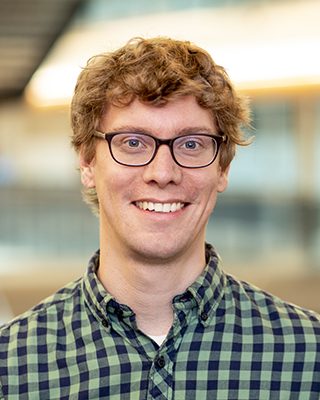
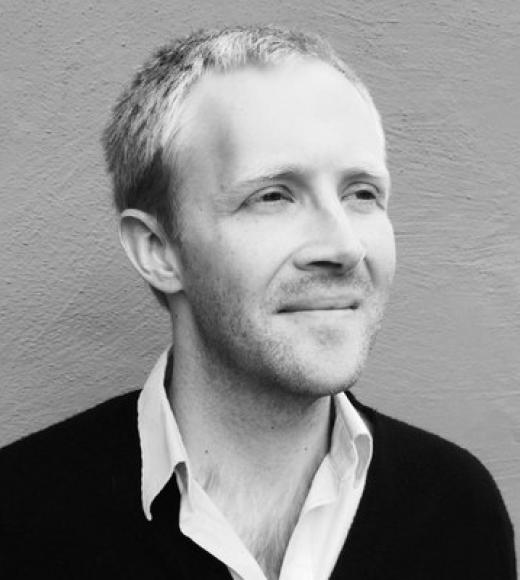
Tim Althoff is an Associate Professor at the Paul G. Allen School of Computer Science & Engineering, University of Washington, specializing in Artificial Intelligence and Human-Centered Computing. His research focuses on behavioral data science, combining Data Science Natural Language Processing Social Computing Human-Centered AI Ethics & Fairness to extract insights about health and well-being. Recent publications highlight advancements in: Mental health support through AI Wearable sensor health monitoring Online community analysis Reproducibility in data science Public health interventions with notable papers in ACL, Nature Machine Intelligence, and NeurIPS. Scientific recognition includes: ACL 2023 Outstanding Paper Award WWW 2021 Best Paper Award Double ICWSM 2021 Best Paper Awards SIGKDD Dissertation Award 2019 Fulbright Scholarship German National Merit Foundation Actively mentoring postdoctoral researchers and seeking PhD students in areas like neural representation learning, NLP applications to psychology, and mobile health technologies through his Behavioral Data Science Group .
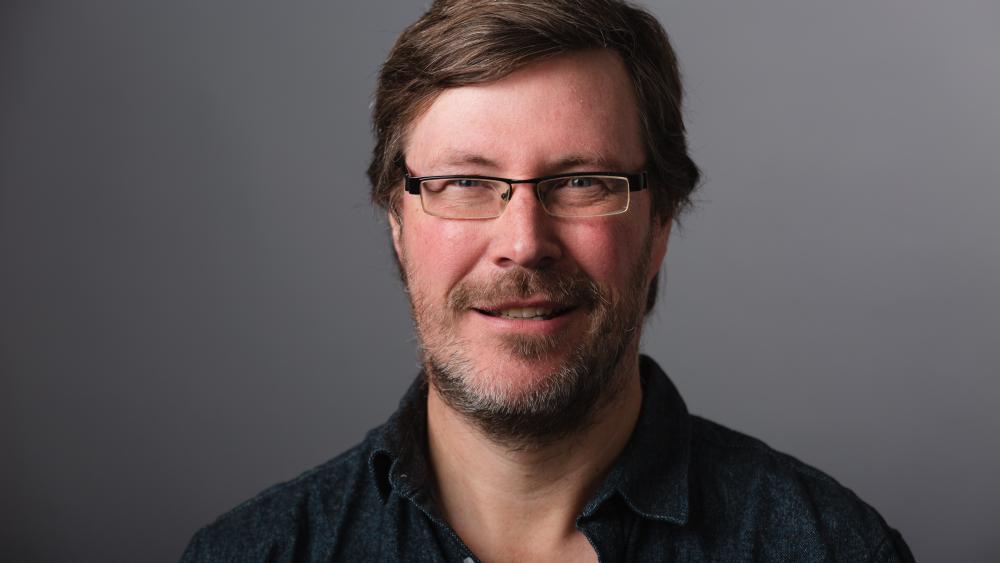
Professor Simon Buckingham Shum is a leading academic in Learning Informatics at the University of Technology Sydney (UTS), serving as inaugural Director of the Connected Intelligence Centre since 2014. His work bridges Human-Computer Interaction, Educational Technology, and Learning Analytics to develop AI-driven tools like OnTask that enhance student belonging through personalized feedback. Key research areas: Human-Computer Interaction, Learning Analytics, AI in Education, Collective Intelligence Recent work focuses: LLM-augmented qualitative analysis, Belonging Analytics frameworks, and ethical AI implementation in education CIC received the 2024 Vice-Chancellor’s Student Experience Award for scaling OnTask across multiple faculties. His contributions span over 30 years, including founding roles at The Open University’s Knowledge Media Institute and innovations in Open Educational Resources (OER), SocialLearn, and FutureLearn platforms. Notable awards: 2024 Student Experience Award (OnTask), Fellow of the Royal Society of Arts (RSA), DEFI STRI Researcher at University of Cambridge Education: B.Sc. in Psychology (York), M.Sc. in Ergonomics (UCL), PhD in Human-Computer Interaction (York) He leads multidisciplinary collaborations with teams across Business, Law, and Education faculties, pioneering tools like Theme Explorer and Qreframer bot. His recent focus on the "metacrisis" reframes educational technology’s role in addressing global systemic challenges through transdisciplinary approaches.
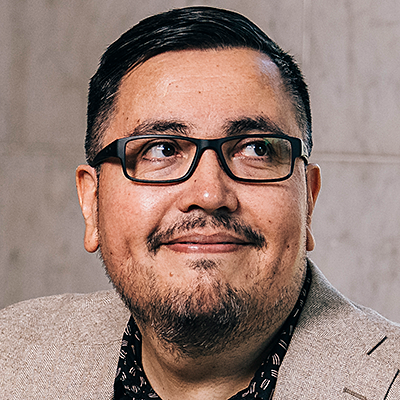
Andres Lucero is Associate Professor of Interaction Design at Aalto University's Department of Art and Media, specializing in human-computer interaction for mobile devices and interactive surfaces. His research integrates human-computer interaction, design methodologies, and playful interfaces. He holds a PhD from Eindhoven University of Technology and has industry experience from Nokia, where he led user-centered design projects as Senior Researcher. Research explores tangible interfaces, social wearables, museum experience design, human-AI collaboration, and cross-cultural co-design approaches. Recent projects investigate conversational agents in design processes, persona generation workflows, and freeform interactive devices. Dr. Lucero received the Honourable Mention Award at MUM 2020 for innovative interaction research. His work advances design methods through first-person perspectives, AI integration, and novel interaction paradigms.
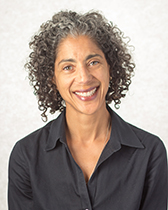
Mary Pattillo serves as the Harold Washington Professor of Sociology and Chair of the Department of Black Studies at Northwestern University's Weinberg College of Arts and Sciences, with additional affiliation at the Institute for Policy Research. Her work centers on Chicago's urban landscape as a critical site for examining systemic racism and inequality. Her academic foundation includes a PhD in Sociology from the University of Chicago (1997) and a BA in Urban Studies from Columbia University (1991), establishing her expertise in urban analysis and racial dynamics. Pattillo's research agenda prioritizes race and ethnicity, urban sociology, and inequality through the lens of Black communities, with particular focus on housing, criminal legal systems, and the Black middle class. Her ethnographic approach reveals how spatial dynamics shape life outcomes, as demonstrated in her influential books Black Picket Fences (1999) and Black on the Block (2007), which introduced the pivotal "middlemen/middlewomen" framework for understanding professional Black roles in mediating inequality. Current work advances the "Black Advantage Vision" paradigm to reframe racial inequality research. Her publication trajectory shows deepening engagement with structural racism across multiple domains: from early neighborhood ethnographies to contemporary analyses of monetary sanctions and placemaking. This evolution reflects an interdisciplinary expansion into criminology, policy studies, and cultural sociology while maintaining core commitments to urban inequality and Black community resilience. Major recognitions include: Election to the American Academy of Arts and Sciences (2020) Robert E. Park Award for Best Book (2008) Oliver Cromwell Cox Best Book Award (2000) Fulbright Scholar designation (2019-2020) Weinberg College Community Building Award (2018) Outstanding Academic Book Award (2000) Pattillo actively mentors students through courses like Urban Ethnography and Sociology of Housing while leading significant research initiatives on school choice and criminal legal sanctions. Her community impact extends through board service at the W.T. Grant Foundation and Chicago Appleseed Center, plus founding Urban Prep Academies. Current projects examining Black safety in Chicago demonstrate her sustained commitment to community-engaged scholarship addressing urgent urban challenges.
Christian Grönroos is Professor of Marketing at Hanken School of Economics, recognized among the top marketing researchers globally. His pioneering work established service marketing theory and the service logic paradigm. Research focuses on value co-creation frameworks, relationship marketing evolution, and service-driven business model innovation. Publications have transformed understanding of customer management and service productivity. Awards include the Don Schultz Award (2025) and AMS-Parasuraman Best Paper Award. Recent work examines service-informed marketing reform and employee alignment in brand promise co-creation.
Jacqueline Vayntrub is an Associate Professor of Hebrew Bible at Yale University's Yale Divinity School (YDS). Her expertise spans the Hebrew Bible, wisdom literature, biblical poetry, philology, and the reception history of biblical scholarship. She holds a PhD in Near Eastern Languages and Civilizations from the University of Chicago (2015), along with earlier degrees from UCLA and Hebrew University. Dr. Vayntrub’s research examines biblical genres within ancient Near Eastern literary contexts, focusing on how textual values evolve through transmission and reception. Her first monograph, Beyond Orality: Biblical Poetry on its Own Terms (Routledge, 2019), critiques scholarly assumptions about biblical poetry’s oral origins. Her current projects include Reframing Biblical Poetry (Yale U.P.) and Seeking Eternity , exploring transmission and mortality in biblical texts. She directs the international Renewed Philology working group and chairs SBL units in Hebrew Bible and philology. Vayntrub has published widely in journals like Harvard Theological Review and Catholic Bible Quarterly , and her work has been reviewed at prestigious institutions including Yale and NYU. She received a 2019-20 Katz Center fellowship for her Seeking Eternity project. Her academic service includes organizing conferences at Yale, Harvard, and Princeton, and editorial roles for Studies in Cultural Contexts of the Bible . Her teaching and scholarship emphasize critical engagement with ancient texts and their enduring cultural impact.
Professor Phil Clark is a Professor of International Politics at SOAS University of London, specializing in conflict and post-conflict issues with a focus on transitional justice, peacebuilding, and reconciliation after mass atrocity in Rwanda, Uganda, the Democratic Republic of Congo, and Burundi. He holds a DPhil in Politics from the University of Oxford, where he studied as a Rhodes Scholar, and a Bachelor of International Studies from Flinders University. His research focuses on international, national, and community-based responses to mass violence in Central Africa, particularly examining the gacaca community courts in post-genocide Rwanda and the International Criminal Court (ICC). Professor Clark has advised multiple governments (Danish, Sudanese, Swedish, Ugandan, and UK), international organizations (ICC, International Criminal Tribunal for Rwanda), and NGOs (Human Rights Watch, Crisis Group) on conflict issues in Africa. Professor Clark's work spans several key areas including the History, Politics and Law of the African Great Lakes; Transitional Justice Theory and Practice; the Politics of Violence; Community-Based and Customary Law; Conflict Resolution and Reconciliation; the Politics of International Criminal Justice; Peacebuilding, Security and Post-Conflict Reconstruction; and Moral and Political Philosophy. His approach often combines theoretical analysis with practical fieldwork in post-conflict societies. His publications reveal a consistent focus on the tension between international legal frameworks and local justice mechanisms, particularly examining how post-genocide societies navigate complex reconciliation processes. Over time, his work has evolved from documenting specific cases (like the gacaca courts) to analyzing broader patterns of transitional justice and international criminal law across the African continent. Shortlisted for the Raphael Lemkin Award for best book on genocide and mass violence (for "Distant Justice: The Impact of the International Criminal Court on African Politics") Regular contributor to major media outlets including The New York Times, Foreign Affairs, Washington Post, The Guardian, and BBC Frequent media commentator on international news networks including BBC, France 24, Al Jazeera, CNN, and Deutsche Welle Professor Clark has supervised multiple PhD students working on topics related to conflict analysis, women's access to transitional justice, China-Africa relations, and conflict transformation. His current research includes "Intergenerational Justice in Eastern Africa" and "Reframing Justice after Atrocity," which examines justice interactions beyond the linear international-to-national transmission of norms and practices. He has led significant research projects, including serving as technical advisor and co-author of a 2007 UN Office of the High Commissioner for Human Rights project surveying popular perceptions of transitional justice and peacebuilding in northern Uganda. His ongoing work continues to shape academic and policy discussions about justice mechanisms in post-conflict societies.
Molly Greene is a Professor of History and Hellenic Studies at Princeton University. Her work focuses on the Ottoman Empire and the Mediterranean world, with expertise in early modern Christian-Muslim interactions, maritime history, and colonial dynamics. She served on the Executive Committee of the Program in Hellenic Studies from 2011 to 2022. Her research bridges Ottoman administrative systems, ethnic communities, and religious coexistence. Affiliations: Princeton University (current), Center for Hellenic Studies (past committee role) Her research explores themes such as Ottoman governance mechanisms, the role of piracy in Mediterranean trade, and socio-economic relationships between Christian and Muslim populations. Recent work emphasizes the agency of non-state actors and marginalized groups in shaping imperial structures. Greene’s publications include seminal works like A Shared World (2002) and Catholic Pirates and Greek Merchants (2010), which reframe understandings of religious and economic networks in early modern Europe. She has also published in Greek, reflecting her deep engagement with Hellenic cultural history. Teaching: Courses on the Mediterranean’s historical trajectory, Ottoman Empire studies, and early modern global connections. She advises students on topics spanning Ottoman social history, Mediterranean maritime networks, and interfaith historiography. Her research has been supported by grants from the National Endowment for the Humanities and the Andrew W. Mellon Foundation. Greene’s interdisciplinary approach integrates archival research from multiple languages and regions, emphasizing the Mediterranean as a cohesive yet diverse space. She is a leading voice in redefining narratives of early modern empire and cross-cultural interaction.
Kees Dorst is a Professor of Transdisciplinary Innovation at the TD School of the University of Technology Sydney. He bridges philosophical understandings of design with practical applications, focusing on tackling complex societal challenges through designerly thinking. His research develops methodologies for strategic transformation and networked problem-solving in public sectors. Professor of Transdisciplinary Innovation, UTS Director, Designing Out Crime Research Centre International keynote speaker and advisor on design thinking Research Interests Dorst specializes in: Transdisciplinary innovation for societal challenges Design thinking and co-evolutionary processes Reframing complex problems in public policy Design cognition and metacognition Urban environment design for safety Recent Research Trends show increasing focus on: Hypercomplex problem-solving frameworks Strategic transformation through design Cognitive models in design processes Public sector innovation methodologies Teaching & Leadership includes: Bachelor of Creative Intelligence and Innovation Master of Creative Intelligence and Strategic Innovation Founding the Designing Out Crime Research Centre International design research symposium leadership
Ian Campbell is an Associate Professor in the Department of History at the University of California, Davis. He holds a Ph.D. (2011) and B.A. (2005) in History from the University of Michigan, followed by a postdoctoral fellowship at Harvard University's Davis Center for Russian and Eurasian Studies. His research focuses on pre-Revolutionary Russia, particularly the dynamics between non-Russian territories and imperial governance. Campbell’s work emphasizes colonialism, military history, and environmental transformations in the Russian Empire. His first book, Knowledge and the Ends of Empire , explores tsarist policies toward the Kazakh steppe, analyzing bureaucratic knowledge systems and local intermediaries. Current projects include The Bleeding Edges , studying counterinsurgency across Russian borderlands, and Sowing Russianness? , reframing Kazakhstan through settler colonialism frameworks. His research has been supported by prestigious grants such as the Fulbright-Hays Doctoral Dissertation Award and the American Councils Title VIII Fellowship. Campbell teaches courses on European history, Russian history, and military history at both undergraduate and graduate levels. His publications span journals like The Russian Review and Ab Imperio , with a focus on violence, colonialism, and environmental adaptation in imperial contexts. Awards include the Fondiler Dissertation Prize for outstanding doctoral work (2011).
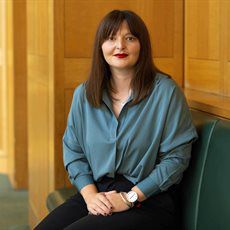
Louise Reardon is Professor of Governance and Public Policy at the University of Birmingham's School of Government, Department of Public Administration and Policy. She serves as School Deputy Director of Research (Impact) and is Thematic Research Lead for Transport at UK Parliament. Her internationally recognized expertise spans transport policy and governance, with research focusing on institutional collaboration across scales to advance local transport goals, technological innovation, and sustainability. Louise earned her PhD in Political Science from the University of Sheffield (2014), MA in Governance and Public Policy from the University of Sheffield (2009), and BA (hons) in Philosophy, Politics and Economics from the University of Durham (2008). She holds a Post-Graduate Certificate in Higher Education (2018) and is a Senior Fellow of the Higher Education Academy (2020). Her research interests center on transport policy and governance, with specific focus on multilevel governance, agenda setting, policy implementation, smart mobility transitions, urban governance, and wellbeing. As a political scientist, she advances theoretical understanding of policy processes through transport analysis, examining how local dynamics influence issue recognition, agenda setting, policy change, and approaches to wicked problems. Her work consistently bridges academic theory with practical policy application. Louise's research portfolio demonstrates a clear trajectory toward increasingly complex, interdisciplinary climate-related transport research. Her recent publications show strong emphasis on net-zero transitions, smart city governance, and pandemic recovery implications for transport systems, with growing international collaboration particularly with Indian and Australian institutions. The trend indicates deepening engagement with practical policy implementation challenges alongside theoretical contributions. Senior Fellow of the Higher Education Academy, 2020 Louise regularly provides scientific advice to diverse stakeholders and serves on the UK Department for Transport's Transport Research Innovation Grant advisory board. She co-edited the Handbook of Transportation and Public Policy (2025) and previously co-chaired the Governance and Decision-Making Processes Special Interest Group for the World Conference on Transport Research Society. She serves on editorial boards for Research in Transportation Business & Management and Local Government Studies. As an educator, Louise led the College of Social Science's first Degree Apprenticeship programme and specializes in blended teaching approaches. She has supervised PhD students on evidence use in local policymaking, center-local government relations, and walking's role in climate change agendas. She actively seeks new doctoral students interested in multi-level governance, policy change, sustainable transitions, and urban governance topics.
Neda Maghbouleh serves as Associate Professor of Sociology at the University of Toronto Mississauga (UTM), holding a cross-appointment to the graduate department at St. George campus. She holds the prestigious Canada Research Chair in Migration, Race, and Identity and received the Ontario Early Researcher Award. As Principal Investigator of the RISE (Refugee Integration, Stress, and Equity) Team, she leads a major SSHRC Insight Grant (2018-2023) examining refugee settlement experiences in Canada. Her research critically investigates racialization processes among Middle Eastern, North African, and South Asian populations in North America, challenging the Black-White racial binary. She specializes in refugee integration dynamics, Iranian diaspora identity formation, and gendered migration experiences. Her methodological approach combines critical race theory with feminist and qualitative frameworks, particularly in refugee motherhood studies and digital activism among Muslim-American youth. Analysis of her publications reveals evolving thematic focus from Iranian-American identity politics (2009-2017) to contemporary refugee integration challenges. Her work consistently examines how structural inequalities manifest in everyday interactions, with increasing emphasis on Syrian refugee experiences in Canada since 2018. Key contributions include reframing MENA racial categorization and developing trauma-informed frameworks for refugee settlement. Her scientific recognition includes: Canada Research Chair in Migration, Race, and Identity Ontario Early Researcher Award Through the RISE Team, Maghbouleh directs community-engaged research on refugee health equity, collaborating with scholars like Melissa Milkie and Ito Peng. Her SSHRC grant supports interdisciplinary investigation of Syrian mothers' settlement stressors and resilience factors, informing Canadian integration policies. Current projects emphasize participatory methodologies that center refugee voices in knowledge production. She leads the RISE research collective, an interdisciplinary team developing evidence-based interventions for refugee health equity through mixed-methods investigation of settlement challenges and community support systems.
Tae Eun Kim is an Associate Professor in Maritime Safety Management at UiT The Arctic University of Norway, working within the Department of Technology and Security. Her research, teaching, and industrial collaboration focus on maritime safety and human factors, with particular expertise in maritime safety management, accident analysis, Maritime Autonomous Surface Ships (MASS), and human factors in maritime operations. Dr. Kim's research spans four interconnected domains: maritime safety management and leadership, maritime accident and casualty analysis, Maritime Autonomous Surface Ships (MASS), and human factors in maritime operations. She has developed assessment instruments like the Safety Leadership Self-Efficacy Scale (SLSES) and conducted STAMP-based causal analyses of maritime accidents. Her work on MASS addresses safety challenges in mixed navigational environments and examines leadership competencies for autonomous shipping operations. Her human factors research explores how technological advancements impact navigators' performance, crew dynamics, and safety outcomes, including gender parity issues in the maritime industry. Dr. Kim's publication record reveals a strong focus on the intersection of maritime safety, technology, and human performance. Her recent work increasingly addresses autonomous shipping technologies, with numerous publications on AI decision transparency, learning analytics in maritime simulator training, and multi-modal data analysis for nautical skill development. She has conducted systematic reviews on simulator training approaches and scenario design, contributing significantly to methodology development in maritime education and training. Her research demonstrates a clear trajectory toward integrating emerging technologies with traditional maritime safety practices as the industry transitions toward greater automation. Dr. Kim is actively involved in several significant research projects, including the i-MASTER EU Horizon Europe Research and Innovation Project, the REFRAME project, and the SPRICE project (Multidisciplinary approach for spray icing modelling). She is a member of both the Advanced Maritime Ship Operations research group and the Maritime Safety Science (MARSCI) Research Group, demonstrating her commitment to collaborative research in maritime safety science. Dr. Kim teaches several specialized courses at UiT, including SVF-3206 Safety Management and Accident Investigation, TEK-3014 Navigation Technology, MFA-2100 Maritime Digitalization, MFA-8010 Maritime HTO (Human-Technology-Organisation) and Innovation, and MFA-2018 Maritime Administration and Leadership. Her teaching portfolio reflects the interdisciplinary nature of her expertise, bridging engineering, safety science, and organizational behavior in maritime contexts.
Radhika Govindrajan is an Associate Professor in the Department of Anthropology and Director of the South Asia Center at the University of Washington's Henry M. Jackson School of International Studies. A cultural anthropologist, her work spans multispecies ethnography, environmental anthropology, political anthropology, and South Asian studies. Education: Ph.D., Anthropology, Yale University (2013) M.A., Modern History, Jawaharlal Nehru University (2006) B.A., History, Delhi University Her research investigates how human relationships with nonhumans in South Asia intersect with religious nationalism, gender politics, conservation efforts, and caste dynamics. Current projects examine democratic politics through more-than-human sociality, rural subjectivity through scandals, and electoral practices in Himalayan communities. Scientific recognition includes: 2017 AIIS Edward Cameron Dimock Prize 2019 Gregory Bateson Prize 2021 Diana Forsythe Prize Honorable Mention 2020 Green Lit Fest Honour 2016 General Anthropology Division Award 2016 Anthropology and Environment Society Junior Scholar Award ACL and Fulbright fellowships for field research She teaches courses on animal studies, ethnography, and South Asian agrarian and religious transformations. Her 2018 book Animal Intimacies challenges human exceptionalism in Himalayan ethnography.
Prof. Dr. Julia Nentwich is an Assistant Professor of Organizational Psychology at the University of St. Gallen (HSG), affiliated with the OPSY-HSG department. Her work focuses on gender dynamics in organizations, qualitative research methods, and discursive psychology. She co-leads the non-tenured faculty group and teaches courses on organizational psychology, gender, and diversity. Nentwich's research explores gender practices in management, resistance to organizational change, and inclusive leadership strategies. She has held visiting researcher positions at the Norwich Business School (UK) and serves on editorial boards for journals like Gender: Zeitschrift für Kultur und Gesellschaft and Gender in Management . Her academic contributions emphasize empirical studies of gender socialization in early childhood education, workplace inclusion initiatives, and the intersection of gender with professional roles. Notable projects include Leaders for Equality and Gender in the nursery , which investigate gender norms in childcare and corporate environments. Nentwich has received the Summa Cum Laude award for her doctoral thesis from the University of Tübingen and actively reviews for leading journals in organizational and gender studies. Teaching activities span undergraduate and graduate levels, covering topics like climate change psychology, gender identity, and qualitative research design. She coordinates HSG's Gender Studies program and collaborates with international research networks such as EGOS Standing Working Group Gender and Diversity. Nentwich's recent work addresses male advocacy in gender equality, resistance to diversity policies, and the discursive construction of leadership roles.