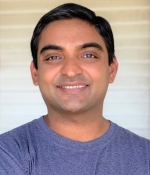
Ning Shen is a researcher in computer science with a focus on security and testing methodologies. Their work spans access control policies, database encryption, and automated testing techniques. Research Interests: XACML policy testing and analysis Order-preserving encryption for databases Automated and mutation testing Formal verification of security protocols
Dr. Marten van Dijk is a Full Professor in the Computer Security department at Vrije Universiteit Amsterdam (VU) since 2022 and a Group Leader for Computer Security at CWI since 2020. He also holds a Gratis Full Research Professor position at the University of Connecticut's ECE Department since 2020. Previously, he served as Associate and Full Professor at the University of Connecticut and held research roles at MIT CSAIL, RSA Laboratories, and Philips Research. PhD in Mathematics (1997, Eindhoven University of Technology) M.S. in Mathematics (Cum Laude, 1993) M.S. in Computer Science (Cum Laude, 1991) His research focuses on foundational computer security problems using cryptographic principles, including secure processor design, oblivious computation, and privacy-preserving machine learning. Notable contributions span Physical Unclonable Functions (PUFs), Aegis secure processor architecture, and oblivious RAM protocols. 15+ publications in 2023-2025 address topics like PUF cryptanalysis, differential privacy in federated learning, and Byzantine fault tolerance Key journals: IEEE Transactions on Computers, Journal of Cryptology, ACM CCS Conference Award highlights include: IEEE Fellow (2022) for secure processor design and encrypted computation IEEE Technical Achievement Award (2023) Intel Test of Time Award (2022) ACM CCS Best Paper (2013) A. Richard Newton Technical Impact Award (2015) His technical leadership spans hardware security (blu-ray error correction codes), cryptographic protocol design, and machine learning privacy frameworks. Current projects focus on secure processors with hardware-enforced isolation and differential privacy optimization.
Audrey Lumley-Sapanski is an Assistant Professor of Geography in the Department of Geography at Colorado Mesa University (CMU), where she teaches human geography, world regional geography, GIS for social scientists, and introduction to cartography. She joined CMU in August 2023 after conducting research at the University of Nottingham’s Rights Lab, focusing on human trafficking, migration governance, and migrant vulnerabilities. Her educational background includes a PhD in Geography from The Pennsylvania State University, an MS in Masters of Science for Teachers from Pace University, and a BA in American Studies from Williams College. She was also a New York City Teaching Fellow in Social Studies, which led to high school teaching experience in social studies, economics, and governance, including leading student study abroad programs to Mexico and South Africa. Lumley-Sapanski’s research centers on the intersection of migration, governance, and human rights, particularly how policies and securitization affect migrant safety and integration. Her work explores 'points of inflection' in migratory journeys where exploitation risks increase, and how differential rights allocation based on migratory status leads to marginalization. Her research is both academic and policy-oriented, funded by organizations such as the International Organization for Migration, the International Labour Organization, and the UK’s Research Innovation fund. Her recent publications span journals like Political Geography , Journal of Ethnic and Migration Studies , and Geoforum , as well as policy briefings for the UN and NGOs. The articles reflect consistent themes in migration policy, human trafficking during crises (e.g., the pandemic), and the spatial and institutional factors shaping refugee outcomes. Her work often employs qualitative and spatial analysis methods, with regional focus on the Central Mediterranean Route, the UK, Sudan, and the US. International Organization for Migration (IOM) International Labour Organization (ILO) Modern Slavery Policy and Evaluation Centre UK Research Innovation fund Lumley-Sapanski has collaborated extensively with policymakers and practitioners, contributing submissions to United Nations human rights bodies and co-authoring policy evaluations such as the Homes for Ukraine hosting scheme. While no formal advisees are listed, she has mentored students through field programs and taught graduate-level methods courses in Italy, the UK, and the US. She is actively involved in bridging academic research with real-world policy solutions, particularly in the areas of refugee integration, housing, and anti-trafficking initiatives. She is affiliated with interdisciplinary research networks focused on human rights and migration, including the Rights Lab at the University of Nottingham. Her future work is likely to expand on the geographies of forced displacement, the role of community hosting in refugee integration, and the evolving impacts of global crises on modern slavery.
Santosh Chandrasekhar serves as an Assistant Teaching Professor in the Department of Electrical Engineering and Computer Science at the University of California, Merced, within the School of Engineering. His academic position focuses on teaching excellence and curriculum development in computer science education. Dr. Chandrasekhar's research interests include: Development of effective teaching strategies for undergraduate computer science courses Development of a security education program for undergraduate students His scholarly work demonstrates significant contributions to computer security education and cryptographic research. His publications span from 2007 to 2017, showing a clear progression from fundamental cryptographic techniques to applied security solutions in modern computing environments. His research exhibits consistent focus on developing efficient, scalable security protocols that balance robust protection with practical implementation considerations. Dr. Chandrasekhar's publication record reveals expertise in trapdoor hash functions, proxy signatures, cloud security frameworks, and authentication protocols. His work addresses security challenges across multiple domains including cloud computing, ubiquitous computing environments, and mobile ad hoc networks, demonstrating both theoretical depth and practical application. As a teaching professor, he is deeply involved in undergraduate instruction and curriculum development, with particular emphasis on integrating security concepts throughout the computer science program at UC Merced.
Michael Plexousakis is an Assistant Professor in the Department of Mathematics & Applied Mathematics at the University of Crete. He received his PhD from the University of Tennessee, Knoxville and joined the University of Crete in 2010. He maintains research affiliations with the Institute of Applied and Computational Mathematics at the Foundation for Research and Technology, Hellas (FO.R.T.H.) and the Archimedes Center for Modeling, Analysis and Computations (ACMAC). His research focuses on: Numerical solution of partial differential equations with finite element and finite volume methods A posteriori error estimation and adaptivity Singular solutions of evolution equations Scientific computing and visualization Dr. Plexousakis has secured significant research funding including the SYNERGASIA program (2011-2013) studying extreme weather phenomena, the THALIS program (2012-2014) on optimal management of economic and environmental systems, and research on seismic protection of existing buildings. His teaching portfolio spans computational mathematics with courses including: Computer Programming II Design and Analysis of Algorithms Numerical Algorithms Numerical Analysis Numerical Solution of PDEs Mathematical Biology He has co-authored two textbooks: "Numerical Analysis" (2023) for postgraduate studies and "Numerical Solution of Partial Differential Equations" (2015) for undergraduate students, both published through Kallipos, Open Academic Editions. Dr. Plexousakis's publication record demonstrates expertise across multiple domains of computational mathematics, with particular emphasis on numerical methods for Helmholtz equations, Schrödinger equations, and parabolic equations. His work bridges theoretical numerical analysis with practical applications in atmospheric science, quantum mechanics, and materials science, showing consistent contributions to high-impact journals in applied mathematics.
Maciej Woźniak serves as a university professor at the Institute of Computer Science within the Faculty of Computer Science at AGH University of Science and Technology in Kraków, actively contributing to research and teaching staff while participating in the Computer Science Discipline Council and College of the Faculty. His office is located at D-17, ul. Kawiory 21, III, 4.58, with primary contact via macwozni@agh.edu.pl. His research spans computational mathematics and high-performance computing, specializing in parallel algorithms for numerical simulations including isogeometric analysis, finite element methods, and multi-frontal solvers. Key applications address environmental challenges like hail suppression and urban smog reduction, alongside biomedical modeling of tumor growth and airborne pathogen dispersion. Methodological innovations focus on GPU acceleration, shared-memory architectures, and efficient integration techniques for partial differential equations. Analysis of his 2019-2024 publications reveals consistent advancement in parallel computational frameworks for environmental and biomedical applications, demonstrating interdisciplinary impact through experimental validation of hail cannons, smog reduction technologies, and pathogen dispersion modeling during the COVID-19 pandemic. His work bridges theoretical algorithm development with real-world problem solving across physics, engineering, and life sciences. Scientific Awards: No specific awards were documented in the provided sources. Student advising, research grants, laboratory affiliations, and educational background details beyond his PhD, DSc, and Eng. titles remain unspecified in the available materials, though his extensive publication record suggests active mentorship and collaborative research leadership.
Dr. Tseng Yi-Fan is an Assistant Professor in the Department of Management Information Systems at National Chengchi University (NCCU), Taiwan. He holds a Ph.D. in Computer Science from National Sun Yat-sen University (2014-2018) and has been with NCCU since February 2020. His research focuses on advanced cryptography and information security. Research Interests: Dr. Tseng specializes in post-quantum cryptography, cloud security frameworks, and encrypted data systems. His core innovations include: Quantum-resistant encryption schemes (lattice/isogeny-based) Secure data sharing in cloud/IIoT environments Identity-based cryptographic systems Efficient searchable encryption protocols Blockchain security applications Publication Trends: His 15 most recent articles demonstrate concentrated work in quantum-resistant cryptosystems (7 papers), enhanced encryption for cloud/IoT (6 papers), and advanced searchable encryption (5 papers), with consistent focus on practical cryptographic efficiency. Awards: Academic Research Excellence Award, NCCU (2022) Research Projects: Principal Investigator for NSTC grants including: Post-quantum blockchain security mechanisms (2024-2025) Cryptography for consortium blockchains (2022-2023) Co-investigator for multi-year FinTech security projects (2021-2025) focusing on digital currencies and privacy technologies. Lab Affiliations: Contributes to NCCU's Software Security Lab and IT Innovation Lab, focusing on cryptographic protocol design and security analysis for emerging technologies.
Amanda Mason-Jones is a Senior Lecturer (Associate Professor) in Global Public Health at the School of Health Sciences, University of York. She serves as Programme Director for the MPH program (2012-2024), Module Leader for Global Public Health (2012-2024), and has held various committee roles including the Research Governance Committee (2014-2020) and Dissertation Development Committee (2012-2021). She also holds honorary positions as Senior Lecturer at the Adolescent Health Research Unit, University of Cape Town, and Extraordinary Senior Lecturer at the Division of Community Health, University of Stellenbosch, South Africa. PhD in Public Health and Injury Epidemiology - University of Nottingham MSc in Health Services Research - Trent Institute for Health Services Research Master in Public Health (MPH) - University of Nottingham Postgraduate Certificate in Academic Practice (PGCAP) - University of Nottingham BA (Hons) in Sociology and Psychology - University of Lancaster Registered General Nurse (RGN) - University of Nottingham Registered Health Visitor (RHV) - Nottingham Trent University Amanda is a mixed methods researcher and medical statistician with expertise spanning sexual and reproductive health, injury prevention, safety promotion, and intimate partner violence prevention. Her work focuses on reproductive justice, examining how interventions on reproductive and maternal health intersect with environmental justice concerns. She has conducted significant research on school-based programs to reduce HIV, STIs and pregnancy among adolescents, and has investigated reproductive health issues for young people 'on the move' and interventions for improving wellbeing through early years interventions. Her research often employs social-ecological approaches to understand health issues within their broader context. Analysis of her recent publications reveals a strong focus on adolescent sexual and reproductive health, with particular attention to health equity and justice frameworks. Her work spans global contexts, with significant research conducted in South Africa, India, Saudi Arabia, and Uganda. She frequently employs mixed methods approaches, combining quantitative epidemiological methods with qualitative insights to provide comprehensive understanding of complex health issues. Recent work shows increasing attention to methodological innovation, including participatory approaches with young people and the use of sonification to communicate health risks. Amanda actively supervises PhD students and leads a research group for graduate students, PhDs, postdocs, and early career researchers. Her current supervisees include Mashael Hobani (Gestational Diabetes in Saudi Arabia), Jenny Loggie (Public health approaches to the prevention of child sexual exploitation), Xola Potelwa (HPV vaccination uptake), Luis Beltran (adolescent pregnancy in Mexico), and Dr. Aisha Akeel (global empowerment frameworks). She also serves on the NICE Public Health Advisory Committee for Condom Distribution Schemes and is an Associate Editor for BMC International Health and Human Rights. Amanda leads the SCORe Project (using Sonification to COmmunicate health Risk data) and has been involved in significant research projects including the NIHR PHR-funded study on enhancing social-emotional health in early years and the HEIF-funded project exploring young people's vulnerability and resilience. Her research group, Public Health and Society, provides a collaborative space for interdisciplinary work on pressing public health issues.
Professor Simon Mortimer is a distinguished academic at the University of Reading's School of Agriculture, Policy and Development, where he conducts research at the intersection of agricultural science, ecology, and sustainable land management. His work spans multiple institutional collaborations including English Nature and the Sussex Downs Conservation Board, with significant contributions to European research initiatives. Professor Mortimer's research focuses on understanding how agricultural practices affect soil health, biodiversity, and ecosystem services. His work examines crop rotation systems, grassland restoration, soil carbon dynamics, and the development of effective agri-environment schemes. He takes a holistic approach that connects soil science with plant ecology, agricultural economics, and landscape management to address the challenges of sustainable food production. His publication record demonstrates significant contributions to understanding ecological intensification in agricultural systems, with particular expertise in soil-plant interactions and biodiversity conservation. Professor Mortimer's research bridges fundamental ecological principles with practical applications for farmers and policymakers. Professor Mortimer has made substantial contributions to agricultural policy through his work on the Agri-Environmental Footprint Index and research on sustainable intensification. His findings provide evidence for balancing agricultural productivity with environmental protection, influencing both national and European policy frameworks. Students and collaborators benefit from Professor Mortimer's interdisciplinary perspective and extensive network of research partnerships across academia, government agencies, and conservation organizations. His work provides valuable insights for those seeking to advance sustainable agricultural practices while maintaining productive farming systems.
Dr. Fatih Temiz serves as an Assistant Professor at Uskudar University, specializing in mathematical foundations of information security and coding theory. His work bridges abstract algebra with practical cryptographic applications, focusing on number-theoretic approaches to data protection. His academic journey includes: B.Sc. in Mathematics (English) from Dokuz Eylul University (2010) M.Sc. in Mathematics from Yildiz Technical University (2012) Ph.D. in Mathematics from Yildiz Technical University (2018) Research centers on algebraic structures for secure information systems, with emphasis on cellular automata applications in secret sharing and cryptographic protocol design. His investigations into cyclic codes and enumeration techniques advance error-correction methodologies for modern communication networks, demonstrating consistent focus on theoretical underpinnings of data security. His single documented publication in the Journal of Symbolic Computation (2023) reveals strong thematic alignment with algebraic coding theory, indicating specialized expertise in symbolic computation for cryptographic applications despite limited output volume. This work establishes foundational connections between finite field theory and practical code enumeration. Dr. Temiz actively supervises graduate research and serves as academic adviser for 151-200 students since 2021. He concurrently participates in institutional governance as a member of the Education Commission (Institute/Faculty level), contributing to curriculum development and academic policy since 2021.
Ronald Linn Rivest is an Institute Professor at the Massachusetts Institute of Technology (MIT), where he holds the Andrew and Erna Viterbi professorship in the Department of Electrical Engineering and Computer Science. He is a member of MIT's Computer Science and Artificial Intelligence Laboratory (CSAIL), where he is part of the Theory of Computation Group and leads the Cryptography and Information Security Group. Rivest has been at MIT since 1974, after completing a post-doctoral position at INRIA in France. His educational background includes: Niskayuna High School, Niskayuna, New York (1965) B.A. in Mathematics from Yale University (1969) Ph.D. in Computer Science from Stanford University (1973) Rivest's research spans multiple areas of computer science with a particular focus on cryptography, computer security, algorithms, and election security. He is best known for co-inventing the RSA public-key cryptosystem with Adi Shamir and Leonard Adleman in 1977, which revolutionized secure communications and is widely used in internet-based commercial transactions. His work on election security has led to innovative voting systems like the ThreeBallot scheme, designed to ensure verifiability while maintaining voter privacy. Rivest has also made significant contributions to algorithm design and analysis through his co-authorship of the influential textbook "Introduction to Algorithms," which has become a standard reference in computer science education. An analysis of Rivest's recent publications reveals a continued focus on election security and voting systems, with numerous papers on risk-limiting audits, ballot design, and verification methods. His work has expanded into related areas including pandemic response technology (particularly contact tracing systems during the COVID-19 pandemic), climate change mitigation, and privacy-preserving technologies. The interdisciplinary nature of his research bridges computer science with political science, public policy, and environmental science. Rivest has received numerous prestigious awards throughout his career: ACM Turing Award (2002) - considered the "Nobel Prize of Computing" Marconi Prize (2007) Member of both the National Academy of Engineering (1990) and National Academy of Sciences (2004) Fellow of the ACM (1993) and American Academy of Arts and Sciences (1993) IEEE Koji Kobayashi Computers and Communications Award (2000) NEC C&C Prize (2009) Named an Institute Professor at MIT (2015) - the highest faculty honor at MIT Rivest has been actively involved in advising government bodies on election security and technology policy. He has testified before congressional committees and served on the National Academies of Sciences, Engineering, and Medicine committee that produced the report "Securing the Vote: Protecting American Democracy." His work with the Encryption Working Group has influenced national discussions on encryption policy. Rivest has also co-founded companies including RSA Data Security, demonstrating his ability to translate theoretical work into practical applications. His research has been supported by various grants from government agencies and private foundations focused on cybersecurity, election integrity, and privacy-enhancing technologies. At MIT, Rivest leads the Cryptography and Information Security Group within CSAIL, which conducts cutting-edge research in cryptographic protocols, secure systems design, election security, and privacy-preserving technologies. The group collaborates with policymakers, election officials, and other researchers to develop practical solutions for real-world security challenges. Rivest's team has been particularly active in developing and testing risk-limiting audit methods for election verification and creating secure, verifiable voting systems that maintain voter privacy.
Prof. Peter Agyei-Baffour is a Professor and current Chair of the Department of Occupational and Environmental Health and Safety at the School of Public Health, College of Health Sciences, Kwame Nkrumah University of Science and Technology (KNUST), Kumasi, Ghana. Previously, he served as Foundation Chair of the Department of Health Policy, Management and Economics and was instrumental in establishing KNUST's School of Public Health. With over 25 years of academic experience since joining KNUST in 1999, he holds leadership roles in health systems research and policy development across Africa. His educational background includes a PhD in Community Health (Health Systems Financing and Policy) from the University of Copenhagen's DBL-Institute of Human Research and Development under supervision of Prof. Pascal Magnussen and Prof. Kristian Schultz of Aarhus University. Funded by DANIDA, he completed a Postgraduate Diploma in Health Systems Research Methodology and a postdoctoral program in Global Environmental Occupational Health at the University of Michigan in 2011. Prof. Agyei-Baffour's research spans Health Systems Policy, Health Financing, Environmental & Occupational Health Safety (GEOHealth), and Non-Communicable Diseases. His work emphasizes evidence-based policy formulation, resource mobilization in informal sectors, and strengthening health systems in low-resource settings through innovative financing mechanisms and technology integration. His 100+ publications reveal consistent focus on healthcare financing mechanisms, telemedicine implementation, and health equity. Recent work analyzes private insurance schemes, non-communicable disease management in primary care, and maternal health policy impacts - demonstrating how context-specific interventions can advance Universal Health Coverage in African health systems. He has mentored 12+ PhD students and 200+ postgraduates while serving as external examiner for multiple Ghanaian universities. Major grants include DANIDA-funded malaria research (1999-2003), EU-supported RODAM study on diabetes among African migrants (2011-2014), and German-funded capacity building initiatives that launched KNUST's MPhil/MPH programs in 2017. Prof. Agyei-Baffour leads international collaborations including the Partner I program on artisanal mining health impacts with Canadian/Michigan teams and contributes to Ghana's health policy framework through work on the Mental Health Bill and National Health Insurance Scheme reforms.
Alessandro Checco is an Assistant Professor in the Computer Science Department at University of Rome La Sapienza. His research focuses on crowdsourcing, distributed systems, and privacy-preserving technologies, bridging theoretical computer science with practical applications that consider human factors in technological systems. He has established himself as a significant contributor to the field of human computation and privacy-aware systems. His educational background includes: 2020: Fellowship of Higher Education from The University of Sheffield, Higher Education Academy 2015: Ph.D. in Mathematics from Hamilton Institute (Design of decentralised algorithms applied to channel/code selection and convex optimisation for throughput fairness of 802.11 networks) 2010: M.Sc. in Mathematical Engineering from University of Roma "Tor Vergata" (110/110 with great distinction) 2009: Erasmus Scholarship at Universiteit Gent, Department of Telecommunications 2007: B.Sc. in Mathematical Engineering from University of Roma "Tor Vergata" (110/110 with great distinction) Checco's research spans multiple areas at the intersection of computer science and social implications of technology. He is particularly interested in Crowdsourcing for Human Computation, Distributed Private Recommender Systems, Information Retrieval, Data Privacy, Distributed Systems, User Data Obfuscation in Web Systems, Societal and Economic Analysis of Online Work, Crowd Workers Unionisation, and Algorithmic Bias. His work often examines how technological systems can be designed to respect user privacy while maintaining functionality, and how crowd work can be structured to be more equitable for workers. His recent publications demonstrate a clear evolution in research focus, beginning with foundational work in wireless networks and distributed algorithms, then shifting toward human computation and privacy-preserving systems. His most recent work increasingly addresses the societal implications of crowd work, including investigations into crowd worker unionization and cooperative models. Several publications examine gender bias in algorithmic systems, reflecting growing attention to fairness and ethical considerations in his field. Among his notable achievements: All That Glitters is Gold-An Attack Scheme on Gold Questions in Crowdsourcing (Best Paper Award) Checco has secured significant research funding and led important projects including the H2020-funded FashionBrain project as Research Director and the EPSRC-funded BetterCrowd project as Research Associate. His work on the FashionBrain project demonstrates his ability to lead large-scale, interdisciplinary research initiatives. He has also received the Technology Innovation Development Award (TIDA) from Science Foundation Ireland. His research has practical applications across multiple domains including recommendation systems (BLC: Private Matrix Factorization Recommenders), peer review assistance using AI, smart farming technologies, and cooperative models for crowd workers (CrowdCO-OP). He has developed frameworks for understanding worker behavior in crowdsourcing platforms and created methods for improving quality control in human computation systems.
Al Kingston is a Senior Research Fellow at the University of St Andrews, affiliated with the School of Biology, Scottish Oceans Institute (SOI), and Sea Mammal Research Unit (SMRU). His work focuses on fisheries science and management, specializing in bycatch mitigation, risk assessment, and analyzing impacts of shifting fishing effort patterns on marine ecosystems. Kingston's research centers on bycatch management and sustainable fisheries practices, with emphasis on protected species conservation. His fingerprint analysis reveals dominant expertise in bycatch (100% research relevance) and protected species (35% focus), contributing directly to UN Sustainable Development Goals 14 (Life Below Water) and 11 (Sustainable Cities and Communities). Methodologically, he integrates field data collection, policy analysis, and international collaboration frameworks. Scientific awards: None documented in available sources. Kingston actively shapes marine conservation policy through key advisory roles including the NAMMCO Working Group on Bycatch (participant since May 2024), Clean Catch National Advisory Board (2024–present), and ICES Working Group on Bycatch of Protected Species (2013–present, with active participation 2021–2023). His work has been referenced in policy documents and cited by governmental bodies including the UK Department for Environment, Food and Rural Affairs. Based at the Sea Mammal Research Unit within the Scottish Oceans Institute, Kingston collaborates with an international network of marine scientists across Europe. His research infrastructure includes hydrophone array systems for cetacean monitoring, with datasets publicly archived in Dryad and Zenodo repositories. Current work emphasizes developing standardized bycatch monitoring protocols for endangered species conservation.
Dr James McGinlay serves as a Research Fellow at the Institute for Global Sustainable Development within the School of Cross-Faculty Studies at the University of Warwick. He joined in 2021 and currently leads research on two major projects: the ERC-funded FIDELIO project (€1.5 million, 2019-2024) examining public support for biodiversity conservation policies in Europe, and the ESRC-funded ESCALATE project (€200,000) investigating UK flood defence perceptions. Dr McGinlay holds qualifications from the University of Oxford and University of Nottingham, preceded by over a decade of professional experience in environmental assessment across public, private, and academic sectors. His career includes research roles at the Open University, Cranfield University, Anglia Ruskin University, and the University of Cambridge's Department of Land Economy. His research bridges environmental and social sciences with specialized expertise in biodiversity conservation policy , cultural ecosystem services , and public engagement with protected areas . Employing interdisciplinary mixed-method approaches, he investigates how socio-economic factors and crises like the COVID-19 pandemic influence conservation support, with particular focus on European landscapes and high nature value systems. Analysis of his 15 most recent publications reveals consistent exploration of social dimensions in conservation governance , with dominant themes including protected area management during crises, cultural service valuation methodologies, and stakeholder perception dynamics. His work demonstrates strong methodological emphasis on qualitative case studies and policy-relevant applications across environmental psychology and socio-ecological systems. No major scientific awards are documented in the provided information, though his research is supported by prestigious competitive grants including European Research Council and ESRC funding. Dr McGinlay manages significant grant portfolios through the FIDELIO and ESCALATE projects, though formal student supervision isn't specified. His €1.7 million in active funding reflects capacity for large-scale collaborative research, with project structures indicating mentorship of junior researchers within multi-institutional teams. He operates within the FIDELIO project consortium involving multiple European institutions and the ESCALATE project led by the University of Birmingham, contributing to Warwick's Institute for Global Sustainable Development as a hub for interdisciplinary sustainability research addressing biodiversity conservation and climate adaptation challenges.