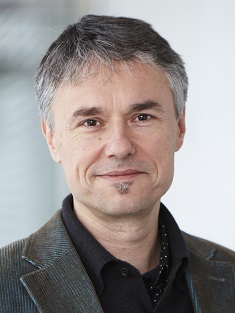
Prof. Tim Güneysu is a full Professor and Head of the Security Engineering department at the Faculty of Computer Science, Ruhr-Universität Bochum. He serves as Vice Dean for Strategy and Finances (since 2023) and previously as Speaker of the Horst-Görtz Institute for IT-Security (2020-2023). His academic journey includes roles as Associate Professor at the University of Bremen (2015-2017) and Assistant Professor at Ruhr-Universität Bochum (2011-2015). He also holds positions at the German Research Center for Artificial Intelligence (DFKI) and has conducted postdoctoral research at UMass Amherst. His research focuses on Security-by-Design principles, CAD for Security, and countermeasures against physical attacks. He emphasizes efficient cryptographic implementations and system-level hardware security. Key areas include post-quantum cryptography, side-channel resistant designs, and secure embedded systems. He has contributed over 200 publications in top venues, with recent work on FPGA-based cryptographic accelerators, secure hardware extensions (e.g., KeyVisor), and post-quantum algorithms for IoT. His research themes include agile signature acceleration, fault attack mitigation, and hardware-software co-design for security. Notable projects include CONVOLVE (edge-AI security) and QuantumRISC (quantum-safe systems). His work bridges theoretical cryptography with practical hardware implementations, emphasizing real-world security applications.
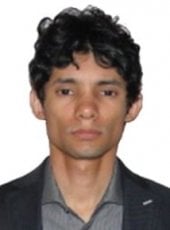
Flavio Bezerra Costa serves as an Assistant Professor in the Department of Electrical and Computer Engineering at Michigan Technological University's College of Engineering. His research focuses on critical areas of modern power systems, including smart grid technologies, renewable energy integration, power system protection, and advanced applications of signal processing and artificial intelligence in electrical power networks. Dr. Costa's research interests span a comprehensive range of power system topics with particular emphasis on Smart Grid technologies, Integration of Renewable Energy Systems, Power System Protection, Control, and Monitoring, Power Quality analysis, Power Systems and Power Electronics, AC/DC Microgrids, High-Voltage Direct Current (HVDC) Electric Power Transmission Systems, and the application of Signal Processing and Artificial Intelligence (including Machine Learning) in power systems. His work bridges traditional power engineering with modern computational techniques to address contemporary grid challenges. Analysis of Dr. Costa's recent publications reveals a consistent focus on wavelet transform applications for power system protection and monitoring, particularly in the areas of fault detection, classification, and location. His research demonstrates strong integration of machine learning techniques with traditional power system protection methods, with significant contributions to transformer protection, transmission line fault analysis, and microgrid stability. The work shows an evolving trajectory from fundamental wavelet-based protection techniques toward more sophisticated AI-enhanced approaches for modern power grid challenges. Dr. Costa maintains an active research program with numerous publications in top-tier IEEE journals and conferences, demonstrating his significant contributions to the field of power systems engineering and protection.
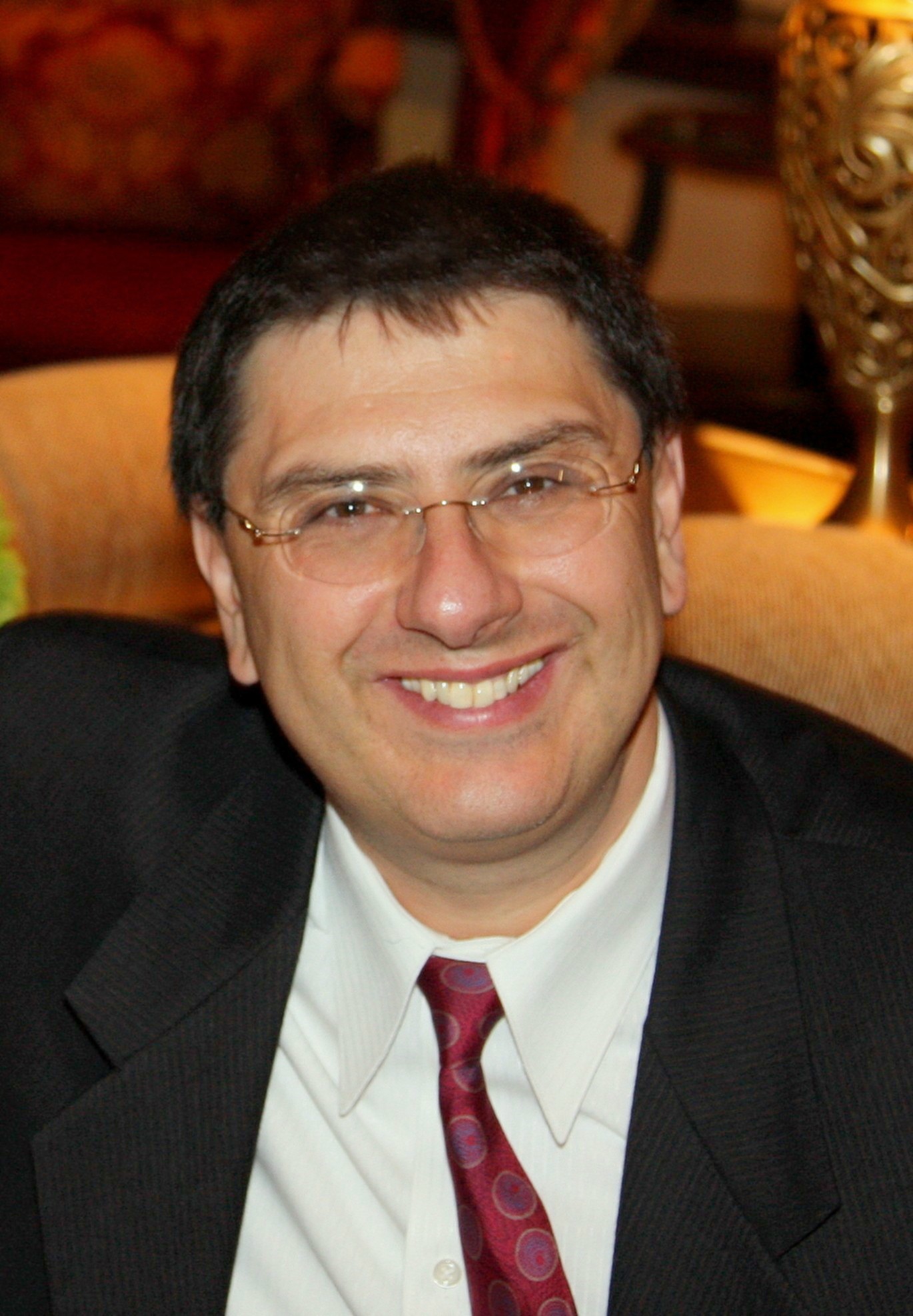
Dr. Joonsang Baek is an Associate Professor at the School of Computing and Information Technology, University of Wollongong (since 2021). His research focuses on Cybersecurity , Cryptography , and Network Security , with notable contributions to digital signature revocation, attribute-based encryption, and privacy-preserving protocols. Member, Institute of Cybersecurity and Cryptology (since 2017) Supervision interests: Cybersecurity, Applied Cryptography, Network Security Research Highlights: Innovations in withdrawable signatures, secure cloud data sharing, and 5G authentication protocols. His work combines theoretical cryptography with practical applications in edge computing and AI-driven security systems. Grants: Led projects on ransomware datasets, dynamic access control, and TLS optimization. Collaborated with Data61, Discovery Projects, and industry partners on cybersecurity resilience initiatives. Collaborations: Frequent co-author with researchers like Willy Susilo, Cao Cao, and Xinyu Liu. Active in ACM Asia CCS, IEEE Transactions, and LNCS publications.
Rafail Ostrovsky is the Norman E. Friedman Chair in Knowledge Sciences at UCLA Samueli School of Engineering, where he serves as a Distinguished Professor of Computer Science and Mathematics. He also directs the Center for Information and Computation Security at UCLA. His academic leadership extends to his role as a foreign member of Academia Europaea and his fellowship in multiple prestigious organizations including the National Academy of Inventors, AAAS, ACM, IEEE, and IACR. Professor Ostrovsky's research spans multiple domains in theoretical computer science, with primary focus on cryptography, secure computation, and algorithms. His work on garbled circuits, zero-knowledge proofs, and private information retrieval has had significant theoretical and practical impact. He has pioneered research in secure multi-party computation, oblivious RAM, and cryptographic protocols that maintain privacy while enabling complex computations on sensitive data. His research bridges theoretical foundations with practical applications in secure systems, ranging from database security to hardware-based cryptographic primitives. Ostrovsky's publication record shows a consistent trajectory of innovation in cryptographic theory and its applications. His recent work focuses on optimizing secure computation protocols for efficiency while maintaining strong security guarantees, with particular attention to communication complexity, round complexity, and practical implementations. He has made significant contributions to homomorphic encryption, non-malleable commitments, and zero-knowledge proofs, often developing techniques that transform theoretical constructs into practically viable solutions. 1993 Henry Taub Prize 2017 IEEE Computer Society Edward J. McCluskey Technical Achievement Award 2018 RSA Award for Excellence in Mathematics (RSA Prize) 2022 W. Wallace McDowell Award (highest award from IEEE Computer Society) Fellow of National Academy of Inventors, AAAS, ACM, IEEE, and IACR Foreign member of Academia Europaea With over 350 peer-reviewed publications and 16 issued USPTO patents, Professor Ostrovsky has significantly shaped the field of cryptography and secure computation. His mentorship has cultivated numerous students and postdocs who have gone on to make their own contributions to the field. His editorial roles on prestigious journals including Journal of ACM and Algorithmica reflect his standing in the theoretical computer science community. His leadership extends to chairing major conferences including FOCS 2011 and serving on over 40 international conference program committees. As Director of the Center for Information and Computation Security at UCLA, Professor Ostrovsky leads a team focused on advancing the theoretical foundations and practical applications of secure computation. His center serves as a hub for interdisciplinary research connecting cryptography with systems security, network protocols, and hardware security. The center's work spans from foundational cryptographic primitives to real-world applications requiring privacy-preserving computation.
Prof Nikolaos Nikiforakis is a Professor at the University of Cambridge, leading the Laboratory for Scientific Computing at the Cavendish Laboratory. He holds roles including Director for Academic Programmes of the Centre for Scientific Computing, Course Director of the MPhil in Scientific Computing, and Deputy Director of the EPSRC Centre for Doctoral Training in Computational Methods for Materials Science. He is also a Fellow and Director of Studies in Mathematics at Selwyn College, Cambridge. He directs The Gianna Angelopoulos Programme for Science Technology and Innovation. He holds a BSc in Aeronautical Engineering from the University of Manchester, followed by an MSc in Aerospace Propulsion and a PhD in 'Evolution of Detonation Waves' from Cranfield Institute of Technology. His postdoctoral research at the University of Cambridge’s Department of Chemistry focused on computational models for stratospheric ozone depletion. He later founded the Laboratory of Computational Dynamics at the Department of Applied Mathematics and Theoretical Physics before joining the Cavendish Laboratory in 2008. His research focuses on numerical algorithms and High Performance Computing for multi-physics simulations involving complex systems of nonlinear PDEs. Applications span detonation dynamics, plasma physics, and materials science, with industry collaborations for software development. His work addresses multi-scale, multi-physics problems previously deemed intractable, with practical applications in aerospace, energy, and environmental fields. He leads academic programmes in scientific computing and supervises doctoral research through the EPSRC CDT. His contributions bridge fundamental science and industrial innovation, emphasizing computational methods for materials and fluid dynamics.
Professor Joseph Tzanopoulos is a Professor in Landscape Ecology and Biodiversity Conservation at the School of Ecology and Conservation , University of Kent , and serves as the Academic Lead for SEDarc. He is also a member of the Durrell Institute of Conservation and Ecology. His interdisciplinary research integrates ecological, geographical, and socio-economic perspectives to evaluate the impacts of policy and land-use change on biodiversity and rural sustainability. His educational background includes a BSc in Agricultural Sciences from the Agricultural University of Athens and a PhD in vegetation ecology from Imperial College London. Prior to his appointment at Kent, he held research fellow positions at Wye College, Imperial College London, Aristotle University of Thessaloniki, and the Centre for Agri-Environmental Research at the University of Reading. Professor Tzanopoulos’s research spans landscape ecology, biodiversity conservation, agricultural landscapes, land-use change, GIS, remote sensing, sustainability assessment, and environmental governance . He employs interdisciplinary methods to analyze drivers of change in complex land-use systems, with a focus on reconciling conservation with sustainable development. His recent publications reflect a strong trend in large carnivore conservation, human-wildlife conflict, agroecology, climate change perceptions, and landscape connectivity . Many studies apply spatial modeling and scenario analysis in regions such as Colombia, Oman, Southern Africa, and Europe, often in collaboration with interdisciplinary teams. He is actively involved in supervision, mentoring numerous PhD students on topics including jaguar conservation, lynx reintroduction, marine protected areas, and socio-ecological dynamics. He has also contributed to policy-relevant research and serves on the editorial board of Nature Conservation . His work is supported by collaborations across national and European-funded projects, emphasizing stakeholder engagement, participatory governance, and science-policy integration. He teaches undergraduate modules in geography and GIS, contributing to the training of future environmental scientists.
Professor Conor O'Mahony is a faculty member in the School of Law at University College Cork (UCC), where he holds the rank of Professor of Law and serves as Vice-Dean for Research. He is also the Director of the UCC Child Law Clinic, leading initiatives in child protection litigation and law reform. He earned his BCL and LLM from UCC and a PhD from the University of Wales, Aberystwyth. PhD, Law, University of Wales, Aberystwyth (2005) LLM, Law, University College Cork (2002) BCL, Law, University College Cork (2001) His research centers on constitutional law and child law, with a strong emphasis on children's rights, family rights, education law, and constitutional reform. He has published extensively in leading journals such as the International Journal of Constitutional Law , Human Rights Law Review , and Harvard Human Rights Journal . His recent articles reflect a consistent focus on constitutional interpretation, child protection mechanisms, and legal reform, often analyzing landmark cases and policy developments in Ireland and internationally. From 2019 to 2022, he served as Ireland’s Special Rapporteur on Child Protection, producing annual reports and expert recommendations to the government. His scientific awards include UCC’s Researcher of the Year (2019) and Research Team of the Year (2016). He has secured significant research funding, including from Horizon 2020 for projects like IDEA and FYDO, which address children’s rights and victim support in the justice system. He supervises PhD students in constitutional and child law and has advised several successful graduates. He is an active public intellectual, contributing over 30 op-eds and 200 media interviews, and providing expert testimony to Oireachtas Committees, the Constitutional Convention, and the Citizens’ Assembly. He is engaged in outreach through the Child Law Clinic, which supports legal practitioners in children’s rights litigation.
Dr. Panagiotis Andriotis is a Lecturer in Computer Science at the School of Computer Science, University of Birmingham, within the College of Engineering and Physical Sciences. He is also a GIAC Certified Forensic Examiner (GCFE, GASF) and a Senior Fellow of the Higher Education Academy (SFHEA). His interdisciplinary research spans Cyber Security, Human Factors, and Mobile and Ubiquitous Computing. He teaches courses in Computer Science, Cyber Security, and Digital Forensics. His educational background includes a PhD in Computer Science from the University of Bristol (2016), an MSc with Distinction in Computer Science from the same institution (2011), and a BSc in Mathematics from the National and Kapodistrian University of Athens (2004). Dr. Andriotis’s research interests focus on user-centered security, particularly in mobile environments. He investigates how users interact with Android’s permission systems, develops novel authentication mechanisms like Bu-Dash, and explores adversarial machine learning in cybersecurity. His work bridges technical and human aspects, aiming to improve both system robustness and user experience. His recent publications reflect a strong trend in adversarial machine learning, mobile malware detection, usable privacy, and the societal implications of AI in education. He has contributed to high-impact journals such as IEEE Transactions on Cybernetics, ACM Transactions on Privacy and Security, and Elsevier’s Journal of Information Security and Applications. Best Paper Award at HCI International 2020 Impact Award, UWE Bristol Student Union GIAC Certified Forensic Examiner (GCFE) GIAC Advanced Smartphone Forensics (GASF) SANS Lethal Forensicator Coin Dr. Andriotis has advised PhD students, including Andrew McCarthy, and has been involved in funded research projects such as those related to fuzzing, software security, and critical infrastructure protection in collaboration with Airbus. He has served as an External Examiner at Cardiff Metropolitan University and is currently on the editorial boards of Digital Threats: Research and Practice (ACM) and the Journal of Responsible Technology (Elsevier). He has held visiting roles at the National Institute of Informatics in Tokyo, including as a JSPS Fellow and Toshiba Fellow. He leads research in digital forensics and security, with a lab focus on mobile ecosystems, behavioral modeling, and AI-driven threat detection. His team explores both technical and human dimensions of cybersecurity, contributing to tools and frameworks that enhance mobile security and user awareness.
Dr. YANG Guomin is an Associate Professor of Computer Science at Singapore Management University's School of Computing and Information Systems, where he coordinates the BSc Cybersecurity Track. His research focuses on privacy-preserving cryptography, authentication systems, and secure IoT frameworks. Research spans cryptographic protocols for cloud security, blockchain applications, and federated learning with emphases on efficiency and practical implementation. Recent publications demonstrate innovations in threshold authentication, redactable blockchains, and privacy-aware communication protocols. Advisees include LI Huilin and WANG Jiaheng, with research projects examining hardware-enhanced encryption, biometric authentication policies, and space network security. Work consistently addresses tension between security guarantees and computational efficiency in distributed systems.
Willem Jonker is a Full Professor at the Digital Society Institute, specializing in Semantics, Cybersecurity & Services. His research focuses on encryption schemes, access control, and privacy-preserving technologies. He has contributed to over 120 publications, with recent work addressing CVE-to-CWE mapping, anomaly detection in network traffic, and functional encryption systems. His expertise aligns with UN Sustainable Development Goals related to secure digital systems and privacy. Jonker has supervised 10 students and actively participates in academic conferences, presenting on topics like secure data management and cryptographic protocols. Research interests include cryptographic protocols, secure data management, and cybersecurity solutions. Notable projects involve developing methods for detecting covert channels, enhancing data privacy in healthcare, and improving secure search over encrypted data. He has also contributed to standards in digital rights management and forensic image recognition.
Ueli Maurer is a Full Professor of Computer Science at ETH Zurich and heads the Information Security and Cryptography research group. He received his diploma and Ph.D. in Electrical Engineering from ETH Zurich in 1985 and 1990 respectively. After a fellowship at Princeton University, his research focuses on foundational aspects of cryptography and information security. Education Diploma in Electrical Engineering, ETH Zurich (1985) Ph.D. in Electrical Engineering, ETH Zurich (1990) DIMACS Research Fellow, Princeton University (1990-1991) His research spans information security, cryptographic protocols, discrete mathematics, and theoretical computer science. Key areas include provably secure systems design, digital signatures, public-key infrastructures, and trust management. His work bridges theoretical foundations with practical applications in digital security. His publications demonstrate a consistent focus on advancing cryptographic theory and security proofs. Recent works explore anamorphic encryption, blockchain security frameworks, and composable protocol design. Primary trends include privacy-preserving communication, adaptive security models, and information-theoretic approaches to cryptography. Awards & Honors IEEE Fellow ACM Fellow IACR Fellow Member, German Academy of Sciences (Leopoldina) Rademacher Lecturer (2000) Vodafone Innovation Award (2013) RSA Mathematics Award (2016) TCC Test-of-Time Award (2016) He advises doctoral students on cryptographic protocols and security proofs. His research group works on diverse projects including secure multi-party computation and blockchain technologies. He co-founded the Zurich Symposium on Privacy and Security and serves on editorial boards of major cryptography journals.
Laura G. Hill is Professor and Chair of the Department of Human Development within Washington State University's College of Agricultural, Human, and Natural Resource Sciences. Appointed Chair in 2014 after serving as Professor (2013-2014) and Associate Professor (2007-2013), she leads research on prevention science implementation in real-world settings with focus on college student transitions and adolescent development. Her educational background includes: Ph.D. in Psychology from Vanderbilt University (1998) M.S. in Psychology from Vanderbilt University (1994) B.A. in Greek Studies from Smith College (1979) Dr. Hill's research centers on translating evidence-based prevention programs into practice, developing brief values-based interventions for college-bound students (particularly underrepresented STEM populations), and examining parent-child dynamics during emerging adulthood. She integrates psychological flexibility frameworks to address retention challenges and risky behaviors through culturally adapted family interventions. Her 2016-2019 publications reveal strong thematic continuity in emerging adulthood research, with methodological innovation in qualitative comparative analysis and person-centered approaches. Key contributions span economic evaluation standards in prevention science, cultural adaptation of parenting programs, and integrating personal development into higher education curricula to support student success beyond academic metrics. Dr. Hill actively mentors graduate researchers including B. Bayly, J. Jeffords, G. Shrestha, and L. Hyman, while directing major funded initiatives: NIDA R01: $2.46M for 'Letting Go and Staying Connected' parenting intervention (2016-2021) WSU Grand Challenge: $7.12M student success transformation project (2016-2021) NIDA Spanish-adaptation supplement: $274k (2018) WA State DSHS prevention evaluation: $575k (2016-2019) SAMHSA Prevention Tech Transfer Center: $540k subcontract (2018-2023) As Department Chair and principal investigator, she oversees interdisciplinary teams collaborating with state agencies and community organizations to scale evidence-based prevention programs across Washington's educational and healthcare systems.
Ian Greer is a Research Professor and Director of the ILR Ithaca Co-Lab at Cornell University's ILR School. He specializes in qualitative comparative research on marketization's impact on labor relations and welfare systems. Previously, he held roles as Professor of Comparative Employment Relations at the University of Greenwich and Research Fellow at Leeds University. Greer's career spans academic, union, and policy sectors, including work with the Service Employees International Union and New England Regional Council of Carpenters. His PhD (ILR School, 2005) was preceded by a Fulbright grant in Berlin. Research focuses on marketization dynamics in industries like healthcare, construction, and multinational automakers, alongside welfare-to-work schemes and labor coalitions. His work examines union adaptation strategies and policy competition across Europe. Key publications include Marketization (2022) and studies on European welfare state dilemmas. He collaborates with institutions in Leeds, Greenwich, Duisburg, and Aalborg. Awards include the Fulbright Grant. Funding sources include the European Research Council, Economic and Social Research Council, and Hans Boeckler Foundation. The Ithaca Co-Lab serves as a hub for community-engaged research in labor and work systems.
Dr. Michelle Gallant serves as Professor at the University of Manitoba's Faculty of Law (Robson Hall), where she has taught continuously since 1999 and attained full professorship in 2014. She concurrently holds an Adjunct Professor appointment in the university's Peace and Conflict Studies Program since 2005 and is an Associate member of St. Paul's College. Her significant administrative roles include Manitoba Law Reform Commissioner (2012-2018), Deputy Commissioner of the Residential Tenancies Commission (2008-2011), and former Associate Dean (Research and Graduate Studies) and Director of the Legal Research Institute (2004-2010). Her academic credentials feature a Doctor of Philosophy from King's College London (2000), preceded by a Master of Laws from the University of British Columbia (1996) and Bachelor of Laws from the University of New Brunswick (1990). Prior to doctoral studies, she practiced as Legal Counsel for the Federal Department of Justice in Halifax. Dr. Gallant's research centers on the governance of tainted finance, with primary expertise in Money Laundering, Terrorist Finance, and Taxation intersecting with Philanthropy and the Law. Her work critically examines civil forfeiture mechanisms, anti-money laundering regulations, and the tension between financial crime control and human rights protection. She employs empirical methodologies to evaluate regulatory effectiveness across Canadian and international contexts, with particular attention to banking sector vulnerabilities and cross-jurisdictional enforcement challenges. Analysis of her publication record reveals evolving scholarly focus from theoretical frameworks toward empirical studies of civil forfeiture and international regulatory cooperation. Recent work increasingly addresses the impact of financial secrecy jurisdictions on crime control efforts and explores innovative approaches to balancing security imperatives with fundamental rights protections in financial regulation. She maintains active scholarly engagement through presentations at premier international forums including the Cambridge International Symposium on Economic Crime and Global Conference on Transparency Research, where she contributes expertise on civil forfeiture patterns, terrorist finance regulation, and philanthropy law applications.
Dr. Qiteng Hong is a Reader in the Department of Electronic and Electrical Engineering at the University of Strathclyde, Faculty of Engineering. He holds a BEng (Hons) and PhD from the same institution and is a leading researcher in power system protection and control for renewable-dominated grids. He is Deputy Director of the MSc in Electrical Power and Energy Systems and a member of the Steering Committee for the Joint MSc with Hong Kong University of Science and Technology (HKUST). BEng (Hons), Electronic and Electrical Engineering, University of Strathclyde, 2011 (Top Graduate of the Year) PhD, Electrical Engineering, University of Strathclyde, 2015 (fully funded by National Grid) His research focuses on novel solutions for monitoring, protection, and control of future power systems, particularly those with high renewable penetration. Key areas include wide-area monitoring using synchronized measurements, protection of converter-dominated systems, fast frequency response in low-inertia networks, and digital twin-based real-time control. His work contributes to UN Sustainable Development Goals in clean energy and climate action. Dr. Hong has published over 110 research outputs, including 59 journal articles. His recent publications (2025) emphasize fault detection and arc suppression in active distribution networks using advanced converter topologies and signal processing techniques. Themes include traveling wave analysis, Hough transform, synthetic zero-sequence signals, and machine learning for frequency prediction, reflecting a strong trend toward intelligent, data-driven power system protection. Gold Medal, 49th International Exhibition of Inventions Geneva (2024) IET Best Paper Award (DPSP APAC 2025) Best Paper Award, IEEE APAP (2019) Principal’s Award Runner Up, University of Strathclyde (2024) Students' Choice Award (2021) British Renewable Energy Awards – 'Highly commended' (2018) IET Prize for Academic Excellence (2011) John Moyes Lessells Scholarship (2013) Shortlisted for Best Innovation Award, Scottish Renewables (2018) Dr. Hong has led or participated in over 50 research and KE projects, securing £11M in funding (PI on £2.26M). He leads a team of 10 researchers, including 5 PhD students, and has developed the LGMVP platform—the UK’s first online tool of its kind. He serves on the University Senate, is a guest editor for 5 journal special issues (Co-Guest Editor-in-Chief for a special issue on zero-carbon power systems), and has delivered teaching across 9 modules. He has been PI or Co-I on major projects such as SETTLE-INSIGHT (NIA), Shell-iCase, and NGET SIF ALPHA. He leads an active research group focused on smart grid protection and digital twin technologies. He is the main developer of four prototype software tools and mentors a team of PhD students and research associates. His lab collaborates with industry partners like SSE, National Grid, and Shell, and he is a key figure in international initiatives through IEEE and CIGRE.