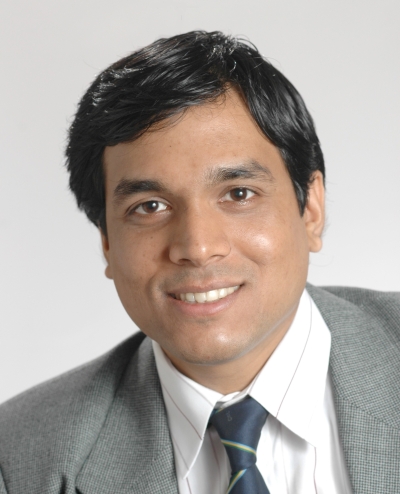
Furkan Alaca is an Assistant Professor at Queen's University's School of Computing, part of the Faculty of Arts and Science. His research focuses on user authentication systems, addressing security and usability challenges. He holds a Ph.D. (2018) in Computer Science from Carleton University, an M.A.Sc. (2012) in Electrical and Computer Engineering, and a B.Eng. (2010) in Communications Engineering, all from Carleton University. His academic career includes teaching roles at Queen's University and the University of Toronto Mississauga, where he taught courses such as Cryptography, Cybersecurity, and Discrete Mathematics. He is affiliated with Queen's Security Research Group and Computer Security Research Lab. Research interests include computer and internet security, usable security, authentication mechanisms, and systems security. He has contributed to advancements in web authentication frameworks, malware analysis, and privacy-preserving technologies. His work spans conferences like IEEE and ACM, with notable publications in cybersecurity, machine learning, and network efficiency. Current teaching includes CISC 447 (Introduction to Cybersecurity) and CISC 468 (Cryptography). He has advised on courses ranging from undergraduate programming to graduate-level security topics.
Houman Savoji is an Associate Professor in the Department of Pharmacology and Physiology at the Faculty of Medicine, University of Montreal. He is also a full-time researcher at the CHU Sainte-Justine Research Center and principal investigator in regenerative medicine, organs-on-chip, and bioprinting at TransMedTech Institute. Dr. Savoji received his PhD in Biomedical Engineering from the Institute of Biomedical Engineering at Polytechnique Montréal in 2016. He then completed a postdoctoral fellowship at the Institute of Biomaterials and Biomedical Engineering at the University of Toronto. His research expertise combines advanced manufacturing technologies (micro- and nano-fabrication, 3D bioprinting, microfluidics, cell electrospinning) with functional and composite materials for applications in tissue engineering, regenerative medicine, and organs-on-chip. His work focuses on the design, development, optimization, implementation, and characterization of innovative functional biomaterials using emerging engineering technologies, with particular emphasis on cardiac tissue engineering and biomimetic pulmonary heart valves for pediatric patients. Dr. Savoji has published extensively on biomaterials, tissue engineering, 3D bioprinting, and organ-on-chip technologies. His recent publications demonstrate expertise in viscoelastic characterization of soft tissues, engineering immune responses to biomaterials, ceramic engineering for biomedical applications, and advanced 3D bioprinting techniques for cardiac and vascular tissue engineering. 2017-2020, Postdoctoral Research Grant, CIHR 2017-2019, Postdoctoral Research Grant, FRQNT 2017-2018, Human Society of International Grant, Human Toxicity Assessment Project 2016, CR-CHUM Research Center Award 2015, Star Student-Researcher Award, FRQNT 2014-2015, Jane and Frank Warchol Fellowship, Society of Vacuum Coaters Foundation 2013, Institute of Textile Science Award 2012-2015, Excellence Doctoral Scholarship for Foreign Students, FRQNT Dr. Savoji has supervised Master's students including Ines Barrakad (2024) working on 'Advanced manufacturing technologies versus molding of corneal implants: 3D printing vs molding of a Keratoprosthesis' and Zineb Ajji (2023) researching 'Development of perfusable patches by 3D bioprinting for potential application in cardiac tissue regeneration.' He has secured numerous research grants from organizations including CIHR, NSERC, FRQNT, FRQS, MITACS, and others for projects related to 3D bioprinting of cardiac tissues, biomimetic heart valves, and other tissue engineering applications. The Savoji Laboratory, located within the Department of Pharmacology and Physiology and Institute of Biomedical Engineering of the Faculty of Medicine of the University of Montreal, the Research Center of the CHU Sainte-Justine (CHUSJ), and the TransMedTech Institute, focuses on multidisciplinary research involving 3D bioprinting using stem-cell derived human cardiac cells to fabricate functional cardiac tissues for transplantation and drug discovery applications.
James B. Rawlings is the Mellichamp Process Control Chair in the Department of Chemical Engineering at the University of California, Santa Barbara, and holds the rank of Professor. His research focuses on chemical process control, reaction engineering at the molecular level, and computational modeling with tools like Octave. He has held prominent roles, including the Paul A. Elfers Chair at UW Madison and the Steenbock Professor of Engineering. Education: PhD in Chemical Engineering from the University of Wisconsin-Madison (1985), BS in Chemical Engineering from The University of Texas at Austin. Postdoctoral training at the Institute for System Dynamics and Process Control, University of Stuttgart (1985-1986). Research interests include nonlinear systems, model predictive control (MPC), moving horizon estimation (MHE), and stochastic reaction engineering. His work bridges theory and industrial applications, emphasizing robustness and practical implementation. Awards: Elected Fellow of the National Academy of Engineering (2016), IFAC (2016), and IEEE (2012). Recipient of the Process Automation Hall of Fame (2016), Vilas Distinguished Achievement Professor (2015), and numerous AIChE awards. Honorary doctorate from Technical University of Denmark (2011). Grants & Leadership: Led NSF-funded projects on MPC and control systems. Developed Octave, a widely used computational tool. Active in academic leadership and curriculum development, recognized with teaching awards including the Chancellor’s Distinguished Teaching Award (2013). Labs & Teams: Directs research groups focused on control theory, computational tools, and industrial process optimization. Collaborates with industry on MPC implementation and disturbance modeling.
Sanghyun Hong is an Assistant Professor at Oregon State University's School of Electrical Engineering and Computer Science , focusing on Trustworthy AI and Cybersecurity . He holds a Ph.D. in Computer Science from the University of Maryland, College Park (2021) and a B.S. in Electrical Engineering and Computer Science from Seoul National University (2015). His research bridges machine learning , security , and privacy-preserving systems . Current research themes: Robustness of AI systems to adversarial attacks Privacy-preserving machine learning Security of pre-trained and large language models Hardware fault vulnerabilities in neural networks Cybersecurity workforce development Publication Trends (15 most recent): Focus on adversarial machine learning (jailbreaking LLMs, membership inference) Advances in physics-informed neural networks and time series forecasting Key contributions to AI security and malware detection Interdisciplinary work in visualization design and tsunami warning systems Scientific Accolades : Google Faculty Research Award (2023) Samsung Global Research Award (2022, 2023, 2024) DARPA Riser (2022) NSF SFS Award (co-PI, 2023) USENIX Enigma Speaker (2021) Academic Leadership : Mentors 5 Ph.D. students and has graduated 8 M.S. and B.S. students. Currently developing next-generation auditing frameworks for AI systems while on medical leave until Winter 2026.
Neil Olver is an Associate Professor in the Department of Mathematics at the London School of Economics and Political Science (LSE), where he has held his current position since 2021. He is also affiliated with CWI in Amsterdam. His research focuses on combinatorial optimization, network design, algorithmic game theory, and probability, with applications to traffic networks and robust optimization. Olver has organized major events such as the Highlights of Algorithms conference and the Hausdorff Trimester Program on Discrete Optimization. He completed his PhD in Applied Mathematics at McGill University (2010), preceded by an MSc (2006) and BSc (2004) from the University of Cape Town and McGill University. His academic career includes roles at Vrije Universiteit Amsterdam (2013–2021) and MIT (2010–2013). Olver has been awarded grants from NWO (VIDI, TOP, VENI) and the NSF, supporting research on network optimization and robust design. His notable contributions include resolving the VPN Conjecture, advancing strongly polynomial algorithms for generalized flows, and analyzing dynamic traffic equilibria. Students advised include Dr. Dario Frascara and Dr. Madelon de Kemp. Current grants include a VIDI-funded project on 'Usable Algorithms for Network Design.'
Professor David C. Dunand is a faculty member in the Department of Materials Science and Engineering at Northwestern University , where he leads the Dunand Research Group . His work focuses on mechanical metallurgy of advanced metallic materials, including alloys, composites, and foams, with applications in energy-efficient transportation and biomaterials. He also investigates additive manufacturing techniques like laser powder-bed fusion and 3D ink extrusion. Research Interests: Physical and mechanical metallurgy of multiphase metals Additive manufacturing (ink extrusion, selective laser melting) Green/sustainable metal production In situ X-ray tomography for microstructure analysis Metallic foams and scaffolds Thermoelectric materials Recent Publications show expertise in redox cycling stability, precipitation strengthening, and hierarchical microstructures, with applications in batteries, shape-memory alloys, and high-entropy systems. Awards: TMS Fellow (2012) Structural Materials Division Distinguished Scientist/Engineering Award (2008) Fellow, ASM International (2007) Department Teacher of the Year (1998) He has held leadership roles including Co-Director of the Initiative for Sustainability and Energy at Northwestern (2008-2015) and Visiting Professor at École Polytechnique Fédérale de Lausanne (2000). The group operates a SISMA MYSINT 100 laser powder bed fusion machine and collaborates extensively.
Rachel Cummings is an Associate Professor in the Department of Industrial Engineering and Operations Research (IEOR) at Columbia University, with a courtesy appointment in the Department of Computer Science. She serves as Co-chair of the Cybersecurity Research Center at Columbia’s Data Science Institute. Previously, she was faculty at Georgia Tech’s School of Industrial and Systems Engineering (ISyE), holding a courtesy appointment in Computer Science. She holds a Ph.D. in Computing and Mathematical Sciences from Caltech, with research visits at UPenn, Hebrew University, Microsoft Research, and the Simons Institute. Her research focuses on differential privacy, integrating tools from machine learning, algorithm design, economics, optimization, statistics, HCI, usable security, and public policy. She emphasizes practical applications of theoretical privacy-preserving methods. Key roles include Managing Editor for the Journal of Privacy and Confidentiality , service on the ACM U.S. Technology Policy Council, IEEE Standards Association, and Future of Privacy Forum’s Advisory Board. She has advised on the U.S. Census Bureau’s Scientific Advisory Council and served as a Fellow at the Center for Democracy & Technology. Recent work includes papers on privacy elasticity, synthetic control methods, and differential privacy under class imbalance. Her awards include NSF CAREER, DARPA Young Faculty Award, and Best Paper recognitions at DISC, CCS, and SaTML. She actively chairs conferences (e.g., DEF CON Crypto) and mentors students like Tingting Ou (PhD 2025) and Peihan Liu (PhD 2024–present). Her lab explores privacy-preserving technologies, policy implications, and interdisciplinary collaborations.
Marian Chertow is the Manufacturer’s Association Professor of Industrial Ecology at Yale University and Director of the Center for Industrial Ecology at the Yale School of the Environment. She holds an appointment at the Yale School of Management (SOM) and previously taught at the National University of Singapore (NUS) for 20 years, contributing to the development of their Master’s of Environmental Management program. Her research focuses on industrial ecology, circular economy, and industrial symbiosis—the study of material, energy, and byproduct exchanges among businesses. She pioneered frameworks for understanding industrial ecosystems and their resilience, emphasizing collaboration among firms for environmental and economic benefits. Her work spans global case studies, including China, India, and Singapore, and explores urban metabolism, resource reuse, and policy innovation. Chertow has received prestigious awards, including recognition from the U.S. EPA, the CT Women’s Hall of Fame, and the International Society for Industrial Ecology (ISIE). She advises organizations like Trane Technologies and chairs initiatives like the Industrial Symbiosis Research Symposium. Beyond academia, she founded a theater company staging Greek tragedies and teaches a course linking environmental themes to theater. Her research integrates complex adaptive systems theory, social network analysis, and policy design to address sustainability challenges in emerging economies. Current projects include analyzing waste management in China and urban resource flows in Singapore. Chertow’s interdisciplinary approach bridges environmental science, economics, and management to advance sustainable industrial practices globally.
Clark Olson is a Professor in the Division of Computing & Software Systems at the University of Washington Bothell, part of the School of Science, Technology, Engineering & Mathematics. He earned his Ph.D. in Computer Science from UC Berkeley (1994), M.S. in Electrical Engineering (1990), and B.S. in Computer Engineering (1989) from the University of Washington, Seattle. Education: Ph.D. in Computer Science (2017) from University of California, Berkeley M.S. in Electrical Engineering (1990) from University of Washington, Seattle B.S. in Computer Engineering (1989) from University of Washington, Seattle His research focuses on computer vision, robot navigation, and clustering algorithms. He has developed techniques for Mars rover terrain mapping, subspace clustering, and geometric feature matching. His work bridges theory and application in autonomous systems and image analysis. Analysis of his publications reveals expertise in computer vision (8 papers), clustering algorithms (4 papers), and robotics (5 papers). Key subtopics include Mars exploration (3 papers), Hough transforms (3 papers), and probabilistic methods (3 papers). Professor Olson teaches courses ranging from introductory programming (CSS 161-162) to advanced topics in computer vision (CSS 487-587) and algorithm design (CSS 549). He also advises on the CSSE Capstone (CSS 497) projects requiring rigorous prerequisites and structured evaluation criteria.
Prof. Dr. Barbara Kraus is the Chair of Quantum Algorithms and Applications at the Technical University of Munich (TUM), affiliated with the TUM School of Natural Sciences. She previously held academic positions at the University of Innsbruck, where she founded her research group in 2010. Education : Physics and Mathematics at the University of Innsbruck; Post-doctoral work at MPI for Quantum Optics and University of Geneva. Her research focuses on foundational problems in quantum information theory, particularly entanglement in multipartite systems, quantum simulation, and verification of quantum processors. She develops theoretical tools for quantum many-body systems and explores applications in quantum computing, emphasizing error characterization and experimental validation. Recent publications highlight advancements in Hamiltonian learning, symmetry-resolved entanglement detection, and multipartite state transformations. Her work bridges theoretical quantum physics with practical implementations, including Rydberg platforms and quantum metrology. Key Awards : START Prize (2010), Ignaz L. Lieben Award (2013), Boltzmann Prize (2011), Südtiroler Sparkasse Research Prize (2019). She supervises doctoral students and postdocs in quantum information theory, with a focus on stabilizer states, quantum networks, and entanglement measures. Her courses at TUM include Quantum Information , Quantum Algorithms , and workshops on entanglement manipulation.
Sanjit A. Seshia is the Cadence Founders Chair Professor in the Department of Electrical Engineering and Computer Sciences at the University of California, Berkeley . He is affiliated with the Group in Logic and the Methodology of Science and participates in centers like the Industrial Cyber-Physical Systems Center , Berkeley AI Research , and the Simons Institute for the Theory of Computing . Research interests include formal methods for automated verification and synthesis of dependable systems, with applications to cyber-physical systems , AI-based autonomy , and computer security . His work spans SMT solving, model counting, syntax-guided synthesis, and algorithmic improvisation, with tools like UCLID5 , VerifAI , and Scenic for verifying autonomous systems and educational platforms like CPSGrader . Students and collaborators include notable researchers such as Dorsa Sadigh (Stanford), Daniel Fremont (UC Santa Cruz), and Hazem Torfah (Chalmers). He has co-founded startups like Decyphir and 20ⁿ Labs based on his research.
Volker Ahrens is a Professor of Production Management at NORDAKADEMIE since 2007. He also serves as Head of the Industrial Engineering (B.Sc.) program and the International Business & Administration (B.Eng.) program, while acting as Coordinator of the Department of Engineering. His career spans academic and industrial roles, including leadership positions in medium-sized industrial companies and editorial work on VDI standards. Education: Diplom-Ingenieur in Mechanical Engineering (1989, Universität Hannover); Doktor-Ingenieur (1997, Universität Hannover) Industrial Experience: 10 years of executive management in industry, including König Metall GmbH & Co. KG and Wilhelm Schröder GmbH His research focuses on Systems Engineering and Production Management, with emphasis on lean production, quality management, and Industry 4.0. His publications since 2025 explore systemic approaches to socio-technical systems, cardboard engineering for collaborative design, and human-technology interaction in production environments. He has contributed extensively to process modeling, simulation of production systems, and meta-process frameworks like PDCA cycles. The 15 most recent articles highlight trends in systemic production design, lean manufacturing, and Industry 4.0 applications. Key keywords include Systems Engineering, Production Management, Lean Production, and Quality Management. Subfields span socio-technical systems, simulation techniques, human-centered design, and cyber-physical system integration across industrial contexts. Volker Ahrens is actively involved in teaching, serving as a lecturer at Hochschule Karlsruhe (1998–2013) and Fachhochschule Vorarlberg (since 2017). He contributes to academic governance as a member of the NORDAKADEMIE faculty and chairs VDI committees on simulation standards for production systems. His advisory roles include peer reviewing for quality assurance agencies like FIBAA and ZEvA.
Ahmed Eldawy is an Associate Professor in the Department of Computer Science at the University of California, Riverside. He leads groundbreaking research in databases, big data management, and spatial data processing, with a focus on scalable exploratory analytics through systems like Beast , UCR-Star , Raptor , and Spider . His work spans geospatial data infrastructure, distributed computing, and computational geometry. Research Interests : Databases, big data management, spatial data processing, geospatial analytics, distributed systems, computational geometry. Awards : NSF CAREER award (2021), 10-year Influential Paper Award (ICDE 2025), Best Demo award (SIGSPATIAL 2020). Grants : NSF (IIS-2046236, IIS-1954644, CNS-1924694), USDA (USDA NIFA 2020-69012-31914), UC Office of the President (M21PL3368). Labs & Centers : RAISE@UCR, Data Science Center, Center for Robotics and Intelligent Systems (CRIS), Affiliate of Center for Geospatial Sciences and Winston Chung Global Energy Center. His recent publications focus on LLM-driven geospatial visualization (LASEK), distributed raster analytics (RDPro), learned spatial query optimization, and scalable spatiotemporal systems. He advises numerous PhD and Master’s students, many of whom now work at top tech companies like Amazon, Microsoft, and Meta.
Bharat Lohani is a Professor at the Department of Civil Engineering in Indian Institute of Technology Kanpur . His work focuses on Geoinformatics , utilizing LiDAR and GIS for 3D modeling and spatial analysis. Education : PhD (University of Reading, UK), ME (IIT Roorkee), BE (MMM Engineering College Gorakhpur) Research Interests : LiDAR simulation, motion correction in scanning, flood propagation modeling, historical urban mapping, GPS signal analysis, agricultural land consolidation Article Trends : His publications emphasize LiDAR data processing , sensor integration , and optimization algorithms for geospatial applications. Scientific Awards : ISRS National Award (2012), Best Paper at INCA Congress (2012), Silver Award at ISPRS (2008) Advising : Mentored 8+ students in LiDAR and spatial data analysis Labs/Teams : Leads a research group at IITK including Aswani Kumar Munnangi and Salil Goel, affiliated with the Wadhwani School of AI & Intelligent Systems .
Florian Schäfer is an Assistant Professor at the School of Computational Science and Engineering at Georgia Tech. His research spans numerical computation, statistical inference, and competitive games, with applications in materials science, turbulence modeling, computer graphics, and computational geometry. He will join the Courant Institute at NYU in September 2025. PhD in Applied and Computational Mathematics, Caltech Bachelor’s and Master’s in Mathematics, University of Bonn His work focuses on information geometric mechanics to design structure-preserving numerical methods for continuum mechanics. This includes: State-of-the-art solvers for elliptic PDEs via Gaussian elimination and conditional independence Efficient multi-agent optimization algorithms Information geometric regularization for compressible fluid dynamics Enabling the first compressible fluid simulation exceeding 100 trillion grid cells His recent research trends integrate: Machine learning for materials science (e.g., active learning, Bayesian approaches) Stochastic modeling of microstructures and phase-field problems Neural operators for super-resolution fluid dynamics Generative models for polycrystalline material datasets Optimal transport and diffusion models for conditional density transformations High-performance computing at extreme scales Florian collaborates with researchers including Houman Owhadi, Jessie Liu, Spencer Bryngelson, Tamer Zaki, and Ali Mani. He actively presents at conferences like SIAM and UCLA seminars, and is recruiting PhD students for work at the Courant Institute starting 2025.