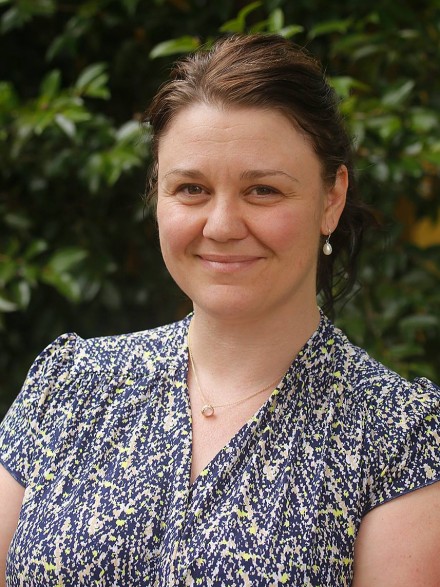
Jo Salmon is a Deakin Distinguished Professor and Director of the Institute for Physical Activity and Nutrition (IPAN) at Deakin University's Faculty of Health/School of Exercise and Nutrition Sciences. Her expertise spans physical activity promotion, sedentary behavior reduction, and public health interventions, with over 20 years of research experience. She has been recognized as a Highly Cited Researcher by Clarivate Analytics (2017–2023) and holds leadership roles in global organizations like the Asia-Pacific Society for Physical Activity. Salmon holds degrees from Deakin University (PhD), Monash University (BA), and La Trobe University (Bachelor of Behavioural Sciences). Her research focuses on behavioral epidemiology, intervention efficacy, and implementation science, with over 491 publications and $37 million in competitive grants. Key achievements include developing the TransformUs program and contributing to national movement guidelines. She has supervised 35 PhD students and 13 postdoctoral fellows, and her work spans 37 nationally competitive grants and 13 international projects. Awards include the NHMRC Level 2 Investigator Grant and Fellowships from the International Society for Behavioral Nutrition and Physical Activity. Salmon's research emphasizes equitable scaling of interventions, with projects like the TransformUs program targeting children's physical activity. Collaborations include the World Health Organization and multi-sector partners. Her labs/IPAN focus on translating research into actionable policies and programs.
Nick Parr is a Professor and Honorary Professor at the Department of Management and Centre for Workforce Futures, Macquarie University. His research focuses on demography, population studies, immigration policy, fertility trends, and workforce futures. He has contributed to numerous projects such as the 'DLUA: Demography, Geography and English Proficiency of Language Users in Australia' (2023-2026) and 'Spatial Patterns of Fertility in New South Wales' (2018). Key research interests include fertility replacement levels, immigration impacts on population dynamics, and the socio-economic integration of immigrant groups. Parr has published widely in peer-reviewed journals, with recent work addressing European demographic challenges and climate-related displacement effects in Bangladesh. He received the 2019 Wiley Award for Best Paper in Geographical Research (2020). His work also extends to policy analysis, including projections of criminal court workloads and long-term living standards influenced by migration patterns.
Michael Barnes is a Research Fellow at the ARC Centre of Excellence for 21st Century Weather , located within the School of Earth, Atmosphere and Environment at Monash University , Australia. He is currently accepting PhD students and serves as an Associate Editor for the Monthly Weather Review . Education: PhD in Meteorology, University of Pretoria Research Interests: Michael’s work centres on synoptic-scale atmospheric dynamics , with particular emphasis on Rossby-wave breaking , extratropical cyclones , cut-off lows and subtropical rainfall . His investigations improve understanding of extreme weather and underpin better prediction of high-impact events over Australia and southern Africa. Publications trend: Across 11 peer-reviewed articles (2019-2023) his research spans dynamical meteorology, heavy-rainfall mechanisms, sea-ice forecasting and regional climate modelling, showcasing a blend of theoretical idealised modelling and operational evaluation. International service: Member, WMO WWRP Working Group on Prediction, Dynamics & Ensemble Forecasting (PDEF) Past METAREA VII Coordinator, WMO WWMIWS committee (Dec 2019 – Feb 2022) Editorial role: Associate Editor, Monthly Weather Review .
Professor Shamsul Haque is a cognitive psychologist at the Jeffrey Cheah School of Medicine and Health Sciences, Monash University Malaysia. With extensive teaching and research experience, he has published numerous works in leading peer-reviewed journals and edited volumes. His current position as Professor reflects his significant contributions to the field of cognitive psychology, particularly in memory research and mental health. His educational background includes: PhD in Cognitive Psychology from University of Bristol (1996-1999), focusing on "Investigating the retrieval of autobiographical memories" MSc in Psychology (I/O Psychology) from University of Dhaka (1991-1993), focusing on "Organizational environment and category of organization: A study of job satisfaction, job involvement and personality of mid-level managers" BSc in Psychology from University of Dhaka (1986-1991), focusing on "Feeling of fatigue, workload and strain as related to the nature of job and employees' skill level" Professor Haque's research focuses on several interconnected areas within cognitive psychology and mental health. His primary interests include the retrieval of self-defining memories, lifespan distribution of autobiographical memories, and the construction of autobiographical memories in psychiatric patients. He has made significant contributions to understanding trauma, narrative identity, and mental health among refugee populations, as well as generational identity and memory of war veterans. His work aligns with UN Sustainable Development Goals related to health and wellbeing, particularly addressing mental health challenges in vulnerable populations such as refugees. His recent projects include studying trauma, daily stressors, and mental health among elderly Rohingya refugees, as well as investigating fatigue through the FRESH project. His publication record shows a strong trend toward refugee mental health, cultural memory studies, and cross-cultural psychological assessment. A significant portion of his recent work (2023-2025) focuses on refugee populations, particularly Rohingya refugees, examining trauma, mental health, and memory processes. He has also developed and validated psychological assessment tools for Bangladeshi contexts, including the Bangla versions of established instruments like the GHQ-12 and Big Five Inventory-2. His interdisciplinary work spans cognitive psychology, clinical applications, and public health implications. His scientific contributions have been recognized with multiple awards: Commonwealth Scholarship Award (1966) ASIA Fellows Program Award (2000) ASIA Fellows Follow-up Award (2002) KS Yang Young Scholar Award (2005) PVC's Award for Excellence in Teaching (2008) Professor Haque actively mentors PhD students and has served as Primary Chief Investigator for multiple research projects, including "Trauma, daily stressors, quality of sleep and mental health among elderly Rohingya refugee people resettled in Bangladesh and Malaysia" (2023-2027), "Project FRESH: Fatigue Research Shell" (2016-2018), and "The transmission of cultural life scripts" (2014-2015). He also contributes significantly to the academic community through editorial responsibilities and peer review for journals including Journal of Global Postcolonial Studies, Journal of Psychiatric Research, Heliyon, and PLoS ONE.
Dr Bob Beeton is an Honorary Associate Professor in the School of the Environment at the University of Queensland (UQ). He holds a Bachelor of Rural Science and Master's degree from the University of New England. His career spans over five decades, including roles as Head of Department/School for 11 years, leadership in establishing environmental management programs (Bachelor/Master of Environmental Management), and extensive community/government service at state and national levels. Education: Bachelor of Rural Science, University of New England (1969) Masters (Coursework), University of New England Research & Interests: Dr Beeton’s work focuses on environmental management, wildlife conservation, sustainable tourism, and urban sustainability. He has contributed to landmark projects such as the Ord River Development, Rainforest Canopy Walk Project, and studies on climate change adaptation in China and Thailand. His research integrates ecological science with socio-economic factors to address complex environmental challenges. Key Contributions: Founded the Wilderness Reserves & Wildlife program at Queensland Agricultural College (later merged with UQ) Developed methodologies for assessing biodiversity in rangelands Advocated for community-based natural resource management frameworks Awards & Recognition: 2009 Member of the Order of Australia (AM) 2000 Fellow of the Environmental Institute of Australia and New Zealand 1994 UQ Excellence in Teaching Award His work bridges academia, policy, and community action, emphasizing holistic approaches to environmental sustainability.
Emeritus Professor John Alexander Church is a prominent climate scientist affiliated with the University of New South Wales (UNSW) and previously with CSIRO from 1978 to 2016. He served as the initial leader of the ocean climate program in CSIRO's Division of Oceanography and contributed to establishing the Antarctic Climate and Ecosystems Research Centre. Awarded CSIRO Fellow in 2010, he has also held visiting roles at Woods Hole Oceanographic Institute and Southampton Oceanography Centre. His expertise lies in global/regional sea-level variability, ocean dynamics, and the Earth’s energy budget, combining observational data and climate models. Church has been deeply involved in international climate research, including chairing the World Ocean Circulation Experiment's Scientific Steering Group and contributing to the IPCC's Third and Fifth Assessment Reports as a co-convening lead author. He has authored over 180 refereed papers, co-edited books, and earned prestigious awards such as the Roger Revelle Medal, BBVA Frontiers Prize, and AO honor. His work emphasizes the ocean's role in climate change, particularly in sea-level rise and its societal implications. In advising and grants, Church has collaborated extensively on projects like the Framework for High-End Sea Level Rise Estimates and FAFMIP (Forecasting Sea-Level Rise using CMIP Models). His research also explores freshwater transport dynamics and the integration of observational data with climate models to improve projections. Notably, he leads discussions on the urgency of addressing sea-level rise for coastal management and policy. Church's affiliations include the Climate Change Research Centre at UNSW and global collaborations with institutions like the Woods Hole Oceanographic Institute. His contributions bridge science and policy, ensuring actionable insights for climate adaptation and mitigation efforts.
Dr. Michaela Froehlich is a researcher at the Department of Nuclear Physics & Accelerator Applications at the Australian National University (ANU), specializing in accelerator mass spectrometry (AMS) and nuclear physics applications. She holds a PhD and MSc from the University of Vienna. Her work focuses on isotopic analysis, environmental science, and astrophysical studies, with a particular emphasis on radioactive isotopes like Pu-244 and U-236. She is a key contributor to the SABRE South dark matter experiment at the Stawell Underground Physics Laboratory and collaborates on defining Anthropocene boundaries through geological archives. Research Interests: Dr. Froehlich’s expertise spans nuclear forensics, isotopic fingerprinting in environmental samples, and cosmogenic isotope dating. Her work bridges physics and earth sciences, addressing topics such as supernova signatures in Earth’s crust, nuclear weapon fallout, and marine sediment analysis. She also develops advanced AMS techniques for ultra-trace element detection in astrophysical and environmental contexts. Projects: SABRE South dark matter experiment, Anthropocene stratigraphy studies, and AMS facility optimization at ANU. Publications: Over 48 peer-reviewed articles, including high-impact studies in Proceedings of the National Academy of Sciences and Nuclear Instruments and Methods . Labs: Principal researcher at ANU’s Heavy Ion Accelerator Facility, leveraging a 14MV EN tandem accelerator.
Dr. Pranesh Padmanabhan, a Senior Research Fellow and NHMRC Emerging Leadership (Level 2) Fellow at the University of Queensland, leads the Molecular and Systems Medicine Group within the School of Biomedical Sciences and Queensland Brain Institute. His interdisciplinary research combines computational modeling with advanced molecular imaging to investigate mechanisms underlying infectious and neurodegenerative diseases, with a focus on Alzheimer's and hepatitis C virus (HCV) pathogenesis. His research spans: Development of mathematical models for viral kinetics and host-pathogen interactions Single-molecule imaging of synaptic vesicle recycling and Tau protein dynamics Ultrasound neuromodulation strategies for neurodegenerative disease treatment Systems medicine approaches to proteostasis in dementia Since 2015, his work has resulted in 35+ journal articles across top-tier journals like Nature Communications , PNAS , and eLife , alongside 3 book chapters. His publications reveal expertise in computational virology, synaptic nanoscience, and ultrasound-based therapeutics. Current research focuses on the Fyn-STEP-Tau axis in synaptic plasticity (ARC Discovery Grant 2024-2027) and Alzheimer's pathomechanisms (NHMRC Investigator Grant 2024-2029). Notable contributions include: 2011 Kuloor Memorial Medal for HCV research 2020 book chapter on viral bistability mechanisms 2024 leadership in Alzheimer's ultrasound therapy studies He supervises PhD students investigating ultrasound bioeffects and Alzheimer's pathogenesis, with past trainees including Dr. Gerhard Leinenga and Dr. Juan Polanco. Collaborations span Profs. Jürgen Götz, Geoffrey Goodhill, and Frédéric Meunier's laboratories.
Professor Pankaj Sah is Director of the Queensland Brain Institute (QBI) and Centre Director of The Asia-Pacific Centre for Neuromodulation at The University of Queensland. He holds academic leadership roles in neuroscience and neurotechnology, with expertise in neural circuitry, synaptic plasticity, and anxiety-related disorders. Trained in medicine at UNSW (Australia) and with a PhD from ANU, he has held faculty positions at the University of Newcastle and ANU before co-founding QBI in 2003. His research integrates electrophysiology, molecular biology, and behavioral studies to unravel amygdala function in learning and fear. Education: MBBS (UNSW), PhD (ANU) Affiliations: Editor-in-Chief of npj Science of Learning, member of Asia-Pacific Centre for Neuromodulation Research focuses on amygdala circuits mediating fear learning and extinction, with clinical applications in anxiety disorders and deep brain stimulation (DBS). His lab collaborates with DBS patients to study neural mechanisms in Parkinson’s, Tourette’s, and essential tremor. He pioneered studies on synaptic plasticity in amygdala networks, linking molecular mechanisms to behavior. His work bridges neuroscience and education, co-authoring the Higher Education Learning Framework. Recent innovations include optogenetic tools and organic photodetectors for neural activity monitoring. Awards include editorial leadership roles and over 110 peer-reviewed publications.
Dr. Nathalie Dehorter is a Senior Research Fellow at the Queensland Brain Institute (QBI), University of Queensland. Her research focuses on understanding the molecular and physiological mechanisms governing interneuron function during development and in neurological disorders such as autism, schizophrenia, and Parkinson’s disease. She employs advanced techniques including electrophysiology, imaging, molecular biology, and genetics to investigate these processes. Her key research interests include neuronal adaptation, synaptic plasticity, and the role of interneurons in circuit formation. She has contributed to studies on striatal cholinergic interneurons, Erbb4 signaling disruptions, and the impact of genetic mutations (e.g., Cntnap2) on neural circuitry. Dr. Dehorter’s work spans multiple areas: from exploring the therapeutic potential of reprogramming neurons using hydrogels to analyzing RNA modifications at the transcriptome level. Her lab’s findings have implications for understanding both normal brain development and pathological conditions like autism spectrum disorders. Her publications highlight contributions to fields like glutamate transport mechanisms, hippocampal network maturation, and the Tac2 signaling pathway in brain research. While no specific awards are listed, her extensive publication record reflects recognition in neuroscience research.
Associate Professor Belinda Reeve is a prominent academic at the University of Sydney Law School, where she serves as Director of Sydney Health Law. She holds dual appointments as a Member of both the Sydney Environment Institute and the Charles Perkins Centre, reflecting her interdisciplinary research approach that bridges law, public health, and environmental sustainability. Dr. Reeve's educational background includes a BA (Hons) from the Australian National University, an LLB from the University of Auckland, and a PhD from the University of Sydney. Her academic journey has positioned her at the intersection of legal scholarship and practical public health policy development. Her research focuses on the critical nexus between law, regulation, and food systems, with particular emphasis on creating healthier and more sustainable food environments. Dr. Reeve explores innovative governance models at the local government level, examining how municipalities can address issues like unhealthy food marketing to children, product reformulation programs, and urban agriculture initiatives. Her work combines rigorous regulatory theory with empirical research methodologies to develop practical legal and policy solutions for complex public health challenges. Analysis of her recent publications reveals an evolving research trajectory that increasingly incorporates equity considerations and decolonial perspectives into food systems governance. There's a clear progression from examining specific regulatory mechanisms (like food marketing restrictions) toward more holistic approaches that consider the interconnected challenges of climate change, food security, and social justice within local food environments. University of Sydney Thompson Equity Prize (for high-achieving women) 2021 Charles Perkins Centre Exceptional Contribution Award (for leadership of the Food Governance Node) 2019 Dr. Reeve currently supervises PhD candidates Berk EKER (researching legal frameworks for regulating ultra-processed foods) and Kamara PATHER (examining digital marketing restrictions). Her research is supported by significant grants including an NHMRC Partnership Project (2023), a Charles Perkins Centre Research Program Award (2022), and an ARC Discovery Project (2019). As the co-founder of Australia's first Food Governance Conference and director of the Food Governance Node, she has established vital platforms for cross-disciplinary collaboration on food systems transformation.
Professor Nancy Baxter is the Interim Executive Dean of the Faculty of Medicine and Health at the University of Sydney. Her research focuses on colorectal cancer outcomes, surgical quality improvement, genomic medicine, and healthcare equity. She leads studies on cancer screening efficacy, pandemic healthcare impacts, and gender disparities in academic medicine. Key areas of expertise include surgical oncology, health policy, and patient-centered care innovations. Her work addresses critical topics such as post-treatment complications of chemotherapy, disparities in surgical access during pandemics, and optimizing colorectal cancer screening programs. She has contributed to ASCO clinical guidelines for colorectal cancer management and pioneered digital health tools for genomic testing. Recent projects examine the clinical utility of genomic sequencing and the impact of surgeon gender on patient care. Professor Baxter's research integrates population-level analyses with clinical practice improvement. Notable contributions include studies on pandemic-related procedure backlogs, fertility preservation in cancer patients, and the role of interprofessional collaboration in reconstructive surgery. She actively engages in health system optimization, including evaluating wait times and surgical protocols for conditions like diverticulitis and testicular cancer. Her interdisciplinary approach bridges clinical practice, public health policy, and healthcare equity. Current work explores strategies to recover from pandemic-related healthcare delays and enhance patient experiences through mobile health interventions. She also investigates the long-term outcomes of childhood cancer survivors and the impact of obesity on gynecologic cancer care.
Elizabeth Scott is a Lecturer in Conducting and Director of the Sydney Conservatorium of Music Choir at the University of Sydney. She also serves as Associate Music Director of Sydney Philharmonia Choirs and has extensive experience in choral conducting, vocal performance, and aural training. She holds a Doctorate of Musical Arts in Choral Conducting (2021) and has led projects such as building the NSW Public Schools Singers and conducting the Schools Spectacular since 2009. Her roles include Music Performance Projects Officer for the NSW Department of Education (2007–2022) and Director of Vocal and Choral Studies at Conservatorium High School (2012–2013). Education: Doctorate of Musical Arts in Choral Conducting, University of Sydney (2021) Post-Graduate Studies in Hungary and Germany (Choral Conducting, Vocal Performance) Bachelor of Music (Flute), Sydney Conservatorium of Music (1995), recipient of Student of the Year Award and Reuben F. Scarf Scholarship Research & Interests: Focused on choral conducting, music education, and the intersection of music with youth development. Her work emphasizes collaborative projects and institutional leadership in music performance. Awards: Sydney Choral Symposium Foundation Choral Conducting Scholarship (2008) Student of the Year Award (1995) Reuben F. Scarf Scholarship (1995) Labs/Teams: Directs the Sydney Conservatorium of Music Choir and collaborates with Sydney Philharmonia Choirs, Canberra Symphony Orchestra, and Gondwana Choirs.
Professor Eyles leads research at the Queensland Brain Institute (University of Queensland), focusing on neurodevelopmental disorders such as schizophrenia and autism, particularly investigating the role of vitamin D and environmental factors. Their work integrates animal models, clinical studies, and molecular biology to understand mechanisms linking vitamin D deficiency to neurological outcomes. Recent projects include exploring the gut microbiome’s role in schizophrenia treatment resistance and the long-term effects of neonatal vitamin D levels on eczema and food allergy development. Eyles has secured significant NHMRC funding and collaborates with international teams to advance translational neuroscience. Their lab has trained students like Svetlina Vasileva (gut-brain axis studies) and Zilong Du (stress-dopamine interactions). Research interests span vitamin D’s regulation of dopamine systems, developmental origins of mental disorders, and environmental pollutant interactions. Major findings include the association between neonatal vitamin D deficiency and increased schizophrenia risk, and the use of animal models to study autism-relevant behaviors. Eyles contributes to public health initiatives, including mental health webinars and community outreach, and has been recognized for expanding schizophrenia research knowledge. Their team employs cutting-edge techniques like LC-MS/MS for biomarker analysis and genomic approaches to study vitamin D signaling pathways. Grant achievements include $3.2 million NHMRC Ideas Grants (2023) and collaborations on projects such as TRS-BIOME. Eyles’ work bridges basic science and clinical applications, emphasizing early intervention strategies and preventive measures in neurodevelopmental disorders.
Dr Tayanah O'Donnell is an Honorary Associate Professor at the ANU Institute for Climate, Energy & Disaster Solutions (College of Science, Australian National University). As a lawyer and academic, she leads the Oceania node of Future Earth at the Australian Academy of Science, focusing on science-policy-practice integration. Her expertise spans environmental law, climate governance, and coastal policy, with 15+ years of cross-sectoral experience. Research Focus: Her work examines the intersection of law, geography, and climate adaptation, particularly addressing: Legal frameworks for coastal retreat and climate governance Urban sustainability transformations Complex disaster management systems Environmental justice in policy implementation Publication Trends: Recent articles focus on legal geography, coastal adaptation, and systemic approaches to disaster risk. Key themes include regulatory innovation, stakeholder engagement, and interdisciplinary solutions for environmental challenges. Professional Networks: Contributes to research groups on Extreme Events, Water/Flooding, and Risk/Resilience. Maintains active policy engagement through publications and institutional leadership.