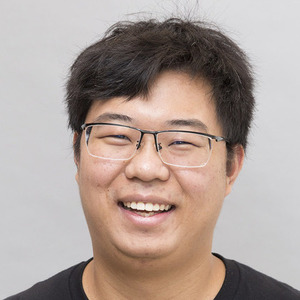
Zhen Liu is an Assistant Professor at the School of Data Science, CUHK-Shenzhen. His research focuses on generative models, 3D representations, and the synergy of spatial and semantic understanding in AI systems. With a PhD from Mila and Université de Montréal, he develops foundational methods for physics simulation, 3D assembly, and semantic reasoning in neural networks. His work bridges machine learning with applications in computer vision and graphics, emphasizing: Generative architectures for 3D content creation Diffusion model alignment techniques Efficient parameter finetuning strategies Dr. Liu mentors students in AI research and contributes to advancing 3D generative modeling paradigms.
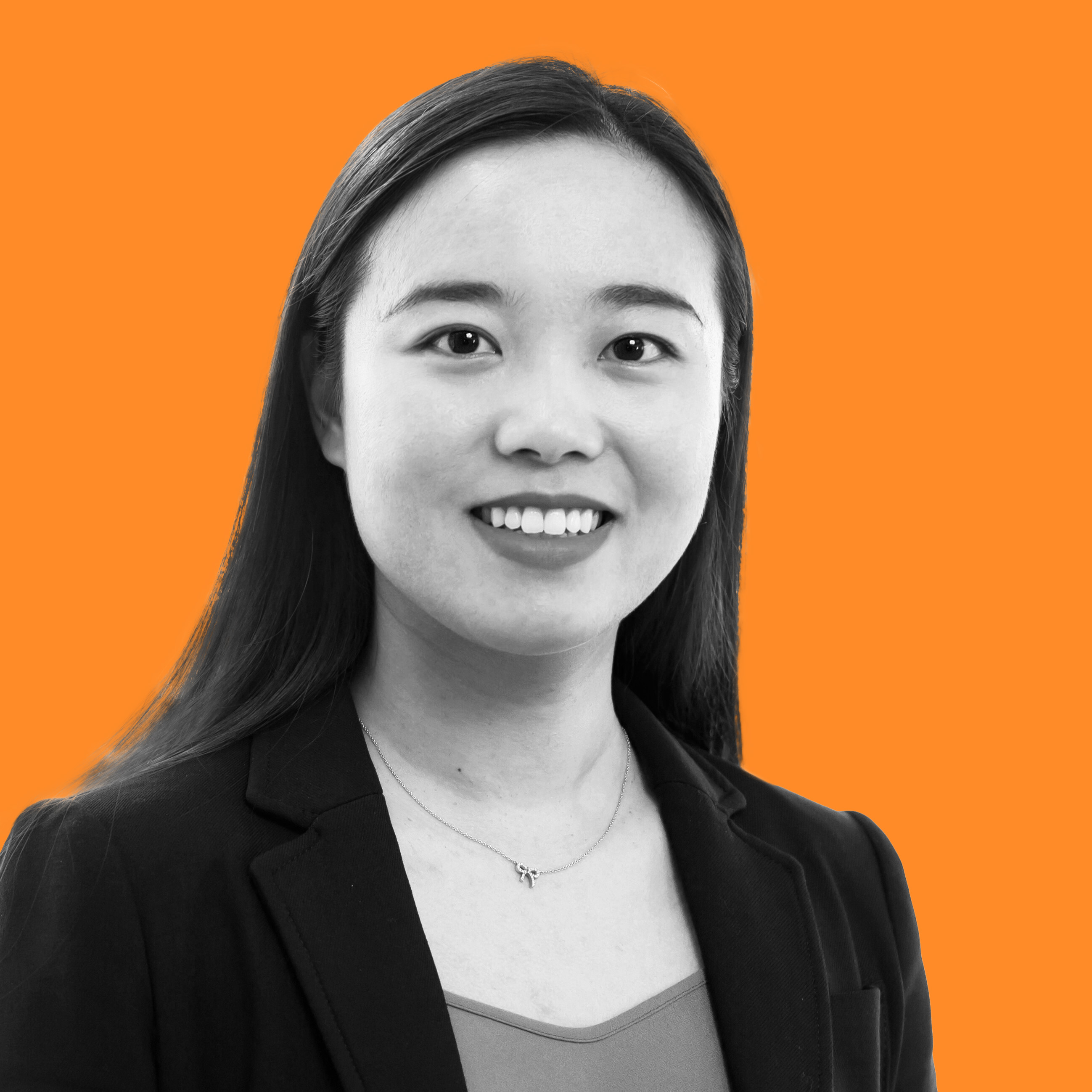
Jie Xu is a Scientist at Argonne National Laboratory and a CASE Affiliated Scientist at the University of Chicago, Pritzker School of Molecular Engineering . Her research focuses on engineering durable, scalable, and sustainable polymer semiconductors for skin-like electronics and autonomous material discovery. Education : PhD in Chemistry (Nanjing University), Postdoctoral Fellow (Stanford University) Her research bridges polymer physics , self-driving laboratories , and AI-guided material synthesis to address challenges in stretchable electronics, recyclable polymers, and energy-efficient manufacturing. She pioneered polymer circuits that remain conductive under extreme deformation and developed the first roll-to-roll mass-production method for stretchable semiconductors. Her 15 most recent articles highlight advancements in AI-driven polymer discovery , biodegradable electronics , and multi-modal energy dissipation . Key themes include autonomous experimentation , hydrogen-bonded polymer systems , and machine learning for conjugated polymers , with applications in wearable medical sensors , soft robotics , and human-computer interfaces . Scientific accolades include the Materials Research Society Postdoctoral Award , MIT Technology Review’s Innovators Under 35 , and recognition as a Scialog Fellow . She serves on editorial boards for APL Machine Learning and Flexible Electronics , and her team at Argonne includes postdocs and students working on self-driving labs and degradable polymers .
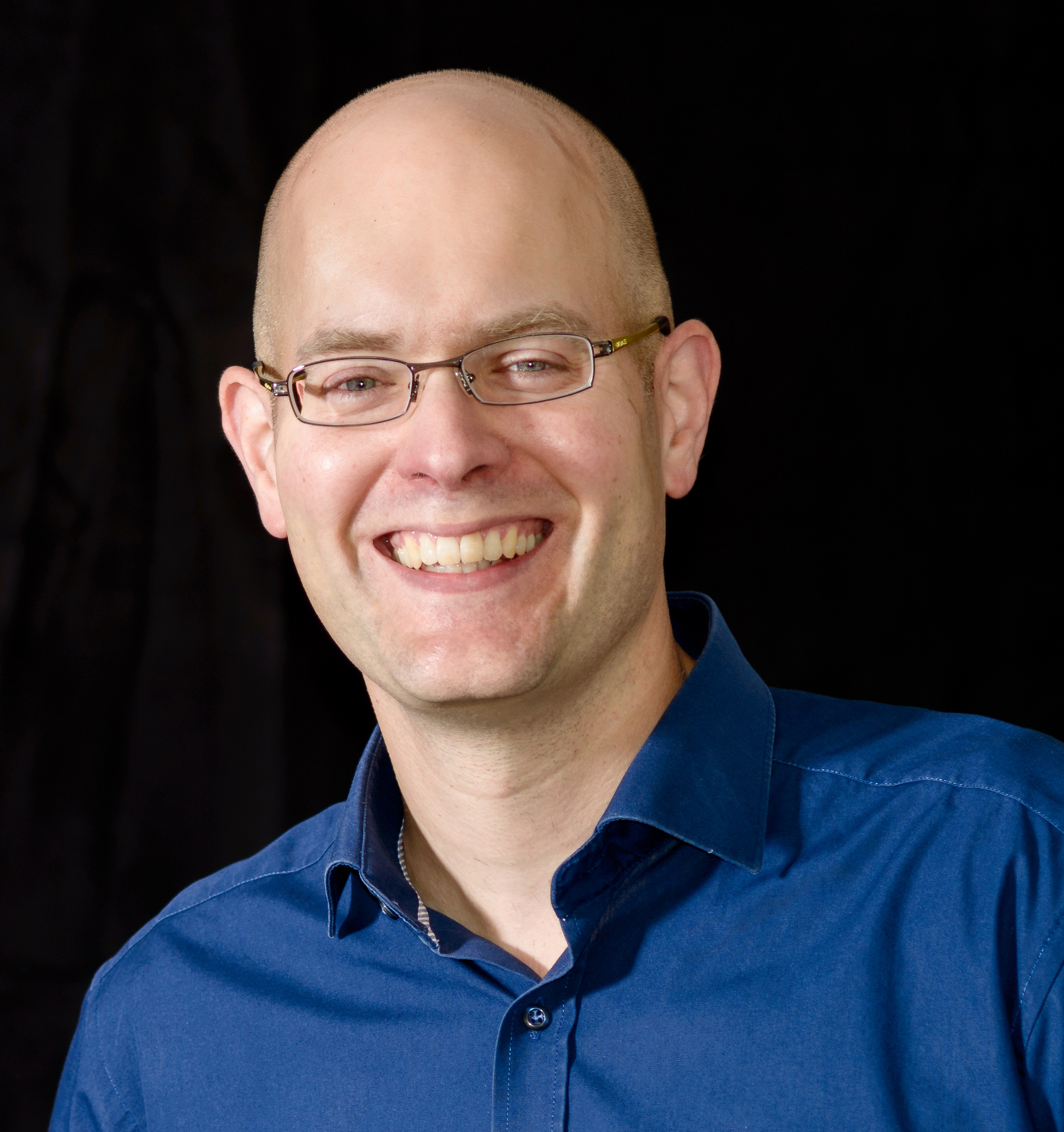
Patrick J. Walsh is the Rhodes-Thompson Professor of Chemistry at the University of Pennsylvania’s College of Arts & Sciences. He leads the Walsh Group, focusing on catalytic methodologies and synthetic chemistry with an emphasis on merging organic/inorganic synthesis and exploring unusual reactivity. His educational background includes a B.A. in Chemistry from UC San Diego (1986), a Ph.D. in Chemistry from UC Berkeley (1991), and a NSF Postdoctoral Fellowship at The Scripps Research Institute (1991–1994). His research interests span catalysis, radical chemistry, and transition metal systems, with key projects involving cation-pi interactions for C-H activation, super electron-donor (SED) 2-azaallyl anions, and photoredox-driven reactions. The group also develops pharmaceutical analogs like bioisosteric BCP compounds and explores transition metal-free syntheses for complex molecules. Recent publications highlight advancements in Ce(III) photoredox systems, Smiles rearrangement applications, and nickel-catalyzed enantioselective reactions. The work demonstrates a focus on sustainable catalytic strategies, mechanistic innovation, and novel compound construction. No scientific awards are explicitly listed in the provided texts. Professor Walsh’s advising spans doctoral, master’s, and undergraduate students, contributing to lab efforts in catalysis and organic synthesis. His team collaborates on diverse projects, including molecular glassformer design and radical relay pathways. Labs/teams: The Walsh Group at Penn actively researches in the areas of synthetic chemistry, catalysis, and radical-mediated reactions. The group emphasizes interdisciplinary approaches and includes visiting scholars alongside traditional academic trainees.
Alicia L Carriquiry is a Distinguished Professor and President's Chair at Iowa State University, serving as Director of the Center for Statistics and Applications in Forensic Evidence (CSAFE). She holds a PhD in Statistics from Iowa State University (1989), an MS from the University of Illinois at Urbana-Champaign/ISU (1985/1986), and a BS from Universidad de la Republica in Uruguay (1981). Her research focuses on applying statistical methods to forensic science, nutrition epidemiology, and plant and animal breeding, with a particular emphasis on Bayesian frameworks. Recent research emphasizes forensic evidence analysis, including footwear impression algorithms, handwriting software development, and probabilistic evidence assessment tools. She also explores dietary intake patterns in populations across Latin America and Southeast Asia, addressing nutrient deficiencies and public health interventions. Her work bridges statistical rigor with practical applications in criminal justice, improving forensic methodologies through algorithmic innovation and interdisciplinary collaboration. As CSAFE Director, she leads initiatives to enhance statistical foundations in forensic disciplines, train practitioners, and develop open-source datasets. Notable contributions include database search methodologies, error rate analyses, and software tools like handwriter for handwriting analysis. Her research underscores the importance of probabilistic reasoning in legal contexts and addresses challenges in multi-camera source identification and nonlinear image distortion correction. Carriquiry’s leadership extends to editorial roles and professional service, advancing statistical standards in forensic science. She remains active in training programs and collaborative research projects, fostering reproducibility and relevance in scientific inquiry.
Dr. Muhammad Najib is an Assistant Professor (Lecturer in the UK system) at Heriot-Watt University's School of Mathematical and Computer Sciences in Edinburgh. He is also an Associate Member of the University of Oxford's Department of Computer Science. His research focuses on ensuring AI safety through formal verification methods, particularly in multi-agent systems. Najib holds a DPhil/PhD from the University of Oxford, supervised by Julian Gutierrez and Mike Wooldridge, and has industry experience at Samsung Electronics. Education: BSc from Sepuluh Nopember Institute of Technology, MSc from the University of Liverpool, DPhil/PhD from the University of Oxford. He previously worked as a postdoctoral researcher at TU Kaiserslautern under Anthony Lin. Research Interests: Logic and game theory in AI foundations, equilibrium verification in multi-agent systems, temporal logics, and formal verification techniques. He developed the EVE tool for rational verification. Najib actively supervises PhD students and collaborates on projects like the UKRI AI CDT-D2AIR. Key Contributions: Published 17+ research outputs since 2018. Areas include equilibrium design, probabilistic multi-agent systems, and computational complexity analysis. His work bridges formal methods with AI safety, emphasizing automated synthesis and model checking.
Frank Glorius is a Professor of Organic Chemistry at the University of Münster, Germany. With a career spanning multiple institutions, he focuses on developing innovative catalytic methods for organic synthesis and materials science. Born: 1972, Germany Education: PhD in Organic Chemistry (summa cum laude), University of Basel & Max-Planck-Institut für Kohlenforschung Key Research Areas: Photocatalysis, C-H Activation, Organocatalysis, Data Science, and N-Heterocyclic Carbenes His recent work emphasizes photocatalysis , machine learning for reaction modeling , and catalytic hydrogenation . He has pioneered interdisciplinary approaches combining organic chemistry with computational methods. Scientific Awards: Clarivate Highly Cited Researcher (2014-2021) ERC Advanced Grant (2018) Gottfried Wilhelm Leibniz-Award (2013) Alfried Krupp Prize for Young University Teachers (2006) He leads the Glorius Group, which organizes symposia on photochemistry and data science, and engages in industry-academia collaborations through the Forschung der Chemischen Industrie symposium.
Christine ABDALLA MIKHAEIL is an Assistant Professor in the Department of Management of Information Systems at IÉSEG School of Management in France. She holds dual Ph.D. degrees in Business Administration with a focus on Information Technology from the University of Paris Dauphine (France) and Georgia State University (USA), alongside advanced degrees in Business Consulting and Administration from Paris Dauphine. Her research focuses on collective action dynamics in social media, cybersecurity and privacy challenges, artificial intelligence applications, and disinformation propagation. Recent work explores the adoption of privacy-enhancing technologies (PETs), paradoxes in hybrid work visibility, and data adequacy in qualitative IS research. She has published in leading journals such as Information Systems Journal and Information and Organization . Her articles reflect a strong emphasis on understanding socio-technical systems through interdisciplinary lenses, combining behavioral theories with digital technology analysis. No specific awards or grant details are mentioned in her profile. She currently advises no formally listed students.
Prof. Kat Smith is a Professor of Public Health Policy at the University of Strathclyde, leading the Centre for Health Policy and the Scottish Health Equity Research Unit (SHERU). Her research focuses on policy impacts on public health and inequalities, with expertise in qualitative and mixed methods. She co-leads the Health-Justice Nexus initiative and contributes to the ESRC Centre for Lifecourse Health Equity (Equalise). Her career includes roles at Edinburgh, Bath, and Durham Universities, analyzing UK health policies and corporate influence. She has authored/co-authored over 125 publications and a forthcoming book on reducing health inequalities. Education: PhD in Health Inequalities (University of Edinburgh, 2008), MSc Geography (Edinburgh, 2004), MA(Hons) Geography (Edinburgh, 2002) External Roles: Fellow, Academy of Social Sciences; Honorary Professor (Edinburgh University, 2019-2022); Co-Editor of Evidence & Policy Research interests include policy implementation, health equity, and intersectoral collaboration. Notable awards include the BMA Public Health Book Prize (2016) and the Cambridge University Prize for Excellence in Social Policy (2018). She mentors graduate students in public health policy and advocates for evidence-based decision-making. Key projects include the Health-Justice Nexus (2024-2029) and the UKRI Population Health Network Cluster. Her work addresses social determinants of health, corporate influence, and equitable policy design.
Prof. Robert Güttel is the Director of the Institute for Chemical Engineering at the University of Ulm. He is a member of the Ulm Center for Thermal and Environmental Technology (UZWR) since 2016 and serves on its executive board. His work focuses on catalytic reaction engineering, particularly in CO2 utilization, methanation, Fischer-Tropsch synthesis, and process intensification. Research emphasizes catalyst design, reaction kinetics, and reactor modeling under dynamic conditions. Educations : Not explicitly stated in the provided text. His academic career is highlighted through his leadership roles and publications. Research Interests : Güttel’s research spans heterogeneous catalysis for CO/CO2 hydrogenation, transient kinetic analysis, polymeric reactors for extraterrestrial applications, and AI-driven reactor design. His team develops advanced catalysts (e.g., Ru/TiO2, cobalt@silica core-shell structures) and investigates novel reactor concepts like fibrous structured catalysts and sorption-enhanced processes. Recent work explores in-situ methanation on Mars and the impact of light on catalytic selectivity. Publications Trends : His 2024–2025 articles focus on low-temperature methanation beyond Earth, AI-based residence time analysis, and deactivation mechanisms. Studies highlight both experimental and computational approaches to optimize catalytic systems for sustainability and industrial relevance. Awards : No specific scientific awards mentioned in the text. Grants/Labs : Leads the Institute for Chemical Engineering at Ulm, collaborating on EU-funded projects related to power-to-X technologies and extraterrestrial chemistry. Active in developing lab-scale reactor systems and industrial partnerships for catalyst testing. Labs/Teams : Directs research groups focused on catalytic reactor design, transient kinetic methods, and sustainable process engineering. Collaborates with institutions on Mars habitat resource utilization and green hydrogen production systems.
Eric Coatanea is a Professor at Tampere University, affiliated with the Automation Technology and Mechanical Engineering department within the Faculty of Engineering and Natural Sciences. His research focuses on manufacturing systems, causal graph networks, multi-disciplinary optimization, and AI integration in engineering design. He holds a BSc from University of West Brittany (1990), MSc from INSA Toulouse (1993), and teaching certification from Ecole Normale Supérieure (1994). Research interests include modeling manufacturing systems, additive manufacturing (e.g., Directed Energy Deposition), causal graphs for decision-making, and systems engineering. Notable awards include the Chevalier des Palmes Académiques (2018) and Marie-Curie Fellowship (2006–2008). Recent publications emphasize optimization algorithms combining AI (e.g., L-ANN-GWO), viscosity effects in 3D printing, and causal graph applications in MDO. His work bridges theoretical frameworks with practical engineering challenges, focusing on early design synthesis and sustainable manufacturing. Commitments include editorial roles (Journal of Integrated Design & Process Science), NSERC Canada advisory, and board memberships (Dynavio Cooperative Oy, Selko Oy). Current projects include LILIAM, ÄVE, and DIGITBrain initiatives.
Alberto Viglione is an Associate Professor at the Politecnico di Torino , Department of Environment, Land and Infrastructure Engineering (DIATI), and a member of the Interdepartmental Center SmartData@PoliTO. He has been a faculty member since 2019, following a decade as a Research Fellow at the Vienna University of Technology. University: Politecnico di Torino Department: DIATI – Department of Environment, Land and Infrastructure Engineering Rank: Associate Professor Email: alberto.viglione@polito.it His research focuses on flood hydrology, water resources, and hydro-meteorological extremes , integrating statistical analysis, climate change impacts, land use dynamics, and socio-hydrological modeling. He investigates the spatio-temporal dynamics of climatic, hydrological, and human processes in river basins and their implications for extreme event risks. His work emphasizes data integration, conceptual modeling, and risk assessment across scales. The recent publications highlight a strong trend in analyzing European flood dynamics , the impacts of climate change , and the development of socio-hydrological frameworks that incorporate human behavior and societal memory into flood risk modeling. His research spans from statistical hydrology in ungauged basins to large-scale assessments of climate-flood interactions. Scientific Awards and Honors: AMGA Award for best PhD thesis on water resources (2009) Editorial and Professional Service: Associate Editor, Water Resources Research (2014–present) Associate Editor, Hydrological Sciences Journal (2012–2018) Associate Editor, WIRES Water (2012–2020) Associate Editor, Journal of Hydrology and Hydromechanics (2019–present) Scientific Committee Member, European Geosciences Union (2019–2023) Secretary, International Commission on Water Resources Systems, IAHS (2015–present) Teaching and Advising: He teaches courses such as Bayesian Inference , Applied Hydrology , Fundamentals of Environmental Geosciences , and Hydro-meteorological Risk Assessment . He is a PhD supervisor and member of multiple PhD colleges in Civil and Environmental Engineering at Politecnico di Torino. He currently advises PhD students including Tsion Ayalew Kebede , Emanuele Mombrini , Luigi Cafiero , Luca Lombardo , and Matteo Pesce . His research is supported by grants from national (PRIN), EU, and commercial sources, including projects like Clim2FlEx , RETURN , and ATO4WATER . Research Labs and Teams: He is affiliated with the SmartData@PoliTO laboratory, focusing on big data and data science applications in hydrology and environmental systems.
Ke Li is an Assistant Professor at Simon Fraser University (SFU) in Vancouver, Canada. He previously worked at Google and the Institute for Advanced Study (IAS) in Princeton. He holds a Ph.D. from UC Berkeley, advised by Jitendra Malik, and a B.Sc. in Computer Science from the University of Toronto. His research focuses on machine learning, computer vision, and algorithms, with contributions to generative modeling, neural rendering, fast nearest neighbor search, and meta-learning. Education: Ph.D. in Computer Science, UC Berkeley (2016) B.Sc. in Computer Science, University of Toronto (2008) Research Interests: Dr. Li explores foundational challenges in machine learning, including: - Generative Modeling : Developing methods like Implicit Maximum Likelihood Estimation (IMLE) to improve generative model training. - Neural Rendering : Innovating techniques like Proximity Attention Point Rendering (PAPR) for dynamic 3D scene representation. - Fast Nearest Neighbor Search : Pioneering algorithms to overcome dimensionality curses. - Learning to Optimize : Automating algorithm design through reinforcement learning. Professional Activities: Organized the IAS Seminar Series on Theoretical Machine Learning with Sanjeev Arora Lead organizer of the BIRS Workshop on 3D Generative Models Reviewer for NeurIPS, ICML, CVPR, and other top conferences Teaching: Recently taught CMPT 726: Machine Learning and CMPT 983: Generative Models at SFU.
Majed S. Fataftah is an Assistant Professor of Chemistry at the University of Illinois, affiliated with the College of Liberal Arts & Sciences. He leads the Fataftah Research Group, focusing on physical inorganic chemistry at the intersection of chemistry, physics, and materials science. His research emphasizes synthetic chemistry to control photophysical properties for quantum information science, magnetic properties for novel materials, and reactivity modeling for catalysis. Education : B.S. in Chemistry & Biochemistry, University of Washington (2013) Ph.D. in Chemistry, Northwestern University (2019) Postdoctoral Fellow, Yale University (2019–2023) Research Interests : Inorganic and bioinorganic chemistry: synthesis, spectroscopy, electronic structure Metal-organic frameworks Molecular magnetism Quantum information science Key Research Themes : Students in his lab develop expertise in synthesizing small molecules/materials, X-ray crystallography, magnetometry, and advanced spectroscopic techniques (EPR, UV-vis-NIR, Mössbauer). Recent work includes studies on nickel-iron clusters, mixed-valence iron complexes, and vanadium-based molecular qubits. Labs/Teams : The Fataftah Group (2024) includes researchers like Garrett, Austin, Mari, Arsha, Joshua, Adrienne, Cayden, and Gwen, though formal student lists are not explicitly documented.
Dr. Michael S. Matthews is a Professor and Interim Department Chair in the Department of Special Education and Child Development at the University of North Carolina at Charlotte (UNC Charlotte). He also serves as Director of the Academically/Intellectually Gifted M.Ed. Program. His primary roles include teaching, research, and leadership in gifted education policy, program development, and equity initiatives. He is co-editor of the Gifted Child Quarterly and a board member of the National Association for Gifted Children. Education: Ph.D. in Educational Psychology (Gifted & Creative Education), University of Georgia (2002) M.A. in Anthropology (Archaeology), University of Wisconsin (1991) B.A. in Chemistry, magna cum laude, University of Tennessee at Chattanooga (1989) Research focuses on: Gifted education policy and equity Assessment and identification of advanced learners Parental influence on gifted children Underachievement prevention Science education for gifted learners Homeschooling dynamics Publications highlight methodological rigor, transparency in research, and addressing disparities in gifted program access. He advocates for open science practices and has led initiatives to improve identification rates for underrepresented groups. His work bridges academia and policy, emphasizing real-world applications for diverse learners. Awards include the NAGC Early Scholar Award (2014), AERA Pyryt Collaboration Award (2017), and the Texas AGT Legacy Book Award (2019). He has advised numerous graduate students and contributed to national education reforms through board memberships and advisory roles.
Kai Landskron is a Professor in the Department of Chemistry at Lehigh University. His research focuses on high-pressure synthesis of mesoporous materials, supercapacitive swing adsorption for CO2 separation, and electrochemical engineering. He has been at Lehigh since 2006 and was promoted to full professor in 2018. Diplom in Chemistry, University of Bayreuth, Germany PhD in Chemistry, Ludwig Maximilians University of Munich Research interests include Energy and Catalysis , Molecular Assembly , Materials Science , and Nanoscience . Key areas are supercapacitive CO2 capture, high-pressure synthesis of mesoporous materials, and electrochemical methods for gas separation. Recent publications highlight trends in supercapacitive swing adsorption (2024, 2014), high-pressure synthesis of nanomaterials (2010, 2009), and CO2 separation technologies (2019, 2017). Subfields span adsorption kinetics, porous frameworks, and material stability under extreme conditions. Current students include Alysson Bermudez, Jacob Dooley, Jiajie Li, and Muhammad Bilal Zarafullah. The Landskron Research Group explores periodic mesoporous organosilicas, coesite nanocrystals, and diamond monoliths.