Raúl AranovichView profile
Professor
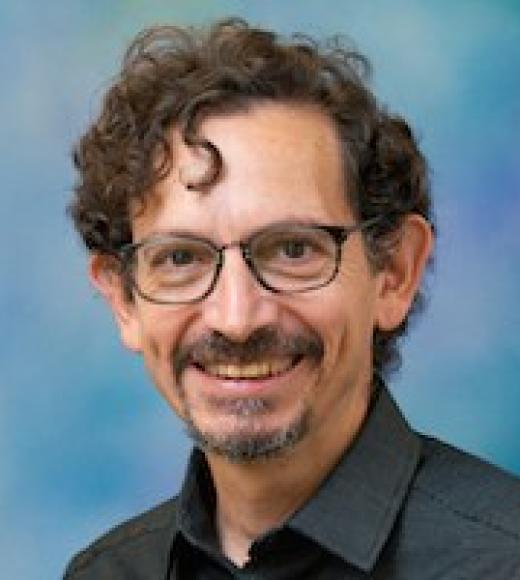
Raúl Aranovich is a Professor in the Department of Linguistics at the University of California, Davis, within the College of Letters and Science. He has been a faculty member at UC Davis since 2001 and previously held academic positions at Ohio State University and the University of Texas at San Antonio. He earned his Ph.D. in Linguistics from UC San Diego in 1996 under the supervision of Professors S.-Y. Kuroda and John Moore. His research centers on theoretical linguistics, particularly the interfaces between syntax, morphology, and semantics, with a focus on grammatical mismatches across these domains. He specializes in Romance languages—especially Spanish—and lesser-studied languages such as Fijian and Shona. His work increasingly integrates computational methods, including corpus linguistics, natural language processing, and knowledge representation via ontologies. He has also contributed to interdisciplinary research in cybersecurity communication and neural machine translation. The recent publications of Raúl Aranovich span a wide range of subfields, from historical linguistics and construction grammar to computational modeling and cross-linguistic typology. A strong trend in his work is the use of formal and empirical methods to analyze syntactic variation, auxiliary selection, impersonal constructions, and morphological complexity, often with a comparative approach across languages. His interdisciplinary collaborations, especially with computer scientists, reflect a growing interest in applying linguistic theory to real-world digital communication and security challenges. Fellow, Linguistic Society of America Raúl Aranovich has mentored numerous students and collaborators, though specific advisees are not listed in the provided text. He has secured research funding through collaborative projects, particularly in computational linguistics and cybersecurity, as evidenced by co-authored publications with researchers in computer science. His work on low-resource machine translation and semantic web applications suggests active grant-supported research. He is involved in modeling grammars using OWL ontologies and has explored language use in digital communities such as GitHub and cybersecurity forums. His research group likely includes students and postdocs working at the intersection of linguistics and computer science, particularly in NLP and knowledge representation.