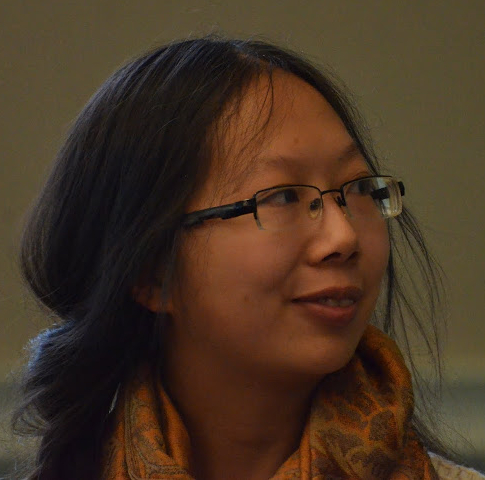
Ethan Poole is an Assistant Professor in the Department of Linguistics at the University of California, Los Angeles (UCLA). His research focuses on syntax, the syntax-semantics interface, and morphological case, particularly in Finnish. Key areas include reconstruction effects, quirky subjects, and cross-clausal dependencies, with recent work on the Williams Cycle and Hindi-Urdu binding. His research interests span syntactic movement interpretation, morphological case (especially Finnish), and quirky subjects. He explores topics like embedding, intervention effects in tough-constructions, and NPI grammaticality illusions. Collaborative work includes studies on Hindi-Urdu scrambling and tough-constructions. His articles analyze reconstruction effects, trace semantics, and syntactic phases, reflecting a focus on formal syntax and interface constraints. Notable themes include case assignment mechanisms and the theoretical implications of syntactic movement for semantic interpretation. No specific scientific awards or grants are listed in the provided information. He advises no students in the given data. His work contributes to foundational questions in syntactic theory and cross-linguistic variation.
Professor Aditi Lahiri is a Research Professor of Linguistics at the University of Oxford's Faculty of Linguistics, Philology and Phonetics. She holds positions in the Centre for Linguistics and Philology and directs the Language and Brain Laboratory. Her research focuses on phonology, phonetics, historical linguistics, psycholinguistics, and neurolinguistics, with special expertise in metrical theory, feature theory, and morphological complexity. Education : BA (Mathematics, Economics) from University of Calcutta (1971); MA (Comparative Philology) from University of Calcutta (1973); DPhil (Comparative Philology and Linguistics) from University of Calcutta (1979); PhD (Linguistics) from Brown University (1982). Research Interests : Her work spans experimental and theoretical linguistics, including prosodic phrasing, lexical representation, language change, and neural correlates of phonological processing. Key areas include: Metrical phonology and historical sound change Cognitive representation of speech sounds Morphological complexity in the mental lexicon Speech perception and production mechanisms Recent Research Trends : Over the past decade, her publications emphasize cross-disciplinary approaches, integrating experimental psycholinguistics with computational modeling (e.g., ERC-funded projects on morphophonological alternations). Recent work explores language processing in multilingual speakers and the neural basis of phonological features. Awards : Recipient of prestigious awards including the Leibniz Prize (2000), Max Planck Research Prize (1994), and Fellow of the British Academy (2010). She serves as Vice President of the British Academy and President of the Philological Society. Grants & Leadership : Secured over €8 million in research funding, including ERC Advanced Grants (e.g., MORPHON, WORDS). Directed the DFG-funded Sonderforschungsbereich 471 (2006-2008). Established key partnerships in India through endowed scholarships and academic outreach initiatives. Labs & Collaborations : Leads the Language & Brain Laboratory, collaborating internationally on projects combining neurolinguistic methods with historical and experimental linguistics. Supervised numerous PhD students who have become leading academics globally.
Mykel Loren Brinkerhoff is a Postdoctoral Research Associate and Acting Phonetics Lab Director in the Department of Linguistics at the University of Washington. His research focuses on phonology, phonetics, and linguistic fieldwork, particularly on Mesoamerican languages like Santiago Laxopa Zapotec. He investigates syntactic and prosodic phenomena in Celtic and Germanic languages and collaborates on projects such as the Zapotec Language Project. Brinkerhoff has taught at the University of California, Santa Cruz, and the University of North Carolina at Chapel Hill, leading courses in phonetics, phonology, and syntax. He mentors students in fieldwork and linguistic analysis, with notable projects on Zapotec voice quality and Scandinavian syntax. His work bridges theoretical linguistics with empirical research, contributing to our understanding of phonological interfaces and language structure. His publications explore topics like voice quality in Zapotec, Norwegian object shift, and Welsh morphophonology. He actively contributes to academic discourse through presentations at conferences like LabPhon and SSILA. Brinkerhoff’s research also emphasizes documenting endangered languages and advancing methodologies in acoustic phonetics.
Marcin Wągiel is a semanticist affiliated with Masaryk University's Department of Czech Language and the Centre for Corpus and Experimental Research on Slavic Languages at the University of Wrocław. As an Alexander von Humboldt Fellow at Leibniz-Zentrum Allgemeine Sprachwissenschaft (ZAS), he researches mereotopology across linguistic domains. His work focuses on compositional semantics, quantification, and morphologically complex expressions. Research interests include: Parthood and mereotopological structures Subatomic quantification Cross-linguistic analysis of Slavic languages Semantic change and event semantics He received the E.W. Beth Dissertation Prize for his work on subatomic quantification. Current projects explore classifier constructions and additive numerals across languages.
Jon Brennan is an Assistant Professor in the Department of Linguistics at the University of Michigan, affiliated with the College of Literature, Science, and the Arts (LSA). His research focuses on neurolinguistics, computational linguistics, and psycholinguistics, particularly investigating how the brain processes language structure and meaning. He leads the Computational Neurolinguistics Lab, which develops neurocomputational models to study language comprehension mechanisms. Brennan received an NSF Grant for collaborative research with Christophe Pallier (Paris) on neurocomputational models of natural language processing. His work integrates EEG, fMRI, and MEG techniques to decode linguistic features in neural signals. Key research areas include syntax-semantics interfaces, multilingual processing, and developmental disorders like dyslexia. Notable contributions include studies on hierarchical syntactic structure, minimal pairs in language models, and neural correlates of theory of mind in children. Brennan collaborates internationally, exemplified by the US-French NSF-CRCNS grant. He has published extensively on topics like neural decoding of grammatical features, LLM internal representations, and bilingual processing mechanisms. Scientific awards include the NSF Collaborative Research in Computational Neuroscience (CRCNS) Grant (2016). His research bridges computational modeling and experimental neuroscience, aiming to reveal how language mechanisms are implemented in neural systems.
Julie Anne Legate is Professor and Chair of Linguistics at the University of Pennsylvania's Department of Linguistics. She earned her PhD from the Massachusetts Institute of Technology in 2002. Legate co-directs the Penn Syntax Lab and served as Editor-in-Chief of Natural Language & Linguistic Theory for 10 years. Her research focuses on syntactic theory, morphosyntax, and syntax-semantics interfaces, with specialization in endangered/understudied languages. Key interests include passives, impersonals, causatives, null subjects, case theory, and locality domains. She maintains secondary research interests in language acquisition. Legate's publications demonstrate extensive work on voice systems (especially passives), ergativity, case theory, recursion, and cross-linguistic analysis of languages including Acehnese, Warlpiri, and Lithuanian. Her research frequently combines theoretical innovation with empirical fieldwork. Awards include the LSA’s Best Paper in Language Award (2020) for On Passives of Passives . She has advised multiple PhD students including Faruk Akkuş (2021), Milena Šereikaitė (2020), Ava Irani (2019), Helen Jeoung (2018), and Einar Freyr Sigurðsson (2017). Current projects include: syntactic islands (with Charles Yang), Mandarin bridge verbs (with Jiayi Lu and Charles Yang), null subjects in Brazilian Portuguese (with Gesoel Mendes), and passive agent binding.
Kay James is an Associate Professor of Neuroscience and Education at Teachers College, Columbia University, and serves as Director of the Graduate Program in Neuroscience and Education and the Neurocognition of Language Lab. Their work focuses on neural mechanisms underlying language disorders, second language acquisition, and cognitive processes in schizophrenia. Key affiliations include Biobehavioral Sciences, Neuroscience and Education, Human Development, and Cognitive Science in Education. Research interests emphasize the neural basis of language processing in pathological contexts such as developmental speech disorders and schizophrenia, alongside second language acquisition in adults. Their interdisciplinary approach bridges cognitive neuroscience with clinical and educational interventions. Publications span studies on mismatch negativity in speech disorders, syntactic development in Arabic diglossia, and brain-behavior asymmetry in schizophrenia. Ongoing work explores voice-related cortical potentials and emotional face processing through electrophysiological methods. Labs and teams include the Neurocognition of Language Lab, focusing on language neurobiology and clinical applications. Grants and advising roles are not explicitly detailed in the provided materials.
Oliver Bond is a Reader in Linguistics (Associate Professor) at the University of Surrey, affiliated with the Surrey Morphology Group (SMG) within the School of Literature & Languages. He holds a PhD from the University of Manchester and specializes in linguistic typology, morphology, syntax, and language documentation. His research focuses on the systemic properties of language, particularly in African and Himalayan languages, exploring features like agreement systems, case marking, and morphological complexity. Key roles include Deputy Director of SMG and PhD Coordinator. His research projects include studies on Nuer (South Sudan/Ethiopia), Tibeto-Burman languages of Nepal, and prominent internal possessors. He has received a prestigious British Academy Award for his work on language evolution and analogy in morphological change. Bond supervises PhD students in areas such as morphology, syntax, and language documentation. Notable former students include Dávid Győrfi and Tatiana Reid. His publications span typological studies, language documentation, and theoretical morphology, with recent work on contact effects in Tibeto-Burman languages and negation systems in African languages. Bond’s contributions include collaborative projects like the Nuer Literacy Initiative and the Manang Languages Project. He actively publishes in journals like Journal of Linguistics and Linguistic Typology , and maintains a comprehensive resource, the Nuer Lexicon .
Rita Finkbeiner is a Professor of German Linguistics at Johannes Gutenberg-Universität Mainz, where she has held a W3 professorship since April 2020 and served as managing director of the German Institute from 2022-2023. Previously, she was a W2 Professor at Heinrich-Heine-Universität Düsseldorf (2018-2020) and has been affiliated with Johannes Gutenberg-Universität Mainz since 2010. Her research focuses on the critical interface between grammatical structures and pragmatic functions in language use. Her academic background includes: Magistra Artium in German Linguistics and European Ethnology from Humboldt-Universität zu Berlin (2000) Ph.D. in German Linguistics from Stockholm University (2009) Habilitation at Johannes Gutenberg-Universität Mainz (2016) Professor Finkbeiner's research examines how linguistic constructions operate at the grammar-pragmatics interface, with particular attention to speech acts, implicit meaning, and expressivity in German. She investigates phenomena such as wh-headlines in newspapers, reduplicative constructions, expressive morphology, and the pragmatics of social media commenting. Her work bridges theoretical linguistics with practical applications in language teaching and media discourse, demonstrating how linguistic form and communicative function interact systematically. Analysis of her recent publications reveals a consistent focus on construction grammar and pragmatics, with increasing attention to digital communication patterns while maintaining strong theoretical foundations. Key trends include exploration of wh-headlines across discourse types, expressive morphology in German word formation, and the pragmatics of social media commenting, demonstrating both theoretical depth and practical relevance to contemporary communication contexts. Professor Finkbeiner actively supervises doctoral and master's students, with numerous successful completions including Julian Stawecki (2024) and Robert Külpmann (2019). She has led significant research projects including the DFG-funded "W-Überschriften im Deutschen" (2018-2022) on German wh-headlines, and is coordinating the development of a German linguistics textbook. She collaborates closely with researchers including Dr. Robert Külpmann, Dr. Paul Reszke, and Charlotte Eisenrauch. She leads a research team at Johannes Gutenberg-Universität Mainz that investigates construction grammar and pragmatics across various discourse contexts, with particular attention to digital communication and educational applications. Her work environment provides a strong interdisciplinary context connecting theoretical linguistics with language education and media studies.
Laura Kalin is the Acting Director of the Program in Linguistics at Princeton University since Fall 2024, having previously served as Associate Director from Fall 2023. She is an Associate Professor of Linguistics in the Council of the Humanities and joined Princeton in 2016. Her full name is Laura Kalin, and she holds a Ph.D. from UCLA (2014). She is based at Green Hall (1-S-4C/1-S-19) and can be reached via lkalin@princeton.edu. Her research focuses on syntax and morphology in understudied and endangered languages, particularly Neo-Aramaic (e.g., Turoyo, Senaya, and Adıyaman Kurmanji), Austroasiatic (Nancowry), Austronesian (Malagasy), and Carib (Hixkaryana) languages. Key research themes include allomorphy, infixation, nominal licensing, agreement systems, and the interplay between morphosyntax and phonology. She also explores root-and-pattern morpho-phono-syntactic structures in languages like Malagasy and Turoyo. Laura’s research contributions span formal linguistic theory, typology, and fieldwork-based analysis. Recent work emphasizes cyclic morphosyntax-phonology interactions and morphological opacity across languages. She has published in major journals such as NLLT and Glossa, and her website (www.laurakalin.com) provides further details on her work. No scientific awards are explicitly listed in the provided texts. Her advising and grant activities remain unreported here. She is affiliated with the Program in Linguistics, the Humanities Council, and the Joseph Henry House at Princeton.
Rachel Nordlinger is a Professor of Linguistics and Director of the Research Unit for Indigenous Language at the University of Melbourne's School of Languages and Linguistics. Her research focuses on documenting and describing Australian Indigenous languages, with a particular emphasis on syntactic and morphological theory. She has conducted extensive fieldwork with communities speaking Bilinarra, Wambaya, Gudanji, Murrinhpatha, and Marri Ngarr, contributing to language preservation efforts. She holds a PhD from Stanford University and has authored influential works including A Grammar of Wambaya and co-edited volumes like The Languages and Linguistics of Australia . Nordlinger is a Fellow of the Australian Academy of Humanities (2017) and leads major grants like the ARC Centre of Excellence for Dynamics of Language (2014-2026). Her work integrates linguistic theory with community-driven language revitalization projects, emphasizing the interconnectedness of language and cultural knowledge. Key research grants include projects on polysynthetic language processing (2021-2025), Indigenous language documentation, and cross-linguistic syntactic analysis. Nordlinger collaborates with institutions such as PARADISEC and the Kanamkek-Yile Ngala Museum to preserve endangered language materials. Her interdisciplinary approach bridges formal linguistic analysis with applied community linguistics.
Mai Ha Vu is an Assistant Professor at the University of Toronto Mississauga , split between the Department of Language Studies and the Department of Mathematics, Computer Science, and Statistics . Her work bridges theoretical linguistics, computational methods, and biological data modeling. Ph.D. in Linguistics, University of Delaware (2020) M.A. in Linguistics, University of Delaware (2014) B.A. in Psychology and Linguistics, Grinnell College (2013) Research focuses on applying formal language theory to understand human language patterns and train biologically reliable language models . Recent work includes antibody language modeling (Nature Computational Sciences 2022) and syntax-prosody mapping via logical transductions (SIGMORPHON 2022). Key research trends in publications: interdisciplinary applications of computational linguistics to immunology, psycholinguistic modeling of neural language models, and formal syntactic analysis of negation and wh-questions across languages.
Marc Authier is a Professor of French and Linguistics at The Pennsylvania State University's Department of French and Francophone Studies, part of the College of the Liberal Arts. His research focuses on syntactic theory, semantic theory, and Romance linguistics, with special emphasis on French constructs. He holds a Ph.D. from the University of Southern California. His professional bio highlights expertise in clausal structure, implicit arguments, polarity, quantification, and reference in Romance and Germanic languages. His work bridges theoretical linguistics with formal semantics and mathematical logic. Authier's recent publications (2014–2025) explore French syntax phenomena such as ellipsis, exceptives, mirative focus fronting, and quantification dynamics. He engages with debates on syntactic structures, phonological overt elements, and the syntax-semantics interface. No scientific awards are explicitly mentioned, though his extensive publication record suggests significant scholarly contributions. He has no listed advisees or grants in the provided data.
Anna Theakston is a Professor of Developmental Psychology at the University of Manchester where she holds the position of Head of Division for the Division of Psychology Communication and Human Neuroscience. She is also Co-director of the ESRC International Centre for Language and Communicative Development (LuCiD), a major research initiative focused on language development in children. Dr. Theakston completed her undergraduate degree in Psychology at the University of Nottingham and earned her PhD through research at the University of Manchester on early language development in children aged 2-3 years. She subsequently coordinated the Manchester-based Max Planck Child Study Centre before being appointed to her current professorship. Her research focuses on children's early language and communicative development during preschool and early school years, situated within a usage-based framework that emphasizes child-environment interactions and caregiver input. Her work spans multiple areas including early gestural communication, caregiver-child interactions, grammatical construction acquisition, grammatical error origins, inflectional morphology, and syntax-semantics-pragmatics interfaces in complex language development. She frequently conducts crosslinguistic comparisons and employs diverse methodologies from corpus analysis to behavioral experiments, often collaborating with computational modelers. Analysis of her recent publications reveals strong emphasis on children's comprehension and production of complex sentence structures, particularly adverbial and complement clauses, with investigations into how information structure, iconicity, and pragmatic factors influence language development. Her work increasingly examines applications in real-world contexts including schools, nurseries, and cultural institutions, with growing attention to supporting deaf children's communication development and multilingual education. Co-Director, ESRC International Centre for Language and Communicative Development (LuCiD) Active researcher with 111 research outputs including articles, datasets, and book chapters Recipient of research funding from ESRC and Max Planck Institute Professor Theakston supervises numerous PhD students investigating various aspects of language development, with recent projects examining tag questions, cultural institutions' role in language learning for minority populations, science interventions for deaf children, and Modern Foreign Language teaching in multilingual classrooms. Her research has practical impact through tools like the Teacher Toolkit for Teaching Primary MFL in Multilingual Key Stage 2 Classrooms and initiatives supporting deaf children's social communication skills. She maintains active collaborations with researchers across multiple disciplines and institutions, as evidenced by her extensive co-authorship network. Her work contributes to UN Sustainable Development Goals related to quality education and reduced inequalities.
Prof. dr. Norbert Corver is a Professor of Dutch Linguistics at Utrecht University , affiliated with the Department of Languages, Literature and Communication and the Institute for Language Sciences . He chairs the Dutch Linguistics division and leads the Mind your Manner Adverbials! (MiMA) project funded by an NWO Open Competition grant (2021-2025). He was a Visiting Professor at the University of Connecticut (2019) and serves as editor of Studies in Generative Grammar . Education: PhD in Linguistics (1990, Tilburg University) Research Interests: Syntax, generative grammar, language variation, syntactic interfaces, and affective language structures Key Projects: MiMA (syntax of adverbials), AThEME (multilingualism in Europe), Syntax of Idioms (NWO-FWO collaboration), DiDDD (Dutch noun phrase diversity) Scientific Recognition: Member of Academia Europaea Current Work focuses on the syntax of adverbials through comparative Germanic studies, while his broader research explores curse expressions, numerical expressions, and dialectal variation. He maintains active collaborations across Europe and contributes to digital resources like the Taalportaal (Dutch/Frisian grammar portal).