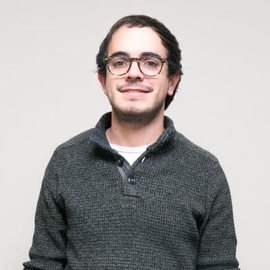
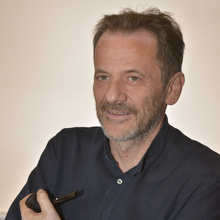
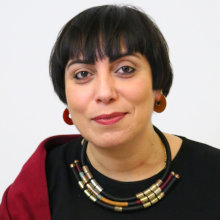
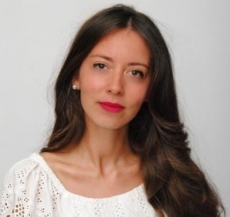
Suzanne Stevenson is a Professor in the Department of Computer Science at the University of Toronto, affiliated with the Cognitive Science Research Community (CoRC). She holds a BS in Computer Science and Linguistics from William & Mary and MS/PhD in Computer Science from the University of Maryland. Before joining UofT in 2000, she was faculty at Rutgers University with joint appointments in Computer Science and Cognitive Science. Her research focuses on computational cognitive models of language acquisition and processing, integrating insights from linguistics, psycholinguistics, and machine learning. Key areas include semantic/syntactic learning from text, probabilistic computational models of word learning, and cross-situational learning. Notable awards include the NSERC University Faculty Award (2000) and NSF CAREER Award (1997). Her work bridges computational linguistics and cognitive science, emphasizing multidisciplinary approaches. Recent publications (2014–2018) explore topics like probabilistic perspective models in language production, bilingual word associations, and semantic search algorithms. She advises on computational linguistics and cognitive modeling, with grants supporting investigations into language acquisition dynamics and semantic networks. Active in teaching, she previously offered courses on computational linguistics and the computational lexicon. Her lab’s research themes include child language acquisition, ambiguity resolution, and computational modeling of linguistic phenomena.
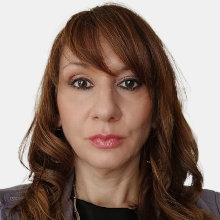
Orwin Martin is an Associate Professor of Somali Language and Literature at the University of Naples 'L'Orientale', Department of Asia, Africa and Mediterranean. He holds a First Class Honors degree in Arabic and Amharic from SOAS (1986) and a PhD in Somali Phonology (1994). Previously, he served as Senior Lecturer at SOAS (2008–2020) and held various administrative roles including Head of Department (2011–2014). His research focuses on Somali poetry's linguistic and aesthetic dimensions, including meter analysis, Arabic influences, and literary translation. He has published extensively on Somali poets like Hadraawi and Weedhsame, and collaborates with international institutions like the Poetry Translation Centre. Teaching spans Somali language at all levels, comparative literature, and translation studies. He has organized conferences, including the 2018 Somali Studies Congress in Hargeysa, and contributed to academic roles such as editorial boards for African Languages and Cultures and the Journal of Somali Studies. Awards include a certificate from Hargeisa Youth Development Association for outreach work.
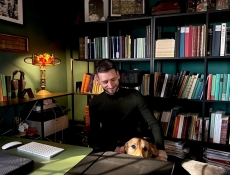
Andrea Santilli is a Research Scientist at Nous Research and holds a PhD in Computer Science from GLADIA at Sapienza University of Rome. His research focuses on large language models (LLMs), robustness, reliability, and multimodal learning. He previously worked at Apple MLR, Hugging Face’s BigScience, and Pi School. He earned his MSc and BSc in Computer Science from Tor Vergata University and Sapienza. Education: PhD in Computer Science, Sapienza University of Rome (2024) MSc in Computer Science, University of Roma Tor Vergata (2020) BSc in Computer Science, University of Roma Tor Vergata (2018) Research Interests: Santilli’s work spans LLM robustness , mechanistic interpretability , multimodal neural databases , and instruction-tuning . He introduced Parallel Jacobi Decoding and contributed to projects like BLOOM, Camoscio, and Fauno. His research bridges syntax-aware NLP, privacy-preserving LLMs, and cross-modal alignment. Publications: His work includes advancements in 3D-text latent space alignment (CVPR 2025), evolutionary merging (ICML 2025), and efficient decoding (ACL 2023). Over 15+ peer-reviewed papers span venues like ACL, CVPR, and ICLR. Awards: Received the Emanuele Pianta Award for his MSc thesis on continual language learning with syntax-based episodic memory. Grants & Projects: Winner of ‘Machine Learning Algorithms for Translation’ grant (2022), developing Parallel Decoding Co-PI for ‘Multimodal AI for 3D Analysis’ (2021) with Ecole Polytechnique Labs & Teams: Active in GLADIA (Sapienza), Apple MLR, and Hugging Face’s BigScience initiative. Core contributor to open-source projects like PromptSource and BLOOM.
Gias Uddin is an Associate Professor at York University's Lassonde School of Engineering and an Adjunct Professor at the University of Calgary . His research bridges Software Engineering (SE) and Artificial Intelligence (AI) , focusing on AI Trustworthiness Assessment (SE4AI) and AI-Driven Productivity Tools (AI4SE) . PhD in Software Engineering & AI, McGill University (2018) MSc in Software Engineering, Queen’s University (2008) BSc in Computer Science & Engineering, Bangladesh University of Engineering and Technology (2004) His research explores: Metamorphic Relations for LLM Hallucination Detection AI-Enhanced Software Documentation Foundational Models for Runtime System Modernization Developer-Centric AI Tooling Recent article trends show expertise in LLM Trustworthiness , Low-Code Platforms , and IoT Developer Communities . Awards include Distinguished Paper at FSE 2025 , multiple IBM Champion recognitions, and York Research Award . He leads the Data Intensive Software Analytics (DISA) Lab and mentors PhD students in SE-AI Intersections .
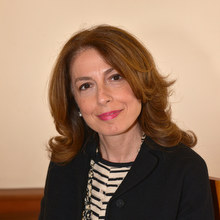
Bianca Basciano is an Associate Professor at the Department of Asian and North African Studies , Ca' Foscari University of Venice, where she has held the Director's Delegate for Research role since 2023. Her work focuses on Chinese linguistics , particularly Mandarin morphology, syntax, and second language acquisition. Research Areas: Chinese compounding, reduplication, causative constructions, resultative compounds, and language teaching methodologies. Teaching: Offers BA/MA courses in Chinese language and linguistics at Ca' Foscari University. Editorial Roles: Member of the editorial boards for Sinica Venetiana and Lingue e Linguaggio . Research Projects: Principal investigator for the PRIN 2020 project on Italian learners' acquisition of Chinese resultative verbs, with extensive corpus-based analysis. Collaborates with Giorgio Arcodia and other international scholars. Key Themes: Event structure delimitation, Vendlerian verb classes, micro-parametric syntactic variation. Publications: Over 40 works including monographs with Oxford University Press and Bologna University Press. Her methodological approach combines theoretical linguistics with corpus analysis, contributing to the understanding of Chinese as both a linguistic system and a second language acquisition challenge. She has also organized international conferences like the 31st IACL Annual Meeting.
Luca D'Acci is an Associate Professor in Sustainable Urban Forms and Evaluations at the Polytechnic of Turin, affiliated with the Interuniversity Department of Territorial Sciences, Planning and Policies (DIST). He holds additional affiliations as a Senior Research Fellow at the University of Portsmouth and as a member of research networks at the University of Birmingham and Erasmus University Rotterdam. His academic journey includes international roles such as Head of Urban Environment at Erasmus University Rotterdam and visiting researcher positions at the University of Oxford, University of Cambridge, and ETH Zurich. Education: MSc in Architecture-Science of Cities, Polytechnic of Turin (2003, cum laude) PhD in Economic Assessments, Polytechnic of Turin (2007) BSc in Mathematics, University of Turin (2007) BSc in Construction Engineering, Polytechnic of Turin (2009, cum laude) Post-PhD in Urbanism, University of Campinas (2010) Anthropology, University of Oxford (2020, 20 credits) Luca D'Acci’s research focuses on urban morphology, urban allometry, isobenefit urbanism, and the socio-economic-environmental impacts of urban form. His work bridges humanistic and quantitative approaches, integrating engineering, architecture, economics, and anthropology. He investigates how urbanicity, urban form, and spatial configuration influence well-being, sustainability, and resilience. His recent publications (2023–2025) reveal a strong trend toward computational modeling and simulation of urban growth, particularly through the lens of isobenefit urbanism —a concept he has pioneered. These works combine cellular automata, agent-based modeling, and morphogenetic frameworks to simulate sustainable urban futures. He also explores fractal patterns in housing markets, the psychology of urban living, and the mental costs of urbanicity. His research spans disciplines including urban science, environmental psychology, urban economics, and complex systems. Scientific Awards and Honors: Fellow, Erasmus Happiness Economics Research Organisation (EHERO), Erasmus University Rotterdam (2022–) Senior Research Fellow, University of Portsmouth (2017–) Fellow, Cluster for Sustainable Cities, University of Portsmouth (2017–2020) Fellow, Urban Morphology Research Group, University of Birmingham (2016–2021) Member, Cambridge Networks Network, University of Cambridge (2016–) Honorary Fellow, University of Birmingham (2016–) Luca D'Acci actively advises PhD students as a member of the Doctoral Collegium for Urban and Regional Development at Politecnico di Torino (2020–2024). He has secured and contributed to significant research grants, including projects funded by the World Bank, Asian Development Bank, European Commission, EPSRC, Lincoln Institute of Land Policy, and University College London (Future Urban Growth Lab). His editorial roles include membership on the boards of PLOS ONE , PLOS Mental Health , and Humanities & Social Sciences Communications . Labs and Research Networks: Future Urban Growth Lab (UCL, 2019–) LEUr Urban Ecology Lab (UFSC, 2022–) URban Evolution Morphology (UReM, 2024–) Erasmus Universiteit Rotterdam (EHERO, 2022–2024) Spatial Intelligence Unit (SPIN Unit), Estonia (2013–) International Society of Biourbanism (2013–)
Alessandro Del Tomba is a Tenure-Track Researcher in Linguistics and Glottology at Sapienza University of Rome, specializing in historical linguistics, Indo-European studies, and Central Asian philology. He holds a PhD in Linguistics from Sapienza and Comparative Indo-European Linguistics from Leiden University. Historical linguistics Indo-European studies Eastern Iranian philology Language contact theories His research focuses on Khotanese and Tocharian languages, with recent publications analyzing manuscript transmission, morphological variation, and phonological developments. He serves as Principal Investigator for the FIS project "Khotanese language and texts in contexts (KhoTxt): A multimodal approach to the classification and periodisation of the Khotanese language and its texts within the cultural and historical framework of medieval Central Asia". He teaches General Linguistics at undergraduate levels and Linguistics courses at the graduate level in Modern Philology. Active in international academic networks, he participates in conferences across Italy, Europe, and Asia.
Giorgio Satta is a Full Professor at the Department of Information Engineering , University of Padua, Italy. He received his Ph.D. in Computer Science from the University of Padua in 1990. His career includes research positions at Fondazione Bruno Kessler (Trento) and the University of Pennsylvania (IRCS). Research Focus : His work centers on computational linguistics and formal language theory , with emphasis on: Parsing algorithms (CCG, TAG, LCFRS) Computational complexity of grammar formalisms Probabilistic language modeling Dependency parsing and synchronization techniques Professional Service : He chaired the European Chapter of the ACL (2009-10), served on editorial boards for Computational Linguistics , Transactions of the ACL , and co-chaired ACL-2001/IWPT-2001. Teaching : Current courses include Automata, Languages, and Computation and Natural Language Processing (2024-25).
Gioacchino Garofalo holds roles as Adjunct Professor in the Department of the Arts and Research Fellow/Teaching Tutor in the Department of Philosophy at the University of Bologna. His research focuses on sensorimotor integration, neurorehabilitation, and embodied cognition. Key interests include the neural mechanisms underlying language processing, motor control in developmental disorders, and the intersection of perception and action. Garofalo employs methods like MEG neuroimaging and behavioral studies to explore topics such as action verb semantics, affordance perception, and color influence on motor representation. Recent work (2022-2025) highlights studies on autism spectrum disorder, cerebral palsy, and the role of color in motor representation. He collaborates on neurorehabilitation interventions involving hand-mouth motor synergies for facial palsy patients. Garofalo's publications reflect a multidisciplinary approach blending linguistics, neuroscience, and clinical applications. His academic contributions span 15+ peer-reviewed articles since 2017, emphasizing experimental paradigms like action observation and virtual perspective-taking. No specific grants or awards are mentioned in the provided materials.
Carolina NEGRI is an Associate Professor in the Department of Asian and North African Studies at Ca' Foscari University of Venice, where she has held a permanent faculty position since 2015. She is also the Director's Delegate for Quality Assurance of the Department and has served in various institutional roles including scientific coordinator of the Erasmus+ ICM program with Waseda University and member of the Doctoral College. She holds a PhD in Oriental Studies from the Oriental University Institute of Naples and advanced degrees from Ochanomizu University in Tokyo and the University of Naples 'L’Orientale'. PhD in Oriental Studies (Far Eastern Asian Civilizations), Oriental University Institute of Naples, 2000 MA in Japanese Literature and Philology, Ochanomizu University, Tokyo, 1996 Laurea in Japanese Language and Literature, University of Naples 'L’Orientale', 1991 Her research focuses on pre-modern and modern Japanese literature, Japanese philology, literary translation, and gender studies. She specializes in classical Japanese texts, the role of women in medieval Japanese society, intertextuality, and the literary contributions of female authors such as Murasaki Shikibu and the nun Abutsu. Her work bridges philological rigor with cultural and gender analysis. Her recent research outputs demonstrate a strong trajectory in the study of Japanese literary history, classical grammar, and the socio-religious roles of women. Key themes include the development of a comprehensive history of Japanese literature, intertextuality in premodern works, and the literary production of medieval nuns. She has led externally funded projects such as 'Images from the Past' (Japan Foundation, 2019–2021) and multiple Erasmus+ and National Institute of Japanese Literature research stays. Premio Guglielmo e Mario Scalise per la traduzione letteraria (2007) Japan Foundation Japanese Studies Fellowship (2011) National Scientific Qualification for Full-Time Professor (2021) National Scientific Qualification for Associate Professor (2014) Carolina NEGRI has supervised numerous academic programs and mentored students through her teaching and research leadership. She has secured multiple international research grants, particularly from the Japan Foundation and Erasmus+, supporting collaborative projects with Waseda University, Gakushūin Women’s University, and the National Institute of Japanese Literature. She has been a visiting scholar at institutions in Japan, the United States, and Europe, reflecting her active international engagement. She is a member of the research group working on the history of Japanese literature alongside Luisa Bienati, Edoardo Gerlini, and Pierantonio Zanotti, and has collaborated with Paolo Calvetti on medieval Japanese literature. Her work contributes significantly to the global understanding of Japanese literary and cultural history.
Marco Maggini is a Full Professor in the Department of Information Engineering and Mathematics at the University of Siena, a position he has held since joining the university in 1996. His academic career spans over 25 years with foundational expertise in computer engineering and artificial intelligence, focusing on theoretical and applied machine learning research. His educational background includes: Laurea degree (cum laude) in Electronics Engineering from the University of Florence (1991) Ph.D. in Computer Engineering and Control Systems from the University of Florence (1995) Prof. Maggini's research encompasses machine learning, neural networks, kernel machines, and the integration of symbolic and sub-symbolic knowledge systems. He extends these foundations into practical applications including web mining, search engine technology, pattern recognition, natural language processing, and computer vision. This interdisciplinary approach bridges theoretical computer science with real-world implementation challenges across multiple domains. Analysis of his 15 most recent publications (2023-2025) reveals a dominant focus on multilingual NLP applications, particularly educational puzzle generation for low-resource languages (Italian, Arabic, Persian, Turkish) using LLMs. His work demonstrates consistent innovation in named entity recognition, commonsense reasoning evaluation, and cross-lingual adaptation techniques. Secondary research threads include medical imaging segmentation, molecular property prediction, and AI security vulnerabilities, reflecting his broad technical mastery across computer vision, bioinformatics, and adversarial machine learning. No specific scientific awards were mentioned in the provided documentation, though his editorial roles indicate peer recognition within the academic community. While student mentoring details are absent from the source material, his position as Full Professor and leadership of SAILab imply active graduate supervision. His extensive publication record (120+ papers) and editorial service suggest significant research grant involvement, though specific funding sources remain undocumented. He directs the Siena Artificial Intelligence Laboratory (SAILab), which serves as an interdisciplinary hub for advancing machine learning theory and applications. The lab's current projects emphasize educational technology, multilingual NLP systems, and the integration of symbolic reasoning with neural architectures, maintaining strong industry and international academic collaborations.
Franco GATTI is an Associate Professor at the Department of Asian and North African Studies, Ca' Foscari University of Venice. His research focuses on Chinese and Southeast Asian languages and literatures, with particular emphasis on classical Taoist literature, modern Chinese linguistic studies, and business language applications. He teaches courses in advanced Chinese language for business and academic contexts. GATTI is fluent in Italian, Chinese, English, and has basic Japanese proficiency. Research & Publications Specializes in Tang Dynasty literature, Taoist texts, and cross-cultural communication strategies. Authored/co-edited works on classical Chinese poetry, linguistic corpora, and cultural studies. Contributes to editorial boards of Annals of Ca' Foscari, Oriental Series and Sinica venetiana . Teaching & Engagement Teaches Chinese language courses with a focus on business and professional communication. Supervises students in language studies and literary analysis. Notable Works 2022: Analyzed Buxuci poetry of Wei Qumou. 2020: Co-edited linguistic research on modern Chinese. 2015: Studied narrative techniques in the Xuanshi zhi .
Francisco Matte Bon is a full Professor of Spanish and Translation at the Faculty of Interpreting and Translation, Free University of International Studies of Rome (UNINT), where he has served as Dean and Rector. Previously, he held academic roles at the University of Salerno (2002-2007), the University of Bologna (as Associate Professor from 2000), and institutions in Germany, France, and Spain. His research focuses on communicative grammar, language teaching, and contrastive analysis, with a particular emphasis on the relationship between linguistic systems and real-world usage. Education: Studied Modern Languages and Linguistics in Paris His work includes foundational texts like Gramática comunicativa del español and co-authorship of the Uno and Due communicative Italian courses. He has directed university language centers and organized international conferences, leading a research group on utterance grammar. His recent publications explore metalinguistic operations, cyclicity principles, and pragmatic strategies in Spanish-Italian interactions. Scientific awards and honors are not explicitly mentioned in the provided text. Matte Bon has conducted over 150 seminars and conferences across 18 countries, contributing extensively to teacher training and communicative language methodologies.
Ilaria Sicari is a Research Fellow at Ca' Foscari University of Venice, specializing in Slavic Studies with a focus on Soviet literature, cultural Cold War dynamics, and transnational literary circulation. She holds a PhD in Slavic Studies from Ca' Foscari University (2017) and has taught Russian literature at the Universities of Bologna, Florence, and Pisa. Her current Marie Skłodowska-Curie Global Fellowship explores Tamizdat (underground Soviet literature dissemination) through the TAMIZDAT project, collaborating with Stanford University and Leiden University. Research Institutes: Digital and Cultural Heritage, International Studies Key Projects: On the Two Sides of the Iron Curtain , Banned Books from Russia and Eastern Europe Her research emphasizes socio-cultural actors in literary circulation, including translators, editors, and dissidents. Major interests include Soviet censorship, dissident literature, and the reception of foreign literature in the USSR. She has published widely on Italo Calvino's Soviet reception, Soviet human rights movements, and Cold War cultural diplomacy. Recent articles examine Tamizdat publishing strategies in Italy, Soviet psychiatric abuse, and Cold War paratextual propaganda. She contributes to digital archives on banned Soviet texts and is affiliated with the Italian and international Slavic studies associations (AIS, ASEEES, AATSEEL).
Francesca Cupelloni is a Researcher in Italian Linguistics (LIFI-01/A) at the Department of Modern Literature and Culture , Sapienza University of Rome. Qualified as an Associate Professor in 2023, she graduated in History of the Italian Language (2017) and earned her PhD (2020) at Sapienza, supervised by Luca Serianni . She has held scholarships at Scuola Normale Superiore, Pisa, and been a visiting scholar at the University of Lausanne (2019). Her research focuses on Italian language history (early centuries), lexicography , and gastronomic vocabulary , particularly 14th-15th-century Florentine and Middle Latin/vernacular gastronomic terms. She contributes to projects like the digital Autographs of Italian Writers ( www.autografi.net ), editing Lorenzo de' Medici's autograph letters with linguistic commentary, and collaborated on the PRIN 2017 AtLiTeG project. Recent publications include articles in VoSLIG. Historical Vocabulary of the Italian Gastronomy Language (2024), studies on Antonio Pucci's Danteisms, Leopardi's lexical borrowings, and historical syntax in Lorenzo de' Medici's epistles. She serves on the scientific committees of journals Interpres and Dante , and collaborates with the Germanisms section of the Lessico Etimologico Italiano (LEI) .