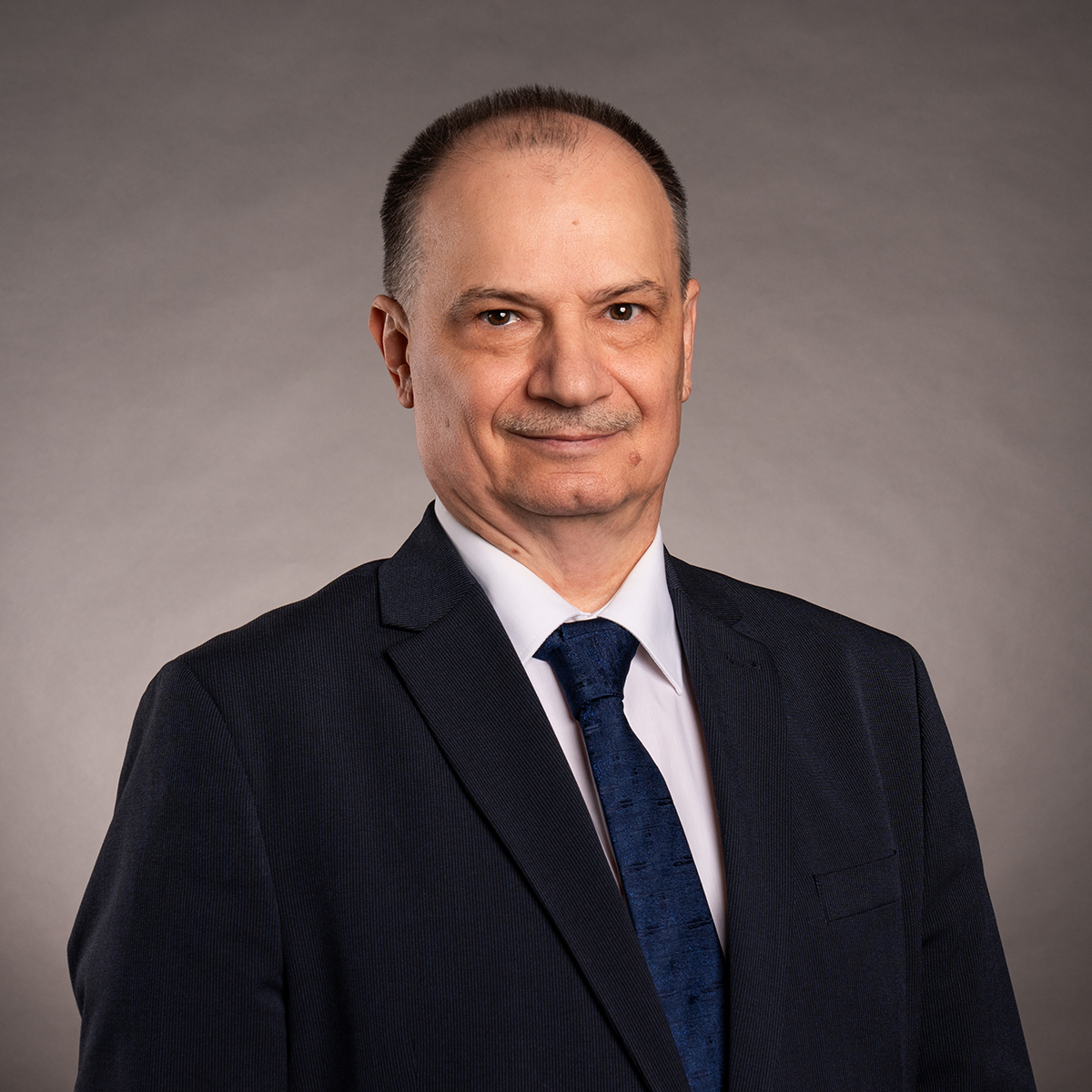
Joop van der Horst is an associate professor at Károli Gáspár Reformed University, Faculty of Humanities and Social Sciences, specializing in Dutch Studies. Previously, he held professorial roles at KU Leuven and the University of Amsterdam. PhD in Linguistics (University of Amsterdam, 1986) MA in Dutch Language and Literature (Leiden University, 1975) His research spans historical linguistics, focusing on grammaticalization, collocations, and language change, as well as descriptive linguistics (syntax, morphology) and sociolinguistics. He has extensively studied fixed verb constructions, Dutch-French grammatical comparisons, and long-term language-society interactions. His publications and conference contributions from 2002-2013 highlight trends in Dutch syntax evolution, comparative German-Dutch verb patterns, and the decline of Renaissance language culture in Europe. Key themes include grammatical theory, European multilingualism, and language education reforms. LOT Publication Award Our Language Award He has supervised PhD students Freek Van de Velde, Judith Schonenboom, and Bert Cappelle, while serving as an opponent in doctoral defenses including Evie Coussé and Rinaldo Neels. His guest professorships include institutions in Berlin, Maastricht, Cologne, Münster, and Wroclaw.
Péter Szigetvári is an Associate Professor at the School of English and American Studies , Eötvös Loránd University , specializing in the Department of English Linguistics . His work bridges phonology, morphology, and theoretical linguistics, with a focus on Hungarian and English language structures. Academic Rank: Associate Professor Department: Department of English Linguistics University: Eötvös Loránd University His research explores phonological patterns , including vowel harmony, syllable structure, and morphological constraints. He investigates the interplay between morphology and phonology in Hungarian and English, analyzing phenomena like diminutive formation, diphthong debates, and stress-related vowel reduction. Recent publications highlight trends in Vowel Harmony , Syllable Typology , and Morpho-Phonological Variation . His work often challenges traditional frameworks, proposing paradigm-based or VC phonology approaches. Péter Szigetvári's professional activities include contributions to linguistic journals and a blog at nyest.hu . His office is located at Room 302, Rákóczi út 5, Budapest (1088).
Péter Balla is a distinguished University Professor and current International Relations Vice-Rector at Károli Gáspár Reformed University (KRE), where he has served since 1994. He is Head of the New Testament Department at the Faculty of Theology and has held numerous leadership positions including Rector (2011-2019), Religious Vice-Rector, and previously served as Deputy Dean. His academic journey began with theological studies at the University of Edinburgh, where he earned his PhD in 1994 with a dissertation on New Testament theology. Ball has made significant contributions to New Testament scholarship with his research focusing on Pauline studies, New Testament canon history, biblical exegesis, and the child-parent relationship in biblical context. His major publications include commentaries on Galatians and 2 Corinthians, as well as foundational works on New Testament writings and theology. His scholarly approach combines rigorous textual analysis with historical contextualization and contemporary application. Ball's academic output demonstrates consistent engagement with both theoretical theological questions and practical biblical interpretation. His works span from detailed linguistic studies of New Testament Greek to broader examinations of New Testament theology's coherence and relevance. The trajectory of his scholarship shows increasing focus on the practical application of biblical texts in contemporary contexts while maintaining scholarly rigor. Bolyai Plaque (2009) from the Hungarian Academy of Sciences Pro Universitate Award (2019) from KRE Soli Deo Gloria Award (2019) from Nagykőrösi Reformed Church Knight's Cross of the Order of Merit of Hungary (2024) As a dedicated educator, Ball has supervised numerous doctoral students and served on various academic committees. His research has been supported by prestigious grants including multiple MTA Bolyai János Research Scholarships and Alexander von Humboldt Foundation awards. Internationally, he has maintained significant academic connections, particularly with Stellenbosch University in South Africa where he served as Research Fellow and Research Associate for over a decade. His work bridges Hungarian Reformed theological tradition with international scholarly discourse in New Testament studies.
István Janó is an Assistant Professor in the Department of Japanology at the Faculty of Humanities and Social Sciences, Károli Gáspár Reformed University in Budapest, Hungary. With a distinguished career spanning over four decades, he has established himself as a leading scholar in Japanese studies, comparative literature, and cross-cultural research between Japan and the West. His academic journey began at József Attila University where he earned his MA in English and German literature and linguistics in 1978, followed by his doctoral degree in comparative literature in 1980. His educational background includes: MA in English and German literature and linguistics (1978) from József Attila University PhD in Comparative Literature (1980) from József Attila University with dissertation on 'Far Eastern influences in the poetry of imagism' Continuing doctoral studies at the Doctoral School of Literary Studies of the Hungarian Academy of Sciences (2008-) Additional studies at Eötvös Loránd University, Humboldt University in Berlin, and Osaka University of Foreign Languages Janó's research focuses on the intricate connections between Japanese and Western literary traditions, with particular expertise in classical and modern Japanese prose, Japanese literary theory, classical Japanese grammar, and linguistic problems. His scholarly work reveals a deep engagement with how Japanese poetic forms like haiku influenced Western literary movements such as Imagism and Vorticism, particularly through the works of Ezra Pound and Amy Lowell. He has made significant contributions to understanding the cultural dialogue between Japan and Hungary, as evidenced by his involvement in the Japanese-Hungarian Dictionary project since 2000. An analysis of his publications spanning from 1980 to 2022 shows a consistent scholarly trajectory exploring Japanese-Western literary connections, with recent works delving deeper into Vorticism's Eastern roots and the synthesis of Japanese haiku with French symbolism. His research demonstrates remarkable continuity in examining how Japanese aesthetics have shaped and been shaped by Western literary traditions. Throughout his career, Janó has been actively involved in academic service, including serving as an examiner for Japanese language exams at ELTE from 1992-2000, revising significant Japanese language learning materials like 'Kanji and Kana' (1995), and developing university textbooks on basic Japanese (1997). His international research fellowships at Osaka University of Foreign Languages (1990-1991) and Yokohama University (1995) under Japanese government sponsorship highlight his recognition in the field. Janó maintains active participation in the Hungarian Association of Japanese Language Teachers and has presented extensively at academic conferences, including notable appearances at the Károli Gáspár Reformed University's Literary Studies Conferences and the 20th anniversary celebration of the Japanology department in 2014. His work continues to bridge Japanese and Hungarian academic communities through translation, lexicography, and scholarly research.
Imre Szilágyi is an Associate Professor at the Institute of Romance Studies within Eötvös Loránd University (Budapest, Hungary). He serves as a lecturer in the Department of Italian Language and Literature , focusing on advanced linguistic analysis. Primary Affiliation: Institute of Romance Studies, Eötvös Loránd University Department: Department of Italian Language and Literature Email: szilagyi.imre@btk.elte.hu Research Focus Szilágyi's work centers on Italian syntax , with particular attention to: Infinitive constructions in Italian and Latin Historical linguistics of medieval and late-medieval Italian dialects Contrastive analysis of linguistic structures across languages Textual criticism of classical manuscripts like the Meditationes vitae Christi Publications Trends His research spans over two decades, covering: Evolution of accusative with infinitive constructions Analysis of causative and perception verbs in Italian literature Comparative studies of Italian-Spanish syntax Historical syntax patterns in Alberto Moravia's prose Contact Information Email: szilagyi.imre@btk.elte.hu Address: 1088 Budapest, Múzeum körút 4/C Office: II. floor 218
Máté Ittzés , Associate Professor at the Department of Indian Studies , Institute of Oriental Studies (Eötvös Loránd University), serves as Deputy Director of the Institute, Head of Department, and Team Leader of the Indo-European Linguistics Research Division. His research focuses on historical linguistics, Sanskrit, Vedic grammar, Latin/Greek phonetics, and support-verb constructions. Research Trends: Analysis of grammaticalization processes in Vedic, Proto-Indo-European syntax, tense-aspect systems, and comparative studies of Latin/Greek/Vedic morphological evolution. Recent articles emphasize light verb constructions, phonetic shifts, and Indo-European root structures. Publications: Over 15 works spanning Proto-Indo-European support verbs, Vedic perfect tenses, Latin syllable laws, and Rigvedic lexical mysteries.
Hanoch Ben-Yami is a Professor of Philosophy at Central European University (CEU) in Vienna. He holds a PhD from Tel Aviv University (1995). His research focuses on logic, philosophy of language, philosophy of mind, and the history of philosophy, particularly on Descartes and Wittgenstein. His work explores formal systems like the Quantified Argument Calculus (Quarc) and addresses topics such as the philosophy of space-time, animal mentality, and the semantics of natural language. Education: PhD in Philosophy, Tel Aviv University, 1995 Research Interests: Formal logic and its applications, including Quarc and substitutional semantics Philosophy of language, focusing on quantification, reference, and vagueness Philosophy of mind and animal cognition Space-time theories, special relativity, and quantum mechanics Historical philosophy, especially Descartes' representational theory and Wittgenstein's later work Key Contributions: Advancements in formal logic systems, including Quarc's completeness proofs Analysis of open texture and Wittgensteinian concepts Critiques of traditional model-theoretic semantics Explorations of philosophical concepts in Descartes and Wittgenstein Labs/Teams: While no specific labs or teams are mentioned, his collaborative works (e.g., with Edi Pavlović, Hongkai Yin) highlight interdisciplinary research in formal philosophy.
Dr. Gergely Mezei is an Associate Professor and Deputy Head of the Department of Automation and Applied Informatics at the Budapest University of Technology and Economics (BME) , Hungary. He is affiliated with the Applied Computer Science Group within the department and is actively involved in research and education in model-driven engineering and formal methods. His research interests lie at the intersection of multi-level modeling , formal verification , and model transformation systems . He has contributed extensively to the development of modeling languages and tools, particularly in the context of DMLA (Deep Multi-Level Architecture) and Melanee , focusing on enabling rigorous, scalable, and verifiable modeling practices. Dr. Mezei's work emphasizes performance optimization in model transformations, visual modeling frameworks , and domain-specific languages . His research spans both theoretical foundations and practical tool implementations, with a strong focus on bridging the gap between formal semantics and usable modeling environments. His recent publications reflect a consistent focus on advancing the state-of-the-art in multi-level modeling and formal verification , with contributions to international workshops such as MULTI and MPM . These works explore challenges in model validation, transformation correctness, and the usability of modeling tools in complex systems engineering. Contact: Email: gmezei@aut.bme.hu Office: Q.B228, Budapest University of Technology and Economics, 1117 Budapest, Magyar tudósok krt. 2., Hungary Phone: +36 (1) 463-3491
Albertne Balazsi Julianna is an Associate Professor at the Department of Netherlandic Studies within the Faculty of Humanities and Social Sciences at Károli Gáspár Reformed University. She holds a PhD in Linguistics from ELTE (2002) and has served as Head of the BA Dutch Studies department since 2012, previously leading the MA program from 2008-2012. MA in Hungarian and German Language and Literature with Dutch Studies (ELTE, 1980) PhD in Linguistics (ELTE, 2002) Extensive language proficiency: Dutch and German (C1), English (B2), Hungarian Sign Language (A2/B1) Her research spans Dutch-Hungarian comparative linguistics with specializations in syntax, morphology, and sign linguistics. Her work demonstrates consistent focus on light-verb constructions, negation patterns, and question structures across spoken and sign languages. She has maintained active international collaboration through guest lectureships at Charles University (Prague), Lessius University (Antwerp), and research at the University of Amsterdam (2010-2011). Her publication record shows sustained scholarly output through 2018, with recent work examining etymology in Afrikaans proverbs, comparative negation in Dutch and Hungarian, and sign language planning in the Netherlands and Flanders. Her articles reflect interdisciplinary approaches connecting theoretical linguistics with sociolinguistic applications. She has served as opponent for multiple doctoral defenses at Hungarian universities including ELTE, Debreceni Egyetem, and Pécsi Egyetem. Her administrative contributions include developing BA/MA accreditation materials and teacher training programs for Dutch studies. OTKA research on negation and interrogative constructions in sign languages (2010-2011) Active member of Hungarian Academy of Sciences Linguistics Committee Member of IVN International Association of Dutch Scholars Her academic service includes organizing international conferences such as 'Het belang van kleine talen in een nieuw Europa' (2005) and the Kuyper Symposium (2018), demonstrating leadership in Central European Dutch studies.
Ildikó Szijj is an Associate Professor at the Institute of Romance Studies, Department of Portuguese Language and Literature, Eötvös Loránd University. Her academic work focuses on comparative and historical linguistics within Iberian Romance languages, including Portuguese, Spanish, and Catalan. Research Interests: Romance Morphology Verbal and Nominal Compounds Imperative and Subjunctive Mood Interaction Negative Quantifier Structures Galician-Portuguese Linguistic Relations Minority Language Education in Academic Settings She has extensively published on topics such as parasynthetic derivation, prefixal irregularities, and dialectal variations in verb forms, with a particular emphasis on cross-linguistic comparisons. Her work bridges theoretical morphology with pedagogical approaches to minority Iberian languages.
Dr. Horváth Katalin is an Assistant Professor at the Department of German Linguistics , Institute of Germanic Studies , Eötvös Loránd University . Her academic work spans linguistics, cognitive science, and interdisciplinary studies involving physiotherapy and environmental science. Email: horvath.katalin@btk.elte.hu Address: 1088 Budapest, Rákóczi út 5. Room: 202 Research Interests: Primarily focused on German Linguistics , particularly modal verbs, epistemic modality, and translation studies. Additional contributions include physiotherapy research on systemic sclerosis and cardiorespiratory interventions. Publications Trends: Her work bridges linguistics (modal expressions, translation theory) and health sciences (posture, motor control, systemic sclerosis). Recent articles emphasize interdisciplinary methodologies and longitudinal clinical studies. Affiliations: No explicit awards or grants are mentioned in the scraped text. She has not been listed as advising students in the provided data.
Szilárd Tátrai is a Professor and Head of the Department of Modern Hungarian Linguistics at the Institute of Hungarian Linguistics and Finno-Ugric Studies, School of Humanities, Eötvös Loránd University (ELTE). Holding the prestigious title of Doctor of Science (DSc), his work bridges cognitive linguistics, pragmatics, and discourse analysis, focusing on Hungarian language and literature. University: Eötvös Loránd University (ELTE) Department: Department of Modern Hungarian Linguistics Email: tatrai.szilard@btk.elte.hu His research explores deictic operations, metapragmatic awareness, and the cognitive underpinnings of linguistic identity in computer-mediated discourse. He investigates how deixis, irony, and genre-specific schemas shape understanding in Hungarian lyrical and narrative structures, with a focus on functional and sociocultural factors. Recent publications highlight trends in Hungarian discourse analysis, including studies on apostrophic fiction, joint attention in lyrics, and the role of humor in ironic interpretation. His work often intersects with corpus linguistics and cognitive poetics, emphasizing empirical and theoretical approaches to language use.
Zsuzsanna Havasi is a Lecturer at the Institute of Hungarian Linguistics and Finno-Ugric Studies and the Department of Hungarian Historical Linguistics, Sociolinguistics and Dialectology within Eötvös Loránd University's Faculty of Humanities. Her institutional affiliation highlights a focus on Hungarian language studies across historical, sociolinguistic, and dialectological dimensions. Her research explores: Hungarian linguistics and Finno-Ugric studies with emphasis on historical evolution Metaphor identification methodologies and computational applications Legal language discourse in historical contexts, particularly witch trials and authority structures Sociolinguistic aspects of medieval Hungarian society and gender dynamics Recent publications (2018-2025) demonstrate consistent focus on metaphor analysis, historical text interpretation, and legal linguistics. Works frequently incorporate diachronic perspectives, methodological adaptations for Hungarian language processing, and interdisciplinary approaches combining linguistics with historical jurisprudence.
Krisztina Renáta Laczkó is a Habil. Associate Professor at Eötvös Loránd University, affiliated with the Institute of Hungarian Linguistics and Finno-Ugric Studies. She serves as a lecturer in the Department of Modern Hungarian Linguistics and the DiAGram Functional Linguistics Center, contributing to linguistic research and education.
Pavel Štekauer is a Professor at Károli Gáspár Reformed University 's Institute of English within the Faculty of Humanities and Social Sciences. He holds a PhD in English linguistics from Comenius University (1991), a habilitation (1995) and full professor qualification (2002) from Masaryk University, and a DrSc degree (2006) from Slovak Academy of Sciences. Major research areas: Word-formation , Morphology , Lexical semantics , Psycholinguistics , and Typology His publications focus on derivational morphology , compound structures , and cross-linguistic typology , with recent work addressing productivity constraints and meaning predictability in word-formation. He has served as principal investigator for VEGA 1/0094/12 and supervised the KWARK international double diploma project . Scientific honors: Rector's awards (Prešov University 2000; PJ Safarik University 2006, 2013) Doctoral supervision: 12 PhD students (2002-2012) in topics ranging from forensic linguistics to sociolinguistic factors in word-formation