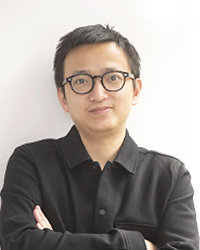
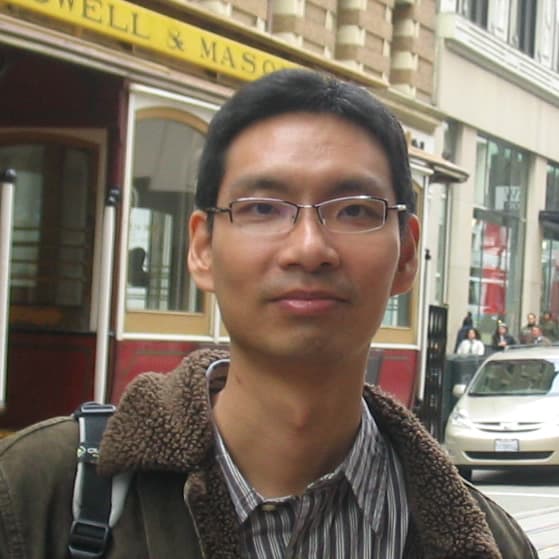
Dr. Lingpeng Kong is an Assistant Professor in the Department of Computer Science at the University of Hong Kong (HKU), affiliated with the School of Computing and Data Science. He obtained his PhD from Carnegie Mellon University in 2017, co-advised by Noah Smith and Chris Dyer. Previously, he was a research scientist at Google DeepMind (2017–2020). His research focuses on natural language processing (NLP), machine learning, and deep learning, particularly in structured prediction and representation learning. He co-directs the HKU NLP Lab. Notable contributions include work on syntactic parsing, neural architecture design, and lifelong learning. He has received an Outstanding Paper Award at EACL 2017. Dr. Kong teaches courses such as Natural Language Processing (COMP3361/COMP7607) and Machine Learning (COMP3314), and has advised multiple research projects at HKU.
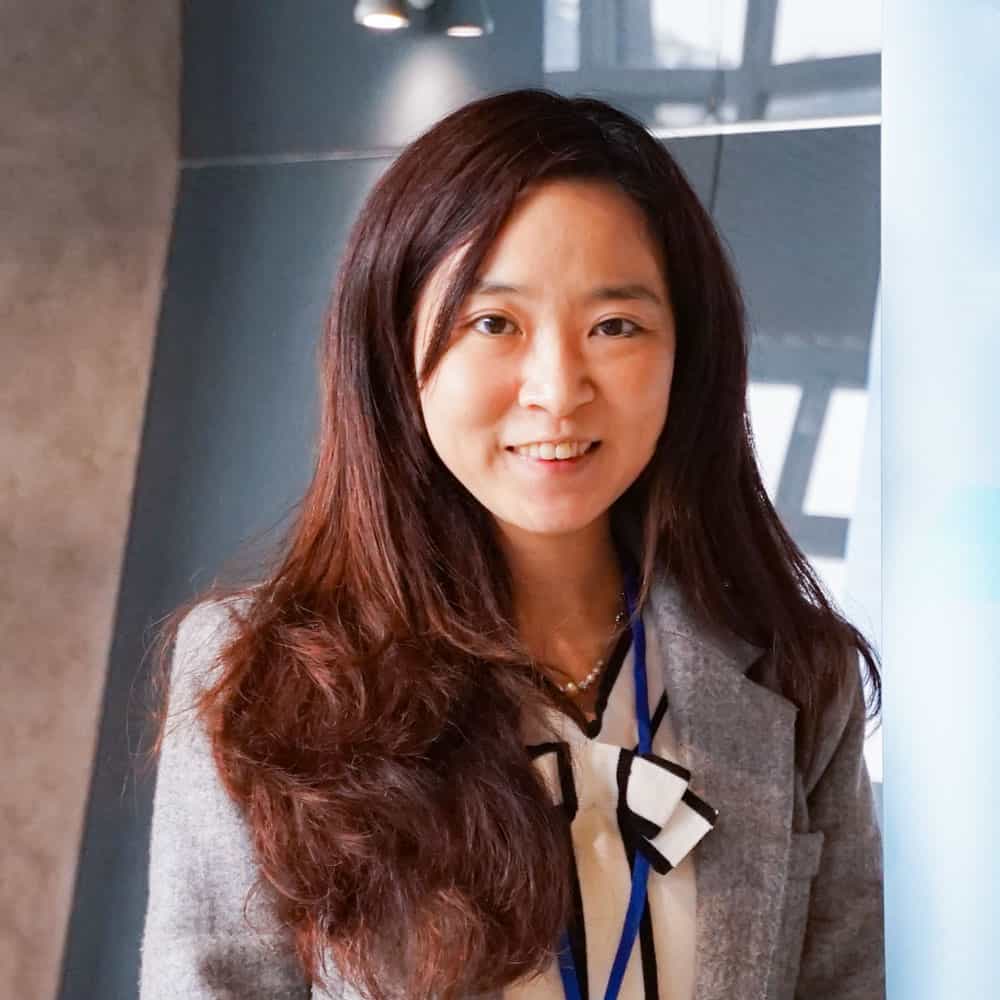
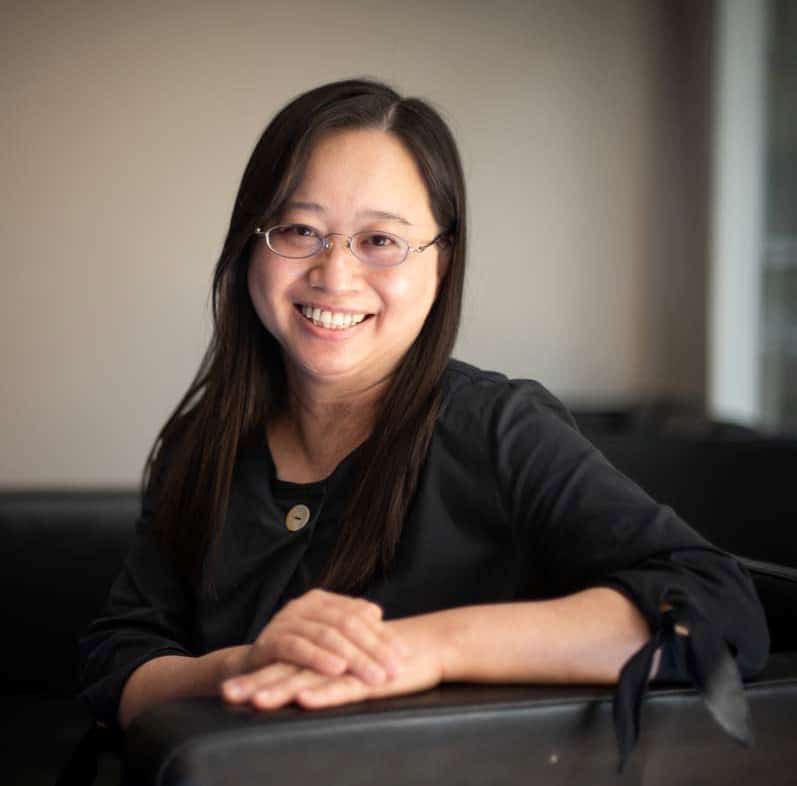
Margaret Lei is a Lecturer at the Department of Linguistics and Modern Languages at The Chinese University of Hong Kong . She holds a PhD in Linguistics and actively contributes to research in language acquisition, syntax, and the intersection of language and numerical cognition. Prior to her current position, she served as a Postdoctoral Fellow and Lab Manager at CUHK's Language Acquisition Laboratory and as a part-time lecturer at HKUST. BEng (Information Engineering) - CUHK PgDip (Psychology) - CUHK MA (Linguistics) - CUHK MPhil (Linguistics) - CUHK PhD (Linguistics) - CUHK Research Interests: Margaret specializes in first and second language acquisition , with particular focus on semantics and syntax in Chinese dialects. Her work explores: • Quantifier acquisition in Cantonese and Mandarin • Cardinal/ordinal number development in L1 Cantonese • Language's role in numerical cognition • Syntactic change in Hong Kong Cantonese • Early grammar in Shanghainese-speaking children • Quantifier scope and aspect interaction Scientific Contributions: Her publications demonstrate expertise in quantification theory , aspect interpretation , and tonal language acquisition . She has received special recognition through the Linguistic Society of Hong Kong's 2017 Outstanding PhD Thesis Award. 2017 : Linguistic Society of Hong Kong Outstanding PhD Thesis Award 2022 : CUHK Faculty of Arts Outstanding Teaching Award Teaching Portfolio: At CUHK, she teaches both postgraduate and undergraduate courses including: • Foundations in Language Acquisition (LING5103A/B/C) • Linguistic Argumentation (LING2007/2008) • Language Acquisition for Speech-Language-Pathology (SLPA5403) Her work extends to interdisciplinary collaboration with the Faculty of Medicine's Speech Therapy Division.
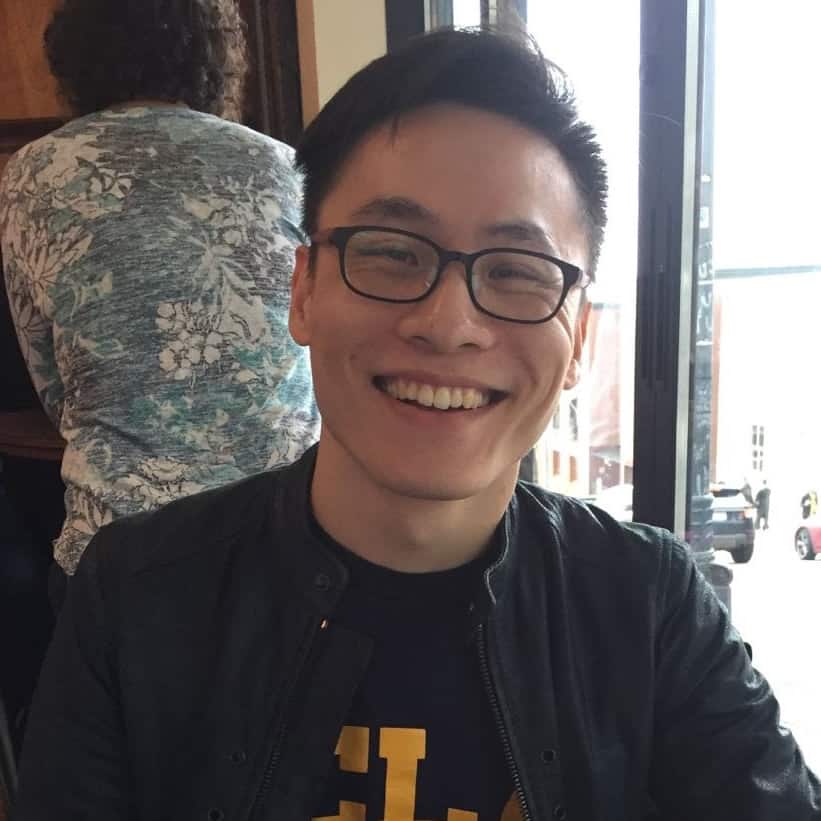
CHEN Zhuo is a Lecturer in the Department of Linguistics and Modern Languages at The Chinese University of Hong Kong. He holds a B.A. in Chinese Language from Fudan University and two M.A. degrees in Linguistics from UCLA and the University of Kansas. Education: B.A. in Chinese Language from Fudan University M.A. in Linguistics from UCLA M.A. in Linguistics from University of Kansas CHEN Zhuo's primary research interests focus on syntactic theory and Chinese comparative syntax. His work examines A-bar dependencies such as yes-no question-answer pairs and (un)conditionals across Sinitic languages, using original data from understudied non-standard varieties of Mandarin like Wuhu and Nanjing. He also works with other Sinitic languages including Cantonese, Shanghainese, and Teochew. In addition to his work on Chinese languages, CHEN Zhuo has been a member of UCLA's research group on Dschang, an understudied Grassfields Bantu language spoken in Cameroon, since early 2019. This reflects his broader interest in language documentation and fieldwork.
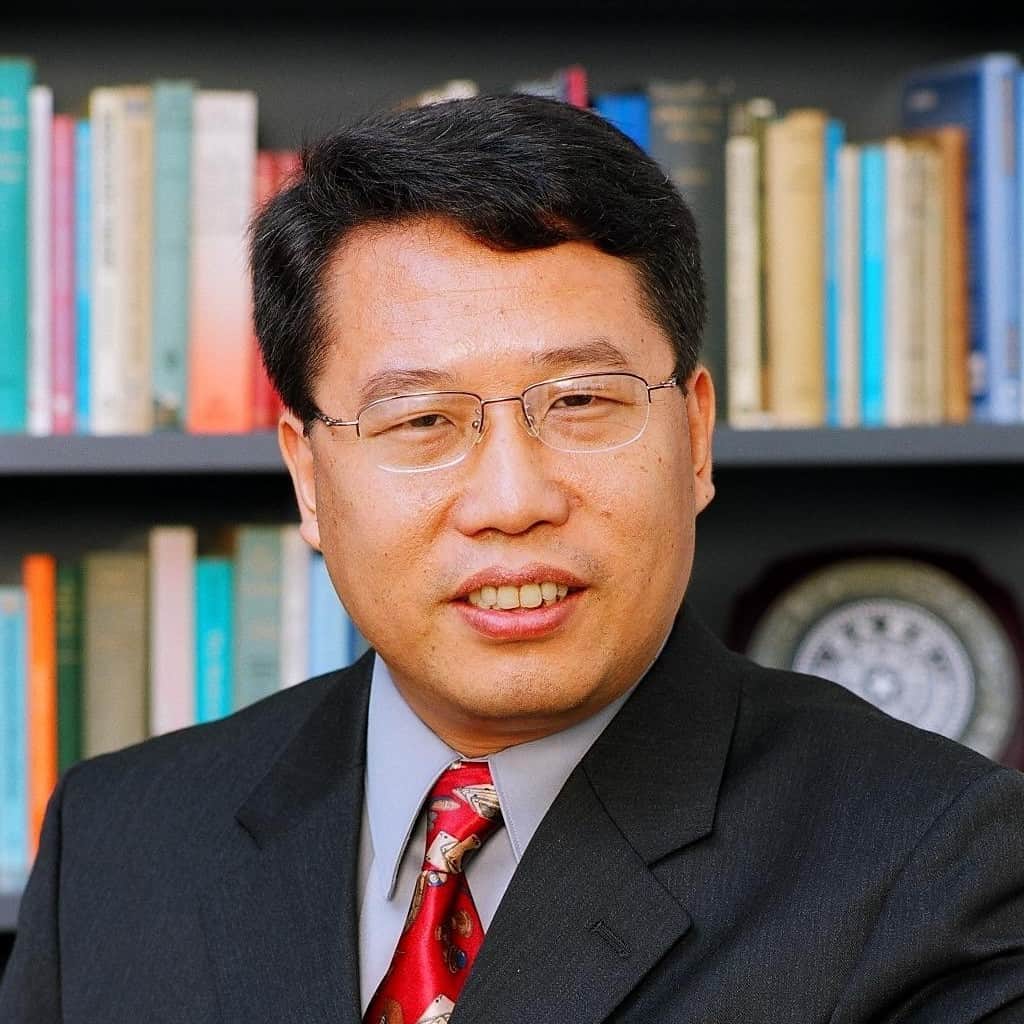
Prof. PAN Haihua is a Professor at The Chinese University of Hong Kong, where he has served since December 2015. Previously, he held academic positions at City University of Hong Kong (1995-2015), Huazhong University of Science and Technology (1986-1988), and was a Research Associate at CUHK in 1995. He earned his BA from Huazhong University of Science and Technology, MA from Wuhan University, and PhD from the University of Texas, USA. His educational background includes: BA, Huazhong University of Science and Technology, China MA, Wuhan University, China PhD, University of Texas, USA Prof. PAN's research centers on theoretical Chinese linguistics with emphases on formal semantics and syntax. His work systematically investigates reflexives, quantification, focus phenomena, and information structure in Mandarin Chinese. He has made foundational contributions to understanding donkey anaphora, negative polarity items, and the syntax-semantics interface, often bridging empirical Chinese data with universal linguistic theory. His methodological approach combines formal analysis with psycholinguistic insights, particularly in sentence processing and comprehension constraints. Analysis of his recent publications (2022-2025) reveals sustained focus on syntactic structures and semantic interpretation in Chinese, with recurring themes in quantification (especially the dou operator), anaphora resolution, and information-structural phenomena like cleft constructions and focus marking. His work consistently addresses theoretical puzzles at the syntax-semantics-pragmatics interface, demonstrating how Chinese data challenges and refines broader linguistic frameworks. His distinguished honors include: Changjiang Scholar-Chair Professor by China's Ministry of Education (2012) KC Wong Foundation Scholar (2010) Prof. PAN has held significant academic leadership roles including Associate Dean for Postgraduate Education and Research at City University of Hong Kong (2005-2010), President of the Linguistic Society of Hong Kong (2010-2011), and Executive Committee member of the International Association of Chinese Linguistics (2004-2006). He serves as a reviewer for premier journals including Language , Linguistic Inquiry , and Natural Language and Linguistic Theory , and has published two research monographs on Chinese reflexives and formal semantics while editing two volumes on Chinese linguistics and focus phenomena.
Prof. Cai Zhenguang is a Professor in the Department of Linguistics and Modern Languages at The Chinese University of Hong Kong (CUHK), where he leads the Language Processing Lab affiliated with the Brain and Mind Institute. His research integrates behavioral, neuroscientific, and computational approaches to investigate language processing mechanisms. His educational background includes a PhD in Psychology from the University of Edinburgh. Prior to joining CUHK, he served as a lecturer at the University of East Anglia and held an ESRC Future Research Leader fellowship at University College London. Prof. Cai's research centers on psycholinguistics and cognitive neuroscience of language, with specific focus on language comprehension, production, and learning mechanisms. His lab investigates how interlocutors influence language processing, Chinese handwriting literacy including character amnesia, and whether large language models exhibit human-like language behaviors. Additional interests include psychophysics of magnitude perception where physical dimensions interact statistically. Recent publications (2024-2025) reveal strong trends in neural correlates of speaker-contextualized comprehension, computational modeling of language adaptation, and AI-human language comparisons - particularly in Chinese language phenomena. Key methodological approaches combine ERP/fNIRS neuroimaging with Bayesian modeling and deep learning techniques. Scientific recognition includes: ESRC Future Research Leader fellowship He has successfully advised multiple PhD students including Zebo Xu, Hanlin Wu, and Xufeng Duan, along with MA students like Tianyi and Yufeng Wu. His research is supported by significant grants: two General Research Fund projects as Principal Investigator (on character amnesia and interlocutor modeling), an Academic Equipment Grant for TMS-EEG systems, and a teaching grant for virtual behavioral research methodologies. The Language Processing Lab maintains active collaborations across disciplines, having organized major conferences including AMLaP Asia and CogSci Hong Kong Meetup, while recruiting researchers with expertise in fMRI, Bayesian modeling, and machine learning for ongoing projects.
CHEUNG Yam Leung Lawrence is an Associate Professor at the Department of Linguistics and Modern Languages, Chinese University of Hong Kong (CUHK), and MA Programme Director. He earned his BA, MSc, and MPhil from CUHK and his PhD in Linguistics from UCLA in 2008. Research Interests Syntax, Semantics, Syntactic Typology Natural Language Processing (NLP), Corpus Linguistics Current Projects Syntax-Phonology Interface in Chinese Right Dislocation Negative Wh-construction Across Languages Wh-placeholders in Cantonese Corpus Annotation and Unlexicalized Parsing His work bridges theoretical syntax with computational methods, focusing on phenomena like mirativity, focus constructions, and synthetic/analytic variation in English comparatives. He has supervised numerous PhD, MPhil, and MA students on topics spanning Cantonese grammar, ellipsis, and code-switching. Prof. Cheung is a Research Fellow at the T.T. Ng Chinese Language Research Centre and Institute of Chinese Studies (CUHK). He is affiliated with professional bodies including the Linguistic Society of America, International Association of Chinese Linguistics, and Linguistic Society of Hong Kong. His teaching portfolio includes courses on syntax, corpus linguistics, and computational methods.
Prof. Felix Sze (Sze Yim Binh) is an Associate Professor at the Department of Linguistics and Modern Languages , The Chinese University of Hong Kong . She holds a PhD in Linguistics from the University of Bristol and has been a leading figure in sign language research and Deaf community empowerment in the Asia-Pacific region. Education: BA & MPhil from CUHK, PhD from University of Bristol Her research focuses on sign language documentation (Hong Kong, Macau, Sri Lankan, Indonesian, Japanese varieties) and linguistics analysis of grammatical structures including word order and non-manual markers. She specializes in bimodal-bilingual acquisition by deaf/hard-of-hearing children in Cantonese and Hong Kong Sign Language, developing assessment tools like the HKSL Sentence Repetition Test . She also investigates sign language's cognitive benefits for hearing infants and elderly populations. Prof. Sze's recent publications analyze polar questions and negation markers, word order typology, and interpretation training frameworks. She leads major projects like the Hong Kong Sign Language Browser and Asian SignBank , creating educational resources for Deaf communities including sex education and medical terminology databases. Her work combines rigorous sign language corpus development with practical applications in education, healthcare, and technology, including AI-driven sign recognition systems like SignTown . She has presented at major international conferences including TISLR, Sign Language Acquisition Conference, and World Federation of the Deaf Congress.
Dr. GUO Yingxia is a Lecturer in the Department of Japanese Studies at The Chinese University of Hong Kong (CUHK). Her academic work primarily focuses on Japanese grammatical structures, contrastive analysis between Japanese and Chinese, and pedagogical approaches to teaching East Asian languages as second languages. She holds a Ph.D. in Japanese Social and Cultural Science from Niigata University, reflecting her expertise in Japanese language education and cross-cultural linguistic studies. Dr. GUO's publications highlight her engagement with Japanese political history, cultural integration in language teaching, and curriculum design. Her research explores the application of standardized frameworks like the JF Standard for Japanese-Language Education, while also addressing practical strategies for language learners. Notably, she has contributed to understanding the nuances of Japanese-Chinese grammatical contrasts, particularly in structures like "Noda" and "Shi-De." Her work bridges theoretical linguistics with pedagogical innovation, emphasizing sustainable Japanese language education practices and fostering Japan-Hong Kong academic collaborations. Dr. GUO's research has been published in key venues such as 日本學刊 and 現代社會文化研究科プロジェクト論集 , with topics spanning from cultural pedagogy to grammatical analysis.