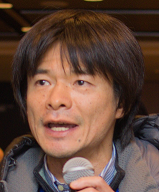
Emily Elfner is Associate Professor in the Department of Languages, Literatures and Linguistics at York University, specializing in phonological interfaces. Education includes: PhD, University of Massachusetts Amherst MA, University of Calgary BA, University of Calgary Research investigates prosodic structures in endangered languages, particularly Kwak'wala phonology and Irish syntax-prosody interactions. SSHRC-funded fieldwork documents Kwak'wala intonation patterns. Publications demonstrate consistent focus on prosodic systems across diverse languages including Breton, Irish, Inuktitut, and Tlingit. Recent works examine word-order constraints, morphological-prosodic mappings, and recursive phonological structures.
Thomas Graf is an Associate Professor in the Department of Linguistics and an Affiliate Professor at the Institute for Advanced Computational Science (IACS) at Stony Brook University. He holds a Ph.D. from UCLA (2013) and an M.A. from the University of Vienna. His research focuses on the intersection of theoretical linguistics and computer science, exploring structural complexity in syntax, morphology, and phonology, and its implications for language processing and acquisition. Graf’s work emphasizes computational constraints on natural language, such as subregular complexity and parsing efficiency, and involves empirical studies across languages like English, Icelandic, and American Sign Language. Education: Ph.D., University of California, Los Angeles (2013) M.A., University of Vienna Research interests include computational syntax and phonology, parsing theory, and the formal characterization of linguistic universals. Key themes involve the computational power of linguistic frameworks (e.g., Minimalist grammars), the subregular hierarchy, and the typological implications of computational constraints. Graf’s recent work investigates how empirical phenomena like syntactic islands arise from complexity limits in natural language. His contributions to computational linguistics include Python tools for Minimalist grammar processing and collaborations in labs like the Computational Linguistics Lab (CompLab) at Stony Brook. He has also received a NSF CAREER grant for research on abstract universals in morphosyntax. Labs/Teams: Active member of the Computational Linguistics Lab (CompLab) at Stony Brook University. Leads the MathLing Reading Group and contributes to NLP research initiatives.
Ana Teresa Pérez-Leroux is a Professor of Spanish and Linguistics and Chair of the Department of Spanish and Portuguese at the University of Toronto . She also serves as Director of the Cognitive Science Program. Her research focuses on child language acquisition, bilingualism, and Spanish syntax, with an emphasis on understanding how children learn complex grammatical structures. She holds a PhD in Hispanic Linguistics from the University of Massachusetts Amherst. Key affiliations include the Faculty of Arts and Science , where she has been a professor since 2009, and leadership roles such as Chair of Spanish and Portuguese (2019–present) and Director of Cognitive Science (2014–2019). Earlier roles include Visiting Professorships at the Federal University of Rio de Janeiro and Michigan State University. Research Interests : Her work investigates syntactic and semantic development in monolingual and bilingual children, particularly recursion in noun phrases, clitic usage, and tense/mood systems. Recent projects include SSHRC-funded studies on noun phrase complexity ($158,848, 2014–2018), revealing insights into recursive structures across languages like Japanese, German, French, Spanish, and English. Grants and Collaborations : Co-PI on SSHRC Insight Grant exploring recursive embedding in children. Collaborators include Susana Bejar, Diane Massam, and Yves Roberge. Supervises over 20 graduate students and has published extensively in Bilingualism: Language and Cognition , Linguistics , and Language . Education : PhD in Hispanic Linguistics (1993), MA in Spanish & Linguistics (1992), both from UMass Amherst. BA in Modern Languages (1983) from Universidad Autónoma de Santo Domingo.
Caroline Lemieux is an Assistant Professor at the University of British Columbia, specializing in automated software testing and reliability. Her research develops methods for testing, debugging, and improving software correctness through techniques like fuzz testing and program synthesis. She holds a Ph.D. from UC Berkeley advised by Koushik Sen and a B.Sc. in Computer Science and Mathematics from UBC. Research Interests: Dr. Lemieux's work focuses on: Fuzz testing for vulnerability detection Program synthesis using AI/ML approaches Property-based testing frameworks Automated debugging and specification mining Applications of reinforcement learning in test generation Publication Trends: Her recent papers explore large language models for test generation, fuzzing strategies in CI/CD environments, and neural-backed program synthesis. Work consistently bridges theoretical computer science with practical software engineering challenges. Awards: ACM SIGSOFT Distinguished Paper Award Google PhD Fellowship Best Paper Award (Industry Track) Berkeley Fellowship for Graduate Study
Joseph A Galasso is a Lecturer in the Linguistics Department at California State University, Northridge, specializing in early child language development through the lens of Chomskyan Minimalist Program. With a Ph.D. in Linguistics from the University of Essex (1999), he has dedicated his career to understanding how syntactic operations like Merge and Move develop in children's language acquisition. His research focuses on the biological underpinnings of language, particularly examining the relationship between brain maturation (especially basal ganglia development) and syntactic acquisition. Galasso's work bridges theoretical linguistics, neurolinguistics, and artificial intelligence, exploring how recursive neural networks might model human language processing. He has developed the 'Merge-based Theory' of child language acquisition, which posits that children initially operate with only Merge operations before developing Move capabilities. Galasso's recent publications (2020-2025) reveal a growing interest in the intersection of AI and linguistics, particularly examining how current transformer models fall short of capturing the recursive nature of human language. His work spans theoretical syntax, neurolinguistics, and practical applications to language acquisition research. Referenced by National Institutes of Health (NIH) on Minimalist Approaches to Early Child Language Acquisition (PMID: 32457672) Galasso has published extensively in academic journals and books, with notable contributions to The Oxford Handbook of Developmental Linguistics (2016) and Oxford Bibliographies in Linguistics. His work on early child syntax has been influential in understanding the developmental trajectory of possessive constructions and word order acquisition. His teaching includes courses on Introduction to Linguistics, Language Acquisition, and Minimalist Syntax, reflecting his broad expertise across theoretical and applied linguistics.
Zhenjiang Hu is a Chair Professor and Dean of the School of Computer Science at Peking University. He serves as Director of the Programming Languages Laboratory and has held significant academic positions including Professor at the National Institute of Informatics and University of Tokyo. BS and MS from Shanghai Jiaotong University (1988, 1991) PhD from University of Tokyo (1996) Lecturer/Assistant Professor at University of Tokyo (1997) Associate Professor at University of Tokyo (2000) Full Professor at National Institute of Informatics (2008) Full Professor at University of Tokyo (2018-2019) Professor Hu's research primarily focuses on programming languages and software engineering, with special emphasis on functional programming, bidirectional transformation, and software adaptation. His work explores transformational programming approaches for automatic program optimization, systematic parallelization of sequential programs, efficient manipulation of structured documents, and bidirectional model transformation for software development. His research has significantly advanced the field of bidirectional programming, developing foundational theories and practical applications that enable more reliable and maintainable software systems. His recent publications demonstrate a strong trajectory in bidirectional programming, program synthesis, and graph processing. The research shows increasing sophistication in handling program transformations, with growing emphasis on practical applications in software engineering contexts. His work increasingly integrates formal methods with practical programming language design, creating systems that maintain theoretical soundness while addressing real-world software development challenges. The research spans multiple venues including top conferences like PLDI, POPL, ICFP, and OOPSLA, reflecting its broad impact across programming language research. Fellow of JFES (Japan Federation of Engineering Society, 2016) ACM Distinguished Scientist (2016) Member of Academia Europaea (2019) IEEE Fellow (2020) Member of Engineering Academy of Japan (2020) Professor Hu actively mentors students and has welcomed excellent candidates to join his group through Peking University's International Elite PhD Program and Boya Postdoctoral Fellowship Program. He serves on numerous program committees for major conferences including PLDI, POPL, ICFP, and OOPSLA, and holds editorial positions for prestigious journals such as Journal of Functional Programming and Science of Computer Programming. His leadership extends to conference organization, having served as PC Chair for CNCC 2024 and General Co-Chair for SoICT 2019. As Director of the Programming Languages Laboratory at Peking University, Professor Hu leads a research team focused on advancing programming language theory and practice. His lab has developed influential frameworks like BiGUL for bidirectional programming and Fregel for graph processing. The laboratory maintains strong international collaborations and contributes to both theoretical foundations and practical implementations in programming languages and software engineering.
Dieuwke Hupkes is a Researcher at Meta AI Research and an ELLIS Scholar, focusing on understanding neural networks' ability to process hierarchical structure and generalize compositional patterns. Her work bridges computational linguistics, cognitive science, and artificial intelligence, emphasizing interpretability of language models. She holds a PhD from the University of Amsterdam (ILLC) and has supervised numerous student theses on neural network analysis and language processing. Notable contributions include the Llama 3 models, GenBench generalization taxonomy, and studies on compositional learning in recurrent networks. Education: PhD in Logic (University of Amsterdam, 2020), MSc in Artificial Intelligence, and earlier studies in Physics. Awards include ELLIS Scholar (2024), CoNLL 2019 Honourable Mention, and MLRC 2022 Best Paper Award. She has taught courses on natural language processing and co-organized workshops on neural network interpretability. Research interests span generalization in NLP, emergent language structures, and alignment of large language models. Her work frequently employs diagnostic classifiers and benchmarking to probe model behavior, with applications to both theoretical understanding and practical model evaluation.
Dr. Roy Crole is an Associate Professor in the School of Computing and Mathematical Sciences at the University of Leicester. He holds a PhD in Computer Science from the University of Cambridge, where his thesis focused on 'Programming Metalogics with a Fixpoint Type.' After postdoctoral research at Imperial College London (funded by the ESPRIT project) and an EPSRC Fellowship, he joined Leicester in 1994. His academic journey includes studies in Mathematics at Churchill College, Cambridge (MA, MMath), followed by doctoral work under Prof. Andrew Pitts. His research spans Category Theory , Type Theory , and Formal Semantics , with a focus on multi-language systems, categorical logic, and foundational programming language theory. Key research contributions include work on multi-language abstraction, static analysis, and hybrid logical frameworks. His articles explore topics like nominal logic, Yoneda lemmas in category theory, and dependent type systems. Roy has received the SERC (now EPSRC) Open Research Fellowship and has contributed to international workshops on algebraic and coalgebraic methods in program construction. His teaching and supervision span advanced topics in theoretical computer science and mathematics.
Benjamin C. Pierce is the Henry Salvatori Professor of Computer and Information Science in the School of Engineering and Applied Science at the University of Pennsylvania. As a Fellow of the ACM, he has made significant contributions to programming language theory and formal methods. His academic leadership includes previous editorial roles as co-Editor in Chief of the Journal of Functional Programming and Managing Editor for Logical Methods in Computer Science. His research spans multiple interconnected domains in programming language theory, with particular emphasis on type systems and their applications to security and verification. Pierce's work bridges theoretical foundations with practical implementations, most notably through his development of the Unison file synchronization tool and contributions to the Clowdr virtual conference platform. His research interests form a cohesive trajectory from foundational type theory to applied security and verification techniques. Pierce's scholarly output shows consistent focus on property-based testing, type systems, and formal verification methods. His recent publications demonstrate evolving interests in differential privacy verification, synchronization technologies, and the practical challenges of implementing formal methods in real-world systems. The progression of his work reflects both theoretical depth and practical relevance to software development challenges. Fellow of the ACM Author of influential textbooks Types and Programming Languages and Software Foundations Lead designer of the Unison file synchronizer Co-developer of the Clowdr virtual conference platform Former editorial leadership for multiple prominent programming languages journals As an educator and mentor, Pierce has contributed to the Programming Languages Mentoring Workshop (PLMW) and has served on numerous conference program committees. His academic service extends to SIGPLAN leadership roles including SIGPLAN Vice Chair and Steering Committee membership. His textbook Software Foundations has become a standard resource for teaching formal methods and proof assistants.
Susana Béjar is an Associate Professor in the Department of Linguistics at the University of Toronto, Faculty of Arts and Science. Her research focuses on syntax, morphology, and linguistic theory, particularly exploring topics like DP recursion, phi-features, copular clauses, and language acquisition. She holds a PhD, MA, and BA from the University of Toronto. Her work examines syntactic structures, formal feature theory, and the acquisition of complex NPs in child language. Béjar has collaborated on numerous projects, including studies on Inuttitut corpus development and split ergativity in Kurdish varieties. She actively participates in research networks and has presented at conferences such as NWAV and LSA. Research Interests: Syntax, Morphology, Linguistic Theory, Language Acquisition, Phi-Features, Copular Clauses, DP Recursion. Recent Work Trends: Her publications emphasize syntactic recursion, feature-driven operations, and cross-linguistic agreement patterns. Notable contributions include analyses of copular clauses and the role of phi-features in syntactic dependencies. Grants: Over 30 grants secured from SSHRC and other agencies, including projects on case agreement in Laki, possessive extraction in English, and corpus development for Inuttitut. Labs/Teams: Collaborates with the Department of Linguistics research groups at U of T and participates in international research networks on syntax and language acquisition.
Nicholas Rolle is an Assistant Professor in the Program in Linguistics at Princeton University. He holds a PhD from the Department of Linguistics at UC Berkeley (2018) and previously held a research position at the Leibniz-Zentrum Allgemeine Sprachwissenschaft (ZAS) in Berlin, Germany. His research focuses on phonology, morphology, and their interface with syntax, with a particular emphasis on African languages, especially those in the Niger-Congo family. Key areas of interest include tone systems, segment-tone interactions, vowel harmony, and prosodic constituency, with fieldwork in Nigeria and Sierra Leone. Rolle is a core contributor to the ALFA (Areal Linguistic Features of Africa) project, co-developing a database of vowel systems across 681 West and Central African languages. His work explores typological patterns in Advanced Tongue Root (ATR) harmony and interior vowels, highlighted in Linguistic Typology (2020). Recent publications address tone-driven epenthesis in Ghomala’, clitic tone spreading in Kalabari, and theoretical contributions to morphosyntactic exponence. Publications: Over 25 peer-reviewed articles in top journals ( Natural Language & Linguistic Theory , Linguistic Inquiry , Phonology ). Fieldwork collaborations: With communities in Sierra Leone (Limba), Nigeria (Degema, Izon), and Cameroon (Ghomala’). Current projects: A monograph on grammatical tone under contract with Mouton De Gruyter. His work bridges formal theory with empirical description, emphasizing areal and typological linguistics. Office: Green Hall 1-S-16 | Email: nrolle@princeton.edu .
Dr. Lluís Barceló Coblijn is a Senior Lecturer at the University of the Balearic Islands (UIB), specializing in Catalan Philology and General Linguistics. He leads the Laboratori d'Investigació en Complexitat i de Lingüística Experimental (LICLE) , focusing on language evolution, syntax, and atypical language acquisition. His work combines Network Science with linguistic analysis, particularly exploring phylogeny (e.g., H. sapiens and H. neanderthalensis) and ontogeny (birth to adulthood). He also researches Balearic sign languages and clinical linguistics in disorders like Williams syndrome and dyslexia. Education: Bachelor's in Catalan Philology (UIB, 2006), with a year at Universität Paderborn Bachelor's in General Linguistics (UB, 2007), with a year at Vrije Universiteit Amsterdam Master's in Cognitive Science and Language (UB, 2008) Master's in Human Cognition and Evolution (UIB, 2010) PhD in Human Cognition and Evolution (UIB, 2012) Research Interests: Language evolution in hominins (e.g., Neanderthals) and its biological underpinnings Syntactic development analyzed via complex networks and graph theory Sign language sociolinguistics in Balearic islands Clinical linguistics in atypical populations (e.g., Williams syndrome, Down syndrome) Recent Work: His 2025 studies include exploring language acquisition in dyslexic students and syntactic patterns in Spanish speakers with Williams syndrome. He recently secured a grant for expanding the Descriptive Dictionary of Balearic Sign Languages (DDLSIB). Awards/Grants: Member of consolidated research groups (BEATLES, NRL) and recipient of a Menorcan Institute grant for sign language research. Currently coordinating an FPI grant application on Williams syndrome and syntax. Teaching: Teaches courses on Catalan grammar, language acquisition theories, and language evolution at the undergraduate and master's levels. Supervises thesis projects in linguistics and literary competence.
Maria Rita Manzini is a Full Professor at the Department of Letters and Philosophy, University of Florence (since 2000). She previously held academic positions as Associate Professor (1992-2000) and Lecturer (1984-1990) at University College London's Italian Department and Faculty of Letters, later advancing to Reader and Visiting Professor there (1990-1999). Her affiliations span prestigious institutions including MIT, University of Florence, UCL, and collaborations with international universities like Georgetown, Universidade de Brasilia, and University of Leiden. 1983 Ph.D. in Linguistics and Philosophy from MIT 1979 Diploma from Scuola Normale Superiore, Pisa 1979 Laurea in Lettere (Italian Literature) from Università di Pisa Her research focuses on core areas of theoretical linguistics, particularly syntax, morphosyntax, and parametric variation in Romance and Balkan languages. She investigates grammatical categories, case marking, clitic placement, and syntactic structures across diverse linguistic frameworks. Her recent publications explore topics like DOM datives, middle-passive constructions, and complementizer systems in Romance languages. These works intersect with subfields including generative grammar, linguistic typology, and formal syntax analysis. Research Fellow, Netherlands Institute for Advanced Studies (1990-1991) Postdoctoral Fellow, Center for Cognitive Science, UC Irvine (1983-1984) Manzini has led major Italian PRIN research projects on linguistic categories, recursion, and grammatical features. She served as Editor for Quaderni di Linguistica e Studi Orientali (2015) and held editorial board positions for Rivista di Grammatica Generativa (since 1987) and Language Acquisition (1990-2003). Currently (as of 2012), she directs the Doctoral Programme in Filologie del Medioevo e Rinascimento e Linguistica at the University of Florence.
Kazuhiro Ogata is a Professor in the School of Information Science at Japan Advanced Institute of Science and Technology (JAIST). He actively teaches courses such as i116 Basic of Programming, i217 Functional Programming, and i219 Software Design Methodology, indicating a strong commitment to computer science education and curriculum development. Institution: Japan Advanced Institute of Science and Technology (JAIST) School: School of Information Science Position: Professor Email: ogata@jaist.ac.jp Research Laboratory: http://www.jaist.ac.jp/~ogata/lab/ His research interests center on programming languages, software design methodology, formal methods, and compiler construction. He emphasizes formal verification using theorem proving and rewriting logic, particularly with tools like Maude. His work bridges theoretical computer science with practical software engineering and education, focusing on correctness, design patterns, and language semantics. The analysis of his recent publications reveals a consistent focus on formal specification, verification of software systems, and educational tools for programming. His work spans functional programming, concurrent systems, and distributed algorithms, often using rewriting logic as a unifying framework. He integrates formal methods into both research and teaching, promoting rigorous software development practices. No scientific awards are explicitly mentioned in the provided texts. Kazuhiro Ogata advises students through his laboratory at JAIST and has developed structured course materials that suggest active mentorship. While specific grant information is not available, his sustained research output and tool development imply ongoing project funding. He contributes to academic outreach through summer schools and educational frameworks. He leads a research laboratory focused on formal methods and programming language design, fostering a collaborative environment for students and researchers. The lab develops tools for teaching and verifying software systems, emphasizing correctness and educational impact.
Andrei Popescu is a Senior Lecturer (Associate Professor level) in the Department of Computer Science at the University of Sheffield, where he conducts research in formal methods, proof assistants, and information flow security. He previously held academic positions at Middlesex University and TU Munich. University: University of Sheffield Department: Department of Computer Science Previous Affiliations: Middlesex University, TU Munich His research focuses on the logical foundations and practical applications of proof assistants, particularly Isabelle/HOL. He has made foundational contributions to inductive and coinductive datatypes, syntax with bindings, higher-order logic, and the formal verification of secure systems. His work bridges theoretical logic with real-world systems such as conference management (CoCon) and social media platforms (CoSMeDis). The recent publications highlight a strong trend in formalizing deep logical results (e.g., Gödel’s incompleteness theorems), advancing datatype theory, verifying complex security properties, and applying formal methods to practical systems. His work consistently appears in top-tier venues such as POPL, CAV, ITP, and CSF. Distinguished Paper Award at POPL 2025 Distinguished Paper Award at POPL 2024 Distinguished Paper Award at POPL 2023 RS 3 Best Paper Award for 2012–2013 He has advised PhD students including Lorenzo Gheri and has been actively involved in organizing major academic events such as the Midlands Graduate School, CPP, ITP, and TABLEAUX conferences. He has served on numerous program committees including POPL, ITP, CSF, and CAV, and has led research projects funded by VeTSS and industrial partners. He is a key contributor to the Isabelle proof assistant ecosystem, particularly in the development of the (co)datatype package and foundational consistency results. His work combines deep theoretical insight with practical implementation, making significant impacts in both academia and applied security.