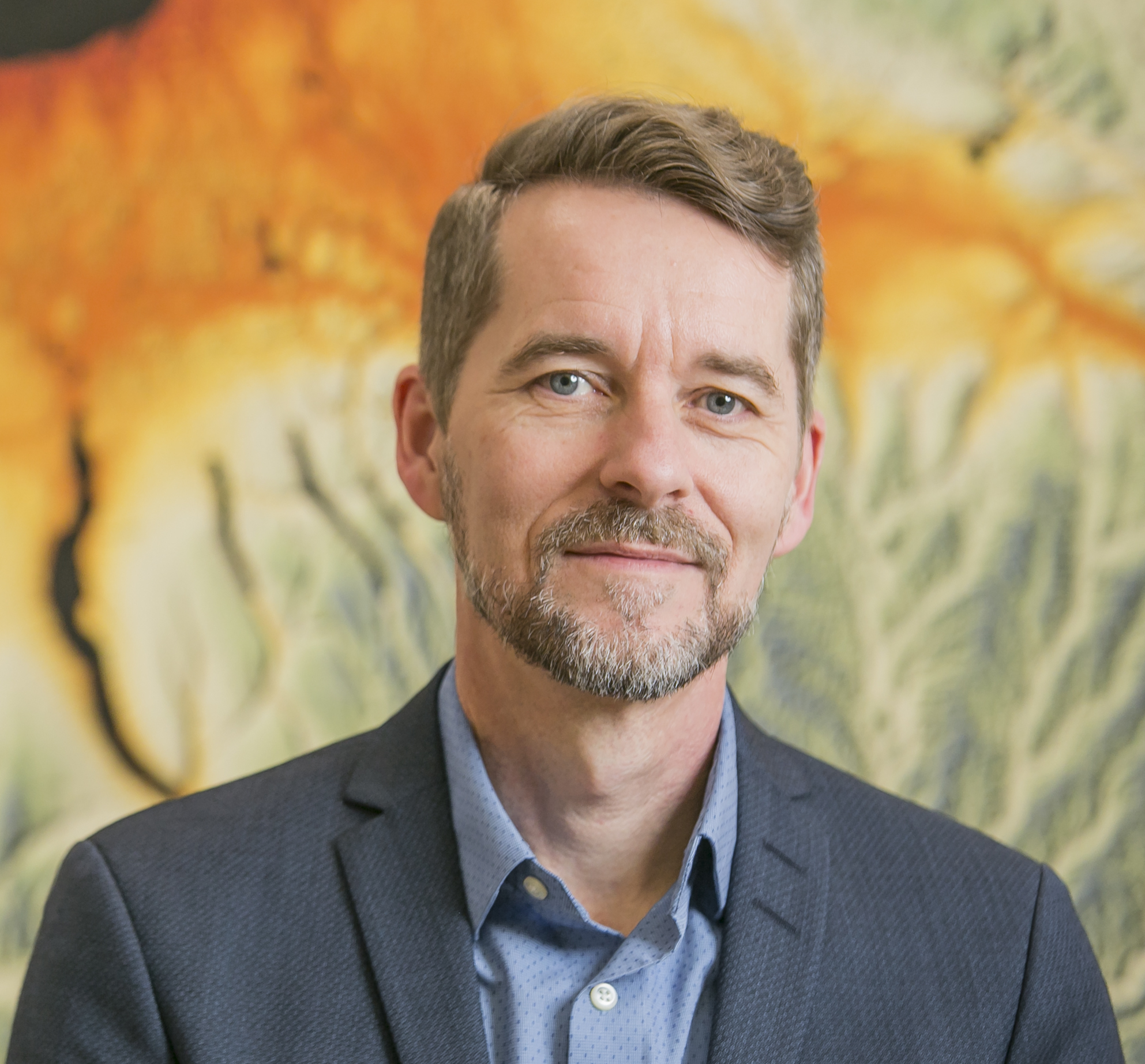
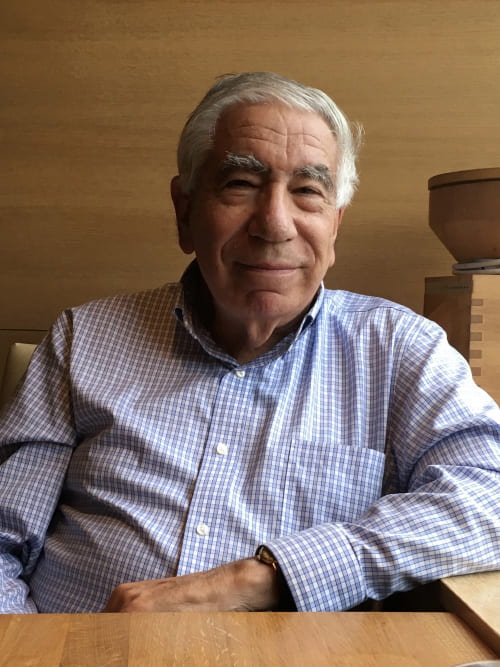
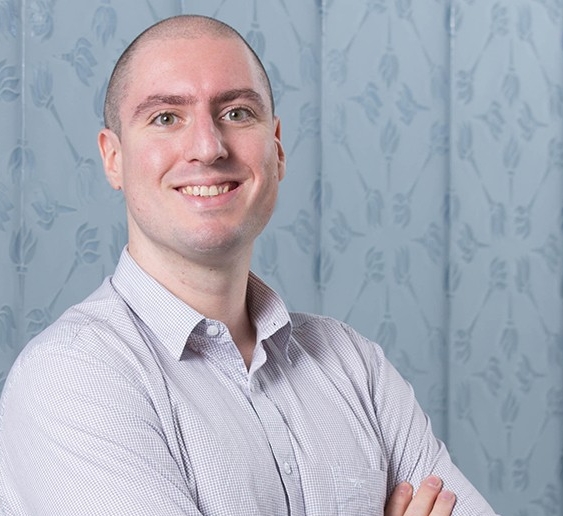
Dr Paul Sidwell is an Honorary Associate in the Department of Linguistics at The University of Sydney. His research focuses on Austroasiatic languages, particularly their classification, historical development, and syntactic structures. He has authored and edited numerous works including A Grammar of May: An Austroasiatic Language of Vietnam (2021) and contributed to major volumes like The Languages and Linguistics of Mainland Southeast Asia: A Comprehensive Guide (2021). His work spans comparative linguistics, epigraphy, and the prehistory of Southeast Asian languages. Recent publications include studies on Nicobarese language classification (2022), Austroasiatic syntax (2020), and Tai-Kadai language history (2021). His research integrates phylogenetic analysis, historical reconstruction, and areal linguistics to explore language relationships across Mainland Southeast Asia. Notable contributions include foundational works on Palaungic languages (2015), Old Khmer (2014), and the Munda Maritime Hypothesis (2019). His scholarship combines rigorous linguistic fieldwork with theoretical insights, advancing understanding of Austroasiatic linguistic diversity.
Piet Desmet is a full professor at KU Leuven's Faculty of Arts, serving as vice rector of KU Leuven, Kulak Kortrijk Campus, and academic director of the Office of the Academic Director, Bruges Campus. He leads multiple research divisions including itec and its Language and Technology subdivision, and is a member of Leuven.AI - KU Leuven Institute for Artificial Intelligence. As general coordinator of itec and academic director of the imec smart education research program, he oversees significant research initiatives spanning multiple campuses. Desmet's research focuses on the intersection of language learning and technology, with particular expertise in Second Language Acquisition and Technology, Computer-assisted Language Learning (including AI-based chatbots), Learning Analytics, and Language Technology and Corpus Linguistics. His work explores intelligent feedback systems, linguistic complexity prediction, adaptive testing, and natural language processing applications for educational contexts. His research spans theoretical linguistic frameworks to practical educational implementations, with a strong emphasis on empirical validation of technological interventions in language learning. Analysis of Desmet's recent publications reveals a strong trajectory toward integrating artificial intelligence with language education, particularly through conversational AI and learning analytics. His work increasingly focuses on chatbot-assisted language learning, adaptive assessment systems powered by large language models, and the application of computational linguistics to educational problems. The publications demonstrate a consistent methodological approach combining theoretical linguistics with empirical educational research, often employing eye-tracking, ERP studies, and learning analytics to evaluate effectiveness. Desmet actively supervises numerous PhD students and leads multiple major research projects including Smart Education at Schools (2025-2026), Enhancing EFL Learners' Speaking Ability through Chatbot-Assisted Dynamic Assessment Powered by LLMs (2024-2028), and the Flanders Ed Tech Hub (2022-2025). His research portfolio demonstrates significant funding success across multiple national and international initiatives focused on educational technology and language learning. As head of itec (an imec research team at KU Leuven), Desmet leads a substantial research ecosystem focused on smart education technologies. The itec team collaborates extensively with Leuven.AI and the KU Leuven Educational Research Institute (LIVO), creating a multidisciplinary environment that bridges computational linguistics, educational psychology, and artificial intelligence. Recent initiatives include the 'AI in Education' online training course and the network for Edtech and Learntech in Flanders.
Sharon Rose is a Professor in the Department of Linguistics at the University of California, San Diego. She holds a BA (Honors) from the University of Toronto, an MA from Université du Québec à Montréal, and a PhD from McGill University. Her research specializes in phonological analysis and descriptive fieldwork on African languages, particularly Semitic languages of Ethiopia/Eritrea and Kordofanian languages of Sudan. Her research examines phonological phenomena including: Long-distance consonant/vowel harmony Featural affixation and dissimilation Tone-intonation interfaces Grammatical tone in Heiban languages Musical pitch processing in tone language speakers She leads several research groups including the Field Research Lab, Phonetics-Phonology Research Community (PhonCo), and UCSD Phonetics Lab. Professor Rose is currently a Fellow at the Netherlands Institute for Advanced Study (2025) and an affiliated faculty member with African Studies Minor and Center for Research in Language.
Morten H. Christiansen is the William R. Kenan, Jr. Professor of Psychology at Cornell University and holds a concurrent position as Professor of Cognitive Science at Aarhus University's School of Communication and Culture and the Interacting Minds Centre. His research focuses on the interplay between biological and environmental factors in language evolution, acquisition, and processing. Key methodologies include computational modeling, neuroimaging, and experimental psychology. He is an elected member of Denmark’s and Norway’s Royal Academies of Sciences and a Fellow of the Association for Psychological Science and Cognitive Science Society. His work spans over 250 papers and four edited volumes, with his monograph The Language Game (2022) proposing a novel theory of language emergence through improvisation. Research interests emphasize multiword chunking, statistical learning, and individual differences in language processing. Current projects explore Danish language challenges, computational models of cultural evolution, and the impact of large language models (LLMs) on human cognition. Christiansen directs the Cognitive Science of Language Lab, teaches undergraduate and graduate courses (e.g., PSYCH 2150: Psychology of Language), and collaborates internationally on projects like the Danish Gigaword Corpus. His recent work highlights language as an emergent system shaped by interactive and ecological pressures.
Richard K. Larson is a Distinguished Professor of Linguistics at Stony Brook University, specializing in syntax and semantics. He holds a Ph.D. from the University of Wisconsin-Madison (1983). His research focuses on syntactic structures, quantification, clausal complementation, and cross-linguistic phenomena in languages like Warlpiri, Japanese, Turkish, and Mandarin. He is recognized for pioneering the Grammar as Science Project , developing educational software Syntactica and Semantica , which earned him the 1998 EduCom Medal. Education: Ph.D. in Linguistics, University of Wisconsin-Madison, 1983 Research Interests: Larson’s work spans syntax-semantics interface, quantifier scope, NP adverbs, psych-verbs, and formal linguistic theory. He emphasizes scientific rigor in syntax, advocating for linguistics as an experimental science. Current projects include rethinking syntactic cartography and Ezafe constructions in Iranian languages. Awards: EduCom Medal (1998) MIT Graduate Council Teaching Award SUNY Chancellor’s Award for Excellence in Teaching Stony Brook Dean’s Award for Excellence in Graduate Teaching Advising & Grants: Larson has advised numerous graduate students and contributed to NSF-funded initiatives like the Accelerated College Education (ACE) program. His grants focus on computational linguistics tools and language education outreach. Key Contributions: Authored foundational textbooks including Grammar as Science (2010) and Knowledge of Meaning (1995). His work on AP-de adverbs in Mandarin and Ezafe construction has reshaped syntactic analysis. Active in promoting linguistics education at secondary/higher education levels through AP Linguistics initiatives.
Dr. Alan Bale is a Professor in the Department of Classics, Modern Languages and Linguistics at Concordia University, specializing in semantics and syntax-semantics interfaces. His work integrates generative linguistics frameworks with experimental methods to explore grammatical representations of meaning, particularly focusing on number, comparison, and scalar competition across languages like Mi’gmaq, English, and Western Armenian. He investigates how conceptual development interacts with linguistic structures through both linguistic and non-linguistic meaning analysis. His research emphasizes teasing apart contributions from pure semantics, psychological categories, and pragmatic reasoning. Key topics include the mass-count distinction, scalar implicature, and experimental methodologies. He maintains a website and has published extensively on topics ranging from linguistic pragmatics to formal syntax. His CV provides additional details on his academic contributions. Bale's publications (2020–2025) reflect a sustained focus on scalar implicature mechanisms, mass-count distinctions, and cross-linguistic syntax-semantics interactions. Recent work explores how online experimental methods and cognitive load influence pragmatic reasoning. His research bridges formal linguistic theory with empirical cognitive science approaches.
Kajsa Djärv is a Lecturer in Linguistics at the University of Edinburgh, affiliated with the School of Philosophy, Psychology and Language Sciences and the department of Linguistics and English Language. She holds a PhD in Linguistics from the University of Pennsylvania (2019), and previously served as an Alexander von Humboldt Research Fellow at the University of Konstanz. Her research focuses on formal semantics and pragmatics, exploring interactions between syntax, semantics, and discourse. Key areas include attitude reports (e.g., belief/knowledge representations), clausal complementation strategies, factivity, and embedded main clause phenomena. She employs experimental methods to investigate grammatical constraints and cross-linguistic variation in meaning representation. Teaching responsibilities include undergraduate and graduate courses in semantic theory and guided research. She currently supervises PhD and MSc students in formal semantics and pragmatics. Notable awards include the Humboldt Research Fellowship (2020–2022). Collaborative projects involve scholars like Donka Farkas (UC Santa Cruz) and Deniz Özyıldız (University of Konstanz), addressing topics such as argument-structure alternations and meaning-driven syntactic restrictions. Djärv is an affiliate member of the MECORE research project on cross-linguistic clausal embedding patterns.
Jay Jasanoff is the Diebold Professor of Indo-European Linguistics and Philology at Harvard University's Department of Linguistics. His research focuses on Indo-European historical linguistics, with specialization in Anatolian Hittite, Tocharian, Greek, Celtic, and other branches. He holds an office at 312 Boylston Hall and can be reached via email at jasanoff@fas.harvard.edu. His work spans comparative grammar, morphological evolution, and phonological processes in ancient languages. Research Interests: Indo-European language family Historical phonology and morphology Preterite and aorist constructions Language contact phenomena in Balto-Slavic and Anatolian Publications reflect deep engagement with verb systems across Indo-European branches, including seminal work on Hittite and Latin. His contributions to understanding Lachmann’s Law in Latin and Tocharian verb paradigms have been widely cited. Recent work continues exploring diachronic patterns in Indo-European verb structures. Lauded for his scholarly contributions, Jasanoff was celebrated at a departmental retirement tribute in 2023, highlighting his mentorship and impact on historical linguistics.
Diogo Almeida is an Associate Professor of Psychology and Global Network Associate Professor of Psychology at New York University Abu Dhabi. His research focuses on neurolinguistics and language processing, employing methodologies such as MEG/EEG, fMRI, and cross-linguistic studies. He holds an MSc in Cognitive Science from the Ecole des Hautes Etudes en Sciences Sociales and an PhD in Linguistics from the University of Maryland, College Park. Prior to NYU Abu Dhabi, he held positions at the University of California, Irvine, and Michigan State University. Almeida’s research explores perceptual processes underlying language understanding, including syntactic structure processing, agreement phenomena, and the neural bases of lexical access. His work integrates behavioral experiments with neuroimaging techniques to investigate how linguistic structures are represented in the brain. Key areas include sentence processing selectivity in Broca’s area, cross-linguistic differences in agreement encoding, and the role of phonological and morphological features in real-time language comprehension. His publications span topics like masked priming effects, sociolinguistic influences on speech perception, and the reliability of experimental syntax methods. He leads the Language, Mind and Brain research group at NYU Abu Dhabi, focusing on interdisciplinary approaches to language cognition. Almeida has contributed to debates on empirical rigor in syntax, advocating for robust experimental designs and large-scale data collection to validate theoretical claims.
Dr. Christopher Lucas is a Senior Lecturer in Arabic Linguistics at SOAS University of London, affiliated with the School of Languages, Cultures and Linguistics. He holds a BA in Arabic from SOAS and an MPhil and PhD in Linguistics from the University of Cambridge. Prior to his current role, he served as a Research Associate at the University of Cambridge and a British Academy Postdoctoral Fellow at SOAS. His research focuses on linguistic variation and change, particularly in Arabic and Maltese, examining topics like negation, definiteness, and contact-induced grammatical change. He actively supervises PhD students in Arabic/Maltese linguistics and grammatical change. Key publications include works on negation typology, Maltese phonology, and historical linguistics. Dr. Lucas has authored/co-authored books such as *The History of Negation in the Languages of Europe and the Mediterranean* and edited volumes on contact-induced change. His work bridges theoretical linguistics with empirical analysis, contributing to understanding language evolution through contact and historical processes. He is reachable at cl39@soas.ac.uk and office 447, Russell Square campus. Current research includes LADO applications in Arabic and Maltese language dynamics.
Kaius Sinnemäki is a Professor of Quantitative and Comparative Linguistics at the University of Helsinki, affiliated with the Department of Languages under the Faculty of Arts. Since 2025, he has directed the strategic profiling action Diversity in Society and Life (DIVSOL) , funded by the Research Council of Finland, and previously led the ERC Starting Grant project Linguistic Adaptation (2019-2024). His research focuses on large-scale comparative linguistics, integrating language typology with sociolinguistics. Key areas include core argument marking, statistical methods in typology, linguistic complexity, language contact, and the interplay between language and religion. He teaches courses spanning language typology, evolution, sociolinguistics, and quantitative methods. Recent publications address replication in linguistic research, adaptation in contact ecologies, and complexity measures across phonological, morphosyntactic, and syntactic domains. His work often bridges theoretical linguistics with empirical data analysis, utilizing open datasets and computational tools. Scientific Awards: Prize for the Humanities (2021) He actively supervises academic theses, serves on editorial boards (e.g., Linguistic Typology ), and participates in international collaborations, peer reviews, and media engagements on linguistic diversity and secularism.
Dr. Kim Potowski is a Professor of Spanish Linguistics at the University of Illinois at Chicago (UIC), specializing in heritage language development, Spanish in the U.S., language and identity, and dual immersion education. She directs UIC's Spanish Heritage Language Program and the summer study abroad program in Oaxaca, Mexico. Her research emphasizes sociolinguistic aspects of Spanish in the U.S., including dialect contact, language maintenance/shift, and bilingual education advocacy. She earned her PhD in Linguistics from the University of Illinois at Urbana-Champaign. Her notable honors include a 2016 CUNY Advanced Research Collaborative Fellowship, a 2013-2014 UIC Institute for the Humanities Fellowship, and a 2011-2012 Fulbright Research Fellowship in Oaxaca. She has authored/edited over 12 books, including El español de los Estados Unidos and Heritage Language Teaching: Research and Practice . Her TEDx talk No Child Left Monolingual advocates for multilingual education equity. She has held editorial roles at Spanish in Context and Heritage Language Journal , and her work bridges sociolinguistic research with pedagogical practice in bilingual settings.
Dr. Anatol Stefanowitsch is a Professor at the Institute of English Philology, Freie Universität Berlin. His work bridges corpus linguistics, cognitive linguistics, and sociolinguistic analysis, with a focus on construction grammar and language's role in societal discourse. He contributes to debates on language policy, gender marking, and digital communication, particularly through public commentary and academic publications. Linguistics (structure of modern English) Corpus Linguistics Cognitive Linguistics Construction Grammar Language Variation and Change Sociolinguistics Recent publications emphasize collocational patterns, metaphor interpretation, and motion event encoding. His research often integrates empirical methodologies with theoretical insights, challenging traditional grammatical paradigms. Key areas include the cognitive basis of language structures and their application to sociopolitical contexts.
Radosław Dylewski is a Professor at the Faculty of English , Adam Mickiewicz University , where he leads the Department of American Studies: Language and Culture . He holds a D.Litt. in English Linguistics (2014) and an MBA in Higher Education Management (2015). His administrative roles include **Deputy Dean for International Cooperation and Outreach** (2020–2024), **Deputy Dean for Full-Time Studies** (2012–2019), and **Dean’s Representative for Open University** initiatives. Education : M.A. in English (1998), Ph.D. in English (2002), D.Litt. in English Linguistics (2014), MBA in Higher Education Management (2015). Research Interests : Dylewski specializes in dialectology, focusing on New England and American South dialects , African American English , and Polish youth slang . His work examines lexical borrowings between Polish and English, historical morphology , and taboo language in sociocultural contexts. He has also analyzed formulaic closings in 19th-century correspondence and verb forms in early American texts. Key Publications include studies on the use of the lexeme 'shit' in stand-up comedy, Polish loanwords in English, and historical dialects. His recent work explores the validity of literary dialect portrayals and the evolution of irregular verbs in Confederate grammars. Scientific Awards : He has received consecutive **Rector’s Prizes for Administrative Achievements** at Adam Mickiewicz University from 2014 to 2024. Professional Involvement : Dylewski has served on numerous academic committees, including the **EPICUR Council at AMU** (2019–) and as a **NAWA Expert**. He has coordinated international conferences like MEDIEVAL ENGLISH STUDIES SYMPOSIUM and projects such as Innovative Language Research (2020–2024).
Lev Michael is a Professor of Linguistics at the University of California, Berkeley, in the Department of Linguistics within the College of Letters and Science. His research focuses on anthropological linguistics, typology, and the documentation and description of Amazonian languages, particularly in Peru. He is actively engaged in fieldwork, language revitalization, and the study of South American historical and contact linguistics. Research Interests: Lev Michael's work spans a wide range of topics in linguistic anthropology and descriptive linguistics. He specializes in the documentation of endangered Amazonian languages such as Iquito and Nanti, examining grammatical phenomena like evidentiality, negation, and subject-verb agreement. His research integrates fieldwork with computational methods, particularly in phylogenetic classification of language families like Tupí-Guaraní and Arawakan. He is deeply committed to language revitalization and community-based lexicography, contributing to school dictionaries and literacy materials. Recent Research Trends: His recent publications (2017–2022) reflect a strong emphasis on lexicography, computational phylogenetics, and the sociocultural dimensions of language use. Articles span from dictionary compilation to Bayesian modeling of language evolution, demonstrating a unique blend of traditional fieldwork and cutting-edge quantitative analysis. There is a consistent focus on Arawakan and Tukanoan languages, evidentiality, poetic structure in oral traditions, and the historical relationships among South American language families. Scientific Contributions: Co-developer of lexicographic resources for Iquito and other endangered languages Pioneer in applying computational phylogenetics to South American language classification Contributor to the understanding of evidentiality and reported speech in Amazonian languages Advocate for language revalorization and community-led documentation Advising and Grants: While specific students and funded grants are not listed in the provided text, Lev Michael frequently collaborates with students and community members on documentation projects. His extensive co-authorship with scholars like Christine Beier and Jaime Pacaya Inuma suggests a collaborative, team-based research model involving students, local speakers, and interdisciplinary partners. His work likely involves external funding given the scale of fieldwork and publication output, though specific grants are not mentioned. Labs and Research Teams: Lev Michael is associated with the Fieldwork and Language Documentation group and the Language and Social Context faculty at UC Berkeley. His collaborative projects involve multidisciplinary teams including linguists, anthropologists, and native speaker consultants, particularly from Peruvian Amazonian communities. He contributes to digital language archiving and lexicography using tools like FLEx (FieldWorks Language Explorer), indicating involvement in computational language documentation initiatives.