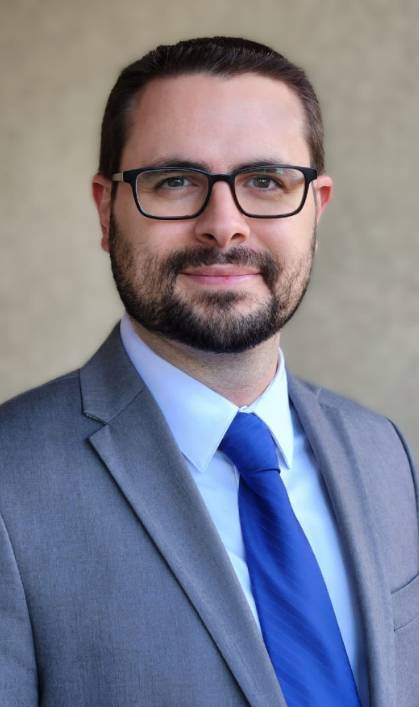
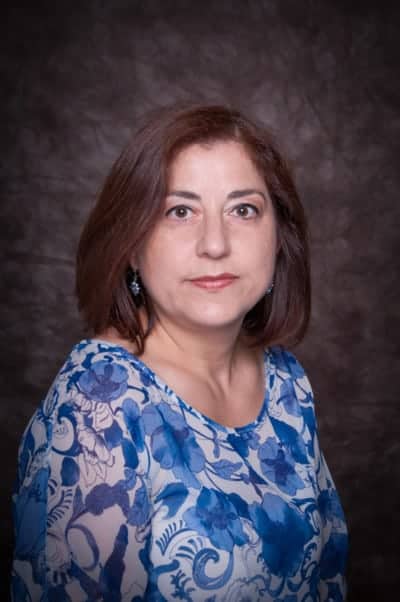
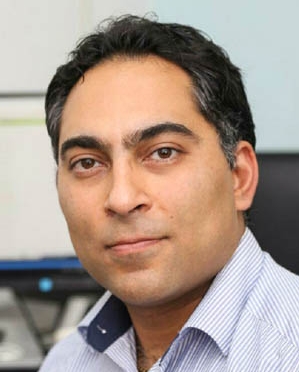
Frazer Alexandra is an Associate Professor of Psychology at Muhlenberg College, specializing in psycholinguistics and cognitive psychology. She holds a Ph.D. in psychology from Lehigh University, an M.A. and B.A. from Northern Arizona University. Her research focuses on language production mechanisms, phonological encoding, and the interplay of memory, attention, and sociolinguistic factors in language use. Teaching expertise includes methodology, statistics, and courses like Adult Personal and Cognitive Development. Research interests include grammatical structure priming, taboo word production, and social media content analysis. Recent work explores how phonological form preparation interacts with semantic interference in speech production. Selected publications and presentations span 2005–2022, addressing topics like swearing's linguistic preparation, Twitter interaction psychology, and bilingual language switching costs. Collaborations with undergraduate researchers (highlighted with *) underscore her mentorship role. No scientific awards explicitly noted in the text. Advises on grants related to cognitive science and language studies.
André Zampaulo is a Professor of Linguistics and Department Chair in the Department of Languages, Literatures, and Cultures at Saint Louis University's College of Arts and Sciences. He holds a Ph.D. from The Ohio State University (2013), an M.A. from the University of Louisville (2009), and a B.A. from São Paulo State University (2006). His research focuses on Phonetics and Phonology, Language Variation and Change, Romance Linguistics, and Translation Studies, with a particular emphasis on historical and comparative perspectives in Portuguese and Spanish. Professor Zampaulo has authored or edited several influential books, including A History of the Portuguese Language (forthcoming, Oxford University Press) and The Routledge Handbook of Portuguese Phonology (2024). His work explores palatalization processes, sound change mechanisms, and sociolinguistic variation in Romance languages. He is an active member of professional organizations such as the Linguistic Society of America (LSA), Modern Language Association (MLA), and Societé de Linguistique Romane (SLiR). Zampaulo’s research bridges theoretical linguistics and pedagogical applications, particularly in pronunciation training for Portuguese learners. His publications address both historical linguistic trends and contemporary phonetic practices across dialects. He has contributed to debates on heritage languages in Latin America and the sociopolitical dimensions of language variation.
Naomi Havron is a post-doctoral researcher at the Laboratoire de Sciences Cognitives et Psycholinguistique (LSCP) at the École Normale Supérieure in Paris, France. Her academic focus is on language acquisition and development, particularly the mechanisms young children use to learn syntax and vocabulary. She investigates syntactic adaptation, differences between children and adults in language processing, and the impact of family environment on language development. Her work employs behavioral experiments, eye-tracking, day-long recordings, and corpus studies. Education PhD (2013-2016): Hebrew University of Jerusalem, Psychology. Dissertation: 'The Effect of Literacy on Language Learning and Processing.' MA (2010-2012): Tel Aviv University, Philosophy (Summa Cum Laude). Dissertation explored Wittgenstein's influence on Tomasello's language theory. BA (2005-2008): Haifa University, Psychology (Summa Cum Laude). Honors program with a thesis on language and empathy. Research Interests Dr. Havron's research explores how children adapt to linguistic input to learn syntax and vocabulary, emphasizing predictive coding mechanisms. She studies how environmental factors like family size and literacy influence language development. Her work bridges experimental methods (e.g., eye-tracking) with naturalistic approaches, such as analyzing language corpora and day-long recordings. Awards and Fellowships 2017-2018: Victor Smorgon Post-doctoral Fellowship for Outstanding Women ($20,000). 2016-2017: Social Science and Humanities Post-doctoral Fellowship (€22,500) from the French Embassy. 2009: Prize for exceptional paper from Bar-Illan University (Linguistic Philosophy). Collaborations and Grants Her collaborations include projects with Anne Christophe (ENS) on syntactic adaptation and predictive coding, and with Alejandrina Cristia on language exposure in large families. She has also worked with international teams like the ManyBabies Consortium to study variability in infant language research. Labs and Teams She is affiliated with the LSCP at ENS, focusing on cognitive and psycholinguistic approaches to language development. Her work integrates interdisciplinary methods from psychology, linguistics, and neuroscience.
Dr. Antroulla Papakyriakou is an Associate Professor at the Department of Languages and Literature, University of Nicosia, within the School of Humanities and Social Sciences. She holds a PhD in General Linguistics from Humboldt University (Berlin, Germany) and an MA in German Language and Literature from the same institution. Her academic career includes roles as a member of the Senate at the University of Nicosia (2008–2014), Intercollege (2003–2006), and Humboldt University (1990–1992). She has coordinated EU projects such as the European Curricula in New Technologies and Language Teaching (Comenius 2.1) and contributed to initiatives like Language Network for Quality Assurance and WeReLaTe. Her research focuses on the Syntax-Semantics interface, technology in language teaching, CLIL, and multilingualism policies. Dr. Papakyriakou’s research interests extend to linguistic ecology, plurilingualism promotion, and refugee/migrant education. She leads initiatives like the Cyprus Linguistics Society and Cyprus Teachers of German Association. Key projects include NEOLAiA (European University Alliance) and studies on linguistic policies in Cypriot universities. Recent work explores terminology management in academic contexts and integration strategies for marginalized groups. Her contributions span over 20 publications and collaborative projects across Europe. She actively promotes multilingualism through institutional frameworks and pedagogical innovation, emphasizing societal impact and policy development.
Yrd. Doç. Dr. Shahin Mehdipour Ataee is an Assistant Professor in the Department of Computer Engineering at the Faculty of Engineering, Final University. His research focuses on semantic web services choreography, logic programming, and formal methods in computer engineering. He holds a PhD in Computer Engineering from Eastern Mediterranean University (2018), an MSc in Software Engineering from Qazvin Azad University (2010), and a BSc in Computer Engineering from Mazandaran University of Science and Technology (2006). His work emphasizes the application of abstract state machines (ASM) and F-Logic to solve complex problems in service-oriented architectures. Notable contributions include developing algorithms for semantic web service composition and applying logic-based frameworks like Flora-2 to AI challenges such as the Wumpus World. His research also extends to video analysis for periodic activity detection. No scientific awards or grants explicitly listed in the provided information. His academic profile includes a strong focus on both theoretical advancements and practical implementations in computer science domains. Currently affiliated with Final University’s Faculty of Engineering, his educational background spans multiple institutions across different countries, reflecting a global academic trajectory. No specific labs or teams are mentioned in the current data.
PATRICIA MARTIN RODILLA is a Researcher affiliated with the Center for Research in Intelligent Technologies (CITIUS). She holds a PhD from the Universitat Politècnica de València (2016) with a thesis on software-assisted knowledge generation in cultural heritage. Her work focuses on interdisciplinary applications of AI in humanities, discourse analysis, and archaeological methodologies. Key research areas include hate speech detection using LLMs, digital humanities frameworks, and computational approaches to cultural heritage preservation. Her educational background includes advanced studies in computational methods and their application to archaeological discourse analysis. She has contributed to projects like ACME and erisk, addressing early risk prediction on social media platforms. Her publications emphasize methodology validation, uncertainty management in archaeological data, and the ethical implications of AI in language processing. Dr. Martin Rodilla has pioneered software tools for discourse analysis and heritage documentation, such as the PAFe plugin for phonetic feedback in language learning. Her work integrates fuzzy logic for uncertainty modeling and explores the intersection of archaeology with computational linguistics. She has also engaged in collaborative efforts to standardize methodologies across European archaeological organizations. Her research bridges technical innovation with humanistic inquiry, particularly in leveraging AI for heritage preservation, bias mitigation in language models, and enhancing scholarly communication through digital platforms.
Andrei Popescu is a Senior Lecturer (Associate Professor level) in the Department of Computer Science at the University of Sheffield, where he conducts research in formal methods, proof assistants, and information flow security. He previously held academic positions at Middlesex University and TU Munich. University: University of Sheffield Department: Department of Computer Science Previous Affiliations: Middlesex University, TU Munich His research focuses on the logical foundations and practical applications of proof assistants, particularly Isabelle/HOL. He has made foundational contributions to inductive and coinductive datatypes, syntax with bindings, higher-order logic, and the formal verification of secure systems. His work bridges theoretical logic with real-world systems such as conference management (CoCon) and social media platforms (CoSMeDis). The recent publications highlight a strong trend in formalizing deep logical results (e.g., Gödel’s incompleteness theorems), advancing datatype theory, verifying complex security properties, and applying formal methods to practical systems. His work consistently appears in top-tier venues such as POPL, CAV, ITP, and CSF. Distinguished Paper Award at POPL 2025 Distinguished Paper Award at POPL 2024 Distinguished Paper Award at POPL 2023 RS 3 Best Paper Award for 2012–2013 He has advised PhD students including Lorenzo Gheri and has been actively involved in organizing major academic events such as the Midlands Graduate School, CPP, ITP, and TABLEAUX conferences. He has served on numerous program committees including POPL, ITP, CSF, and CAV, and has led research projects funded by VeTSS and industrial partners. He is a key contributor to the Isabelle proof assistant ecosystem, particularly in the development of the (co)datatype package and foundational consistency results. His work combines deep theoretical insight with practical implementation, making significant impacts in both academia and applied security.
Satoshi Nambu is a tenured Lecturer in Japanese Studies at Monash University, affiliated with the School of Languages, Literatures, Cultures, and Linguistics within the Faculty of Arts. He joined Monash in 2017 and currently serves as Chair of the School Equity, Diversity, and Inclusion Committee and coordinator of the Japanese Studies major. He is actively involved in research, teaching, and professional service. Monash University, Faculty of Arts (2017–present) National Institute for Japanese Language and Linguistics (NINJAL), Project Member (2022–present) Tohoku University, Language Change and Variation Unit, Member (2016–present) His research focuses on the dynamics of language variation, particularly how syntactic variation contributes to diachronic change and reflects speaker identity and ideology. He employs quantitative methods such as corpus analysis, surveys, and psycholinguistic experiments. Recent projects explore linguistic landscape in Japan and character language in fiction, linking them to real-world language ideologies through the concept of enregisterment. The most recent publications (2024–2025) show a strong trend toward interdisciplinary research combining sociolinguistics, psycholinguistics, and corpus methods. Key themes include multilingualism, language in urban spaces, neural processing of Japanese syntax, and language concerns among immigrant families. The work spans empirical studies, theoretical contributions, and policy-relevant analyses. His scientific awards include the Japan Society for the Promotion of Science Research Fellowship (2015–2017) and the Japan Foundation Research Grant (2020). Research Fellowship for Young Scientists, JSPS (2015–2017) Japan Foundation Research Grant (2020) Satoshi Nambu advises PhD students and teaches courses such as Japanese sociolinguistics, research methods, and linguistic landscape. He serves on editorial boards and professional committees, including the Japanese Studies Association of Australia and the journal The Japanese Journal of Language in Society . He leads research projects on Japanese/Korean linguistics and language variation, securing external funding and fostering international collaboration. He is a member of research teams at NINJAL and Tohoku University, contributing to large-scale projects on corpus development and multilingualism. He also participates in academic networks such as the Global Council for Anthropological Linguistics and regularly serves as a peer reviewer for journals including International Journal of Multilingualism and English Today .
Ada Valentini is a Full Professor in Glottology and Linguistics (SSD L-LIN/01) at the University of Bergamo, Department of Languages, Literatures and Foreign Cultures. She has been a faculty member since 1997, promoted to full professor in 2017, and has taught a wide range of courses including Acquisitional Linguistics, Corpus Linguistics, and Intercultural Communication. Her academic journey began in 1987-1988, with continuous teaching engagement since 1993-1994. PhD in Linguistics, University of Pavia (1992) Graduate in Foreign Languages and Literatures, University Institute of Bergamo (1986) Her research focuses on acquisition linguistics , particularly the acquisition of Italian as a second language by speakers of Wu Chinese, Tigrinya, English, and German, grounded in a typological-functionalist framework. She has published extensively in this domain, including two monographs. Her sociolinguistic interests include immigrant languages in Italy and linguistic varieties. She also investigates information structure in the Bergamo dialect, ancient and contemporary Italian, and English, especially split sentences. Her recent publications (2021–2025) reflect a strong engagement with second language acquisition, digital processing of spoken data, femicide discourse in media, and the preservation of linguistic heritage. Themes across her work include language contact, multilingualism, and the documentation of minority and regional varieties. She has no listed scientific awards in the provided text. Prof. Valentini supervises master's theses and advises students, requiring institutional email contact for academic inquiries. She holds regular online office hours on Mondays from 8–10. She is actively involved in academic service, including thesis preparation seminars for graduating students. She leads and contributes to initiatives on linguistic heritage and digital documentation, particularly through publications and editorial work on regional Italian dialects and sociolinguistic issues.
Dr. Lixin Tao is a tenured Professor and Chairperson of the Computer Science Department at Pace University's Seidenberg School of CSIS. He earned his PhD in Computer Science from the University of Pennsylvania in 1988 and has conducted research and teaching at Concordia University (1988-2001) before joining Pace University. Research Interests: Dr. Tao's work spans Internet Computing , Server Scalability , Component Technologies , Parallel Computing , Functional Simulation , and Combinatorial Optimization , with recent focus on Knowledge Graphs , Semantic Web , and Secure Mobile Cloud Systems . He has pioneered cloud computing research since the 1990s and developed industry standards like OWL extensions. Over 300 peer-reviewed publications Director of Pace University's PhD Computer Science Program (2013-2017) Developed MS in Enterprise Analytics (2015) and BS in Computer Engineering (2017) Scientific Awards: Recognized as IEEE Senior Member (2020), ABET Evaluator (2001-2012), and recipient of multiple research grants including a $12M NSERC Strategic Technology Program and NSF awards for server infrastructure. He received Pace University's Presidential Research Grant and collaborated with institutions like Stanford University on knowledge engineering projects. Professional Contributions: Directed ABET accreditation for Pace's BS-CS program (2010-2012), served as Editor-in-Chief for the Journal of Computer Science Research (2018-present), and supervised dozens of PhD/DPS students in areas ranging from Mobile Payment Protocols to Drug Side Effect Knowledge Graphs . His lab focuses on Knowledge-Empowered AI and Secure Software Development .
Elsa Gunter is a Research Professor and Senior Lecturer at the Siebel School of Computing and Data Science, part of the Grainger College of Engineering at the University of Illinois Urbana-Champaign. She holds a Ph.D. in Mathematics from the University of Wisconsin (1987). Her research focuses on programming languages, formal methods, software engineering, and interdisciplinary computing education. Key research areas include the semantics of programming languages, compiler optimization, formal verification frameworks, and integrating computing into interdisciplinary education. She teaches courses like CS 421 (Programming Languages & Compilers), CS 431 (Embedded Systems), and CS 477 (Formal Software Development Methods). Her work emphasizes practical applications of formal methods in software development and pedagogical innovations in computing education. Recent projects explore challenges in interdisciplinary computing curricula and the formal semantics of programming languages. Elsa’s academic contributions span over four decades, with notable work on theorem proving tools (e.g., HOL90), compiler correctness frameworks, and educational technologies for programming courses.
Isaac L. Bleaman is an Assistant Professor in the Department of Linguistics at the University of California, Berkeley, and an affiliate of the Center for Jewish Studies. He also serves as faculty director of the Sociolinguistics Lab at Berkeley (SLaB). His research examines sociolinguistic variation, language maintenance, and language change, with a focus on contemporary Yiddish. Bleaman earned a PhD in Linguistics from New York University (2018), an MA in Linguistics from NYU (2016), an MSt in Yiddish Studies from the University of Oxford (2013), and a BA in Linguistics & Comparative Literature from Stanford University (2012). His current NSF CAREER-funded project develops a corpus of conversational Yiddish from Holocaust survivor testimonies. Research interests span: Phonetic/grammatical variation in Yiddish Computational methods for language analysis Syntactic theory and variation mechanisms Language standardization and maintenance Recent publications focus on computational sociolinguistics, speech synthesis for Yiddish, syntactic variation, and language documentation. His work integrates corpus linguistics, experimental methods, and theoretical frameworks. He directs the Sociolinguistics Lab at Berkeley and develops open-source tools for Yiddish text processing, including keyboard layouts, orthographic normalizers, and syllabification algorithms. He teaches graduate and undergraduate courses in sociolinguistics and Yiddish studies.
Dr. Martin Doherty is an Associate Professor in the School of Psychology at the University of East Anglia. He holds a PhD in Developmental Psychology from the University of Sussex and has conducted postdoctoral research in Japan and Stirling. His academic roles include serving as Psychology Masters Director and coordinating multiple courses including PSY-5016A: Developmental Psychology. His research focuses on: Theory of mind development, particularly false belief understanding in children Metalinguistic and metapictorial awareness Children's understanding of gaze direction and its implications for theory of mind Cross-cultural differences in perception and cognition Analysis of his 15 most recent publications reveals consistent themes in developmental psychology, with a strong focus on metacognition, visual perception, and cross-cultural cognitive development. His work demonstrates increasing methodological sophistication in longitudinal designs and cross-cultural comparisons, particularly between Scottish and Japanese populations. Dr. Doherty leads the Centre for Japanese Studies collaboration and directs multiple research projects including 'The development of gaze understanding' funded by the Leverhulme Trust. He coordinates university outreach through initiatives like 'Child Scientist Morning at UEA' supported by ESRC funding.
Adjunct Associate Professor Nick Reid is an emeritus academic at the University of New England (UNE), specializing in Australian Aboriginal linguistics and language revitalization. He retired in 2019 but continues research on Daly River languages (NT), including Ngan'gikurunggurr and Ngan'giwumirri. His work bridges descriptive linguistics, ethnomusicology, and environmental science, notably linking Indigenous oral traditions to sea-level chronologies. A pioneer of online education, he co-developed UNE's Master of Applied Linguistics and created multimedia resources like the Phonetics: An Interactive Introduction CD-ROM. Reid holds a BA (Hons) and PhD from ANU, with research interests spanning morphosyntax, nominal classification systems, and Indigenous language maintenance. He collaborates with institutions like the Northern Institute (CDU) and the University of Melbourne on projects blending linguistics with environmental science. Awards include the Carrick Citation (2006) for student learning innovations and UNE's Vice-Chancellor's Award (2000) for teaching excellence. His publications emphasize language documentation, including grammars and curriculum resources for Aboriginal communities. Recent work focuses on collaborative projects with the Ngan’gi Schools Network and coastal inundation studies with Patrick Nunn. He has supervised numerous higher-degree students and remains active in eResearch initiatives, such as digitizing the Ngan’gi language collection.
Dr. Deborah Do Rosario Benros is a Senior Lecturer and Cluster Lead in Architecture at the University of East London. She specializes in computational design methodologies, robotic manufacturing, and sustainable micro-housing solutions. Her research bridges architectural theory with digital fabrication technologies, focusing on generative design systems and mass customization. Research interests span generative multilingual shape grammars, 3D printing applications in large-scale construction, and AI-assisted co-design processes. Her work emphasizes sustainable housing innovation through parametric modeling and robotic construction techniques. Recent publications demonstrate consistent focus on AI-driven design collaboration, robotic fabrication efficiency, and sustainable modular systems. Trends include increased integration of machine learning with architectural prototyping and human-AI co-creation frameworks. As Cluster Lead, she oversees research initiatives in Architecture, Computing & Engineering, fostering cross-disciplinary innovation in digital manufacturing.