Satoshi Tomioka is a Professor in the Department of Linguistics and Cognitive Science at the University of Delaware, affiliated with the College of Arts & Sciences. He holds a B.A. from International Christian University (Tokyo) and a Ph.D. from the University of Massachusetts Amherst. His expertise spans semantics, pragmatics, syntax, and prosody, with a focus on Japanese and comparative East Asian linguistics. Education: B.A. in Liberal Arts (1987), International Christian University; Ph.D. in Linguistics (1997), University of Massachusetts Amherst. Research interests include ellipsis, anaphora, wh-interrogatives, distributivity, and contrastiveness. He investigates how prosody interacts with syntax and semantics in Japanese, exploring topics like focus marking, intervention effects, and scalar implicatures. Recent work examines associative plurals and pragmatic disambiguation in embedded questions. Publications analyze theoretical and empirical questions in linguistic interfaces, such as Bare quotatives as embedded speech acts (2024) and Focus without pitch boost (2022). His work bridges formal semantics and experimental approaches, addressing challenges in cross-linguistic typology and cognitive aspects of language processing.
Elaine J. Francis is a Professor of English and Linguistics at Purdue University, where she also serves as the Associate Head of the Department of English. She holds affiliate appointments in the Department of Linguistics and the Department of Speech, Language, and Hearing Sciences. At Purdue, she directs the Experimental Linguistics Lab and teaches linguistics courses at both graduate and undergraduate levels. Francis completed her B.A. in Linguistics at the College of William and Mary in 1993, followed by her M.A. (1995) and Ph.D. (1999) in Linguistics at the University of Chicago under the direction of Salikoko Mufwene. Her dissertation examined variation among members of the same lexical category in English using Sadock's Autolexical Grammar framework. Prior to joining Purdue in 2003, she served as an Assistant Professor at the University of Hong Kong from 1999 to 2002, where she collaborated with Stephen Matthews on research concerning syntactic categories and relative clauses in Cantonese. Her research focuses on syntax and its interfaces with semantics, discourse information structure, and language processing in production and comprehension. Francis employs experimental methods to investigate syntactic, semantic, discourse-pragmatic, and cognitive factors underlying the grammar and usage of complex sentence structures. Her specific interests include word order alternations, filler-gap dependencies, resumptive pronouns, relative clauses, grammatical categories, and syntactic alternations. She has published extensively in top linguistics journals including Language and Cognition, Glossa Psycholinguistics, Linguistics, Lingua, Cognitive Linguistics, and the Journal of Psycholinguistic Research. Analyzing her recent publications reveals a consistent focus on experimental approaches to syntactic phenomena. Her work demonstrates a strong interest in gradient acceptability, syntactic priming, cross-linguistic comparison (particularly involving English and Cantonese), and the relationship between grammatical theory and language processing. Her 2022 book Gradient Acceptability and Linguistic Theory represents a major contribution that synthesizes experimental findings with theoretical linguistics frameworks. Francis plays an active role in the broader linguistics community. She regularly teaches short courses at the Linguistic Society of America Linguistic Institutes, serves on the LSA Ethics Committee, and is on the editorial board of Glossa Psycholinguistics. She has also edited several books and special journal issues, including Mismatch: Form-Function Incongruity and the Architecture of Grammar (2003) and Polymorphous Linguistics: Jim McCawley's Legacy (2005). As an educator and administrator, Francis has supervised numerous graduate students and currently serves as Associate Head of the Department of English at Purdue. Her Experimental Linguistics Lab provides research opportunities for students interested in the intersection of theoretical syntax and experimental methodology. While she recently announced she will not be accepting new graduate students for the 2025-2026 cycle, her established mentorship record demonstrates her commitment to training the next generation of linguists. The Experimental Linguistics Lab, which she directs, serves as a hub for research combining theoretical linguistics with experimental methods. Her collaborative work extends across disciplines, including collaborations with researchers in speech-language pathology, cognitive science, and computational linguistics, reflecting the interdisciplinary nature of modern linguistic research.
Kyle Johnson is a Professor and Curriculum Committee Chair in the Department of Linguistics at the University of Massachusetts at Amherst, located in Integrative Learning Center N440. He holds a BA in Psychology from the University of California-Irvine (1981) and a PhD in Linguistics from MIT (1985). His research focuses on formal syntactic theory, particularly the interaction between syntax and prosody/semantics, with attention to real-time sentence processing evidence. He has taught at multiple institutions including UC-Irvine, UCLA, University of Wisconsin-Madison, and McGill University before joining UMass. Current courses include LING 301 (Introduction to Syntax) and LING 601 (Transformational Grammar). His work emphasizes syntactic derivations, linearization, ellipsis phenomena (gapping, stripping), and the empirical adequacy of formal syntactic theories. Selected recent contributions include analyses of Principle B derivation, prosodic spell-out mechanisms, and theta-role theory. He maintains an active publication schedule with over three decades of work in top journals like Linguistic Inquiry and Nordlyd , addressing topics ranging from adjunct islands to multidominant movement theories. His research combines theoretical innovation with experimental plausibility, often challenging traditional assumptions in generative syntax. Teaching responsibilities include both undergraduate and graduate syntax courses, with supplementary materials like Transformational Grammar lecture notes and a comprehensive bib file for researchers. Office hours are scheduled via his online calendar with a preference for in-person meetings.
Jonathan David Bobaljik is a leading linguist whose research spans formal syntax, phonology, and the documentation of endangered languages, particularly Itelmen. He is actively involved in multiple international research collaborations and regularly presents at major linguistic conferences across Europe and North America. His work is published in top journals such as Natural Language and Linguistic Theory and Language . His research interests lie at the intersection of theoretical and descriptive linguistics. He investigates universal patterns in morphology and syntax, including suppletion, vowel harmony, ergativity, and control structures, often using data from understudied languages like Itelmen. His work combines rigorous formal analysis with deep empirical grounding in language documentation. The recent publications reflect a strong trend toward integrating typological diversity with formal theory. Key areas include morphosyntactic universals (e.g., suppletion in pronouns), information structure in verb-final languages, and the phonology of ejective consonants. There is also a growing emphasis on sociolinguistic and community-based aspects, as seen in collaborative work on language revitalization and the social life of the Itelmen language. He has received recognition through numerous scholarly publications and invited talks, though specific awards are not listed in the provided text. His collaborative projects suggest active grant involvement, particularly in language documentation and cross-linguistic typology. Bobaljik plays a central role in the Itelmen documentation and revitalization project, contributing to the creation of a dictionary app, the publication of historical manuscripts, and public exhibits on Siberian Indigenous knowledge. He collaborates with a team including David Koester, Chikako Ono, Tatiana Degai, and Maria Pupynina.
Maite Taboada is a Distinguished Professor in the Department of Linguistics at Simon Fraser University (SFU), directing the Discourse Processing Lab. She is also an Associate Member of the Cognitive Science Program and School of Computing Science, and affiliated with the Digital Democracies Institute and Visual and Interactive Computing Institute. Her research bridges discourse analysis and computational linguistics, focusing on mechanisms of coherence, discourse parsing, and sentiment analysis. Key projects include analyzing online news comments (SOCC corpus), detecting misinformation (MisInfoText), and monitoring gender representation in media (Gender Gap Tracker/Radar de Parité). Notable research interests span toxic language detection, constructive dialogue systems, and interdisciplinary work between social sciences and engineering. She has led projects funded by SFU and collaborated with organizations like Informed Opinion. Her awards include Fellowship in the Royal Society of Canada. Key contributions include developing the SFU Opinion and Comments Corpus, systems for comment moderation, and frameworks for gender bias analysis using topic modeling. Her work integrates theoretical discourse analysis with applied computational methods, addressing societal challenges like media bias and misinformation.
Sanjit A. Seshia is the Cadence Founders Chair Professor in the Department of Electrical Engineering and Computer Sciences at the University of California, Berkeley . He is affiliated with the Group in Logic and the Methodology of Science and participates in centers like the Industrial Cyber-Physical Systems Center , Berkeley AI Research , and the Simons Institute for the Theory of Computing . Research interests include formal methods for automated verification and synthesis of dependable systems, with applications to cyber-physical systems , AI-based autonomy , and computer security . His work spans SMT solving, model counting, syntax-guided synthesis, and algorithmic improvisation, with tools like UCLID5 , VerifAI , and Scenic for verifying autonomous systems and educational platforms like CPSGrader . Students and collaborators include notable researchers such as Dorsa Sadigh (Stanford), Daniel Fremont (UC Santa Cruz), and Hazem Torfah (Chalmers). He has co-founded startups like Decyphir and 20ⁿ Labs based on his research.
Emily A. Gasser is an Associate Professor in the Linguistics Department at Swarthmore College , specializing in Austronesian languages , Wallacea & northwest New Guinea , and language documentation . Her research spans phonology, morphology, typology , and language contact , with a focus on endangered languages and computational phylogenetics . She is currently on sabbatical for the 2025-26 academic year, conducting fieldwork in Manokwari, writing a Wamesa grammar, and developing new courses. Research Interests include: Language documentation and fieldwork in Austronesian and Papuan-speaking regions Phonological variation and vowel harmony systems Typological surveys of adnominal possession and morphological structures Interaction between prosodic features in media speech and socio-phonetics Computational tools for historical linguistics and classifier system analysis Recent publications focus on vowel harmony , prosodic perception , and possessive constructions across Wallacea and Northwest New Guinea. She edits volumes on Austronesian-Papuan language contact and contributes to open-access research initiatives.
Dylan Hadfield-Menell is an Assistant Professor in the Department of Electrical Engineering and Computer Science at the Massachusetts Institute of Technology, holding the Bonnie and Marty (1964) Tenenbaum Career Development Professorship. His research focuses on AI alignment and human-AI interaction within MIT's School of Engineering. His research interests center on agent alignment problems in AI systems, particularly examining uncertainty in objective optimization for human-robot teams and societal oversight of machine learning systems. Key areas include the principal-agent alignment problem , assistance games frameworks , and robust preference learning that accounts for hidden contextual factors in reinforcement learning from human feedback. His recent publications reveal strong trends toward multi-agent cooperation , formal contract mechanisms for resolving social dilemmas, and advanced evaluation methodologies for AI safety. The research spans theoretical frameworks like open-universe assistance games while addressing practical challenges in language model alignment and cultural bias assessment. Scientific awards include: AI2050 Early Career Fellowship from Schmidt Futures Berkeley Fellowship NSF Graduate Research Fellowship C.V. Ramamoorthy Distinguished Research Award His work bridges theoretical computer science with real-world AI governance challenges, as demonstrated through MIT's participation in AI policy white papers. Current research directions include developing frameworks for transparent AI systems and addressing fundamental limitations in aligning recommender systems with human values through interdisciplinary synthesis.
Alexander Key is an Associate Professor of Comparative Literature at Stanford University, specializing in Classical Arabic literature and the intellectual history of Arabic and Persian-speaking worlds from the 7th century onwards. His scholarship focuses on the philosophy of language, literary theory, and cross-cultural translation. Ph.D. in Arabic and Islamic Studies from Harvard University (2012) Current research: Arabo-Persian linguistic intersections, poetics in translation, and pre-modern theories of syntax and affect His articles span diverse eras and topics, including: Medieval Arabic language philosophy (5th–11th century) Modern Arabic political poetry analysis (20th–21st century) Comparative methodologies bridging Islamic and Western traditions A key editorial role includes: Board Member of Stanford University Press Advisory roles at Habib University and Stanford’s Markaz Resource Center His work bridges academic publication with public discourse through: Contributions to Arcade Colloquy Interviews on poetics, religion, and contemporary politics Podcasts and literary salon discussions
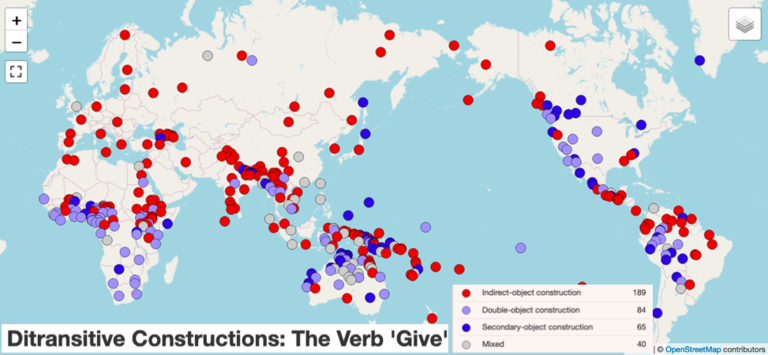
Martin Haspelmath is a Senior Research Scientist at the Department of Linguistic and Cultural Evolution at the Max Planck Institute for Evolutionary Anthropology (MPI-EVA), Leipzig, and an honorary (adjunct) professor at Leipzig University. His research focuses on comparative linguistics, language universals, and typology, particularly in syntactic and morphological systems. He co-edited the World Atlas of Language Structures (2005/2013) and co-founded Language Science Press . Education: PhD in Linguistics, Freie Universität Berlin (1990–1993) MA in Linguistics, University of Cologne and University at Buffalo (1985–1989) Undergraduate studies in Linguistics, University of Vienna (1983–1985) Research Interests: Haspelmath investigates global grammatical diversity, form-function correspondences, and universals in syntax, morphology, and lexical systems. His work emphasizes comparative concepts for cross-linguistic analysis and critiques traditional grammatical categories. Grants & Projects: ERC project leader at Leipzig University (2015–2020) Co-creator of Grambank , an open-access database of grammatical structures Leading initiatives for open-access publication and linguistic data sharing Labs/Teams: Active in the MPI's Department of Linguistic and Cultural Evolution, collaborating on projects like APICS (Atlas of Pidgin and Creole Language Structures) and ValPal (Valency Patterns Leipzig).
Lucia Binotti is a Professor of Spanish and Digital Humanities at the University of North Carolina at Chapel Hill (UNC-CH), with dual affiliations in the Department of Romance Studies and interdisciplinary Digital Humanities initiatives. She serves as Graduate Advisor for Hispanic Linguistics and Director of the Honors Study Abroad Program in Rome. Her work bridges traditional philology with cutting-edge digital scholarship, emphasizing immersive learning experiences through virtual reality (VR) and augmented reality (AR) technologies. Binotti holds a Ph.D. from UC Santa Barbara (1990), an MA (1985), and a BA (1984) in Romance Philology from the Università degli Studi di Pisa. Her research focuses on linguistic identity, cultural heritage preservation, and innovative educational platforms like Amirabilia—the world’s first experiential learning platform. Notable projects include nXimena (healthcare training for Latinx abuse survivors) and Entiendelo (a linguistic/cultural navigation app for Latinx communities). Her scholarly interests span Early Modern Spanish literature, digital humanities applications, and the intersection of technology with social justice. She has directed grants totaling over $500K for projects involving AR/VR integration in education, including collaborations with the UNC Health Science Library and NCSU’s DELTA initiative. Recent awards include the John K. Walsh Award (2010) and Digital Innovation Fellow status (2014). Grants & Leadership: CFE-Lenovo Technology Grants (2018–2019) for AR/VR expansion iLRN 2020 International Co-Chair XR Faculty Learning Community Leader (UNC) Teaching: Courses span from introductory Hispanic literature to advanced topics like medieval intellectual history and digital humanities methodologies. Binotti’s work emphasizes ‘place, presence, and perspective’ in Cyber-Humanities education, particularly addressing marginalized communities through technology-driven solutions.
Mark Baker is a Professor of Linguistics and Cognitive Science at Rutgers University. His work focuses on comparative syntax, linguistic universals, semantic roles, and the study of Amerindian and African languages. He holds the title of Distinguished Professor and maintains an office in Scott Hall. As of 2021, his office hours were by appointment due to sabbatical leave. His research interests include syntactic diversity, its limits, and patterns across languages. Notable themes in his work involve logophoric pronouns, switch-reference mechanisms, and the relationship between case systems and agreement structures. He has contributed to discussions on language typology, formal syntax, and the cognitive foundations of linguistic structures. Baker teaches advanced syntax courses and has published extensively on topics ranging from Panoan languages to theoretical models in generative grammar. His recent articles explore syntactic variation, morphosyntactic alignment, and interdisciplinary connections between linguistics and cognitive science. He serves on editorial boards and has reviewed for journals such as Journal of East Asian Linguistics and Yearbook of Corpus Linguistics and Pragmatics . His work bridges formal linguistic theory with empirical cross-linguistic analysis, emphasizing the interplay between universal grammatical principles and lineage-specific traits.
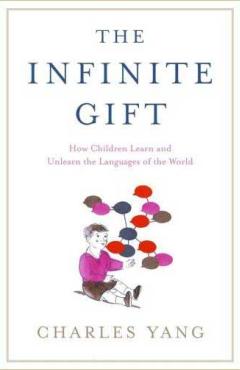
Charles Yang is a Professor of Linguistics and Computer Science at the University of Pennsylvania , where he also directs the Cognitive Science Program. His research integrates computational models with studies of language acquisition, processing, and evolution. Education: Ph.D. in Computer Science, MIT, 2000 Yang's work spans language acquisition , computational linguistics, and the evolution of cognition. He has authored The Price of Linguistic Productivity (2016), which received the Leonard Bloomfield Award from the LSA. Recent publications focus on large language models as cognitive models, the Chinese aspectual system , and statistical approaches to linguistic patterns. His 15 most recent articles (2025-2021) demonstrate a trajectory from computational models of language change to machine translation and multiword expression analysis . Yang has received significant funding from the National Science Foundation and the Guggenheim Foundation . He co-directs the Integrated Language Science and Technology group with John Trueswell and mentors students in linguistics, computer science, and psychology.
Gregory Ward is Professor of Linguistics, Gender & Sexuality Studies, and Philosophy at Northwestern University. His work bridges pragmatic theory, information structure, and intonational meaning, with a focus on reference/anaphora. He has taught courses like Pragmatics (LING 372) and Language & Gender (GSS 234), receiving the E. LeRoy Hall Award for Excellence in Teaching (2012). BA in Comparative Literature and Linguistics (1978, UC Berkeley) PhD in Linguistics (1985, University of Pennsylvania) His research explores how contextual meaning shapes linguistic structures, including demonstratives, implicatures, and noncanonical word order. He has contributed to experimental pragmatics, syntax-discourse interactions, and the semantics-pragmatics boundary, co-authoring key works like Information Status and Noncanonical Word Order in English (1998). Recent publications analyze deferred reference, event anaphora, and functional compositionality. These works span subfields such as pragmatic theory, syntactic variation, and discourse processing, reflecting his interdisciplinary approach. Scientific awards include: E. LeRoy Hall Award for Excellence in Teaching (2012) He served as Secretary-Treasurer of the Linguistic Society of America (2004-2007), co-PI on NIH and NSF grants, and Fellow at the Center for Advanced Study in the Behavioral Sciences (2004-05).
Ethan Poole is an Assistant Professor in the Department of Linguistics at the University of California, Los Angeles (UCLA). His research focuses on syntax, the syntax-semantics interface, and morphological case, particularly in Finnish. Key areas include reconstruction effects, quirky subjects, and cross-clausal dependencies, with recent work on the Williams Cycle and Hindi-Urdu binding. His research interests span syntactic movement interpretation, morphological case (especially Finnish), and quirky subjects. He explores topics like embedding, intervention effects in tough-constructions, and NPI grammaticality illusions. Collaborative work includes studies on Hindi-Urdu scrambling and tough-constructions. His articles analyze reconstruction effects, trace semantics, and syntactic phases, reflecting a focus on formal syntax and interface constraints. Notable themes include case assignment mechanisms and the theoretical implications of syntactic movement for semantic interpretation. No specific scientific awards or grants are listed in the provided information. He advises no students in the given data. His work contributes to foundational questions in syntactic theory and cross-linguistic variation.