Arto Anttila is an Associate Professor in the Department of Linguistics at Stanford University and holds an Adjunct Professor (dosentti) position in General Linguistics at the University of Helsinki. His research spans multiple linguistic subfields with particular focus on the interfaces between phonology, syntax, and prosody. Dr. Anttila's research interests include phonology, morphology, syntax, metrics, and language variation. His work often explores how phonological constraints interact with syntactic structures and how variation manifests across different linguistic domains. He has made significant contributions to Optimality Theory, MaxEnt grammar, and probabilistic approaches to phonology. His recent publications demonstrate a strong focus on metrical patterns, stress systems, syllable structure, and the relationship between prosody and syntax. Anttila frequently collaborates with researchers like Giorgio Magri, Adams Bodomo, and Ryan Heuser, examining phenomena across diverse languages including English, Finnish, and Dagaare (an African language). Anttila has developed several computational tools for linguistic research, including CoGeTo (Convex Geometry Tools for constraint-based phonology), MetricalTree (for English phrasal stress prediction), Prosodic (for automatic metrical scansion), T-Order Generator, and OTOrder. These tools reflect his interest in the mathematical and computational aspects of linguistic theory.
Dr. Danfeng Wu is a Research Fellow at Magdalen College, University of Oxford, conducting interdisciplinary research in syntax-semantics and syntax-prosody mappings. Her work focuses on ellipsis, focus in coordination, and the empirical interplay between syntactic structure and prosody, employing experimental phonetic methods. She investigates languages like English and Mandarin Chinese to explore the cognitive and computational aspects of linguistic structure. Her research themes include phonetics, prosody, semantics, and syntax, with a particular emphasis on how syntactic configurations interact with prosodic phrasing and stress patterns. She has contributed to studies on corrective constructions, clitic climbing in Wolof, and vowel lengthening in Zulu, demonstrating a broad methodological approach combining theoretical linguistics with experimental and computational methods. Dr. Wu is affiliated with the Phonetics Lab and Language & Brain Lab within the Faculty of Linguistics, Philology & Phonetics. She has organized interdisciplinary events such as the Oxford workshop on AI language models and developed linguistics courses for computer scientists and cognitive scientists at MIT. Her work bridges formal linguistics with cognitive science and computational linguistics, emphasizing realistic models of language acquisition and evolution.
Parisa Kordjamshidi is an Associate Professor of Computer Science and Engineering at Michigan State University (MSU), leading the Heterogeneous Learning and Reasoning (HLR) Lab. Her research focuses on Neuro-Symbolic AI, spatial language understanding, and structured learning, with notable contributions to frameworks like Saul for declarative programming. She joined MSU in 2019 after roles at Tulane University and the Florida Institute for Human and Machine Cognition. Education: Ph.D. in Computer Science from KU Leuven (2013), postdoctoral research at UIUC's Cognitive Computation Group, and work in the KnowEng project. Research Interests: Artificial Intelligence, Machine Learning, Natural Language Processing, Neuro-Symbolic systems, spatial semantics extraction, structured output learning, and multimodal reasoning. Key projects include NSF CAREER awards for spatial language understanding and ONR grants for integrating domain knowledge into AI. Awards: NSF CAREER (2019), Amazon Faculty Research Award (2022), Fulbright Scholar (2025), and Rising Stars at MIT EECS (2015). Grants: Active projects on Neuro-Symbolic compositional generalization (ONR), spatial language learning (NSF), and collaborations with the Department of Media and Information for health misinformation management. Professional Activities: Editorial roles at JAIR, TACL, and Frontiers journals; service on program committees for ACL, EMNLP, and AAAI; organization of workshops like Spatial Language Understanding (SpLU) and CLeaR. Lab and Software: HLR Lab develops Saul (declarative learning-based programming framework) and tools for spatial role labeling. Her team emphasizes mentoring, with structured weekly meetings, reading groups, and conference participation for students.
Prof. dr. Enoch O. Aboh is Professor of Linguistics at the University of Amsterdam , Faculty of Humanities, Department of Literature and Linguistics. His office is located at Spuistraat 134, room 647, and he can be contacted at e.o.aboh@uva.nl . Research Interests: Prof. Aboh’s work lies at the intersection of formal syntax, language contact, and learnability. He investigates creole formation , multilingual ecologies , Gbe and Kwa syntax , cartographic approaches to clause structure , and sign language morphosyntax . A recurring theme is the emergence and evolution of grammatical systems under contact, approached through both descriptive fieldwork and formal theoretical modelling. His publications reveal a methodological breadth spanning experimental studies with kindergarteners on statistical learning, computational detection of loanwords, and fine-grained syntactic analyses of serial verb constructions, predication patterns, and determiner systems. This spectrum underscores his commitment to integrating cognitive, typological, and formal perspectives on language. Awards & Recognition: While no specific prizes are listed in the current material, Prof. Aboh’s extensive editorial and collaborative work—evidenced by numerous co-edited volumes and Festschrift contributions—attests to his standing in the field. Students & Grants: Details on PhD advisees or funded projects are not provided in the source text. Labs & Teams: No dedicated laboratory or research group names are mentioned, yet his affiliation with the Amsterdam Center for Language and Communication (ACLC) can be inferred from the institutional context.
Prof. Dr. Frank Kammerzell is a Professor at the Department of Archaeology and Cultural History of Northeast Africa within Humboldt University of Berlin since May 2003. His academic career includes habilitation at the University of Göttingen (1999) and extensive research collaborations with Hebrew University of Jerusalem and University of Vienna. His educational background encompasses Medieval and Modern History (major 1980), Egyptology (major), Coptic Studies, General and Indo-European Linguistics, and Assyriology. He earned his Dr. phil. from Göttingen with a dissertation on 'Studies on the Language and History of the Carians in Egypt' (1990) and completed habilitation with 'Language contact and language change in ancient Egypt' (1999). Kammerzell's research spans Egyptian phonology, morphology, syntax, lexis, language history, diachronic typology, language contact, writing systems, and Carian history in Egypt. His work integrates linguistic analysis with archaeological contexts, examining language evolution through contact and typological shifts. Notable projects include studies on Egyptian-Akkadian typological developments and classifiers in ancient Egypt. His publications since 2000 demonstrate sustained focus on Egyptian linguistic structures, writing systems, and cross-linguistic influences. Key themes include verb classifiers, glossing rules for Ancient Egyptian, and lexical semantics-pragmatics interfaces, bridging Egyptology with broader linguistic theory. Graduate Scholarship from the State of Lower Saxony (Doctoral Scholarship) 1987-1989 Kammerzell has led significant research projects funded by the DFG, Fritz Thyssen Foundation, and Volkswagen Foundation. His collaborative work with institutions in Jerusalem and Göttingen highlights international partnerships. While specific advisees aren't listed, his editorial roles suggest mentorship in academic publishing. He co-founded research groups on multilingualism and script systems, contributing to journals like Lingua Aegyptia and Ägypten und Levante , underscoring team-based archaeological-linguistic research.
Prof. Sabine Schulte im Walde is an Associate Professor at the University of Stuttgart's Institute for Natural Language Processing. She holds affiliations with the International Max Planck Research School for Intelligent Systems (IMPRS-IS), ELLIS Society, and CLARIN-D. Her research focuses on computational modeling of lexical-semantic phenomena, including compositionality of noun compounds and particle verbs, abstract/concrete semantics, and diachronic language change. She has contributed to datasets on association norms for German compounds and led projects on multimodal semantic analysis. Research Interests: Her work bridges computational linguistics and cognitive science, emphasizing data-intensive methods. Key areas include semantic classification of verbs, metaphor detection, and evaluating semantic relations using distributional models. She explores how abstractness influences plausibility judgments and investigates semantic shifts in compounds over time. Awards: Nominated for AcademiaNet by the German Research Foundation (DFG). Active in professional societies including ACL, GSCL, and DGfS. Publications span over 50 peer-reviewed articles in venues like Computational Linguistics and ACL. Labs/Teams: Leads research on computational terminology and semantic change analysis at the Stuttgart Research Focus Language and Cognition (SRF). Collaborates internationally on projects like the DURel annotation tool for diachronic semantics.
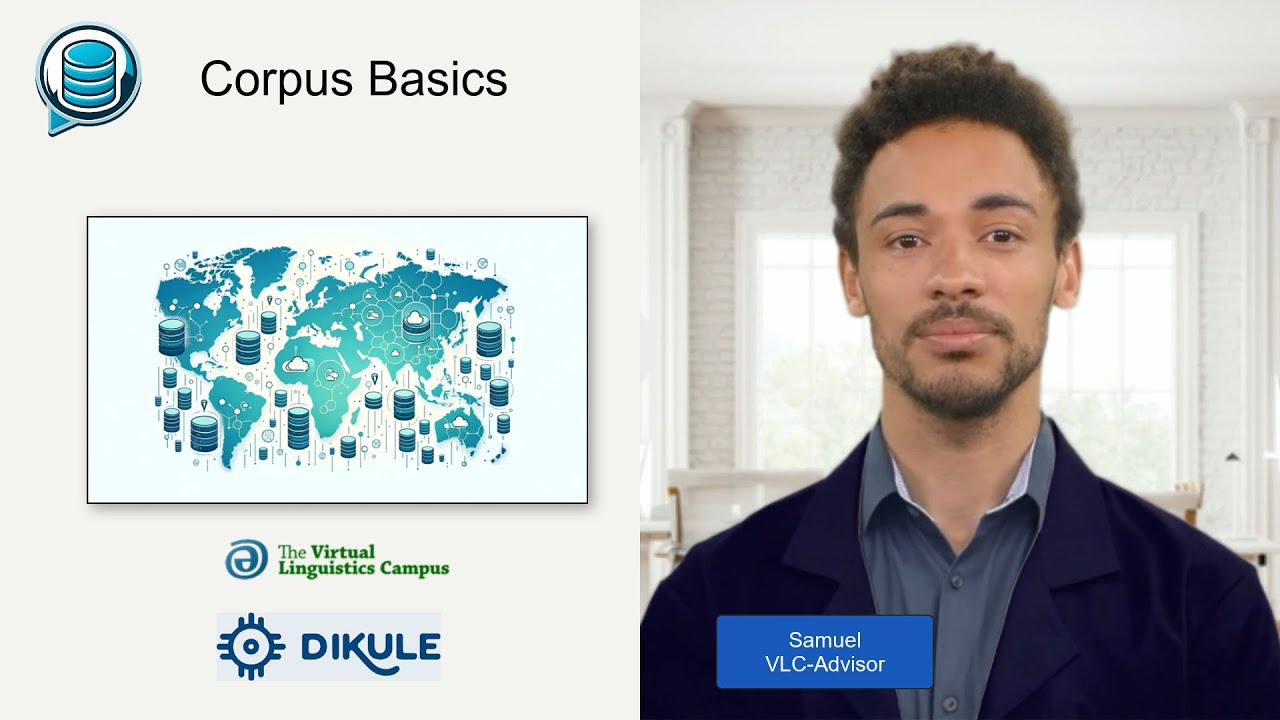
Professor Julia Schlüter is a distinguished academic in the Chair of English Linguistics within the Humanities Faculty at the University of Bamberg, Germany. She has served as Senior Lecturer at the Chair of English Linguistics and Language History under Prof. Manfred Krug since June 2008, holding the title of Professor following her habilitation in 2008. Her institutional profile demonstrates deep commitment to both research and teaching innovation, particularly through her leadership of the KorPLUS project and development of open educational resources for corpus linguistics. Her research interests span corpus linguistics for English language learners, empirical methods for studying language variation and change, and the application of corpus methods to teaching. She specializes in examining grammatical, phonological, and lexical differences between British and American English across historical periods from Middle English to present-day usage. Her work investigates phonological variation (particularly phonotactically controlled alternations), morphological change, and syntactic variation through corpus analysis, with special attention to functional grammar and grammaticalization theory. Professor Schlüter's recent publications (2022-2025) reveal a strategic evolution in her research focus, with increasing emphasis on the intersection of corpus linguistics and digital education. While maintaining her foundational work in historical English linguistics, she has developed significant expertise in applying corpus methods to language teacher education and evaluating AI writing tools. Her work demonstrates consistent methodological innovation, moving from traditional corpus analysis to blended learning approaches and digital educational resource development. Her scientific recognition includes: Winner of the 2025 Teaching Innovation Prize from the International Society for the Linguistics of English for the KorPLUS project University of Bamberg Prize for outstanding habilitation (2009) Lise Meitner Programme post-doctoral scholarship (2005-2006) Rectorate Prize from University of Paderborn for outstanding Ph.D. thesis (2005) Multiple DAAD scholarships for international study Professor Schlüter actively supervises doctoral research, currently guiding three Ph.D. candidates (Katharina Deckert, Aklima Nahar, and Nikolai Beland) while having successfully completed supervision for several others. She leads the KorPLUS project (2021-2025), funded by the Stiftung Innovation in der Hochschullehre, which develops open educational resources for corpus linguistics. Her research has been consistently supported by the German Research Foundation (DFG) and other funding bodies throughout her career. She heads the KorPLUS team (with Carina Großmann and Katharina Deckert) which develops the interactive Open Educational Resource platform for corpus linguistics. Her YouTube channel offers video tutorials on corpus basics, and she has created the Video Podcast Series "How to Update your Grammar" for English teachers. She regularly organizes in-service teacher trainings and collaborates with the Virtual Linguistics Campus at RWTH Aachen University to deliver her educational materials globally.
Nick Thieberger is an Associate Professor in the School of Languages and Linguistics at the University of Melbourne, Australia. He also holds adjunct positions at the University of Sydney, University of Hawai'i, LaTrobe University, Australian National University, and the University of Tasmania. Thieberger serves as Director of PARADISEC (Pacific and Regional Archive for Digital Sources in Endangered Cultures), President of DELAMAN (Digital Endangered Languages and Musics Archives Network), and Deputy Director of the Research Unit for Indigenous Language at the University of Melbourne. He is a Fellow of the Australian Academy of the Humanities and leads multiple major research projects including Nyingarn and Modularised cultural heritage archives. Thieberger's primary research interests focus on language documentation, endangered languages, and digital archiving methodologies. His work bridges linguistics, digital humanities, and Indigenous language preservation, with particular emphasis on Pacific and Australian Indigenous languages. He has developed innovative approaches to linguistic archiving, including the creation of PARADISEC, which has become a model for digital language archives worldwide. His research spans theoretical linguistics, practical archiving solutions, and community-based language work, with significant contributions to Nafsan (South Efate) language documentation and Australian Indigenous language preservation. His recent publications demonstrate a clear trend toward integrating digital humanities with language documentation, particularly focusing on computational approaches to endangered language preservation. Thieberger's work increasingly addresses ethical considerations in linguistic archiving, community-led documentation models, and the development of platforms that give Indigenous communities control over their linguistic heritage. His research shows a progression from descriptive linguistics toward infrastructure development for language preservation, with growing emphasis on access protocols, data sovereignty, and the technical challenges of long-term digital preservation. Open Scholarship Award (2025) for PARADISEC team Digital Repository of Ireland Award for Research and Innovation (2024) DASSH award for Research Partnership and Social Impact (2021) Fellow of the Australian Academy of the Humanities (2021) Ludwig Leichhardt Jubilee Fellowship by Alexander von Humboldt Foundation (2013-2015) ARC Australian Postdoctoral award (2004-2007) QEII Fellowship (2009-2014) Future Fellowship (2014-2018) Thieberger has secured substantial grant funding throughout his career, including multiple ARC grants as Chief Investigator. He leads the ARC LIEF grant 'Nyingarn: a platform for primary sources in Australian Indigenous languages' (2021-2025) and another ARC LIEF grant for 'Modularised cultural heritage archives – future-proofing PARADISEC' (2022-2025). He also serves as Chief Investigator in the ARDC-funded 'Online Heritage Resource Manager to Describo Collections' project (2023-2024) and in the ARC Centre of Excellence for the Dynamics of Language (2014-2025). His grant portfolio reflects his dual focus on theoretical linguistic research and practical infrastructure development for language preservation. Thieberger directs PARADISEC, a pioneering digital archive for endangered language materials that has become an international model. He also leads the Nyingarn project team, which is developing a platform specifically for Australian Indigenous language materials. Through DELAMAN, he coordinates with other language archives worldwide to establish best practices for digital language preservation. His work with the Language Data Commons of Australia (LDACA) further demonstrates his commitment to building research infrastructure that serves both academic researchers and Indigenous communities.
Julie Boland is a Professor at the University of Michigan's College of Literature, Science, and the Arts, affiliated with the Psychology and Linguistics departments. She holds a PhD from the University of Rochester and leads the Psycholinguistics Lab, focusing on interdisciplinary language processing research. Her work explores interfaces between word recognition, syntax, semantics, and sociolinguistic variables, with special attention to bilingual processing and executive function roles. Education: PhD, University of Rochester. She teaches research methods and language psychology, advising numerous PhD candidates. Key research themes include sociolinguistic priming, bilingual ambiguity resolution, and language processing in digital contexts. Her findings highlight how dialect variation, cultural background, and technology impact comprehension and production. Research Interests: Psycholinguistics, sentence processing, lexical access, sociolinguistic influences, bilingualism, and cognitive mechanisms. Labs: Director of the Psycholinguistics Lab, promoting interdisciplinary collaboration across Psychology and Linguistics. Teaching: Courses on language psychology and research methods for Psychology undergraduates/graduates. Recent work addresses conversational dynamics in Zoom interactions, cultural differences in visual attention, and L2 structural priming effects. She emphasizes practical applications of psycholinguistic insights for education and technology design.
Jennifer L. Smith is a Professor and Associate Chair in the Department of Linguistics at the University of North Carolina, Chapel Hill. Her research focuses on phonology, particularly the interplay between phonological constraints, morphosyntactic categories, and experimental methods. Key areas include lexical-category effects (e.g., noun/verb phonological privilege), loanword adaptation, blend phonology, and intonation patterns in Fukuoka Japanese. She has pioneered experimental approaches using artificial-language learning and surfeit-of-the-stimulus experiments to test hypotheses about constraint interaction and phonological universals. Smith’s work bridges formal phonology and phonetics, addressing questions like how phonetic naturalness influences phonological constraints and whether category-specific phonology reflects innate biases. Recent projects include investigating positional effects in phonology (e.g., salient positions) and the role of core-periphery structures in loanword nativization. She has collaborated extensively with researchers like Elliott Moreton and Katya Pertsova on blend phonology and experimental phonology. Her teaching includes foundational courses like Linguistics 60: How Reading Works , emphasizing interdisciplinary connections between language, cognition, and literacy. Smith maintains key resources for the field, including a widely referenced Phonetics resources page with curated materials for teaching and research. Her office is located in Smith Building 309, and she holds regular office hours via Zoom.
Bianca Basciano is an Associate Professor at the Department of Asian and North African Studies , Ca' Foscari University of Venice, where she has held the Director's Delegate for Research role since 2023. Her work focuses on Chinese linguistics , particularly Mandarin morphology, syntax, and second language acquisition. Research Areas: Chinese compounding, reduplication, causative constructions, resultative compounds, and language teaching methodologies. Teaching: Offers BA/MA courses in Chinese language and linguistics at Ca' Foscari University. Editorial Roles: Member of the editorial boards for Sinica Venetiana and Lingue e Linguaggio . Research Projects: Principal investigator for the PRIN 2020 project on Italian learners' acquisition of Chinese resultative verbs, with extensive corpus-based analysis. Collaborates with Giorgio Arcodia and other international scholars. Key Themes: Event structure delimitation, Vendlerian verb classes, micro-parametric syntactic variation. Publications: Over 40 works including monographs with Oxford University Press and Bologna University Press. Her methodological approach combines theoretical linguistics with corpus analysis, contributing to the understanding of Chinese as both a linguistic system and a second language acquisition challenge. She has also organized international conferences like the 31st IACL Annual Meeting.
Dr. Margreet Vogelzang is a Lecturer in Psychology at Newcastle University and an affiliated researcher at Theoretical and Applied Linguistics within the Faculty of Modern and Medieval Languages and Linguistics at the University of Cambridge. Based at the English Faculty Building, 9 West Road, Cambridge, CB3 9DP, and affiliated with Trinity College at Cambridge, she maintains a dual institutional presence that reflects the interdisciplinary nature of her work. Her research program combines neuroscientific, psychological, linguistic, and statistical methodologies to investigate language and cognitive processing across the lifespan. She specializes in multilingual syntactic and semantic processing, employing both written and spoken language paradigms with offline (comprehension, judgments) and online (eye-tracking, EEG, fMRI) measures. Her work examines how hearing loss, socio-linguistic variables, and developmental conditions like autism spectrum disorder influence language processing mechanisms. Analysis of her recent publication record reveals three dominant research trajectories: (1) bilingualism effects on cognitive flexibility in autistic children, (2) neural and cognitive mechanisms of sentence processing in individuals with hearing loss, and (3) computational modeling of pronoun interpretation across diverse populations. These strands demonstrate her consistent focus on bridging theoretical linguistics with cognitive neuroscience to address practical questions about language processing variability. Dr. Vogelzang actively supervises several graduate students including Alexander Cairncross, Andromachi Tsoukala, and Chara Triantafyllidou, and serves as course contact for Li16: Psychology of language processing and learning at Cambridge. Her teaching portfolio includes psycholinguistics, neurolinguistics, cognitive science, and research methods, reflecting her methodological expertise across experimental and computational approaches.
Jonathan Ginzburg is a Researcher in the Department of Linguistics at Université Paris Diderot, affiliated with the CLILLAC-ARP research group. His work bridges linguistics, cognitive science, and computational models, focusing on dialogue semantics, pragmatic functions, and developmental language acquisition. Education details are not explicitly provided in the text, but his research spans formal semantics, syntax, and multimodal interaction. His studies on laughter dynamics and infant communicative behaviors have advanced understanding of pragmatic functions in early development. Key research interests include dialogue structure, question-response systems, and the integration of cognitive science with linguistic theory. Recent work explores neural correlates of language processing through type-theoretical semantics and corpus-based methodologies. He has pioneered the analysis of non-sentential utterances and their role in social interaction. His contributions to dialogue systems design for low-resource languages and the DUEL corpus (analyzing disfluencies, exclamations, and laughter) reflect his interdisciplinary approach. Current projects investigate laughter's pragmatic functions across developmental stages and cross-linguistic variations in exclamatory constructions. Laboratory affiliations include the CLILLAC-ARP laboratory, where he develops computational tools for analyzing dialogue semantics and cognitive interactions. His work on 'response spaces' for questions integrates machine learning and formal pragmatics to model conversational coherence.
Christian Zimmer is a Professor of German Linguistics at Technische Universität Dortmund, specializing in variational linguistics with a focus on multilingual contexts. His academic journey includes a Habilitation (2021) and PhD (2016) from Freie Universität Berlin, and a state examination in German Studies, Philosophy, and Sport Science (2012) from Johannes Gutenberg University Mainz. He has held substitute professorships at TU Dortmund (2019-2020) and Freie Universität Berlin (2022-2023) and led DFG projects on German in multilingual Southern Africa (2020-2022) and Namibia (2016-2019). His research explores German within multilingual environments, language change, corpus linguistics, and gender linguistics. Key projects include analyzing Namibian German (Namdeutsch) and the dynamics of German in African contexts. He uses corpus-based methods to study morphosyntactic variation, case systems, and sociolinguistic factors influencing language structure. Zimmer’s publications address topics such as genitive case reduction, loanword integration, and gender correlations in phonology. His work bridges theoretical linguistics and applied sociolinguistics, contributing to understanding language vitality and contact dynamics in minority speech communities.
Susagna Tubau Muntaña is an Associate Professor at the Autonomous University of Barcelona (UAB), Department of English Philology and German Studies. She is part of the Center for Theoretical Linguistics and the Theoretical Linguistics Research Group funded by the Generalitat de Catalunya. Her academic roles include tenures as Associate Professor (2020–2023), Interim Associate Professor (2015–2020), and various teaching/research positions at UAB and other institutions since 2001. Education: PhD in English Philology (UAB, 2008) MA in Linguistics (University College London, 2004) MA in English Philology (UAB, 2003) Bachelor's in English Philology (UAB, 2001) Research Focus: Main interest: Theoretical linguistics, syntax, and negation phenomena (simple/double negation, negative agreement, negative quantifiers) Secondary areas: First/second language acquisition, the that-trace effect in English, gender expression in translated texts Key contributions: Studies on Catalan and English negative concord, experimental syntax, and language typology Grants & Projects: Principal Investigator (IP) of a funded project, plus member of 6 other projects and 2 thematic networks Active in projects like La interpretación de las categorías funcionales (2018–2021) and EXPLETIVITAD Y SIGNIFICADO EXPRESIVO (2024–2027) Awards & Recognition: Positive evaluations from CNEAI (National Commission for Research Activity) and AQU (Catalonia's Quality Agency) Speaker at 40+ linguistics conferences Reviewer for journals, La Caixa-British Council grants, and U.S. National Research Foundation projects Lab/Team Affiliation: Member of the consolidated Theoretical Linguistics Group funded by the Catalan government