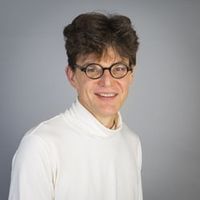
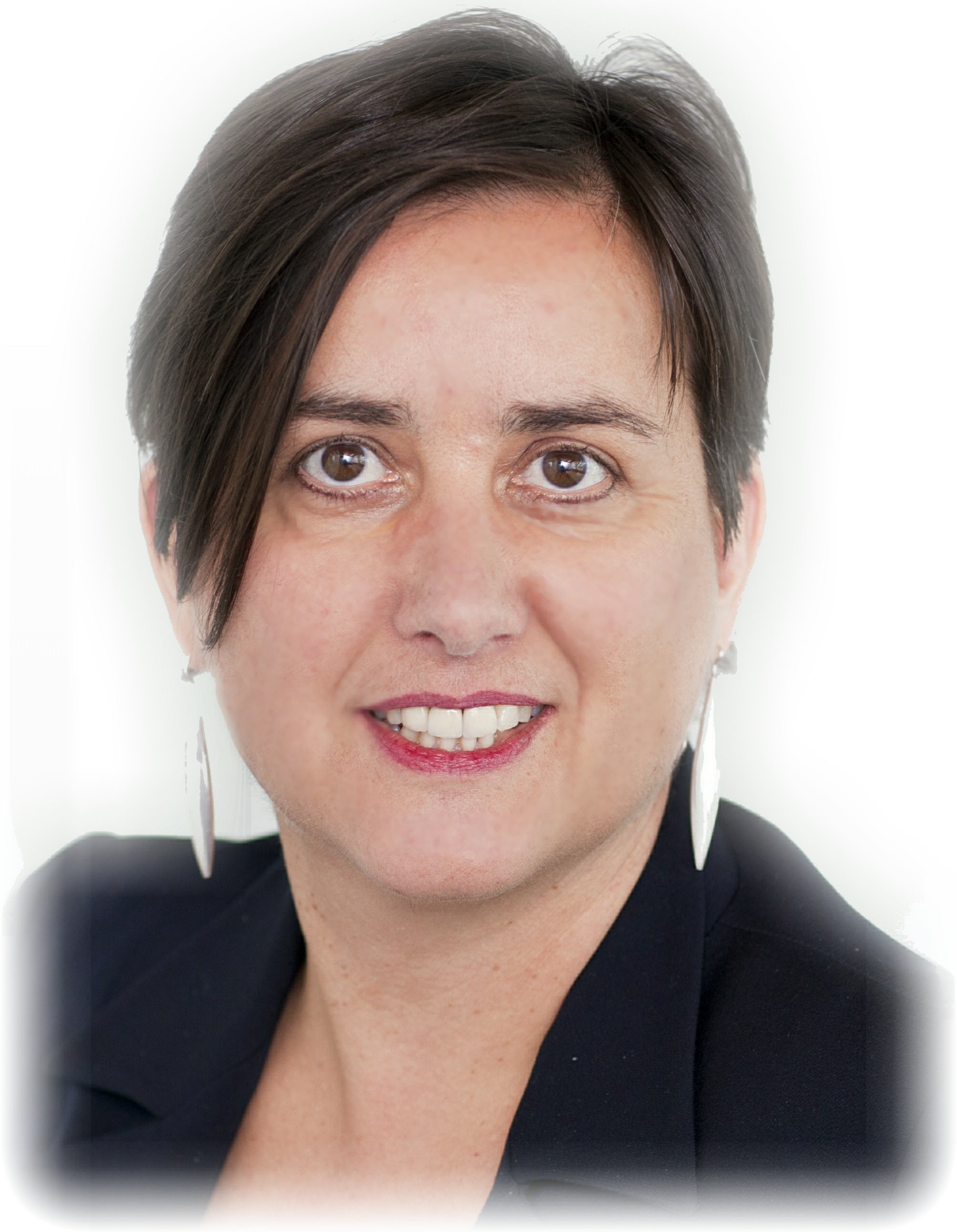
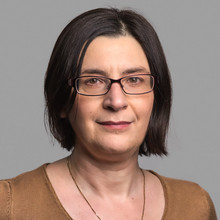
Prof. Dr. Uli Sauerland is Deputy Director at the Leibniz Centre for General Linguistics (ZAS) in Berlin and Adjunct Professor at the University of Potsdam since 2018. He leads Research Area 4 'Semantics & Pragmatics' and oversees key projects including the ERC-funded Realizing Leibniz’s Dream , DFG-ANR Boolean Connectors , and CRC 1412 projects A05 and B06 . PhD in Linguistics (MIT, 1998) Habilitation (Tübingen, 2003) Rehabilitation (Potsdam, 2007) His research focuses on semantic-pragmatic interfaces , register variation , language acquisition , and cognitive modeling of linguistic phenomena . Recent work includes LMBayes (Bayesian language modeling), DUAL (semantic-pragmatic interactions), and studies on quantifier scope in children. Publications span formal grammar , cognitive development , and language processing . Notable scientific awards : CNRS Fellowship (2024) Academia Europea Membership (2019) ESF Community of Experts (2018) He contributes to editorial boards of First Language , Journal of Semantics , and Language Acquisition , and co-founded the CRC 1412 Register research program.
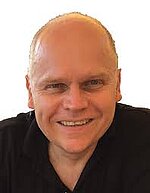
Dietmar Seipel is a Professor at the University of Würzburg, affiliated with the Department of Computer Science within the Faculty of Mathematics and Computer Science. He has held this position since November 1995, establishing a distinguished academic career spanning over 25 years with significant contributions to logic-based computer science. Professor Seipel's research focuses on Logic Programming and Deductive Databases, with substantial expertise in Knowledge Engineering and Artificial Intelligence. His scholarly work bridges theoretical foundations with practical applications, particularly in rule-based systems, knowledge representation, and declarative programming paradigms. He has consistently advanced the field through both theoretical developments and practical implementations, creating tools that enable more effective knowledge management and reasoning systems. His publication trajectory demonstrates a clear evolution from foundational work in disjunctive logic programming to contemporary applications in knowledge representation and semantic technologies. Recent research shows continued innovation in integrating logic programming with modern programming languages and systems, including Python and JavaScript implementations. His work spans theoretical contributions to practical tool development, with applications across diverse domains including space systems, medical informatics, and business process management. Professor Seipel has made extensive contributions to the academic literature, with publications appearing consistently from the 1980s through to the present. His work has influenced both theoretical developments in logic programming and practical applications in knowledge-based systems. He has been actively involved in academic community building through conference organization, particularly for events related to declarative programming and knowledge management.
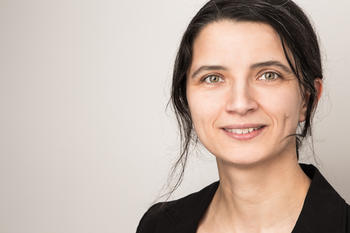
Christine Paul serves as a Scientific Associate in the Department of German Didactics within the Department of Education and Psychology at Freie Universität Berlin, specializing in linguistic and cultural education. Currently on leave while fulfilling duties at Technische Universität Dresden, her expertise spans multilingual pedagogy, German as a second language, and conversation analysis, with significant contributions to corpus linguistics through the Wendekorpus project documenting German reunification narratives. Education: PhD in Linguistics (2016), Freie Universität Berlin First State Examination in German and Spanish (2006), Freie Universität Berlin Graduate Fellowship, Evangelisches Studienwerk Villigst (2009-2013) Study Abroad, Pontificia Universidad Católica del Peru, Lima (2001-2002) Research Focus: Dr. Paul investigates multilingual identity construction in educational settings, analyzing how students navigate spoken vs. academic language varieties through conversation analysis and cognitive linguistics frameworks. Her work bridges theoretical linguistics with classroom practice, particularly examining meaning negotiation in multilingual dialogues and historical language shifts in post-reunification Germany, often utilizing corpus-based methodologies to reveal subtle pragmatic patterns. Publication Evolution: Early career works (2010-2015) established her expertise in temporal inference and retrospective utterances within conversation analysis. Recent publications (2019-2023) demonstrate strategic expansion into digital education spaces and multilingual identity, culminating in 2023's examination of linguistic diversity on school websites. Her research consistently centers on language as a tool for identity construction within institutional contexts, with growing emphasis on intersectional factors like gender and migration background. Academic Engagement: As co-developer of the Wendekorpus audio archive and contributor to the Learning and Research Workshop for Literary Education, she actively shapes pedagogical resources. Her 2024 conference presentation on multilingual female students' self-identification continues her trajectory of connecting linguistic theory to real-world educational challenges through empirical discourse analysis.
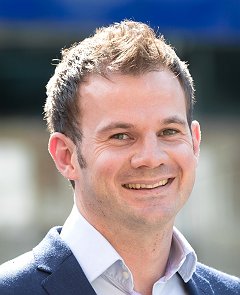
Alastair F. Donaldson is a Professor in the Department of Computing at Imperial College London, where he leads the Multicore Programming Group. His primary affiliation is with Imperial College London's Department of Computing within the broader Faculty of Engineering structure. He serves as a Program Committee Member for major conferences including ASE, PLDI, and POPL. His research spans Programming Languages , Compilers , Verification , Testing , and Multicore Programming , with significant contributions to randomized testing techniques. He pioneered GraphicsFuzz (acquired by Google in 2018) and developed innovative approaches like grammar mutation for parser testing, metamorphic fuzzing for C++ libraries, and specialized tools for GPU API validation. His work bridges theoretical foundations with industrial impact, particularly in compiler correctness and GPU computing. Analysis of his recent publications reveals a strong trend toward fuzzing infrastructure development (40%), GPU/compiler testing (30%), and formal methods integration (30%). His research increasingly focuses on large-scale automated testing for complex systems including WebGPU, Dafny, and Rust, while maintaining rigorous theoretical grounding in concurrency models and memory semantics. Donaldson has held significant leadership roles including General Chair for PLDI 2020 and Program Chair for ECOOP. His research has been supported through conference organizational roles and industrial collaborations, notably the GraphicsFuzz spinout. He actively contributes to the PL community through mentoring initiatives like PLMW and community-building efforts such as The PLDI Song. He leads the Multicore Programming Group at Imperial College London, focusing on practical tools for compiler and GPU driver validation. The group's work combines theoretical program analysis with real-world testing frameworks, maintaining strong industry connections through projects adopted by Google and other technology companies.
Alexander Repenning is a Professor in the Department of Computer Science at the University of Colorado Boulder's College of Engineering and Applied Science. He has been a leading researcher in computer science education, particularly in the areas of visual programming, computational thinking, and game-based learning for over three decades. Repenning's research focuses on making programming accessible to novices through innovative environments like AgentSheets and AgentCubes. His work emphasizes blocks-based programming, computational thinking patterns, and scalable approaches to computer science education. He has pioneered the Scalable Game Design methodology which has been implemented in schools worldwide to teach computational thinking through game design. His recent publications (2021-2024) show a continued focus on blocks-based programming environments, with emerging work integrating AI concepts into educational programming tools. His research demonstrates consistent interest in understanding how to make programming more accessible while preserving computational thinking principles, with particular attention to flow theory, scaffolding techniques, and measuring educational impact. Significant contributions to scalable game design methodology Pioneering work in blocks-based programming for education Development of AgentSheets and AgentCubes environments Repenning has mentored numerous researchers who have become leaders in computer science education themselves, including Ashok Basawapatna, Andri Ioannidou, and David Webb. His work has been supported by multiple NSF grants focused on broadening participation in computing and developing scalable approaches to computer science education. He leads the Scalable Game Design project which has created a comprehensive ecosystem for teaching computational thinking through game design. His laboratory focuses on developing and evaluating visual programming environments, with particular attention to how students engage with computational concepts through game design activities. The team has developed sophisticated analytics to measure computational thinking patterns in student projects, enabling formative assessment in programming education.
Christian Hess was a Lecturer and Undergraduate/Graduate Advisor in the Department of Ancient Near Eastern Studies at Freie Universität Berlin, and a Senior Fellow at Koç University’s Research Center for Anatolian Civilizations (ANAMED). His work focused on Assyriology, the Ancient Near East, and Akkadian language studies. He contributed to interdisciplinary projects like the Broadening Horizons conference series and co-led excavations at Tell Satu Qala (ancient Idu). Hess specialized in toponymy, linguistic analysis of cuneiform texts, and the intersection of material culture with historical narratives. Key research areas: Mittelassyrische texts, Mesopotamian linguistic landscapes, and Iron Age sociopolitical structures Co-authored major toponymic studies (e.g., Toponyme der mittelassyrischen Texte ) Edited volumes on interdisciplinary ancient studies and language history His publications span archaeological reports (e.g., Satu Qala excavations), linguistic analyses of Akkadian dialects, and studies of ancient literary forms. Hess’s work emphasized connecting textual and material evidence to reconstruct historical geographies and cultural practices.
Stephan Hartmann is Chair of Philosophy of Science and Alexander von Humboldt Professor at Ludwig-Maximilians-Universität München (LMU Munich), where he also serves as Head of the Munich Center for Mathematical Philosophy. His academic journey spans multiple prestigious institutions across Europe, establishing him as a leading figure in contemporary philosophy of science. Hartmann received his academic training at Justus-Liebig University Giessen, where he completed a Diploma in Physics (1991), a Master in Philosophy (1991), and a PhD in Philosophy (1995). Prior to joining LMU Munich in 2012, he taught at Tilburg University, the London School of Economics, and the University of Konstanz, with visiting appointments at the University of California at Irvine, Lund University, and the Center for Philosophy of Science at the University of Pittsburgh. Hartmann's research program centers on the application of formal methods to philosophical problems, particularly through Bayesian frameworks. His work bridges philosophy of science, philosophy of physics, formal epistemology, social epistemology, and cognitive science. He has developed influential models for understanding reasoning, argumentation, deliberation, and scientific explanation using probabilistic and mathematical approaches. His current research focuses on the philosophy and psychology of reasoning and argumentation, the philosophy of physics (especially open quantum systems), and formal social epistemology (particularly models of deliberation). His extensive publication record reveals a consistent trajectory of applying formal methods to philosophical questions, with increasing emphasis on Bayesian approaches across multiple domains. Hartmann's work demonstrates remarkable integration of mathematical precision with philosophical depth, particularly in addressing traditional problems in epistemology and philosophy of science through computational and probabilistic frameworks. His research shows strong continuity in exploring how formal models can illuminate fundamental questions about scientific reasoning, evidence, and rationality. Alexander von Humboldt Professor President of the European Philosophy of Science Association (2013-2017) President of the European Society for Analytical Philosophy (2014-2017) Hartmann leads the Munich Center for Mathematical Philosophy, which serves as a hub for interdisciplinary research at the intersection of philosophy, mathematics, and formal methods. Under his direction, the center has become a prominent institution for advancing mathematical approaches to philosophical problems, fostering collaborations between philosophers, mathematicians, physicists, and cognitive scientists. His work has significantly influenced how formal methods are applied to traditional philosophical questions, particularly in epistemology and philosophy of science.
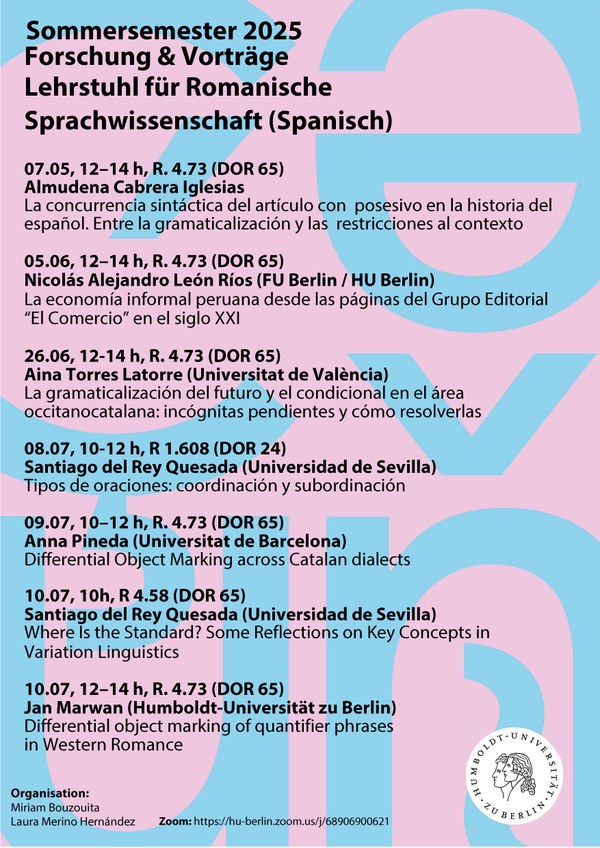
Prof. Dr. Miriam Bouzouita is a Professor of Romance Linguistics specializing in Spanish at the Humboldt University Berlin's Institute of Romance Studies, where she serves as Deputy Director of the Executive Directorate. Her research focuses on historical and comparative aspects of Romance languages, with particular emphasis on Spanish linguistic variation across time and space. She leads the Romance Varieties Lab and has established herself as a leading scholar in grammaticalization processes, syntactic variation, and possessive constructions within Ibero-Romance languages. Her research interests span historical linguistics, syntactic variation, grammaticalization processes, and corpus-based approaches to Romance languages. She has made significant contributions to understanding the development of future and conditional tenses in medieval Ibero-Romance, possessive constructions across Romance varieties, and syntactic archaisms in Atlantic Spanish dialects. Her work often bridges theoretical linguistics with practical applications through digital tools and corpus development, including the creation of the Spanish Dialects app for studying linguistic variation in the Hispanophone world. Analysis of her recent publications reveals a strong focus on grammaticalization phenomena in medieval Ibero-Romance languages, particularly the development of future and conditional constructions. She employs comparative methodologies across Spanish, Catalan, and Navarro-Aragonese, often using parallel biblical translations from the 14th century as data sources. Her work increasingly incorporates computational approaches, including Games With A Purpose (GWAPs) for linguistic annotation and corpus development, reflecting her commitment to methodological innovation in linguistic research. Prof. Bouzouita has successfully supervised numerous doctoral students to completion, including Daniel Eduard Bejarano Bejarano, Antoine Primerano, Johnatan Bonilla Huérfano, Rosa Lilia Segundo Díaz, Vanessa Casanova Romero, and Matti Marttinen Larsson. Her research has been supported through various projects, including the SFB Project 1412 at HU Berlin where former doctoral student Johnatan Bonilla Huérfano now works as a researcher. She leads the Romance Varieties Lab, which focuses on documenting and analyzing linguistic variation across Romance languages, with particular attention to Spanish dialects. The lab has developed digital tools for linguistic research, including the Spanish Dialects app, and has organized lecture series on research projects by participants and guests of the Department of Romance Linguistics. Prof. Bouzouita collaborates extensively with international researchers, as evidenced by her co-organized lecture series with Dr. Merino Hernández.
Kazuko Yatsushiro is a Senior Researcher at the Leibniz Centre for General Linguistics (ZAS) in Berlin, specializing in Language Development & Multilingualism. Her work focuses on theoretical investigations of language acquisition, particularly syntax (relative clauses, Wh-questions), semantics, and pragmatics interfaces. She explores how children process alternative expressions and constructions in language production and comprehension. Education: Doctorate in Linguistics, University of Connecticut, USA Key Research Themes: Her research examines cross-linguistic patterns in child language, including quantifier scope, negative concord, disjunction interpretation, and intonation effects. She investigates how pragmatic principles like Gricean maxims influence children’s language use, often showing children exhibit heightened pragmatic sensitivity compared to adults. Recent Work Trends: Publications analyze German-speaking children’s handling of negative indefinites, dual concepts’ phonological realization, and intonation-driven scope resolution. She collaborates internationally on projects like the DFG-ANR 'Boolean Connectors' and studies multilingual acquisition in Italian and Japanese. Grants & Collaborations: Principal investigator on DFG-ANR projects Marie-Curie Scholarship recipient (2004–2005) Lead in EU Cost Action A33 language acquisition studies Labs & Teams: Conducts research within ZAS’s Language Development team, collaborating with institutions like Humboldt University, University of Padua, and Nanzan University on experimental semantics/pragmatics and syntax-semantics interfaces.
Prof. Evelyn Ferstl is a Professor of Cognitive Science and Gender Studies at the University of Freiburg, affiliated with the Institute of Psychology. She holds a PhD in Cognitive Psychology from the University of Colorado (1994) and a Habilitation in Psychology from the University of Leipzig (2006). Her research focuses on psycholinguistics, neuroanatomy of language comprehension, and gender-sensitive language. She has held roles such as Director of the Department of Cognitive Science and Gender Research, and currently serves on committees including the Hermann Paul Center for Linguistics and the Gender Circle of the University of Freiburg. Education: PhD in Cognitive Psychology, University of Colorado, 1994 MA in Cognitive Psychology, University of Colorado, 1991 Diploma in Mathematics, Ludwig Maximilian University of Munich, 1987 Research Interests: Psycholinguistics, functional neuroanatomy of text comprehension, pragmatic aspects of language (e.g., idioms, humor), gender studies, and emotion-cognition interactions. Publications: Over 50 peer-reviewed articles on topics such as gender-sensitive language, discourse processing, and neuroimaging studies of language comprehension. Recent work includes studies on non-binary gender markers and emotional language processing. Grants & Advising: Supervised doctoral theses and led projects on gender language and cognitive neuroscience. Member of research networks like the Max Planck Institute for Cognitive Neuroscience and the Society for Cognitive Science. Labs & Teams: Active in interdisciplinary collaborations at the Hermann-Paul School of Language Sciences and Freiburg Brain Imaging (FBI).
Diana Pili-Moss is a Lecturer in English as a Foreign Language (EFL) at the Institute of English Studies, Leuphana University Lüneburg, Germany. She holds a PhD in Second Language Acquisition from Lancaster University (UK) and has held academic roles including Senior Research Associate at Leuphana, Post-doctoral ESRC Fellowship at Lancaster, and various teaching positions in the UK and Italy. Her research focuses on cognitive factors influencing second language acquisition (SLA), particularly memory's role in learning, age effects, and pedagogical applications such as corrective feedback and digital instruction. She has contributed to projects like Interact4School, which develops classroom materials and cognitive-educational tools. Educationally, she holds a Dr. phil. in General Linguistics from Universität Potsdam (Germany), a PGCE in Modern Foreign Languages (Manchester Metropolitan University), and an MA in Modern Foreign Languages and Literatures from IULM (Italy). Her work integrates empirical research with practical teaching methodologies, emphasizing the intersection of cognitive science and language pedagogy. Key research areas include instructed SLA in digital contexts, memory's role in EFL development, and the design of effective feedback systems. She has led initiatives such as the FeedBook project and collaborates with labs like LinA-Lab (Corpus Linguistics) and the TEFL Lab. Awards include her ESRC Fellowship, highlighting her contributions to SLA research. Her teaching spans secondary education, university-level language instruction, and specialized courses on SLA. She actively engages in academic activities, including lecture series on North American studies and workshops on corpus linguistics methods.
Prof. Theodoros Marinis is a Professor of Multilingualism at the University of Konstanz's Department of Linguistics. He directs the Center for Multilingualism and leads the EU 'MultiMind' project training early-stage researchers in multilingualism. His research focuses on language acquisition and processing in typically/atypically developing bilinguals, funded by DFG, ESRC, NWO, and others. He co-developed the LITMUS Sentence Repetition Tasks for multilingual children and serves on editorial boards of journals like Journal of Child Language and Applied Psycholinguistics . Research interests include bilingual syntax, heritage language maintenance, figurative language processing in ASD, and multilingual literacy. He investigates cross-linguistic effects in grammatical morphemes, rhetorical questions, and code-switching impacts on cognitive control. His work bridges psycholinguistics with education policy, addressing multilingualism benefits in diverse populations. Grants: DFG (Non-Canonical Questions in Bilingual Acquisition), ESRC (SLI in Bilingual Children), NWO (L2 Children vs. SLI) Projects: COST Action IS0804, EU MultiMind (2024), India literacy studies (2020) Labs/Teams: Center for Multilingualism (Konstanz), LITMUS Task Development Consortium Publications examine metaphor comprehension in ASD, attention networks in stuttering multilinguals, and longitudinal literacy development. He advocates for evidence-based multilingual education policies and has published over 100 peer-reviewed articles since 2017.
Peter Uhrig is a Professor at the Friedrich-Alexander-Universität Erlangen-Nürnberg (FAU), holding the Chair of Digital Linguistics with a Focus on Big Data within the Institute of English and American Studies. He is based in Erlangen, Germany, and actively contributes to research and teaching in computational and cognitive linguistics. His research interests lie at the intersection of linguistics, computation, and cognition, with a strong emphasis on corpus-based analysis , construction grammar , multimodal communication , and digital methods in language research . He investigates phenomena such as collocation, argument structure, creativity in language, and spoken word comprehension using large-scale datasets and advanced computational models. His recent publications reveal a clear trend toward interdisciplinary, data-intensive research. He frequently collaborates on projects involving multimodal corpora , gesture analysis , spoken language processing , and computational modeling , often in collaboration with researchers from computer science and cognitive neuroscience. His work is published in leading journals in linguistics and cognitive science. How Collostructional Analysis Contributes to the Description of Argument Structure Constructions with Slots for that-and Infinitive Clauses (2024) The pluralization palette: unveiling semantic clusters in English nominal pluralization through distributional semantics (2024) World Futures through RT’s Eyes: Multimodal Dataset and Methodology (2024) Prof. Uhrig has co-edited several academic volumes and plays a key role in developing research infrastructure, such as the Red Hen Protocol for anonymizing audiovisual data and tools for multimodal analysis. While specific grant funding is not detailed, his involvement in large collaborative projects indicates active grant-supported research. He also contributes to academic service through editorial work and conference organization. He is involved in building digital infrastructure for multimodal research, including work on gesture retrieval systems and data anonymization protocols. His lab or research group appears to focus on integrating computational tools with linguistic theory, particularly within the framework of construction grammar and cognitive linguistics.
Dr. Katherine Walker is a Researcher in the Department of Linguistics at the University of Cologne, working on the DFG-funded project \"Taking spoken language seriously\" since April 2024. Previously, she completed her PhD at the Amsterdam Center for Language and Communication (ACLC), Universiteit van Amsterdam (2020-2024), and held academic assistant and student assistant positions at the University of Cologne. Her educational background includes: PhD in Linguistics, Universiteit van Amsterdam (2020-2024) MA in Linguistics, University of Cologne (2017-2019) BA in Linguistics and French, University of Cologne (2014-2017) Dr. Walker's research focuses on syntax and morphology of understudied languages, particularly Papuan languages like Kamang and Tabaq. She investigates indexing phenomena, viewpoint alternation, differential marking, and lexical constraints on grammatical relations, contributing significantly to linguistic typology and language documentation through fieldwork and theoretical analysis. Her publication trends reveal concentrated expertise in Papuan language structures, with recent works analyzing morphosyntactic patterns in Kamang (2024) and nominal systems in Tabaq (2019). The 2025 chapter \"Iha\" for The Oxford Guide to the Papuan Languages extends this focus to phonological and semantic dimensions across the language family. Dr. Walker currently leads DFG project \"Taking spoken language seriously\" and previously collaborated on \"Exceptions rule! Lexical restrictions on grammatical structure\". Her guest research at LACITO (2022) and co-editorship of Open Linguistics special issues demonstrate active engagement in international linguistic discourse and collaborative grant-funded research.
Dr. Olga Kellert serves as a Lecturer in the Department of Romance Philology within the Faculty of Humanities at the University of Göttingen, where she conducts interdisciplinary research at the intersection of sociolinguistics, computational linguistics, and historical Romance linguistics. Her work bridges traditional linguistic analysis with cutting-edge digital methodologies, particularly focusing on language variation in social media contexts and diachronic syntactic change. Her research encompasses three primary domains: (1) Sociolinguistic analysis of code-switching and language variation using geolocated social media data, particularly examining Spanish-French interactions in Quebec and Spanish-Italian dynamics in South America; (2) Computational approaches to sentiment analysis and linguistic modeling, with emphasis on syntax-aware NLP systems; (3) Historical evolution of quantificational structures in Romance languages, especially indefinites and free choice items across Old and Modern Italian, Spanish, and Catalan. Current projects include the sociocomputational assessment of belief states among vulnerable indigenous groups in Latin American crises (funded through international collaboration with Mexico, Ecuador, Peru, and Austria) and geospatial analysis of urban linguistic variation using Twitter data. Her publication trajectory reveals a strategic evolution from foundational work in Romance syntax and prosody toward increasingly computational methodologies, with recent publications heavily featuring NLP applications, geotagged linguistic analysis, and interdisciplinary crisis communication research. This shift reflects broader trends in digital humanities while maintaining deep roots in Romance linguistic theory. Habilitation Completion Grant from the Faculty of Humanities, University of Göttingen Dr. Kellert actively supervises student project work on language mixing in social media contexts and collaborates extensively through the University of Göttingen's CRC 'Textstrukturen' research center. Her grant portfolio demonstrates significant international collaboration, particularly with Latin American institutions on crisis communication projects and European partners on historical linguistics initiatives. Current funding includes DFG support for 'Quantification in Old Italian' and international partnerships for sociolinguistic crisis response research. Her research operates within the Collaborative Research Center 'Textstrukturen' at the University of Göttingen, where she contributes to interdisciplinary teams combining linguistic theory, computational methods, and sociocultural analysis. Recent projects involve cross-institutional teams spanning Mexico, Ecuador, Peru, Austria, France, and Italy, with particular emphasis on community-engaged research with indigenous populations in Latin America.