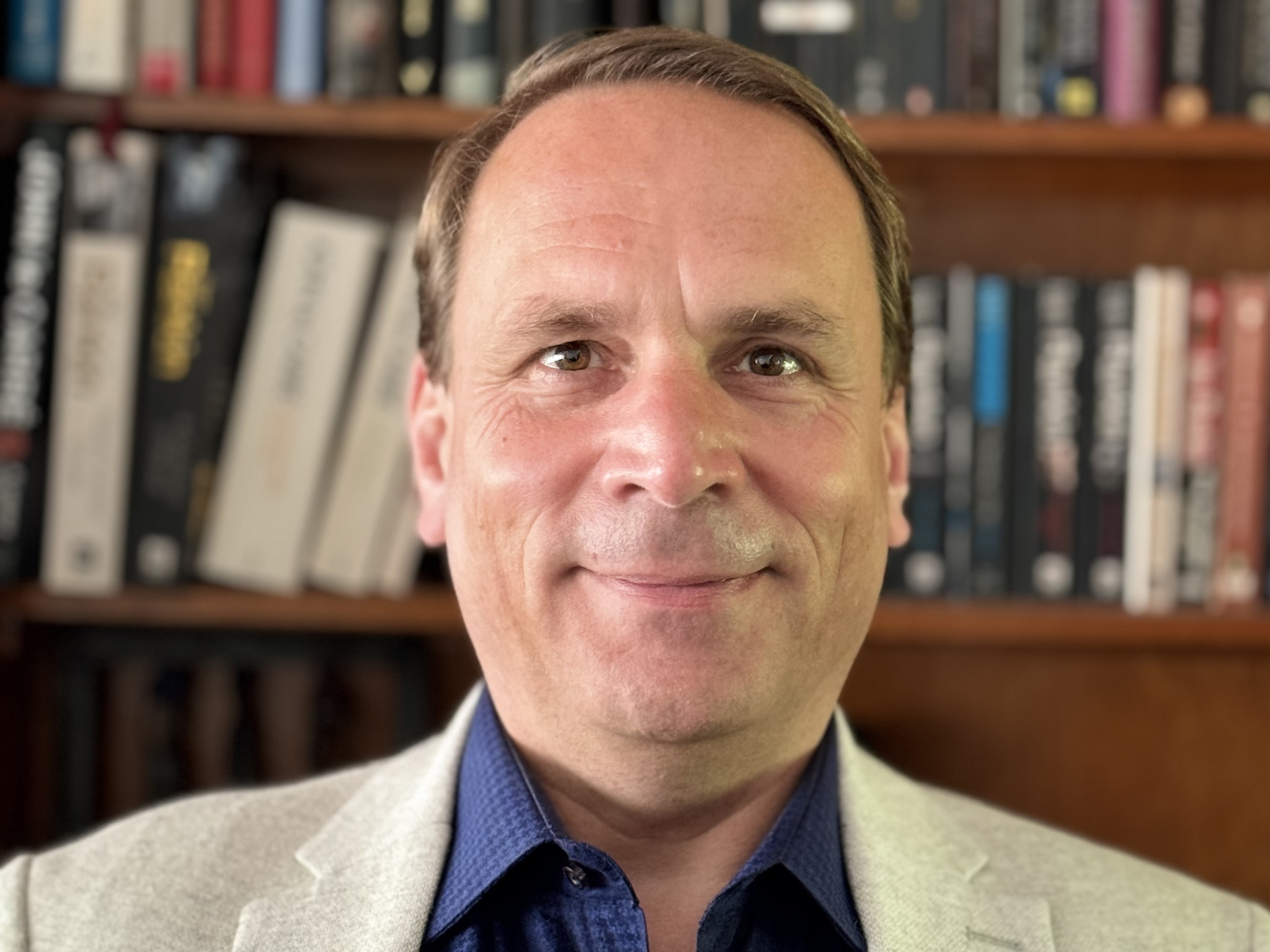
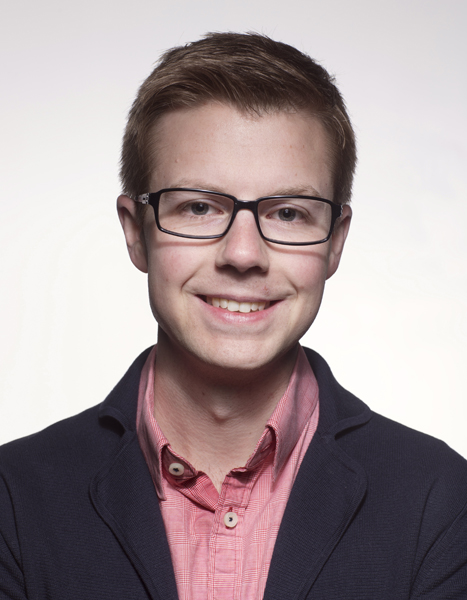
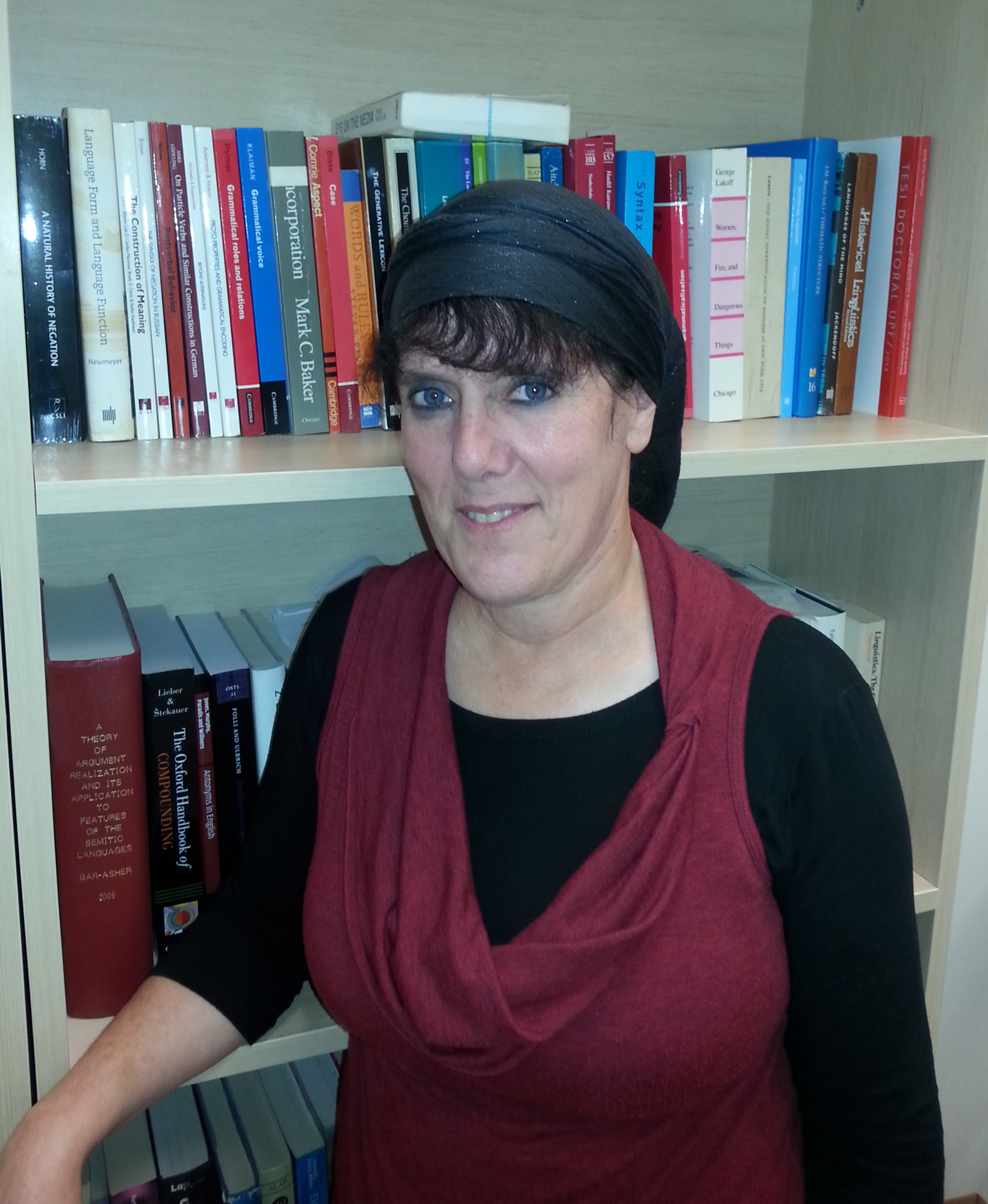
Marten Lutz is a Professor of General and African Linguistics at SOAS University of London, UK. He holds a PhD in Linguistics from SOAS (1999) and additional qualifications in education and philosophy. His academic leadership roles include Head of the SOAS Doctoral School (2020–2023), Dean of the Faculty of Languages and Cultures (2015–2018), and Director of the London Confucius Institute (2015–2019). Research focuses on Bantu languages, comparative linguistics, and morphosyntactic variation in African languages. Fieldwork spans Kenya, Malawi, Namibia, Tanzania, and Zambia. He has received grants from Leverhulme, BA/Leverhulme, and the UK-Africa Academic Partnership. Key awards: SOAS SAAW Award (2020), Senior Fellow of HEA (2020), A.W. Mellon Fellowship (2014) Editor of Transactions of the Philological Society and Founding Chair of the International Bantu Languages Conference Teaching and academic service includes visiting fellowships at institutions like the University of Cape Town and Tokyo's ILLCA, as well as invited lectures at SWL4 (Lyon), ICHL16 (Heidelberg), and AFALA (Nairobi).
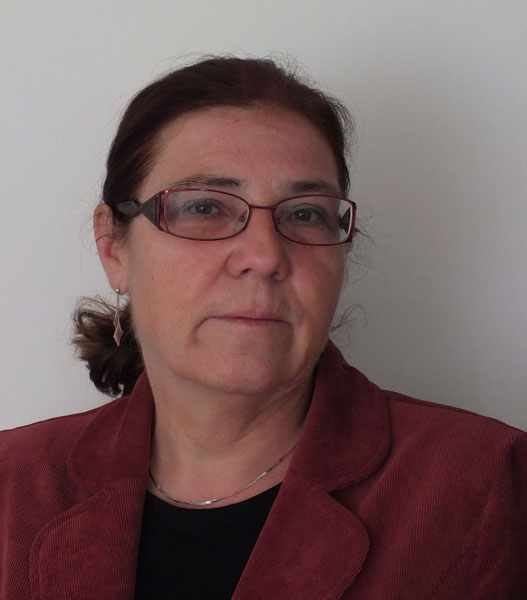
Dagmar Muchnová is an Associate Professor at the Institute of Greek and Latin Studies, Faculty of Arts, Charles University in Prague. She has held leadership roles as Head (2010–2016) and Vice-Head of the Institute, and currently serves as Deputy Head of the Office of the Chief Administrative Officer. Her academic career spans over three decades, with key contributions to Ancient Greek linguistics. Education: Master's degrees in Latin/French (1976) and Ancient Greek (1980), CSc (1990), and Habilitation (2011) from Charles University. Research focuses on Ancient Greek syntax, semantics, and pragmatics , particularly negation, subordination, and discourse construction. Her work integrates classical philology with modern linguistic theories, including typology and discourse analysis. Recent publications emphasize negative concord , particle usage (epei, hoti, oun), and conditional clauses in Classical Greek. These align with her broader interests in grammatical thought in antiquity and textual organization. Scientific Awards: 2013 Charles University Prize for monograph quality Teaching and editorial roles include: Introductory and advanced Greek courses Editorial leadership for AUC Philologica and Auriga journals Supervision of doctoral, master’s, and bachelor’s theses She collaborates internationally, including with the Prague Linguistic Circle and Societas Linguistica Europaea , and contributes to projects like the Ministry of Education’s MSM 0021620825 (2005–2011).
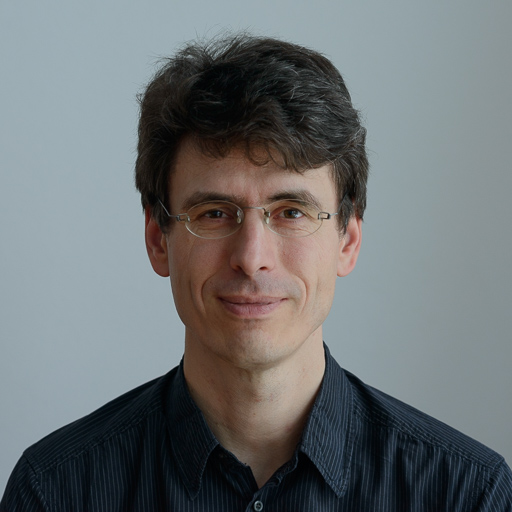
Stefan Müller is a Full Professor of German Linguistics specializing in syntax and Head-driven Phrase Structure Grammar (HPSG) at Humboldt University of Berlin. He also held professorships at Free University Berlin and Bremen, focusing on German grammar and computational linguistics. His research spans syntax of German, Danish, Persian, Mandarin, and Maltese, with a strong emphasis on formal grammar development and theoretical linguistics. Education: Humboldt University of Berlin and University of Edinburgh (1989–1993); PhD (1997) and Habilitation (2001) from Saarland University. Research interests include HPSG, complex predicates, particle verbs, and computational grammar implementation. His publications explore syntactic phenomena like depictive predicates, fronting, and resultative constructions. Müller is a member of Academia Europaea (since 2014) and leads projects on cross-linguistic grammar engineering. He teaches syntax, HPSG, and computational linguistics at the graduate and undergraduate levels.
Ariel Mira is a Full Professor in the Linguistics Department at Tel Aviv University, holding this position since 2006. Previously, they served as Associate Professor (1998-2006), Senior Lecturer (1992-1998), and Lecturer (1988-1992). They have held administrative roles including Chair of the Linguistics Department three times (1997-1999, 2003-2008, 2015-2018) and Chair of the Women’s Forum at Tel Aviv University (1997-1999). Education includes a Ph.D. in Linguistics from Tel Aviv University (1986), advised by Tanya Reinhart and Ellen Prince, an M.A. from the University of Pennsylvania (1978), and undergraduate studies at Tel Aviv University (1974-1976). Postdoctoral research was conducted at the University of London (1986-1987). Research focuses on pragmatics, semantics-pragmatics interface, accessibility theory, and grammaticalization. Key areas include scalar implicatures, reference linguistics, and relevance theory. Recent work explores pragmatic interpretations of linguistic constructs like 'or' and 'most', and semantic changes in verbs like 'bring' → 'give'. 2017–2020 Leadership roles in Societas Linguistica Europaea (President-elect, President, Vice-President) Notable publications include monographs on pragmatics (2010, 2008) and a highly cited book on noun-phrase accessibility (1990/2014) Administrative service includes roles in the School of Cultural Studies’ PhD Committee (2003–2007) and Budget Committee (1993–1997). Research has been published in top journals like Language , Journal of Linguistics , and Studies in Language .
Stefan Müller is a Full Professor of German Linguistics (Syntax) at Humboldt University of Berlin. He holds a PhD (1997) and Habilitation (2001) in Computational Linguistics from Saarland University. His research focuses on Head-driven Phrase Structure Grammar (HPSG), German syntax, and computational linguistics, with contributions to grammars for German, Chinese, and Maltese. Müller has held professorial positions at Freie Universität Berlin, Universität Bremen, and others since 2003. He is a member of Academia Europaea (2014) and a key developer of the Babel grammar system. His work integrates theoretical linguistics with practical applications in language technology, including TRALE grammar-development frameworks and runtime systems. Education: Humboldt University of Berlin (Computer Science) and University of Edinburgh (1989–1993) Habilitation Thesis: Complex Predicates in German (2001) Major Projects: VerbMobil, Whiteboard, and Grammix CD-ROM Research interests emphasize syntactic phenomena like Mittelfeld structure, verbal clusters, and cross-linguistic syntax. His publications span HPSG theory, grammar implementation, and syntactic analysis. Müller also contributes to academic publishing via Language Science Press and maintains active roles in interdisciplinary language research.
Emanuele Banfi is a Full Professor of General Linguistics at the University of Milan-Bicocca's Faculty of Education, where he founded the Degree Course in Intercultural Communication (2001-2005). His career includes roles as a researcher and professor at the University of Trento (1970-1999) and leadership as Dean (1995-1998). He specializes in Indo-European, Greek, Latin, Chinese, and Japanese linguistics. Education: Classics degree (University of Milan, 1970); diplomas in Arabic, Russian, Chinese, and Japanese linguistics Research: Comparative historical linguistics, sociolinguistics, language acquisition, and typological analysis of European, Ural-Altaic, and Sino-Tibetan languages His work spans diglossia, bilingualism, and the evolution of linguistic systems, with a focus on Italian, Greek, and Balkan languages. He has collaborated with institutions in Berlin, Paris, New York, and Tokyo. Notable awards include election to the Academia Ambrosiana (2011) and leadership roles in the Italian Linguistic Society and CIPL.
Luigi Rizzi is a distinguished academic holding the position of Professor of General Linguistics at the University of Siena. He has held significant roles including Full Professor at the University of Geneva and Adjunct Professor at the École Normale Supérieure in Paris. His expertise spans Generative Syntax and Language Acquisition, with contributions to syntactic theory frameworks like Relativized Minimality and the Fine Structure of the Left Periphery. Current Affiliation: University of Siena (Professor) Past Roles: Full Professor at University of Geneva, Adjunct Professor at ENS Paris Research Interests: Rizzi’s work explores syntactic structures through generative approaches, focusing on null elements, movement constraints, and the interface between syntax and semantics. He has advanced theories on the Left Periphery hierarchy and relativized minimality principles. Publications Trends: His articles consistently address core syntax questions, with seminal works on null subjects (1986, 1994), locality conditions (2004), and syntactic cartography (1997, 2004). Themes include parameter setting, acquisition evidence, and formal syntactic representations. Awards: Honorary membership in Linguistic Society of America, British Academy fellowship, Academia Europaea membership Advising & Grants: While specific advisees are not listed, his influential publications suggest extensive mentorship in syntax research. No grant details provided in sources.
Maria Teresa Espinal is a Full Professor of Linguistics at Autonomous University of Barcelona since 1999. She is affiliated with the Faculty of Arts and the Department of Catalan Philology, and a member of UAB’s Center for Theoretical Linguistics (CLT). She has held leadership roles including Vice Rector for Research (1994-98), CLT Secretary (2006-07), and CLT Director (2007-10). Her postdoctoral research includes stays at UC Berkeley, Stanford, Utrecht University, and Université Paris 7-CNRS, with invited professorships at UNAM (Mexico) and UNICAMP (Brazil). Bachelor’s in Hispanic Philology (UAB, 1978) MA in Linguistics (University College London, 1981) PhD in Theoretical Linguistics (UAB, 1985) Her research focuses on syntax/semantics and semantics/pragmatics interfaces, particularly in Romance languages (Catalan and Spanish). She explores phenomena like negation, negative concord, idiomatic constructions, bare nominals, and expletive elements. Her work combines formal linguistic theory with experimental methodologies. Her 15 most recent publications (2022-2025) span syntax-semantic interfaces, negation, Romance language comparison, and experimental linguistics. Key themes include Catalan/Spanish negation patterns, diachronic changes in discourse markers, and cross-linguistic analysis of definite/indefinite expressions. Narcís Monturiol medal (Catalan government, 2020) ICREA Academia Award (twice, 2016 and 2010) She has led nationally-funded Excellence Network on Meaning and Grammar and served on multiple national/international research evaluation panels. Her editorial work includes co-editing volumes on negation, linguistic interfaces, and experimental data's role in linguistic theory.
Jonathan Ginzburg is a Professor of Linguistics at the University of Paris, holding a position in the Faculty of Anglophone Studies and the Laboratoire Linguistique Formelle (LLF), a research laboratory under the French National Center for Scientific Research (CNRS). He has been at the University of Paris since 2010, achieving exceptional class professor status in 2020, which represents the highest academic rank in the French system. Prior to this, he served as a Senior Lecturer in the Department of Computer Science at King's College London from 2000 to 2010. His academic journey includes: Habilitation á diriger des recherches, University of Paris 7 (2003) Ph.D. in Linguistics, Stanford University (1987-1992) B.S. in Mathematics (Cum Laude), Hebrew University of Jerusalem, Israel (1985-1987) Ginzburg's research spans multiple interconnected domains within linguistics and cognitive science. His work fundamentally explores how language functions in interactive contexts, with particular emphasis on dialogue structures and pragmatic phenomena. He investigates how laughter and gestures function as linguistic elements within conversation, examining language acquisition processes with focus on question comprehension and development. His theoretical contributions to formal semantics and pragmatics have reshaped understanding of interrogatives and clarification sequences. Through computational linguistics approaches, he develops models that capture the dynamic nature of dialogue, bridging theoretical linguistics with practical applications in dialogue systems. His research integrates empirical data from cross-linguistic studies with formal theoretical frameworks to create comprehensive models of human interaction. Ginzburg's publication record demonstrates a consistent focus on dialogue and interactive language use, with recent work increasingly examining non-verbal elements like laughter as integral components of linguistic communication. His research shows strong continuity in investigating questions and clarification phenomena while expanding into multimodal communication analysis. The cross-linguistic dimension of his work has grown over time, incorporating data from diverse languages to build more universal models of dialogue. His notable recognitions include: Senior Member of the Institut Universitaire de France (2016-2021) Visiting Scholar at Laboratoire de Linguistique Formelle, CNRS Paris (2011-2012) Senior Visitor for EU FP6 Project on Dealing With Uncertainty in Dialogue (2006-2007) Allon Fellowship from the Israeli Inter-University Planning and Budget Committee (1996-1999) Ginzburg has supervised 10 PhD students (7 graduated, 4 in progress) and 4 postdoctoral researchers, with several advisees now holding prominent academic positions. His successful grant acquisition includes the €400,000 DUEL project on "Disfluencies, Exclamations and Laughter in Dialogue" funded by ANR and DFG (2014-2017), and his coordination of three projects within the Laboratory of Excellence LabEx-EFL since 2011. His editorial leadership as Associate Editor of Dialogue and Discourse and Co-Editor of Cambridge Elements in Semantics demonstrates his significant contribution to scholarly communication in his field. As a key figure in the Laboratoire Linguistique Formelle (LLF), Ginzburg leads research on interactive language use, directing projects that investigate dialogue modeling, non-sentential utterances across the lifespan, and laughter in communication. His work connects theoretical linguistics with practical applications through collaborations with researchers across Europe, particularly within the LabEx-EFL network and through international projects like DUEL with Bielefeld University.
Cornilescu Alexandra is a Professor of Linguistics at the Department of English, University of Bucharest. She has held leadership roles including Dean of the Faculty of Foreign Languages and Literatures (2004-2012) and Head of the English Department (1990-2004). Her research focuses on formal syntax, semantics, and Romanian/English linguistics. She has conducted postdoctoral work at Duke University, Ca'Foscari University of Venice, and University of California, Berkeley. PhD graduate since 1980 Recipient of the Timotei Cipariu Prize (2015) for co-authoring The Reference Grammar of Romanian Her scholarship includes over 10 authored books on syntax, semantics, and English grammar. She has held visiting professorships at universities in Paris, Tilburg, and Cluj-Napoca. Academic service roles include editorial positions for linguistics journals and national accreditation committees.
Helge Julius Jakhelln Dyvik is a Professor of General Linguistics at the University of Bergen, Norway. He has held this position since 1983, following roles as Researcher (1981–1983) and Research Assistant (1976–1981) at the same institution. His academic journey includes a Dr. philos. in Theoretical Linguistics (1981) from the University of Bergen, alongside advanced studies in Vietnamese, Old and Middle English, and Scandinavian languages. His research focuses on syntax, computational linguistics, machine translation, corpus linguistics, and Old Norse studies. Notable projects include pioneering work on the PONS machine translation system, leadership in the ParGram and LOGON projects, and contributions to semantic analysis via translation-based methods. He has also been involved in standardization efforts for Norwegian language through roles in national committees like Fagråd for normering og språkobservasjon and the Norwegian Academy’s dictionary project. His awards include membership in Norway’s leading scientific academies (1995–1998) and the Fridtjof Nansen Award for Research Excellence (1987). His publications span theoretical linguistics, computational frameworks, and language policy, emphasizing collaborative approaches in computational linguistics. Key contributions include the development of treebanking infrastructure, semantic analysis techniques, and methodologies for language variation studies. He remains active in academic governance, including roles at Nansenfondet and advisory boards for language standardization initiatives.
Tania Kouteva is Full Professor of English Linguistics at Heinrich-Heine University Düsseldorf and a Professorial Research Associate at the School of Oriental and African Studies (SOAS), University of London . She has held visiting professorships and research fellowships at prestigious institutions including the Max Planck Institute for Evolutionary Anthropology, Radboud University, and the Netherlands Institute for Advanced Studies. Research Focus: Grammaticalization, Linguistic Typology, Language Evolution, Discourse Grammar, and Creole Studies. Major Works: Co-authored two books with Cambridge University Press and three with Oxford University Press, examining topics like auxiliation, thetical grammar, and contact-induced grammatical change. Her recent publications explore sentence-final particles in Singlish, cooptation as a discourse strategy, and correlations between discourse grammar and brain lateralization. Her research spans typological analysis, historical syntax, and cognitive linguistics. Scientific Awards 2015: Research Fellowship at Radboud University's Excellence Initiative 2014: Research Fellowship at Jawaharlal Nehru University 2009-2012: Alexander von Humboldt Feodor-Lynen Research Fellowship 2006: Fellow-in-Residence at the Netherlands Institute for Advanced Studies 2004-2005: Research Fellowship at the Max Planck Institute for Evolutionary Anthropology Her career includes affiliations with institutions such as the University of Hamburg, University of Cologne, and the University of Texas at San Antonio. She collaborates with leading scholars like Bernd Heine, Bernard Comrie, and Gunther Kaltenböck.
Terje Lohndal is Dean of the Faculty of Humanities at the Norwegian University of Science and Technology (NTNU) since April 2025. He holds a Professorship in English Linguistics at the Department of Language and Literature, NTNU (2013–present), and an Adjunct Professorship in Linguistics at UiT The Arctic University of Norway (2015–present). His work bridges formal grammar, heritage languages, and the syntax-semantics interface. Education : PhD in Linguistics (University of Maryland, 2012); BA in Linguistics and Scandinavian Studies (University of Oslo, 2008). Research Interests focus on grammatical structures across languages, multilingualism (especially heritage languages and language mixing), and language change. He investigates grammatical gender in Norwegian dialects, its acquisition, attrition, and variation, with projects like GenVAC (€1.2M funded by the Research Council of Norway, 2020–2024) and MultiGender (€350k, CAS, 2019–2020). He co-leads the AcqVA research group (NTNU-UiT, 60 members). Trends in recent publications highlight his work on grammatical gender, heritage Norwegian syntax, and cross-linguistic influence. Collaborative studies with scholars like Marit Westergaard and Dave Kush explore dialectal variation, V2 word order, and morphosyntactic complexity in multilingual contexts. Scientific Awards : Research Council of Norway's Award for Young Outstanding Researchers (2018) Fridtjof Nansen Award for Younger Researchers (2018) Nils Klim Prize (2014) Royal Norwegian Society of Sciences and Letters' Humanities Award (2014) Grants and Leadership : Principal Investigator for GenVAC and MultiGender projects. He serves on editorial boards for Linguistic Approaches to Bilingualism , Glossa , and Heritage Language Journal , and reviews for agencies like the National Science Foundation and British Academy. Labs and Teams : Co-leader of the AcqVA research group (60 scholars) and affiliate of the Center for Language, Brain & Learning (C-LaBL) at UiT. His work integrates empirical studies with theoretical frameworks like generative grammar and feature reassembly.
Denis Delfitto is a Full Professor in General Linguistics at the University of Verona's Faculty of Humanities since November 2001. He previously served as Associate Professor of Italian Linguistics (1990-2001) and coordinated the syntax/semantics research group at Utrecht Institute of Linguistics OTS (1996-2001). His academic career includes visiting professorships at ZAS Berlin, University of Geneva, and LaBRI Bordeaux. PhD in General Linguistics, Scuola Normale Superiore (1990) Graduate in Philosophy, University of Pisa (1985) Diploma in Humanities (Logic and Formal Linguistics), Scuola Normale Superiore (1985) His research focuses on the syntax-semantics interface, morphology-semantics interactions, temporal and aspectual semantics, and the philosophy of language. He explores how linguistic structures encode reference mechanisms and self-representation in syntax. Professor Delfitto served as Vice-rector for International Relations at the University of Verona (2005-2011). His work spans formal linguistics, cognitive science, and semiotics. 2014 NWO Visiting Fellow 2008 LaBRI Fellow 1997 NIAS Fellow 1988 Fulbright Fellow
Malka Rappaport Hovav is a Professor at The Hebrew University of Jerusalem, holding the Henya Sharef Chair in Humanities. Her academic career spans multiple institutions, including Bar Ilan University and MIT. She is affiliated with the Department of English/Linguistics under the Faculty of Humanities and has made significant contributions to theoretical linguistics. Education: PhD in Linguistics from MIT (1984), with a thesis on phonological and morphological aspects of Tiberian Hebrew. Her research focuses on lexical semantics, syntax, and the interplay between semantics and cognition. She has led major academic initiatives, including founding the School of Language Sciences and the Language, Logic and Cognition Center at Hebrew University. Key scientific awards include the 2022 Humboldt Research Award and a 2002-2003 fellowship at Stanford's Center for Advanced Study in the Behavioral Sciences. She also pioneered the establishment of the Israel Association for Theoretical Linguistics in 1985. Administrative Leadership: Chair of the Department of English (Hebrew University) Founder and Head of the School of Language Sciences Provost, Rothberg International School (2015-2017)