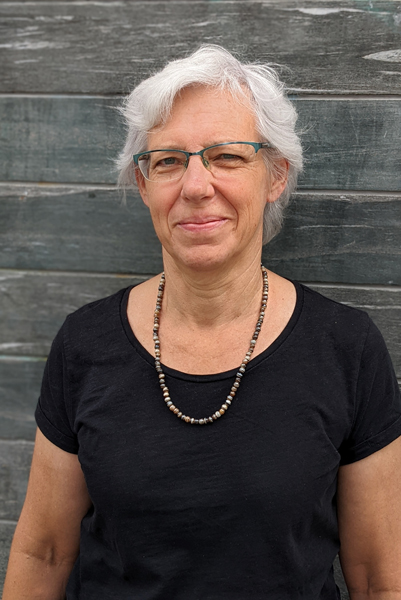
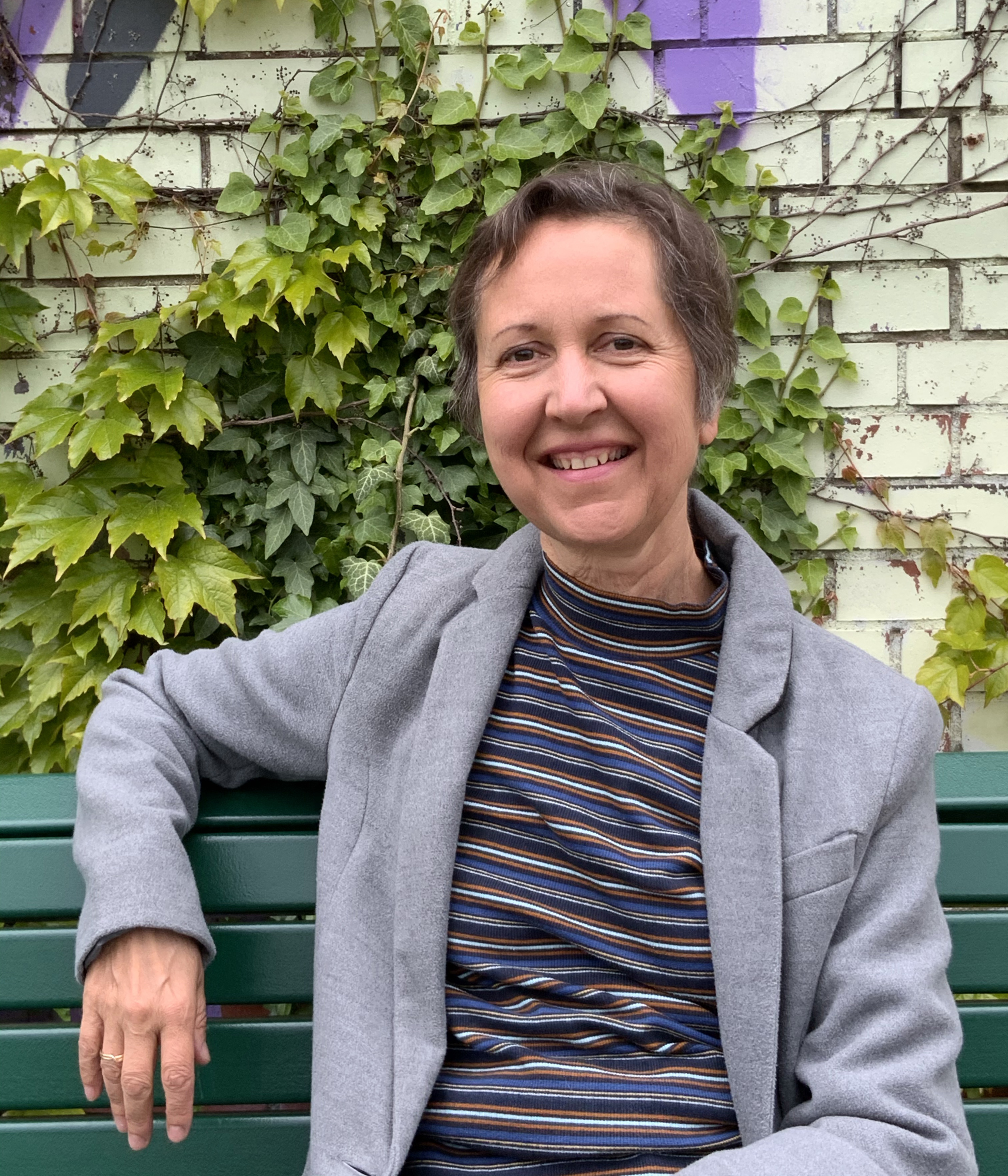
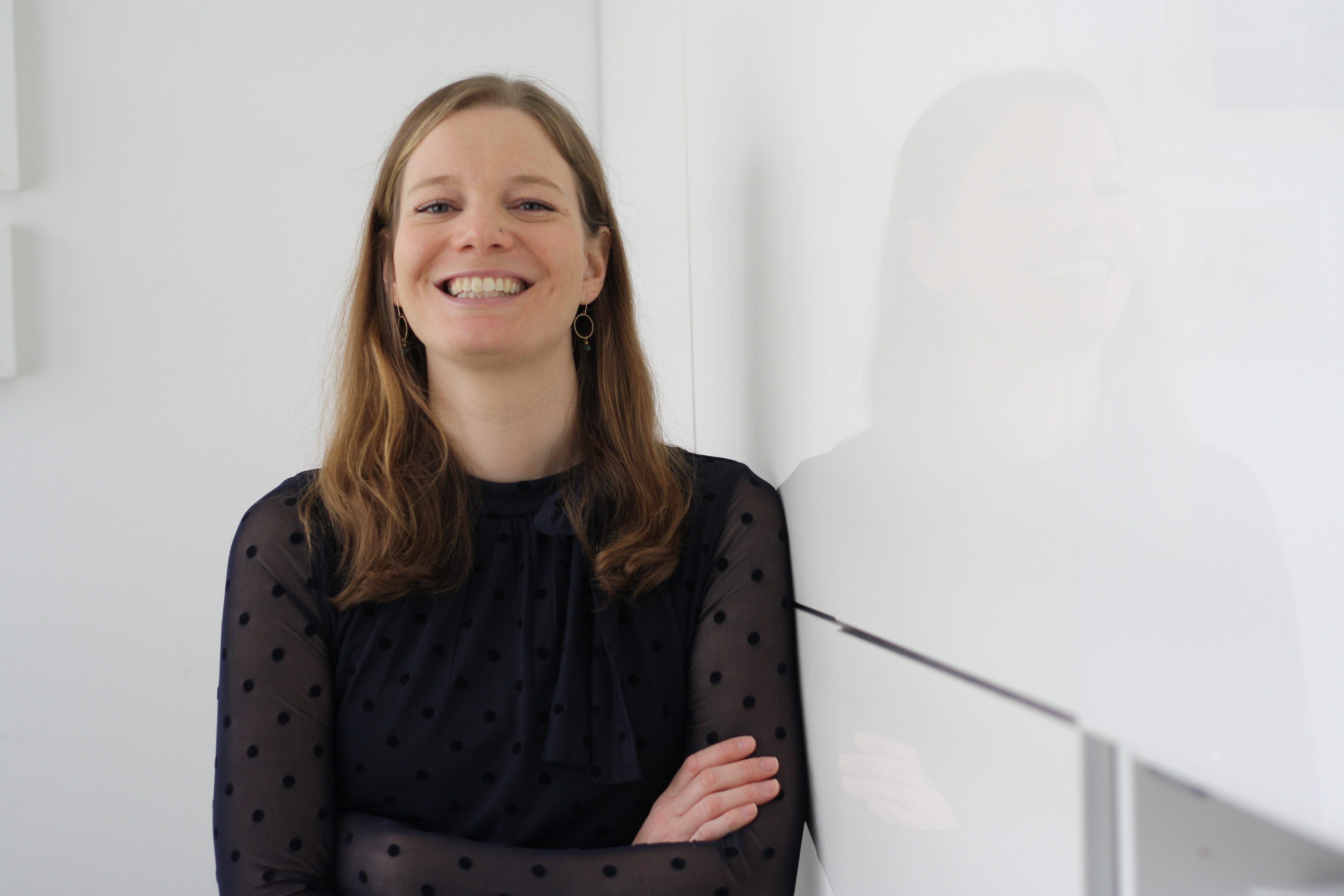
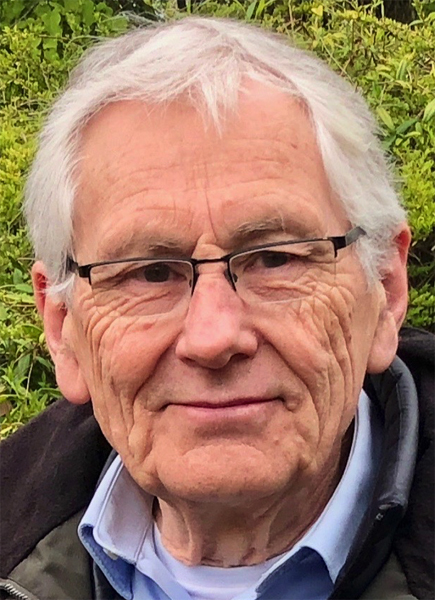
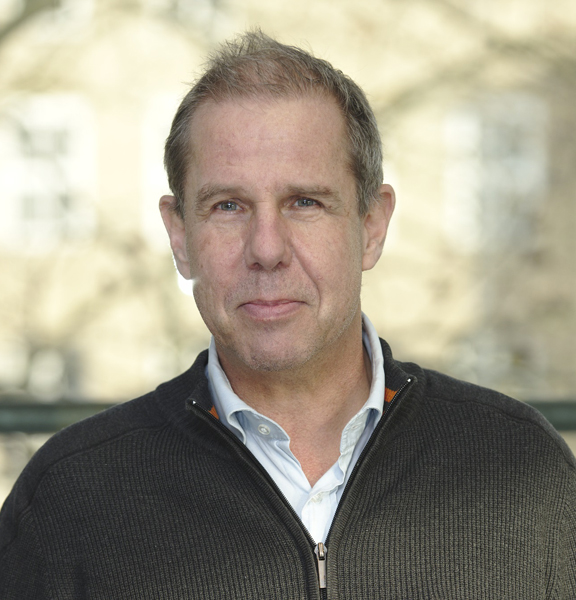
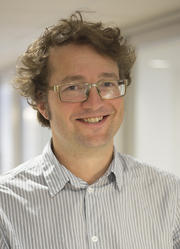
Louise McNally is a Professor of Linguistics at Universitat Pompeu Fabra (UPF) in Barcelona, Spain. She holds a Ph.D. in Linguistics from the University of California, Santa Cruz (1992) and a Postgraduate Diploma in Computational Linguistics from UPF (2002). Her research focuses on semantic/pragmatic theory, morphosyntax-semantics-pragmatics interfaces, and computational semantics, with recent explorations into vector-based and information-theoretic models of meaning. McNally has held senior administrative roles at UPF, including Vice Rector for the Organization and Academic Project (2015–2017), Vice Rector for Faculty Affairs (2011–2015), and Vice Rector for Research (2009–2011). She is co-Editor-in-Chief of Semantics and Pragmatics and affiliated with the Grammar and Cognition Lab and Computational Linguistics and Linguistic Theory groups. Her work bridges formal semantics with experimental perspectives, addressing issues like nominalization, scalar implicatures, and idiomatic expressions. Key honors include the Alexander von Humboldt Research Prize (2017) and multiple ICREA Academia Awards (2008, 2013, 2018). Her publications span theoretical linguistics, computational semantics, and experimental studies, emphasizing cross-disciplinary collaboration.
Heike Wiese is a Professor (W3) at Humboldt-Universität zu Berlin since 2019, holding the Chair for German in Multilingual Contexts within the Department of German Language and Linguistics. Previously, she held similar professorships at Universität Potsdam (2006-2019) and served as a Visiting Associate Professor at Yale University (2005-2006) through a Feodor-Lynen award. Her career began at Humboldt-Universität as a Lecturer (1993-1998) and Assistant Professor (1998-2005). She also worked as a Visiting Scholar at Brandeis University (1998-1999) via a DAAD postdoctoral stipend. Current research spans grammar-lexicon interactions, linguistic architecture, language variation/contact, and language ideologies. Her 2005 Susanne K. Langer Award recognized her foundational work on numerical cognition and language. Recent publications focus on multilingual communication, urban dialects, and emoji as discourse markers in digital German.
Katharina Gerhalter is a Lecturer at the Department of Romance Linguistics within the Institute of Romance Studies at the University of Graz. Her academic work focuses on the intersections of syntax , semantics , and pragmatics , particularly in the diachronic development of discourse functions in Romance languages. Education: Mag. Dr.phil. Bakk.phil. (equivalent to MA and BA in philosophy/philology) Her research includes the adjective-adverb interface in Spanish (dissertation, 2018) and a current habilitation thesis on topicalized infinitives in Spanish, French, and Portuguese. She contributes to the creation of annotated corpora for comparative studies in Romance languages. Recent publications analyze quantifiers in Spanish/Portuguese , NLP processing of infinitive structures , and historical pragmatics . Her work bridges theoretical linguistics with digital corpus methodologies, emphasizing cross-linguistic variation.
Geoffrey Pullum is Professor Emeritus of General Linguistics at the University of Edinburgh's School of Philosophy, Psychology, and Language Sciences. He previously held the position of Head of Linguistics and English Language at Edinburgh (2008–present) and was a Professor of Linguistics at UC Santa Cruz (1983–2007). His academic journey includes a B.A. (First Class Honours) in Language from the University of York (1968–1972) and a Ph.D. in General Linguistics from University College London (1974–1976). Research interests span theoretical linguistics, English grammar formalization, syntax, and the philosophy of cognitive sciences. He co-authored the seminal The Cambridge Grammar of the English Language (2002) and wrote A Student's Introduction to English Grammar (2005). His work challenges prescriptive grammar myths and emphasizes empirical rigor in linguistic analysis. Awards include Fellowships from the American Academy of Arts and Sciences (2003), Linguistic Society of America (2007), and British Academy (2009). He served as Associate Editor of Language (1983–1985) and held visiting positions at institutions like Stanford, Brown, and Harvard. Grants include NSF-funded research at the Center for Advanced Study in the Behavioral Sciences (1990–1991) and leadership in the Jacob R. Javits Fellowship Program (1992–1993). Active in academic service, he chairs editorial boards for journals like Linguistic Analysis and the Oxford International Encyclopaedia of Linguistics .
Sergei Tatevosov is a Professor of Linguistics and Head of the Department of Theoretical and Applied Linguistics at the Faculty of Philology, Lomonosov Moscow State University (MSU). His career spans decades, including roles as Visiting Fulbright Scholar at MIT (2010-2011), Associate Professor, Assistant Professor, and Senior Researcher at MSU. He focuses on theoretical semantics, linguistic typology, and the syntax-semantics interface, with expertise in Turkic, Mongolic, Uralic, and Nakh-Daghestanian languages. Education: Habilitation (Dr. of Sciences) in Philology (2010), dissertation: Actionality in lexicon and grammar , MSU. Ph.D. (Cand. of Sciences) in Philology (1997), dissertation: A typological perspective on quantification in natural language: universal quantifiers , MSU. Diploma in Linguistics with honors (1993), MSU. Research Interests: Formal Semantics, Syntax-Semantics Interface, Linguistic Typology, Theoretical Morphology, Tense & Aspect, Actionality, Evidentiality, Argument Structure, (Anti)causativization, Turkic Languages, Mongolic Languages, Nakh-Daghestanian Languages, Uralic Languages. His work bridges theoretical frameworks with fieldwork on lesser-studied languages, emphasizing cross-linguistic universals and typological variation. Scientific Awards and Honors: Lomonosov Moscow State University Award for Outstanding Scientific Schools (2019-2020). Professor of the Russian Academy of Sciences (2018). Fulbright Visiting Scholar Fellowship (2010). Lomonosov Moscow State University Award for Young Scholars (2007). Association for Linguistic Typology Greenberg Award for best Ph.D thesis (1999). Teaching and Supervision: He teaches graduate and undergraduate courses at MSU, including Theoretical Morphology, Formal Semantics, and Syntax and Semantics of Turkic languages. Over his career, he has supervised 3 Ph.D., 9 M.A., 10 B.A., and approximately 20 diploma papers. He has also taught at international summer schools like the Crete Summer School of Linguistics. Grants and Fieldwork: Tatevosov has led major research projects, including a 2019–2021 Russian Foundation for Basic Research (RFBR) grant on "Syntax and semantics of Uralic and Altaic languages: converging functional-typological and formal perspectives" and a 2016–2018 Russian Science Foundation grant on "Four Grammars of the Languages of Multilingual Russia." He has also received RFBR and Russian Foundation for the Humanities grants since 2002. As principal investigator (1999–present) for MSU's linguistic expeditions, he has conducted fieldwork on Caucasian, Turkic, and Uralic languages since 1990.
Victoria Escandell-Vidal is a Full Professor of Linguistics at the Complutense University of Madrid and former Full Professor at the National University of Distance Education (UNED) since 2007. Her research focuses on the grammar/semantics/pragmatics interface , particularly in Spanish, Catalan, and Italian, covering topics like interrogative sentences , copular constructions , and evidentiality . She has served as Editor-in-chief of Revista Española de Lingüística and co-editor of the AKAL Linguistics book series . Research Focus: Procedural Meaning, Information Structure, Social Cognition, L2 Acquisition International Engagement: Invited professorial roles at universities in Argentina, Belgium, Germany, Italy, Sweden, and the Netherlands Scientific Recognition: Emile Lorand Chair (2014) Humanistisk Samhällsvetenskapliga Forskningsrådet Award (1996) Extraordinary Doctorate & Degree Awards (Universidad Complutense de Madrid) Publications : 123+ academic works including 12 Q1 journal articles and 20 publications with top 10 international publishers in the SPI ranking. Her recent work examines prosodic marking , verum focus , and tautological constructions across languages.
Livio Gaeta is a Full Professor of German Language and Linguistics at the University of Turin, Italy. His academic career includes roles such as Associate Professor (2012–2016) and Visiting Professor at Humboldt-University of Berlin (2009–2010). He specializes in contrastive linguistics, theoretical morphology, and the study of linguistic minorities, particularly Walser German dialects. Gaeta holds a PhD in Linguistics from the University of Rome Three (1998). Educational Background: PhD in Linguistics, University of Rome Three (1998); Guest Researcher at the Center for General Linguistics, Berlin (1998–1999). His research focuses on morphological theory, language contact in Alpine regions, and the documentation of minority languages. Notable projects include CLiMAlp (PRIN 2020–2024) and ArchiWals (PRIN 2017–2020), which digitize and preserve Walser linguistic heritage. Gaeta has authored monographs like Lineamenti di grammatica tedesca (2017) and edited volumes on German linguistics. His awards include the Alexander von Humboldt Research Grant (2009) and Fellowship (2010), and he served as President of the Societas Linguistica Europaea (2025). Key research themes include grammaticalization, derivational paradigms, and the interplay between syntax and morphology.
Maj-Britt Mosegaard Hansen is a Professor of Linguistics and Pragmics at The University of Manchester (since 2007), previously holding roles as Associate Professor (University of Copenhagen, 2000-2007) and Assistant Professor (1996-1999). She specializes in pragmatics, semantics, and historical linguistics with a focus on French and Romance languages. Her research explores discourse particles, grammaticalization, and diachronic semantic shifts. She earned her dr.phil. (higher doctorate) from the University of Copenhagen (2008) with a dissertation on particles at the semantics/pragmatics interface. Notable roles include Associate Dean for Research at Manchester's Faculty of Humanities (2018-2021) and Head of Linguistics and English Language (2014-2017). Her work bridges theoretical linguistics and empirical analysis, addressing topics like negation cycles, interactional pragmatics, and medieval French syntax. She is a Fellow of the Royal Danish Academy of Sciences and Letters (2013). Her publications include influential books such as The Structure of Modern Standard French (2016) and over 50 peer-reviewed articles on historical pragmatics and discourse analysis.
Nikolaus Himmelmann is a Full Professor (W3) in General Linguistics at the University of Cologne since 2010. Previously, he held professorial positions at Westfälische Wilhelms University Münster (2007-2010), Ruhr-University Bochum (1999-2007), and has been actively involved in linguistic research through funded projects like the DoBeS framework (2004-2005) and SFB 1252 projects (2017-2020). He is a founding member and past president of the German Society for Endangered Languages, and serves on multiple editorial boards including Language Documentation & Conservation and Studies in Language . 2018 Honorary Member, Linguistic Society of America 2017 Leo Spitzer-Preis, University of Cologne 2014 Best Paper in Language Award His research spans typology, grammaticalization, language documentation, and prosody-syntax interfaces. He has secured significant grants from DFG, VW Foundation, and BMBF for collaborative projects on language documentation, articulation speed variation, and prosodic prominence. His administrative roles include chairing linguistics institutes at Münster and Cologne universities.
Peter Hagoort is a Full Professor of Cognitive Neuroscience at Radboud University and Director of the Max Planck Institute for Psycholinguistics. He leads the Neurobiology of Language department and founded the Donders Centre for Cognitive Neuroimaging. His research focuses on the neural basis of language, using techniques like ERP, MEG, and fMRI to study language processing impairments in aphasia, dyslexia, and autism. Education: BA in Psychology (Utrecht, 1976) and Biology (Utrecht, 1977), MSc in Experimental Psychology (Nijmegen, 1982), PhD (Nijmegen, 1990). Research interests include cognitive neuroscience of language, neuroimaging methodology, and neurobiological substrates of language disorders. His work bridges cognitive psychology, neuroscience, and neurolinguistics. Awards: Spinoza Prize (2005), Academy Professor Prize (2012), Knight of the Netherlands Lion (2004). Labs/Teams: Directs Max Planck Institute for Psycholinguistics and Donders Centre, leading neuroimaging research groups. His work has produced over 270 publications with an h-index of 50.
Hubert Haider is a Professor of General and Applied Linguistics at the University of Salzburg, serving as Vice-Director of the Centre for Neurocognitive Research. He holds a PhD (1980) and Habilitation (1987) in General Linguistics from the University of Vienna. His academic career includes professorial roles at the University of Stuttgart (1988-1996) and leadership positions such as Chairman of the Department of Linguistics at Salzburg and Dean of the Faculty of Philosophy at Stuttgart. His research focuses on syntax, language-cognition interfaces, and neurolinguistics, with significant contributions to computational linguistics and Germanic/Romance language studies. Major Positions: Chair positions at Salzburg and Stuttgart, leadership roles in departments and graduate programs Research Projects: Led DFG-funded computational linguistics initiatives (SFB 340), neuroimaging studies on language production (fMRI/EEG), and EU-funded IGLO project on Germanic language intercomprehension Recipient of the prestigious membership in Academia Europaea (2012). His international engagements include visiting professorships at Harvard, Lund, and Amherst, alongside summer schools and guest seminars across Europe and beyond. Active in academic administration,他曾担任萨尔茨堡人文学院副院长(1999-2001)and曾主持多个国际同行评审研究项目,包括DFG和欧盟资助的项目。
Isabelle Bril is a Senior Researcher (Directrice de Recherche) at the CNRS laboratory, LACITO (Laboratoire des Langues et Civilisations à Tradition Orale) in Paris-Villejuif. Since January 2014, she has served as Director of the CNRS 'Fédération Typologie et Universaux des Langues,' having previously been its Deputy Director from 2012-2013. Her academic career spans multiple prestigious positions within the French research system, including membership on the National Evaluation Committee for Linguistics. Dr. Bril's research focuses on Austronesian languages, with particular expertise in languages of New Caledonia (Nêlêmwa, Zuanga) and Formosan languages (Amis). Her work encompasses morphosyntax, coordination and subordination, complex predicates, valency alignments, and number marking systems. Her publication record demonstrates consistent contributions to linguistic typology, with significant works including a monograph on Nêlêmwa syntax and semantics, and edited volumes on complex predicates in Oceanic languages and cross-linguistic perspectives on coordination and subordination. Her research trajectory shows a clear progression from documentation of specific languages to broader typological investigations. Joint director of Axis 3 of the Labex project 'Langues austronésiennes: reconstruction et syntaxe' (2011) Ranked first in the highly competitive CNRS selection process for Senior Researchers (2006) President of the Joseph Greenberg Award jury (2011) Member of the editorial board for Studies in Diversity Linguistics (2013-present) Dr. Bril maintains an active presence in the international linguistics community through conference presentations, invited courses at institutions like the University of Leipzig and Manchester University, and leadership roles in the Association for Linguistic Typology. Her work bridges theoretical linguistics with detailed language documentation, making significant contributions to our understanding of linguistic diversity in the Austronesian language family.
Maribel Romero is a Professor in the Department of Linguistics at the University of Konstanz, Germany, where she has held a faculty position since 2007. Previously, she was an Associate Professor (2004-2007) and Assistant Professor (1998-2004) at the University of Pennsylvania. She earned her PhD in Linguistics from the University of Massachusetts at Amherst in 1998, following earlier degrees in Latin Linguistics ('Tesi de Llicenciatura') and Classical Philology from the University of Barcelona. Her research program focuses on the architecture of linguistic meaning through multiple interfaces: Formal semantics and pragmatics core mechanisms Syntax-semantics mapping operations Experimental validation of theoretical models Cross-linguistic patterns in quantification and question formation She investigates phenomena including quantifier interpretation, focus effects, negation, superlatives, and epistemic bias. Analyses of her recent publications reveal consistent research trajectories in: Quantifier semantics and scope phenomena Experimental pragmatics of questions and bias marking Formal approaches to comparatives and superlatives Cross-linguistic prosody-syntax interactions Her work integrates theoretical modeling with experimental validation across languages. Honors include: Elected Member, Academy of Europe (Linguistic Studies Section, 2022) LUKS Teaching Excellence Award (University of Konstanz, 2015) Multiple teaching award nominations at University of Pennsylvania Administrative service includes: Equal Opportunity Officer, School of Humanities (2020-2021) Dean of Studies, Linguistics Department (2018-2019) Head of Linguistics Department (2010-2012)
Sigrid Beck serves as Professor of Theoretical and Descriptive English Linguistics at the University of Tübingen's Faculty of Philosophy since 2005, with prior appointments including Associate Professor at University of Connecticut and Junior Professor at Universität Potsdam. Her international engagements include Visiting Professorships at MIT and University of Canterbury. Educational background: PhD in Linguistics, Universität Tübingen (1997), "summa cum laude" (Dissertation: "Wh-constructions and transparent Logical Form") Habilitation, Johann-Wolfgang-Goethe-Universität Frankfurt (2003) (Thesis: "Pluralities and Comparisons") Masters in Linguistics with distinction, Eberhard-Karls-Universität Tübingen (1993) Beck's research pioneers formal approaches to meaning construction across languages, with signature contributions to: Theoretical frameworks for semantics-pragmatics interactions Diachronic evolution of semantic structures Crosslinguistic analysis of focus and presupposition Syntactic constraints on semantic interpretation Her methodology integrates formal theory with empirical cross-linguistic data to resolve foundational questions in meaning representation. Major recognitions: Academy of Europe membership (2022) Heinz-Maier-Leibnitz-Preis for doctoral work (1997) Oxford Visiting Fellowship at Magdalen College (2022) As principal investigator, Beck secured substantial DFG funding including the 12-year Collaborative Research Center SFB 833 'Construction of Meaning' (2009-2021) where she directed projects on crosslinguistic semantics and context reconstruction, plus XPRAG network leadership for experimental pragmatics research (2014-2020). Her grant portfolio demonstrates sustained leadership in coordinating large-scale interdisciplinary teams. She directs the 'Construction of Meaning' research consortium within the English Linguistics section, fostering collaboration between theoretical linguists, experimental researchers, and computational modelers to advance semantic theory through empirical validation.
Dag Trygve Truslew Haug is a Professor of Linguistics and Greek/Latin at the University of Oslo, affiliated with the Faculty of Humanities and the Department of Classics. He holds concurrent roles as a Professor of Linguistics and has served as a Visiting Professor at the University of Oxford. His academic journey includes degrees from the University of Oslo: Cand. mag. (1996), Cand. phil. (1998), and Dr.art. (2001) in Ancient Greek linguistics. Haug’s research focuses on corpus linguistics, syntactic theory, formal semantics, and Indo-European languages, with significant contributions to computational linguistics and historical linguistics. He leads projects like the DAMOS database for Mycenaean studies and the PROIEL treebank for early Indo-European texts. His awards include membership in the Norwegian Academy of Science and Letters (2016) and the HM King of Norway's Gold Medal for Young Scholars (2002). Haug is actively involved in teaching Greek, Latin, and comparative Indo-European linguistics, and serves on curriculum committees for these disciplines. His research groups include Digital Humanities, Grammar and Meaning, and Language Change. Key areas of innovation involve integrating formal semantics with dependency grammar and developing computational tools for analyzing ancient languages.