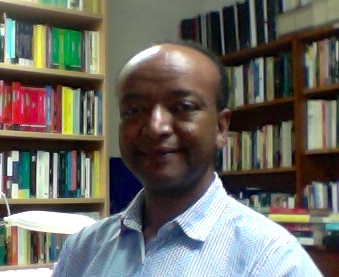
Zhiqun Chen is a Lecturer in Chinese Studies at Monash University. His research focuses on the historical and theoretical analysis of the Chinese writing system, particularly debates surrounding its ideographic nature and historical development. He has published extensively on topics such as compound ideographs, the semiotic properties of Chinese characters, and scholarly critiques of historical linguistics. Key contributions include studies on the graph Míng 明 (2018), critiques of Peter Du Ponceau's work (2015), and analyses of 20th-century linguistic debates (2008). His work bridges sinological studies with broader linguistic theory, emphasizing the intersection of historical linguistics and semiotics. No formal scientific awards are listed, but his academic output reflects sustained engagement with foundational questions in Chinese script studies.
Margaret Ryan serves as a Researcher at Macquarie University within the Department of Cognitive Science, Faculty of Human Sciences, holding dual roles as a Research Officer and recently awarded Doctor of Philosophy (June 2024). She additionally contributes as a Casual Professional at The University of Sydney, with research spanning psycholinguistics, cognitive neuropsychology, and neurolinguistics focusing on sentence processing, syntax-semantics interfaces, and neurophysiological methods. Her academic credentials include a Doctor of Philosophy in Psycholinguistics (awarded 20 June 2024) and a Bachelor of Speech & Hearing Sciences (Honors Class 1) in Linguistics and Cognitive Neuropsychology (awarded 1 December 2000), both from Macquarie University. Ryan's research investigates experiencer verbs, event structure, sentence aspect, and emotional processing through advanced methodologies including Electroencephalography, Transcranial Magnetic Stimulation, Magnetoencephalography, MRI, and fNIRS. Her clinical interests encompass stuttering, aphasia, and apraxia, examining both theoretical frameworks and neural correlates of language disorders. Recent publications (2023-2024) demonstrate consistent focus on thematic role processing, particularly agents and causers in verb semantics, utilizing behavioral and neuroimaging approaches to analyze real-time sentence comprehension and event naturalness across diverse linguistic contexts. She received the Postgraduate Research Fund Recipient award in 2020, recognizing her scholarly contributions during doctoral studies. No student advising relationships are documented in available records. While specific laboratory affiliations aren't explicitly stated, her methodological repertoire indicates active collaboration with Macquarie University's neuroimaging facilities and cognitive science research groups.
Mark W. Post is a Senior Lecturer in the Discipline of Linguistics within the Faculty of Arts and Social Sciences at the University of Sydney, where he also serves as Deputy Head of School (Humanities) and Honours Coordinator. He is a member of the China Studies Centre, Sydney Southeast Asia Centre, and The Vere Gordon Childe Centre. Dr. Post's research focuses on the typologies and relationships among Greater Mainland Southeast Asian and Himalayan languages, with special emphasis on the Tani branch of Trans-Himalayan (Tibeto-Burman) languages. His fieldwork-based research encompasses languages of Eastern Arunachal Pradesh, India, particularly Galo and other Tani languages. His theoretical approach combines functional-diachronic perspectives with anthropological linguistics, viewing language as a dynamic process whose structures emerge from patterns of discourse and interaction. His recent publications reveal significant trends in Eastern Himalayan linguistics, with particular focus on classifier systems, topographical deixis, applicative constructions, and ethnolinguistic prehistory. His work demonstrates the exceptional linguistic diversity of the Eastern Himalayan region and its importance for understanding broader patterns in language evolution and cultural adaptation. 2011 Recipient of the Association for Linguistic Typology's Pāṇini Award Dr. Post supervises research on phonological and grammatical descriptions of Asian minority languages, particularly of Southeast Asia and the Himalayas, and on functional and diachronic analyses of grammatical phenomena. His current projects include 'Grammar and prehistory in the Eastern Himalaya' and 'A grammar and online/app-based dictionary of the Galo language.' He has received multiple research grants, including ARC Discovery Projects and funding from the Firebird Foundation for Anthropological Research. His laboratory work centers on the Centre for Cultural-Linguistic Diversity (Eastern Himalaya), where he coordinates documentation efforts for endangered languages of the region, working closely with local language communities like the Galo Language Development Committee of Arunachal Pradesh.
Dr Mengistu Amberber serves as a Senior Lecturer in Linguistics within the School of Languages and Linguistics at the University of New South Wales' Faculty of Arts and Social Sciences. He maintains an active academic profile with teaching responsibilities across undergraduate and postgraduate linguistics programs. His educational background includes: BA and MA from Addis Ababa University PhD from McGill University Amberber's research expertise centers on linguistic structures with particular focus on African languages, especially Amharic. His scholarly work explores the intersection of lexical semantics and grammatical theory, examining how meaning interfaces with syntactic structures across different languages. His typological approach investigates universal patterns while accounting for language-specific variations, with significant contributions to understanding verb classes, transitivity, and complex predicates in under-documented languages. His publication record demonstrates sustained scholarly output with particular emphasis on cross-linguistic perspectives on memory language, language universals, and variation. His work bridges theoretical linguistics with practical applications in language documentation and analysis. Teaching responsibilities include undergraduate courses in The Structure of Language, The Use of Language, Generative Grammar, Language Universals and Linguistic Typology, and Phonology, along with postgraduate instruction in Introduction to Linguistic Analysis and Bilingualism. Based in the Arts, Design & Architecture building at 241 Morven Brown on the UNSW campus, Dr Amberber contributes to the university's linguistic research community through both his specialized scholarship and educational leadership.
Nan Xu Rattanasone is a Senior Lecturer in the Department of Linguistics at Macquarie University, Australia. She holds additional roles as Director of Research Training, Deputy Director of the Child Language Lab, and member of the Hearing Research Centre. Her research focuses on language and literacy development in young bilingual children and those with hearing loss, addressing implications for school readiness and atypical language development. She teaches courses in language acquisition and supervises PhD students in bilingualism, hearing loss, and related areas. Research Interests: Emergent Language and Literacy Skills Bilingualism (particularly Mandarin-English contexts) Hearing Loss and Cochlear Implants Prosody and Phonological Processing Inflectional Morphology in Child Language Grants and Collaborations: Her work has been funded by the NSW Department of Education, Australian Research Council (ARC), National Health and Medical Research Council (NHMRC), and philanthropic organizations. She has led projects on bilingual education and participated in initiatives like the HEARing CRC and ARC Centre of Excellence in Cognition and its Disorders. Labs & Teams: Active in the Child Language Lab and Hearing Research Centre at Macquarie University, contributing to interdisciplinary studies on language development.
Dr. Yishan Huang is an Honorary Lecturer in the Department of Linguistics at The University of Sydney. She holds a BA from Minnan Normal University (China), an MA from Guangxi Normal University (China), and a PhD from the Australian National University (ANU). Her research focuses on tonal languages in East and Southeast Asia, with a multidimensional approach to tonetics (tonal phonetics), tonology (tonal phonology), and tonotactics (tonal phonotactics). She also investigates morphology, syntax-semantics interfaces, and endangered language documentation. Research Interests Dr. Huang specializes in the phonetic-phonological-morpho-syntactic interfaces of tonal languages. Her work combines acoustic analysis, articulatory data, and theoretical linguistics to explore tonogenesis, tonal phonotactics, and the sociolinguistic dimensions of language endangerment. Recent studies emphasize Zhangzhou Southern Min dialect's tonal systems, phonation types, and morphological processes like infixation and reduplication. Publications Trends Her recent work (2020–2024) reveals a consistent focus on Zhangzhou Southern Min dialect, addressing tonal acoustics, phonotactic constraints, and morphological processes. Methodologically, she integrates computational linguistics with fieldwork, employing multidimensional analyses to decode complex linguistic interactions. Key themes include tonal sandhi, glottal stop evolution, and the documentation of endangered language practices. Awards & Grants 2020 Humanities Travelling Fellowship (Australian Academy of Humanities) 2017 Research Grant (Australian Linguistics Society) 2016 ARC Centre of Excellence for the Dynamics of Language Grant Grants & Affiliations Dr. Huang has secured grants supporting fieldwork in Southeast Asia and collaborative research on tonal systems. She is affiliated with the Sydney Southeast Asia Centre and active in organizations like the International Association of Chinese Linguistics. Her work bridges theoretical linguistics and applied language documentation, with a focus on preserving cultural knowledge embedded in endangered languages. Labs & Teams She collaborates with the Sydney Southeast Asia Centre, contributing to interdisciplinary projects on language and cultural sustainability in Southeast Asia.
Dr. Catriona Malau is a Senior Lecturer at the University of Newcastle's College of Human and Social Futures, School of Humanities, Creative Industries and Social Sciences, specializing in Linguistics. She holds a PhD and BA (Honours) from the Australian National University. Her research focuses on documenting endangered Oceanic languages, particularly in Vanuatu, where she has published grammatical analyses and dictionaries. Her work centers on linguistic diversity in Vanuatu, grammatical documentation of Vurës and Ambae languages, and developing accessible digital archives for community use. Recent articles demonstrate a shift toward computational linguistics and multilingual modeling while maintaining core focus on Pacific language preservation. Awards: College Excellence Award for Research Supervision (2023) Office for Learning and Teaching Citation (2012) Vice-Chancellor's Citation (2011) She has supervised 13 PhD/Masters students in linguistics topics including grammars of Fakamae and Nese languages. Major grants include Volkswagen Foundation projects ($390,613 total) supporting documentation in Vanua Lava. As Deputy Head for Research Training, she coordinates multidisciplinary teams integrating anthropology and biology in language documentation.
Ina Bornkessel-Schlesewsky is a Professor of Cognitive Neuroscience at the University of South Australia, affiliated with the School of Psychology, Social Work and Social Policy and the UniSA Justice and Society faculty. Her research focuses on neurobiological foundations of language processing, syntax, and cross-linguistic diversity, utilizing EEG, fMRI, and computational modeling. Key areas include the dorsal-ventral stream architecture for language comprehension, predictive processing, and the impact of mindfulness training on cognitive performance. Her work spans theoretical neuroscience, neurophysiological experiments, and applied studies in complex environments. Notable contributions include the Argument Dependency Model (ADM), studies on case marking evolution, and investigations into how EEG-based measures can enhance military training and decision-making. She collaborates internationally, with grants from the ARC and defense agencies, and supervises research students in cognitive neuroscience and language evolution. Publications highlight neurobiological roots of language in primate audition, ERP correlates of syntactic processing, and the role of mindfulness in enhancing attention and task performance. Her labs and teams explore interdisciplinary themes like virtual environment design and neurophysiological markers of cognitive states.
Rebecca Holt is a Research Fellow in the Department of Linguistics at Macquarie University, affiliated with the Hearing Research Centre and the Child Language Lab. She holds a PhD from Macquarie University (2020). Her research focuses on spoken language processing in children with hearing loss and adults learning English as a second language, employing methods like eye-tracking, EEG, and behavioral measures. Key areas include syntactic prediction, audiovisual speech processing, and phonological awareness. Her work spans 15 peer-reviewed articles (2014–2025), with recent emphasis on interdisciplinary frameworks for classroom interventions (L3 Assessment Framework) and neural responses to accented speech. Collaborations involve institutions like the Child Language Lab and projects funded since 2014. No awards are explicitly listed, but her research is widely cited in audiology and developmental linguistics. Education: PhD in Linguistics (Macquarie University, 2020) Labs/Teams: Child Language Lab, Hearing Research Centre Grants: Active since 2014 (Neural and behavioral evidence for children's learning of grammatical morphology)