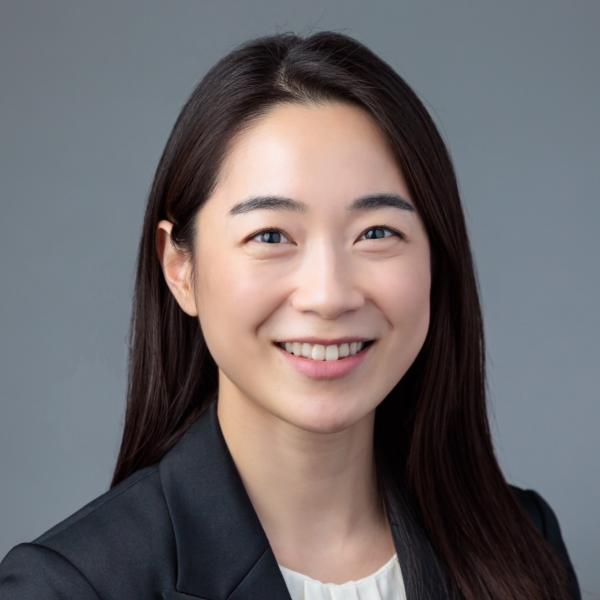
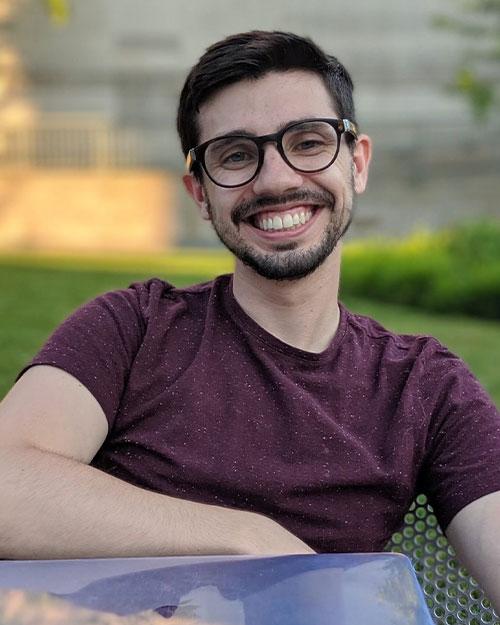
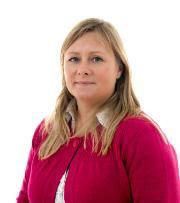
Sanghee Kim is a Researcher and Humanities Teaching Fellow at the University of Chicago's Department of Linguistics. She holds a Ph.D. from the University of Chicago (2024) and specializes in psycholinguistics and computational linguistics. Her research focuses on the cognitive mechanisms of human language processing within discourse contexts, combining behavioral experiments with computational methods like NLP tools (Python) and statistical analysis (R). She teaches core undergraduate courses in Cognitive Science, Linguistics, Psychology, and Computer Science, including newly designed methods courses that integrate experimental and computational approaches. Research Interests: Psycholinguistics, Computational Linguistics, Discourse Processing, Experimental Design, Language Models, and Cross-Linguistic Studies. Publications highlight work on agreement attraction effects, discourse structure encoding, prosody in Korean syntax, and dialogue dynamics in language models. Her methodologies include web-based behavioral experiments (eye-tracking), visual world paradigms, and computational modeling.
Carolina González is a full-time Professor at Florida State University's Department of Modern Languages and Linguistics, College of Arts and Sciences. Holding a Ph.D. in Linguistics from the University of Southern California, she specializes in Spanish phonetics, phonology, and prosody with particular focus on language invention and phonation patterns. Research Areas: Phonology, Phonetics, Prosody, Laboratory phonology, L2 phonological acquisition, Syntax-phonology interface, Morph-phonology, Language invention Her publication trends reveal sustained expertise in Spanish consonantal phenomena, intonation patterns, and prosody-conditioned alternations across Romance languages. Notably, she is collaborating with Lara Reglero on mirativity and developing a book on language invention with Cambridge University Press. While no formal scientific awards are mentioned in the available text, her laboratory phonology research integrates acoustic analysis with phonological theory. No graduate students are explicitly listed in the provided materials.
Antje Muntendam is an Associate Professor of Linguistics and Spanish at Florida State University (FSU), affiliated with the Modern Languages and Linguistics department. She holds a M.A. from Leiden University and a Ph.D. from the University of Illinois at Urbana-Champaign. Her roles include serving as Coordinator and Adviser of Linguistics at FSU, Affiliate Faculty at the Native American and Indigenous Studies Center, and Affiliated Member of the Heritage Linguistics Lab at Leiden University. Her research focuses on bilingualism, language contact, and prosody, with particular emphasis on Quechua-Spanish and Turkish-Dutch bilingual communities. She investigates cross-linguistic influence, code-switching, and intonation patterns in Andean and European contexts. Muntendam is co-founder of the international conference on Bilingualism in the Hispanic and Lusophone World (BHL). She currently leads a National Science Foundation-funded project (2024-2027) on Quechua and Spanish intonation in Andean language contact. Muntendam teaches courses such as Bilingualism in the Spanish-Speaking World , Psycholinguistics of Bilingualism , and Spanish Phonetics . Her work bridges syntax, sociolinguistics, and psycholinguistics, addressing topics like clitic placement, focus marking, and heritage language acquisition. Her publications span journals like Linguistic Approaches to Bilingualism and Bilingualism: Language and Cognition . Her academic contributions include co-editing volumes on Quechua stance and deixis and co-authoring studies on prosodic transfer and syntactic interfaces in bilingual contexts. She actively engages in interdisciplinary research, integrating experimental methods (e.g., eye-tracking) and comparative analyses of multilingual speech.
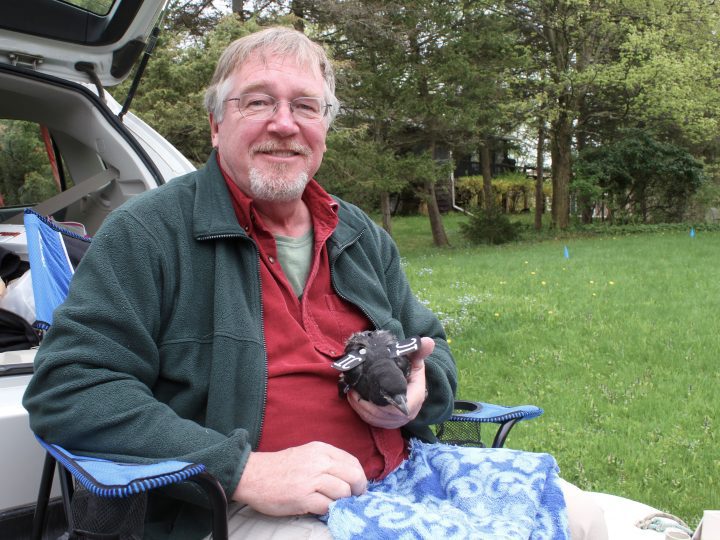
Kevin B. McGowan is an Associate Professor and Director of Graduate Studies in the Department of Linguistics at the University of Kentucky, affiliated with the UK Phonetics Lab and the Lewis Honors College. His research focuses on phonetics, speech perception, sociophonetics, and sound change, with a particular interest in how linguistic variation intersects with social and cognitive factors. He co-authored the third edition of English with an Accent , a seminal work on linguistic discrimination and sociolinguistic awareness. His work bridges experimental phonetics with sociolinguistic theory, emphasizing the role of listener expectations and language ideology in shaping perception. McGowan's contributions include studies on coarticulation timing, non-native speech perception, and the impact of socioindexical cues in noisy environments. He actively promotes open-access methodologies, as seen in projects like Wildcat Voices . His research highlights the interplay between linguistic structure and social meaning, advancing both theoretical and applied linguistics.
José A. Camacho is a Professor and Director of the School of Literatures, Cultural Studies and Linguistics at the University of Illinois at Chicago. His research focuses on syntax, bilingualism, and language contact phenomena, with particular attention to Spanish and indigenous languages like Shipibo. He has authored influential textbooks such as Introducción a la sintaxis del español (2018) and edited volumes like Exploring Interfaces (2019). His work bridges formal syntax with sociolinguistic concerns, examining heritage speaker grammars, null subject parameters, and morphosyntactic variation. Notable projects include studies on gender agreement in Shipibo-Spanish contact zones and adverb placement in heritage Spanish. Camacho has collaborated extensively with researchers on indigenous language maintenance in urban settings, as seen in Linguistic attitudes towards Shipibo in Cantagallo (2018). Publications span over three decades, with key contributions to syntactic theory (e.g., revisiting the null subject parameter) and bilingualism studies. His recent work explores paradigmatic uniformity in heritage grammars and the Big DP hypothesis in contact languages. Camacho serves as an editorial board member for major linguistics journals and has organized international workshops on bilingual morphology.
Prof. Anja Müller is a Full Professor of Language Acquisition and Language Didactics at the Johannes Gutenberg University Mainz. She leads the Descriptive Linguistics of German department within the German Institute. Her academic career includes roles as a research associate at the University of Potsdam (2003-2008) and Goethe University Frankfurt (2008-2016), and a speech therapist at ZaPP (2003-2004). She holds a Dr. phil. from the University of Potsdam (2010). Education: 2003: Diplom in General Linguistics (University of Potsdam) 2010: Doctorate in Philosophy (University of Potsdam) Research Focus: Prof. Müller investigates first/second language acquisition, semantics/pragmatics interfaces, and language-conscious teaching methods. Her work emphasizes multilingual classroom dynamics, teacher professionalization, and comparative grammar instruction. Key projects include the FaPlan interdisciplinary lesson-planning initiative and the TWIND project on multilingual technical education. Publications: Her recent work bridges linguistics and pedagogy, including Grammatische Modellierung als Grundlage für sprachdidaktische Vermittlung (2022) and articles on digital media in teacher training. Her research spans language acquisition theories to practical teaching materials for multilingual classrooms. Teaching/Grants: Leads projects funded by BMBF and LOEWE. Developed e-learning units for teacher education and co-authored materials like 160 Karten für die linguistisch fundierte Sprachförderung . Supervises research on grammar education and multilingual writing skills.
Anthony Yacovone is a Post-doctoral Research Fellow with a joint appointment at Tufts University's Department of Psychology and Massachusetts General Hospital. He is affiliated with the NeuroCognition of Language Laboratory under the guidance of Gina Kuperberg. His research focuses on linguistic prediction, cognitive neuroscience, and computational modeling of inference, alongside investigations into syntactic processing and real-world knowledge interactions. He will assume a role as Assistant Professor in Boston University's Department of Linguistics starting July 2025. Education includes a PhD in Psychology from Harvard University (2023), where he worked with Jesse Snedeker on language acquisition and sentence processing, and a BA in Psycholinguistics from University of Massachusetts Amherst (2016), collaborating with Brian Dillon and Lyn Frazier on syntactic processing research. Key research interests span psycholinguistics, neurolinguistics, and child language acquisition. His work integrates EEG, eye-tracking, and computational methods to explore topics like form-based prediction in natural contexts, developmental shifts in lexical vs. plausibility-based processing, and code-switching effects in multilingual discourse. Publications highlight methodological innovations (e.g., web-based eye-tracking comparisons) and theoretical contributions to understanding linguistic prediction mechanisms. Current research emphasizes bridging computational models with neurophysiological evidence in language processing. No formal grants or awards are listed in the provided information. His academic trajectory includes advising roles yet to be detailed in the text.
Mithun Marianne is a Professor of Linguistics at the University of California, Santa Barbara (UCSB), USA, since 1986. Previously, she held roles including Visiting Professor at UC Berkeley (1982-1986) and Professor at SUNY Albany (1973-1985). She earned a Ph.D. from Yale University in 1974. Her research focuses on morphology, syntax, discourse, prosody, language contact/change, typology, and documentation of Indigenous and Austronesian languages. She has held visiting positions globally, including at the University of Nice, Stanford, and La Trobe University. She serves on editorial boards for journals like Amérindia and Journal of Linguistic Typology . Her honors include Fellow of the Linguistic Society of America (2008), the Medaille du Collège de France (2005), and Doctorates Honoris Causa from La Trobe University (2003) and the University of Oslo (2000). She was elected to the Norwegian Academy of Science and Letters in 1998. Recent activities include leading international research initiatives on cross-linguistic clause combining (2010-2012) and serving on scientific committees for language documentation conferences. Her work bridges linguistic theory with empirical analysis, emphasizing fieldwork and endangered language preservation.
Prof. Bettina Braun is a faculty member at the University of Konstanz, specializing in prosody and intonation. Her research explores intonational contrasts, listener processing, and second language acquisition. She teaches phonetics, phonology, and experimental methods, and was honored with the students' teaching prize. She holds regular office hours and is supported by a secretary, Barbara Werner. Research focuses on how prosody interacts with lexical meaning, particularly in questions and sarcasm. Cross-linguistic studies feature prominently, including work on German, Persian, Chinese, and Swiss dialects. She emphasizes experimental methods, including Active Learning systems for perception experiments. Her work also examines infant-directed speech and L2 acquisition challenges. Key contributions include analyses of rhetorical vs. information-seeking questions, the role of pitch accents, and the impact of native language on prosodic perception. Ongoing projects are detailed on her dedicated page. Scientific awards include the University of Konstanz student-recognized teaching prize. Her lab's work is supported by collaborations in corpus development, such as the Konstanz prosodically annotated infant-directed speech corpus (KIDS corpus). She actively publishes on intonation’s role in disambiguation and cross-cultural communication.
Kara Hawthorne is an Associate Professor in the Department of Hearing, Speech, and Language Sciences at Gallaudet University's Human Services and Sciences school. Her work focuses on prosody-syntactic interactions, speech perception in cochlear implant users, and language processing in neurodiverse populations. She teaches graduate courses including Research Methodology, Speech Science, and Dissertation Seminars. Research interests include prosody's role in syntax acquisition, clinical practices for speech-language pathologists, and linguistic challenges faced by individuals with intellectual and developmental disabilities. Her grants include studies on cochlear implant outcomes, early intervention strategies, and accent adaptation in speech perception. Hawthorne has advised 11 doctoral students and serves on committees for Gallaudet’s PhD program and institutional review boards. She has published over 20 peer-reviewed articles, with recent work exploring prosody meta-analyses and intervention methods for children with language delays. Current research emphasizes clinical applications of prosody research and accessibility in communication technologies.
Merete Brendeford Anderssen is a Professor of English Linguistics at UiT The Arctic University of Norway, serving as Academic Programme Director for English Language and Theoretical Linguistics and Deputy leader of the research group AcqVA-Nor. She leads the C-LaBL Learning Domain and oversees study programs in English linguistics (M-EAC) and theoretical linguistics (M-TLIN). Her research focuses on multilingual acquisition, syntactic variation, heritage languages, and cross-linguistic influence. She has contributed to projects like MultiGender (CAS), MiMS (RCN), INPUT (MSCA), and MuMiN (RCN), exploring language representation, attrition, and maintenance across diverse populations. Her work integrates experimental methods (ERP studies, response time analysis) with theoretical linguistics, examining how structural similarities between languages influence acquisition and attrition. Key themes include heritage language trajectories in Syrian Arabic-German bilinguals, L3 acquisition processes, and dialect levelling mechanisms in Norwegian dialects. She has published extensively on word order variation, possessive constructions, and cross-linguistic influence in multilingual contexts. Current research interests include studying heritage speakers across ages and examining the role of English-Norwegian similarities in multilingual minds. Anderssen collaborates internationally, leading teams that bridge psycholinguistics and sociolinguistics. Her grants include €1.5M from RCN for MuMiN (2021-2025) and MSCA funding for INPUT (2021-2023).
Rebecca Holt is a Research Fellow in the Department of Linguistics at Macquarie University, affiliated with the Hearing Research Centre and the Child Language Lab. She holds a PhD from Macquarie University (2020). Her research focuses on spoken language processing in children with hearing loss and adults learning English as a second language, employing methods like eye-tracking, EEG, and behavioral measures. Key areas include syntactic prediction, audiovisual speech processing, and phonological awareness. Her work spans 15 peer-reviewed articles (2014–2025), with recent emphasis on interdisciplinary frameworks for classroom interventions (L3 Assessment Framework) and neural responses to accented speech. Collaborations involve institutions like the Child Language Lab and projects funded since 2014. No awards are explicitly listed, but her research is widely cited in audiology and developmental linguistics. Education: PhD in Linguistics (Macquarie University, 2020) Labs/Teams: Child Language Lab, Hearing Research Centre Grants: Active since 2014 (Neural and behavioral evidence for children's learning of grammatical morphology)
Gillian Ramchand is a Professor of Linguistics at UiT The Arctic University of Norway and a key member of CASTLFish, the Center for Advanced Study in Theoretical Linguistics. She is actively engaged in interdisciplinary research through the OASIS network (Ontology as Structured by the Interfaces with Semantics), funded by CNRS, which brings together scholars from linguistics, psychology, neuroscience, philosophy, and computer science to explore the cognitive foundations of meaning. Her research centers on linguistic semantics, the structure of meaning, and the interface between language and cognition. She investigates how language interacts with conceptualization, categorization, and counterfactual reasoning, often drawing on developmental and cross-disciplinary evidence. Her work emphasizes the importance of formal linguistic theory in understanding broader cognitive processes. The recent publications listed reflect a strong trend in theoretical and cognitive linguistics, with a focus on the syntax-semantics interface, the role of language in thought, and the implications of linguistic structure for modeling cognition. Her writings also explore the cultural and philosophical dimensions of language, including identity, diaspora, and the challenges posed by digital communication and AI. Scientific Awards: No specific awards mentioned in the provided text. She mentors and collaborates within academic networks, particularly through OASIS, where she promotes dialogue between formal semantics and empirical cognitive science. While no direct mention of advising students is made, her leadership in research initiatives suggests an active role in training and guiding emerging scholars. She has no known labs or formal research teams explicitly mentioned, but her involvement in CASTLFish and OASIS indicates participation in collaborative research environments.
Björn Lundquist is an Associate Professor at the Institute of Language and Culture at UiT The Arctic University of Norway. His research focuses on syntactic variation, language processing, grammatical gender, dialect variation, and heritage languages. He collaborates with institutions like AcqVA-Aurora and CASTLFish, and leads projects funded by the Norwegian Research Council, including the Nordic Word Order Database. Education: PhD in Theoretical Linguistics (2008, University of Tromsø), Master's in Nordic Languages (2005, Lund University). He has supervised students such as Maud Westendorp and Eirik Tengesdal. Awards include grants from UiT and the NORMS program. Key research interests include experimental approaches to syntactic optionality, prosody-syntax interface, and language attrition in heritage speakers. His work spans peer-reviewed journals like Frontiers in Psychology , Bilingualism: Language and Cognition , and Glossa . He organizes workshops on topics like bidialectism and language variation. Lundquist is involved in projects like Multilectal Literacy in Education and Grammatical Gender in Norwegian Dialects . His lab work includes eye-tracking and ERP studies to explore language comprehension and production.
Hongming Zhang is a Professor of Chinese Linguistics and Head of the Chinese Language and Linguistics Program at the University of Wisconsin–Madison, where he has been a faculty member since 1994. He also directs the UW-Tianjin Summer Chinese Program and holds editorial leadership roles in major journals and book series in Chinese linguistics. Ph.D., University of California at San Diego, Linguistics (1992) M.A., University of California at San Diego, Linguistics (1990) M.A., Fudan University, Chinese Linguistics (1984) B.A., Fudan University, Chinese Language (1981) His research focuses on the syntax-phonology interface, prosodic phonology, poetic prosody, and the history of the Chinese language. He has made significant contributions to the understanding of tone sandhi, tonal representation in dialects, and the linguistic structure of classical Chinese poetry. His work bridges theoretical linguistics and literary analysis, particularly in the context of historical and dialectal variation. The most recent articles highlight a strong trend in prosodic studies across Chinese dialects, historical phonology, and the linguistic analysis of classical poetry. His publications consistently emphasize empirical data from understudied dialects and integrate formal linguistic theory with philological insights. Vilas Associate Award (UW-Madison, 2003–05) Chiang Ching Kuo Research Grants (1997–99, 2005–06) Chern Shiing-shen Chair Professor (Nankai University, 2006) Chang Jiang Scholar Chair Professor (China MOE, 2009) Teacher of the Year 2015 (Wisconsin Association of Chinese Language Teachers) Distinguished Guest Professor (multiple Chinese universities) Professor Zhang has advised numerous students and led curriculum development in Chinese language and linguistics. He has secured research grants from prestigious foundations and has held leadership roles in international scholarly organizations. He is currently executive editor of the International Journal of Chinese Linguistics and series editor for Routledge Studies in Chinese Linguistics . He leads a research group focused on prosodic theory and Chinese linguistic analysis, contributing to interdisciplinary projects connecting linguistics, literature, and language education.